A Finger That Sticks, Then Gives
Most people meet trigger finger on an ordinary morning. The hand closes around a rail or a kettle, and one finger — the ring finger most often, then the thumb — folds down and then hesitates on the way back up. There is a catch, sometimes an audible click, and then the finger pops straight with a small, humiliating jerk. For the rest of the day it may behave. The next morning, the catch is back.
The mechanism is not mysterious. Each finger is worked by a long flexor tendon that runs through a series of pulleys in the palm — rings of dense tissue that hold the tendon close to the bone, the way the guides on a fishing rod hold the line. The first of these, the A1 pulley, sits at the base of the finger in the palm crease.
When the tendon or its sheath thickens, the swollen spot has to squeeze through that ring with every flex and extension. Back and forth, back and forth, and the friction feeds the swelling, which narrows the passage further. Doctors call it stenosing tenosynovitis; patients call it the finger that sticks.
That loop — inflammation narrows the tunnel, friction thickens the tendon, thickening worsens the friction — explains the condition's most distinctive feature. It tends to arrive gradually, get worse in the morning, and sometimes release after a few minutes of gentle movement as the hand warms and the fluid redistributes. It also explains why the common intuitions about it are mostly wrong.
Stretching harder does not fix a mechanical mismatch. Neither does gripping a stress ball, which is friction, more friction, delivered enthusiastically.
One caveat before anything else: this article is a synthesis of published research and classical texts, not a diagnosis. A finger that locks can belong to several different stories, some of them needing a clinician's eyes. What follows is the map of what the evidence says about the ordinary version of this problem, and it turns out the evidence has a favorite — and it is not the needle.
The Pulley, the Tendon, and the Nodule
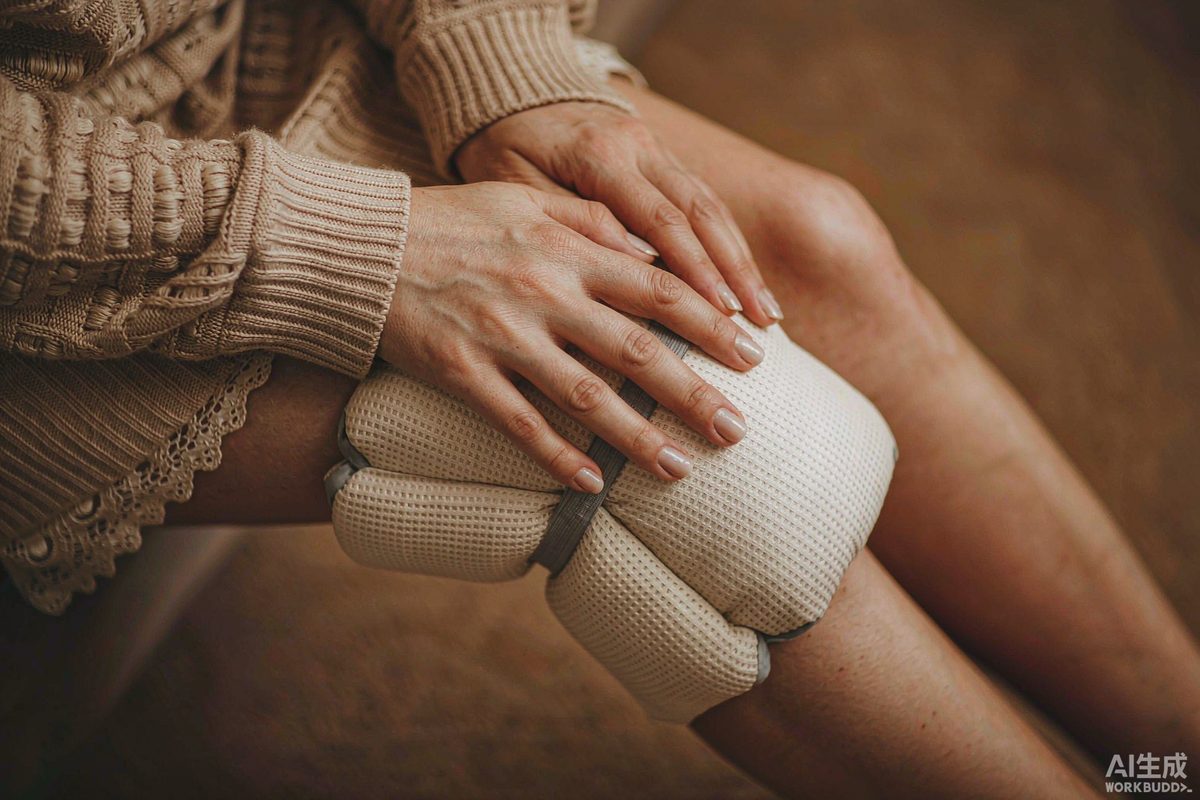
Look at the anatomy for a moment, because the entire treatment debate hangs on one detail. The flexor tendon is not inflamed evenly along its length. The pathology concentrates at one spot — where the tendon repeatedly drags under the A1 pulley — and the body's response to that chronic rubbing is the same response it has everywhere: thicken the tissue.
The result is a palpable nodule, a pea-sized knot on the tendon that you can sometimes feel rolling under the skin of the palm as the finger moves.
That nodule is the reason the finger catches. As the hand closes, the knot slides easily one way, into the pulley. As the finger tries to extend, the knot has to come back through, and the swollen spot jams at the ring's edge. Push a marble through a narrows in a garden hose and you have the whole disease in miniature.
It also explains the morning pattern: hours of sleep with the fingers curled means the tendon sits stationary under friction, fluid settles into the already-irritated tissue, and the first movements of the day are the stiffest. Warmth, in this picture, is not superstition.
It moves fluid, softens tissue, and buys the tendon an easier hour — which is why so many people independently discover hot water and a slow morning as their first remedy.
What the picture does not excuse is waiting forever. A nodule that catches daily is a tendon telling you the friction load exceeds its repair budget. Every forceful grip — pruning shears, dumbbells, the steering wheel gripped on the same commute — re-enters the evidence into the same inflamed docket.
Classical texts filed this kind of lesion under the sinew channels and called the palpable knot a sinew binding, a thing located precisely where it hurts. Modern biomechanics, asked to explain the same hand, draws the same picture with a fishing rod instead of channels. The treatments that work, it turns out, are the ones aimed at the loop itself.
- Trigger finger is a friction economy problem at one pulley — the A1 — and the nodule you can feel in the palm is the tendon's thickest point, not a separate growth.
- Morning stiffness that eases with warmth and gentle motion is the classic presentation; a finger locked in flexion that will not straighten at all has graduated past early stage and needs a clinician.
"A swollen point on a rope, dragging through a fixed ring, a hundred times a day. The diagnosis is almost an engineering diagram."
The Diabetes Line in the Chart
Trigger finger has a demographic signature worth knowing, because it changes what the symptom means. It favors women, shows up most often between fifty and sixty, and clusters in the dominant hand among people who grip hard for a living. But the strongest statistical thread running through the literature is metabolic: diabetes.
Population estimates put lifetime risk somewhere between two and three percent in the general public; among people with diabetes, the figure has been reported as high as twenty percent, and the diabetic version tends to be nastier — more fingers involved, more often both hands, more recurrences after treatment.
For decades that association rested on cross-sectional snapshots, the kind of study that counts who has what at one moment and cannot say what led to what. In 2021 a Swedish team closed that gap.
Using the Malmö Diet and Cancer Study — more than thirty thousand people followed for over twenty years with registry linkage — Löfgren and colleagues asked whether diabetes at baseline predicted a later trigger finger diagnosis. It did, roughly doubling the hazard after adjustment for age, sex, body mass index, occupation, smoking, and the rest of the usual suspects.
Among the adjusted variables, diabetes remained the main risk factor in the model.
Two honest footnotes belong next to that finding. First, doubling a risk is not the same as explaining it — the mechanism by which metabolic disease thickens tendon pulleys is still being worked out, and this study established association, not cause. Second, the absolute numbers stay modest: about three percent of the whole cohort ever received the diagnosis in two decades.
A person with diabetes should not read this as a prophecy about their ring finger. What it does change is vigilance. For a reader managing blood sugar, a finger that starts catching is worth mentioning at the next appointment rather than waiting out, because in diabetic hands the condition is documented to be more stubborn, and the earlier the friction loop is interrupted, the less there is to undo.
- A twenty-year Swedish cohort of 30,000+ people found diabetes roughly doubled the hazard of developing trigger finger — the strongest adjusted risk factor in the model.
- Association is not mechanism: the study cannot say diabetes causes the tendon change, only that the two travel together closely enough to plan around.
"The hand keeps metabolic records. Sometimes the first page a doctor reads is a finger that will not straighten."
Splints Before Needles
Here is where the evidence gets pleasantly contrarian. The treatment most people expect — the corticosteroid injection — works. The treatment most people have never heard of — a small splint that holds one joint of the finger nearly straight for six weeks or more — works about as well, and in some comparisons better, while being dramatically harder to sell.
A 2022 randomized trial from Tehran put sixty adults with trigger fingers to the test: everyone got a single steroid injection at the A1 pulley, and half also wore a static splint blocking the metacarpophalangeal joint for three months. At three months the splint group reported less pain and less symptom severity, and their tenosynovitis had regressed further along the staging scale used to grade the condition.
The splint, in other words, was not a placebo sitting next to a real treatment. It was doing measurable work of its own — which makes physiological sense, because a joint held near extension keeps the flexor tendon from making its full pass through the narrow pulley, starving the friction loop of its raw material.
That finding sits inside a wider pattern. Reviews of splinting trials report success rates that overlap with injection studies, with the odd and useful detail that the smaller joint-block designs — a slim ring holding the middle finger joint, rather than a bulky palm splint — tend to be tolerated better and worn longer, which is most of the battle in a treatment whose entire mechanism is consistency.
Night wear is the common prescription, since it targets the morning stiffness directly and leaves the working day untouched.
The unglamorous summary: the first rung of this ladder is a piece of molded plastic worn while you sleep, for weeks, without anyone checking your compliance. That is also its weakness. Splinting demands a kind of patience injections do not, and some hands will not stay the course.
But for a condition whose root cause is mechanical friction, the intervention that reduces friction for six unbroken weeks is not the soft option. It is the one aimed at the mechanism.
- In the Tehran RCT, adding a static blocking splint to a standard steroid injection produced larger reductions in pain, symptoms, and disease stage at three months than injection alone.
- Splinting works by preventing full tendon excursion through the A1 pulley — the benefit accrues from wear time, which is why night splints that spare the day are the practical favorite.
"The needle announces itself. The splint just quietly stops the tendon from doing the thing that is hurting it."
The Exercise Advice That Did Not Survive Its Trial
Hand therapy advice for trigger finger tends to arrive with confidence: glide the tendon through its ranges — straight, hook, fist, tabletop — stretch the finger gently toward extension, massage the palm. Some of it is sound in principle; tendon gliding is real biomechanics, and controlled motion helps many tendons. But trigger finger may be the case where the confident advice meets its audit.
In 2025, a randomized trial assigned seventy-six patients who had just received steroid injections to either usual care or a structured finger gliding exercise program, logged online and followed for twenty-four weeks. The result was flat. No differences in pain, in triggering grade, in recurrence, in the need for repeat injections, or in new trigger sites.
Compliance was high — people did the exercises — and the exercises changed nothing the investigators could measure. The authors stated the conclusion without varnish: the study did not establish clinical effectiveness for finger gliding exercise after injection.
A null result deserves careful handling, not dismissal. It says the added exercises did not add benefit on top of an injection in this population over six months. It does not say movement is useless for hands in general, nor that gentle warmth and ordinary use are harmful. What it should retire is the specific myth that diligent gliding routines will dissolve a nodule that is already catching.
There is a reason the anatomy section reads the way it does: the problem is a size mismatch in a narrow tunnel, and stretches do not widen tunnels. Meanwhile the classical literature would raise a different eyebrow — the sinew channels tradition treats a bound, knotted sinew as something to be settled and nourished over weeks, not worked through on a daily schedule.
On this point, the modern trial and the old texts find rare agreement: with an inflamed pulley, enthusiasm is not therapy.
- A 2025 RCT found structured finger gliding exercises added nothing measurable to steroid injection over 24 weeks — a genuine null result from a compliant cohort.
- Gentle daily activity is fine; a formal exercise program sold as the cure for an active catch is selling past the evidence.
"Compliance was high. The effect was zero. Both facts deserve the same font size."
Needles, Knives, and the Order of Escalation
When splinting fails or is abandoned, the ladder continues. Corticosteroid injection into the tendon sheath remains the workhorse of second-line care: trials and clinical series report symptom resolution for a clear majority of ordinary cases after one or two injections, with relief often beginning within days.
The effect is not uniform across all comers — people with diabetes resolve less often and recur more, which is one more reason the metabolic thread from earlier matters at the moment of choosing treatment. Injection risks are real but small: a brief flare of pain, local skin changes, and the rare depigmentation or fat atrophy at the site.
Beyond the needle sits the surgical release, a brief procedure in which the A1 pulley is cut so the tunnel stops narrowing. It is among the most reliably successful operations in hand surgery for the right patient, and it ends the mechanical problem permanently by removing the ring rather than shrinking the knot.
The trade is a small but nonzero set of procedure risks and a recovery period, and the standard counsel is that surgery is for hands that conservative care has genuinely failed, not for hands that never tried it.
What the literature does not support is skipping to the end. The comparison trials suggest the nonoperative rungs are not decorative; a splint alone resolves a large share of early presentations, an injection resolves most of the remainder, and the combination adds little over either alone in head-to-head testing.
The honest sequencing, then, is patience first, medicine second, scalpel last — inverted from the order in which most patients imagine wanting them. Nobody manufactures drama out of a splint. That is precisely its recommendation. There is a cost accounting hiding under this sequencing, too. The injection costs a copay and a flinch; the release costs an operating room.
The splint costs about the same as the takeout meal you will eat while wearing it, and its failure mode is not harm but laundry-day forgetting. A health system that routed every early catch through six weeks of plastic before offering needles would spend less and, on the current evidence, lose little. Patients routed the other way get speed they did not need and skip the rung with the best ratio of benefit to bother.
- Typical escalation: night splint for six-plus weeks, then steroid injection, then surgical release — each rung has real evidence, and skipping ahead buys speed, not better outcomes.
- Diabetic hands respond less predictably to injection, so the case for earlier specialist input is stronger, not weaker, in that group.
"The order of the ladder matters more than the height of any single rung."
The Classical File: A Knot on the Sinew
Open the classical Chinese medical literature and trigger finger lands in a familiar drawer. The tradition assigns the tendons, sheaths, and sliding tissues of the body to the sinew — jin — governed by the liver and nourished by blood. The Inner Canon's organ chapter states it flatly: the liver governs the sinew membranes of the whole body.
Its sinew-channel chapter goes further and describes, channel by channel, the disorders of this tissue: tensions, spasms, and — the part that matters here — localized bindings, knots that can be felt at the site of pain, which the text makes the anchor of treatment.
A pea under the skin of the palm that catches a finger on its way through a ring is about as literal a reading of a sinew binding as the tradition ever produced.
Two implications follow from the classical frame, and both survive contact with the modern evidence. The first is the principle of rest through restraint.
If the sinew is knotted because it is overworked and under-nourished, the intervention is to quiet the region and let blood do its maintenance — which is, functionally, what a night splint does: it holds the finger still for eight hours and lets the inflamed sheath settle. The second is the material claim.
The materia medica records peony as breaking accumulated masses and resolving blood stasis, and the later formula built on it — peony with licorice, the pair classical physicians reached for when sinews spasmed and would not release — reads, in modern pharmacological terms, as an attempt to relax smooth and striated tension while addressing local inflammation.
Whether any of that helps a tendon nodule is untested in trials we would trust; the honest boundary between a two-thousand-year hypothesis and a randomized comparison has to stay visible.
What the frame contributes is not a rival treatment but a different question. Western mechanics asks what is catching; the sinew tradition asks what has been withdrawn. A hand that grips all day and rests poorly is a hand spending sinew faster than it refills, and the splint's six quiet weeks happens to be exactly the refill schedule the old texts would have prescribed.
It is worth being clear about what this frame cannot do. Nothing in the Neijing describes an A1 pulley, and reading a stenosing sheath into a sinew-binding chapter is an act of translation, not discovery. The correspondence is conceptual — rest the tissue, nourish it, expect weeks — and conceptual correspondences do not outrank trials.
What the frame earns is a place in the conversation about pacing, where the old texts are, on this particular condition, startlingly current.
- The classical sinew-channel texts describe palpable knots treated at the tender point — a startling match for the trigger finger nodule and its A1 pulley.
- Herbal claims for relaxing bound sinews remain untested in rigorous trials; treat the classical pharmacology as a hypothesis with history, not a prescription.
"One tradition draws a fishing rod and a swollen line. The other draws a knotted sinew waiting for blood. Same hand, same six weeks of quiet."
Six Quiet Weeks
What would a well-run month and a half look like for the ordinary early case? Less than most people expect. The night splint goes on before sleep and comes off at breakfast; a slim joint-blocking ring or a molded splint that leaves the other fingers free is the form that survives real-world wear.
Mornings get warm water and patience rather than force — prying a locked finger straight with the other hand feels productive and is the opposite of productive, feeding the friction loop one more cycle. Gripping chores get shared or downsized: lighter pruning shears, wider handles, gloves with some padding, the gym's hand tools swapped for ones that do not concentrate load into the palm crease.
The watch list is short. A finger that locks in flexion and will not come back at all, a palm with spreading tenderness or heat, a hand that is changing alongside numbness in the fingers — those are clinician visits, not home projects. Diabetes moves everything up one rung of urgency, for the reasons the Swedish cohort made plain.
And the honest limits of this article apply to every paragraph of it: we are an editorial team, not physicians; the trials summarized here enrolled selected adults and said nothing about many common situations; and a treatment that averages well can still be wrong for one particular hand.
The deeper lesson may be about tempo. Almost nothing in the modern evidence for trigger finger rewards urgency, and almost everything rewards consistency — six weeks of a splint, weeks of patience after an injection, the slow regression of a nodule that took months to form. The condition is, in a sense, a measurement of how a person spends their grip. Spend it in bursts and the tendon keeps the receipts.
Will the finger you are flexing right now, the one that clicked this morning, quiet down on its own if you simply give it a month of less? For a fair number of hands, the honest answer appears to be: quite possibly, if less actually means less.