Shopping Around a Bone
The spur aisle has a branding problem. Type the diagnosis into a search bar and you get enzymes that promise to dissolve mineralized bone, creams with testimonial paragraphs, and insoles photographed next to X-rays that may or may not belong to anyone involved.
Our companion piece covers why the spur itself is usually the wrong target — growths of this kind show up in enormous numbers of people who feel nothing, and pain shows up in feet and knees whose films are clean. The working summary for a shopping trip: you are not buying anything for the bone.
You are buying for the tissue around it — the fascia, the fat pad, the capsule, the load coming through the joint — and the evidence for that target is oddly specific and oddly encouraging.
We sorted the category with a simple rule: every item that made this list has published trial numbers behind it, and every item whose pitch contradicts anatomy got left on the shelf regardless of its review count. That rule cost the list its most popular products, several of which are very good at a job no one has.
What survived is a short list of three, and the cheapest two of them outperformed two-hundred-dollar custom orthotics in a fifteen-center randomized trial — a sentence we did not expect to write when we started.
The standing disclosures, stated once and meant: this is an editorial synthesis, not medical advice; the links carry our affiliate tag, which routes a small commission to the site at no extra cost to you; and that arrangement did not influence the sorting, which was finished against the trial record before any product page was opened.
A heel that is hot, swollen, or suddenly worse, a single joint that is red and furious, diabetes in the picture — those are clinician conversations first. The shelf will keep.
For the record, here is what a month of combing this category taught us about its shape: the products with the loudest packaging had the thinnest paperwork, the products with the dullest packaging had randomized trials behind them, and the gap between the two piles was wider than in any category we have sorted before.
Fear is a more efficient sales channel than evidence, and a diagnosis printed on a report is the raw material fear works with. Sorting by trial rather than by review count is not a sophistication upgrade; it is the difference between shopping for the tissue that hurts and shopping for the word that scared you.
Start With Warm Water, Not the Cart
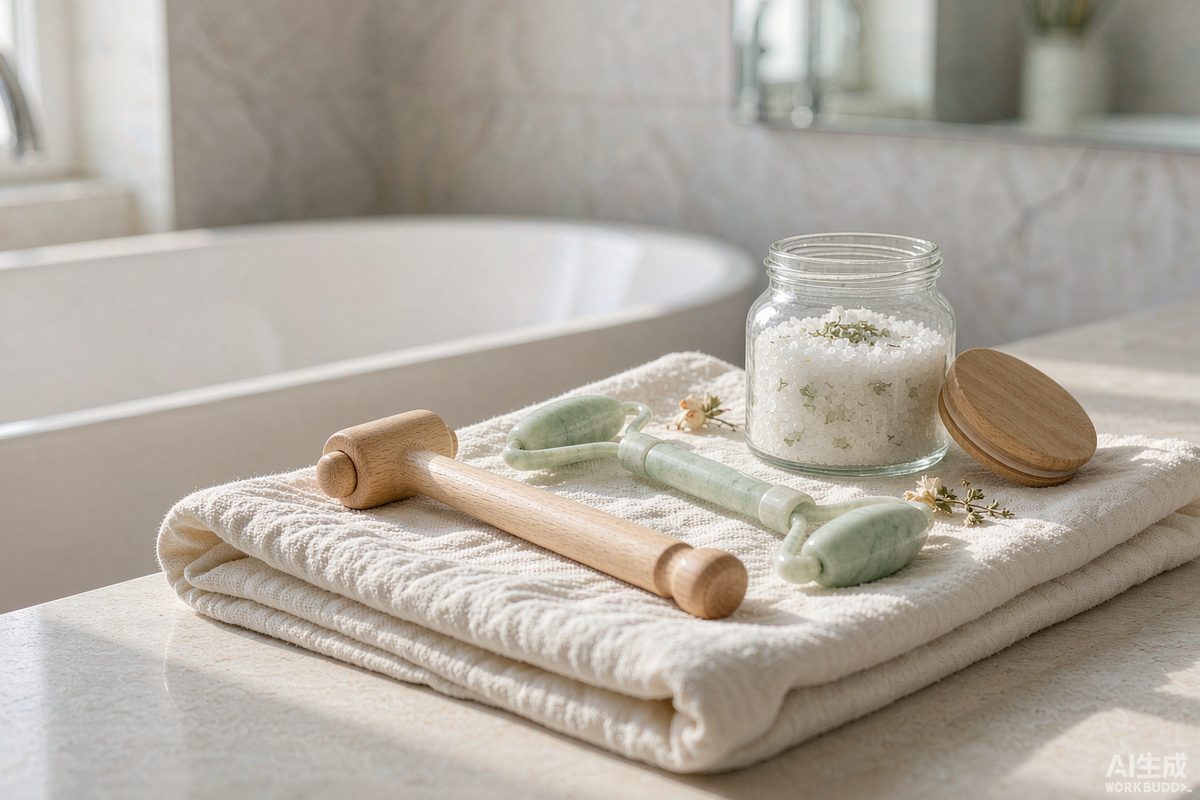
Before the products, the ritual that costs nothing and earns its keep: warmth. An evening foot soak in comfortably hot water, fifteen minutes; a warm morning shower aimed at a stiff heel before the first steps out of bed.
The classical warrant for this is older than the products by some distance — the Suwen observes that pain means the cold is abundant, and where there is cold, there is pain, which is a pre-scientific way of describing something every person with a morning heel already knows: the first steps hurt, and warmth is what buys them back. Modern tissue logic agrees with the old grammar.
Warm tissue is better perfused tissue; better-perfused tissue tolerates the day's loading with less complaint; a heel that has been warmed before it bears weight is simply a politer heel.
The image of warm water and bath salts and quiet ten minutes is easy to dismiss as pampering, and we would rather argue the opposite: it is the one item on this page with no failure mode, no sizing chart, and no returns pile. Heat will not change the shape of anything on an X-ray, and we will not pretend it will.
What it changes is the morning, and for most people in this category the morning is where the score is kept. Pair it with the gentlest movement on this list — a slow calf stretch against a wall while the kettle boils — and you have the whole classical prescription in miniature: warm the tissue, move it kindly, then load it like someone who intends to keep it.
One honest boundary around the ritual. Soaks and warmth are comfort measures with logic behind them, not treatments with trial numbers; there is no randomized study of evening foot baths against a spur, and there will not be one.
We include the ritual because it is free, safe, and aimed at exactly the tissue that hurts — and because a person who starts their day by solving their own heel tends to make calmer decisions at the checkout than a person who starts it in pain.
- Warm the heel before the first steps of the day — morning pain is the category's scoreboard, and warmth moves it first.
- Soaks are comfort measures with tissue logic, not evidence-graded treatments; their price, safety, and target make them the correct first shelf.
"Where there is cold, there is pain — and where there is a kettle, there is a treatment with no failure mode."
The Trial Favorite: Silicone Heel Cups
Here is the trial that anchors this list, run across fifteen foot-and-ankle centers with two hundred thirty-six people and a design that still reads well a quarter century later. Everyone with recent-onset heel pain did the same stretching program. Then each group added one thing: a silicone heel pad, a rubber heel cup, a felt pad, a custom polypropylene orthotic, or nothing.
Eight weeks later the improvement rates stood at ninety-five percent for silicone, eighty-eight for the rubber cup, eighty-one for felt, seventy-two for stretching alone, and sixty-eight — last, behind doing almost nothing — for the custom orthotics. Pool the prefabricated inserts and they beat both the stretching-only group and the custom group on formal comparison.
Sit with the ranking for a moment, because it is upside down relative to the market. The most expensive, most personalized option in the trial performed worst. The cheapest prefabricated items performed best.
The trial cannot tell you exactly why the custom orthotics lagged — the authors suggest the stiff custom shell may simply have lost to softer cushioning — but the practical read is hard to argue with: for an ordinary, recent heel complaint, a nine-dollar cup of silicone did the job better than the two-hundred-dollar device made for it.
What the cups are actually doing is humbler than any marketing page admits. They cushion the landing, contain the heel's fat pad so it stays under the bone instead of splaying, and shave the peak pressure off the attachment point where the fascia is angry. No realignment, no correction, no bone being addressed — because the bone is not the patient.
That is also why the category rewards simplicity: a squishy, well-fitted cup with no gimmicks beats a structured one, for reasons the trial predicted before the product pages were written.
- In the 236-patient trial, silicone heel pads led all five groups at 95% improved at eight weeks; custom orthotics finished last at 68%.
- The cups work by cushioning and containing the fat pad, not by correcting anything — buy the simple squishy version that fits your shoe.
"The nine-dollar cup beat the two-hundred-dollar orthosis. The scoreboard, unusually, is a randomized trial."
The Pantry Temptation We Declined
Every category in this aisle has its folklore, and the joint folklore lives in the kitchen and the supplement shelf: turmeric everything, vinegar wraps, the enzyme capsules whose marketing borrows more credibility from a 1970s textbook than from any trial run since. We want to be fair to the instinct, because some of it is not silly.
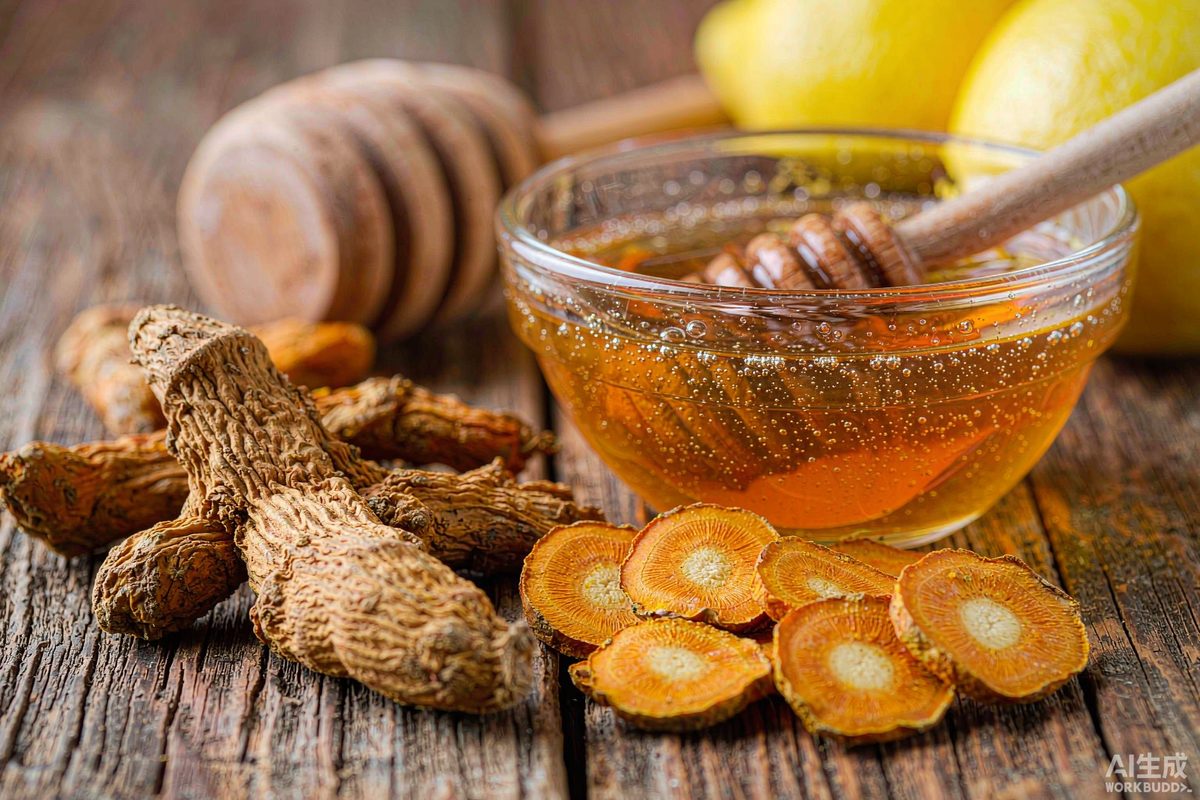
Curcumin has genuine published research on joint inflammation, and a honey-lemon-turmeric morning drink is a pleasant ritual with exactly zero downside. The honey and the turmeric in the photograph below have real jobs in a real kitchen.
What they do not have is any mechanism for touching the mineralized bone on an X-ray — nothing you eat does, and the sooner the dissolving-spur fantasy retires, the sooner the money flows to things that work on the tissue that actually hurts.
The same honesty applies in the other direction, which is where the tasting spoon of humility comes in. The tools that made this list have trial numbers but modest effect sizes; the pantry has anecdotes but no randomized evidence for spur pain specifically.
Neither shelf offers geology in reverse, and a reader who holds both to the same standard ends up holding, mostly, the two cheap inserts and a pair of boring shoes — plus a warm drink, if the drink makes the morning better, which has a value the trial design never captures.
What we actually declined, in order of how hard it was to decline: the dissolving-enzyme capsules, confidently sold, anatomically impossible; the copper-infused everything, whose periodic table-based pitch has survived every trial it has ever met; and the magnetic insoles, about which the kindest published word is inconclusive. All three remain popular.
Popularity, in this category, correlates with how frightening the diagnosis sounds — which is a marketing channel, not a result.
- No food, capsule, or cream dissolves mineralized bone; a substance that could would dissolve the bone you are still using.
- Curcumin has real joint-inflammation research but no spur evidence — enjoy the kitchen ritual for what it is, and fund the felt pads with the savings.
"The pantry is honest about what it is. It is the marketing pages that need the teaspoon of humility."
Felt Pads: The Eighty-One Percent Workhorse
The second insert in the fifteen-center trial, and the item we find ourselves recommending to the impatient and the thrifty alike: quarter-inch adhesive wool felt, sold in sheets, cut with household scissors into a horseshoe. Eighty-one percent of the felt group improved at eight weeks — behind silicone, comfortably ahead of stretching alone, and far ahead of the custom orthotics. The material costs less than lunch.
Nothing about its appearance suggests it belongs in the same sentence as a randomized trial, and the trial insists.
The skill is the product. A horseshoe of felt, hole cut slightly larger than the tender point, floats the sore attachment and makes the surrounding felt carry the load — offloading in its most literal, old-fashioned form. The classical tradition had a phrase for the principle: treat at the site of tenderness, with the dosage measured by the tissue's response. The felt horseshoe is that sentence made of wool.
It is also the only item on the list that lets you place the relief within a millimeter of where it is needed, which no molded product of any price can claim.
Its weaknesses are honest ones. Felt compresses, so the pad flattens over days and needs recutting; adhesive fails in sweaty shoes; and the aesthetic is hospital-corridor rather than boutique, which bothers some shoppers more than they admit. If you want a device rather than a craft, buy the silicone cups and stop reading.
But for a person willing to spend ten minutes with scissors every few days, the felt pad is the highest ratio of evidence to price in the entire category — and the daily fitting ritual, for what it is worth, teaches you more about your own foot than any orthotic ever will. There is a quiet argument for keeping both inserts on hand rather than choosing between them.
The silicone cups live in the shoe and ask nothing of you; the felt handles the days when the heel has a specific opinion about a specific spot, or when you are walking further than usual and want a millimeter of extra relief exactly there. Trial participants had to pick one arm, but nobody outside a protocol does.
The combined cost of both is still under twenty-five dollars, which in this category is a rounding error on the orthotics the trial ranked last.
- Felt scored 81% improved in the same trial that put silicone first — at roughly a tenth of the price of custom orthotics.
- Cut a horseshoe with the hole over the sore point, round the edges, and refresh it every few days as the wool compresses.
"Treat at the site of tenderness, said the Lingshu. The felt horseshoe is that sentence, cut from wool."
Shoes: The Counterintuitive Part
Now the finding that rearranged our own shoe rack. A gait study put thirty-one people with symptomatic knee osteoarthritis on a force plate in four shoe types and barefoot. The clunky, supportive, exactly-what-the-catalog-recommends shoes — the clogs and the stability runners — raised peak knee loads about fifteen percent above flat flexible walking shoes, flip-flops, or no shoes at all.
Flexibility and heel height, the authors concluded, are the shoe characteristics that matter to a loaded knee. The shoe most people buy when a joint starts complaining turns out to be the shoe that loads the joint hardest.
The logic underneath is mechanical rather than mystical. A stiff, supportive sole with heel lift and motion control keeps the foot from doing its own work, and the knee downstream pays for the arrangement in every step. A flat, bendable sole lets the foot articulate the way the species spent a few million years calibrating it to, and the knee's load curve settles back toward the barefoot baseline.
For a reader whose spur report lives in a heel, this matters differently: the same flat, flexible, roomy shoe is kinder to a sore heel's landings than a rigid rocker of a clog, and a wide toe box leaves the forefoot room to spread instead of concentrating every push-off under two metatarsals.
Two cautions so the enthusiasm stays honest. First, the study measured immediate gait loads, not years of symptom outcomes — the reasonable conclusion is about load, and load is a strong suspect in knee disease, but the study is a biomechanics result, not a cure announcement. Second, transition slowly.
Feet that have lived in stiff supportive shoes for decades need weeks to remember their own architecture; the first week of enthusiastic mileage in new flexible shoes is a well-known way to introduce yourself to your calf muscles. Buy the boring-looking pair, wear it an hour a day, and let the tissues join the project at their own pace.
A note on how to evaluate the purchase, because the shoe category is where marketing language runs thickest. Weight is a decent proxy: a true flexible walking shoe for everyday use tends to sit well under ten ounces. The bend test is better — hold the toe and the heel and twist; a shoe that resists twisting like a plank is a stability shoe wearing a walking shoe's label.
And read the drop figure if the brand prints it: anything over eight millimeters of heel-to-toe offset is quietly reintroducing the heel elevation the gait study flagged. None of these numbers guarantees comfort, and comfort still decides whether a shoe gets worn, but in this specific category the numbers and the comfort tend to agree more often than the catalog suggests.
- Clogs and stability shoes raised knee loads ~15% above flat flexible shoes in a gait lab — the supportive shoe is the knee's load problem.
- Transition to flexible shoes over weeks, not days; tissues adapted to stiff soles need time to remember their own job.
"The shoe that promises to support the knee is the shoe that loads it. The force plate does not care what the box says."
What We Would Buy, and What We Would Wait On
Condensed to one drawer: the silicone heel cups, sized to the shoe, replaced when they go slack; next to them the felt sheets and a good scissors, the two-dollar-per-month workhorse whose value is the millimeter-level fitting no molded product can match; and on the floor of the closet, the flat flexible walking shoes, adopted slowly, doing quiet knee arithmetic with every step.
The soak kettle sits on the counter because it is free. Everything else in the aisle — the enzymes, the copper, the magnets, the custom orthoses for an ordinary recent heel — waits until a clinician names a specific reason, which in our reading of the trial record is the correct shelf for all of it.
The pattern behind the drawer is worth naming, because it recurs across this whole site. The category wants to sell you interventions aimed at the most frightening object in the report — the bone — and the evidence keeps rewarding interventions aimed at the least dramatic one: the fat pad, the fascia, the load curve of a shoe.
The classical texts, offered a choice between a dissolving capsule and a warm foot plus a gentler week, would not have needed a force plate to choose. Their materia medica for aching limbs asks about what the body can hold and what it cannot — the magnetite entry governs joints too painful to carry things — and answers with warmth, circulation, and load made reasonable.
One question to leave the drawer with. If the two cheapest items in the trial beat the most expensive one, and a boring shoe outperforms the supportive one, what else in the joint-comfort aisle is priced by fear rather than by result?
Disclosure, in plain terms one last time: the links above carry our affiliate tag and a small commission to the site, the sorting was done against published trials before any product page was opened, and none of it makes us doctors. A heel that is hot, red, or swollen; a joint that locks; diabetes in the picture — close the tab, call the clinician, and the drawer will still be here after the appointment.