A Shelf Sorted Backwards
Most review lists for a catching finger begin with the exotic: vibrating rings, compression gloves with copper thread, battery-powered massagers shaped like a lobstery handshake. We began with the trial results instead, and the trials kept pointing at an object nobody photographs well — a molded plastic strip worn to bed. That inversion set the shape of this list.
The splint comes first because the evidence puts it first. Heat comes next because it makes the worst hour of the day survivable while the splint does its slow work. The stretch tools come last, with the most qualifications attached, because the newest trials on exercise for this specific condition came back flat.
A word on what this list is not. It is not a treatment plan, and we are not the people to write one; a finger that locks, a palm that is hot and spreading tender, or a hand with diabetes attached to it belongs in front of a clinician, full stop.
What follows is a sorted shelf for the ordinary version of the problem — the finger that clicks on coffee presses and hesitates on stair rails — with each product's honest evidence load spelled out.
The organizing principle, borrowed from the trials themselves, is wear time. Nearly every intervention in this category works by interrupting a friction loop that runs all day, and the objects that get worn or used consistently beat the objects that get admired and abandoned. Buy accordingly. A note on how we chose the three items at all, since the category is crowded with things we left off.
Copper-thread gloves did not make the list because the copper has never been shown to do anything a cotton glove does not. Vibrating massagers did not make it because vibration is a sensation, not a documented intervention for a stenosing sheath.
Compression gloves overlap with a genuine evidence base for arthritic hands, but arthritis is a different disease with a different shelf, already covered elsewhere on this site. What remains is a short list of objects whose mechanisms map directly onto the condition's actual loop — friction, inflow of fluid, and the flexed posture that feeds both — and whose prices stay in lunch territory. That is not a coincidence.
The condition is mechanical, so the tools that help are mechanical too.
- The list is ordered by evidence weight: splint first, heat second, exercise last with the heaviest caveats.
- Wear time beats feature count in every study we read — comfort and convenience are functional requirements, not luxuries.
"Nobody puts the winning splint in a product video. It looks like a hospital. That is roughly what it is."
The Splint That Earns Its Drawer Space

The case for the night splint rests on a study from Massachusetts General Hospital that followed people with recent-onset trigger digits — symptoms under three months, mild to moderate on the catching scale — who wore a custom hand orthotic at night for six weeks.
Of the thirty-four who managed at least six weeks of wear, triggering resolved completely in fifty-five percent, and the group as a whole logged substantial improvements in pain and disability scores. Those who did not resolve moved on to injection without having lost anything except time.
Later trials have reached the same neighborhood: a 2024 randomized comparison found a joint-blocking orthosis fully resolved symptoms in over half of its group at six weeks, while the hand-therapy-only comparison arm produced no full successes. Half a condition, gone, from plastic worn while unconscious.
Shopping for one is where the category gets messy, because the designs divide along a fault line that matters. Knuckle-blocking splints hold the finger straight at the base and are the style used in several trials; middle-joint rings are slimmer, less obtrusive at a desk, and in some comparative work better tolerated, which feeds directly back into wear time.
Our practical advice runs: buy for the affected finger's size — most listings carry a sizing chart, use it, and measure at night when hands are their swollen worst; prefer rounded, fully enclosed edges over exposed aluminum; and check that the padding is closed-cell foam rather than fabric wrap, which loosens within a week. A splint you adjust once and forget is the goal.
A splint you re-tighten nightly is a habit you will quit.
Two failure modes deserve naming. Thumbs need differently shaped splints, and a generic finger design contorted around a thumb will neither fit nor stay. And anyone whose finger is already locked — will not straighten even with help — is past the splint's jurisdiction and should go directly to a clinician rather than a cart.
- Trial benchmarks: 55% complete resolution in a six-week night-splint series; a 2024 RCT found orthosis resolved 53.6% versus zero in the therapy-only arm.
- Measure the finger at night, prefer closed-cell foam and rounded edges, and treat any design you have to re-adjust daily as the wrong design.
"The splint's entire job is eight hours of nothing. It is the only product here priced like a lunch and dosed like a habit."
What the Studies Measured While You Slept
It is worth pausing on why a night device outperforms intuition, because the reasoning determines how you use everything else on this list. Trigger finger is a loop: a swollen point on the tendon, a fixed narrow ring in the palm, and friction between them repeated thousands of times daily. Daytime splinting interrupts the loop but collides with work, typing, and everyone's patience.
Nighttime splinting has a quieter genius — it targets the hours when the loop is worst anyway. Fingers curl in sleep, the tendon sits pressed against the pulley for eight hours, fluid pools in the irritated sheath, and the first grips of the morning are the ones that catch.
Wear a blocking splint through exactly that window and you have removed the worst shift of the tendon's working day without moving a single meeting.
The numbers across studies cluster in a range worth internalizing: success rates for various blocking splints run from roughly half to the high ninety percentiles depending on design, severity, and how generously success is defined, with full-time wear outperforming night-only but at real cost in comfort and compliance.
Six weeks is the minimum course, not a suggestion; tendon tissue remodels on a schedule measured in weeks, and the people who resolve are almost always the people who forgot they were wearing the thing. Adherence, not hardware, is where these programs die — which is why the review's whole philosophy reduces to one instruction: choose the most boring splint you will actually keep putting on.
The classical literature, for once, agrees with the protocol sheet without translation. The sinew-channel texts treat a bound, knotted sinew as a thing to be settled where it hurts, and their timetable for sinew disorders is weeks of quiet, not days of effort. Two thousand years apart, the advice converges on the same prescription: Compliance is the treatment.
Selection matters as much as consistency, and the trials are unusually clear about where the boundaries sit. The night-splint series enrolled fingers that were recent-onset and mild to moderate — Quinnell grade one or two in its language — which means the fifty-five percent figure describes early disease, not hands that have been catching for a year.
The 2024 orthosis trial restricted enrollment to idiopathic cases and excluded the already-stiff. Neither study tested the splint against a locked finger, a thumb in severe grade, or the diabetic hand that the epidemiology says is the toughest customer in the waiting room.
Read the success rates as a claim about early, ordinary trigger fingers — for those, the numbers are strong enough that several reviewers now rank splinting alongside injection as a first-line choice — and as silence about everything else.
- Night splinting targets the eight hours when morning stiffness is manufactured — the same hours a curled hand presses tendon against pulley.
- Six weeks minimum. Tendon remodeling runs on a weekly clock; stopping at week two restarts the meter.
"The splint works while you dream and loses while you reconsider. Compliance is the treatment."
Heat First: The Mitten and the Kitchen Shelf
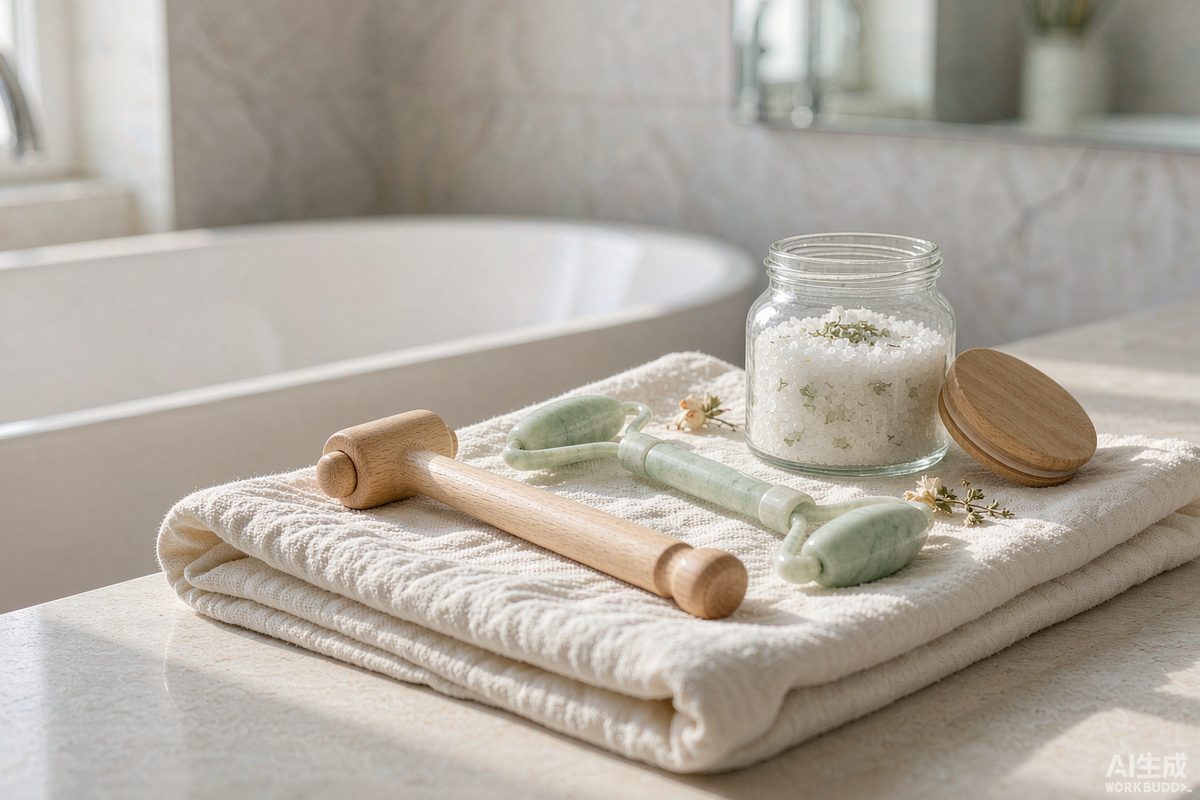
Heat is the oldest tool in the hand-pain drawer and the one with the most pleasantly underestimated trial record.
The strongest data comes from hand osteoarthritis rather than trigger finger specifically, and honesty requires the distinction: a single-blinded randomized trial of paraffin bath therapy — the clinical ritual of dipping hands in warm wax — followed fifty-six people for twelve weeks and found the heat group improved in pain at rest and during daily activities while preserving grip and pinch strength that measurably declined in the untreated group.
No equivalent trial exists for trigger finger alone. What transfers is the biology: warmed tissue holds more fluid movement, tolerates gentle motion, and registers less pain doing both, which is why a heat station stands by the door of nearly every hand therapy clinic on earth.
For home use, the paraffin bath's domestic cousin is the microwavable mitten — clay or flax beads sewn into fabric, ninety seconds of microwave, ten to fifteen minutes worn over the whole hand. It trades some of the wax bath's enveloping thermal contact for total convenience: no melting, no cleanup, no burn risk from dipping, and a shape that covers the palm crease where the A1 pulley actually sits.
We look for three things in a good one: a wrist closure so the heat stays put instead of venting at the cuff, a removable washable liner because nine minutes of warm hand plus tea is a routine that generates crumbs, and fill that drapes rather than packs.
The kitchen earns its place on the same shelf. Warm water on waking — a bowl, not a task, a minute of slow finger opening and closing underwater — is the free version of the same physiology, and the classical tradition would approve of the timing: blood returning to the sinews after sleep, the hand asking for nourishment before labor.
Turmeric in the morning pan, honey and lemon instead of a third coffee — none of it is treatment, all of it is atmosphere that makes the six weeks livable.
- Paraffin's RCT evidence is for hand osteoarthritis; for trigger finger, heat is comfort and preparation, not a proven resolver — the extrapolation is honest biology, not statistics.
- Microwavable mittens: adjustable wrist closure, washable liner, draping fill. The ritual is heat, slow opening, then the day — not heat, then forceful prying.
"Warmth does not fix the pulley. It makes the first hour of the fix survivable, which in practice is most of the fix."
The Stretch Web: Buy It for the Right Reason
Every aisle needs an honest skeptic's section, and for this condition it belongs to exercise gear. The elastic finger webs and extension bands — loops that spread the fingers outward against resistance — are pleasant objects with an evidence file that should humble them.
A 2024 randomized trial set a joint-blocking orthosis against a structured hand therapy program in adults with idiopathic trigger fingers and reported full symptom resolution in over half the orthosis group and none in the therapy group.
The following year, a trial of structured finger gliding exercises added after steroid injection — seventy-six participants, twenty-four weeks, good compliance — found no measurable benefit on pain, catching severity, recurrence, or any other endpoint the investigators tracked.
That is the record. It does not make stretching harmful, and it does not make the web useless; it makes the web a tool with a narrow, specific job that its marketing does not usually describe. Modern hands close constantly and open almost never — keyboards, handles, phones, grips — and the extensor side of the hand does the muscular equivalent of standing in a doorway all day.
For a person spending six weeks in a night splint, a light morning spreading routine keeps the resting fingers moving and addresses the open-close imbalance that plausibly feeds the whole family of hand complaints. That is a real benefit.
It is simply not the benefit the product page claims, and the distinction matters because people buy the web instead of the splint, exercise diligently for a month, stay caught, and conclude correctly that they were sold the wrong primary tool.
If the budget allows exactly one purchase, the splint takes it without a contest. If the budget allows two, the web earns the second slot as posture and balance for a hand in recovery — used gently, in the morning, after warmth, with no illusion that repetitions are dissolving a nodule. Resistance bands do not widen tunnels. Nothing we reviewed does, except time. One more honest wrinkle belongs here.
The gliding trial that came back null tested exercises layered on top of an injection — a context where both arms were already receiving active treatment. Whether gliding routines help the unsplinted, untreated, mildly catching finger has not been tested head-to-head at all, and the older observational work that first popularized these routines was never randomized.
The safe reading of the file is not that movement is worthless. It is that the specific claim of exercise as a standalone fix for an active catch outruns the studies actually run.
- Trial reality check: therapy alone resolved no cases in a 2024 RCT, and gliding exercises added nothing to injection over 24 weeks in 2025.
- Use the web as morning extensor balance during splint treatment — not as a substitute for the splint or a cure for the catch.
"The web is good at its real job and fictional at its advertised one. Both statements fit in the same shopping cart."
Sizing, Thumbs, and the Returns Pile
The category's return pile, judging by the reviews we combed, is built from three avoidable mistakes. The first is sizing by guesswork: finger splints come in graded widths, hands swell toward evening, and a splint fitted on a cool morning at a desk will slide or bite at midnight. Measure the affected finger and the palm circumference at the end of the day, then buy against the chart rather than the mood.
The second is the thumb exception. Trigger thumb is common — often the most common presentation — and it does not tolerate generic finger splints; the thumb's geometry needs a design built for it, with the strap pattern wrapped around the base joint rather than along a finger line. Ordering a finger design for a thumb is the most reliable way to fund the returns pile personally. The third is over-buying rigidity.
The goal is blocking one joint's extreme range, not casting the hand; rigid metal frames with adjustment dials solve problems most readers do not have and introduce pressure points most readers will.
Beyond hardware, a note on the people wearing these things. Someone whose finger locks solid and requires the other hand to open has outgrown conservative shelf-shopping for the moment.
So has anyone with swelling, redness, or heat in the palm; any hand that is changing quickly; and every reader with diabetes, whose version of this condition is documented to be more aggressive and whose treatment choices benefit from a clinician's input earlier rather than later.
Rheumatoid and other inflammatory conditions also rewrite the shopping list entirely, because the joint story is different even when the clicking sounds identical.
And the universal disclosure, stated plainly: this is an editorial synthesis with affiliate links, not medical advice, and we earn from purchases without endorsing them as treatment. The splint is cheap, the evidence is real, and neither fact makes us doctors.
- Measure at end of day, buy thumbs their own design, and prefer simple blocking over rigid adjustable frames.
- Locked fingers, hot swollen palms, diabetes, or inflammatory arthritis move this from a cart decision to a clinician conversation.
"Three sizing errors fund the entire returns pile. All three are avoidable with a tape measure and a pause."
What We Would Buy, and What We Would Wait On
Condensed to a single drawer: the plain single-finger night splint, sized properly, worn for six weeks with the discipline of someone who understands that compliance is the active ingredient. Next to it, the microwavable mittens, because the fifteen minutes they buy at dawn make the other five and a half weeks tolerable and their clinical cousin has real trial results behind it.
The stretch web sits on the third shelf, bought knowingly — a morning balancing tool for a hand in recovery, not a cure. Everything else in the aisle — the copper, the vibrators, the compression promises — waits until a hand therapist names it, which in our reading of the evidence is the correct shelf for it anyway.
The deeper pattern in this category is how badly it wants to be exciting and how completely the evidence refuses. Trigger finger resolves, in a majority of early cases, under conditions of patient, repeated boredom: the same splint, the same hours, the same warm-water mornings, the same gentleness with the pruning shears. There is a classical echo here that we keep returning to.
The sinew tradition holds that sinews are nourished slowly, by blood, over weeks of quiet, and that a bound sinew is settled rather than fought. The modern trials, run with registries and randomization, keep arriving at the same instruction through different machinery.
One question to leave the shelf with: if the fix for a hand that grips too hard and rests too little is six weeks of enforced rest, what does that say about the grip itself? The splint answers the finger. The answer to the schedule that produced it lives outside the drawer, and the trials, characteristically, have nothing to say about that part.
Disclosure, in the same plain terms: the links above carry our affiliate tag, which means a purchase routes a small commission to the site at no added cost to you, and that arrangement does not change the sorting, which was done against published trials before any product page was opened. If a finger is locked, a palm is hot, or diabetes is in the picture, close this tab and call the clinician first.
The drawer will still be here after the appointment, and the splint will probably still be the recommendation.