A Shadow With a Reputation
The report usually arrives in one flat sentence. Degenerative changes noted; small spur present. Nothing about how you slept, or whether the heel has ached for a year, or what you were doing when it started. Just a name for a piece of extra bone that has apparently been growing on you without permission. For a lot of people this is the moment a vague stiffness becomes an identity: someone with a spur.
The word itself does damage. A spur is what you put on a horse to make it move, and there is something vaguely violent about the image — a hook of bone digging in with every step.
What the imaging actually found is usually more boring and considerably more interesting. An osteophyte — the general term — or an enthesophyte where tendon and fascia anchor into bone — is the skeleton's own patching work, new bone laid down where load concentrates at a joint margin or an attachment point. The body grows it on purpose.
Not on purpose the way you decide to build a fence; on purpose the way a callus forms on a working hand. Tissue that has been asked to handle more force than the design brief intended responds by adding material, and bone, being bone, adds bone.
That reframing is not a feel-good trick. It changes what you do about the thing. If the spur is a repair response, the questions worth asking are what it is repairing for, whether the repaired area actually hurts, and what the surrounding tissue needs — because the honest answer, developed through the rest of this piece, is that the spur itself is frequently innocent.
One caveat up front: this is a synthesis of published research and classical texts, not a reading of your X-ray. Films come with context, and a clinician who has looked at the joint beats any article, including this one.
Bone That Listens to Pressure
Bone is not masonry. It is living scaffold in a constant renovation project, torn down and rebuilt according to the forces it meets. Load it sensibly and it densifies; stop loading it and it thins; load it in one stubborn direction for years and it thickens exactly there. An osteophyte is what that third rule looks like at a joint edge.
Cartilage has thinned a little, the joint has loosened a fraction, the pressure map has shifted, and the bone along the margin quietly builds a lip to spread the new load over more surface. At the heel, where the plantar fascia anchors, repeated traction and compression at the attachment can produce the well-known calcaneal spur — new bone bridging out along the lines of stress.
Researchers who have studied heel spurs up close describe them not as traction injuries pulling the fascia off the bone but as an adaptive skeletal response — a buttress, deeply anchored in fibrocartilage, that redirects impact forces away from the calcaneal attachment and into the surrounding tissue. The trabecular pattern inside the spur matches a vertically directed ground force.
In plain terms, the bone read the traffic, and built a wider road.
Which leads to the sentence this whole subject turns on: the spur is evidence of a load history, not a diagnosis of damage. It is the receipt, not the crime. And receipts do not hurt. A joint margin can grow its lip and the owner never feels it; a fascia can be angry and inflamed with no spur in sight.
The generation of the word should also temper the panic — most of these growths are measured in millimeters, formed over years, and about as fast-moving as geology. Nothing about an ordinary spur is an emergency, and very little about it responds to urgency.
- An osteophyte is adaptive bone laid down where load concentrates — a record of force, not a foreign body.
- Heel spurs form along the direction of stress at the fascia attachment and are built to redirect load, not to stab.
"The bone read the traffic and built a wider road. Nobody asked the driver whether the detour would hurt."
The Quiet Majorities
Here is the finding that should sit next to every spur report: spurs are enormously common in people who feel fine. A Swiss radiology team scanned the heel attachments of seventy-seven volunteers with not one symptom between them — average age forty-eight, no heel pain, recruited precisely because their feet were quiet. On MRI, nineteen percent had a calcaneal spur. Not on the painful side of some comparison group.
In the asymptomatic population itself. The same study found signal changes and edema patterns in a meaningful fraction of these painless volunteers too, and concluded that such findings should be used with caution when diagnosing plantar fasciitis. Some fraction of the population is walking around on spur-bearing heels and has never given the matter a thought.
The knee tells the same story from the other direction. A systematic review that pooled population studies of knee pain and knee X-rays found the relationship between the two almost embarrassingly loose: among people with knee pain, only fifteen to seventy-six percent had radiographic osteoarthritis on their films; among people whose films showed osteoarthritis, only fifteen to eighty-one percent reported pain.
Either way you cross the bridge, you can be standing on the wrong side. Pain without pictures, pictures without pain.
Both findings counsel the same humility. An X-ray is a snapshot of structure, and symptoms live in tissue, load, sleep, temperament, and time. The authors of the knee review put it plainly: x-ray results should not be used in isolation when assessing an individual patient.
If your report mentions a spur but your foot or knee has opinions of its own, the two facts are related by a very long, very loose thread — and it is worth knowing which end of the thread your discomfort is actually tied to before you start treating the picture instead of the person.
So Why Does It Hurt? Follow the Soft Stuff
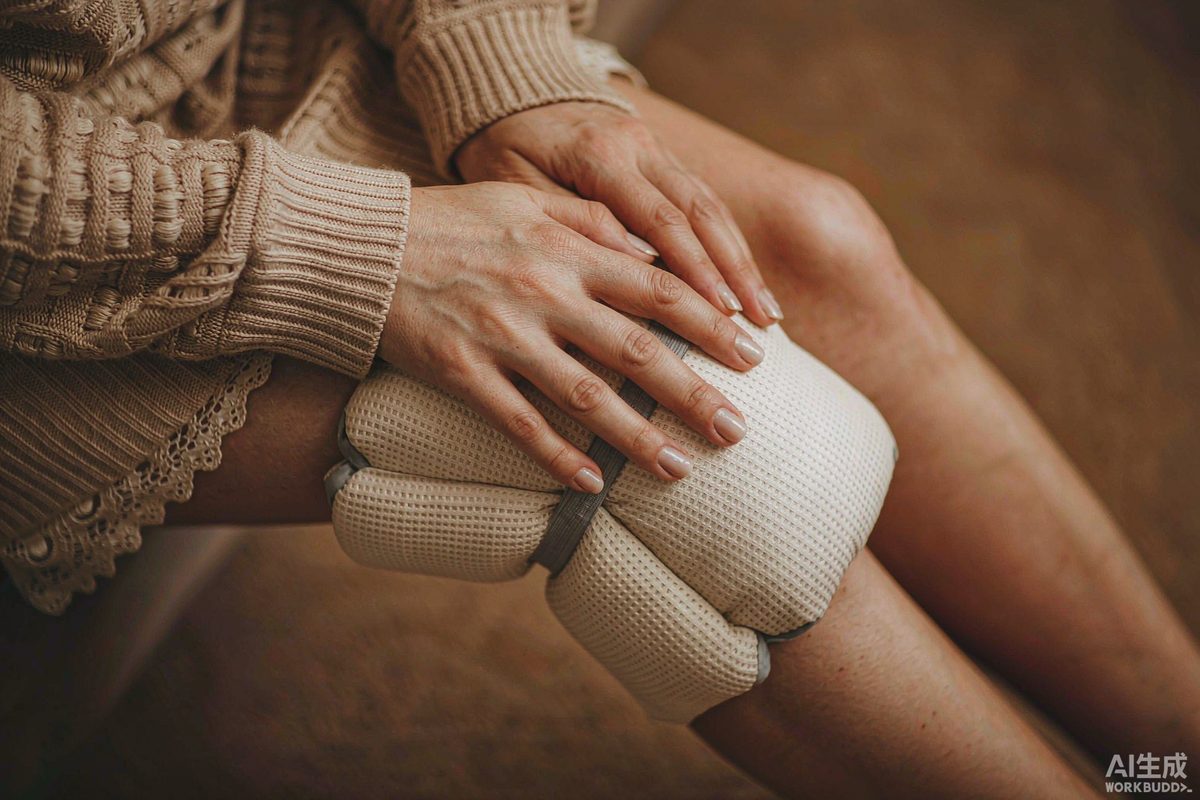
If the spur is usually innocent, who is guilty? Almost always: the soft tissue. The heel pain of plantar fasciitis lives in the fascia — a thick band of connective tissue that has become degenerated and irritated at its attachment, often without any spur involved. Under the heel, the fat pad that cushions every step can thin with age and take over the complaint.
Around a spur-happy knee, the pain map covers joint lining, capsule, the tendons crossing it, and the bone beneath the cartilage. Bone marrow lesions, synovitis, pericapsular strain — the modern imaging vocabulary of osteoarthritis pain is a soft-tissue vocabulary, and the osteophyte is mostly scenery.
This has a practical consequence most people discover by accident. The things that calm an angry heel or a sore knee — warmth, gentle movement, unloading, time — act on the soft tissue, not the bone. Warmth moves fluid and softens tissue and buys a painful morning an easier first hour.
Graded movement keeps the fascia and the joint lining fed, because connective tissue has almost no blood supply and depends on motion to circulate its nutrients. Rest that goes on too long stiffens exactly the structures that were complaining, which is why the advice so often lands on keep moving, just more gently.
The classical tradition drew its own map of this terrain. Bone and joint complaints that worsen with cold and damp were filed under bi — obstruction — and the texts are strikingly concrete about where the suffering lives: in what the joint does, in stiffness on waking, in aching that weather moves.
Read the ancient complaints and you find people describing morning stiffness and cold-sensitive aching, the very signature of the soft tissue around a joint, spur or no spur. The old doctors never saw an X-ray. They did not need one to notice that the painful thing was rarely the thing the eye could see.
- The pain generators around a spur are soft tissue — fascia, fat pad, capsule, synovium — and first-line care targets those, not the bone.
- Warmth and gentle graded movement are comfort measures with logic behind them: they act on exactly the tissue that is actually angry.
"The spur is scenery. The play is happening in the soft tissue around it."
What the Trial Record Actually Says Helps
If the spur is a load receipt, the trials ask a useful question: what happens when you change the load? The Arthritis, Diet, and Activity Promotion Trial — ADAPT, eighteen months, three hundred sixteen overweight adults aged sixty and older with knee osteoarthritis — tested it directly. Everyone kept their spurs, their joint space narrowing, whatever their films said.
One group got exercise, one got diet, one got both, one got general healthy-lifestyle attention. The diet-plus-exercise group improved in self-reported physical function, in distance walked in six minutes, in the time it took to climb stairs, and in knee pain, all significantly better than the healthy-lifestyle group. The weight change was modest — about five point seven percent of body weight — and it was enough.
Notice what the winning intervention did not do. It did not remove bone. It did not target the osteophyte on the X-ray, because you cannot target it; it is the endpoint of a load story, not a lesion with a handle. What it did was reduce the load coming through the joint by a few pounds and strengthen the muscles that share that load, and the joint — soft tissue, lining, movement patterns and all — quieted down.
The diet-only group, interestingly, was not distinguishable from the control group on function or pain; it was the combination that carried the trial.
There is a lesson here about the order of operations. For most spur-adjacent complaints — the aching heel, the grumbling knee — the evidence-backed first moves are unglamorous: reduce the load a little, strengthen what shares it, keep the tissue warm and moving, give it weeks. Imaging has a role when pain changes character, when a joint swells or locks, when red flags gather.
As a routine first step, for a symptom that matches the boring pattern, the films mostly add anxiety without adding information. The trial record keeps rewarding people who work on the load before they work on the picture.
The Dissolving-Spur Aisle
Where fear concentrates, products appear. Search the phrase and you will find enzymes that claim to dissolve bone spurs, herbal drops, creams with striking testimonials, insoles marketed as spur erasers, and supplements whose before-and-after X-rays have a suspicious habit of being the same film twice.
It is worth stating the mechanics plainly: mineralized bone, formed deliberately by your own osteoblasts along lines of stress, is not dissolved by anything you swallow. A substance capable of dissolving calcified bone would have to be capable of dissolving the calcified bone you are still using. The skeleton, as a system, has strong opinions on the subject.
The marketing exploits a real ambiguity that this article has been circling: sometimes the spur-bearing area does hurt, and sometimes the spur is surgically removed — and sometimes removal helps, because the operation addresses the tissue around it or the genuine mechanical conflict a large, weight-bearing spur has created.
What the surgery does not support is the general claim that spurs are the cause of most heel and joint pain, or that anyone can tell from a report alone. The population data say the opposite: spurs populate asymptomatic people at double-digit rates, and pain populates clean films just as freely.
A word of fairness before the mockery hardens into contempt. The people buying dissolvers are not fools; they are in pain, and pain that a specialist calls mechanical and self-limiting still has to be slept on.
The honest shelf for them holds the boring things — load reduction, conditioning, warmth, time, and a clinician when the pattern stops being boring — and the dishonest shelf holds whichever bottle promises geology in reverse. The distinction is not between caring and not caring. It is between spending money on the tissue that hurts and spending it on the shadow that does not.
- Nothing you swallow dissolves mineralized bone; any product claiming to erase a spur is selling against anatomy.
- Genuine spur surgery exists but is a tissue-and-mechanics operation for specific cases — not a general answer, and never the first one.
"Geology does not run in reverse, and nothing in the supplement aisle has repealed that rule."
The Bone Bi Reading
The classical texts assigned bone to the kidney. Not the anatomical organ — a whole functional system that governs growth, maturation, and the slow reserves of the body, of which bone is the most visible ledger. The Suwen states it in one line: the kidney's association is bone, its flourishing shows in the hair.
In this grammar, an extra piece of bone is not an invader but a project of the bone system itself — which is why the tradition would have been entirely unsurprised that spurs turn up in people who feel fine. A system building reserve and reinforcement is doing its work whether or not anyone complains.
For the painful version, the texts have a precise vocabulary: bi, obstruction, the pattern of aching, heaviness, and stiffness that cold and damp worsen.
The Bi Lun chapter names the bone-deep form specifically — the pattern met in winter is bone bi — and adds a warning with real clinical weight: obstruction that goes unrelieved and is met by further pathogenic factors will, over time, lodge deep and implicate the kidney system itself. Read as instruction rather than cosmology, the message is about trajectory.
A joint problem treated as a nuisance for a decade, while the loads and the system behind it go unaddressed, does not stay a local problem. The tradition files spurs under chronicity, and chronicity under system maintenance — warmth, circulation, graded use, and the slow nourishing of the tissues rather than war on the bone.
The materia medica agrees by omission. The Shen Nong Ben Cao Jing entry for gou ji — the rhizome later doctors reached for exactly in these presentations — governs stiffness of the lower back, slackness and spasm of the joints, pervasive bi, cold-damp knee pain. Every verb is about how tissue moves and feels. There is no verb about removing bone, because there was no such verb in the tradition.
The pharmacology of the classics works on the living problem: what hurts, what is cold, what will not move.
Living With the Extra Bone
So the practical picture, assembled. The spur on the report is, in the ordinary case, your skeleton's own load patching — common in the painless population, loosely tied to symptoms, and not dissolvable by anything sold in a bottle. The pain that sent you to the X-ray lives, usually, in soft tissue that responds to load reduction, conditioning, warmth, and weeks of patience.
The single best-supported intervention in the trial record for the achy, spur-adjacent knee combined modest weight loss with regular movement and beat every passive comparison. For the heel, the same logic holds in miniature: softer landings, gentler mornings, tissue that gets stretched and strengthened rather than braced against its own complaint.
None of this makes every spur ignorable. A spur that is large and weight-bearing, a joint that locks or gives way, a heel that swells or turns hot, pain that wakes you at night or marches quickly worse — those are clinician conversations, and some of them are urgent ones. A single hot, swollen joint needs same-week attention. Diabetes rewrites the rules for feet in ways this article cannot.
And any treatment plan built around an image, rather than around the person the image came from, should be re-examined from the ground up.
The reader with the highlighted report eventually sent a second letter. Her heel still did not hurt; her walking had never stopped. What changed was not her foot but the sentence in her head — from something is growing wrong with me to my heel built reinforcements for the walking I asked of it. That is closer to what the data show than the first sentence was. The extra bone is a record of a life under load.
The interesting question, and the open one, is not how to erase the record but what the rest of the body would like the next few years of that record to say.