The Kettle Test
Nobody remembers the moment it started, because nothing happened. That is the first strange fact about a bad outer elbow: there is no fall, no twist, no dramatic rep at the gym to blame. There is only a morning when pouring from the kettle sends a thin, precise line of pain down the outside of the forearm, and you find yourself using two hands for a jug you have owned for years.
The grip goes quiet in a particular order. Lifting a full mug with the palm down — worse. Turning a doorknob — sharper. A handshake, of all things, can make a grown adult plan an escape route. Shaking out a bedsheet becomes a project. And yet the elbow itself bends and straightens fine, which convinces most people the problem must be minor. It is not minor.
It is just specific: the common extensor tendon, the strap of tissue anchoring the forearm muscles that hold the wrist against gravity, has been asked to do the same job too many times without repair breaks, and it has started billing for the shortfall.
Despite the name, the large majority of people with this condition never touch a racket. It belongs to desk workers and carpenters, cooks and knitters, new parents hauling a car seat — anyone whose weeks stack small repeated wrist-and-grip efforts on top of each other. Chinese medicine gave it a name with no sport in it at all: zhou lao, elbow strain. Labor, in the old word, meaning accumulated work, not injury.
The framing is accurate enough that modern tendon research arrived at roughly the same conclusion a couple thousand years later.
What follows is what that research actually shows — including one of the more humbling randomized trials in sports medicine — what the classical texts add, and what a realistic recovery month looks like when the kettle has started making demands.
- Outer-elbow pain when lifting palm-down, gripping, or shaking hands is the classic pattern of lateral epicondylitis — often with no injury to point to.
- The bend of the elbow is usually fine; the problem lives in the tendon strap on the outside, which complains during grip.
- Most cases occur in people who never play tennis — desk work, tools, cooking, and carrying are the usual authors.
"Nothing happened, and that is the point: tendon problems are written in small characters over a long time, then read out loud on an ordinary morning."
Warm Hands, Then a Verdict
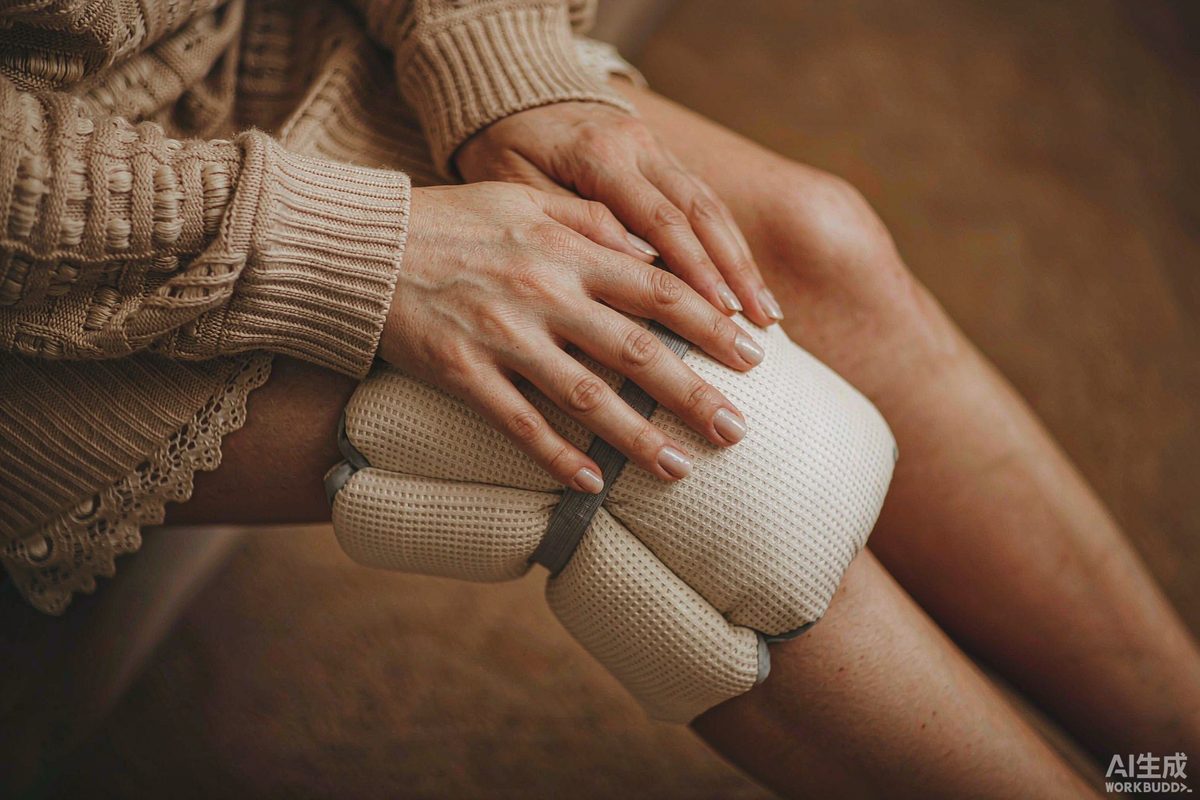
Before anything else, a word on warmth, because the advice column wars over ice have confused a simple picture. A tendon that has been ground down by overuse is a tendon with cranky, guarded muscle around it and sluggish local circulation. Warmth — a shower run over the forearm, a wrap while the morning tea steeps, five minutes with a heat pack before any stretching or gripping — does not repair anything.
What it does is lower the volume. Warm tissue is less defensive tissue, and everything that follows in a tendon program works better on a forearm that has been warmed than one that starts cold and braced.
Chinese household medicine never really dropped this step, for reasons that hold up physically even if you skip the theory. An ache that worsens in cold weather and eases with heat fits the classical pattern of cold binding the channels, and the traditional answer is patient warmth applied where the complaint lives.
The old texts pair the warmth with the tender spot itself rather than with some distant point, which is worth noticing: the clinical instinct of pressing right on the sore bit is several thousand years old and survives in every modern hand-therapy clinic under a newer name.
What warmth is not is the treatment. This distinction matters more for elbows than for most joints, because the popular alternative — rest the arm entirely, ice it when it complains — is precisely what the evidence does not support.
A tendon starved of load does not heal into toughness; it heals into a tendon that is even less prepared for the kettle, the doorknob, and the handshake, and it announces this the first week you return to normal life. The trials that settle this belong a few sections ahead. The short version, for the impatient: a sore tendon wants careful reloading, and rest is a painkiller pretending to be a plan.
- Warm the forearm before any exercise or stretching — a shower, a wrap, five minutes of heat. Warm tissue moves with less complaint.
- Heat is the opener, not the fix. Ice and complete rest lower pain short-term but do nothing a tendon can build on.
- The old texts and the modern clinics agree on the first instinct: press where it hurts, warm what complains.
Tendon, Not Inflammation — and Not the Nerve, Either
The suffix in epicondylitis means inflammation, and the suffix is wrong, which is why many clinicians now say tendinopathy or tendinosis instead. Under a microscope, a chronically angry outer elbow shows almost no inflammatory cells.
What it shows is disarray: tendon fibers that once ran in crisp parallel bundles now resemble a dropped deck of cards, thinned, frayed, and threaded with scrappy little new blood vessels and nerves that grew in to supervise the mess.
The pain is real, the tissue is genuinely altered, but there is no fire to put out — which is why anti-inflammatory pills and injections disappoint over the long run and why treatments that remodel tissue do not.
Two neighbors need ruling out, because treating the wrong one wastes months. Pain that burns a little lower, toward the forearm muscle belly, and comes with odd numbness or tingling on the back of the hand may be the radial nerve getting pinched as it passes the elbow — a nerve problem dressed in tendon clothing.
Pain that wanders up and down the arm, especially with neck stiffness or tingling into fingers, points the suspicion at the cervical spine, which refers to the elbow the way a bad boss refers work. A couple of tests in a clinician's room sort these out faster than any scan.
One honest word about imaging, since someone will offer an ultrasound. Picture findings and pain correlate poorly in tendons — painless elbows can look frayed and agonizing ones surprisingly tidy — so a scan confirms what the exam already suspects and changes little else.
The exam itself is short and damning: tenderness on the bony point, pain when the wrist bends back against resistance, a grip that fades when the arm is held out straight. The elbow tells on itself. It does not need a photograph to do it.
- Chronic tennis elbow is tendon degeneration, not inflammation — which explains why anti-inflammatories disappoint over months.
- Nerve irritation (radial nerve, or referred neck pain) mimics tendon pain; tingling or neck stiffness shifts the suspicion.
- Scans add little: frayed-looking elbows can be painless and tidy ones agonizing. The bedside exam carries more information.
What the Trials Actually Show: Load Beats Rest
The most instructive tennis elbow trial ran in 2006, and its losers list is long. Researchers in Brisbane split 198 people with true lateral epicondylitis into four groups: physiotherapy involving exercise and a specific manual-therapy technique, a corticosteroid injection, both together, or nothing but reassurance and a leaflet.
The injection won the short game — at six weeks, the steroid groups reported the least pain, and their advocates were no doubt pleased. Then the picture inverted. By a year, the steroid groups had the worst outcomes of all, with substantially more recurrence and relapse than the groups that had been merely told to wait, let alone the groups that exercised.
The shots had borrowed relief from the future at a punishing interest rate.
Exercise, meanwhile, was slow and unglamorous and ended up ahead. The 2024 meta-analysis pooling non-invasive therapies for lateral elbow tendinopathy reached the pattern that now repeats across the tendon literature: exercise-based programs reduce pain and improve grip strength and function better than passive approaches, with the effect growing the longer you look.
Manual therapy and taping add modest, mostly short-term comfort. Nothing passive — laser, ultrasound, electricity — remodels a tendon, because tendon remodeling is load-dependent biology. Collagen fibers align and strengthen along the lines of the stress you give them. Give them none, and they decline politely.
The practical shape of that loading, refined over years of trials, is unromantic. Slow, controlled work for the wrist extensors — lifting a light weight or a flexible bar with the wrist hinging down slowly, taking three to five seconds on the lowering phase — done most days in doses that ache a little but do not bite.
The slow lowering is the point: tendons respond to the controlled lengthening under load, which is why the eccentric version outperforms ordinary fast lifting in trial after trial. One caution belongs beside all of it: work the edge, not the cliff. Pain up to a four out of ten during exercise that settles within a day is the accepted negotiation zone.
Sharp pain that lingers into tomorrow means the dose was wrong, not the principle.
- In the landmark BMJ trial, steroid injections won at six weeks and lost at a year — with the worst relapse rates of any group.
- Meta-analyses consistently put exercise-based loading ahead of passive treatments for pain, grip strength, and function.
- Slow, controlled lowering (3-5 seconds) under light load is the core prescription — most days, at a tolerable ache that fades by tomorrow.
"A tendon remodels along the stress you give it. Give it none, and it declines politely."
Zhou Lao: The Liver's Sinews and the Cost of Repetition
The old diagnostic label is short and disconcertingly precise: zhou lao, elbow strain. Lao carries the sense of accumulated labor — the wear of a thousand small efforts, none individually worth noticing. Where a Western chart asks what happened to the elbow, the classical question is closer to what has the elbow been doing every day for months.
It is the difference between an accident report and an audit, and for this particular complaint the audit is simply the more honest document.
The framework underneath assigns tendons to the liver. Sinews — the straps, cords, and attachments that tie bone to muscle and let the frame transmit force — belong to the liver's account, in the same way the classical texts assign bone to the kidney and flesh to the spleen. The Suwen's chapter on the five strains names the failure mode directly: prolonged walking damages the sinews, jiu xing shang jin.
Substituting any repeated motion for walking gives you the classical description of a repetitive strain injury, complete with the cause. A sinew, in this reading, is a nourished account. Repetition draws it down; rest, blood, and feeding replenish it. Push the withdrawals past the deposits for long enough and the account does not fail loudly — it thins, frays, and complains at the kettle.
Treatment, classically, worked the sore spot itself.
The a shi point — literally, the point that produces an 'ah, there it is' when pressed — sits at the center of most elbow protocols, needled or pressed alongside the forearm channel points the Zhen Jiu Da Cheng gathers under elbow complaints: Quchi at the outer end of the elbow crease, Shousanli a hand-width below it, both on the line the extensor muscles call home.
The pharmacy shelves the softening herbs — peony root chief among them, credited with dispelling blood stasis and relaxing a sinew that has tied itself in a knot. Whatever one makes of the theory, the practice carries a modern echo: treat the tissue where it lives, feed it, and stop re-injuring it daily, and a sinew can rebuild. It just was never going to rebuild over a weekend.
- Zhou lao — 'elbow strain' — frames the problem as accumulated labor: an audit of daily repetition, not an accident report.
- Classically, sinews belong to the liver's account and wear down when repetition outpaces rest and nourishment.
- Classical protocols press or needle the tender spot itself alongside the forearm channel points — the same address modern therapy works on.
The Kitchen and the Workload Audit
Two quieter variables decide most elbow outcomes, and neither is a supplement. The first is the workload itself, which deserves an honest audit rather than a vow of rest. Walk through a typical day and count the grip events: mouse hours, coffee mugs, a power tool, grocery bags carried in one hand, the phone pinched between ear and shoulder while the typing hand keeps working.
For most desk-bound people the tally is absurd, and the fix is rarely heroic — a vertical or lighter mouse, carrying loads palm-up or with two hands, switching the mouse to the other side for a few weeks, keeping the wrist neutral rather than bent while typing. Each change is small. Together they subtract the hundred small withdrawals that keep resetting the tendon's repair budget.
The second variable is the kitchen, and here the honest scale of the evidence needs stating up front: nutrition helps a tendon at the margins, not the center.
What has modest support is unremarkable food — enough protein across the day, since tendon is collagen and collagen is protein; vitamin C in ordinary amounts, because the collagen-building machinery uses it; and the general anti-inflammatory eating pattern of vegetables, legumes, fish, and olive oil that shows up favorably across half of musculoskeletal research.
Turmeric and ginger have their enthusiasts and some small trials. None of it out-lifts load. A good week of eating will not fix what a bad month of gripping broke, but a consistently fed tendon repairs itself more readily than a depleted one, and the cost of eating well is not a bottle of anything.
One more entry belongs under workload, and it is the one people resist: the four-week deadline is a fiction. Tendon tissue remodels on the scale of months — twelve weeks is a fair median, not a worst case — and programs that quietly assume otherwise get abandoned by people who did nothing wrong except expect a sprain's timeline from a strain's problem.
- Audit the grip day — mouse, mugs, bags, tools — and shave the repetitions; small changes compound across thousands of lifts.
- Nutrition helps at the margins: adequate protein, ordinary vitamin C, an anti-inflammatory pattern. Nothing on the plate out-lifts load.
- Plan in months, not weeks. Twelve weeks is a fair median for tendon remodeling — the timeline is biology, not pessimism.
"A good week of eating will not fix what a bad month of gripping broke — but the account still needs feeding."
When an Elbow Deserves a Professional Eye
Most outer elbows respond to the unglamorous program — warmth, load management, slow eccentric work, an audit of the grip day — and need no rescuing. Some elbows are not that, and the signals are specific. Numbness or tingling on the back of the hand or into the fingers points away from the tendon toward nerve.
Pain after a clear accident, an elbow that will not bend or bear weight, a joint that is hot and swollen for no reason, or pain with fever are all different conversations, and each deserves an examination rather than a program.
For the ordinary case, the escalation ladder is short. A clinician confirms the pattern in about two minutes of bedside tests and rules out the nerve and neck mimics, which is genuinely useful — an elbow being treated for a tendon problem it does not have is an elbow losing months.
Hand therapy earns its fee by teaching the eccentric loading correctly; the technique is simple, but the dosing judgment — how much load, how fast to progress, what pain level is negotiable — is where supervised elbows outperform solo ones.
Injections remain an option, but the 2006 trial's one-year verdict has aged well across later studies, so the modern framing is worth hearing from any prescriber: what does this injection buy, over what interval, and what happens to the tendon afterward.
Surgery sits at the end of the line for the small group whose elbows stay severe despite months of honest loading, and it succeeds often enough to be a legitimate final answer rather than a frightening one. The order of operations is what matters. Program first, professional assessment when signals appear or progress stalls, escalation only when the program has genuinely been given its twelve weeks.
Plenty of elbows get injected, imaged, and frightened in week four of what would have been an uneventful — if slow — recovery.
- Tingling, numbness, pain after an accident, a hot swollen joint, or fever each shift the elbow from self-program to examination.
- Hand therapy's main value is dosing the load correctly — supervised tendons recover faster than solo ones.
- Given the one-year data on steroid injections, ask any prescriber what the shot buys and what the tendon does afterward.
Twelve Quiet Weeks
Week one is subtraction. Warm the forearm daily and change the grip habits that started the ledger — the mouse, the mugs, the one-handed carrying. Nothing else, or nothing much: two or three gentle pain-free range movements to keep the elbow social. The assignment is to stop the daily re-injury before adding any load, because loading an elbow you are still aggravating is bailing a boat with the hole open.
Week two introduces the work. Light wrist extensor loading — a small weight or a resistance bar, wrist hinging slowly down over three to five seconds — two sets of ten or fifteen, done five or six days a week, after warming. Expect a tolerable ache during and after that clears by the next morning; that ache is the negotiation, and its daily silence is the contract.
Week three repeats the same program with slightly more load, and adds a counterforce strap for the hours that hurt most — not as treatment, but as a permission slip to live normally while the tendon rebuilds. Week four adds grip work: a soft putty or a ball, squeezed easily, and continued slow lowering with a longer path of motion.
From there the program is mostly repetition with patience. The honest scoreboard is functional and small: the kettle one-handed again, the handshake survived without a plan, the doorknob unremarkable. Measure those, not the pain log's daily weather. And keep the classical marginal note — the sinew is an account, not a repair ticket.
Whatever rebuilt it over twelve weeks is what maintains it: fewer pointless grip repetitions, regular loading, and feeding that treats the tissue as something you intend to keep for decades. The kettle, come to think of it, makes a fine scoreboard for most of the body. It is heavy enough to be honest and ordinary enough to be used every day, which is more than can be said for most of the measures we trust.
- Week 1 subtracts the aggravators; weeks 2-4 layer slow eccentric loading, then a strap for daily life, then gentle grip work.
- The scoreboard is functional — the kettle, the handshake, the doorknob — not the daily pain weather.
- What rebuilds the tendon is what maintains it: less pointless gripping, regular loading, honest patience.