The Sock Test
Ask someone with an early hip problem what hurts and you will rarely hear the word hip. You will hear about shoes. Putting on socks is a full performance now — one foot braced on the opposite knee, a held breath, a stretch across the front of the groin that goes from uncomfortable to negotiable depending on the morning. Cutting toenails becomes a two-day project. Getting out of the car, the same spot lights up.
This is the signature of a hip that is complaining about rotation and folding, and it is worth knowing how early it shows up. The joint itself sits deep, buried under some of the thickest muscle in the body, so it is a poor announcer. Pain refers forward and down: the groin, the front of the thigh, sometimes the knee, which is why a stubborn knee occasionally turns out to be a hip wearing a disguise.
Stiffness after sitting, a limp that appears only when tired, the sense that one leg briefly forgot how to swing — all of it comes back to the same deep socket.
Chinese medicine had a name for this spot centuries before imaging. The hip joint is the bi shu, the pivot of the thigh — the place where the body's weight turns into walking. The framing matters less for the poetry than for the practical claim underneath it: pivots wear differently from hinges, and the way you care for one is not the way you care for a sore knee or a bad back.
What follows is the modern picture of what a stiff hip actually is, what the exercise trials genuinely show, what the classical texts contribute, and a four-week shape for a hip that has started charging admission to the sock drawer.
- Groin pain and trouble with socks, shoes, and car doors are the classic early signs of a hip problem — often long before any limp.
- Hip pain commonly refers to the knee or front of the thigh; a mysterious knee sometimes has its real address higher up.
"Hip trouble arrives not as an injury but as a renovation: slip-on shoes, a long shoehorn, socks done against the bed frame."
Warmth First: the Oldest Move Still Earns Its Keep
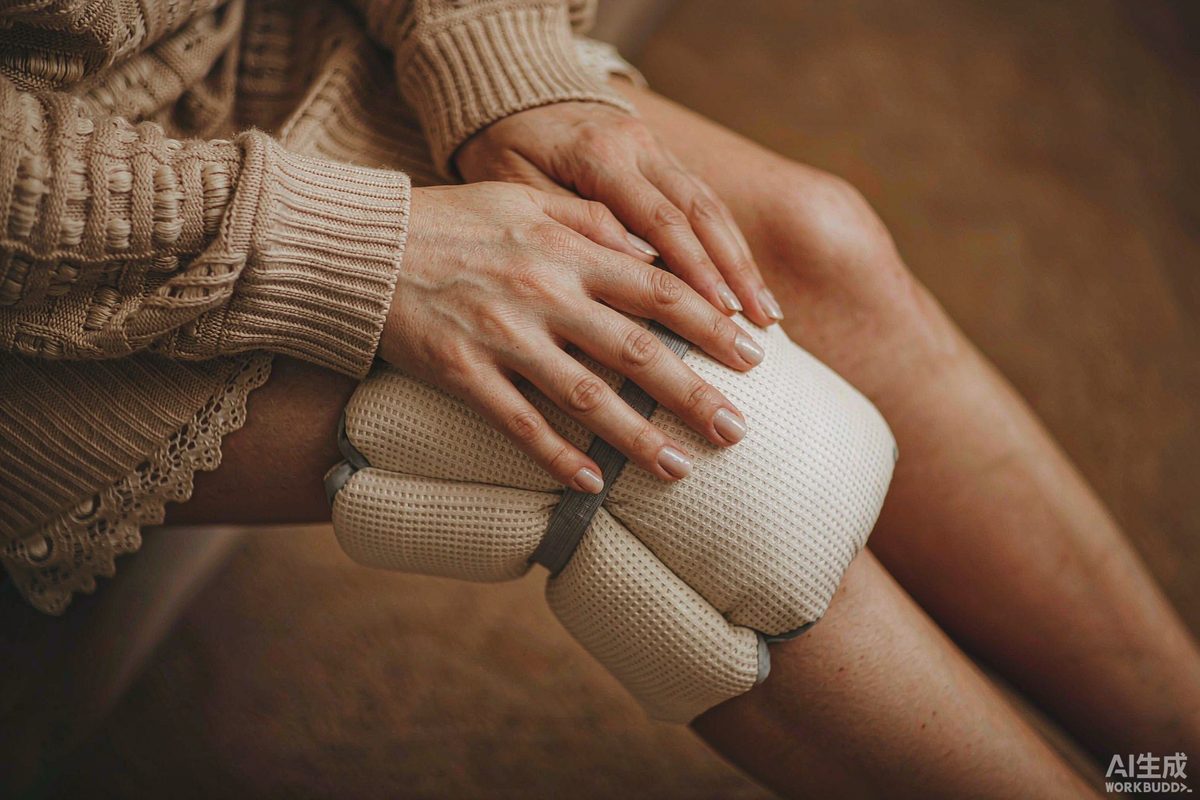
Before any exercise conversation, there is the matter of the cold, grumbling hip. Deep joints respond to warmth the way old hinges respond to it — slowly, and with visible gratitude. Heat relaxes the thick muscles that guard the hip, brings circulation to tissue that sits far from the surface, and takes the edge off the morning stiffness that makes the first steps of the day a negotiation.
A hot shower aimed at the hip, a warm wrap while sitting with morning tea, a heated blanket on low for ten minutes before getting out of bed: all of it counts, none of it needs to be fancy.
Chinese household medicine never really abandoned this move, for good reason. In the classical framework a stiff joint that worsens in cold and damp weather belongs to cold invading the channels, and the answer is warmth applied patiently — which is one reason moxibustion, the burning of mugwort near specific points, has been aimed at stubborn joints for a very long time.
The Zhen Jiu Da Cheng devotes detailed instruction to warming techniques at the pivot itself. Whatever one thinks of the theory, the physical logic is unremarkable: warmth relaxes guarding muscle and improves local blood flow, and a hip that moves better after warming is telling you something useful about what it needs.
Warmth is the opener, not the treatment. A hip that is only ever warmed and never moved tends to return the favor by getting stiffer. The trials on what actually changes a stiff hip belong to the next section — but nearly every program worth following starts with heat and ends with movement, in that order, for the simple reason that warm tissue moves further with less complaint.
- Apply warmth before activity — a shower, a wrap, or ten minutes of low heat in bed loosens the guarding muscles around a deep joint.
- Stiffness that eases with heat and movement but returns after sitting is typical of early hip osteoarthritis.
- Warmth is the opener, not the treatment. A hip that is only warmed and never moved keeps stiffening.
What a Stiff Hip Is Actually Saying
The hip is a ball-and-socket: the femoral head, a rounded knob at the top of the thigh bone, seats itself into the acetabulum, a deep socket carved into the pelvis. Depth is the design theme.
Where the shoulder trades stability for range, the hip does the opposite — a rim of cartilage and the densest muscle in the body lock the ball in, which is why hip dislocations are rare and hip grumbles are deep and hard to localize.
Osteoarthritis is the usual suspect past middle age. The cartilage lining the joint thins, the bone beneath it reacts, and the joint capsule tightens — which is why the loss shows up first at the ends of range: folding to tie a shoe, rotating the leg to look over a shoulder while reversing the car.
The pattern that points to the hip rather than the spine is pain in the groin or front of the thigh, worse with weight-bearing and twisting, often walking with a limp by the end of a long day.
Two neighbors need ruling out, because they are managed differently. Pain on the outside of the hip, tender to lie on and worse climbing stairs, is usually greater trochanteric pain syndrome — a tendon and bursa problem at the bony point, not the joint. Pain that grips the buttock and shoots down the back of the leg belongs more to the lumbar spine or the deep rotator muscles than to the joint itself.
Location of the ache, and what provokes it, sort most of this out before any scan does.
An honest word about imaging is owed here. X-ray findings and symptoms correlate poorly — plenty of painless hips look rough on film, and plenty of painful hips look fine — so a scan is a snapshot, not a verdict. The functional questions, the sock test, the stairs, the limp at the end of the day, carry more information about how a hip is actually living.
One more pattern deserves its own paragraph, because it ambushes people in their forties rather than their seventies. Femoroacetabular impingement — FAI, in the shorthand — is a shape mismatch at the ball or the rim of the socket that pinches during deep folding: deep squats, direction changes on a hockey rink, sometimes just ambitious yoga.
It announces itself with groin ache after activity rather than morning stiffness, and it responds to different dosing than wear-related arthritis does. The untrained eye cannot reliably tell them apart, which is the practical argument for a professional assessment when a young, active hip starts complaining — the program still centers on sensible loading, but the loading has edges.
- Groin or front-of-thigh pain worse with weight-bearing and twisting points to the joint; outer-hip tenderness lying on that side points to the bony point, not the joint.
- X-ray appearance and pain correlate poorly. How the hip functions day to day is the better measure.
Moving the Pivot: What the Trials Show
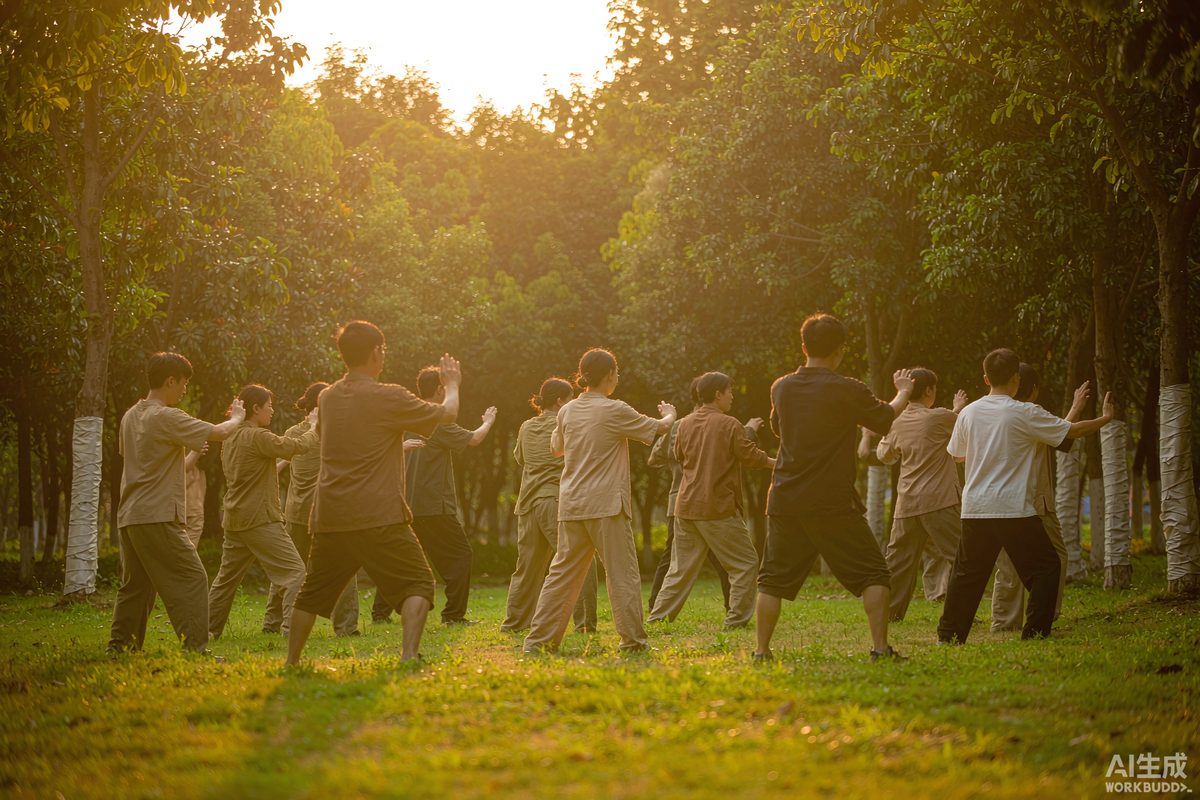
The exercise evidence for hip osteoarthritis is modest in size but consistent in direction, and its most instructive result is a negative one. In a randomized trial published in JAMA, researchers compared a twelve-session program of manual therapy and supervised exercise against a credible sham — ultrasound and light gel rubbing — in people with painful hip osteoarthritis.
The sham group improved too, nearly matching the active treatment, and the difference between them was small. Whatever moved the needle, in other words, was not the specific hands-on technique. Attention, reassurance, and the act of moving more did most of the work that got done.
That is less deflating than it sounds. It means the expensive, elusive perfect protocol matters less than the unglamorous baseline: a hip that is loaded gently and regularly outperforms one that is protected.
Reviews of aquatic exercise support the same conclusion from the shallow end — warm-water exercise modestly reduces pain and improves function in hip and knee osteoarthritis, with the buoyancy doing the kindly work of removing body weight while the joints move through range. For a hip too grumpy for land-based exercise, the pool is not a soft option. It is a legitimate starting venue.
Strength is the other pillar. A 2024 meta-analysis pooling resistance training trials across osteoarthritis found meaningful reductions in pain and gains in strength and function — and for the hip specifically, the muscles that matter most are the gluteals, the body's actual load managers. Side-lying leg lifts, bridges, supported squats to a chair: dull names, real effect.
The classical texts arrive at a neighboring conclusion by a different road, and the next section walks through it.
One caution belongs here. Flare-ups happen, and the rule is not to train through a hot, sharply painful joint but to shrink the dose — shorter sessions, pool instead of pavement — and let the irritation settle before building again.
- A credible sham nearly matched supervised exercise in a hip OA trial — regular gentle loading matters more than the perfect protocol.
- Warm-water exercise has trial support for hip and knee OA; buoyancy buys range of motion that land-based movement refuses.
- Gluteal strengthening — bridges, side-lying lifts, chair squats — is the load-management core of hip care.
"A hip that is loaded gently and regularly outperforms one that is protected."
The Kidney's House and the Liver's Sinews
Open the Suwen and the stiff hip gets a diagnosis with an entirely different anatomy. Chapter seventeen states it plainly: the loins and hips are the house of the kidney, and when a person can no longer turn and bend — zhuan yao bu neng — the kidney is weary.
Weight-bearing structure, the bones and the frame that carries them, belongs to the kidney's ledger; the sinews that tie the frame together and let it move belong to the liver's.
The first chapter of the same text sketches the life course of these two accounts. Liver qi, it says, declines with age, and the sinews can no longer move freely; the kidney's reserves thin in step, and the bones lose their backing.
What reads as fatalism is better read as bookkeeping: the tissues that carry you are nourished accounts, drawn down by decades of standing, carrying, and staying up late, replenished by rest and feeding. A hip that stiffens at sixty is, in this framework, less a local failure than a long ledger showing its balance.
The Shennong Bencao Jing, the oldest Chinese materia medica, lists the corresponding pharmacy. Its top-grade entry for Du Zhong, Eucommia bark, names exactly this complaint — pain of the lumbar spine and hip, weakness of sinew and bone — and calls the herb a supplement to essence and qi rather than a painkiller. Classical practice paired such herbs with moving treatments rather than resting ones.
Which is where the two systems agree most cleanly. The Zhen Jiu Da Cheng centers hip treatment on Huantiao, the point at the middle of the pivot, and the classical instructions for it are unromantic: stand, walk, turn, restore range. No tradition in this story recommends guarding a stiff hip into stillness. Two thousand years apart, the prescription converges on the same verb.
- In TCM, weight-bearing bone belongs to the kidney's account and supple sinew to the liver's — both are fed by rest and nourishment, not just exercise.
- 'When turning and bending are no longer possible' — the classics file lost hip rotation under a depleted reserve, not a single event.
- Classical and modern prescriptions converge: restore range and keep the pivot moving.
The Kitchen and the Load Question
Two quieter variables sit behind most stiff hips, and both are easier to change than to accept. The first is body weight, discussed here without editorializing. Each step loads the hips with roughly one to two times body weight, several thousand steps a day, so modest reductions compound in a way few joint supplements can match.
There is no honest version of a hip article that skips this, and also no honest version that moralizes about it — the arithmetic is the point, not the character of the person doing it.
The second variable is the chair. Modern hips sit for six to ten hours a day in a folded position, with the front-of-hip muscles held short and the gluteals held idle, and then are asked to stand and swing without notice.
The classical five strains include prolonged sitting — jiu zuo shang rou, sitting too long damages the flesh — which is as good a one-line description of the modern hip as any epidemiology paper has produced. The fix costs nothing and fits between meetings: stand every half hour or so, walk to refill the cup, let the hip unfold before it has to run.
Food is the smaller lever but worth naming. An eating pattern built on vegetables, legumes, fish, and olive oil — the Mediterranean pattern in the trials — has modest evidence for lowering the inflammation that makes arthritic joints grumble.
The Chinese kitchen reached a similar place from a different direction: bone simmered long into soup, ginger and turmeric-class warming spices in the pot, nothing raw and shocking first thing in the morning. None of it is a cure. All of it makes the joint's working environment slightly less hostile, which over a decade is not nothing.
- Weight and the chair are the two big background variables: each step carries 1-2 times body weight, and modern hips fold for hours at a stretch.
- The classics named it too — 'prolonged sitting damages the flesh.' Break up sitting; the hip pays for uninterrupted folding.
- An anti-inflammatory eating pattern helps the joint's environment modestly but real-ly over years.
"There is no honest version of a hip article that skips the load arithmetic, and none that should moralize about it."
When a Hip Deserves a Professional Eye
Most stiffness traced to early osteoarthritis responds to the unglamorous program — warmth, movement, strength, load management — and does not need rescuing. Some hips are not that. A few signals change the appointment.
Pain that wakes you at night, deep in the groin, or that arrived with a specific incident — a fall, a twist, a misstep off a curb — deserves an examination rather than a self-program. So does any hip that will not bear weight, or that comes with a fever, which is rare and serious and not a tuning question. A limp that worsens week over week, or one leg visibly turning out and shortening, is anatomy talking loudly.
And numbness or tingling down the leg suggests the nerve, not the joint, is the aggrieved party — a different conversation entirely.
For the ordinary grumbling hip, the escalation ladder is short. A clinician can confirm the pattern with a few movements in the room — the folding test that reproduces groin pain is seconds long and more informative than most imaging. Physiotherapy earns its fee by finding which of your muscles are asleep at their post and issuing specific homework.
Injections exist for hips that stay hot despite everything, and joint replacement, for the small group whose daily life has shrunk around the hip, is among the highest-value operations in medicine — a fact worth knowing without rushing toward.
A practical note on what to ask for, since appointments are short. The questions that sort hips usefully are: which movements reproduce the pain, what the plan is for strength and range, and what would have to change before imaging or referral becomes worthwhile. Ask what to do, not only what is wrong — a hip program is mostly a verb.
The order matters. Self-program first, professional assessment when signals appear, imaging when a decision depends on it. Plenty of hips get scanned, labeled, and frightened long before anything was going to be done about the picture.
- Night pain deep in the groin, pain after a fall, inability to bear weight, fever, or a worsening limp each justify a clinician's exam.
- Numbness or shooting pain down the leg points to nerve involvement — a different problem from the joint.
- Bedside folding tests often say more than an X-ray; scans are for decisions, not for reassurance.
Four Quiet Weeks
A workable month looks like this. Week one: warmth every morning, a daily walk shortened to whatever the hip tolerates without complaint, and standing breaks each half hour of sitting. Nothing else. The assignment is to stop aggravating before starting to strengthen.
Week two adds the floor. Two exercises — bridges and side-lying leg lifts, or their seated equivalents for anyone who finds the floor unfriendly — done daily, two sets of ten slow repetitions, warm beforehand. The pace matters more than the load; these are wake-up calls to muscles that idled through a decade of chairs.
Week three extends the walk by a few minutes and adds a second daily exercise round, preferably evening, after the day's stiffness has loosened. Week four adds range: gentle folding and rotation drills after the walk, the sock-reach position held briefly and without strain, the pool once a week if one is available.
What counts as success is specific and small. The sock reach easing from negotiable to unremarkable. The first steps after a film feeling like steps rather than a restart. Getting out of the car without the pause. Measure those, not the mirror.
And keep a marginal note for the years ahead. A hip is a long relationship, not a repair ticket — some weeks it will complain about weather, or a long flight, or nothing at all. The program stays the same through all of it: warmth, movement, strength, patience.
If the pivot is the body's hinge between standing and going somewhere, the least it asks is to be consulted before the schedule is written — which, come to think of it, is true of most of the body, and of most things that carry us quietly for decades.
- Week 1 warmth and walking only; weeks 2-4 layer glute strength, longer walks, and gentle range work.
- Measure success in function — the sock reach, the car door, the first steps after sitting — not in the mirror.
- Stiff hips are managed, not fixed. The program repeats; that is the feature, not the failure.