The 3 PM Crash Was Set Up at Lunch
There is a moment in almost every busy person's day: the afternoon slump. Energy drains, focus scatters, the eyes drift to the snack drawer, and a voice says, 'I need something sweet.' Western nutrition has a precise name for this: postprandial reactive hypoglycemia, or more simply, the blood sugar crash that follows a carbohydrate-heavy, fiber-poor meal.
The morning pastry spikes glucose; insulin rushes in to clear it; two hours later glucose overshoots downward; and the brain, which runs almost entirely on glucose, sends an urgent craving signal. The crash is not a failure of character. It is the predictable second half of a glucose wave.
Chinese medicine has described the same phenomenon for two thousand years, in different vocabulary, with a remarkably similar mechanism.
In TCM, the Spleen (Pi) governs what the classics call 'transformation and transportation' — the conversion of food into Qi (the body's fuel) and Blood. The Spleen is the engine of post-natal Qi: the energy you extract from food. And the Spleen, like every engine, has a finite capacity per unit of time.
Give it a moderate, well-sequenced meal, and it transforms smoothly: glucose enters steadily, energy is even, the mind stays clear. Overwhelm it with a rapid flood of refined carbohydrate — a pastry, a bowl of white rice eaten alone, a sugary drink — and the Spleen cannot transform fast enough. The surplus glucose spikes, the system over-corrects, and the crash follows.
The 3 PM collapse, the mid-morning hunger, the 4 AM waking hunger — in TCM these are the classic signs of the Spleen being repeatedly overwhelmed by the wrong fuel in the wrong order at the wrong time. Here is the reframe that changes everything for patients: the crash is not your enemy to be fought with willpower. It is information. It tells you the previous meal was not Spleen-friendly.
And once you read that information correctly, the fix is not deprivation — it is design: the right food, in the right order, at the right time.
What follows is a complete TCM blood sugar protocol: seven rules, each grounded in both the classical canon and modern glucose research, that together flatten the waves and restore the steady, even energy that TCM calls the healthy Spleen's natural state.
- Track your crashes for one week: note the time of each energy dip and what you ate in the previous 2-3 hours. The pattern will be embarrassingly clear — and that clarity is the cure.
- The crash is a lagging indicator: it reports on the meal before last. Fix the meal, and the crash moves or disappears within days.
- If you crash at 3 PM daily, your 3 PM problem was created at 12:30 PM. Breakfast and lunch are the design surface; the afternoon is just the report.
"The Spleen governs transformation and transportation. When the Spleen is strong, transformation is smooth and energy is even; when it is overwhelmed, the Qi is unsettled and fatigue and craving arise."
Glucose Curves and Spleen Qi: Two Maps, Same Terrain
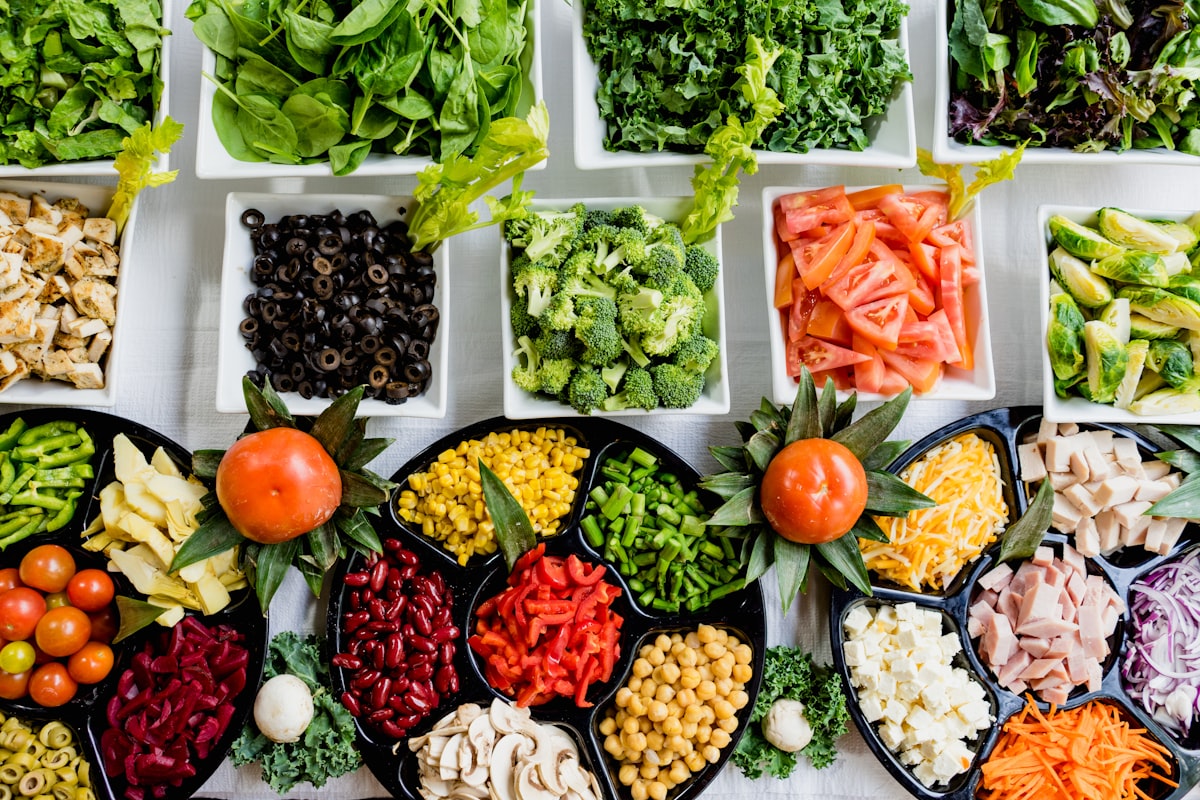
Modern nutrition and TCM sound like they are describing different worlds. One speaks of glycemic index, insulin response, and continuous glucose monitors; the other of Spleen Qi, transformation, and the middle burner. But when you put the two maps side by side, the landmarks line up with striking precision.
The Western model: food is digested into glucose, glucose enters the bloodstream, the pancreas releases insulin, insulin directs glucose into cells for energy or storage, and the shape of the resulting glucose curve determines how you feel. A slow, shallow curve — a gentle rise and fall — produces steady energy. A steep spike followed by a deep trough produces the crash: fatigue, brain fog, hunger, irritability.
Three things shape the curve: what you eat (the glycemic load), how fast it digests (fiber, fat, protein, and processing all slow it), and in what order you eat it — sequence changes the curve even when the plate contents are identical.
The TCM model: food enters the Stomach, and the Spleen transforms it into Qi and Blood. The Spleen has a finite daily and per-meal capacity. ' Food that exceeds the Spleen's capacity becomes what TCM calls Dampness — heavy, turbid, unprocessed residue that manifests as fatigue, heaviness, brain fog, bloating, and cravings for more sweet (the body grasping for fuel it failed to store properly).
Overlay the two maps and the convergence is plain. The steep spike and crash is the Western name for the Spleen being overwhelmed. The 'postprandial somnolence' after a heavy carbohydrate meal is the Western name for the Dampness that TCM says follows untransformed surplus.
The mid-afternoon craving is the Western name for reactive hypoglycemia — and the TCM name for the Spleen calling for fuel it cannot get from a body that stored the last meal poorly.
The interventions converge too. Western nutrition says: slow the curve with fiber, protein, fat, and meal order. TCM says: protect the Spleen with cooked food, moderate portions, the five flavors in balance, and the right sequence. Same prescription, two dialects.
The useful clinical takeaway: you do not need a continuous glucose monitor to know your curve is steep. Your body tells you. The crash, the craving, the mid-meal fatigue, the 4 AM waking hunger — these are the felt experience of a steep curve, and they respond to the same interventions that flatten a measured one.
- Think of every meal as a curve-shaping event: you are not just eating food, you are designing the next 3-4 hours of your energy. The Spleen framework makes this intuitive; the glucose curve makes it measurable.
- The felt curve test: after any meal, ask 'Do I feel steady, or do I feel a wave coming?' Steady = Spleen happy. A wave = the next meal needs to be smaller, slower, and better sequenced.
- Both systems agree on the fundamental unit: the single meal. Not the day, not the week — the meal. Fix the meals one at a time and the day fixes itself.
"The Spleen is the officer of transformation, and its Qi ascends. When transformation is smooth, the whole body is nourished; when it is blocked, Dampness arises and the spirit is heavy."
Rule 1: Vegetables First, Protein Second, Starch Last
The single most powerful blood sugar tool ever discovered is not a food — it is an order. A landmark 2015 clinical study gave adults with type 2 diabetes identical meals but in two different sequences: vegetables and protein first, carbohydrate last; versus carbohydrate first.
The result was dramatic: when carbohydrate was eaten last, postprandial glucose was significantly lower, and insulin levels were lower too — the same meal, the same calories, a flatter curve, produced purely by sequencing. This is the meal-order effect, and it is now among the most robust findings in postprandial glucose research.
TCM arrived at the same prescription by a different road. In the TCM view, the Stomach receives food and the Spleen transforms it. The order in which food arrives determines the transformation load at each moment. Fiber and protein arrive first: they are slow, they buffer, they prepare the digestive field.
Starch arrives last, into a system already occupied with slower-burning fuel — so its glucose enters gradually instead of flooding. The classics never described the glucose curve, but they prescribed exactly this architecture: the meal as a sequence, not a pile.
The practical execution is simple and profoundly effective. Vegetables first: a few bites of fiber-rich, preferably cooked vegetables to line the digestive field. Protein second: the anchor — eggs, fish, chicken, tofu, beans — which slows gastric emptying and smooths the glucose entry. Starch last: rice, noodles, bread, root vegetables, eaten after the buffer is in place, and in a portion the Spleen can handle.
The same plate, eaten in this order, produces a visibly flatter glucose curve — and patients feel the difference within days.
The 38-year-old engineer I described earlier made this one change and his afternoon crashes essentially disappeared in two weeks.
A note on the Western caveat: the meal-order effect is well established for postprandial excursions, though its long-term glycemic benefit (on HbA1c) is still being studied — the honest framing is that it is a powerful acute tool, not a substitute for overall carbohydrate quality and quantity. TCM would add the same nuance: sequencing supports the Spleen, but it does not license an unlimited starch portion.
Order and portion work together.
- The 3-bite rule: start every meal with three bites of vegetables before anything else touches the plate. It takes ten seconds and it primes the digestive field for everything that follows.
- Restaurant hack: when the bread basket arrives, order the salad first — or eat the protein and vegetables of your main before the rice. The order works anywhere you can control the sequence.
- The meal-order effect is strongest when the starch is refined and the fiber is real — sequence matters most exactly where modern diets are most vulnerable.
"The Stomach receives, and the Spleen transforms. When food enters in harmony — the light and the heavy, the quick and the slow — transformation is complete and the Qi is even."
Rule 2: Vinegar — the Sour Brake on Sweet
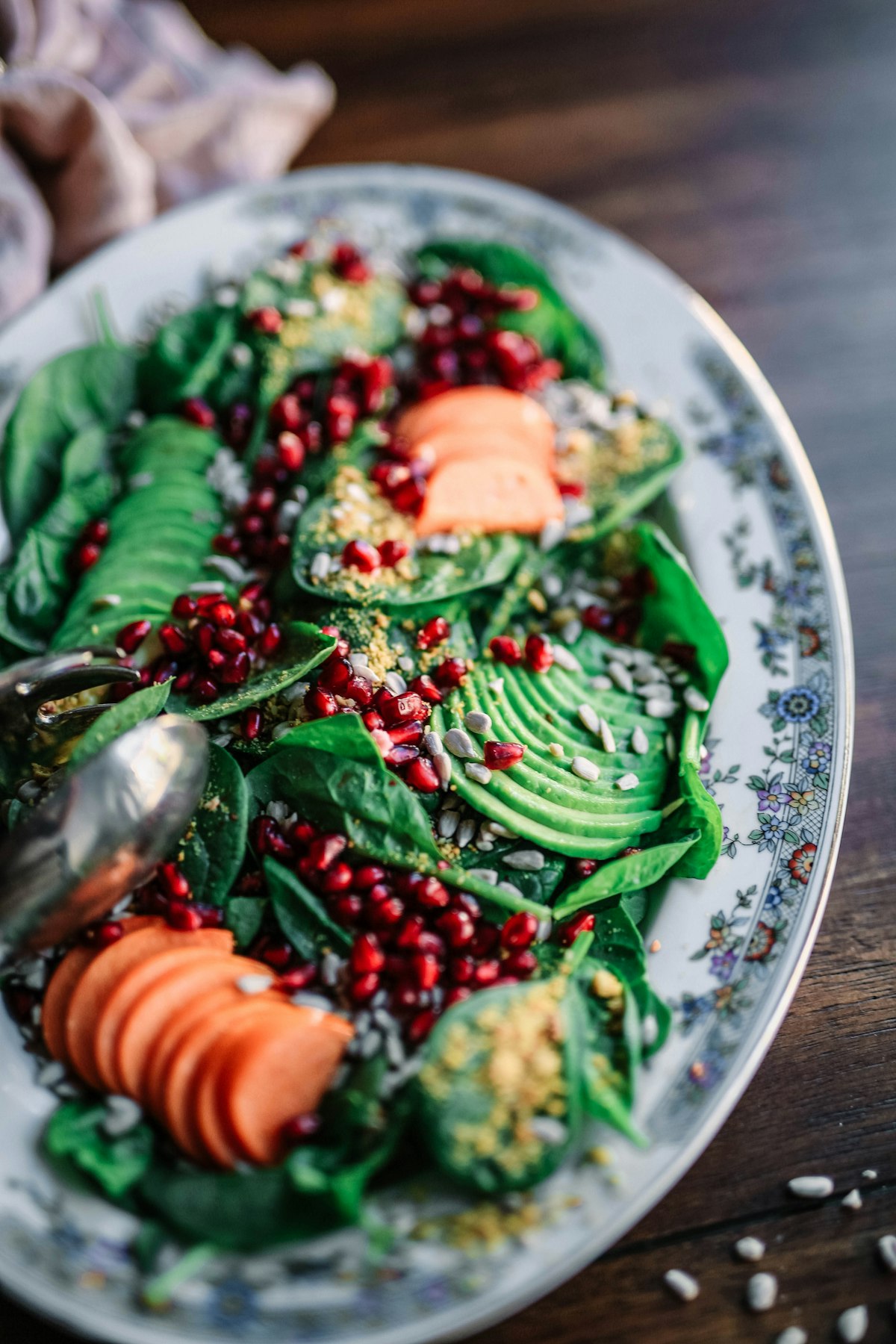
Of the five flavors — sour, bitter, sweet, pungent, salty — TCM assigns sour (suan) the function of gathering, astringing, and steadying. In the blood sugar protocol, sour has a specific job: it is the brake on sweet. And modern research has confirmed this in remarkable detail.
A 2017 systematic review and meta-analysis of clinical trials found that vinegar consumption significantly attenuates postprandial glucose and insulin responses — meaning the same meal, with a modest dose of vinegar, produces a flatter glucose curve. The mechanism appears to involve slowed gastric emptying, reduced starch digestion via enzyme inhibition, and improved peripheral glucose uptake.
The traditional application is even older than the studies. The sour note that accompanies so many traditional cuisines — the vinegar in a rice bowl dressing, the pickled vegetable beside the main dish, the fermented side that Chinese, Japanese, Korean, and Mediterranean tables all include — is not decoration. It is physiology.
TCM frames it as the sour flavor steadying the sweet: the astringing quality of sour gathers and holds, preventing the sweet from flooding in and flooding out.
The practical rules: a tablespoon of vinegar (rice vinegar, apple cider vinegar, or any fermented vinegar) diluted in a small glass of warm water before a carbohydrate-heavy meal, or a sour element on the plate itself — pickled vegetables, a vinegar-based dressing, a squeeze of lemon over greens.
The evidence is strongest for vinegar taken with or just before the meal; the effect is modest but reliable, and it compounds with meal order and carbohydrate quality.
Cautions, in both dialects. TCM: sour in excess injures the Liver and over-astringes; it should be a seasoning, not a regimen, and it must be balanced by the other flavors.
Western medicine: vinegar is acetic acid — always dilute it, never drink it undiluted (it can damage tooth enamel and the esophagus), avoid it if you have gastroparesis or significant reflux, and check with your doctor if you take diabetes medication, because the glucose-attenuating effect can potentiate hypoglycemia in medicated patients. The sour rule is not a replacement for medication.
It is a food-level lever, best used as part of the full protocol.
- The pre-meal sour shot: one tablespoon of vinegar in 250 ml of warm water, 5-10 minutes before the meal. Start with half a tablespoon if your stomach is sensitive.
- Build sour into the plate instead of the glass: pickled vegetables, a lemon-ginger dressing, kimchi as a side — the traditional sour accompaniments do the same work with more flavor.
- Sour is a seasoning of the whole protocol, not a magic bullet: it slows the curve by 10-20%, while sequence and carbohydrate quality do the heavy lifting.
"Sour enters the Liver and has the function of gathering and astringing. It steadies that which is dispersing and holds that which is spilling — the natural companion to the sweet, which disperses and transforms."
Rule 3: Eat the Grain That Still Looks Like a Grain
In TCM, the sweet flavor (gan) is the Spleen's own flavor — it tonifies, harmonizes, and nourishes. The classical canon is not anti-carbohydrate; it is pro-transformation. The Spleen thrives on whole, minimally processed sweet: grains, root vegetables, legumes, and fruit in season, cooked and eaten as part of a balanced meal.
What the Spleen cannot handle — and what modern carbohydrate science flags with equal urgency — is the refined, concentrated, fiber-stripped sweet: white sugar, sugary drinks, pastries, and ultra-processed carbohydrate. The modern evidence is unambiguous.
A landmark 2019 series of systematic reviews and meta-analyses on carbohydrate quality and human health found that higher intake of whole grains, vegetables, fruits, and legumes — and lower intake of refined carbohydrate and added sugar — is associated with lower risk of type 2 diabetes, cardiovascular disease, and all-cause mortality.
The key variable is not carbohydrate per se; it is quality: fiber, structure, and the pace of digestion. Refined carbohydrate digests fast, spikes glucose, and overwhelms the Spleen's transformation capacity — creating the very Dampness pattern (fatigue, heaviness, cravings) that the classics describe. Whole carbohydrate digests slowly, feeds the body steadily, and keeps the curve flat.
The TCM translation is precise: whole-food sweet enters the Spleen and transforms into Qi; refined sweet enters the Spleen and overflows into Dampness.
The practical rules are simple. Choose intact grains over milled: brown rice, oats, barley, millet, quinoa, buckwheat — the more intact the grain, the slower the curve.
Cook starches with the Spleen in mind: congee (rice porridge), which the classics call the perfect Spleen food, is a slow, warm, easily transformed carbohydrate — and it is the traditional recovery food precisely because it asks little of the transformation engine. Pair every starch with fiber, protein, and a sour note (Rules 1 and 2).
And treat added sugar as a condiment, not a food group: a small sweet after a complete meal is far gentler on the curve than a sweet eaten alone, and far gentler than a sweet drink, which delivers glucose with zero buffer.
The honest evidence boundary: carbohydrate quality research is robust for whole populations, but individual responses to specific carbohydrates vary (genetics, microbiome, medications, and metabolic status all matter). For anyone with diabetes, prediabetes, or reactive hypoglycemia, carbohydrate quality is a support strategy — not a substitute for medical management, medication, and monitoring.
- The intact-grain test: if a grain still looks like a grain (brown rice, oats, barley, millet), it is Spleen-friendly. If it looks like powder (white flour, white rice), it needs the full buffer of Rules 1 and 2.
- Congee is the traditional Spleen recovery food for a reason: it is the gentlest possible way to deliver carbohydrate, and it is the classic breakfast for stable morning energy.
- When you eat a sweet, eat it as dessert after a full meal, not as a snack alone — the meal is the buffer that keeps the sweet from becoming a spike.
"The sweet flavor enters the Spleen. When sweet is whole and moderate, it tonifies; when it is refined and excessive, it generates Dampness and injures the transformation of the middle burner."
Rule 4: The Spleen Runs on a Clock
The Spleen, in TCM, is not just an organ — it is a rhythm. It operates on a daily clock, strongest in the morning hours and declining through the day, and it rewards regularity: meals at roughly the same times, warm food, and a light early dinner that allows the transformation work to finish before sleep.
The classical instruction is blunt: eat at regular times, do not skip meals, do not eat late at night, and do not flood the Spleen with cold food and drink that force it to spend energy warming what it receives.
Modern chrononutrition has arrived at the same architecture from the measurement side. Research on meal timing and the circadian system shows that glucose tolerance varies across the day — the same meal produces a higher glucose response in the evening than in the morning — and that irregular eating patterns are associated with worse metabolic health.
The modern terms: meal regularity, circadian alignment, and the metabolic cost of eating against the clock. The TCM terms: protect the Spleen's hour, keep the middle burner warm, and let the Stomach empty before the Kidneys take the night shift.
The practical rules, in both dialects. Regularity: eat at roughly the same times daily. Skipping breakfast and eating a huge dinner is the worst possible architecture for the Spleen and the glucose curve alike — it sets up a morning fast, an afternoon crash, and an evening flood.
Warmth: cooked, warm food and warm drinks ask far less of the Spleen than raw, cold food and iced drinks, and warmth is also the practical expression of 'slow the curve' — warm cooked carbohydrate digests more gently than cold refined snacks.
Early, light dinner: finish the main evening meal 3-4 hours before bed, and keep it moderate — the evening meal has the steepest glucose cost and the least opportunity for the body to spend the fuel.
A clinical note from my practice: the single most common pattern in patients with afternoon crashes and morning cravings is a skipped or inadequate breakfast followed by a carbohydrate-heavy lunch and a large late dinner. Restoring the rhythm — a real warm breakfast, a balanced lunch, an early light dinner — resolves more energy complaints than any single food change.
The evidence boundary: chrononutrition is a young field, and individual circadian types differ; the strongest and most consistent finding is that regularity itself — consistent meal timing, adequate morning fuel, and not eating late — is metabolically protective, regardless of the specific schedule.
- The rhythm reset: breakfast by 9 AM (warm and cooked), lunch between 12-1 PM, dinner before 7 PM. Consistency matters more than perfection — your Spleen learns your schedule.
- The 3-4 hour rule for dinner: finish your main evening meal 3-4 hours before bed. Late eating costs the curve more than any other meal of the day.
- Cold drinks with meals force the Spleen to spend energy warming them — room-temperature or warm drinks are the rhythm-friendly choice, especially with carbohydrate.
"One should eat at regular times and in regular amounts. To eat late at night, or to skip meals and then eat to excess, is to injure the Spleen and Stomach, the root of post-natal Qi."
Rule 5: The Five-Flavor Plate Was the Original Blood Sugar Diet
Before the glycemic index, before continuous glucose monitors, TCM had a macronutrient framework: the five flavors. Sour gathers and steadies (Rule 2). Bitter drains and clears — the bitter greens, the dandelion, the green tea that support the body's clearing of excess. Sweet tonifies — the whole-food sweet of grains and roots that the Spleen transforms into Qi.
Pungent disperses and moves — ginger, scallion, garlic, spices that keep the Qi and digestion moving. Salty softens and anchors — a pinch of mineral salt or a little seaweed that grounds the meal.
The classical principle: every meal should contain all five flavors in balance, with none dominant, because each flavor performs a function and an excess of any one creates its own pathology. The modern translation is the 'balanced plate' — and the five-flavor lens adds a dimension the macronutrient lens misses: sensory completeness.
A plate with all five flavors is more satisfying, which means you stop eating at the right point; and the flavors themselves — the sour brake, the bitter drain, the pungent mover — actively shape digestion and the glucose response.
The research on dietary variety and metabolic health aligns: diverse, plant-rich eating patterns (which naturally deliver all five flavors) are consistently associated with better glucose control and lower diabetes risk, while monotonous, ultra-processed patterns (sweet and salty dominant, bitter and sour nearly absent) are associated with worse outcomes.
The practical rule: build every plate with a sour note (lemon, vinegar, pickles), a bitter note (greens, arugula, dandelion, green tea), a sweet base (whole grains or roots, in Spleen-friendly portions), a pungent accent (ginger, garlic, scallion, spice), and a salty seasoning (a pinch, or miso, or seaweed).
The five-flavor plate is the original blood sugar diet, and it predates every branded eating plan by two millennia.
The evidence boundary: the five-flavor framework is a traditional system of classification, not a measured intervention — its metabolic claims rest on the modern evidence for dietary diversity, plant-rich patterns, and the specific actions of sour (vinegar studies), fiber (carbohydrate quality studies), and bitter phytochemicals.
It is best understood as a design principle that reliably produces a balanced, Spleen-friendly plate — not as a set of individual flavor-dosing prescriptions.
- The five-flavor audit: at your next meal, count the flavors on the plate. Most modern plates score sweet + salty and nothing else — the missing sour, bitter, and pungent are exactly the curve-shaping flavors.
- The bitter gap is the most common: one serving of bitter greens, dandelion, radicchio, or green tea daily is the fastest way to restore the draining, clearing function modern diets lack.
- Spices are medicine in the five-flavor system: ginger, garlic, and cinnamon are pungent movers that support digestion — and cinnamon in particular has shown modest glucose-attenuating effects in clinical studies.
"When the five flavors are in harmony, the five organs are nourished. When one flavor dominates, its organ is injured, and the balance of transformation is lost."
Rule 6: Walk It Off — a Hundred Steps After Meals
The classical TCM instruction after eating is not to lie down — it is to walk. The tradition holds that gentle movement after meals supports the Spleen's 'transportation': the Qi moves, digestion completes, and the fuel is delivered to the muscles instead of settling into storage.
Modern glucose research confirms this with remarkable precision: a post-meal walk — even a short one of 10-15 minutes — meaningfully reduces the postprandial glucose rise, because contracting muscles take up glucose directly, independent of insulin, and movement speeds the disposal of the meal's fuel. Walking after the evening meal is the most studied and most consistently effective version.
The clinical practice: a 10-15 minute gentle walk, starting within 30 minutes of finishing the meal. Not a workout — a stroll, the traditional 'hundred steps after meals' that Chinese households have prescribed for centuries.
The benefits stack with everything else in this protocol: the walk is the physical bookend of the meal-order rule (the fuel has a destination), the five-flavor plate (the meal is complete and satisfied), and the Spleen's rhythm (the day's fuel gets spent, not stored).
A note on the evidence boundary: post-meal walking reliably attenuates the acute glucose excursion, and walking in general is associated with better long-term glycemic control, but it is a support intervention — for people with diabetes, it complements, and does not replace, medication, monitoring, and a medically supervised plan. And the TCM caution: 'gentle' is the operative word.
The classics warn against strenuous exercise immediately after a full meal — vigorous exertion diverts blood and Qi away from the digestive work. The walk is for transportation, not transformation-under-load.
- The 15-minute rule: walk for 10-15 minutes, starting within 30 minutes of finishing your main meal — the evening meal is the highest-value walk of the day.
- The meeting-walk hack: if you take calls in the afternoon, take them on your feet after lunch. You will flatten your curve and clear your head simultaneously.
- Stairs count: a few flights of stairs after lunch are a compact, effective version of the post-meal walk when time is short.
"After eating, walk a hundred steps. Movement assists the Spleen in transportation; the Qi moves, and what is eaten is transformed into strength, not stored as burden."
A Full Day on the Protocol, and Where the Evidence Runs Thin
Here is the entire protocol as a day, so you can see how the rules assemble. Morning: warm water with lemon (sour) on waking; a warm cooked breakfast — congee, oatmeal, or eggs with vegetables — eaten by 9 AM, with a sour note and a bitter side (green tea or greens).
Midday: the five-flavor plate in the right order — vegetables first, protein second, starch last; a tablespoon of vinegar in the dressing; a 10-15 minute walk after eating.
Afternoon: if a snack is needed, make it the Spleen-friendly kind — a handful of nuts and a piece of fruit, or warm tea with a small whole-grain bite — not a refined sweet alone. Evening: dinner before 7 PM, moderate portion, the same sequence, warm and cooked; a gentle evening walk; no late-night eating.
That is the whole system: sequence, sour, quality, rhythm, flavor, movement. Each rule is small; together they are transformative — and they are the direct translation of classical TCM dietary teaching into the modern glucose framework.
Now the honest boundaries, because YMYL content owes you precision. First: this protocol is a health-support and prevention strategy, not a treatment for diabetes.
If you have diabetes, prediabetes, reactive hypoglycemia, or any metabolic condition, this article is not medical advice for your condition — work with your physician or endocrinologist, keep your medication and monitoring plan, and use these food-level rules as complementary support with their knowledge.
Second: the individual response to specific foods varies — genetics, microbiome, medications, and metabolic status all shift the curve. What is reliably true for populations may not be true for you; measure your own response (a glucometer or continuous glucose monitor, used with your doctor, is the gold standard).
Third: the evidence behind each rule has a distinct strength — meal order and vinegar have strong acute postprandial data; carbohydrate quality has strong long-term outcome data; the five-flavor framework and post-meal walking have solid mechanistic and association-level support. None of these rules is a miracle; all of them are real levers.
Used together, they flatten the curve, steady the energy, and give the Spleen the conditions it needs to do what it has always done: transform food into Qi, smoothly, evenly, all day long.
- Print the day: sequence, sour, quality, rhythm, flavor, movement. One glance at the six words is the entire protocol.
- Start with one rule, not six: Rule 1 (meal order) or Rule 4 (rhythm) delivers the fastest felt change. Add the others as they become habits.
- If you have diabetes or take glucose-lowering medication, share this article with your care team before changing anything — vinegar and meal changes can potentiate medication effects.
"The superior physician treats the day before it is ill, the meal before it crashes, the Spleen before it is overwhelmed. The art of eating is the art of timing, order, and measure."