The Cheapest Food With the Worst Reputation
Somewhere in most kitchens there is a bag of dried beans that got bought with good intentions and never opened. The intention was usually a number: more fiber, more plant protein, less meat. The obstacle was usually a memory — an evening when a pot of chili or a bowl of stew made a person miserable, gassy, or both, and the conclusion got drawn that beans and that particular body were not compatible.
The conclusion deserves scrutiny, because beans sit in an unusual position among whole foods. They are the staple protein of some of the longest-lived dietary patterns on record, they cost a fraction of meat per gram of protein, and their fiber feeds exactly the gut bacteria that short-chain fatty acids come from. A food with that resume gets abandoned over flatulence.
Something about that trade is worth pulling apart.
There is a real mechanism here, and it comes first. You cannot talk someone out of bloating with enthusiasm; you can only show them what produces the gas, what the trials measured week by week, and which steps of ordinary kitchen preparation take a measurable slice of the problem out before the plate.
And there is an older text, written a couple of thousand years before anyone isolated an oligosaccharide, that files all of this under one organ and prescribes the soybean for it. The two accounts disagree about vocabulary and land in a similar place.
One boundary before the first section: this article is about ordinary, healthy-adult digestive adjustment. Persistent pain, blood in the stool, unexplained weight loss, or bloating that does not respond to anything you change are medical matters, and no amount of soaking protocol addresses them. If that is your situation, the reading stops and the clinic starts.
- Beans are among the cheapest protein and fiber sources available, yet flatulence fear is the most commonly cited reason people avoid them.
- This piece covers normal digestive adaptation in healthy adults — persistent pain, blood, or unexplained weight loss belong with a clinician, not a soaking protocol.
"A food with that resume gets abandoned over flatulence."
Raffinose, Stachyose, and the Enzyme Humans Never Had
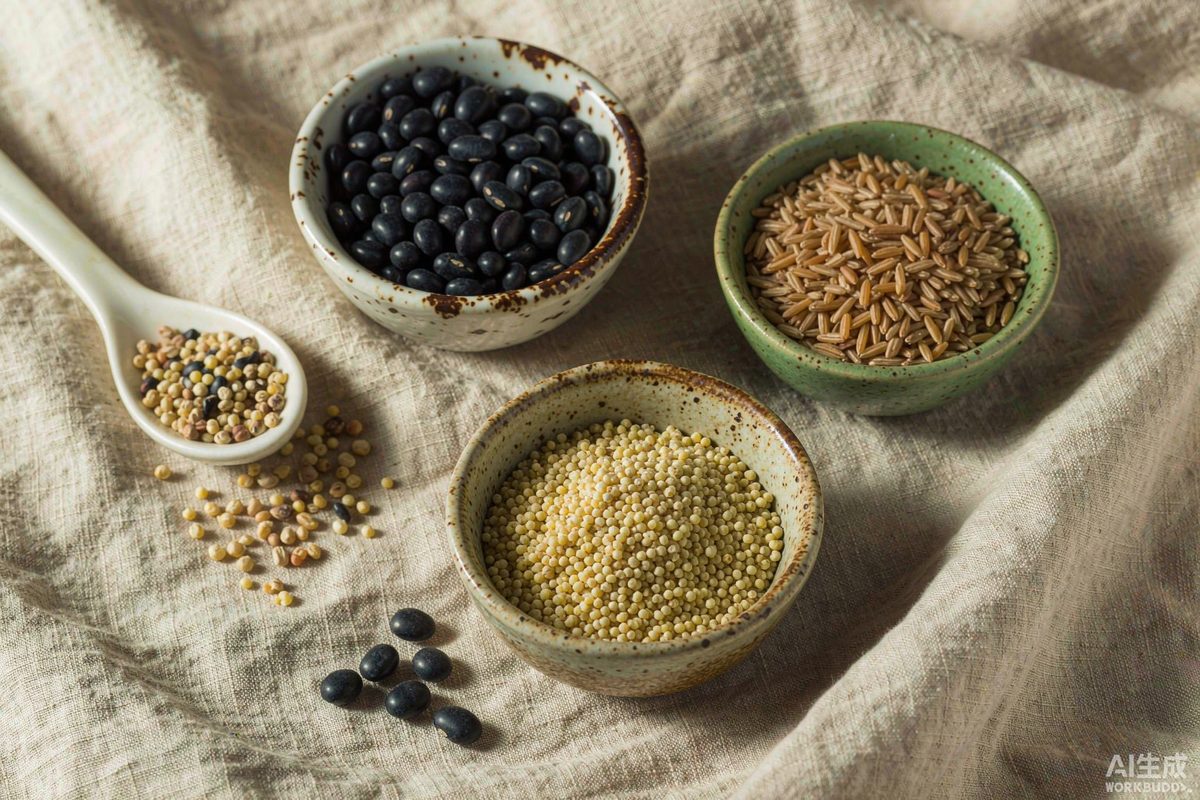
The culprit family is small and has an unglamorous name: the raffinose-family oligosaccharides, or RFOs. Raffinose itself is a three-sugar molecule, stachyose a four-sugar one, verbascose a five-sugar one. Legumes pack them as compact energy reserves for the seedling — unlike starch, they stay soluble through drying and freezing, which is why a seed can sit in a jar for two years and still sprout.
Common beans carry several percent of their dry weight as stachyose alone; soybeans run high too, and lentils comparatively low.
Humans digest them not at all. The small intestine has no alpha-galactosidase, the enzyme that snips the galactose units off these chains, and it never developed one — our lineage did not grow up eating seeds engineered to survive winters. So raffinose, stachyose and verbascose pass through the small intestine untouched, arrive in the colon, and meet bacteria that absolutely can cut them apart. Fermentation follows.
The products are useful ones — short-chain fatty acids that colon cells prefer as fuel — and gaseous ones: hydrogen, carbon dioxide, and in roughly a third of people, methane.
That gas is the entire complaint. It distends the gut wall, registers as fullness, pressure and rumbling, and eventually leaves by whichever exit is convenient. Notice what did not happen: nothing was absorbed badly, nothing was toxic, nothing was inflamed. A person ate a carbohydrate their microbes liked, and the microbes produced their standard by-products.
The same transaction happens with every fiber-rich meal; legumes simply deliver a larger and more concentrated batch of one particular substrate than most foods do.
Which reframes the question. The issue is not whether beans are digestible — the parts worth digesting get digested — but how much fermentable cargo arrives at once, and what the bacterial community downstream does with a sudden raise in supply. Both of those are adjustable.
- Raffinose-family oligosaccharides (raffinose, stachyose, verbascose) are seed energy reserves; humans lack the alpha-galactosidase needed to digest them, so they reach the colon intact.
- Colonic fermentation of these sugars yields beneficial short-chain fatty acids alongside hydrogen, carbon dioxide and sometimes methane — the gas is a by-product of the useful part.
"Nothing was absorbed badly, nothing was toxic. A person ate a carbohydrate their microbes liked."
What the Feeding Trials Actually Measured
The fear has been tested, more carefully than most food fears. Winham and Hutchins tracked flatulence reports across three feeding trials in which adults ate half a cup of beans daily for eight to twelve weeks — pinto beans, black-eyed peas and baked beans against canned-carrot controls, with a parallel trial of forty bean eaters against forty control-soup eaters. Everyone filled in the same weekly questionnaire.
The first-week numbers matched the folklore reasonably well. About half of pinto and baked-bean eaters reported increased flatulence in week one. Black-eyed peas came in far gentler at nineteen percent — the same researchers noted bean type matters, and fiber content plausibly explains part of that gap. Then the curve bent. By the second week, only six percent of the pinto group still reported increased gas.
In the twelve-week parallel trial, reports started at forty-five percent and slid to somewhere between fifteen and twenty-three percent for the remainder of the study.
Two details deserve as much attention as the percentages. A small share of participants — three to eleven percent — reported increased flatulence even during control weeks, on canned carrots, which says something about how noisy self-reported gas is as a signal. And in the crossover analyses, seventy percent or more of those who did experience flatulence said it faded by the second or third week of continued eating.
Why would a control group on canned carrots report gas at all? Partly because intestinal gas is ordinary — everyone produces somewhere between half a liter and a liter and a half a day, most of it swallowed air and normal fermentation — and people who are paying attention to their gut start noticing a baseline they previously ignored. Questionnaires about flatulence recruit attention, and attention finds material.
Partly, too, because expectations run the experiment from the inside: several of the feeding studies asked about belief as well as symptoms and found that people who arrived convinced beans would bloat them reported more symptoms than believers in the control condition. None of this makes the discomfort imaginary.
It makes the discomfort a poor measuring instrument, which is a different and more useful thing to know. A person deciding whether legumes work for their body needs a measurement that expectation cannot write — and the only such measurement available at home is time. Symptoms that survive four honest weeks of graded intake are information.
Symptoms that peak in week one and fade are, on the trial evidence, the signature of a system adjusting rather than a food disagreeing.
The authors' own conclusion was blunter than the folklore: people's concerns about excessive flatulence from beans may be exaggerated, and the anticipation itself shapes what people feel. Expectation is a real ingredient in digestive sensation — anyone who has felt queasy purely from watching someone else eat something disagreeable has already run that experiment on themselves.
The trials suggest a fair fraction of the bean problem is a forecast, not a measurement.
- In three feeding trials, roughly 50% of pinto and baked-bean eaters reported more gas in week one — but only 6% of the pinto group still did by week two.
- 70% or more of participants who felt increased gas said it dissipated by the second or third week of daily half-cup servings.
What the Soaking Water Takes With It
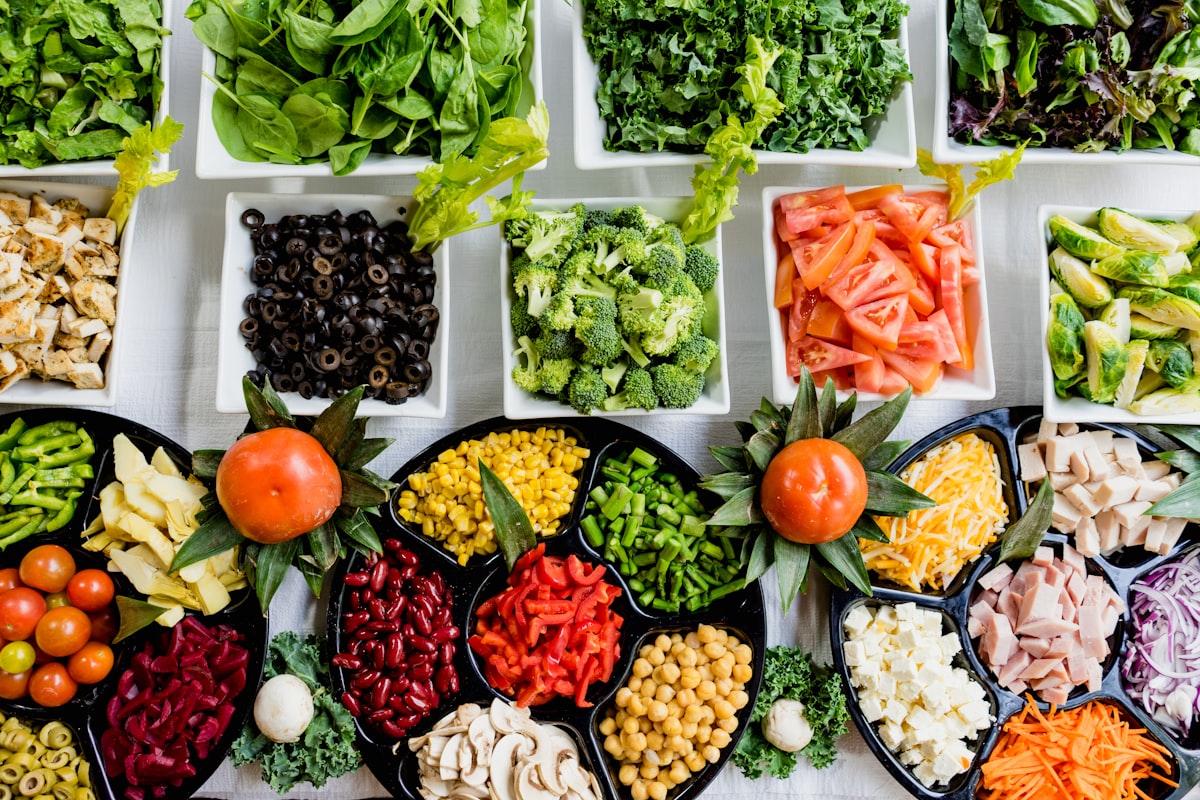
The oligosaccharides are water-soluble, which is the practical opening. Every step of preparation that puts legume sugars into water and then throws the water away removes a slice of the fermentable cargo before it ever reaches the colon.
A Brazilian group put numbers on the home-kitchen version. They took common beans through five domestic preparations and measured the raffinose-type oligosaccharides in each. Soaking followed by cooking and discarding the soaking water cut raffinose by twenty-five percent, stachyose by roughly a quarter, and verbascose by forty-two percent — while cooking without soaking removed less.
The finding that matters just as much sat in the second half of the paper: protein quality did not pay for it. Food conversion efficiency and net protein ratio in the rat feeding assay were unchanged by the treatment. The water took the gas supply and left the nutrition.
Longer, hotter, pressurized cooking leaches more, which is one quiet reason pressure-cooked and canned legumes sit easier on many stomachs than a gentle home simmer — the sterilization process pushes the sugars out into the canning liquid, which most people drain and rinse away.
Discarding the soak, using enough water, and rinsing cooked beans are all the same physical move repeated at different stages: give the sugars somewhere to go that is not you.
None of this zeroes the problem. The oligosaccharides woven inside the seed matrix stay put, and cooking can even release some that were previously bound and unmeasurable. Soaking is a reduction, not an exemption — which is exactly the right scale for it.
- Soaking, then cooking and discarding the water, cut raffinose 25%, stachyose ~25% and verbascose 42% in common beans — with no loss of measured protein quality.
- Pressure cooking and canning leach still more oligosaccharide into the liquid; draining and rinsing cooked beans continues the same removal.
"Give the sugars somewhere to go that is not you."
The Spleen Reads Bloating Differently
Two thousand years before anyone named raffinose, the compilers of the Huangdi Neijing had already filed this symptom. ' Not the food. The transformer. In that framework the spleen and stomach are the middle burner, the apparatus that receives food, separates the clear from the turbid, and ships the useful part upward and outward.
When that movement stalls, the result is not poisoning but accumulation — food sits, damp gathers, the abdomen fills.
Lingshu chapter sixty-six describes the sensation with startling physicality: distension lies outside the organs themselves, pushing against them, enclosing the chest and ribs, stretching the skin. That is a fine phenomenological description of gas — a mechanical event, a wall being pushed from inside, not a disease of the tissue being pushed.
The text and the modern account agree that the machinery is intact and the problem is a volume-and-motion mismatch.
The spleen in that system is not the anatomy textbook's spleen. ' The classical texts add a second clause that survives translation surprisingly well: the spleen also governs dampness, meaning that a sluggish middle fails to move fluids as well as food, which is why the same patient who bloats after beans often reports heaviness, loose stools and fatigue in the same breath.
Whether the underlying physiology is motility, fermentation load, or something else entirely, the clinical description — food sits, gas accumulates, the person feels waterlogged — is coherent and reproducible across twenty centuries of case records. ' It is to lighten, warm, cook longer, and rebuild the transformer's tolerance with foods it can actually move.
The prescription is where the two frameworks part ways in method but not in direction. Lingshu chapter fifty-six names the soybean — da dou — among the salty flavors favored by a struggling spleen, alongside pork, chestnut and pulse leaves. The staple that modern eaters abandon was, in that text, the food the compromised digestion was told to eat.
The reasoning is characteristically classical: a food that generates qi and builds the middle, taken in amounts the middle can handle, trains the apparatus it feeds.
What the classical frame adds, for a modern reader, is the insistence on capacity rather than avoidance. A weak middle burner is not permanently weak; it is load-bearing tissue that has been asked for more than it can currently move. The response the texts recommend is graded load. Which happens to be what the feeding trials found, twenty centuries later, in questionnaire form.
- Suwen 74 files bloating and fullness under the spleen's failure to transform — the transformer, not the food, is the unit of analysis.
- Lingshu 56 prescribes the soybean for the spleen; the classical instinct is graded retraining of digestion, not permanent avoidance.
A Ramp That Fits the Evidence
Put the mechanism and the trial data together and a reasonable protocol writes itself. It is not exotic. It is a loading plan, and it has four moving parts.
Start small. The trials used half a cup daily, but nothing prevents a first week at a quarter cup, or a third, three times a week. The colon does not need a heroic dose to begin adapting its bacterial community; it needs a repeated, survivable signal.
Pick the gentler gateways early — black-eyed peas scored nineteen percent first-week flatulence against pinto's fifty, and red lentils and split peas carry less of the oligosaccharide load than most common beans. Bean type is a variable, not a footnote.
Handle the water at every stage. Overnight soak, drain, rinse; cook in generous water; drain again; rinse canned beans even when the recipe does not insist. Each drain moves fermentable sugar out of the pot and down the sink.
Then the part almost nobody does: stay in the room past week one. The trials' central finding is temporal. Week one is the worst week, by a factor of several, and the discomfort that a person remembers and generalizes from is usually a week-one discomfort. Committing to three or four weeks before judging the experiment is the single highest-yield step in this entire article.
And spread the load across the day. Half a cup at dinner is a bigger single fermentable challenge than a quarter cup at lunch and another at dinner. The middle-burner framing says the same thing in older language: give the apparatus what it can move, when it can move it.
- Begin with 1/4 cup, 3 times a week, favoring gentler legumes first — black-eyed peas caused first-week gas in only 19% versus 50% for pinto beans.
- Judge the experiment after 3-4 weeks, not one — the trials show week one is the peak and the curve falls from there.
"Week one is the worst week, by a factor of several."
The Honest Boundaries
This is the section that keeps the piece honest, and it runs in three directions.
First, the health halo. ' The best recent synthesis declines to.
A 2023 systematic review and meta-analysis for the Nordic nutrition authorities pulled in forty-seven studies — thirty-one cohorts covering over two million people — and found essentially null associations between legume intake and cardiovascular disease, coronary heart disease, stroke and type 2 diabetes in populations that, it should be said, ate very few legumes.
The randomized trials inside the same review did show real improvements in total and LDL cholesterol, fasting glucose and insulin resistance. So the honest sentence is: legumes improve risk factors measurably in trials, while disease-endpoint evidence from real populations is too limited and too confounded to promise outcomes. They are an excellent food. They are not a statin.
Second, not every gut adapts on the same schedule. People with irritable bowel syndrome, small intestinal bacterial overgrowth, or a diagnosed FODMAP sensitivity may find even well-prepared legumes genuinely disruptive, because the sensitivity is to the fermentable category as a whole, not to beans specifically.
For those readers, smaller pulses, sprouted or well-rinsed preparations, and a dietitian's guidance beat trial-and-error with symptoms. Adaptation is the norm in healthy volunteers; it is not a guarantee in everyone.
Third, gas is usually noise, but not always. A persistent change in bowel habit, blood, night-time pain that interrupts sleep, or weight loss without trying are not adaptation issues. Those are appointment issues.
- A 2023 meta-analysis of 47 studies found null disease-endpoint associations for legumes, while RCTs showed LDL cholesterol about 0.19 mmol/L lower — risk-factor benefit, not proven outcome benefit.
- IBS and FODMAP sensitivity can make even well-prepared legumes genuinely disruptive; adaptation is the healthy-adult norm, not a universal promise.
Eleven Years, Ten Days
The friend from the opening came back to legumes at a third of a cup, twice a week, black-eyed peas before anything bigger. The second week was easier than the first. By the third she was eating half-cup servings most days and had stopped thinking about it, which is what adaptation looks like from the inside: the absence of a topic.
Nobody is owed that outcome. Some bodies, some preparations, some weeks — it will not go smoothly, and the honest move is to slow down rather than quit. But the default story most people carry is worse than the evidence. The default story says the gas is permanent and the only response is exclusion.
The trials say the gas is mostly a first-week phenomenon with a strong expectation component, and the kitchen says a meaningful slice of the fermentable load leaves with the soak water.
The Neijing would put it another way — that fullness belongs to a middle that needs feeding, not starving, and that the soybean is on the list of foods for exactly that job. Two thousand years and a randomized-trial literature later, the two accounts still seem to be describing the same patient.
The bag in the back of the cupboard is not a mistake. It is week zero. What it becomes depends almost entirely on whether the person holding it gives the second and third weeks a chance to be different from the first. The evidence says they usually are.
- A practical restart: 1/4 cup of black-eyed peas or red lentils, twice weekly, soaked and well rinsed, judged after four weeks.
- Adaptation feels like nothing — the topic simply stops coming up. That silence, not any single good day, is the signal it worked.