The Fear Is Specific, So the Tools Should Be
Ask someone why they avoid legumes and the answer is rarely about flavor, cost or nutrition. It is an event. A dinner that went wrong, an office afternoon that went worse, and a decision made in the aftermath that beans are not for this body.
The interesting thing about that decision is how vague its object is. 'Beans cause gas' treats legumes as a single undifferentiated hazard, as if the only possible response were total exclusion. But the problem has structure. A set of specific sugars survives human digestion and feeds colonic bacteria.
The amount of those sugars varies by bean, falls with soaking, collapses with sprouting, and can be partially dismantled at the meal itself by an enzyme you can swallow. The gut community downstream adapts to a repeated signal within weeks. Every one of those clauses is a handle, and a handle is something a tool can grip.
That is the organizing idea of this review: three tools, each aimed at a different clause in that sentence. The sprouting kit attacks the sugars before cooking. The enzyme tablet attacks them at the meal. The freezer tray exists for the least chemical but most evidence-backed variable of all — the shape of the ramp, small and steady instead of rare and heroic.
What no tool here does is make the problem vanish, and we will say so repeatedly, because the product pages will not. But a problem with structure is a problem with levers, and these are the three levers we would reach for, in the order a normal kitchen would meet them.
A word on scope and money, since reviews that refuse to name prices tend to waste their readers' time. All three tools together cost less than a mid-range monthly supplement subscription, and none of them has an ongoing cost: sprouting seeds run a few dollars a pound, enzyme tablets are consumed but optional, and the freezer tray is a one-time purchase that outlives most of the pans in the drawer.
The ordering also matches the cash-flow logic of the problem. The sprouting kit is the tool to buy first, because it attacks the largest measured slice of the issue for the least money. The enzyme is the tool to buy if and only if your life actually includes unpredictable bean meals — many people's do not, and that is fine.
The tray is for the person already convinced who keeps falling off the wagon logistically, which, in our experience reading the failure patterns, is the largest group of all.
- The bean problem is a chain of specific, separable steps — sugar content, meal-time chemistry, gut adaptation — not one undifferentiated hazard.
- Each tool in this review targets one step: sprouting reduces sugars pre-cooking, enzymes act during the meal, portioning shapes the adaptation ramp.
"A problem with structure is a problem with levers."
Let the Seed Eat Its Own Gas First
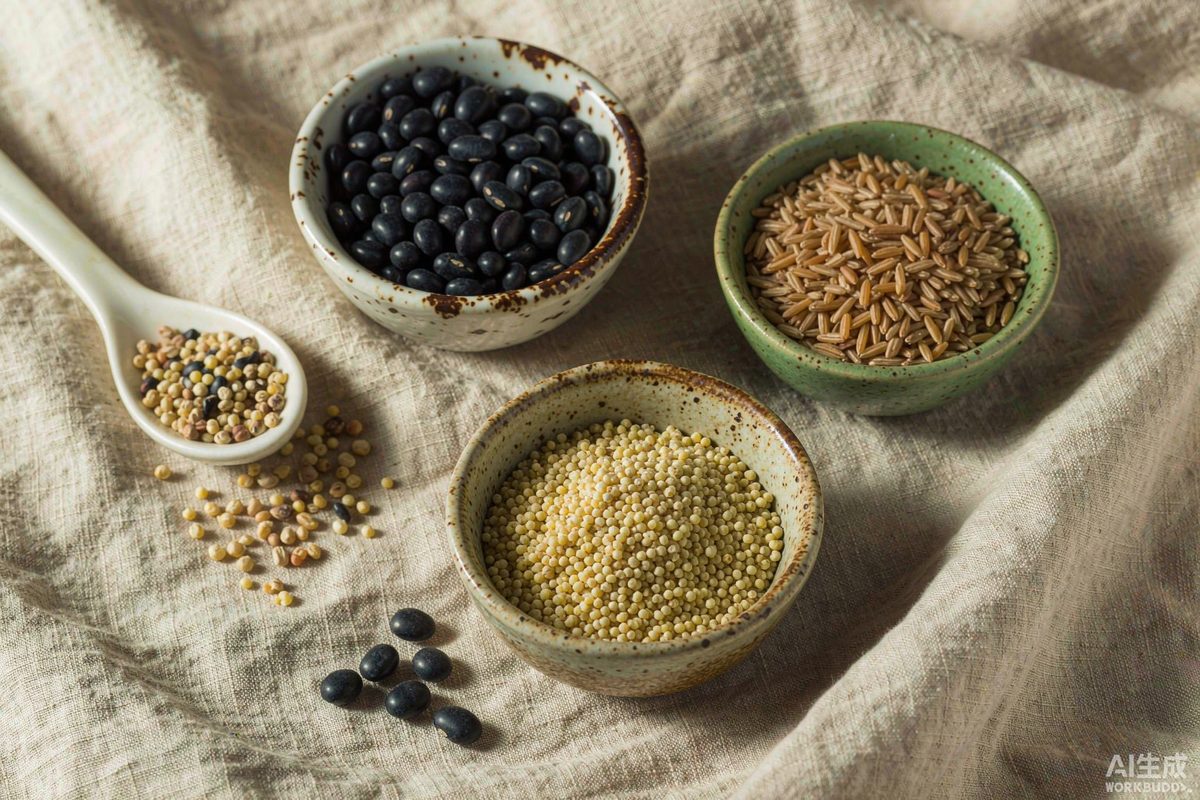
A dry bean is a survival kit. Its raffinose-family oligosaccharides exist precisely because they stay stable through drying and freezing — energy banking for the seedling. Which leads to an elegant inversion: the property that makes these sugars indestructible in the pantry is the property that makes them first on the menu when the seed wakes up.
Germination is the seed liquidating its own reserves, raffinose and stachyose included, before it grows anything you would recognize as a sprout.
The measurements back the poetry. In an analysis of mung beans and two strains of small-seeded soybeans, stachyose and raffinose either disappeared or fell to trace amounts within three days of germination for mung beans and four for soybeans, with phytic acid and trypsin inhibitor activity falling alongside.
Later work on lupine and faba beans found germination stripped the raffinose-family oligosaccharides entirely. A seed that has spent four days turning its gas supply into a shoot is, by direct measurement, a very different food from the dry seed that went into the jar.
A countertop sprouting kit is the cheapest possible way to run this process at home: a quart jar, a stainless mesh lid for rinsing and draining, a rack to keep the jar angled so it drains. Two minutes of attention, twice a day, three to five days. Mung beans and lentils are the forgiving first choices; chickpeas take a day longer; anything that soured smells sour, and gets composted without ceremony.
The side effects of the process are worth wanting, not just tolerating. Sprouted mung beans cook in a fraction of the time of their dry parents, which quietly removes the 'I forgot to soak them last night' failure that kills more bean intentions than gas ever did. Their protein becomes measurably more digestible in several assays, and vitamin content shifts as the seed metabolizes its own reserves.
And the texture is genuinely different — crisper, greener, somewhere between a vegetable and a legume — which matters more than it sounds, because a food you enjoy eating twice a week is a food you will keep eating. In Chinese cooking this is not an exotic move.
Bean sprouts have been a market staple for centuries; the pharmacopoeia's first soybean entry is a sprout, not a seed; and the home habit of germinating mung beans in a covered basin predates every gadget on this page. The jar is a sanitation upgrade to a two-thousand-year-old kitchen practice, not an invention.
Honest costs, so the product page does not have to say them: sprouting is a habit rather than a purchase, and a forgotten jar on a warm counter is a failed jar. The sprouts themselves are a different food — greener, rawer, eating them in stir-fries and congee rather than by the handful. And sprouting does not touch every antinutrient equally; some measures move more than others.
As a lever on the specific sugars behind the gas, though, it is the strongest one on this page.
- Germination cut stachyose and raffinose to trace amounts in mung beans within 3 days and soybeans within 4 — the seed consumes its own gas-causing reserves.
- Start with mung beans or lentils; rinse twice daily, keep the jar angled to drain, and compost any batch that smells sour.
The Enzyme at the Table: Measured, Not Miraculous
Alpha-galactosidase is the enzyme the human small intestine never evolved, supplied in tablet form, chewed with the first bites of a bean meal. The logic is direct: do in the gut lumen, chemically, what the gut cannot do for itself — snip the galactose units off raffinose and stachyose so they arrive in the colon as ordinary sugars instead of bacterial fuel.
The trial behind this category is better than most supplement trials and still small. Eight healthy volunteers, a randomized double-blind crossover design, and a test meal of 420 grams of cooked beans — roughly triple a normal serving, chosen plainly to provoke the problem. With the higher enzyme dose, breath hydrogen fell significantly, as did flatulence severity, and the total symptom score dropped at both doses.
Breath hydrogen is the objective marker here: it is the direct readout of how much fermentable material made it to the colonic bacteria. The enzyme measurably starved them.
Now the counterweight, which the brand pages leave out. A later randomized, double-blind, placebo-controlled crossover pilot ran the same enzyme against carbohydrate-rich test meals in twenty adults with irritable bowel syndrome and found no advantage over placebo — not in symptom ratings, not in breath hydrogen or methane. The authors' conclusion was straightforward: in IBS, this enzyme was not superior to placebo.
Read together, the two trials sketch an honest boundary. For a healthy gut facing an unusually large legume meal, the enzyme has a measured, mechanism-matched effect. For a reactive, symptomatic gut, the evidence of benefit is absent, and the realistic expectation should be set accordingly.
Buy it as a seatbelt for the restaurant meal and the dinner-party chili — not as daily armor that licenses portion sizes no enzyme can cover.
- In a randomized crossover trial with a 420 g bean test meal, 1200 GalU of oral alpha-galactosidase significantly cut breath hydrogen and flatulence severity in healthy volunteers.
- The same enzyme showed no advantage over placebo in a 20-person IBS pilot — sensitive guts should not expect the label's promise.
"Buy it as a seatbelt for the restaurant meal, not as daily armor."
The Tool for Week Two, Three, and Four
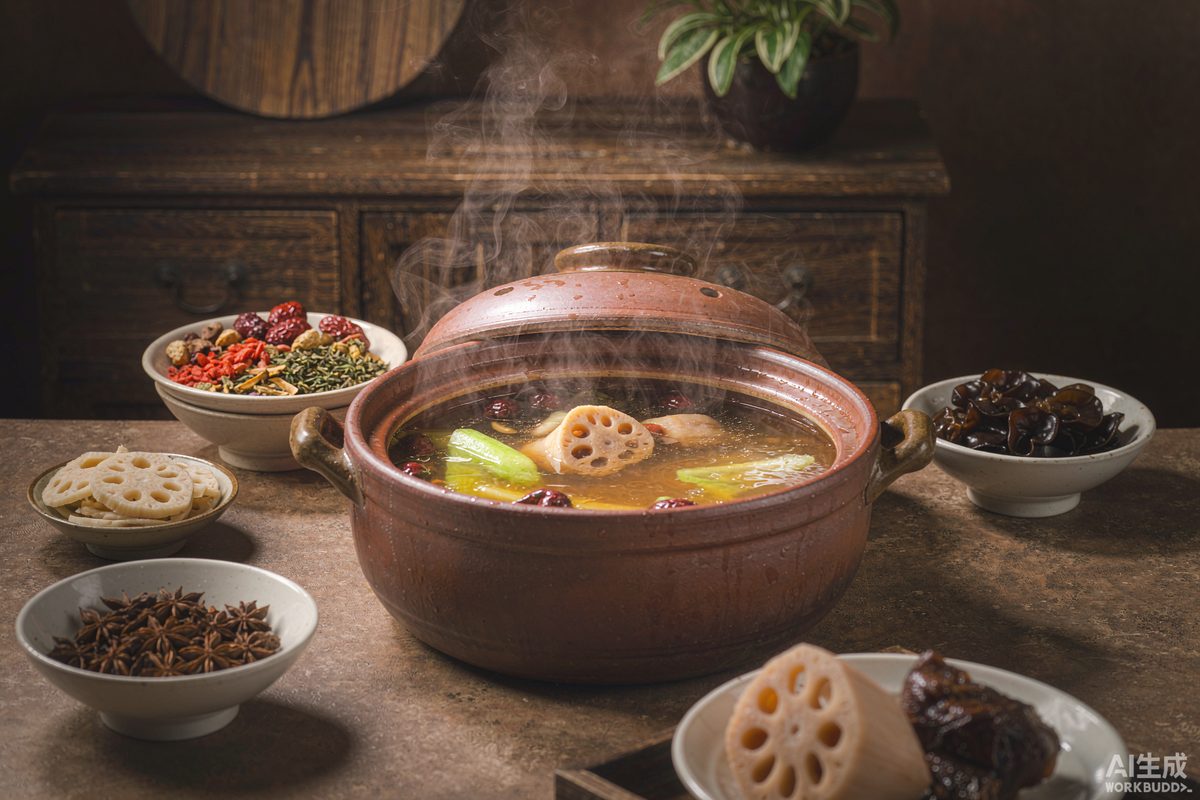
This third tool looks the least medical and may matter most. Every adaptation claim in the feeding-trial literature — fewer symptoms by week two, reports fading by week three, the microbiome adjusting to a repeated substrate — depends on one unglamorous condition: the beans have to keep arriving. Small and steady, not rare and heroic.
Nothing about modern life supports that rhythm naturally. A pot of beans serves eight. Soaking and simmering a fresh half cup every evening is a project nobody sustains past Thursday. The failure mode of nearly every bean-resolution is not a bad reaction; it is logistical decay — the resolution dies in the freezer where the leftovers went to be forgotten.
A lidded silicone freezer tray with one-cup compartments is the piece of equipment that matches the evidence's shape. Batch-cook once a week, portion into cups, freeze, and pop out individual bricks as needed. The half-cup trial serving stops being a cooking task and becomes a retrieval task — thirty seconds of reheating in a pan of rice or a bowl of soup.
That is the difference between a plan that survives a busy month and one that does not.
Silicone earns its premium over rigid plastic on release and lifespan: frozen bricks push out cleanly, lids block freezer odor, and the trays take years of dishwasher cycles. Get one-cup compartments rather than larger — the entire point is right-sizing the fermentable load — and cool the batch fully before filling. It is a boring purchase. So is the thermostat, and it works.
The freezer rhythm has a second-order benefit nobody markets: it decouples beans from decisions. ' The bricks go into congee from frozen, dissolve into tomato sauce, get mashed with garlic for toast, or become a five-minute fried rice with whatever vegetables are wilting in the drawer.
A truer confession about our own tray: the top compartment's lid eventually warped from a hot-pan contact incident, and the tray kept working anyway, which says something about the material's margin for household error. If your household eats meat as well, the same tray does double duty for stock, curry base and pesto cubes — the beans will not care about sharing, and neither will you.
What the tray cannot do is make week one comfortable; its job begins exactly where the soaking and the enzyme leave off, and it assumes you are willing to see the experiment through to the weeks where the trials say it gets easier.
- Adaptation depends on repeated small servings — the freezer tray turns a half-cup serving into a 30-second retrieval instead of a cooking project.
- Choose 1-cup compartments, cool batches fully before freezing, and label lids: frozen adzuki and black bean soup look identical.
The Old Pharmacopoeia Chose the Sprout
There is a footnote in this subject that we find hard to leave out. When the Shennong Bencao Jing — the oldest known Chinese pharmacopoeia, compiled roughly two thousand years ago — catalogues beans, its very first soybean entry is not the dry seed. It is da dou huang juan: the soybean, sprouted and dried. '
Sit with that middle clause for a second. A text with no concept of enzymology picked, as its canonical bean preparation, the one processing method that modern food chemistry can now measure stripping out the gas-producing oligosaccharides. Whatever mixture of observation and accident produced that choice, the choice itself was, by present measurements, the technically sophisticated one.
The rest of the framework is equally directional. Suwen chapter twenty-one describes digestion as a transport chain — drink enters the stomach, essence passes upward to the spleen, the spleen disperses it onward — with a middle link whose capacity is the whole question. Capacity language, not gate language: the middle can be loaded, gradually, and it strengthens under graded demand.
And the adzuki bean enters the same pharmacopoeia under 'governs promoting water downward' — filed, like everything in this article, under movement rather than avoidance.
None of this constitutes evidence in the modern sense, and we are not presenting it as such. It is a record that people eating beans daily for centuries, without pressure cookers or enzyme tablets, converged on sprouting, portioning and graded reintroduction as the working answers. The tools in this review are new handles on old doors.
- The Shennong Bencao Jing's canonical soybean preparation is the sprout (da dou huang juan) — the exact method modern assays show dismantling raffinose-family sugars.
- Classical digestion is transport-chain language: a middle link that strengthens under graded load, not a pass-fail barrier.
"New handles on old doors."
What None of These Tools Can Do
A review that sells three products owes a section on what the receipt does not buy.
It does not buy speed. The tools shorten week one and smooth the path, but the adaptation the trials document still takes weeks of repeated exposure. A jar of sprouts does not condense three weeks of microbiome adjustment into three days.
It does not buy a green light for reactive guts. If you have diagnosed IBS, SIBO, or a known FODMAP sensitivity, the one human trial run in people like you found the enzyme no better than placebo, and even well-prepared legumes may be genuinely disruptive. That is a conversation for a dietitian with your history in the room, not a product page.
Small, tolerated pulses — a spoon of well-rinsed lentils in a large soup — are a different experiment from a bowl of chili, and the difference is the experiment.
And it does not buy silence about red flags. Bloating that is new, persistent and one-sided; blood in the stool; weight loss without trying; pain that wakes you at night — these are not fiber-adjustment problems, and no sprouting schedule addresses them. Tools are for mechanical problems. Symptoms that persist need a clinician.
With those limits stated plainly, the three tools do what tools do best: they remove friction from a behavior the evidence favors. Sprout what you can, dose what you cannot, portion the rest — and let the weeks do the part the weeks were always going to do.
One last practical synthesis, for the person who wants a single ordered plan out of three separate product pitches. Weeks one and two: soaked, well-rinsed lentils or black-eyed peas, a quarter cup, three times weekly, portioned from the freezer tray so the routine costs nothing; enzyme tablets reserved for any meal you did not cook yourself.
Weeks three and four: half-cup servings on most days, the first mung-bean sprout batch running on the counter so that a gentler, partially pre-digested legume joins the rotation. Week five onward: whatever rhythm the last month has proven your body can absorb — more variety, larger portions where they were tolerated, sprouts folded into congee and stir-fries. It is not a dramatic protocol.
It is a loading program, the same shape physical therapists use for a tendon: graded, repetitive, and honest about the fact that capacity is built, not declared. The tools simply make the repetition cheap enough to actually happen.
- No tool here condenses weeks of adaptation into days — sprouting reduces the load, it does not replace the ramp.
- For IBS, SIBO or FODMAP sensitivity, the human trial evidence shows no enzyme benefit; work with a dietitian rather than a product page.
Three Handles, One Gradient
If you only buy one, buy according to your failure mode, not the reviews' rankings. If beans already agree with you and you simply want the gentlest possible version of them, the sprouting jar kit is the strongest lever and the most mechanically backed — the seed does the chemistry, measurably, before you ever light a stove.
If your exposure to legumes is mostly other people's cooking and unpredictable portion sizes, the enzyme tablet is the right shape of insurance, with the honest caveat that its strongest evidence is in healthy guts facing large meals.
If your problem is consistency — you know beans agree with you in moderation but never manage to eat them that way — the freezer tray is the boring, effective answer, and it is the one that most directly matches how the feeding-trial data were actually collected: half a cup, most days, for weeks.
In our own kitchen all three settled into an unceremonious division of labor. Sprouts go into congee and stir-fries a few times a week. A strip of enzyme tablets lives in the bag that goes to restaurants. The freezer tray runs its Sunday-afternoon cycle, and its bricks have quietly replaced canned beans in most weeknight cooking — cheaper, less sodium, and the texture after reheating is better than anyone expects.
That is the whole system. It is less a kit than a gradient: the sugars reduced before cooking, dismantled at the table, and delivered to the gut in loads it can learn from. None of it is dramatic. All of it is measurable. And somewhere around week three, the topic stops being interesting — which, in digestion as elsewhere, is what progress usually feels like.
- Buy by failure mode: sprouting kit for gentlest daily legumes, enzyme for unpredictable meals, freezer tray for consistency.
- The system is a gradient — reduce before cooking, dismantle at the meal, and deliver small repeatable loads the gut can adapt to.