Every Meal Ends the Same Way
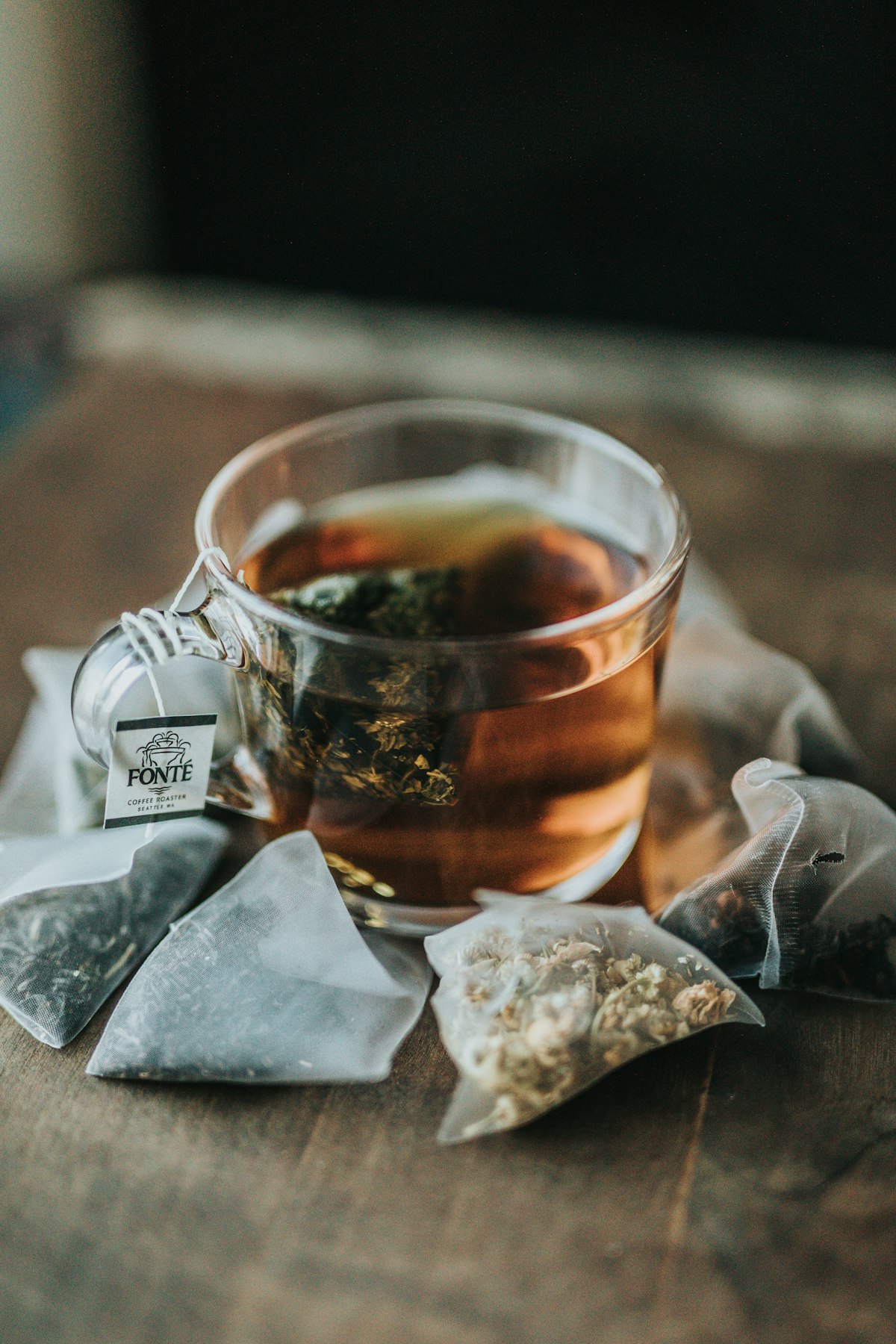
The pot comes out after the plates are cleared. In Chaozhou, in Hunan, on the north China plain in January — dinner finishes and tea appears, brewed dark enough to stain the rim of the cup. Poured small, drunk fast, three infusions before anyone thinks about the dishes. Nobody measures it, and the habit is several centuries older than any nutrition label.
It is also, in one narrow respect, a variable in how much iron a person actually gets from a meal. Not the iron sitting on the plate. The iron that crosses the intestinal wall. Those two numbers are not the same, and the distance between them is where this article lives.
Let me put the frame down before anything else. Tea is not a toxin, and nothing here argues for giving it up. Populations that drink a great deal of it — Japan, parts of China, Britain in its own way — are not notably anemic as a group.
The effect we are about to look at is conditional: it depends on how strong the brew is, on what else is in the meal, on how much iron the person has in storage, and on the size of the body's current demand. Change any of those and the arithmetic changes with it.
Still, conditional effects are the ones most worth understanding, because they are the ones a person can do something about. A well-nourished man with normal ferritin can drink tea through dinner for forty years and notice nothing. A menstruating woman with a ferritin of 9, a regular blood donor, someone eating mostly plants — the same cup lands in a different body.
There is also an older description of this, written by people who had no idea iron existed, that lands closer to the modern account than it has any right to. We will get there. First the chemistry, because the chemistry is where the argument has to stand.
- The relevant number is not iron eaten but iron absorbed — a mixed diet supplies 10-20 mg daily, of which an adult typically absorbs 1-2 mg.
- The effect of tea is conditional. Iron status, meal composition and brew strength change it more than the tea itself does.
"Not the iron sitting on the plate. The iron that crosses the intestinal wall."
Counting Polyphenols, Not Cups
The compounds that interfere are polyphenols, a large family that includes the tannins. They bind iron in the gut lumen and hold it in a form the intestinal cells cannot take up. Galloyl groups on the molecule do most of the gripping.
This is not a subtle or speculative mechanism — it is old, well-replicated bench chemistry, and it applies to coffee, cocoa, wine and several herbal infusions as much as to Camellia sinensis.
What matters practically is dose, and dose varies more than tea drinkers assume. A single strong mug of black tea can carry roughly 150 to 250 milligrams of polyphenols. Brew the same leaves lightly, or drink a delicate white tea, and you might get half that.
Brew gongfu style — small vessel, a lot of leaf, thirty-second infusions poured over and over — and the concentration per sip climbs again, because the leaf-to-water ratio is doing something a Western mug never does.
The cleanest dose-response data come from a 1999 study that fed volunteers a bread meal and varied only the beverage. Infusions carrying 20 to 50 milligrams of polyphenols per serving cut iron absorption by 50 to 70 percent. Those carrying 100 to 400 milligrams cut it by 60 to 90 percent. Black tea, at typical strength, produced inhibition of 79 to 94 percent.
That is not a rounding error in a footnote; that is most of the iron in that meal, gone.
Two findings from the same study deserve to be better known. Milk did not help. Adding it to tea or coffee had little or no effect on the inhibition, which quietly retires a piece of advice that gets repeated in kitchens constantly. And the herb teas were not innocent either: peppermint matched black tea at equal polyphenol concentration, cocoa inhibited 71 percent, chamomile 47 percent.
Switching from black tea to a mint infusion is a change of flavor, not a change of chemistry.
- Beverages with 100-400 mg polyphenols per serving reduced iron absorption from a bread meal by 60-90%; black tea at normal strength inhibited 79-94%.
- Milk does not block the effect, and peppermint tea inhibited absorption as strongly as black tea at the same polyphenol load.
"Switching from black tea to a mint infusion is a change of flavor, not a change of chemistry."
The Iron Door Is Narrow
Iron is abundant in food and scarce in the body, and the reason is that the body has almost no way to get rid of it. There is no regulated excretion route. Losses are involuntary — a milligram or so a day through sloughed skin and gut cells, more through menstrual bleeding. Since nothing leaves on purpose, nothing can enter on purpose either.
Absorption is the only valve, and it is a tight one: of the 10 to 20 milligrams an adult eats daily, something like 1 to 2 milligrams crosses over. Everything else passes through.
The valve has two different doors. Heme iron, the iron wrapped inside the porphyrin ring of hemoglobin and myoglobin, arrives pre-packaged and gets absorbed at roughly 15 to 35 percent efficiency, mostly through a dedicated transporter. It is largely immune to the things that interfere with other iron.
Non-heme iron — the ferric and ferrous salts in plants, eggs, dairy, fortified flour, supplements — is absorbed at perhaps 2 to 10 percent, and it is exquisitely sensitive to its chemical company. Vitamin C reduces it to the ferrous form and pulls it through. Phytates in whole grains and legumes grab it. Calcium competes with it. Polyphenols chelate it.
Above both doors sits hepcidin, a hormone made in the liver that behaves like a gatekeeper with a clipboard. When iron stores are full, hepcidin rises and closes the doors. When stores drop or demand climbs, hepcidin falls and absorption opens up — which is why a person with depleted iron can absorb three or four times more from the same meal than a replete person does.
That last point is the one that keeps this from being a story about a dangerous drink. The body compensates. It compensates slowly and imperfectly, and it cannot compensate against an intake that never arrives, but it does compensate. The question is whether the compensation is enough in a given body — and for that you need to know a ferritin number, not a feeling.
- Heme iron (meat, blood) is absorbed at roughly 15-35% and largely resists inhibitors; non-heme iron (plants, eggs, fortified foods) absorbs at 2-10% and is highly inhibitor-sensitive.
- When stores fall, hepcidin drops and absorption can rise several-fold from the same meal — the body's main defense against a marginal diet.
What the Isotope Lab Found
In 1975 a group in South Africa ran the experiment that still anchors this literature. They gave volunteers radio-labelled iron in several forms — simple salts, bread, a rice meal with potato and onion soup, and haemoglobin — and measured absorption with and without tea. Absorption fell in every case but one. The exception is the detail worth remembering: tea did not inhibit iron from cooked haemoglobin.
Uncooked haemoglobin, yes. Cooked, no. The heme pocket apparently shields its iron from the polyphenols once the protein has been denatured and the meal is real food rather than a lab solution.
That single result explains a large part of the epidemiology. Populations whose iron comes mostly from meat show muted effects from tea. Populations whose iron comes mostly from grain and vegetables show the full effect, which is precisely the caveat the authors wrote into their conclusion — that tea with meals may contribute to iron deficiency where the diet is built largely on plant foodstuffs.
The second detail is one people rarely expect. In the 1975 work, adding ascorbic acid did not rescue the absorption. Vitamin C is a powerful enhancer of non-heme iron uptake, and it is the standard advice for vegetarians, but it did not beat a strong tannin load in that design. The two effects are not simply additive; they compete for the same iron in the same lumen, and the polyphenol was winning.
Later work filled in the dose curve and confirmed the mechanism — insoluble iron-tannate complexes, formed fast, at gut pH, in proportion to how much polyphenol was present. Nothing about this requires believing tea is harmful. It requires only accepting that a molecule that binds iron tightly will bind some of the iron passing by.
- Tea inhibited absorption from iron salts, bread and a rice meal, but not from cooked haemoglobin — heme iron arrives protected.
- Adding vitamin C did not prevent the inhibition in the original trial, so 'just add lemon' is not a guaranteed fix against a very strong brew.
"A molecule that binds iron tightly will bind some of the iron passing by."
One Hour Buys Back Roughly Half
The practical question is not whether tea inhibits, but whether the timing of the cup changes anything. A 2017 trial took that on directly. Twelve healthy, iron-replete women ate the same isotope-labelled porridge on three occasions, two weeks apart: once with water, once with tea served alongside, once with tea served an hour after the meal.
Fractional absorption came out at 5.7 percent with water, 3.6 percent with tea at the table, and 5.7 percent with tea an hour later. Expressed as inhibition relative to water, the tea-at-the-table condition cost 37.2 percent, and the delayed cup cost 18.1 — roughly half the penalty, gone, for the price of waiting.
Now the honest part, which the paper states and most summaries skip. 398). 046), but barely. This is a small mechanistic study, not a trial of who develops anemia. What it demonstrates is direction and plausible size, and it happens to line up with the dose-response logic: polyphenols need to be present in the lumen at the same time as the iron. Remove the overlap and you remove much of the effect.
There is a corollary nobody finds intuitive. Tea on an empty stomach at four in the afternoon is not costing you iron, because there is no iron in your gut to bind. The cup that matters is the one poured over food, or within the window while digestion is still releasing minerals into the small intestine. Which is why the advice is not 'drink less tea' but 'move the pot'.
One hour is a reasonable, achievable interval. Two is safer and, for most people, still within the shape of an ordinary evening.
- In a controlled isotope trial, tea with the meal cut absorption 37.2%; tea one hour later cut it 18.1% — about half the penalty removed by timing alone.
- Tea between meals costs almost nothing, because there is no dietary iron in the gut for the polyphenols to bind.
Blood Is Something the Body Cooks
The Huangdi Neijing does not have a word for iron, and it would be dishonest to read one into it. What it has is a manufacturing account of blood. In the Lingshu, the middle burner receives qi, extracts the juices from food, transforms them, and makes them red — and that red product is blood. The Suwen repeats the idea from another angle: ying, the nutritive aspect, is the essence of water and grain.
Blood in this frame is not a substance you have; it is a substance you keep making, out of material that has to be extracted properly first.
Follow that logic and the organ of origin becomes the stomach and spleen, the middle burner, the granary. Which is why classical dietary writing is so preoccupied with the strength of digestion and so suspicious of anything that cools or scatters it.
Blood deficiency, in this vocabulary, shows up as pallor, fatigue, palpitations, brittle nails, dizziness on standing, scanty periods — a cluster that overlaps only partly with iron-deficiency anemia, and that a modern clinician would investigate rather than assume.
Tea enters that frame with an odd double character. The Shennong Bencao Jing files the bitter vegetable later identified with tea as bitter and cold, useful against stagnation and aversion to food, and praised for making the body light and reducing sleep. Light and wakeful, not nourished and settled.
Later materia medica was more explicit: Li Shizhen described tea as bitter, cold, heavy in its descent, and unmatched at lowering fire — then added that in people who are cold and weak, or thin-blooded, it chills the stomach and quietly damages original qi.
Read plainly, both traditions are pointing at the same junction from opposite sides. One describes a mineral that fails to cross a membrane because a polyphenol held it. The other describes a dispersing, cooling substance taken in quantity by a person whose blood is already thin. They are not the same claim, and neither confirms the other.
But they are close enough that the old caution about strong tea in the weak is not embarrassing to read next to the isotope data.
- Classical texts describe blood as a manufactured product of middle-burner extraction — which is why digestive strength, not iron intake alone, is the focus of TCM dietary advice.
- The Shennong Bencao Jing praises tea for lightening the body and reducing sleep: dispersing qualities, not nourishing ones.
"Blood in this frame is not a substance you have; it is a substance you keep making."
Who Should Move the Teapot
Start with the group where the arithmetic actually bites. Menstruating women, particularly those with heavy bleeding, are the largest population of iron deficiency in most of the world, and they are also the group most likely to drink tea with meals. Pregnancy roughly triples iron demand. Regular blood donors lose 200 to 250 milligrams per donation and are screened for hemoglobin, not for habits.
Vegetarians and vegans absorb only the fragile fraction. Children and adolescents are building blood volume fast. Anyone after bariatric surgery has altered absorption for years. Endurance runners lose iron through foot-strike haemolysis and sweat.
Case reports exist at the far end — severe iron-deficiency anemia traced to very heavy daily green tea intake sustained for years, in people whose diets were otherwise unremarkable. These are extremes, and they are worth reading as extremes: they show the mechanism can matter, not that ordinary tea drinking is dangerous.
One rule has no conditions attached. Do not take iron tablets with tea. A supplement is a large dose of non-heme iron in the most bindable form available, and washing it down with a strong brew is the single most wasteful thing a person can do with it. Water, or juice with vitamin C, an hour away from the pot.
The rest is smaller than it sounds. Put citrus or tomato in the meal. Keep some heme iron in the week if you eat meat. Cook acidic dishes in an iron pan once in a while, which is a subject for its own article.
And if you are tired in a way that sleep does not fix, get a ferritin and a CBC rather than reorganizing your kitchen on a hunch — because the tea habit is only one of several reasons iron goes missing, and celiac disease, bleeding and heavy periods do not announce themselves as tea problems.
- Never take iron supplements with tea or coffee — a tablet is a large dose of the most bindable form of iron, and the brew will take most of it.
- Fatigue that sleep does not resolve deserves a ferritin and CBC, not a dietary guess: bleeding, celiac disease and heavy periods all mimic the tea story.
The Pot Still Sits There
What I have changed after reading this literature is small and slightly annoying. The pot still comes out after dinner. It comes out an hour later than it used to, and it is brewed a little weaker, and there is usually a plate of orange segments somewhere on the table.
My ferritin, the last time it was checked, was fine — which means that for me this whole discussion is mostly theoretical, and I should say so rather than perform concern.
The part I cannot answer is the part that would matter most over a lifetime. Every study above measures a single meal, or three meals in twelve women.
None of them follows a household for twenty years to see whether adaptation closes the gap, whether hepcidin learns to compensate for a habitual binder in the diet, or whether the people who end up anemic are simply the ones whose requirements were already outstripping supply. Nutrition research rarely gets to answer questions shaped like that.
So the honest summary is narrower than a rule. A strong cup with a meal takes a real fraction of the plant iron in that meal. Whether that fraction matters depends on what you have in storage, what you are building, and what else is on the plate. If those numbers are good, drink the tea and stop worrying. If they are not, the fix is a one-hour gap and a blood test — not a farewell to the pot.
- Single-meal studies cannot tell us how a decades-long habit nets out; adaptation and hepcidin may absorb part of the effect.
- A one-hour gap plus a ferritin check covers the realistic version of this problem for most people.
"If those numbers are good, drink the tea and stop worrying."