The Shaker Is a Decoy
Try a quick audit of yesterday's meals. The toast at breakfast, the cheese on it, the lunch meat, the sauce stirred into dinner, the broth under the noodles, the bread that soaked it up — each one carried salt before anyone reached for a shaker. In Western-style diets, close to three-quarters of dietary sodium arrives inside processed and restaurant food, already dissolved, already balanced, invisible.
The shaker on the table contributes a modest fraction. Which means the person who cooks 'without salt' at home can still run a high-sodium week on packaged bread and takeout, and the person who salts a home-cooked soup honestly may do better than either.
How much is too much? The World Health Organization draws the line at five grams of salt a day — about one level teaspoon, or two grams of sodium. Pooled urine surveys across dozens of countries put the global average near double that. The gap is not mainly a failure of restraint at the table. It is a property of how modern food is manufactured, and of how much of it we eat without ever seeing a crystal.
There is an older set of observations here, too. The Huangdi Neijing, assembled more than two thousand years ago, filed the salty flavor under the kidney and the blood — and issued a specific caution about excess, phrased in the vocabulary of a different century: too much salt makes the pulse congeal and stiffen, and it changes the color of the face. Vessels. Flow. Visible change at the surface.
We will come back to that sentence, because modern measurement has been circling the same territory with instruments the old authors never had.
This article walks through the strongest modern evidence — a feeding trial that controlled every gram, a two-decade follow-up, and a trial conducted across six hundred villages — then reads the classical warning on its own terms, and ends where honest writing on salt has to end: with the places the data genuinely disagree.
- About 75% of dietary sodium in Western-style diets comes from processed and restaurant food — the table shaker is the smaller half of the problem.
- The WHO ceiling is 5 g of salt (2 g sodium) per day; global averages sit near double that, mostly from food that was salted before it reached the kitchen.
"The dose we taste is not the dose we get."
Four Hundred Twelve Plates, Measured to the Gram
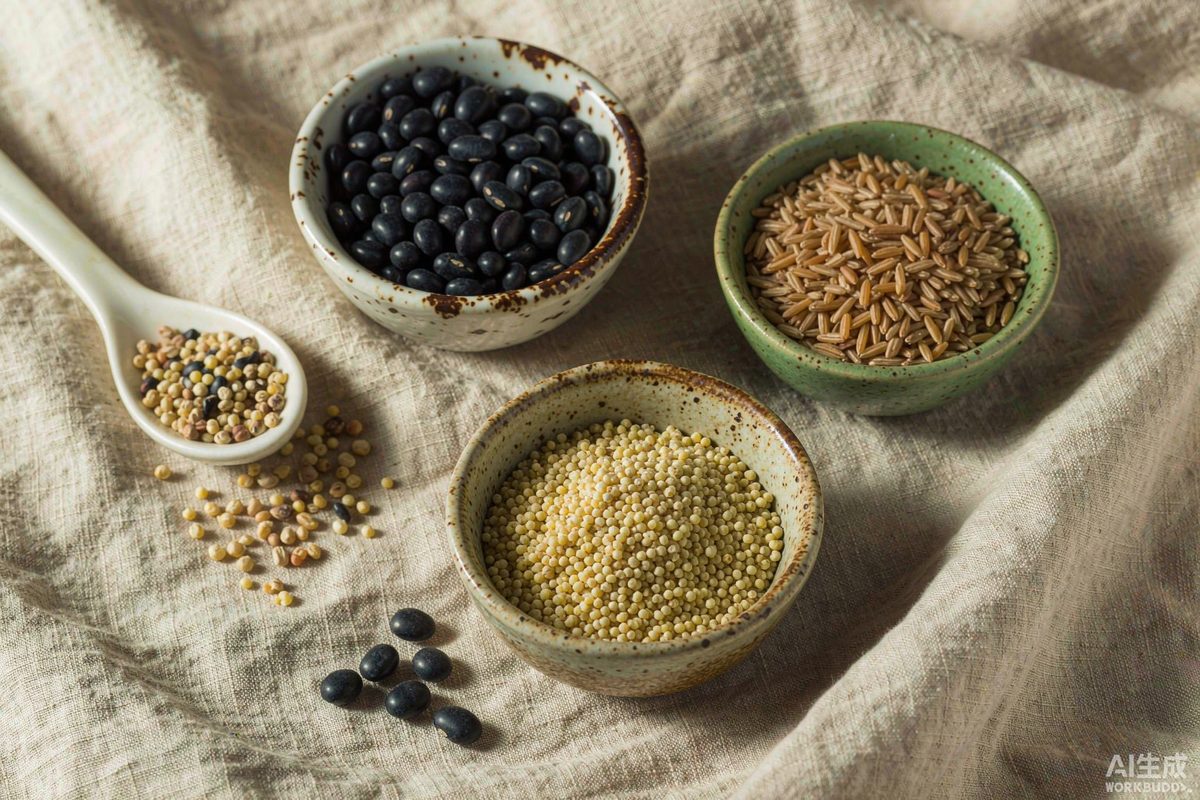
Epidemiology can tell you who eats salt, but never exactly how much. So in 2001 a research group ran the experiment properly. The DASH-Sodium trial enrolled 412 adults — some with hypertension, some without — and fed them every meal under controlled conditions.
Each person cycled through two diet patterns: a control diet built to resemble typical American eating, and the DASH diet, rich in vegetables, fruit, whole grains and low-fat dairy. Inside each diet, sodium ran at three levels, and every volunteer ate each level for thirty consecutive days in random order. Nothing was self-reported. Every gram was counted by the kitchen.
The results stacked cleanly. 1 millimeters of mercury. 6. 5 points in people with it.
Two details deserve more attention than they usually get. The pressure drop from salt reduction appeared in men and women, in Black and non-Black participants, and in people with and without diagnosed hypertension — this was not an effect hiding inside one subgroup. And the two interventions were partly independent. Diet pattern helped at every sodium level; sodium reduction helped inside every diet pattern.
You did not have to choose between them.
The trial says something quietly practical about home cooking, too. A diet built from beans, grains and vegetables leaves less room for the sodium that rides in on processed food — which is, in part, why the pattern works.
- DASH-Sodium fed 412 adults every controlled meal: within one diet, halving sodium dropped systolic pressure 2.1 mm Hg; the austere level added 4.6 more.
- DASH diet plus low sodium reached 7.1 mm Hg below the control diet (11.5 in hypertension) — and the salt effect showed in every subgroup tested.
"Every gram was counted by the kitchen."
Why a Vessel Would Care About a Crystal
Salt is sodium chloride, and sodium is an ion the body guards carefully. Blood sodium concentration stays within a narrow band; what changes after a salty meal is not the concentration but the water. Sodium draws fluid. Take in more of it than the kidneys clear, and the body holds extra water to keep the blood from getting too concentrated — more volume pushed through the same pipes.
That is the textbook story, and it is only part of one. Blood pressure also responds to how the vessel walls behave, and high sodium shows up there too.
Studies of the endothelium — the single layer of cells lining every artery — find that a high-salt load can blunt the vessels' ability to dilate within hours, and weeks of sodium loading measurably stiffen large arteries even when average blood pressure barely moves.
There is also work on the small-resistance vessels and on sympathetic nervous system activity; several mechanisms are under study, and none of them fully explains every observation. Physiology this layered rarely collapses into one sentence.
The honest complication is salt sensitivity. Two people can eat the same salty week and show opposite pressure responses. Sensitivity climbs with age, with existing hypertension, with reduced kidney function, and it runs higher in some populations — people of African ancestry, on average, show larger pressure responses to the same sodium load. Insulin resistance appears to play a role as well.
For a fraction of people the pressure simply does not move much either way, and for others a modest reduction moves it a lot.
Which leads to the question the feeding trials cannot answer alone: does any of this translate into fewer strokes and heart attacks years later? Blood pressure is a proxy, however well-validated. The outcome data needed its own trials — and those took decades.
- Sodium raises pressure partly through retained fluid, but also affects the endothelium and arterial stiffness — several mechanisms are still being mapped.
- Salt sensitivity varies widely: older adults, people with hypertension, and some ancestry groups show larger blood-pressure responses to the same salt load.
Twenty Thousand Villages Swap the Salt
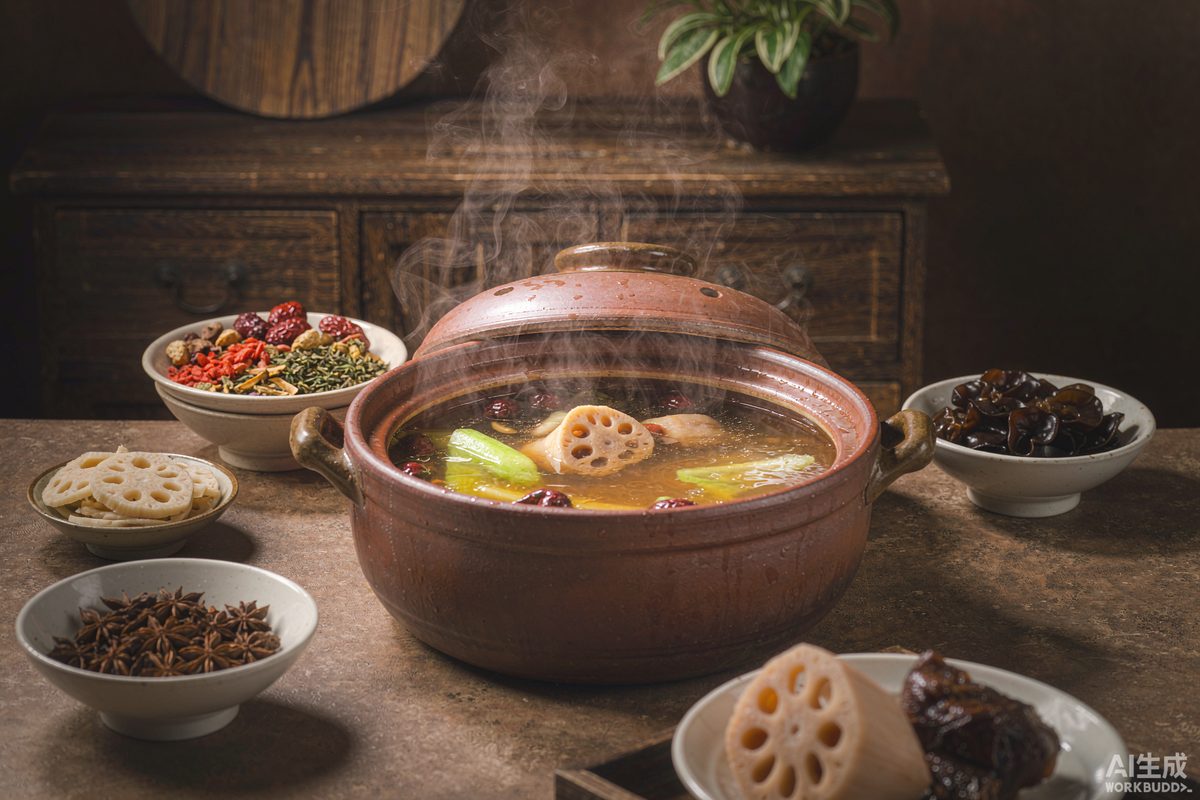
Here is the problem the China Salt Substitute and Stroke Study set out to solve. Telling a village to eat less salt rarely works for long; seasoning is habit, cuisine, and identity at once. But you can change what is inside the salt jar.
The substitute was simple: seventy-five percent sodium chloride, twenty-five percent potassium chloride — the same scoop, the same cooking, part of the sodium quietly traded for potassium, which pulls pressure the other way.
The scale was unusual and so were the stakes. Six hundred rural villages were randomized village by village. Twenty thousand nine hundred ninety-five people enrolled, average age sixty-five, nearly three-quarters with a prior stroke, almost nine in ten with hypertension — precisely the population in which the next stroke is not a hypothetical. 74 years.
Strokes came in at 29.14 versus 33.65 events per thousand person-years — a rate ratio of 0.86. Major cardiovascular events: 0.87. Death from any cause: 0.88, on the order of twelve percent fewer deaths among people swapping one kitchen ingredient. And the safety question that shadows every potassium intervention — clinically serious hyperkalemia — showed no significant increase (rate ratio 1.04).
A skeptic can note the trial was open-label; you cannot blind a salt jar, and the villagers knew which salt they used. But stroke is a hard, counted event, not a mood, and the numbers accumulated over years. Nothing about nutrition research is often this clean: one change, made at the level of habit rather than willpower, sustained by an entire community at once.
The result is among the strongest dietary outcome findings of the last decade — obtained by editing one jar.
- A 75/25 sodium-potassium salt substitute, used in ordinary village cooking for ~4.7 years, cut stroke events 14% and deaths 12% in 20,995 older adults at high risk.
- Serious hyperkalemia did not rise significantly with the substitute in that trial — but the participants were screened and monitored, which home use is not.
"The strongest dietary outcome findings of the decade came from editing one jar."
The Counseling Trial That Outlived Its Funding
A decade before the village study, American researchers ran a humbler experiment. The Trials of Hypertension Prevention enrolled 3,126 adults aged thirty to fifty-four with prehypertension — blood pressure a notch below treatment range, the kind of person a clinician watches rather than medicates. No fancy food.
Just counseling and education aimed at eating less sodium, for eighteen months in the first trial and up to forty-eight months in the second. The measured sodium reductions were modest: roughly 44 millimoles per day in the first trial, 33 in the second — call it one to two and a half grams of salt.
Then the funding ended, the counseling ended, and the researchers did something unusual: they waited. Ten to fifteen years after the original trials, they went back and counted cardiovascular events among the same people.
Among those who had been assigned to the sodium-reduction program, the risk of a cardiovascular event — heart attack, stroke, revascularization, cardiovascular death — was twenty-five percent lower than in the control group. Adjusting further for baseline sodium excretion and weight, the estimate moved to thirty percent.
The mortality signal, it should be said honestly, did not reach significance on its own; deaths were fewer but the confidence interval crossed one.
What makes this study interesting is the shape of the story. An eighteen-month behavior change, made by ordinary prehypertensive adults in the late 1980s, still showed up in their arteries ten to fifteen years later, long after most participants had presumably drifted back toward their old habits. Sodium's vascular effects, at least in this population, were not a week-to-week fluctuation in fluid balance.
Something about the years of lower exposure changed the trajectory. The old texts framed salt damage as accumulation — 脉凝泣, the pulse slowly congealing. The follow-up data, in its own idiom, says the same thing about time.
- TOHP: modest counseling-based sodium cuts (1-2.5 g salt/day) in prehypertensive adults produced 25-30% fewer cardiovascular events 10-15 years later.
- The mortality reduction in TOHP was not statistically significant — a nuance the headline usually drops and the data keeps.
咸 in the Blood: The Old Warning, Read Slowly
' Read it as a clinician's observation rather than as poetry. The pulse — mai — meant both the beat and the vessels it ran in. Congeal and stiffen: a texture word, the language the texts used for anything that lost its movement. And a change in complexion: salt damage made visible at the surface, in the face, where the old physicians read the blood's state every day.
The Lingshu sharpens it into a rule: 'salt travels in the blood; when the blood is diseased, do not eat much salt.' 盐走血 — the salty flavor is assigned a route, into the blood itself, and a condition attached: blood disease narrows the salt budget. It is the first dietary counseling line a modern practitioner will quote a hypertensive patient, and it predates the sphygmomanometer by roughly two millennia.
The Shennong Bencao Jing adds a third voice, and a corrective to modern assumptions about what the tradition thought of salt. Its entry on rong yan — mineral halite — lists real jobs: brightening the eyes, firming muscle and bone, removing toxins. Salt was a medicine, a substance with potency and an implied dose. Nothing in the entry licenses unlimited use; nothing in that pharmacy ever did.
A substance that firms bone in small dose and congeals the pulse in excess is simply a substance with a dose-response curve — a concept the modern lab would recognize instantly.
Where the tradition outran its own evidence, honesty requires the note: the old authors could observe that heavy salt eaters fared worse, but they could not separate salt from the rest of the diet, and their mechanism — that salt congeals — was inference from texture to fate. What they lacked was counting. The modern trials supply the counting, and land, unsettlingly, in the same place.
- Suwen Ch.10 ties salt excess to a stiffened pulse and visible change; Lingshu Ch.63 turns it into a rule — blood disease narrows the salt budget.
- The classical texts treated salt as a potent medicine with a job and a dose, never as a free seasoning.
The Other Half of the Ratio
Notice what the village trial actually did. It did not only remove sodium; it added potassium, and potassium is half the story the salt debate usually forgets. The two ions work in opposition — sodium tends to raise pressure, potassium tends to lower it — and several large observational analyses find that the sodium-to-potassium ratio tracks cardiovascular risk more closely than sodium alone.
A diet can be moderate in salt but low in potassium, and still look worse than a saltier diet built on produce.
Food, again, is where the leverage sits. Beans, leafy greens, squash, potatoes with the skin, bananas, tomatoes, yogurt — ordinary ingredients, each carrying hundreds of milligrams of potassium per serving. The DASH diet's power partly comes from exactly this: a plate dense in vegetables and fruit imports potassium (alongside magnesium and fiber) while displacing processed sodium carriers. Nobody needs a supplement.
The produce aisle and the dried-bean shelf do the work.
The potassium salt substitute deserves its own caveat, though, because it is a pharmacological dose of the mineral rather than a dietary one. For most people at risk — the population the village trial enrolled — the safety margin proved sufficient under monitoring.
For people with chronic kidney disease, or those taking medications that retain potassium (certain blood-pressure drugs and diuretics among them), the same substitute can push serum potassium into dangerous territory.
This is a case where the intervention is real medicine and the pre-existing condition changes the answer; it belongs in a conversation with a clinician who can see a lab value, not a blog post — including this one.
With that boundary drawn, the direction is hard to argue with: swap part of the sodium, and let potassium arrive from the pot and the plate at the same time. The trial tested the jar. The kitchen supplies the rest.
- Potassium counterbalances sodium's pressure effect; beans, greens, squash, potatoes and fruit carry hundreds of milligrams per serving.
- Potassium-based salt substitutes are not for everyone: chronic kidney disease and potassium-retaining medications change the safety math — check with a clinician first.
"The trial tested the jar. The kitchen supplies the rest."
Where the Evidence Ends, and the Kitchen Begins
No honest article on salt gets to end without the disagreement, so here it is. A line of large observational studies — the PURE analyses most prominent among them — reports that people excreting the *lowest* amounts of sodium sometimes show no benefit, or even higher cardiovascular risk, than moderate eaters.
Critics answer with method: spot urine samples estimate twenty-four-hour excretion poorly, reverse causation inflates risk among sick people who lose appetite and sodium, and very-low-sodium groups in these cohorts often include the ill. The randomized evidence — feeding trials, and now the village outcome trial — points one direction; parts of the observational literature hedge it.
Both camps publish, and the argument is not settled at the margins.
What survives even a suspicious read: the harm, where it exists, concentrates at the high end — the eight-to-twelve-gram range where much of the world lives. Nobody credible argues the global average intake is optimal. The open question is where the floor sits, and for whom.
For an individual kitchen, the practical program barely changes across interpretations. Cook more from raw ingredients, where the salt load is visible and chosen. Read labels on the four foods that carry the most hidden sodium — bread, processed meat, cheese, sauces — and treat them as the budget line they are.
Season with acid, heat and aromatics before reaching for more salt; the palate recalibrates within weeks, which every serious feeding study observes and every home cook rediscovers. If pressure is already high, ask about a potassium-based substitute, with lab work if there is any kidney question.
The old warning in the Suwen was not a measurement. It was an observation about habit — that a flavor, taken daily in excess, slowly changes the vessels it travels in. The trials put decimals on the claim. The open question is the one the texts never asked: for a given person, how low is low enough?
- The lowest-sodium cohorts in some observational studies show no added benefit — likely inflated by reverse causation and weak urine sampling; the harm signal concentrates at high intakes.
- Practical program: cook from raw ingredients, audit bread/meat/cheese/sauces for hidden sodium, use acid and aromatics first, and taste buds recalibrate within weeks.