The Smoothie Bowl Problem
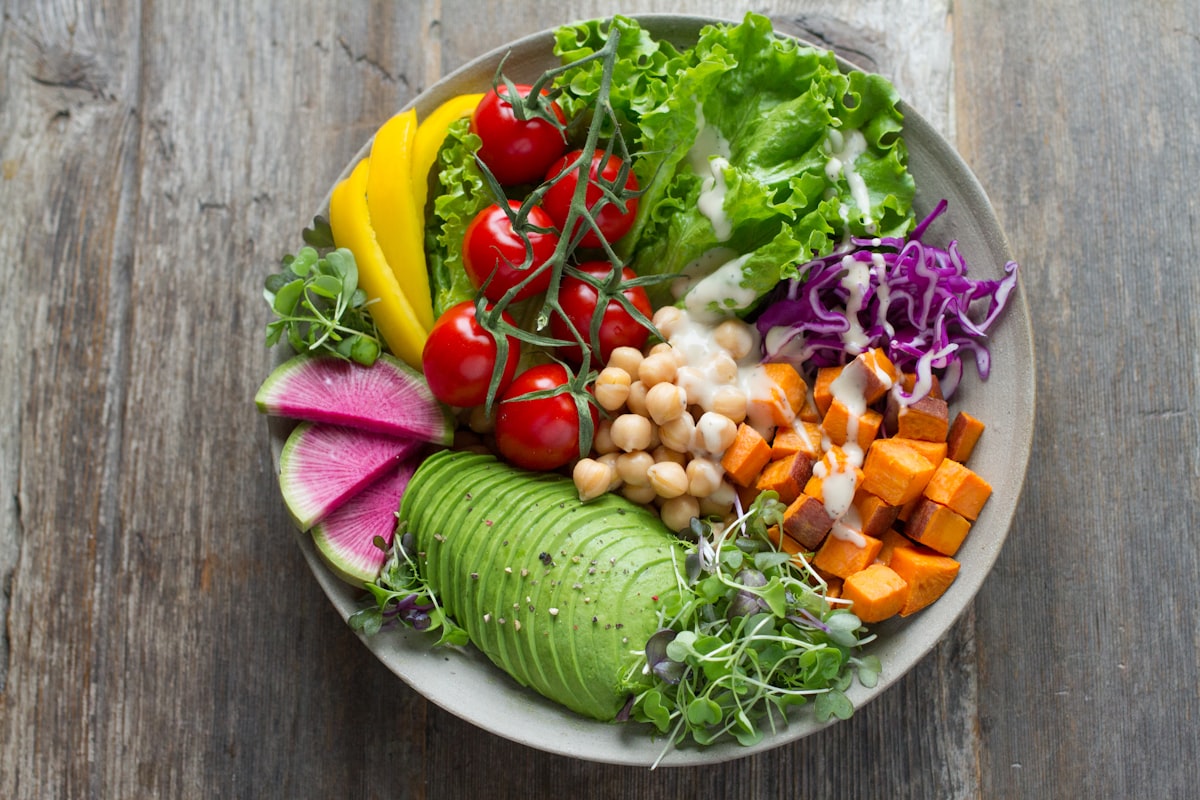
Picture the breakfast. It is January, the radiator is losing its argument with the weather, and you are eating a bowl of frozen berries blended with cold coconut milk, topped with cold yogurt and cold kiwi. Every ingredient on that list appears on published lists of the world's healthiest foods. m. meeting has the emotional texture of wet cardboard.
If this has never happened to you, enjoy it and move along. But if it happens most mornings in the colder months, traditional Chinese medicine would point at a specific suspect, and it isn't the berries. It's the temperature and the rawness, taken together, eaten repeatedly, by a digestive system that was never asked whether it wanted the job.
TCM makes a claim that sounds strange to modern ears: that the same plate of food can be easier or harder on you depending on how much heat it brings with it — heat from the stove, not from chili peppers. Cooked food, in this model, arrives at your stomach partly digested already. Cold raw food arrives as a project.
This article unpacks that claim, checks it against what physiology and nutrition research actually say, and then draws the line where it should be drawn — because there is a real difference between a model that explains your January bloat and a rule that salad is forbidden. It isn't. Keep reading.
What the Spleen Actually Does (It Isn't Anatomy)
First, a translation problem. When TCM talks about the Spleen — Pi, in Chinese — it is not talking about the fist-sized organ sitting behind your stomach. The classical Spleen is closer to a job description: everything your body does to take food apart and redistribute the useful pieces. In modern shorthand, the Spleen is digestion plus absorption plus the metabolic work of conversion, bundled into one official.
The Inner Canon lays out the chain plainly. Food enters the Stomach, which receives and starts the breakdown. The Spleen then does the fine work — transforming the food into usable qi and blood-building material and transporting it where it needs to go.
Suwen describes the Spleen's function as making the essence of grain available to the whole body, and gives the pairing a bureaucratic title: the Spleen and Stomach as the granary officials, the source of postnatal qi. Everything you do after birth, in this framing, runs on fuel this partnership processes.
Two personality traits matter for our subject. The Spleen is said to like warmth and dislike cold, and to like dryness and dislike dampness. Those aren't poetic garnish; they're the operating manual.
Ask the Spleen to work cold and wet for long enough and, the model says, its efficiency drops — food lingers, transformation sputters, and the byproducts of poor transformation accumulate as what TCM calls dampness and phlegm: the heavy, sticky, tired-after-eating, foggy-headed state that half the population seems to self-identify with by mid-afternoon.
None of this maps one-to-one onto a specific enzyme or organ system, and we'll be explicit about that later. But as a working model of how people experience their own digestion, it has held up for two thousand years of clinical note-taking. The question worth asking is what happens when you feed this particular official its least favorite meal.
Cold Means More Than Temperature
Here's where the model gets more interesting than the usual 'don't drink ice water' folklore. In TCM, cold as a food property has two separate dials.
The first dial is literal temperature — food straight from the refrigerator, iced drinks, frozen fruit blended into a slush. This one is intuitive. Your stomach is kept near body temperature, and everything you swallow has to be warmed to roughly 37°C before the chemistry of digestion runs at full speed. That warming costs energy.
Anesthesiologists know this number well: a single liter of intravenous fluid at room temperature can drop core temperature measurably, which is why OR fluids get warmed. Your smoothie bowl is doing a version of this, smaller and survivable, but not free.
The second dial is thermal nature, and it's the one that trips people up. TCM classifies foods on a spectrum from cooling to warming regardless of how they're served. Watermelon is cooling even at room temperature. Mung beans, cucumber, grapefruit, most raw sprouts — cooling. Ginger, cinnamon, lamb, leeks — warming, even chilled.
A large pear straight from the fridge is a double cold event; a small one at room temperature with a cup of ginger tea is closer to neutral.
The full system runs on dozens of foods and gets its own deep dive elsewhere on this site, but the practical takeaway is that the classics worry less about any single cold food and more about pattern: cold-dominant foods, eaten cold or raw, concentrated in one season or one person's already-cold constitution, meal after meal.
Think of the middle burner as a pot on a stove, which is exactly the metaphor the classical texts use. Cooking is what the pot does. If you keep ladling in cold, raw material, the fire under the pot spends its output warming the contents instead of cooking them. Do it once, nothing happens. Do it every morning for a winter, and the model says the fire itself — Spleen yang — starts to run low.
What that deficit feels like is worth spelling out.
TCM describes a cluster, and if you've read this far you can probably guess the entries before I list them. Bloating that builds through the day, especially after cold or raw meals. Stools that run loose or contain undigested-looking material. Fatigue after eating — the kind where you need a desk and forty minutes, not a brisk walk. Cold hands and feet that no amount of socks fixes.
A tongue that's pale or puffy with a thick white coat and scalloped edges, which practitioners read the way a mechanic reads spark plugs. Appetite that's fragile — easily suppressed, easily upset. In women, the pattern can extend into heavier or later cycles, since the Spleen is said to govern blood.
The classics connect this state to what people eat, and the connection isn't subtle. Suwen's dietary chapters return to the point that the middle burner transforms food with warmth and is injured by cold and excess. The Zhen Jiu Da Cheng, a Ming-era acupuncture compendium, spends its moxibustion chapters on exactly this presentation: apply heat at Zhongwan and Zusanli, warm the middle, restore the fire.
You don't need needles to notice what the tradition is implying — the recommended response to a cold-damaged digestion is, overwhelmingly, warmth, from the outside when necessary and from the plate first.
Which brings us to the plate, and to the one intervention in this entire article that costs nothing: cook the food.
And to be clear about what cooking does and doesn't mean here. It doesn't mean torching vegetables into gray submission. Blanching counts. So does a thirty-second steam, a soft braise, congee, soup, stew, anything where heat has done visible work on the fiber. The classics were not anti-vegetable — they were pro-vegetable-with-help. The next section is about what that help looks like in practice.
Cooking Is Pre-Digestion
Strip the metaphor away and the TCM claim is almost mechanical: heat starts breaking food down before you chew it. That's not a metaphor at all, it's food science.
Heating softens plant cell walls, which are built of cellulose fibers your enzymes cannot cut. Cook a carrot and the pectin between cells dissolves, cell walls slip apart, and beta-carotene that was locked behind cellulose becomes extractable. Heat uncoils proteins into shapes digestive enzymes can grab.
Starch granules absorb water and swell into a gel — gelatinization — which is the difference between raw potato and mashed potato in terms of what amylase can reach. Every one of these changes is your stove doing, in minutes, work your gut would otherwise do slowly, expensively, and with more leftovers for the microbiome to argue over.
Anthropologists have pushed this further. Richard Wrangham's cooking hypothesis argues that cooked food is what made large human brains affordable — that our lineage traded gut length for metabolic headroom once fire started pre-digesting meals.
The strongest experimental support comes from a Harvard team led by Rachel Carmody, who showed in mice and later in humans that cooked meat and cooked starch deliver substantially more usable energy than their raw equivalents. The punchline in that literature is uncomfortable for raw-food purists: when calories are equal on the label, they are not equal in your body. Cooking changes the ledger.
Some nutrients run the other direction. Vitamin C is heat-sensitive, and boiling vegetables in water leaches it into the pot. This is real, and it's the strongest argument raw food has. The mature answer is not to pick a side but to allocate: eat some raw food for what survives only raw, and eat some cooked food for what only cooking unlocks — the lycopene studies being the classic case.
Tomatoes cooked into sauce deliver dramatically more absorbable lycopene than raw tomatoes, and you can hold both facts in one kitchen.
The TCM framing lands on the same allocation from the other direction. Warm the middle, help the pot, don't make digestion do everything from scratch. Here's what that looks like at the stove:
- Blanching counts as cooking. Thirty seconds in boiling water softens fiber and takes the raw edge off greens — it doesn't have to be a production.
- Steam or braise rather than boil when you can. Water-soluble vitamins stay in the vegetable instead of draining away with the water.
- Soups and stews are the gentlest cooked meals in the entire repertoire: fiber softened, minerals drawn into the broth, everything served at a temperature the stomach doesn't have to correct.
- If you do eat something cold or raw, pair it with warming aromatics — fresh ginger, scallion, a few cracks of black pepper, cinnamon in the tea alongside.
- Cooked-then-cooled rice and potatoes feed the gut differently (resistant starch) — fine for most people, but if your digestion is fragile, eat grains freshly warm rather than cold from the fridge.
What Modern Research Actually Says About Raw
Now the honest part, because this is a health article and you deserve the seam between tradition and evidence marked in bright thread.
The best-documented window into long-term raw eating comes from a 1999 survey study in Annals of Nutrition and Metabolism. Researchers in Germany collected questionnaires from over 500 people who ate a long-term raw food diet — roughly 70 to 100 percent raw.
The findings: participants lost weight progressively the stricter their raw regimen, men's average BMI fell toward the low end of normal, and about 30 percent of the women under 45 developed partial or complete amenorrhea — their periods stopped or became irregular. The stricter the raw diet, the stronger the effect.
Correlation, caveat, caveat: it's a survey, self-selected, no control group, and people choose strict raw diets for many reasons. But it is the closest thing to a natural experiment we have, and its direction matches the TCM warning with uncomfortable precision. The tradition would say the raw regime was draining the fire; the researchers noted underenergy supply. Same observation, two vocabularies.
On the other side of the ledger sit genuine raw-food wins: heat-sensitive vitamin C survives, and certain plant compounds stay most available uncooked. And a large observational strand of nutrition research keeps finding that people who eat more vegetables — raw or cooked — do better on most outcomes than people who eat fewer. Vegetables are the headline. Preparation is the footnote.
So the evidence-based version of the TCM claim is narrower than the tradition's rhetoric and stronger than pure folklore: cooking reliably increases the energy and availability of some nutrients while destroying others; extreme raw regimes carry documented costs, particularly for weight and menstrual function; and for most people the question isn't raw versus cooked but what proportion, in which season, for which body.
That's a subtler question than any Instagram carousel will ask, and it happens to be the exact question the classical system was built to reason about.
Who Should Go Easy on Raw Food
TCM doesn't issue universal commandments; it matches advice to constitution. The people the classics would gently steer away from the smoothie bowl counter:
Anyone running cold. If your baseline is cold hands and feet, you dislike air conditioning, your face looks pale in winter photos, and you'd rather hibernate than jog, the pattern chart labels you yang-deficient-leaning, and cold raw food is the least useful fuel you could pick. Cook everything. Be the person who orders the soup.
Anyone with the weak-Spleen cluster from earlier — post-meal fatigue, loose stools, bloating, that thick-coated tongue. For this group the tradition treats raw food as food that arrives with a processing fee the account can't cover.
Older adults. Digestive fire is understood to decline with age — this is one of TCM's more testable-seeming claims, and it rhymes with what gastroenterology knows about slowing gastric function in later life. Many Chinese grandparents consider cold cereal a form of self-neglect. They may be onto something.
Postpartum women, and anyone recovering from serious illness. Both states are treated as windows where the body's resources are committed elsewhere and the middle burner runs on staff shortage. Confinement diets across East Asia are built on warm, cooked, easy food for this reason.
Some people during menstruation. Individual variation is huge here — if cold food demonstrably worsens your cramps, the tradition already side with you.
Notice what this list is not. It is not everyone. A healthy 28-year-old who runs hot, trains hard, and feels great on giant salads has no symptom pattern here, and the next section is for them.
When Raw Food Is Fine — Even Good
The smoothie bowl's reputation isn't entirely unearned, and intellectual honesty requires the counterargument to get its day.
If you're genuinely warm-blooded in the TCM sense — you run hot, shed layers in winter, maybe run dry-mouthed and warm at night, the pattern the tradition calls yin-deficiency with heat — then cooling foods are not your enemy. They're your thermostat. The classics prescribe cool-natured foods to exactly this constitution. Cucumber, watermelon, and friends are, for this group, doing a job.
Summer changes the math too. The tradition's seasonal logic treats raw, cooling food as seasonally appropriate in high heat — not as a January program. People who instinctively crave cold fruit in August and want congee in January are simply running the original software correctly. The modern failure mode is an air-conditioned office, a January freezer aisle, and a diet imported from a climate it never met.
And there's the vitamin C point again, plus enzymes, plus the simple fact that raw vegetables require chewing, which slows eating in a way cooked-soft food doesn't. For some readers, a big salad at lunch is the most vegetable-dense moment of their day and I would not talk them out of it. The goal of this article is not a world without salad.
It's a world where salad is a decision instead of a default — where you notice what it leaves you feeling like two hours later, and let that observation, repeated over weeks, set your ratio.
How to run that observation is the last practical section.
Making Any Meal Warmer, Without Total Surrender
Nobody's deleting their salad recipes. What follows is a set of adjustments that shift a diet's center of gravity toward the middle burner without turning your kitchen into a dim sum parlor:
- Move breakfast first — it's the meal with the highest leverage. Warm water before anything else, then something actually cooked: congee, oatmeal cooked well past al dente, eggs with toast, miso soup with rice. Frozen-fruit smoothies move to post-workout, not before commuting.
- Take fruit out of the fridge an hour before eating. Same fruit, less shock — the smallest possible version of this entire article.
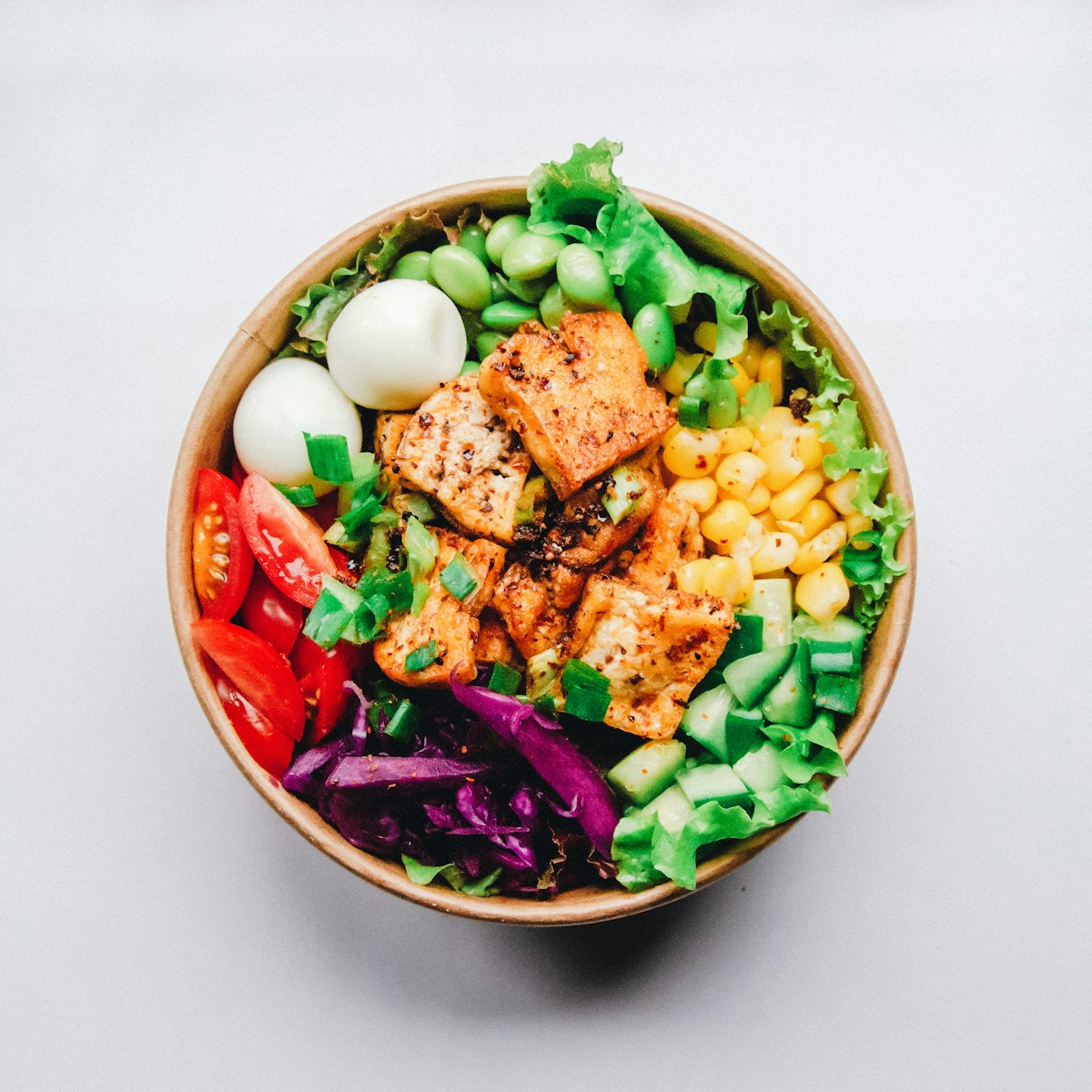
- Build warm elements into salads: roasted squash, warm quinoa, wilted greens, a poached egg. Half-warm salads are a real category of food and they bridge the two philosophies on one plate.
- Order soup first when eating out. It warms the middle, takes the edge off hunger, and the rest of the meal lands softer. This is the cheapest intervention in the article.
- If you drink iced water all day, switch to room temperature or warm for two weeks and watch what happens to your after-lunch energy. Water is where the cold hides.
- Cold leftovers from the fridge — rice, noodles, roasted vegetables — get reheated properly, not eaten at 11 a.m. standing up, straight from the container. The container is not a bowl. Warm the food.
A Two-Week Experiment Worth Running
Suwen has a line that runs underneath this entire article: yang qi is to the body what the sun is to the sky — when it loses its place, everything slows. The tradition's dietary logic is one long footnote to that sentence, and cold raw food, in winter, aimed at a cold constitution, is its most reliable everyday violator.
Here's the experiment, and it costs you nothing but two weeks: warm breakfasts only. Cooked, actually hot, eaten sitting down. Change nothing else — same lunch, same dinner, same coffee habits. , bloating after meals, cold-hands status. If nothing changes in two weeks, revert with my blessing; you've lost nothing and learned your constitution runs hotter than the model's default.
If the afternoons stop sagging, you've found the seam where a 2,000-year-old model still explains your body better than the marketing on the smoothie bowl did.
And that's the method this site keeps coming back to. The classics aren't scripture and they aren't superstition; they're a 2,000-year record of careful observation, hypothesizing about mechanism with the tools of their era. Sometimes the hypothesis is poetic and the observation is repeatable. Warm the middle and see. The stove is already hot.
"Yang qi is to the human body what the sun is to the sky. If it loses its proper place, everything slows and dims."