A Twist, Then the Waiting Room
A knee gives out on a wet stairwell landing, or mid-pivot on a tennis court, or while swinging a grocery bag off the back seat, and there is a sound some people call a pop and others describe as a heavy click. By morning the joint is swollen and angry. A week later the MRI report arrives, and the vocabulary is worse than the knee: tear, lesion, degenerative changes, signal abnormality.
Most people read that page twice and start budgeting for an operation.
Here is the finding that should be stapled to every such report, and almost never is. When researchers have scanned the knees of people in their forties, fifties, and sixties who walk, garden, and climb stairs without pain, meniscal tears show up in a large share of them — in some middle-aged and older populations, roughly a third or more.
A tear on a scan is a photograph of tissue, not a verdict about why anything hurts. The gap between those two statements is where a great deal of unnecessary surgery has lived for decades.
This article follows the meniscus through two descriptive traditions. The first is the modern trial literature, which in the last thirteen years has run some of the most quietly radical experiments in medicine — including surgeries performed as pure placebos.
The second is the classical Chinese frame, which filed the knee under the sinews rather than the skeleton and had opinions about exhausted rope tissue that read oddly well against modern findings. Neither system replaces a clinician. Together they change what a swollen Tuesday feels like: less like the beginning of decline, more like a decision that deserves slower arithmetic.
The first conversation worth having is about volume. Surveys of arthroscopic practice in the years before the sham trial found meniscectomy among the most frequently performed orthopedic operations on the planet, and the indication list had stretched accordingly — a tear on the scan, a knee that ached, an operating slot available.
Trials do not revoke operations directly; they change what a well-informed patient is willing to consent to. That is the mechanism by which evidence actually works, and it is slower than anyone would like. The Finnish group's finding has been repeated in direction across multiple large datasets since, and yet clinics in plenty of health systems still book the trim as a first response rather than a last resort.
The patient who walks into a consult already knowing that the placebo-controlled evidence exists is a different kind of patient — harder to hurry, better at asking what the operation adds over twelve patient months. This article exists to make more people into that patient.
- Meniscal tears are extremely common on MRI in people without knee pain — the finding alone is not a diagnosis of the pain.
- Degenerative tears (wear-related, in middle age and beyond) behave differently from acute sports tears, and most evidence discussed here concerns the former.
"A tear on a scan is a photograph of tissue. It is not a verdict about why anything hurts."
What a Meniscus Does, and Why It Heals on Its Own Schedule
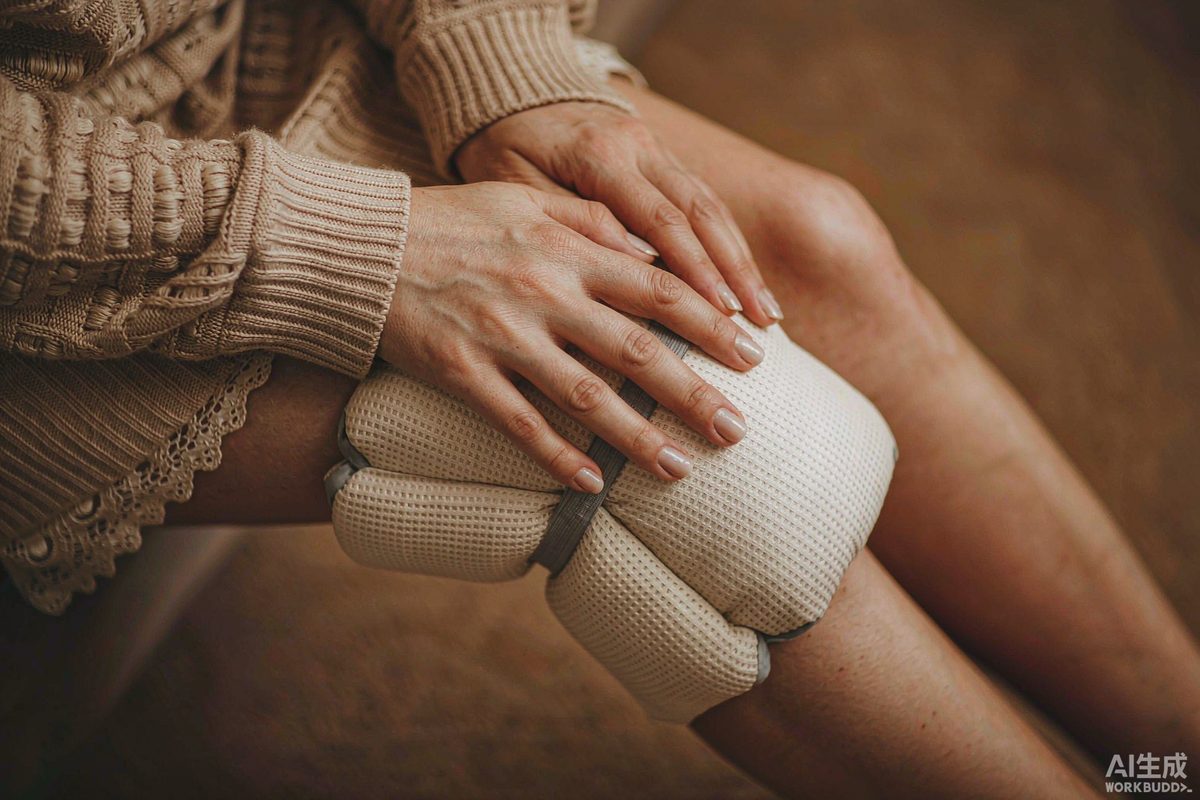
Each knee carries two menisci, C-shaped wedges of rubbery fibrocartilage sitting between the thigh bone and the shin bone, one on each side of the joint. Their job is unglamorous and essential: they are gaskets. When you walk, the load passing through the knee is concentrated into a wedge that spreads it across the joint surface, the way a washer spreads the pressure of a bolt.
A knee whose meniscus has been trimmed away does not fall apart — but the load it redistributes poorly concentrates instead, and cartilage under concentrated load wears faster. Surgeons who remove meniscal tissue have spent half a century learning that the gasket, once cut, does not grow back to specification.
The healing story is narrower than most people expect. Only the outer rim of the meniscus has a meaningful blood supply; the inner two thirds are fed by joint fluid alone, which is a polite way of saying barely. Tears near the vascularized rim, especially clean vertical ones in younger knees, can knit over months.
Tears deep in the avascular zone — which includes most of the degenerative fraying found in people over fifty — have no realistic supply line for repair. Their option is not healing but quiet coexistence: the tissue finds a stable shape, the surrounding muscle takes up slack, and the joint moves on.
That last sentence describes a process, and processes need support more than they need rescuing. The classical texts would not have used the word coexistence, but they knew the territory. A knee that will not bend or straighten fully, that walks stooped, was read as a residence whose sinews had gone exhausted — a maintenance problem, not an invasion.
- Only the outer third of the meniscus has real blood supply; most degenerative tears sit where repair is physiologically off the table.
- The realistic goal for most degenerative tears is a stable, quiet coexistence — built through strength and load tolerance, not regrowth.
"The meniscus is a gasket, not a gripping claw. Gaskets are maintained, not repaired into newness."
The Trial That Turned Off the Laser
In 2013, a Finnish research group published a study in the New England Journal of Medicine that reshaped the conversation about arthroscopic knee surgery.
They recruited 146 adults, ages thirty-five to sixty-five, with a degenerative meniscal tear and no osteoarthritis — the ideal candidates, in the old thinking, for arthroscopic partial meniscectomy, the trimmed-gasket operation performed well over a million times a year worldwide at its peak. Then they split the group in a way few trials had dared. Half got the real surgery.
Half got sham surgery: anesthesia, two or three skin incisions, the whole theatrical apparatus of arthroscopy, and no repair performed at all. Neither the patients nor the outcome assessors knew who was who.
At twelve months, the two groups were indistinguishable. Pain scores, function scores, satisfaction — the patients whose surgeons had done nothing beyond opening and closing the portals recovered exactly as well as those whose torn tissue was actually resected. The operation's benefit, in this population, was not small and disputed. It was absent.
The finding did not arrive alone. Broader reviews and a Cochrane assessment reached the same direction for degenerative knees: arthroscopy for this condition performs no better than the gentler options it was supposed to outperform. Professional guidelines in several countries have since discouraged the operation for degenerative tears without persistent mechanical problems.
Practice has shifted, though not as fast as the data did — the procedure remains common in places, defended by the reasonable-sounding logic that removing a torn piece should help something. The sham trial exists precisely to answer that kind of reasonable-sounding logic. It asked what the scalpel adds over belief and incisions, and its answer was nothing measurable.
- The Finnish trial compared real meniscectomy to sham surgery — incisions without resection — and found no difference at one year.
- The result applies to degenerative tears in middle-aged knees, not to acute traumatic tears in young athletes; the two situations are different evidence worlds.
"The boldest question surgery ever faced was asked with a knife held still. The answer took a year and rearranged a specialty."
Catching, Locking, and the Symptoms That Fooled Everyone
There was one escape hatch left for defenders of the operation, and it was a sensible one. Some knees catch, click, and occasionally lock — sensations attributed to a loose flap of tissue physically jamming the joint. Surely, the argument ran, the sham trial's patients were too mild. Patients with true mechanical symptoms would benefit where their calmer peers did not.
The same Finnish group tested that claim three years later in a secondary analysis published in Annals of Internal Medicine. Among the trial participants, nearly half reported catching or occasional locking before randomization. The question was whether these patients did better after actual resection than after sham. They did not.
The risk difference between real surgery and fake surgery for relieving mechanical symptoms was a few percentage points, with confidence intervals crossing zero — statistically indistinguishable from nothing. The authors drew a conclusion with real edge: the mechanical symptoms may not have been caused by the degenerative tear at all.
Where do those sensations come from, then? Likely from several directions at once — the synovial lining, cartilage surfaces, and the muscles that guard a sensitized joint all generate noise that the brain can label as catching. This is not a claim that every click is imaginary; it is a claim that the mapping from sensation to tissue fault is weaker than intuition insists.
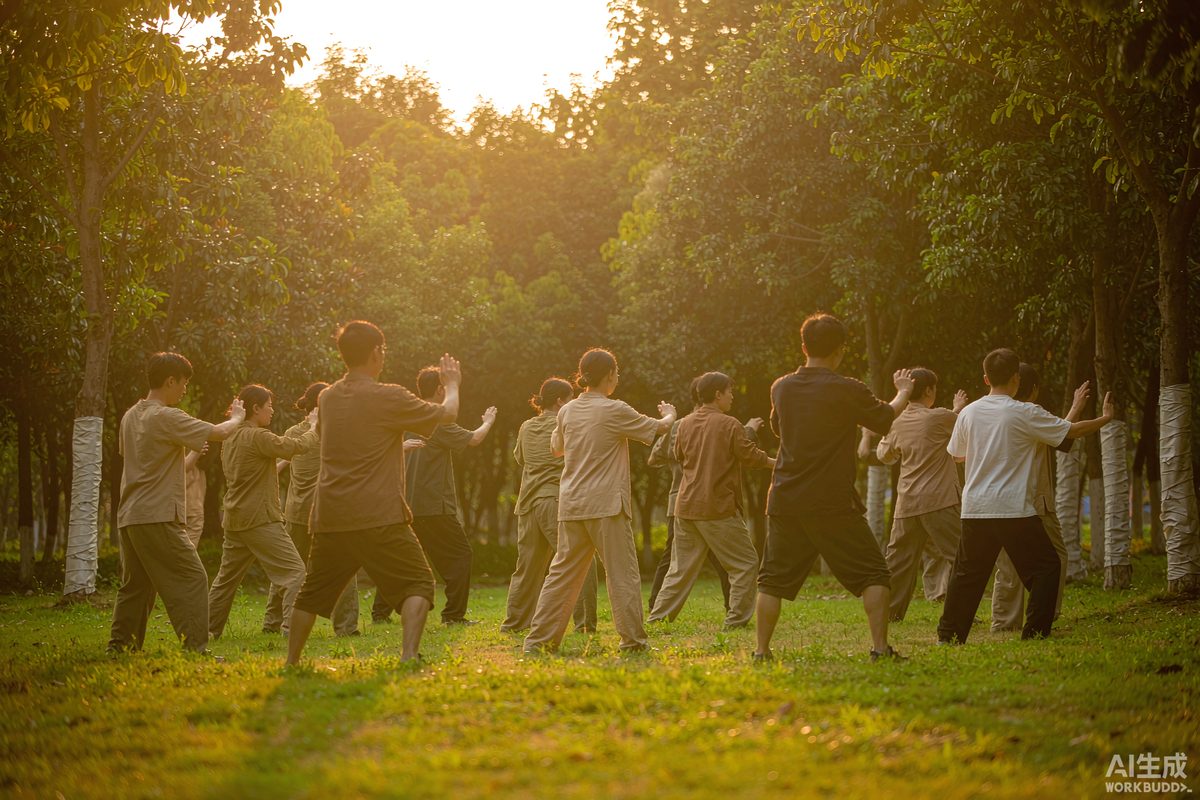
Movement traditions arrived at the practical version of this centuries ago. The slow, weight-shifting drills of tai chi, and the long patient walk, retrain a guarding knee by giving it thousands of low-stakes repetitions in which nothing terrible happens. The evidence base for tai chi in arthritic knees is real, if modest. The logic underneath is older than the trials.
- Even patients with preoperative catching or locking did no better with real resection than with sham surgery in the trial.
- Frequent clicking does not automatically mean loose tissue — sensitized joints generate their own noise, and retraining movement often quiets it.
"The escape hatch was tested and it led to the same room. Mechanical symptoms did not earn the scalpel the surgery hoped for."
The Home-Exercise Trial That Flattered Nobody
Twelve years after the sham trial, a team led by researchers at Brigham and Women's Hospital published the TeMPO trial in the same journal, asking a subtler question: if exercise is the treatment, how much ceremony does it need? They enrolled 879 adults, forty-five to eighty-five, with knee pain, osteoarthritis, and a meniscal tear on imaging, and split them four ways.
One group got a structured home-exercise program alone. A second added text messages nudging adherence. A third added sham physical therapy — in-clinic visits featuring fake ultrasound and imitation manual therapy. The fourth added real supervised physical therapy, with strengthening, stretching, and hands-on treatment.
The primary outcome was pain at three months, and the verdict was dry as a ledger: adding supervised physical therapy was not superior to home exercise alone. Neither were the text messages. Even the sham-arm comparison, designed to measure the ritual of appointments itself, found no separation worth celebrating.
A home program, done consistently, carried essentially the whole benefit that twelve weeks of professional delivery could add.
Read carelessly, the trial seems to say physical therapists are decorative. Read carefully, it says something more useful: the medicine in this treatment is the exercise, and the exercise happened in every arm. What the trial did not test is exercise versus nothing — that comparison was settled years earlier, with consistent gains for structured movement in knee osteoarthritis.
What it did demolish is the assumption that the benefit lives in the supervision, the manual therapy, or the professional aura. It lives in the repetitions. Whoever helps you actually do them is worth paying; the rest is furniture.
One group in the trial deserves a separate sentence: the sham-PT arm. Its participants drove to a clinic, changed into appropriate clothing, lay on a table while a professional moved their leg through comforting arcs, and received ultrasound from a machine switched off. At three months they had improved essentially as much as everyone else.
That finding sits uncomfortably in the literature, and it is the part many summaries quietly omit, because it suggests that some of what works in the treatment room is attention, expectation, and unhurried time with a competent person — real factors, real benefits, just not the factors the billing codes describe. For the person budgeting a recovery, the arithmetic is liberating.
The program that fits into your kitchen at six in the morning, done five days a week without applause, is not the budget version of the treatment. In the best trial available, it was the treatment.
- In the TeMPO trial, adding supervised PT or adherence texts to a home program added no measurable pain benefit at three months.
- The trial tested add-ons to exercise, not exercise versus nothing — structured movement remains the core treatment for this population.
"The treatment was in the repetitions all along. Everything else was scheduling."
The Knee as the Residence of the Sinews
The Suwen's chapter on essential indications opens its survey of the body with a line about the knee that has kept commentators employed ever since: 'the knee is the residence of the sinews' (膝者筋之府). Residence — not fortress, not pillar.
In the classical architecture of the body, the soft, rope-like tissues that bind, move, and steady the joint live in the knee the way a family lives in a house, and the chapter supplies the diagnostic signature of a house in trouble: bending and straightening fail, the walk goes stooped, the sinews are tiring. It is a description of function before structure.
No scanner appears; the examination is what the knee can still do.
Around that residence, the tradition built its administration. The sinews belong to the Liver's portfolio — 'its filling is in the sinews' — which in practical terms tied sinew health to nourishment, blood, and the regular rhythm of activity and rest.
Injury by sudden twist was classified as harm to the sinews rather than the bone, and the therapies that followed — warmth, gentle movement, liniments, and points like Yanglingquan, the influential meeting point of the sinews below the fibular head — aimed at restoring the tissue's glide and the joint's confidence rather than at carving anything away.
None of this is mechanism. The Neijing was not describing fibrocartilage, and reading it as a prediction of the sham trial would be flattery. What the old frame contributes is a stance: the knee's welfare is judged by movement — bending, straightening, walking without stoop — and sinews are trained tissue, fed and loaded gradually, not spare parts awaiting replacement.
On that stance, the trial literature and the residence of the sinews agree without needing to know about each other.
- The classical knee is judged by function — can it bend, straighten, and carry you upright — the same yardstick modern outcome scores measure.
- In the TCM frame, sinews are trained, nourished tissue under the Liver's governance, not parts to be trimmed; that stance matches the conservative-care evidence surprisingly well.
"The Neijing called the knee a residence and asked whether the inhabitant could still move. The trials, eventually, asked the same question."
Niu Xi, the Herb Named for a Knee
The Shennong Bencao Jing, the materia medica tradition's oldest surviving catalog, lists a root whose Chinese name is a picture of the problem: niu xi, ox knee, named for the swollen joints along its stalk.
Its entry reads, in condensed translation, that the root governs painful obstruction of the limbs, spasms of the four limbs, and — with a specificity that startles first-time readers — 'knee pain with inability to bend and stretch' (膝痛不可屈伸). A two-thousand-year-old text, describing in one clause exactly what a person with a grumpy meniscal tear reports at the bottom of the stairs.
What did tradition do with it? Niu Xi became one of the most prescribed herbs in formulas for lower-body weakness and knee complaints, prepared raw where the tradition wanted movement and stagnation broken up, stir-fried with wine where it wanted the root's effect steered toward nourishing the Liver and Kidney systems that govern sinew and bone.
Later formularies built whole strategies around it for knees that had gone stiff, cold, and reluctant.
The honest boundary sits here, and it sits firmly. No modern trial, to the standard this site trusts, has shown that niu xi repairs meniscal tissue or reliably outperforms comparison treatments for degenerative knee pain — the evidence simply is not there, and claims that a root can regrow a gasket should be priced accordingly.
What the entry offers instead is documentation: the tradition observed knees that would not bend, classified the pattern, and reached for a root it believed moved what was stuck and nourished what was tired. As a description of the problem, it is remarkably current. As a treatment, it remains a tradition's answer, and this site reports it as exactly that.
- Niu xi's classical entry describes 'knee pain with inability to bend and stretch' — the degenerative tear's complaint, named two millennia early.
- No trial-quality evidence supports meniscal repair from any herb; traditional use is reported as tradition, not as clinical advice.
"The old text named the herb after a knee and described, in one clause, the exact complaint of a modern stairwell. The description was excellent. The cure remains unproven."
The Honest Ledger
Every claim above carries conditions worth stating plainly. The sham-surgery trial and its secondary analysis enrolled thirty-five to sixty-five-year-olds with degenerative tears and no significant osteoarthritis; they say nothing reliable about young athletes' acute tears, and nothing at all about true locked knees with a displaced bucket-handle fragment, which remain genuine surgical situations.
The TeMPO trial tested what is added to a home program — it did not compare exercise against neglect, and its three-month horizon cannot speak to two-year outcomes. And the meniscus-to-pain link itself is looser than imaging suggests, since tears appear abundantly in knees that never hurt at all.
The TCM material is presented as a descriptive tradition, not as mechanism. 'The knee is the residence of the sinews' does not test as physiology, and niu xi does not repair tissue on any evidence this site would defend in an argument.
We present the two systems together because reading them is how this site thinks, and because the old stance — judge the knee by function, train the sinews patiently — happens to match where the trials landed. Agreement is not proof, but it is not nothing.
What survives the fine print is a genuinely better default than most people are offered. A twisted, swollen middle-aged knee usually deserves a proper clinical exam, a conversation about what the scan can and cannot mean, and a serious home program given months to work — not a rushed booking for tissue that trials have shown gains nothing from trimming.
Some knees do need surgery; the numbers just refuse to say most. The open question worth carrying out of this article is the one the Suwen asked first: not what the picture shows, but whether the knee can bend, straighten, and walk you upright. The rest is commentary — and the commentary, for once, is shorter than the fear.
- True locking, a knee that gives way repeatedly, large rapid swelling, or inability to bear weight all warrant prompt professional evaluation.
- For run-of-the-mill degenerative tears, months of consistent home exercise are the evidence-backed default; surgery is the exception the numbers keep failing to demand.
"Scan first, ask function second, operate rarely. The ledger, read honestly, is shorter than the fear that wrote it."