What Gua Sha Actually Is — and What 'Sha' Means
Gua sha (刮痧, pronounced 'gwah shah') is two words that tell you everything. Gua = scrape or rub with a blunt edge. Sha = the reddish speckles — petechiae — that rise to the skin's surface during treatment.
In Chinese medicine, sha isn't a side effect. It's the whole point. It's visible proof that stagnation — the root of most chronic pain — is being pulled out of deep tissue where it's been parked, sometimes for years.
The technique has been around for centuries. Ming Dynasty medical texts (1368–1644) reference scraping explicitly, and folk versions show up across Asia under different names: cao gio in Vietnam, kerikan in Indonesia, koshate in Japan. The classic tools? Buffalo horn, a jade plate, a porcelain soup spoon, even a coin wrapped in cloth.
Modern tools are usually stainless steel, ceramic, jade, or ox horn — shaped into rounded scrapers that fit different body contours. Big flat rectangles for the back. Curved blades for the neck and shoulders. Small pointed tools for hands and feet. The materials change. The idea doesn't.
' It's stagnation — qi and blood that stopped flowing freely through the channels (meridians) and their branch networks. Stagnant blood is thick, dark, oxygen-poor, and chemically irritating to surrounding tissue. That's why old trigger points feel ropy. Why old injuries 'come back' in the same spot decade after decade.
Gua sha's job is to move that stuff — bring it to the surface where the body's own cleanup crew can get rid of it.
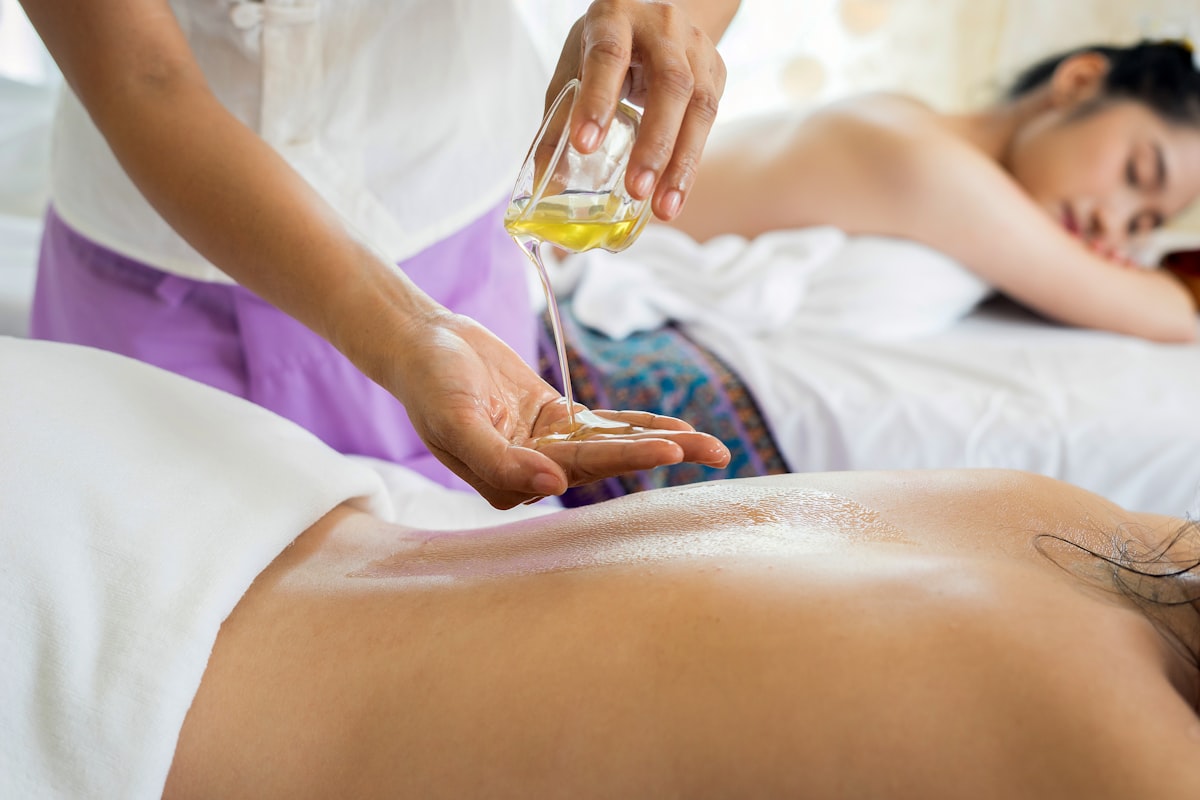
The basic technique: oil the skin, hold the tool at a low angle, stroke firmly along muscle fibers or meridian lines. Repeat each stroke 5–10 times until sha shows up. The marks are diagnostic too. Light red sha that appears in seconds? Recent, superficial stagnation. Dark purple sha that develops slowly? Deep, chronic blood stasis. Pale skin that produces no sha despite firm pressure?
That's a Cold or Deficiency pattern — responds better to moxibustion than scraping.
- Choose a stainless steel tool for your first home set — it's easy to sterilize, holds a consistent edge, and is less likely to harbor bacteria than porous horn or wood.
- The sha that appears during a session is a diagnostic signal: bright red = recent tension, dark purple = long-standing stagnation, no marks despite firm pressure = a Cold/Deficiency pattern that may need moxibustion instead.
- Never scrape on dry skin. Oil is not optional — it prevents friction burns, which are actual injuries, distinct from therapeutic petechiae.
"When the channels are open, the body is at peace. When they are blocked, pain arises. Scraping opens the surface and lets the stagnant Blood return to the great current."
The Marks ARE the Treatment — Petechiae, Blood Flow, and the Repair Cascade
Let's get the obvious thing out of the way. When someone sees a freshly scraped back — red and purple speckles everywhere — they flinch. 'That looks like an injury.' 'Shouldn't you get that checked out?'
Here's the distinction that matters. A bruise comes from blunt-force trauma — tissue damage under intact skin. Gua sha marks are petechiae: pinpoint spots of extravasated blood from controlled, deliberate surface friction. They're not accidental damage. They're the therapeutic mechanism.
What actually happens, step by step: the scraper glides over oiled skin at the right angle and pressure, creating shear force on superficial capillaries. Those vessels — fragile by design — rupture in a controlled pattern. Red blood cells spill into the surrounding tissue. The body reads this as a localized 'injury signal' and mounts a coordinated repair response.
Blood flow to the area surges within minutes. Laser Doppler studies have documented sustained increases in cutaneous blood flow after gua sha. Immune cells mobilize: mast cells degranulate, releasing histamine that dilates local vessels. Macrophages arrive to clear the extravasated red cells. Platelets release platelet-derived growth factor (PDGF), which stimulates fibroblasts to remodel collagen.
The net effect? A concentrated, multi-day infusion of healing chemistry exactly where you need it. Same principle that makes cupping marks therapeutic — but delivered through friction instead of suction.
The clinical data holds up. A 2018 randomized controlled trial of gua sha for chronic neck and back pain found significant improvements in pain and functional status versus a waitlist control, with benefits persisting at follow-up.
Mechanistically, researchers have tracked changes in circulating inflammatory markers after gua sha — shifts that suggest the therapy modulates the local inflammatory response rather than just suppressing it.
The marks are self-limiting. They represent a finite amount of extravasated blood, so they resolve as the body clears them — typically 2–7 days, depending on depth. But the healing cascade they triggered keeps running for days after the color fades. That's why gua sha's effects outlast the session. The treatment doesn't end when the scraper leaves the skin.
It ends when the body finishes the repair work the marks started.
- The counterintuitive truth: the deeper and darker the sha, the more stagnant blood was sitting in the tissue — and the stronger the subsequent healing response is likely to be.
- Marks that fade in 2-3 days indicate efficient clearing; marks that linger 10+ days suggest the body is overwhelmed, and sessions should be spaced further apart.
- Do not re-scrape an area while marks are still visible — you want the previous healing cascade to complete before starting a new one.
"The Sha is not an injury — it is the illness leaving. What rises to the surface is what had sunk into the channels. Let it come out, and the body will finish the rest."
Mechanotransduction, Cytokines, and Fascia — What's Actually Happening Under the Skin
For centuries, gua sha was explained entirely in TCM language — moving qi, resolving blood stasis, expelling pathogens. Those frameworks still work clinically. But modern biomechanics and immunology now offer a parallel explanation that translates directly into Western medical language.
The first mechanism: mechanotransduction. That's the process where mechanical force gets converted into biochemical signals inside cells. When the scraper shears the skin and fascia, it physically deforms fibroblasts embedded in the connective tissue. Those cells have mechanosensitive receptors — integrins, stretch-activated ion channels — that translate deformation into intracellular signaling cascades.
The fibroblast responds by breaking down disorganized, adhered collagen and laying down new, organized fibers aligned with the stroke direction. Repeat this over sessions, and you remodel fascial architecture from a stuck, matted mess to something that actually glides.
The second mechanism: the anti-inflammatory cytokine response. Research has documented shifts in circulating interleukins and other immune signaling molecules after gua sha. The emerging picture: gua sha doesn't just suppress inflammation. It resets the local inflammatory set-point — clearing the chemical irritants (stagnant blood and its breakdown products) that keep pain signaling alive.
Third: direct mechanical release of fascia. Fascia is the continuous connective-tissue web wrapping every muscle, nerve, and vessel. It's the tissue most responsible for the sensation of chronic tightness. When fascial layers adhere to each other — via hyaluronic acid cross-linking, scar tissue from old injuries, years of lousy posture — they restrict movement and trap nerves.
Gua sha's shear force peels those adhered layers apart. Same goal a massage therapist chases with deep manual pressure, but delivered more precisely, plus the chemical cascade from the petechiae.
Fourth: the neurological component. The strong rhythmic sensory input from scraping activates gate control at the spinal cord — the stroke sensation 'competes' with pain sensation, and the brain prioritizes the stroke. Simultaneously, the intensity triggers descending pain inhibition from the brainstem, releasing endogenous opioids that reduce pain both locally and systemically.
Patients often describe a wave of relaxation — a genuine nervous system shift, not placebo — during and after a session.
- Mechanotransduction explains why gua sha's effects build over time: each session gives the fibroblasts a fresh mechanical cue, and remodeling accumulates session by session.
- The cytokine changes after gua sha help explain why its pain-relief effects can outlast the visible marks by days — the chemical reset continues after the color fades.
- Gua sha complements, rather than replaces, massage and stretching: manual therapy works the tissue from the outside in, while gua sha adds the vascular and immune cascade.
"The skin is the outer gate of the body. When the gate is scraped, the whole household is alerted — fluids move, defenses gather, and the obstruction is cleared."
Where Gua Sha Shines: Neck, Upper Back, Shoulders, IT Band, Calves

Gua sha isn't a whole-body treatment. It's a targeted tool with specific strong suits. These five areas deliver the most dramatic, repeatable results.
Neck and Upper Trapezius. This is gua sha's home turf. The upper traps, levator scapulae, and cervical paraspinals soak up tension from screens, stress, and posture — and they respond to scraping within minutes. Technique: oil the area, use a curved blade at 30–45 degrees, stroke from the base of the skull downward along muscle fibers toward the shoulder. Keep strokes short — 5 to 8 cm — firm but never painful.
Repeat 5–10 times per line before moving to the next. Avoid the spine itself and the sides of the throat.
Upper Back and Rhomboids. The rhomboids — between the shoulder blades — are the 'computer back' muscles that burn and ache after a desk day. Use a wide flat tool, stroke from midline outward following the muscle fiber direction, from lower ribs up to the base of the neck. This also maps to the classic Bladder meridian territory.
Strokes along the two parallel lines about three finger-widths from the spine hit both muscle and channel simultaneously.
Shoulders and Deltoid. For shoulder tension and early rotator cuff stiffness: scrape from the neck toward the tip of the shoulder (the Small Intestine meridian line), then along the deltoid front to back. This area handles slightly firmer pressure — the deltoid is thick.
IT Band. The iliotibial band is a thick fascial sheet running down the outside of the thigh — and it's famously resistant to stretching. Gua sha's shear force is one of the few things that can actually release it. Side-lying with the thigh exposed, stroke from hip down to just above the knee using a wide flat tool with firm pressure. Expect deep, dark sha on session one.
The IT band holds years of accumulated stagnation in runners and cyclists. It lightens over 3–4 sessions.
Calves. The gastrocnemius and soleus respond beautifully, especially for plantar fasciitis and Achilles tightness — the calf and foot are mechanically linked through fascia. Stroke upward from the Achilles tendon toward the back of the knee, following the muscle belly.
One universal rule for all areas: never scrape directly over bone — shin, kneecap, spine, collarbone. Scraping bone is painful, produces no therapeutic sha, and can bruise the periosteum. Work the muscle bellies that surround the bone.
- The neck and upper traps give the fastest 'wow' results — most people feel measurable range-of-motion improvement within minutes of the first session.
- For the IT band, expect dark marks on session one. That band is dense fascia with years of built-up stagnation; it lightens progressively over 3-4 sessions.
- A universal rule: scrape muscle bellies, never bone. If you feel the tool clacking against hard surface, you've drifted off the muscle.
"Where the sinews are tight, scrape the sinews. Where the channels are blocked, open the channels. The tool follows the muscle, and the muscle follows the channel."
The Full Session Protocol: Prep, Oil, Angle, Pressure, Strokes, Duration
Gua sha looks simple — a tool, some oil, a few strokes. But the gap between a therapeutic session and a painful mistake lives entirely in the details. Here's the protocol.
Preparation. Take a warm shower or apply a warm compress to the target area for 5–10 minutes. Heat pre-dilates blood vessels, softens fascia, makes tissue more pliable — better sha formation with less pressure. Dry the skin completely, then apply a generous layer of oil. The oil isn't a convenience lubricant. It's the safety system that converts friction into shear. Without it: friction burns.
With it: controlled petechiae.
Tool and Angle. Hold the tool at a low angle — roughly 15 to 45 degrees to the skin. The lower the angle, the more force spreads across a broad area and the gentler the effect. The higher the angle — approaching 90 degrees — the more the edge digs in. That's for practitioners working thick, heavily stagnated tissue, not beginners. Start at 15–30 degrees.
Pressure. Firm enough to produce visible reddening within a few strokes. Gentle enough that it never feels sharp, burning, or bruising. Mental model: the pressure of a firm massage, not a kitchen knife. You should feel tissue 'squash' under the tool, not feel the tool cutting in.
Stroke Pattern. Always stroke in one direction — no sawing back and forth. Long strokes of 5–10 cm along muscle fibers or meridian lines, repeated 5–10 times over the same spot until sha appears. Then move to the adjacent spot. Overlap slightly so the whole area gets covered. Typical treatment areas get 50–150 strokes total.
Duration. A single area — neck, upper back, one calf — takes 5–15 minutes. A full session covering multiple areas shouldn't exceed 20–30 minutes. The session ends when sha appears across the treated area, not when the skin is uniformly black. Three passes over the same line is the maximum. More than that is over-scraping and produces true bruising rather than therapeutic petechiae.
Frequency. Once a week is standard for chronic tension. Acute stuff — a sudden stiff neck — can be treated every 2–3 days until the acute phase breaks. But never re-scrape skin that still carries marks. Facial and neck-front gua sha exist — popular in skincare — but they use a small, smooth stone and feather-light pressure.
The vigorous body technique described here never goes on the face, the front of the throat, or the abdomen.
- The '3-pass rule': never scrape the same line more than three times per session. If sha hasn't appeared by then, stop — the tissue isn't ready, and more pressure is not the answer.
- Angle is the master control: flatten the tool (15-30 degrees) for gentler work, raise it slightly only for thick muscles like the IT band and deltoid.
- One-directional strokes only. Back-and-forth sawing converts therapeutic shear into skin irritation and friction injury.
"Scrape until the Sha appears, then stop. The appearance of the Sha is the completion of the treatment, not the beginning of a marathon. Restraint is the mark of the skilled practitioner."
Aftercare: Mark Timeline, Hydration, Normal vs. Warning Signs
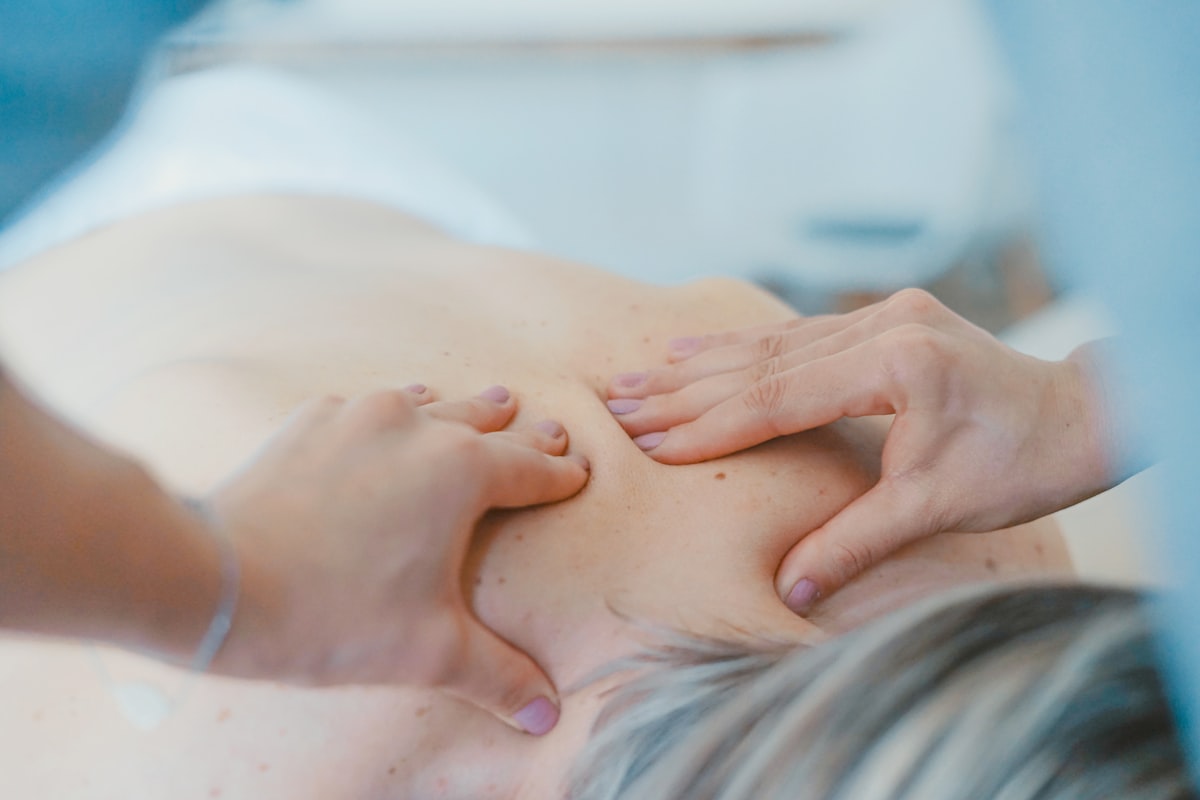
What you do in the 48 hours after a gua sha session determines how much benefit you keep. Here's the aftercare protocol — and, just as importantly, how to tell normal healing from something wrong.
Mark Timeline. Light red sha — superficial stagnation, appears quickly — fades in 1–3 days. Medium red sha fades in 3–5 days. Dark red to purple sha — deep chronic stagnation — takes 5–10 days to clear fully. Very dark, nearly black marks — severe long-standing blood stasis — can take up to 14 days. The marks may shift color as they fade: red to purple to brown to yellow-green.
Exactly like a bruise changing as the body clears extravasated blood. This progression is normal.
Right After the Session. The treated area will feel warm, slightly tender, maybe a little swollen — the same sensation as after deep tissue massage. That's the inflammatory cascade doing its work. Apply a light moisturizer or arnica gel if the skin feels dry. Keep the area warm and covered for 2–4 hours. Avoid cold showers, swimming, and direct air conditioning on the treated area for at least 4–6 hours.
The channels are dilated and the pores are open; cold exposure at this stage can drive the stagnation back down.
Hydration. Drink at least 2–3 liters of water over the next 24 hours. The lymphatic system is the body's garbage truck for extravasated blood, and lymphatic clearance runs on fluid. Warm water, herbal teas (ginger, mint), light broth — all count.
Normal Responses: Mild soreness in treated muscles for 24–48 hours (like post-exercise soreness). Mild fatigue or sleepiness on session day — the immune system is doing heavy work. Increased thirst. Slight warmth in the treated area. All signs the healing cascade is functioning.
Warning Signs — When to See a Doctor: 1) Blistering or open skin at the treatment site — pressure was too high or skin was damaged; keep it clean, see a professional. 2) Severe pain, not soreness — sharp, burning, or throbbing pain that worsens over 24 hours is not normal. 3) Spreading redness, heat, swelling, or fever — signs of infection. Rare with clean tools but possible if tools weren't sterilized.
4) Petechiae appearing in areas you did NOT treat — spontaneous bruising elsewhere can signal a platelet or clotting issue. 5) Dizziness, nausea, or fainting during or after — usually a vasovagal response, but if it doesn't resolve with lying down and water, get medical attention.
- Track your marks with photos. Progression from dark purple to light pink over 4-6 weekly sessions is objective evidence the stagnation is clearing — and the most motivating chart you'll ever keep.
- Drink warm fluids, not iced drinks, after a session — warmth supports the dilated channels; ice can contract them and blunt the response.
- If spontaneous bruising or petechiae appear on untreated areas, stop gua sha and see a doctor — that's a clotting question, not a scraping question.
"After the Sha is drawn out, the body must be allowed to clear it. Water to move it, warmth to guide it, rest to complete it. The treatment is half the work; the aftercare is the other half."
When NOT to Scrape — Blood Thinners, Skin Issues, and All the Contraindications
Gua sha is safe in the right hands. But it deliberately creates petechiae — which means it is categorically not for everyone. Here are the absolute contraindications, plus the situations where you need a practitioner or doctor's opinion first.
Blood Thinners and Bleeding Disorders. If you take anticoagulants — warfarin, apixaban, rivaroxaban, clopidogrel — or have hemophilia or significant thrombocytopenia, do not use gua sha. The therapy's entire mechanism is controlled capillary rupture. On blood thinners, that control evaporates. You risk deep bruising, hematoma, and bleeding into tissue that can't be managed at home.
Same caution applies if you're on high-dose aspirin, therapeutic-dose fish oil, or herbal blood-thinners (large doses of ginkgo, garlic, turmeric). Disclose all of it.
Skin Conditions. Active psoriasis, eczema, sunburn, rashes, open wounds, recent surgical incisions, skin infections, or moles that could be traumatized in the treatment area. Scraping over damaged skin converts a topical condition into a deeper one.
Sensory Loss or Neuropathy. If you can't feel the pressure, you can't protect yourself from over-scraping. Diabetic neuropathy in the feet and legs, areas of nerve damage — off limits.
Varicose Veins and Clot History. Never scrape directly over varicose veins. Absolutely never over an area with a history of deep vein thrombosis — you could dislodge a clot.
Pregnancy. Gua sha is avoided on the abdomen and lower back during pregnancy — the reflex stimulation can be problematic. Upper back and shoulder work is generally fine with practitioner approval, but always consult your OB and a licensed practitioner.
Kidney Area. Avoid deep scraping over the low back directly over the kidneys.
Severe Osteoporosis. Scraping over fragile bones — like ribs in advanced osteoporosis — risks fracture if pressure is excessive.
Do Not Self-Treat: Acute injuries with active swelling (a fresh ankle sprain) — wait until swelling resolves. Fever or acute illness — the body is already mounting an immune response. Areas with unexplained lumps, masses, or pain of unknown origin — get a diagnosis first. Cancer patients, especially on chemo or radiation, should only receive gua sha with their oncologist's knowledge.
When in doubt: don't. One professional session — where you see how your skin responds, how much pressure is right, which areas help most — is worth more than a dozen self-experiments. If you have any chronic condition, take any medication, or have any doubt, ask a professional before you pick up the tool.
- The single most important safety question before any gua sha session: 'Are you on any blood thinners?' If yes, no scraping. Full stop.
- First-timers: book one session with a licensed practitioner to calibrate pressure and observe your skin's response before doing it yourself at home.
- Skip gua sha during active flares — a hot, swollen, acutely inflamed joint needs rest and medical evaluation, not more stimulation.
"Medicine treats the patient, not the disease alone. What helps one body may harm another. The wise practitioner first asks who the patient is — then decides whether the tool is right at all."