A $20 Device That Outscores Your Cholesterol Panel
A grip dynamometer looks like a sci-fi door handle. You squeeze it as hard as you can for about three seconds, it flashes a number in kilograms, and that's the whole test. No fasting, no needle, no lab. And the number it spits out turns out to be one of the most reliable single predictors of how long you'll live that medicine has managed to find.
That sounds like gym-bro folklore. It isn't. When researchers followed nearly 140,000 adults across 17 countries for four years, they found that grip strength predicted death from all causes, from cardiovascular disease, and from everything else — and it did so more reliably than systolic blood pressure.
A person's grip in their sixties carried more information about their survival odds than their doctor's blood pressure cuff did. Chew on that for a second.
The reason is simple once you see it. Grip strength isn't a hand thing. It's a whole-body thing that happens to be measurable through the hand. Your ability to crush a dynamometer reflects the total amount of functional muscle you're carrying — not just in the forearm but everywhere — and total muscle is one of the deepest reserves your body holds against the losses that come with age.
When that reserve drains, the hand is where it shows first, because the hand is the most honest muscle group you have. It doesn't carry body fat the way a thigh or a belly does. It can't be faked with a pump. It just reports what's actually there.
So a weak grip isn't a hand problem. It's an early-warning light on a dashboard you didn't know you had.
- A grip dynamometer costs about as much as a dinner out. You can find one at any medical supply site or online; the number matters less than tracking it over time.
- Rough reference points from the consensus guidelines: below about 27 kg for men and 16 kg for women flags low muscle strength. Above that, trend matters more than any single reading.
"The Spleen governs the flesh and muscles of the body. When Spleen Qi is sufficient, the four limbs are strong; when it is deficient, the four limbs are weak."
What Grip Strength Is Actually Measuring
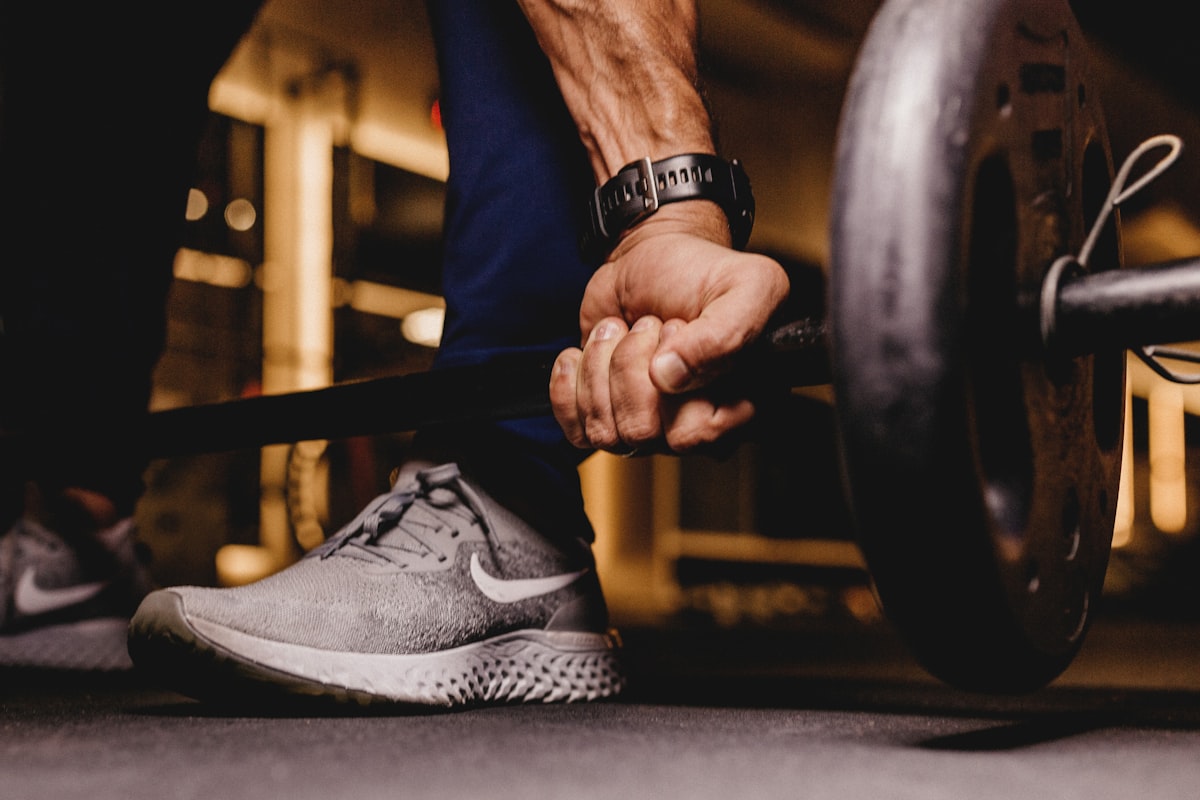
Strip away the mystique and the physiology is straightforward. Squeezing a dynamometer recruits forearm flexors, hand intrinsics, and — through something called irradiation — a cascade of tension that travels up the arm into the shoulder and core. A strong squeeze is a whole-chain event.
That's why clinicians call grip a proxy for 'global muscle strength': the force your hand produces tracks the force your legs, back, and trunk can produce, because muscle doesn't age in isolation. It ages as a system, and the system telegraphs its decline through the easiest joint to test.
There's a second layer. Muscle is metabolically active tissue. It's where your body stores and spends glucose, where a large share of your resting metabolism lives, and where myokines — signaling proteins released during contraction — get manufactured.
Lose muscle and you don't just get weaker; you get worse at managing blood sugar, worse at recovering from illness, more prone to falls and fractures, and less resilient to the surgical and medical insults that hit hardest in later life. The grip dynamometer is reading all of that indirectly. It's a cheap voltmeter attached to a very expensive machine.
What it isn't: a magic number. A single low reading on a bad day — dehydrated, sleep-deprived, just off a red-eye flight — doesn't doom you. The science is built on population-level patterns and on trends within the same person over years. One reading is a snapshot. A falling trend is a signal. The difference between those two things is the difference between a useful test and a source of pointless anxiety.
- Measure at the same time of day, same arm, same posture (elbow at 90 degrees, unsupported), three squeezes with a short rest, take the best of the three. Consistency is what makes the trend readable.
- A gap of more than a few kilograms between your left and right hand is itself informative — large asymmetries are worth mentioning to a clinician rather than self-interpreting.
"The Liver governs the sinews. When Liver Blood is abundant, the sinews are supple and the grip is strong; when it is depleted, the sinews stiffen and strength fades."
The PURE Study: 140,000 People, Four Years, One Clear Signal
The study that put grip strength on the longevity map is called PURE — the Prospective Urban Rural Epidemiology study. It recruited 139,691 adults aged 35 to 70 across 17 countries, from high-income cities to rural villages with no running water, and followed them for a median of four years. That breadth is exactly what makes the result hard to wave away.
This wasn't a gym cohort or a wealthy-country convenience sample. It was, as close as a study gets, everyone.
Here's what they found. For every 5-kilogram decrease in grip strength, the risk of dying from any cause over the follow-up period rose by 16%. Cardiovascular death rose by 17%. Non-cardiovascular death rose by 17%. Stroke risk climbed 9%, heart attack risk 7%.
And grip strength beat systolic blood pressure as a predictor of all-cause and cardiovascular mortality — a finding that quietly embarrassed a measurement we've been taking at every clinic visit for a century.
A separate 2022 meta-analysis, pooling 16 cohort studies and nearly half a million people, looked at the flip side: what happens when you actually do muscle-strengthening exercise. The answer, in the cleanest numbers available, is that 30 to 60 minutes a week of strength work was associated with a 10 to 17% lower risk of all-cause mortality, cardiovascular disease, cancer, and diabetes.
The relationship was J-shaped — some is clearly better than none, a lot is better than some, and going past a certain point doesn't keep paying. But the takeaway for almost everyone reading this is blunt: the average adult does zero minutes of strength training a week, and the single most underused lever on the longevity dashboard is right there, waiting to be pulled.
- The dose that shows up in the literature is modest: 30–60 minutes of muscle-strengthening activity per week, spread over two or three sessions. You don't need a gym. You need consistency.
- Both the PURE grip finding and the strength-training meta-analysis are observational. They show association, not proof of cause. That's an honest limitation — but the direction and size of the effect are consistent across study designs.
"When the Jing of the Kidneys declines with age, the sinews and bones are the first to weaken. What is spent in the deep reserves shows first in the farthest reaches — the hands and the feet."
Sarcopenia: Muscle You Lose Without Noticing
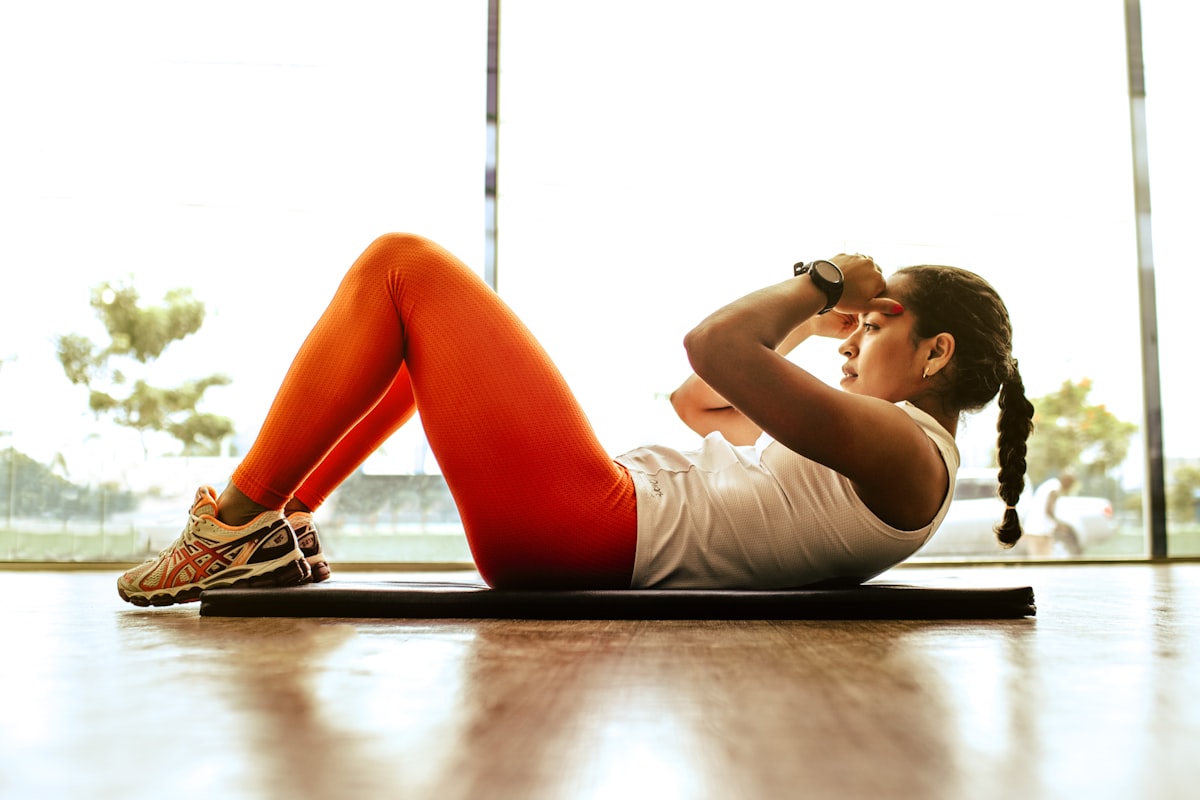
The clinical name for age-related muscle loss is sarcopenia, and the 2019 European consensus redefined it in a way that quietly centers the very measurement this article keeps coming back to: low muscle strength — measured first and foremost by handgrip — is now the primary diagnostic criterion.
Before that revision, the field had been tangled up for a decade arguing about muscle mass, which is hard to measure accurately outside a research lab. The revised definition sidesteps the whole argument by putting strength first. Function follows. Mass matters, but strength is the thing that actually predicts disability, falls, and death.
The numbers behind the decline are stark. Skeletal muscle mass starts dropping around 3 to 8% per decade after age 30, and the slope steepens after 60. Strength falls even faster than mass — which is the detail most people get wrong. You can lose a meaningful fraction of your muscle and keep most of your size, so the mirror lies. The scale lies too, because muscle weighs more than the fat that often replaces it.
The dynamometer is the only honest reporter in the room, which is precisely why a hand test became the field's consensus cornerstone.
What drives the loss is layered: fewer motor units firing, hormonal shifts, chronic low-grade inflammation, poor protein intake, and — most of all — disuse. The body is ruthlessly efficient. Tissue that isn't being asked to work gets dismantled and repurposed.
Bed rest studies are the brutal demonstration: healthy young adults put on complete bed rest can lose several percent of their leg strength in as little as a week or two. Age doesn't cause sarcopenia by itself. Age plus inactivity does. And inactivity is the one variable in that equation you can change tomorrow morning.
- The mirror and the bathroom scale are poor tools for tracking muscle loss. A handgrip reading and a simple chair-rise test (time how long five sit-to-stands take) will tell you more, more honestly.
- Disuse is the fastest driver of decline — far faster than aging itself. Even a single weekly strength session interrupts the dismantling signal the body sends when muscle goes unused.
"Treat atrophy by way of the Yangming. The Stomach and Spleen are the sea of grain and water, the source of Qi and Blood that nourish the flesh."
Two Thousand Years Before PubMed, This Was a Spleen Problem
Classical Chinese medicine never had a grip dynamometer, but it had a remarkably complete theory of why muscle fails — and where to intervene. The organizing idea is that flesh and muscle belong to the Spleen, while the sinews and connective tissue belong to the Liver, and the deep constitutional reserve that underpins both belongs to the Kidney. Three organs, one integrated picture of strength.
Spleen Qi is, in the classical model, what transforms food into the Qi and Blood that nourish the flesh. ' That's not metaphor. It's a functional claim with a testable face.
People with poor digestion, loose stools, bloating after meals, and that heavy-limbed fatigue that follows a carbohydrate load are, in TCM terms, showing you a Spleen that isn't converting food into usable energy — and weak, wasted limbs are the downstream symptom. The classical fix was never to isolate the muscle and hammer it. It was to rebuild the digestive engine that feeds it, then add graduated movement.
The Liver holds the other half. Grip, in TCM, is read through the Liver's governance of the sinews. Tremor, cramping, stiffness, and a grip that's lost its steadiness point to Liver Blood not reaching the connective tissue — which is why Liver-nourishing foods and herbs (goji, black sesame, dang gui) show up again and again in classical formulas for weak sinews.
And underneath both sits the Kidney, storing Jing, the constitutional capital you're born with and spend across a lifetime. Spend it slowly, the texts advise, and the sinews and bones stay strong into old age. Spend it fast — through overwork, chronic illness, or just never replenishing — and the hands and feet are the first to feel it.
None of this was written with a p-value attached. It's a different vocabulary for describing the same biological reality the modern studies measure, and the two maps overlap more than either side usually admits. Modern medicine found that muscle is a metabolic organ and that strength predicts survival. The old texts said the Spleen feeds the flesh and the flesh fails when the Spleen is starved.
You can read that as superstition, or you can read it as the same observation made with different instruments.
- In the TCM frame, you can't fix weak muscle by lifting alone — you also have to fix the digestion that feeds it. Cold, raw, greasy food that bloats you is working against your strength training, not with it.
- Liver-nourishing foods — dark leafy greens, black sesame, goji berries, organ meats — map onto the same connective-tissue support that grip training targets mechanically.
"The Kidneys store the Jing. At fifty, Liver Qi begins to decline and the sinews loosen. The wise nourish the root before the branches wither."
Can You Actually Raise Your Grip Strength at 60? (Yes.)
The most common objection, and the most understandable one, is that this is all very interesting for a 40-year-old but a bit late for anyone actually worrying about it. Here's the good news, and it's not small: muscle responds to resistance training at every age studied, including people well into their eighties and nineties.
The adaptation is slower and the ceiling lower than at 25 — nobody's pretending otherwise — but the direction is reliably up.
A 2013 systematic review and meta-analysis of elastic resistance training in older adults found consistent, meaningful strength gains across the pooled studies, with the biggest relative improvements in the people who started weakest.
A 2015 randomized trial in untrained older adults using short elastic-band sessions produced measurable increases in strength and, notably, preserved muscle mass against the decline the control group experienced.
And a 2019 meta-analysis of minimally supervised home-based resistance training found that you don't need a trainer standing over you three days a week to get the effect — programs done at home, mostly on your own, still moved muscle function in the right direction.
Grip specifically is among the most trainable strength metrics there is, partly because it starts so neglected. Most people have never trained their grip a day in their life, so even a modest stimulus produces a quick, satisfying jump — which then carries over into everything from opening jars to carrying groceries to catching yourself when you trip. That last one matters more than it sounds.
A fall that a strong forearm turns into a stumble is a broken hip that a weak one lets happen. Grip is, quietly, part of your fall-prevention equipment.
The honest caveat, because it's our job to give you the boundary: training your grip will raise your grip. Whether raising your grip in isolation moves the mortality needle the way naturally high grip strength does is a separate, unanswered question. The association in the studies is with grip strength as a whole-body marker.
The safe read is that grip training works best as one thread in a whole-body strength practice — which is exactly how the protocol below is built.
- Strength gains in older adults follow the same rules as at any age: progressive overload, near-effort sets, and enough protein. Age changes the ceiling and the speed, not the mechanism.
- Grip responds fast because it's chronically undertrained. Expect a noticeable jump in the first four to six weeks, then slower gains after — that's normal, not a plateau to panic about.
"The running water never stagnates and the door hinge never rusts, because they are in constant motion. The same is true of the sinews and the flesh."
The Ten-Minute Daily Protocol
You don't need a gym, a coach, or an hour. What follows is a minimal whole-body strength practice built around grip, done in about ten minutes, three or four days a week. It needs either a set of resistance bands or a pair of dumbbells and one grip tool. Start light, add slowly, and write your numbers down — the log is the whole point.
Farmer's carry. Pick up something heavy in each hand — dumbbells, a pair of full water jugs, a loaded grocery bag — and walk for thirty to sixty seconds with tall posture and a braced middle. This is grip plus core plus legs in one movement, and it's the single most underrated exercise in the whole strength canon. Rest, repeat three times.
Dead hang. Hang from a bar, a sturdy doorframe pull-up bar, or even a playground bar for as long as you can with a controlled grip, aiming to build from ten seconds toward sixty over the months. If you can't hang yet, stand on a step with your feet taking some weight. The dead hang trains the exact grip-and-shoulder chain the dynamometer reads, and it doubles as a spine decompression.
Band or dumbbell rows. One pulling movement for the upper back, because grip strength and back strength feed each other — the muscles that squeeze are the muscles that pull. Three sets of eight to twelve.
Grip squeezes. Two or three sets per hand on the adjustable grip strengthener, squeezing to near-maximum, holding a beat, releasing slowly. Or crush a tennis ball, or wring a rolled towel. Anything that makes the forearms burn a little, done consistently.
Sit-to-stands. Ten to fifteen of them, slow, without using your hands. Leg strength is the second half of the fall-prevention equation and the single best proxy for functional independence. If it's easy, hold a weight; if it's hard, push off a chair arm until it isn't.
That's the whole thing. Ten minutes, four movements, zero drama. The people who keep their strength into their nineties aren't the ones who trained hardest — they're the ones who never fully stopped.
- Progressive overload is the whole game: when you can do the top of a rep range comfortably, add weight, add time, or add a rep. If the numbers aren't slowly climbing, you're maintaining, not building.
- Rest days are part of training, not a betrayal of it. Muscle builds in the recovery window after the stimulus. Three or four sessions a week beats seven half-hearted ones.
"Move the Qi and the Blood follows. Where the Blood flows, the sinews are nourished and the flesh is filled. What is used is kept; what is unused is spent."
The Food Half: Muscle Is Built at the Table Too
You can train perfectly and still watch muscle slip away if the raw material isn't arriving. Strength training is the signal; protein is the brick. The research on protein and aging has converged on a few points worth knowing.
Older adults need more protein per meal than younger ones to trigger the same muscle-building response — something in the neighborhood of 25 to 40 grams per meal, rather than the 20 that suffices at 30. And distribution matters as much as total: three meals with a solid protein anchor beat one big protein dinner and two carb-and-coffee days.
The TCM frame says the same thing in different words. Spleen Qi is what transforms food into the Qi and Blood that fill the flesh. Eat in a way that overwhelms the Spleen — cold drinks with meals, raw salads as a main course, heavy greasy food, eating late at night, eating past fullness — and you're starving the muscle-building engine even if the calories are technically there.
The classical emphasis on warm, cooked, easily transformed food is, stripped of poetry, a prescription for keeping digestion working well enough to actually use what you eat.
So the practical list is short and unglamorous. A protein source at every meal — eggs, fish, poultry, tofu, beans, a quality whey or plant protein if you're short. Warm cooked food over cold raw food, especially as the main event. ' And hydration, because a dehydrated muscle contracts weakly and recovers slowly.
None of this requires a supplement drawer. It requires a habit. Protein at breakfast. A real lunch. Not skipping dinner because you're 'watching your weight' at 70, which is exactly the stage of life when losing weight often means losing the muscle that's keeping you upright.
- Aim for 25–40 grams of protein at each of three meals. If you're not sure what that looks like: three eggs plus a cup of Greek yogurt, or a palm-sized piece of fish plus a cup of lentils.
- Watch the undereating trap. In later life, 'eating less' frequently costs muscle before it costs fat. If you're losing weight without trying, flag it — it's a clinical red flag, not a win.
"The Stomach and Spleen are the sea of grain and water. All the flesh and limbs of the body depend on them for nourishment."
What the Data Can't Tell You Yet
It's worth being honest about where the evidence ends, because health writing that never admits its own limits is how people end up terrified of their own hands. The grip-mortality link is robust, replicated, and large — but it's observational. That means we know people with stronger grips tend to live longer; we do not yet have a trial proving that deliberately training your grip, by itself, extends life.
The plausible mechanism runs through total muscle, and the strength-training meta-analyses support acting on it. But the honest sentence is: this is a strong, consistent signal, not a completed proof.
There's a second honest caveat about the dynamometer number itself. Grip strength varies with hand size, body size, sex, ethnicity, and the specific device used — which is why no single universal cutoff should send anyone spiraling. The value of the test is in your own trend over time, not in comparing yourself to a stranger's reading on the internet.
And then there's the question the research genuinely hasn't answered, which is the one I'd leave you with: if the hand is the most honest reporter of a failing system, what are the rest of your limbs quietly reporting right now? The hand gets tested because it's convenient. The legs, the back, the core — they're all carrying the same news, and none of them will volunteer it. Grip strength isn't really the point.
It's the canary. The point is the whole mine, and whether you're going to do something about it before the bird stops singing.
- Read the trend, not the single number. One low reading on a bad day is noise. A slow, consistent decline across a year is the signal worth acting on — with a clinician, not just a dumbbell.
- The intervention that has the most evidence behind it is the least exciting one: whole-body resistance training, twice or three times a week, forever. Grip work is a thread in that, not a substitute for it.
"Treating disease after it has arisen is like forging weapons after the battle has begun, or digging a well after you are already thirsty."