The Hour You Keep Not Taking
There is a version of fitness advice everyone knows by heart: block out an hour, three to five times a week, warm up properly, then cool down. It is correct advice. It is also the advice that most reliably produces a specific and well-known outcome — a person who exercises in January and again, briefly, before a beach holiday, and otherwise watches.
The failure usually isn't laziness. It's arithmetic. An hour of training costs closer to two by the time you factor in the drive, the shower, the packing of the bag. Two hours is a lot to find on a Tuesday. So people negotiate with themselves. They'll start next Monday, when things settle down. Things rarely settle down.
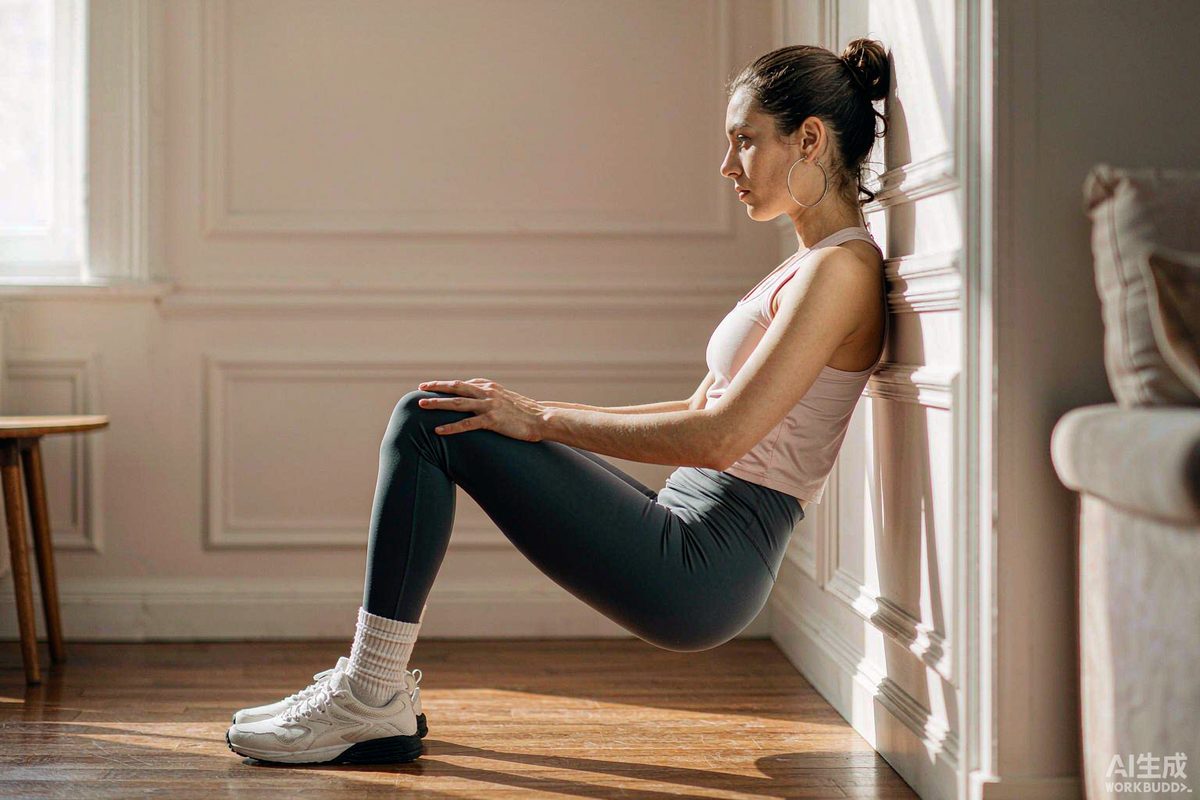
Now look at a different scene. A courier takes a staircase two steps at a time with a parcel under one arm, breathing hard for about forty seconds, and then his breathing settles as he knocks on a door. A woman whose dinner is in the oven slides down the kitchen wall into a wall sit and holds it until her thighs burn and the timer goes off. Neither of them worked out. Neither of them changed clothes.
But both of them did something physiologists have lately taken a serious interest in.
The research community calls these efforts exercise snacks: short, vigorous, self-contained bouts of activity, usually under a couple of minutes, planted into ordinary days. The name is a little cutesy. The data underneath it is not.
Over the past few years, several well-designed studies have converged on an uncomfortable and liberating finding — the body keeps score of these small deposits, and it pays out more generously than anyone expected.
Why should anyone believe that a minute matters? Fair question. The old mental model of exercise came from laboratory sessions on treadmills, measured in continuous thirty and sixty-minute blocks, and against that model a stairwell sprint looks like noise. The newer data changes the frame.
When researchers stopped measuring workouts and started measuring whole days — every hurried corridor crossing, every loaded grocery haul — a category of effort appeared that the old model had no column for.
This article walks through what the strongest of those studies actually measured, where the old Chinese medical texts converged on the same principle from the opposite direction, and how to build a snack habit that survives contact with a real schedule.
One promise before we start: nothing here requires equipment, a subscription, or an identity as a gym person. The staircase, the hill, and the kitchen wall already exist. That is rather the point.
- An hour of gym time costs closer to two hours of real life. If you have been failing that budget for years, the problem was the budget, not you.
- Exercise snacks are complete efforts, not warm-ups: under two minutes, vigorous, embedded in the day you were already living.
- The studies below are small but consistent. 'Short and hard and often' now has receipts.
"The body keeps score of these small deposits, and it pays out more generously than anyone expected."
What Counts as a Snack — and What Doesn't
Definitions matter here, because the phrase exercise snacks is already being stretched by marketing. The version that researchers study has three conditions.
It is brief. One to two minutes is the honest range, sometimes as little as twenty seconds. It is vigorous. The standard test is the talk test: at vigorous intensity you can produce a word or two but not a sentence. Walking briskly while holding a conversation doesn't qualify; walking up a hill so steep that conversation stops does. And it is embedded.
The effort rides on top of a movement you were performing anyway — climbing, carrying, crossing a distance — rather than requiring its own appointment on the calendar.
So: twenty seconds of stairs climbed as fast as you safely can. A wall sit while the microwave runs. Hurrying the last four hundred meters of your commute until your breath shortens. Carrying two heavy grocery bags from the car in one determined trip instead of three relaxed ones. These all count.
What doesn't count, mostly: strolling, standing desks, stretching, housework at a comfortable pace. None of those are bad. They are just moderate, and the striking findings in this literature belong specifically to the vigorous tier.
A large analysis of daily step data found that overall step count mattered greatly — but that within any given step total, the people who reached those steps at a higher cadence did better than the people who accumulated them gently.
Intensity is the ingredient people skip. It is also the ingredient that makes a minute behave like ten.
- The talk test is the cleanest intensity check: vigorous means you can't speak a full sentence.
- Snacks ride on existing movement — stairs, hills, loads — rather than demanding their own slot in the calendar.
- Gentle activity still has value. It simply isn't what these studies measured.
Three One-Minute Efforts a Day, Measured on the Wrist
The study that moved this field from hunch to headline came out of the UK Biobank in 2022. Researchers took accelerometry data from more than twenty-five thousand adults who reported no leisure-time exercise whatsoever — people who, on paper, did not work out — and then tracked them for years.
The exposure they examined they named VILPA: vigorous intermittent lifestyle physical activity. In plain language, the scattered hard efforts of ordinary living. Hurrying. Climbing. Carrying with intent. Most participants in the data either had none or had a little, and the little added up fast.
Around three to four short bouts per day, roughly one to two minutes each, totaled about four minutes of vigorous effort across the entire day.
Four minutes. Against that unimpressive number, the outcomes looked strange. Compared with people whose wrist data showed no VILPA at all, those who accumulated roughly that amount had around a quarter to a third lower risk of death from any cause during follow-up, and the association with cardiovascular death was stronger still.
The researchers were careful with their language — this is observational data, and it can show association, not cause — but the dose-response shape was clean: more short bouts, lower risk, up to a plateau around four or five bouts a day.
Two details deserve a pause. First, the effect appeared in people doing no other exercise, which is precisely the population that gym-based advice keeps missing. Second, the unit of benefit was not the workout. It was the bout. The currency, in other words, is the single minute of winded ordinary effort — and most days hand us several of them for free.
Where did the bouts come from? Almost nowhere dramatic. In the underlying data, the typical VILPA bout lasted between forty-five and one hundred sixty seconds, and the activities behind the accelerometer spikes were the sort nobody logs: a rushed walk to a bus stop, a charge up residential stairs, hauling a stroller up a step, chasing a toddler down a hallway.
There was no pattern of special equipment or special clothing. There was also a plateau — past roughly four or five bouts a day, the curve of association flattened, which is its own kind of good news. The protocol maxes out at what an ordinary life already contains.
- VILPA means vigorous incidental movement — no Lycra, no appointment, no session.
- Around three to four one-to-two-minute hard efforts a day was where the association was strongest in the 2022 UK Biobank analysis.
- The finding applies to non-exercisers. If you already train, this is spare change, not the main account.
The Stairwell Experiment
Observational wrist data is suggestive. Intervention trials are proof of concept, and one of the tidy ones used the most democratic piece of cardio equipment in existence: a staircase.
Sedentary adults were asked to climb a flight of stairs as quickly as they safely could — about twenty seconds of genuine effort — and to do that three times per session, with rest between climbs, on three days a week. Total vigorous climbing per session: about one minute. The program ran six weeks.
At the end, cardiorespiratory fitness, measured as VO2peak, had improved by a meaningful margin, the kind of improvement normally credited to conventional continuous training blocks lasting the same six weeks with far more time invested.
Why should sixty seconds of climbing do what used to take an hour? Because the body adapts to stimulus, not to duration. A hard twenty-second climb yanks heart rate up sharply, demands a burst from the large leg muscles, and briefly stresses the systems that move oxygen.
Repeat that spike several times a week and the cardiovascular system receives a repeated signal to upgrade — more mitochondrial density in muscle, better stroke volume, sharper extraction of oxygen from blood. The classic training-world phrase is stimulus and recovery. The staircase provides the first, and ordinary life provides the second.
There is also a quieter finding tucked into this literature: people who trained this way reported almost no adherence problems. That sounds trivial until you remember that adherence is where nearly every exercise program dies. A program that takes one minute is difficult to fail. You do not need motivation to climb one flight of stairs. You need a staircase.
- Three twenty-second stair climbs, three days a week, measurably improved VO2peak in six weeks.
- The body adapts to intensity of stimulus, not to time spent — a hard minute is a real signal.
- Short programs have a hidden advantage: adherence is nearly automatic.
Blood Sugar, Where the Snacks Bite Hardest
Fitness improvements take weeks to show. Blood sugar responds faster, and this is where the exercise-snack idea has produced its most clinically interesting results.
A 2026 randomized crossover study published in Diabetologia put the question into genuinely real-world conditions: adults living with type 2 diabetes performed short bouts of activity in their own daily settings — not a lab, not a treadmill bay — and wore continuous glucose monitors.
When the snack bouts were in place, post-meal glucose excursions flattened and day-long glycemic variability narrowed compared with the control condition. For a population where postprandial spikes are the daily antagonist, that is a consequential result.
The mechanism is wonderfully direct. Contracting muscle pulls glucose out of the blood through its own transport machinery — the GLUT4 transporters — partly without needing insulin's help. A few minutes of hard effort recruits large muscle stores, opens that pathway, and leaves the body sponging up the aftermath of a meal for the next hour or two. You are, in a very literal sense, making your legs eat.
Timing then becomes a lever. A snack taken after the largest meal of the day meets the biggest glucose load head-on. A short climb after lunch, a wall sit after dinner — the muscle work lands exactly when the blood is carrying the most sugar.
Chinese dietary tradition independently arrived at the practice of walking after meals (fan hou bai bu), and the modern glucose-tracer version of that advice turns out to be: make it brief, make it brisk, make it regular.
There is a sequencing subtlety worth knowing. Muscles that have recently worked keep drawing glucose for a while after the effort stops, so a bout taken near the end of a meal — stairs right after putting down the fork — appears to catch more of the postprandial wave than one taken an hour later.
The crossover trial cannot say whether that holds for everyone, and responses varied between participants, which is honest but worth stating: some people's glucose curves flattened dramatically, others' only modestly. A continuous glucose monitor will tell you which group you are in, though that is a conversation for a clinician's office, not a shopping decision.
None of this replaces diabetes treatment, and anyone on glucose-lowering medication — especially insulin or sulfonylureas — should discuss sudden activity changes with their clinician, because the combination can dip glucose too far.
- Short vigorous bouts after the biggest meal blunt post-meal glucose spikes when it matters most.
- Working muscle draws glucose from blood partly without insulin — the effect is mechanical, not mystical.
- On glucose-lowering medication? Clear the change with your doctor first; activity plus certain drugs can overshoot.
"You are, in a very literal sense, making your legs eat."
Movement Makes Yang: The Old Logic
Set the studies down for a moment and look at an older document. The Suwen's opening chapter, describing the person who lives well across a long life, includes a line easy to skim past: the body labors, but does not weary — xing lao er bu juan — and because of that the qi follows smoothly. Labor is assumed. What is prescribed is the shape of it: effort without depletion.
The most famous elaboration comes from the physician Hua Tuo, two millennia ago, who justified his exercise system with an image that has outlived empires: flowing water does not rot, and a door hinge in daily use does not gather worms. Stagnation is the disease; regular movement is the preservative.
But Hua Tuo's sentence ends with a clause modern gym culture could stand to memorize — the labor must not be carried to exhaustion. Movement, yes. Constantly, yes. To depletion, no.
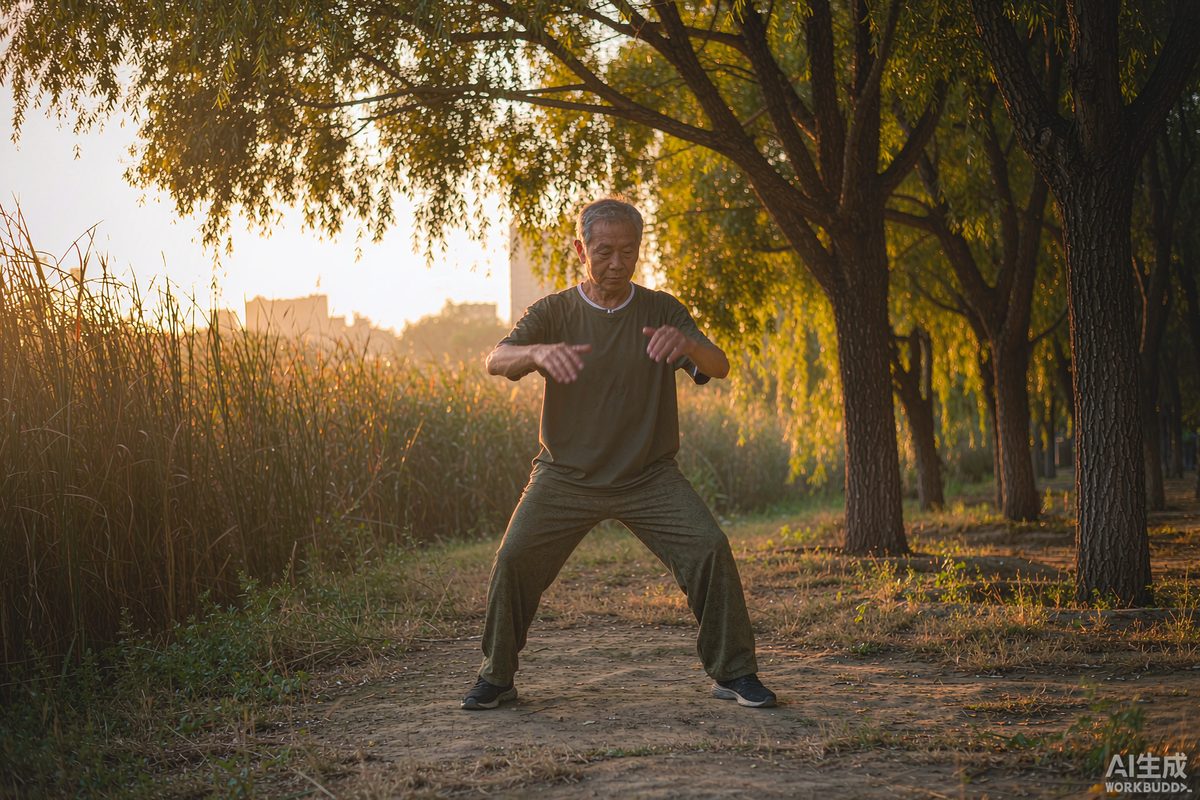
Exercise snacks sit inside that frame almost embarrassingly neatly. The classical recommendation is not an epic session followed by three days of collapse; it is modest effort, most days, forever, with the emphasis on continuity rather than heroics. In the yin-yang language of the Inner Canon, movement stokes yang qi — the warm, active, propulsive aspect of the body — the way sun stirs a foggy valley.
Brief and repeated beats rare and ruinous. The Neijing says it plainly in its own idiom: yang qi, like the sun, must move across the sky daily. Nothing about that image requires it to scorch.
Two thousand years is not evidence, to be clear. But when a very old framework and a very new dataset agree on the same behavioral shape — frequent, moderate-to-hard, non-exhausting movement woven into ordinary days — the convergence is worth noticing.
- The classical prescription is labor without wearying — effort with continuity, not intensity binges.
- Hua Tuo's hinge-and-water image pairs movement with the explicit warning not to push to exhaustion.
- Regularity is the active ingredient in both frameworks: brief and daily outperforms heroic and rare.
"Flowing water does not rot, nor does a door hinge gather worms. Movement, yes. To exhaustion, no."
A Snack Menu You Will Actually Keep
Principles do not climb stairs. Habits do, so here is a working menu, chosen because each item attaches to something a normal day already contains.
The stair rule: any time you meet stairs, take them at a pace that closes your throat to conversation. Two or three flights across a day is a completed snack protocol; no timer required. The kettle wait: while anything heats — kettle, oven, rice cooker — drop into a wall sit or do slow, hard push-ups against the counter until the appliance frees you.
The commute trick: get off one stop early or park at the far edge, then walk the final stretch at the fastest pace you can hold without jogging. The carry rule: groceries go from car to kitchen in one loaded, determined trip, or luggage is lifted rather than rolled where feasible. The two-flight phone call: pace stairs while talking, and take the talk-test down a notch each time the other party pauses.
Dosing, from the literature: aim for three to four vigorous bouts a day, most days. Keep each under two minutes. Spread them out; three distributed efforts beat six at noon. Progression is simple — over weeks, the same stairs get easier, so add a flight, slow the wall sit's release, or carry more.
A four-week ramp, if you want it written out. Week one: notice the opportunities and take two a day at whatever intensity feels honest. Week two: three a day, still moderate. Week three: sharpen the pace until the talk test fails on at least one bout. Week four: three to four genuinely vigorous bouts, plus one slightly longer effort — three flights instead of two, a sixty-second wall sit instead of forty.
That is a complete, progressive cardio program that has never once appeared on a gym brochure. If a week goes sideways — travel, illness, a bad deadline — drop back to week one. The menu has no expiration date and no catch-up mechanic; it simply continues.
One caution belongs here rather than at the end: if you are starting from a very deconditioned place, the right first snack is smaller than you think. Twenty seconds of brisk hill walking counts. The protocol has room for a version almost anyone can begin tomorrow.
- Anchor each snack to an existing trigger: stairs encountered, kettle boiled, stop approached, bags carried.
- Target three to four vigorous bouts daily, each under two minutes, spread across the day.
- When climbs stop stinging, add a flight or a load. The menu should get harder very slowly.
The Honest Limits
Every claim above deserves its fine print, and YMYL health writing owes you that fine print unburied.
The VILPA mortality findings are observational. Wrist data and death records are strong tools, but people who move vigorously through the day may differ from those who don't in ways accelerometers can't see — younger, healthier, differently resourced. The researchers adjusted for what they could measure and flagged what they couldn't. Treat the association as promising, not proven.
The intervention trials are real but small and mostly short — weeks, not years. Snacks improve cardiorespiratory fitness and post-meal glucose convincingly. They do not, by themselves, build much strength, bone density, or balance; for those, resistance work still has no substitute. A snack habit is a floor, not the whole building.
And the vigorous tier is not free of risk for everyone. Anyone with known or suspected cardiovascular disease, uncontrolled blood pressure, a history of dizziness or chest symptoms, significant joint disease, or pregnancy complications should talk to a clinician before deliberately adding hard efforts — brief ones still count as hard.
Chest pain, disproportionate breathlessness, or faintness during a snack is not a sensation to push through; it is a reason to stop and get checked.
With those boundaries stated, the open question is not scientific anymore. It is personal, and it will arrive today: you will encounter a staircase, or a kettle, or four hundred spare meters. The research says the minute you spend on it is not nothing. The old texts say the same thing in older words. The only remaining variable is whether the minute gets spent.