A Strong Body Starts With String, Not Cable
Around the year 1500, give or take a century of retelling, a monk from India or Persia — the stories disagree — arrived at a mountain monastery in Henan Province and found the brothers too weak to sit through long meditation. Da Mo, Bodhidharma, is the name tradition gives him. He is said to have faced a wall for nine years, and when he finally turned around he left the monks three manuals.
One of them was the Yi Jin Jing, the Tendon-Changing Classic.
Historians have doubts. The manual in printed form shows up in 1827, with an earlier manuscript trail reaching back to around 1624, and the Bodhidharma attribution smells like lineage marketing. None of that changes what is inside. The book's central claim is blunt: a body is limited by its sinews — tendons, fascia, ligaments, the stringy architecture — more than by the bulge of its muscles.
Change the sinews and the strength follows. The text promises that the weak become strong and the strong become extraordinary, which is a strange thing for a monastery to promise and exactly the thing a soldier, a laborer, or a sixty-year-old with complaining knees wants to hear.
Western gyms took the opposite road. A century of strength training chased the muscle belly: load it, feed it, measure its circumference. That road works, plainly, for building visible muscle. But anyone who has watched a wiry, flexible person out-lift a bulky one at a deadlift knows the gap in the theory.
Strength is a property of the whole chain — tendon stiffness, joint alignment, the fascial slings that hand force from foot to hip. Train only the muscle belly and you own one link at a time.
The classical physicians had already written this down. The Suwen states it flatly: all the sinews belong to the joints, and the Liver stores the blood that bathes them. Yi Jin Jing reads like a training program built on that single sentence. Twelve postures. Slow holds at the end range of a stretch. Breath led on purpose.
No equipment beyond a patch of floor, which is why the set survived monasteries, village squares, and now apartment living rooms.
This article walks through the twelve postures, what trials published in recent years found when researchers tested the routine on older bodies, and where the honest limits sit. We are an editorial team of researchers and writers, not clinicians, and nothing here is medical advice.
It is a translation job — old text, new evidence — and the goal is that you finish knowing what this practice is, what it can plausibly do, and what it cannot.
- Yi Jin Jing trains tendon, joint, and breath together — judge it by stairs, balance, and reach, not by the mirror.
- The set needs a floor's worth of space and no equipment, which is why it survived 400 years of travel through courtyards, parks, and hotel rooms.
"Flowing water never stagnates; a door hinge never rusts. The body that moves daily stays serviceable the same way."
What the Trials Actually Show
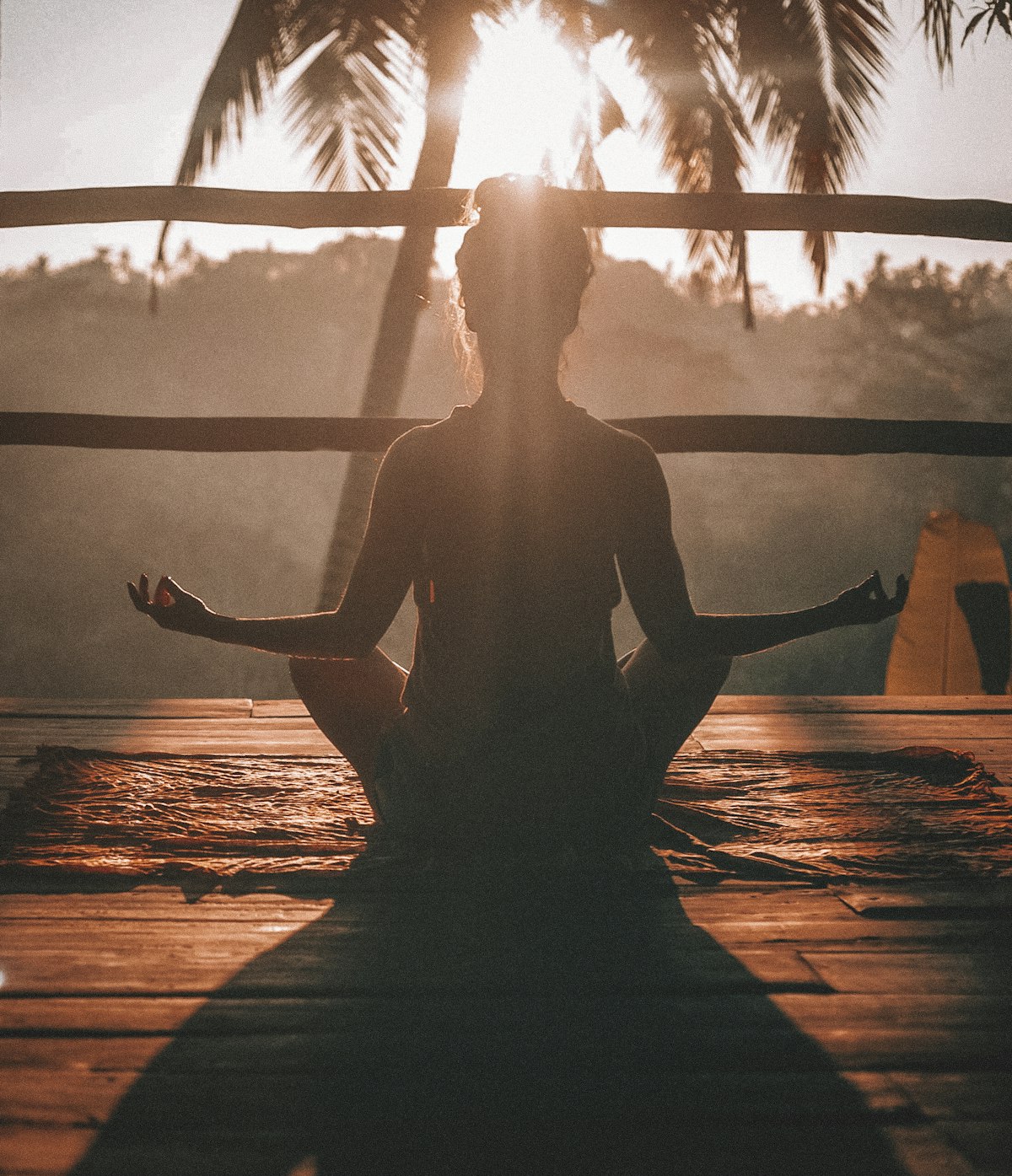
In 2024, a systematic review and meta-analysis gathered the available trials on Yi Jin Jing in older adults and asked what actually changed. The headline: measurable gains in muscle strength and physical performance — the composite things clinicians probe with sit-to-stand tests, walking speed, and similar yardsticks. Lower-limb results led.
Grip strength, the upper-limb classic, improved less consistently, which tracks with what the routine is: a set of holds and pulls that loads legs, hips, and spine harder than hands.
Parkinson's research has since joined. A randomized controlled trial published in 2026 assigned people with mild-to-moderate Parkinson's disease to a Yi Jin Jing program and tracked cognition, sleep, and functional mobility — the timed up-and-go, the test where a chair, a three-meter walk, and a turn tell clinicians how fragile a person really is.
The Yi Jin Jing group improved against controls on all three fronts, and the sleep scores surprised the authors more than the mobility numbers did.
A quieter, stranger trial deserves its own paragraph. Researchers randomized thirty older men with benign prostatic hyperplasia — the prostate enlargement that sends half of men over sixty to the bathroom twice a night — to six months of Yi Jin Jing or to a waiting list. Symptom scores dropped and maximum urinary flow rate rose in the practice group compared with controls.
Nobody is claiming a qigong set replaces a urologist. But the trial shows how this routine keeps surfacing in odd corners of the literature, nudging systems that pure strength work doesn't obviously touch.
Context from the wider field: a 2023 network meta-analysis comparing four traditional Chinese exercises — tai chi, Ba Duan Jin, Wu Qin Xi, and Yi Jin Jing — for fall prevention placed Yi Jin Jing among the strongest performers on closed-eye single-leg stance and Berg Balance Scale outcomes, the two balance probes with the least room for wishful thinking.
Now the fine print, because it matters. Most trials are small — dozens of participants, not thousands. Most come from Chinese research groups with visible enthusiasm for the practice. Blinding is close to impossible when the intervention is twelve visible postures. Effect sizes are moderate, not miraculous.
What the evidence supports is this: a slow, free, joint-friendly routine that reliably improves the physical capacities that keep people independent. What it does not support is anything with the word 'miracle' anywhere near it.
- Trials used roughly three to five sessions weekly over months — the dose matters as much as the movements.
- Lower-limb gains led the evidence; grip improved less. Pair the set with carrying groceries for the hands.
"The sinews are ruled by the Liver, and all the sinews converge upon the joints."
Twelve Postures, One Line of Practice
The version almost every modern class teaches is the standardized set the Chinese Health Qigong Association released in 2003: twelve postures, sequenced, each with a hold at its end range and a breath pattern matched to the movement. The whole set runs fifteen to twenty minutes at a working pace.
The postures, in order: three variations of Wei Tuo Presents the Pestle — hands at the chest, arms spreading wide, then pressing overhead like a pillar. Pluck a Star, Exchange a Cluster: one hand reaches diagonally across the body while the other braces the hip, spine rotating through its full turn. Pull Nine Oxen by the Tail: arms drawn against imaginary resistance, chest open, a tug-of-war against nothing.
Extend Bright Claws: palms pushed forward with fingers spread, the set's most overt expression of isometric intent. Nine Ghosts Draw the Sword: a deep spinal rotation with one hand behind the neck, the other beside the ribcage. Three Plates Fall to Earth: a held half-squat, rising and sinking through three depths.
Azure Dragon Stretches Its Claw: a lateral reach with the eyes tracking the hand, which matters more than it sounds. Crouching Tiger Pounces: hands toward the floor, spine lengthening into a full-body bow. Bending the Body and Beating the Back: a folded forward hold with rhythmic tapping along the spine. Swinging the Tail: a final forward fold with a slow hip-led sway, the cooldown disguised as a posture.
Notice the architecture. Rotation appears in roughly half the postures. Every single move ends in a static hold rather than flowing past its end range. The eyes participate — most postures send the gaze somewhere specific, which sounds ornamental until you try it and feel your balance change under you.
And the set travels mostly in straight lines, forward and back, a deliberate contrast with the circular choreography of tai chi.
That structure is why the routine reads less like dance and more like a physical therapy prescription someone wrote four centuries early: isolate, hold, breathe, move on.
- Learn the first three postures (the Wei Tuo holds) before touching the rest — they teach the stance and breath every later posture borrows.
- The whole set at a working pace is 15 to 20 minutes; slower is allowed, rushed is not.
The Three Wei Tuo Holds: Where Beginners Should Live
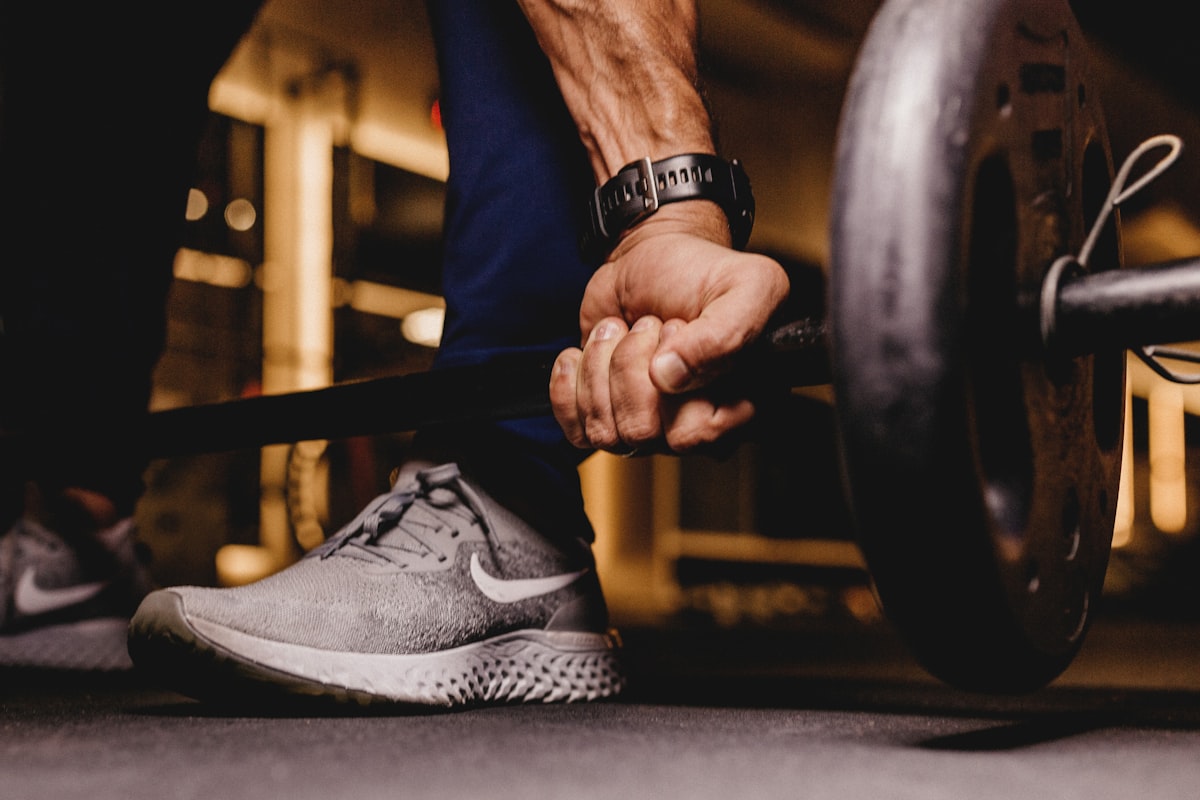
Postures one through three are the entry ramp, and beginners should stay there for two weeks before touching the rest.
Wei Tuo One: stand with feet together or shoulder-width, knees soft. Bring the hands together at the chest, fingers pointing forward, elbows level. Sink slightly. Breathe low into the belly for six slow cycles and let the shoulders drop a centimeter further with each exhale. It looks like nothing.
Held honestly — elbows level, chest open, breath slow — it tires the upper back in about a minute, which tells you how much work your posture muscles had been avoiding.
Wei Tuo Two: from the joined hands, open the arms out to the sides until they sit level with the shoulders, palms facing outward, fingers spread. Hold. The stretch should cross the upper chest and the base of the neck. Common error: floating the shoulders toward the ears. Keep them heavy and low.
Wei Tuo Three: interlace the fingers, rotate the palms to face the sky, and press overhead as the heels rise slightly off the floor. The stretch should run from the palms through the ribs into the hip crease. Breathe out through the hold. Come down slowly — the lowering counts as part of the posture, and most of the benefit hides in the descent.
Six slow breaths per hold, two or three rounds of each. That is the first ten minutes of practice, and for the first month it may fairly be all of it.
The cues that matter across all three: knees soft but not bent into a squat, pelvis neutral (tuck nothing, arch nothing), jaw loose. If a shoulder refuses an overhead position — old injury, post-surgical stiffness — press at a forty-five degree angle instead. The posture serves the shoulder, not the reverse.
- Time holds with breath, not a clock: six slow exhales per hold keeps the intensity honest and prevents straining.
- If heels rising in Wei Tuo Three feels wobbly, keep them down for the first month — balance beats height.
"Change the sinew, and the frail body is exchanged for a strong one."
From Ox-Tail Pulls to Tiger Pounces: The Back Half
The back half of the set is where the routine stops feeling gentle. Pull Nine Oxen by the Tail sets the pattern: the arms barely move, but you pull against an imagined rope with real intent, and after six breaths the lats and the backs of the shoulders report for duty. This is isometric training wearing a costume — no weight, no movement, plenty of load.
Extend Bright Claws drops the costume. Palms push forward, fingers spread and tensed, and the instruction in the old manuals is to hold until the hands tremble slightly. Three rounds. The trembling is the point: the small stabilizing muscles reaching their limit while the big ones keep position.
Nine Ghosts Draw the Sword is the spinal rotation, and it is longer than it looks. One hand hooks behind the neck, the other presses beside the ribs, the eyes lead the turn. Rotate slowly, hold, breathe, change sides. People who sit at desks usually discover one side rotates twice as far as the other, which is information worth having.
Three Plates Fall to Earth is the squat of the set — feet wider than shoulders, sinking through three depths, arms pressing down at each level with fingers spread. Hold the lowest depth for three breaths if the knees allow. If they do not, the depth obeys the knees, always.
Azure Dragon Stretches Its Claw swings the torso sideways, one hand slicing across, eyes chasing the fingertips. Crouching Tiger Pounces is the most athletic posture: a forward fold, hands walking to the floor, chest sinking toward the ground, spine long. Full honesty — if touching the floor is a rumor for your body, put hands on a chair seat. The posture survives the translation.
Bending the Body beats gently along the spine with loose fists while folded. The manuals call this drumming the Jade Pillar, and it is exactly as odd and exactly as pleasant as it sounds. Swinging the Tail finishes the set: a soft forward fold, hips swaying the spine through its last few degrees. Then stand. Notice the body. Warmer, longer, and quieter than it was fifteen minutes ago.
- Desk workers: give Nine Ghosts Draw the Sword double time on the stiffer side — the asymmetry it reveals is the target.
- Chair-height hands are a legitimate version of Tiger Pounces; the floor is a destination, not a requirement.
Why a Static Hold Changes Tissue
Modern exercise science has spent a decade catching up to the isometric hold. Tendon adapts to sustained load — collagen synthesis responds to slow, held tension in a way that bouncing movements trigger less reliably. Isometric work builds tendon stiffness (the springy kind, the good kind) and gives joints controlled loading without the compressive spikes of heavy dynamic lifting.
This is why physical therapists hand post-surgical patients wall sits and static holds long before they hand them barbells.
Yi Jin Jing is essentially a full-body isometric program with a mobility program bolted on. Each posture loads tissue at its end range — the place most gym movements deliberately pass through — and the end range is precisely where flexibility and tendon capacity get built.
The fascial angle deserves a mention, with care. The Lingshu's thirteenth chapter maps the jing jin — the sinew channels — as continuous lines running from foot to head, and anatomists charting fascia two thousand years later found longitudinal slings that match the old drawing tolerably well. The claim that stretching these lines 'unblocks meridians' is classical language.
The claim that long, slow, loaded stretches change how far you can reach and how tissue glides is ordinary physiology. Two vocabularies, overlapping territory.
One classical frame from the tradition itself: the Liver stores the blood that moistens the sinews, and stiff, cracking, tired bodies get read as the Liver's stores running dry. Whether that maps cleanly onto modern hepatology — it does not — the behavioral prescription it produces is sound: movement that bathes tissue slowly in blood, daily, without strain. That is what holds at end range accomplish.
And the breath, which every posture pairs with a specific rhythm. Slow exhales during effort dampen the blood-pressure spike that straining causes, keep the neck and jaw quiet, and turn a muscular event into a nervous-system event. The old manuals called it guiding the qi. A cardiologist would call it avoiding a Valsalva maneuver. Same instruction, same outcome.
- Exhale through every hold; never clamp the breath against tension — that single rule separates practice from straining.
- End-range means 'as far as goes today,' not 'as far as ever has.' The tissue decides daily.
"All the sinews belong to the joints; the Liver governs the sinews of the whole body."
Building a Week Around Twelve Moves
Three sessions a week is the floor where measurable change shows up in trials; five is where the tradition puts it; daily is fine because the set is gentle enough to repeat. Fifteen to twenty minutes a session. Morning is traditional — yang rising, the day still cool — but warm up first with two minutes of easy walking or arm circling, because cold sinews are the one setup risk this practice carries.
Progression is slow by design. Add depth before you add time: sink lower in Three Plates, fold closer in Tiger. Then add breath count — six exhales per hold becomes eight, becomes ten. Anyone who can hold Wei Tuo Three for ten unhurried breaths with heels off the ground has earned something most gym members never touch.
Pair the set with walking. Yi Jin Jing covers strength-through-range, balance, and breath; brisk walking covers the aerobic floor. Together they fill most of the physical-capacity checklist geriatricians actually test, which is why the trials with the cleanest results usually embed the practice in ordinary daily movement rather than replacing it.
Some readers should talk to a clinician first, and we would rather say it plainly than bury it in a footnote: uncontrolled high blood pressure (held tension plus breath work moves pressure around — get the numbers down first), recent surgery anywhere along the chain, acute disc problems, significant osteoporosis (end-range loaded positions want professional clearance), and later pregnancy, when joint laxity makes end-range holds a poor idea.
Shoulder replacement history: overhead work gets modified, never forced.
Everyone else: a mat or flat ground, bare feet or flat shoes, a wall nearby for the balance-hungry postures. Mr. Zhou's sidewalk, the park crowd at dawn, a hotel room at seven in the morning — the set is identical everywhere, which is most of its genius.
- Two minutes of easy movement before the first hold — cold sinews are the only real setup risk in this practice.
- Log one number: your lowest comfortable hold in Three Plates. Depth gained per month is the set's honest scoreboard.
What Twelve Moves Will Not Do
Balance requires the boring part: this is not a complete strength program, and the 2024 meta-analysis said so politely. Grip strength — the measurement that keeps turning up in longevity research — improved less than lower-limb capacity across the trials, because hands barely load here.
If grip matters to you, add a carry: two grocery bags, one in each hand, is the classical prescription whether anyone admits it or not.
Bone needs more. Bone responds to heavy, brief, occasional loads — lifting things that feel heavy, with impact and direction changes. A slow hold loads bone gently. The set is joint-friendly precisely because it is bone-gentle, and those are two sides of one trade-off. Readers with osteopenia on their charts should treat Yi Jin Jing as a supplement to loading work, never a replacement for it.
It will not cause fat loss, build visible muscle mass, or repair a torn rotator cuff. Trials that tracked weight found minor or no change, which matches common sense: twenty minutes of slow holds spends fewer calories than a bowl of rice.
What it does build, the trials and the sidewalk agree on, is the unglamorous middle: standing up from low chairs without a hand on the armrest, turning to reverse a car without rotating the whole torso, walking a wet sidewalk with the quiet confidence of someone whose ankles have opinions and can act on them. Capacity that does not photograph.
Da Mo's monks wanted to sit longer. Soldiers wanted to march further. You may just want stairs to stop announcing themselves. The set does not care which. Twelve postures, fifteen minutes, held at the end of range, breath doing the counting. The only real question the classic asks is the one it ends with: same time tomorrow?
- Add a daily carry for grip — the trials showed hands respond weakly to this set alone.
- Osteopenia or osteoporosis: keep Yi Jin Jing as the mobility floor and get loading guidance from a clinician.
"The wise did not exhaust the body they worked; they moved until stirred, never until spent."