The Old Idea Under the New Straps
A pair of nylon straps hanging from a doorframe does not look like much. It looks even less like classical medicine. But the training logic inside a suspension trainer — body as the load, angle as the only dial, the midsection as the place where everything either holds together or does not — sits closer to the Lingshu's map of the body than anything else in the home-fitness aisle.
The Lingshu, the Inner Canon's second book, spends its thirteenth chapter on the jing jin: twelve sinew channels described as continuous lines running from the feet through the hips and back to the head. Not muscles in isolation — chains. Modern anatomy, once it started charting fascia, found longitudinal slings that map onto the old drawing tolerably well. Suspension training is chain training.
Every row or push through hanging straps runs force from hand through core through foot, and the weakest point in that line — usually the trunk — gets loaded whether you planned for it or not.
The practical case is just as plain. A suspension trainer weighs under two pounds, hangs from a door, a beam, or a park frame, and turns bodyweight into adjustable resistance by changing foot position or body angle. Walk your feet closer to the anchor and a row gets easy. Walk them away and it gets hard. No plates, no math, no commute.
For the two groups this site hears from most — people over fifty rebuilding capacity, and people who travel or live in small flats — that single design idea is why straps keep earning their shelf space.
There is also the honesty of the failure mode. A dumbbell dropped on a toe is an instant lesson; a strap that slips teaches you about anchors. Both categories carry risk, but straps concentrate all of theirs at one attachment point, which means the safety conversation is short enough to actually remember.
That trade — one critical attachment versus a house full of loose iron — is a fair deal for most homes, provided the attachment gets treated with respect.
Cost rounds it out: the category runs from about twenty dollars to under a hundred, which makes even the premium strap cheaper than a couple of months of most gym memberships. So the question is not whether suspension training works. The research on that is better than the price tag suggests. The questions are which of the near-identical-looking kits are worth hanging from, and whether your door will hold.
This review sorts out both.
- Body angle is the weight — walk the feet, change the exercise. No other home equipment offers a dial this simple.
- One strap, under two pounds, packs flat: the entire strength gym for a hotel room or a studio flat.
What the Research Says
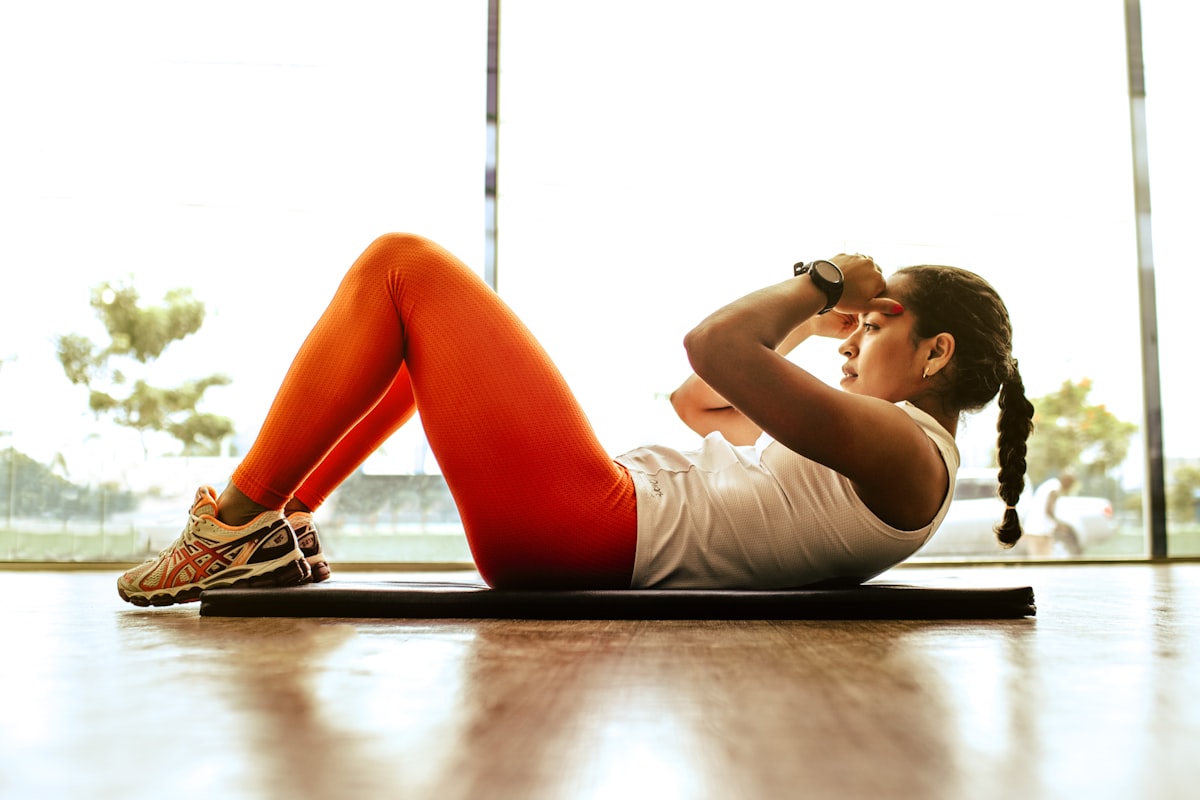
Start with the most encouraging trial. In 2024, researchers in Iran randomized nineteen elderly men with diagnosed sarcopenia — average age nearly seventy-five — to eight weeks of TRX suspension training, three sessions a week, or to a control group. Blood markers moved first: myostatin, the protein that brakes muscle growth, dropped, while follistatin, which blocks the brake, rose.
Functional tests moved with them — gait speed, chair-stand repetitions, the timed up-and-go, and handgrip all improved versus controls. One honest catch: DEXA scans found no significant change in actual muscle mass over the eight weeks. Function improved before tissue did. Short trials show that pattern often, and it argues for longer programs rather than against the method.
The feasibility study matters for a different reason. German gerontology researchers built a twelve-week TRX program for healthy older adults — seven exercises, each with three or four difficulty stages — and tracked whether ordinary people past sixty would actually stick with it.
Compliance hit 85 percent, ninety-one percent wanted to keep training afterward, and participants rated intensity, duration, and frequency as optimal. That borders on unheard-of adherence in exercise research, and it points at the method's quiet advantage: difficulty that scales by body angle means a seventy-year-old and a forty-year-old can train the same seven movements in the same room.
The low-back data completes the picture. A Hong Kong study wired adults with chronic low back pain with EMG electrodes and measured core activation across four TRX exercises. Plank hip abduction drove the deepest abdominal activation of the four; the hamstring curl loaded the lumbar paraspinals hardest.
Other researchers have found that suspension versions of familiar exercises raise core muscle activation above the same movements on a stable floor, while spinal compression stays moderate — a combination rehab specialists like.
Now the boundaries, plainly. Nineteen men is a small trial. Biomarkers are not outcomes. Feasibility is not efficacy. EMG activation is a mechanism measurement, not a promise of less pain.
What the literature supports is narrower and still useful: suspension training is a legitimate, joint-friendly resistance method with documented effects on strength, function, and core activation, at a dose of two to three short sessions a week.
- Trials used two to three sessions weekly for eight to twelve weeks — the method earns results at modest doses, but it does need the doses.
- Older readers, note the feasibility study's design: seven exercises, staged difficulty, angle-based. That structure, not intensity, is what kept compliance at 85 percent.
"The lower back is the residence of the Kidney. When turning and rolling become impossible, the Kidney is exhausted."
How We Picked: Four Tests Before Price
Suspension trainers are the most clone-heavy category in home fitness. The listings look interchangeable because the geometry is identical — two straps, handles, an anchor. What separates a two-year strap from a two-month strap is invisible in photos, so our screening ran on four questions.
First: how does the anchor attach, and how does it fail? Door anchors should be a dense foam wedge or padded block that routes load through the hinge side of a solid door — never a thin strap that slides, and never hardware that quietly assumes a hollow-core door can carry a human. Wall or ceiling anchors need real mounting hardware. Anything shipped with screws that look like an afterthought failed on arrival.
Second: webbing and stitching. We read one-star reviews specifically for seam failures, cam-buckle slippage, and handle foam tearing, and we disqualified anything with a pattern of them. The weight rating should be stated outright — 350 pounds is the credible industry standard — and it should be a tested number, not an aspiration.
Third: adjustability under load. Good kits let you lengthen or shorten a strap in seconds, one-handed, mid-workout, because progression depends on changing body angle constantly. Cheap single-buckle systems force you to stop, feed webbing back through, and lose the thread of the circuit — and workouts that lose their rhythm become workouts that stop.
Fourth: handles and foot cradles. Padded grips that keep their shape after sweaty sessions; cradles that cinch flat instead of twisting into rope. Small things, a fraction of each workout, until one of them annoys you on day nine and the whole routine quietly dies.
Method disclosure, because reviews should say this out loud: we are researchers and writers, not a testing laboratory. Our picks come from published trial protocols (every clinical study above used a TRX-format strap), aggregated buyer reviews at scale, and units bought with our own money — including one budget set whose stitching began to fuzz after six weeks, a failure that shaped the safety section below.
- Knock before you hang: a solid door thuds, a hollow-core door rings. Only the first kind carries a bodyweight anchor.
- Stated weight rating around 350 lb is the credibility line in this category; unstated ratings mean untested gear.
The Three Setups Worth Buying
The professional-format straps, TRX style. This is the format every clinical trial above used, and it stays the default recommendation: industrial webbing, locked cam buckles, padded handles, foot cradles, a door anchor that wedges properly, and a stated weight rating near 350 pounds.
The premium price buys tolerance — for sweat, for daily use, for a person who trains hard — plus one-hand micro-adjustability that keeps a twenty-minute circuit moving. If suspension training becomes a habit, this is the set you keep. If you buy one item from this page, buy this one.
The compact travel set with a door anchor. Under half the price, half the weight, packs to paperback size. The trade-offs are honest ones: thinner webbing, simpler buckles, handles with modest padding, and a door anchor that wants solid doors. This is the set for hotel rooms, for testing whether suspension training fits your life before the bigger purchase, and for anyone whose entire budget is twenty-five dollars.
Ours survived a summer of hotel-door training. The set that failed our fuzz test was a no-name clone below this tier, which is why the category's floor sits here and not lower.
The wall mount anchor with hardware. Not a strap — the missing half of a permanent setup. A steel bracket lag-bolted into a stud or solid masonry turns any corner into a training station with more height range than any door anchor allows, and it removes the one genuine anxiety in this category: attachment points that move. Mount it once, then hang anything from it — straps, bands, a pull-up bar.
Renters and hollow-door apartment dwellers skip it; everyone training daily should own it.
Skipped, deliberately: elastic-bungee hybrids (they turn bodyweight training into band training, which is a different tool), single-strap knockoffs under fifteen dollars (stitching roulette), and any kit that will not state a weight rating.
- Start with the professional format if training daily; add the wall mount within a month — door anchors are for travel, mounts are for habits.
- Solid door, hinge side, closed and locked. That is the entire door rule.
Twenty Minutes, Seven Moves, One Doorway
The TRX-OldAge program from the German study makes a good skeleton: seven movements, each with staged difficulty, all adjustable by angle. Here is a circuit built on that logic — two or three rounds, resting sixty to ninety seconds between rounds.
Rows first: lean back holding the handles, body straight as a plank, pull the chest to the hands. The angle sets the load; a steeper body is easier. Then chest presses, facing away, hands at the chest, lower and press. Squat to row pairs legs and back in one movement — squat, stand, pull. Hamstring curls go next: lying on your back with heels in the cradles, hips lifted, draw the knees in.
The Hong Kong study found this move hardest on the lower-back muscles, so set the tempo slow. Plank knee tucks load the front of the core without compressing the spine. Y-raises, kept light, wake the shoulder stabilizers. Finish with an assisted split squat, rear foot in a cradle, as deep as the knee politely allows.
Progression across the weeks follows the study's staging. Week one, every movement at the easiest angle, two rounds, and the only goal is learning the buckles. Weeks two through four, walk the feet out a step, add the third round where breathing allows.
By week six, most people reach the stages the trials actually trained — and that is the part worth underlining: the same seven movements carried the sarcopenia trial's seventy-four-year-olds and will still be challenging you at stage four, which is more than can be said for most purchases in this aisle.
The classical frame fits this equipment better than it fits most modern gear. The Suwen names the lower back the residence of the Kidney — the organ system said to store the body's deepest reserves — and warns that a waist that cannot turn and roll signals exhaustion. Suspension training is, mechanically, a course in teaching the waist to hold, turn, and roll under load while the spine stays neutral.
And the Dan Tian region that Chinese practice treats as the body's center of gravity is precisely the deep abdominal cylinder the EMG study watched light up.
Timing, as the tradition would have it: mid-morning or late afternoon, neither on a full stomach nor within an hour of bed. Exhale on effort. Stop each set with two honest repetitions left in reserve, because the goal is a body that works tomorrow, not a workout that proves something today. Fifteen to twenty-five minutes, and the door closes behind it.
- Six inches of foot movement separates a warm-up from a workout — recheck your angle every set, not just the first.
- Leave two reps in reserve every set; the trials trained function, not exhaustion, and function is what shows up in stairs.
"Flowing water never stagnates; a door hinge never rusts — because they move. So it is with the body."
Anchors, Doors, and Other Ways This Goes Wrong
Nothing in home fitness fails as suddenly as an anchor. Straps fray gradually; anchors let go at once, and the floor is where the lesson happens. So the safety list is short and non-negotiable.
Solid doors only. A hollow-core door is a cardboard sandwich — it will flex, split, or drop a hinge pin under bodyweight. Check by knocking: solid doors thud, hollow ones ring. Hinge side, door closed, and locked if the lock allows, so nobody opens it mid-set. One of our editors learned this the cheap way in a Chengdu rental when the door swung and the floor happened to be carpet rather than concrete.
Do not repeat the experiment on tile.
Wall mounts go into studs or masonry, full stop. Use the supplied hardware, torque it properly, and test with more than bodyweight before the first real session — hang, pull hard, watch the bracket, wait a day, check again for movement. A bracket that loosens microscopically each session is a bracket planning an exit.
Inspect the webbing monthly: fuzzing, cuts, glazing where heat has sealed the weave, any stitch line that looks thin. The budget set we bought began fuzzing at a buckle contact point after six weeks and retired that same week. Cam buckles should lock dead under load; any slippage retires the strap.
And wear grippy shoes or use bare feet carefully in the cradles — a foot shooting out of a twisted cradle mid-hamstring-curl is how faces meet floors.
Who should get a clinician's blessing first: anyone with an acute disc flare or active sciatica (unstable-surface core work wants professional sequencing), uncontrolled blood pressure, later pregnancy, significant osteoporosis, and anyone fresh out of surgery anywhere along the load chain.
Readers with chronic low back pain: the EMG evidence is encouraging, but mechanism is not treatment — have a physiotherapist check your four exercises before they become a habit.
None of this is complicated. It is the same logic as a climbing gym: trust the rope, audit the bolt.
- Monthly strap inspection is five minutes: hold webbing up to light, look for fuzz and thin stitch lines, retire anything doubtful.
- After mounting a wall anchor, load-test hard, wait 24 hours, and recheck for movement before trusting it fully.
The Honest Trade-Offs
A suspension trainer tops out. Once bodyweight at the shallowest angle stops being hard — for rowing and pressing this takes most people a year or two — there is nowhere to go except adding load: a weighted vest, a backpack of books, or a return to barbells. For rebuilding capacity, protecting a back, and training in small spaces, the ceiling sits far above the required dose.
For chasing a big bench press, straps are scenery.
Legs get shortchanged. Most lower-body strap work is assistance — supported squats, cradle-assisted split squats — and strong legs will outgrow it within a season. Pair the straps with loaded carries or a simple weight if legs are the goal.
Doors and landlords have opinions. Door anchors scuff paint at the top corner, wall mounts require holes, and rental agreements read neither kindly. Measure that trade before the purchase rather than after the deposit disappears.
The learning curve is real but brief. The first two sessions feel awkward the way every new movement pattern does. By the fifth, the body-angle dial makes sense and the kit vanishes from attention, which is the highest compliment available to home equipment.
So the verdict, plainly. For most readers of this site — rebuilding capacity after fifty, protecting a temperamental back, fitting strength work into a small flat or a travel schedule — a professional-format strap kit, plus a wall mount for anyone training daily, is the purchase we would make with our own money, and the one the trial literature would recognize.
It costs less than two months of most gyms, weighs less than a laptop, and trains the exact chain the Lingshu drew two thousand years ago: one continuous line from the ground to the hands, held together at the center.
The classical physicians believed the waist was where reserves lived. Modern trials put muscle biomarkers, gait speed, and grip in the same neighborhood. Both maps point at the same doorframe. The only question left is whether yours has a solid door in it.
- Outgrown the angle dial? A backpack of books adds load for rows and presses before you ever need iron.
- Renters: photograph door tops before the first anchor session — paint scuffs are real, and disputes are easier with a before photo.