The Standard Gout Story Misses Half the Picture — Here's the TCM One
Gout might be the most consistently misunderstood common joint disease in Western medicine. The standard script: 'Your uric acid is high. Avoid red meat and beer. Here's some colchicine for the flare.' Patient complies. Attacks continue. Patient feels like it's their fault.
Here's what that script leaves out. Uric acid is the marker, not the disease. In TCM terms, gout — historically called Li Jie Feng, 'the wind that pierces the joints' — is a Damp-Heat Bi pattern. Bi means obstruction: a joint invaded by pathogenic factors that block qi and blood flow. In gout, the invading pair is Dampness and Heat. And understanding that pair changes everything about how you approach treatment.
Picture the joint as a house. Uric acid crystals are the furniture that got soaked — visible damage. But the flood that soaked the furniture is Damp-Heat: a chronic systemic condition of the body's internal environment. Dampness, in TCM, is heavy, sticky, turbid, slow-moving — the quality of water with nowhere to drain.
It accumulates in the Spleen system (the organ network responsible for transforming food and clearing fluid) when rich food, alcohol, and weak digestion overwhelm the body's processing capacity over years. Heat is the burning quality that results when Dampness stagnates and ferments — compost pile physics: trapped moisture generates heat.
When Damp-Heat congeals in a joint, it produces the exact clinical picture of a gout flare: sudden onset, red, hot, swollen, burning pain — classically in the big toe, the lowest point where turbid fluid sinks. That location isn't random. Dampness is heavy and seeks the bottom.
The TCM framework matters because it changes the treatment target. A uric-acid-only approach says: remove the crystals, avoid the sources. A Damp-Heat approach says: cool the Heat, drain the Damp, and strengthen the Spleen so the environment that manufactured the crystals in the first place stops doing that.
Patients who only avoid shrimp and beer keep flaring because they're emptying one bucket from a flooded basement while the water main is still wide open. The patients who do best combine conventional urate management with the Damp-Heat protocol described below: herbs that cool and drain, acupoints that clear Heat, and food rules that rebuild the internal environment.
- Gout's classic location — the big toe — isn't a coincidence: turbid Dampness is heavy and sinks to the lowest point, like mud settling at the bottom of a jar.
- A flare following a rich meal isn't a food allergy; it's the last straw on a Damp-Heat pattern built over years. The meal triggered it. The pattern built it.
- The TCM name Li Jie Feng — 'wind piercing the joints' — captures the sudden, migratory, piercing quality of gout pain that a uric acid number alone cannot convey.
"When Wind, Cold, and Damp combine, they create Bi. When Heat is added and Dampness ferments within the joints, the pain is red, hot, and piercing — this is the Bi of Damp-Heat."
Why 'Avoid Red Meat and Beer' Keeps Failing: Damp Is Sticky and Systemic

Ask any gout patient what their doctor told them, and you'll hear the same three words: avoid red meat, avoid beer, avoid shellfish. Then ask if it worked. For a lot of them, the honest answer is no — and the frustration is deserved, because the advice, while not wrong, is incomplete in a way that practically guarantees failure for a big subset of patients.
The Damp-Heat explanation: Dampness is sticky. In TCM, Damp is described as the hardest pathogenic factor to eliminate — heavy, turbid, clinging, accumulating over years rather than weeks. Every rich meal, every evening drink, every bout of sluggish digestion deposits a little more Damp into the system, like sediment settling on a riverbed. ' But the pattern isn't built today. It was built over twenty years.
Removing one trigger — beer — from a riverbed already packed with sediment doesn't clear the river.
This is why the 'borderline' uric acid patient is such a common clinical puzzle. Blood test looks okay. Regular flares. In TCM terms, the blood test is measuring the river water; the pattern lives in the riverbed.
Uric acid can sit within normal range while the tissues are saturated with Damp-Heat — the turbid fluid has already migrated out of circulation into the joints, fascia, and connective tissue, parked and waiting.
The second reason standard advice falls short: it's all subtraction. Remove purines. Meanwhile, the two engines that actually drive uric acid production — alcohol and sugar — get a shrug. Beer is the worst of all worlds: yeast purines + alcohol (which blocks renal urate excretion by 10-20% within hours and promotes dehydration) + carbohydrate load spiking insulin.
But even 'just one glass of wine' matters, because the alcohol itself, independent of purine content, suppresses urate clearance. And sugar — fructose specifically — is the hidden third rail. Fructose metabolism burns through ATP and produces uric acid as a direct byproduct, and it does so in people who haven't touched a shrimp in weeks.
A 2017 systematic review of dietary triggers confirmed what TCM has been saying for centuries: the relationship between diet and gout is about systemic load, not single villains.
The third reason: the kidneys, which excrete roughly two-thirds of urate, are exactly what Dampness weakens in TCM's model of chronic fluid imbalance. When the body is chronically dehydrated — which most people are; the standard 'eight glasses' rarely happens — uric acid clearance drops and crystals precipitate more easily. A body that can't drain water can't drain uric acid either.
Treating gout requires treating the drainage, not just the input.
- If you keep flaring with 'borderline' uric acid, stop treating the lab value as the whole story — tissues can be saturated while blood looks acceptable.
- Beer is uniquely dangerous because it delivers purines, alcohol, and sugar simultaneously — three separate mechanisms, one drink. Wine and spirits avoid the purines but keep the alcohol mechanism.
- Hydration isn't a suggestion — it's a uric acid treatment. Chronic mild dehydration directly reduces renal urate clearance. Same diet flares in summer, stays quiet in winter for many patients.
"Dampness is the most difficult of the pathogenic factors to dispel. It is heavy, sticky, and turbid; it descends to the lower body and clings to the joints. Remove the source, drain the channel, and strengthen the Earth — then, and only then, does it leave."
The Damp-Heat Self-Check: Tongue, Heaviness, Digestion, and Five More Signs
Before treating a Damp-Heat pattern, you need to know if you have one. TCM diagnosis doesn't hang on a single number — it reads the body for the fingerprints of Dampness and Heat. Here's the self-check, in the order a practitioner would go through it.
1. The tongue. Most informative diagnostic window you own, and it's free. A Damp-Heat tongue has two features: a coating that is thick, greasy, and yellow (yellow = Heat, greasy = Damp), and often a slightly swollen body with tooth marks on the edges — indicating Spleen qi deficiency underneath the excess. Check in the morning, before eating or drinking, in natural light. Thin white film? Normal.
Layer of yellow paste or cottage cheese? You're carrying Damp-Heat.
2. Heaviness. Dampness literally weighs the body down. Do you feel sluggish in the morning even after eight hours of sleep? Limbs like lead after a heavy meal? Puffy face in the morning, swollen fingers, socks leaving marks on your ankles? A general bodily heaviness that food and rest don't fix — that's the classic Damp signal.
3. Flare patterns. Damp-Heat flares have a signature: they strike at night (Heat and Damp both worsen when the body slows down), they prefer the lower body (big toe, ankle, knee), and they're worse with heat and humidity — hot summer nights, rainy seasons. If your joint pain is worse in cold and better with warmth, that's a Cold-Bi pattern, not Damp-Heat — different treatment entirely.
4. Digestion. Damp-Heat always involves Spleen and Stomach. Bloating after meals, a heavy 'full' feeling that lingers for hours, loose stools that are sticky and hard to wipe (the classic Damp stool — it leaves residue), bitter taste in the mouth, bad breath, and a paradoxical appetite — you're hungry but feel heavy after eating.
5. Skin and secretions. Dampness leaks: sticky sweat, oily skin and hair, thick phlegm, yellowing of the eye whites or skin (in severe cases). If your pillowcase looks greasy by morning, that's Damp-Heat sebum.
6. Urine and thirst. Damp-Heat produces scanty, dark, concentrated urine and a thirst that water never quite quenches — the classic 'thirst without desire to drink much,' because the body feels full of fluid it can't use.
Score yourself. Four or more of these six markers, and you've got a functional Damp-Heat pattern — regardless of what your uric acid number says.
- Take a photo of your tongue in morning light on day one, then monthly — coating thickness and color are among the most reliable indicators of whether Damp-Heat is clearing.
- The Damp stool (sticky, leaves residue, hard to wipe) is one of the most specific signs in the whole checklist — if you have it, you have Damp, full stop.
- Flare timing matters for diagnosis: Damp-Heat flares at night and worsens with humidity; Cold-Bi worsens in winter and loves warmth. Treating the wrong pattern makes things worse.
"The tongue is the mirror of the interior: a greasy yellow coating reveals Damp-Heat fermenting within. The body that feels heavy, the stool that clings, the thirst that never truly quenches — these are the words of Dampness."
Three Food Rules That Move the Needle — and None of Them Start With 'Avoid Shrimp'

Most gout diets are lists of forbidden foods. This is different: three rules, each aimed at a specific mechanism, each measurable. Follow all three and you're treating the pattern instead of just sidestepping triggers.
Rule 1: Zero alcohol. ' Zero — including that one glass of wine. Alcohol doesn't just contribute purines. It directly suppresses renal urate excretion by 10-20% within hours of drinking. It dehydrates, concentrating uric acid. And it taxes the liver, which is already processing urate. Beer is the worst of the bunch (yeast purines + alcohol + sugar), but wine and spirits carry the same excretion-blocking mechanism.
From a Damp-Heat perspective: alcohol is pure Damp-Heat in liquid form — it pours both pathogenic factors straight into the system. The rule is absolute during flares and for three months after. After that, an occasional glass becomes a decision, not a habit — and if you flare within 24 hours of one drink, your body just gave you its answer.
Rule 2: Three liters of water, every day. This is the single most under-prescribed gout intervention in Western medicine. Uric acid clears through the kidneys, and clearance runs on urine volume. A 2017 systematic review identified dehydration as one of the most consistent modifiable triggers; high fluid intake associates with lower serum urate and fewer flares.
The mechanism is simple plumbing: more urine = more urate out. Practical execution: 3 liters (roughly 100 oz) spread across waking hours — not 3 liters at 9 PM, which just means three bathroom trips at midnight. Marked bottle, continuous sipping, front-loaded before 4 PM.
Rule 3: Kill the hidden sugar. This is the rule nobody tells you — and for many patients, it does more than the purine rules. Fructose metabolism produces uric acid directly: when the liver processes fructose, it burns ATP and generates urate as a byproduct, independent of any purine intake. Sugar-sweetened beverages are the worst vehicle — a single soda measurably raises serum urate within hours.
Refined carbs (white bread, pastries, sweetened yogurt, 'healthy' juices) do the same through the fructose pathway and the insulin spike. The rule: no sugar-sweetened drinks, no fruit juice (eat whole fruit — the fiber and water change the equation), and minimize added sugar across the board.
The purine modifier: high-purine animal foods — organ meats, shellfish, sardines, and yes, red meat in excess — still count. But they count as one variable among three, not the whole game. Moderate-purine plant foods (beans, lentils, spinach, mushrooms) are not the enemy; the evidence exonerating plant purines is solid. The three-rule framework in one line: subtract alcohol, add water, eliminate hidden sugar.
Then the purine rules become the final polish rather than the entire strategy.
- Sugar-sweetened drinks raise urate through a completely different mechanism than meat — fructose metabolism manufactures uric acid directly. Cutting soda often matters more than cutting steak.
- 3 liters front-loaded before 4 PM keeps you hydrated without destroying your sleep — evening water is the enemy of both gout and rest.
- Plant purines (beans, mushrooms, spinach) don't carry the gout risk that animal purines do — don't strip vegetables from an anti-gout diet; that's throwing out the medicine with the bathwater.
"The Stomach is the origin of Damp-Heat: what enters the mouth becomes either nourishment or turbidity. The patient who governs the gate governs the disease."
The Four Herbs That Cool the Fire and Drain the Swamp
The herbal strategy for gout has one job: cool Heat, drain Damp, and move the channels — without damaging the Spleen's ability to transform fluids. These four herbs are the classic tools, each with a specific role and a modern pharmacology story that backs up the traditional use.
Tu Fu Ling (Smilax glabra, 土茯苓). The anchor herb for gout. Drains Dampness, clears Heat, and — critically — 'detoxifies' the turbid matter that Damp-Heat generates in the joints. It is the traditional go-to for Li Jie Feng, and modern research has studied it for exactly this reason: Smilax constituents inhibit xanthine oxidase — the same enzyme allopurinol targets — alongside demonstrated anti-inflammatory activity.
In TCM language, it works at the root, changing the internal environment rather than just suppressing symptoms.
Ren Dong Teng (Lonicera japonica stem, 忍冬藤). The stem of the honeysuckle plant — distinct from the flower, Jin Yin Hua, which is for Wind-Heat. Ren Dong Teng clears Heat, resolves Dampness, and moves through the channels and collaterals specifically targeting the joints.
Its modern pharmacology shows broad anti-inflammatory and antibacterial activity, with constituents that modulate the inflammatory cytokines driving acute arthritis. Think of it as the herb that unblocks the joints while the others clear the environment.
Yi Yi Ren (Coix lacryma-jobi seed, 薏苡仁). The great Damp-drainer. Drains Dampness through urine, strengthens the Spleen, clears Heat, relaxes the sinews. And it's also food — pearl barley — meaning it can be used daily in congee as nutritional medicine. An ideal breakfast base for gout patients. Its constituent coixenolide has documented anti-inflammatory activity.
Qin Pi (Cortex Fraxini, 秦皮). Ash tree bark — bitter and cold. Bitter drains Dampness, cold clears Heat, and Qin Pi does both with particular affinity for the lower body and joints. It also has a specific astringent quality that addresses the 'leaky' aspect of Dampness. Modern research has identified its coumarins as anti-inflammatory and uricosuric — promoting uric acid excretion.
These four frequently appear together in formulas — Si Miao San ('Four Marvel Powder': Huang Bai, Cang Zhu, Yi Yi Ren, Niu Xi) is the standard Damp-Heat Bi formula, with Tu Fu Ling and Ren Dong Teng added for gout specifically. Important caveat: herbs are medicine with real pharmacology and real dosing requirements. Tu Fu Ling at high doses can affect kidney function.
Work with a licensed TCM practitioner who can match a formula to your tongue and pulse. Tell both your TCM practitioner and your doctor everything you're taking — especially if you're on allopurinol, febuxostat, or diuretics, which are the medications most likely to interact.
- Yi Yi Ren (pearl barley) is the one herb that doubles as daily food — a congee base that drains Damp with essentially zero risk. Start there.
- Tu Fu Ling's xanthine-oxidase inhibition parallels allopurinol's mechanism — combining high-dose Tu Fu Ling with allopurinol requires practitioner supervision; the two together can drop urate too fast.
- Herbs treat the pattern, not the flare: the cooling-and-draining protocol is a between-attacks strategy. Acute flares need the acute protocol in the next section.
"For the Bi that burns like fire and flows like mud, use the bitter and the bland: bitter to drain the Damp, cold to quench the Heat, and the creeping vines to thread the channels until the joints run clear."
Four Acupoints for Gout — Where They Are, How to Press Them, and When to Leave the Toe Alone
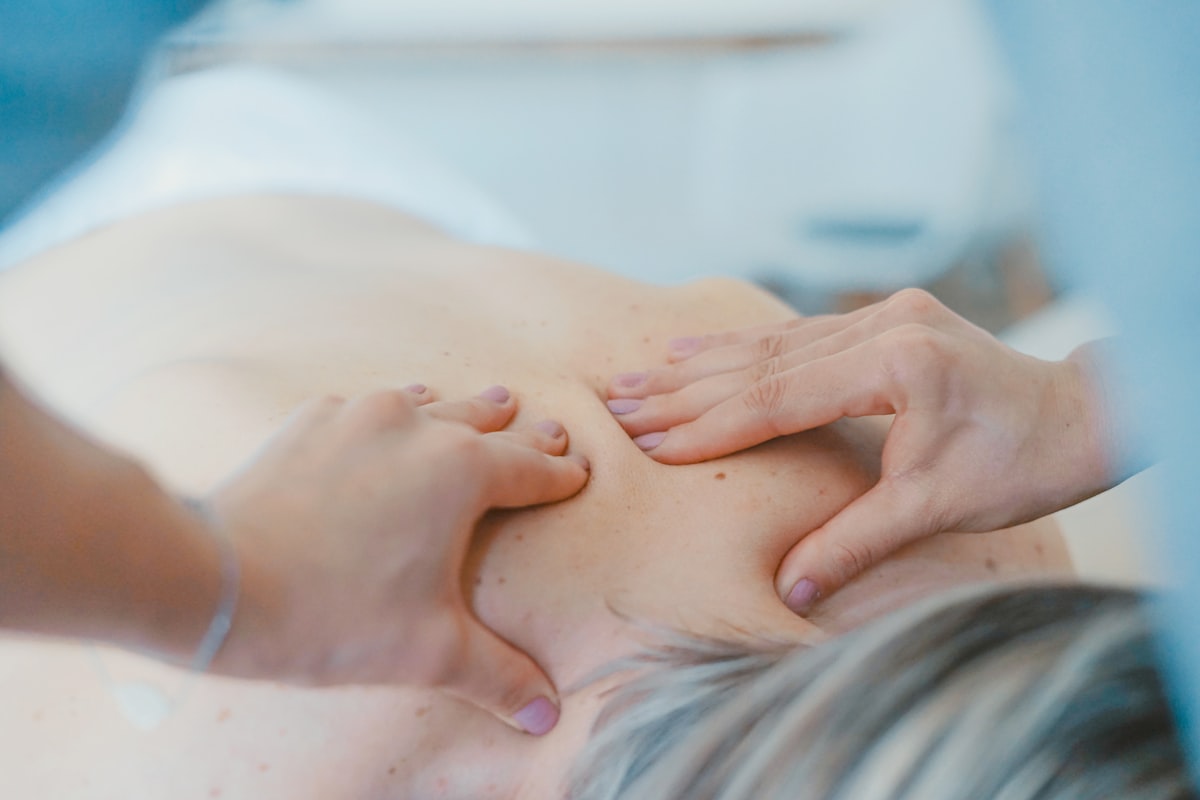
Acupuncture and acupressure give gout patients something no pill offers: a way to participate in treatment between flares, hitting the same Damp-Heat pattern that the herbs address from the inside. These four points form the core gout protocol — two clear Heat and Damp, two support Spleen and free the joints.
LI-11 (Quchi, 曲池 — 'Crooked Pond'). The single most important point for clearing Heat anywhere in the body. Location: bend your arm fully; the point sits at the outer end of the elbow crease, between the joint and the bony bump (lateral epicondyle). LI-11 is the classic point for red, hot, swollen conditions of any kind — the front-line address for the Heat side of Damp-Heat.
Press firmly 2-3 minutes, twice daily during the week leading into a flare and daily during a flare itself (on the unaffected side if the flare is severe).
SP-9 (Yinlingquan, 阴陵泉 — 'Yin Mound Spring'). The master point for draining Dampness. Location: find the bottom of your kneecap, slide down the inner side of the shin bone (tibia) to where the bone curves back — the depression just below and behind the medial condyle. This is the most direct 'drain the Damp' point in the body, the meeting point of the Spleen channel, and Spleen governs fluid transformation.
It pairs with LI-11 as the classic Damp-Heat duo: LI-11 cools, SP-9 drains.
ST-36 (Zusanli, 足三里 — 'Leg Three Miles'). The most famous point in acupuncture, and for gout it serves the support role: it strengthens Stomach and Spleen — the organs whose weakness lets Damp accumulate in the first place. Location: four finger-widths below the kneecap bottom, one finger-width lateral to the shin bone, in the muscle belly.
Press daily — it's also the body's general immunity and energy point, which makes it the prevention anchor of the protocol.
GB-34 (Yanglingquan, 阳陵泉 — 'Yang Mound Spring'). The point that governs the sinews — the meeting point of the Gallbladder channel where tendons gather. Location: outer lower leg, in the depression just below and in front of the head of the fibula (the smaller bone on the outside of the shin).
For gout, GB-34 moves the joints and relaxes the sinews, addressing the stiffness and restricted motion that linger after acute pain settles.
For classic podagra (big toe), add local points around the affected joint — the Bafeng points between the toe web spaces — press gently. But during an acute flare, the joint itself is inflamed and exquisitely tender: work only the distal points (LI-11, SP-9, ST-36, GB-34) and avoid pressing directly on the hot, swollen toe.
Technique: thumb or index finger, press firmly enough to feel a deep, distinct sensation — soreness, heaviness, or a slight radiating feeling (de qi) — hold 30-60 seconds, then massage in small circles 2-3 minutes per point. Twice daily. No equipment needed.
- The classic Damp-Heat pairing is LI-11 + SP-9 — one cools the Heat, the other drains the Damp. Do them together and you've covered both halves of the pattern.
- During an acute big-toe flare, avoid pressing the joint itself — the distal points (LI-11, SP-9, ST-36, GB-34) work through the channels without aggravating the inflamed tissue.
- Consistency beats intensity: 5 minutes of daily acupressure between flares prevents more attacks than an hour of effort during one.
"Quchi clears the Heat that burns, Yinlingquan drains the Damp that clings, Zusanli builds the Earth that transforms, and Yanglingquan frees the sinews that bind. Four points, one intention: make the joints run clear."
During a Flare vs. Between Flares: Two Protocols, Don't Mix Them Up
Gout has two completely different treatment phases, and confusing them is how patients accidentally prolong attacks. A flare is an acute inflammatory crisis. Between flares is chronic pattern management. Here's each protocol, and the rules for switching between them.
ACUTE FLARE PROTOCOL (the attack — typically 3 to 10 days): (1) Rest and elevate. The affected foot or joint should stay above heart level as much as possible for the first 48 hours. Weight-bearing on an acutely inflamed gout joint extends the attack. (2) Cold, not heat.
A hot, swollen, red joint is Heat — cold compresses (15 minutes at a time, wrapped in cloth, never ice directly on skin) help damp down acute inflammation. This is the one phase where the 'heat-not-ice' rule for chronic joint pain gets inverted: acute gout is a Heat flare. (3) Hydrate aggressively — 3+ liters daily to flush urate. (4) Zero alcohol, zero sugar, minimal purines — the three rules go absolute.
(5) Distal acupressure only: LI-11, SP-9, ST-36, GB-34 — not the inflamed joint. (6) Medication: if you have prescribed flare medication (NSAIDs, colchicine, steroid as directed), take it early — early treatment dramatically shortens flares. If this is your first attack, see a doctor for diagnosis and a urate-lowering plan. Don't self-diagnose a hot, swollen joint.
(7) Do NOT start or increase urate-lowering medication during an acute flare without medical guidance — rapid urate shifts can paradoxically prolong the attack.
PREVENTION PROTOCOL (the 90% of the time between flares): (1) The three food rules, every day, indefinitely: no alcohol (or minimal, strategic), 3L water, no hidden sugar. (2) Herbs: a practitioner-matched formula built on Tu Fu Ling, Ren Dong Teng, Yi Yi Ren, and Qin Pi, taken in courses — typically 8-12 weeks at a time with breaks. (3) Daily acupressure: the four points, 5 minutes, morning or evening.
(4) Weekly gentle movement: walking, tai chi, swimming — movement supports Spleen function and joint health, but protect the joints that have been attacked. (5) Weight management as needed — obesity is a major modifiable risk factor; 5-10% weight loss measurably reduces urate.
(6) Monitor: track uric acid (home monitor or quarterly labs), aim to stay under the target your doctor sets — typically under 6 mg/dL, sometimes under 5 with tophi. (7) Seasonality: Damp-Heat flares cluster in hot, humid seasons and after holidays — tighten the protocol (extra hydration, stricter sugar rules) proactively in the weeks before known high-risk windows.
The transition rule: you're in prevention mode the day redness and swelling fully resolve, and you stay there until the next flare. Each completed prevention month reduces the probability of the next attack. Patients who run the full protocol for 6-12 months typically see flare frequency drop 70-90%.
- The number one protocol error: using the acute treatment (rest + cold + aggressive medication) as the long-term strategy. The prevention protocol is what actually ends the cycle.
- A first hot, swollen joint is a medical diagnosis event — septic arthritis and gout need to be distinguished by a doctor before any home protocol begins.
- Time your prevention push: the three weeks before holiday season and the start of summer humidity are peak Damp-Heat flare windows — tighten the rules proactively, not reactively.
"Treat the acute with attack — drain the Heat, cool the fire. Treat the chronic with cultivation — build the Spleen, guard the gate of the mouth, and let the body forget the pattern."
Warning Signs: When Gout Stops Being a Home-Management Problem
Gout is manageable — but it's also a disease where delay causes permanent damage, and where a misdiagnosis can be dangerous. Here are the situations where the protocol stops and a doctor's office starts.
Immediately — same day: (1) Fever, chills, or feeling systemically unwell alongside a hot, swollen joint. A red, hot, swollen joint plus fever raises the possibility of septic arthritis — an infection inside the joint that destroys cartilage within days. This is an emergency; no amount of cherry extract or herbal tea replaces an ER visit. (2) A joint so painful you cannot bear weight or move it at all.
(3) Redness spreading beyond the joint up the limb — this can signal cellulitis or spreading infection. (4) Sudden joint pain following a known recent injury.
Within 48 hours: (5) Your first attack ever — you need a definitive diagnosis (gout vs. pseudogout vs. septic arthritis vs. other inflammatory arthritis) and a urate-lowering plan. Don't self-diagnose from the internet. (6) Recurrent flares despite clean diet and good hydration — this suggests either under-treated hyperuricemia or a different condition, and warrants rheumatology referral.
(7) Kidney symptoms with flares: flank or lower back pain, blood in urine, or significantly reduced urine output — uric acid kidney stones are a common complication of chronic hyperuricemia. (8) Tophi — firm, chalky nodules under the skin on fingers, elbows, ears, or Achilles — indicate long-standing, severe hyperuricemia with crystal deposition requiring active medical management.
When to get a rheumatologist: (9) Flares in multiple joints or unusual locations (knee, wrist, shoulder) — atypical gout deserves specialist evaluation. (10) Morning stiffness lasting more than an hour with swelling — this pattern can indicate other inflammatory arthritis (RA, psoriatic) that needs completely different treatment.
(11) You're on diuretics for blood pressure or heart failure — diuretics raise urate and complicate gout management; the combination needs coordinated care. (12) You have kidney disease or diabetes — gout medications and urate-lowering drugs require dosing adjustments and closer monitoring.
The honest framing: gout is one of the most treatable chronic diseases when it's treated as a chronic disease — with a urate-lowering plan, the food rules, and the Damp-Heat protocol working together. But it's also a disease with real complications — joint erosion, kidney stones, tophi — when it's treated as an occasional nuisance. The warning signs above aren't a reason to fear gout.
They're a reason to respect it — and to let the right professionals into the room at the right moments.
- A hot, swollen joint with fever is a same-day emergency — septic arthritis can destroy a joint in days, and it presents exactly like gout. Never assume; always rule out.
- Recurrent flares despite perfect compliance are a diagnostic clue, not a personal failing — get a rheumatology consult; the pattern may not be simple gout.
- Tophi are the disease's visible scoreboard: crystal deposits under the skin mean years of under-treatment. They signal the moment for aggressive urate-lowering therapy under medical supervision.
"The wise physician knows the limits of his own tools. When the fire burns beyond the joint, when the body burns with it, the time for herbs is past — the time for the urgent needle of intervention has come."