Why Bands Belong in a Fat-Loss Plan
Most people dieting do one of two things with exercise: nothing, or cardio exclusively. Both paths share a flaw the scale never mentions.
A calorie deficit without resistance work invites the body to burn muscle along with fat, and muscle is the tissue that keeps the lost weight from coming back — it spends calories around the clock, it carries your body up stairs at seventy, and its loss is the quiet reason so many regained weights arrive higher than they left.
Bands solve the adoption problem, which is the real problem. A barbell costs hundreds and demands space, plates, and the confidence to load one in a shared gym. Bands cost about the same as two takeout dinners, weigh less than a book, live in a drawer, and ask nothing of your joints on the way in.
For someone starting from zero — or restarting after a long gap, which describes most of our readers mid-diet — the difference between a plan that needs a gym and one that needs the living-room floor is usually the difference between week two and month six.
The deeper reason bands keep earning their spot is that the clinical literature on muscle loss during dieting took them seriously before the fitness industry finished treating them as a novelty.
When researchers design interventions for sarcopenic obesity — the combination of missing muscle and excess fat that makes dieting riskier in older adults — elastic band training keeps appearing as the actual protocol, at doses of two or three short sessions a week.
The trials behind that work are covered in the next section, because before you buy anything you deserve to know what the evidence says it can and cannot do.
And one honest framing note at the top: bands are a tool for keeping the muscle you have while the fat goes. They are not a fat-burner. Nothing is. The deficit does the fat loss; the bands do the defense work.
What the Trials Actually Show
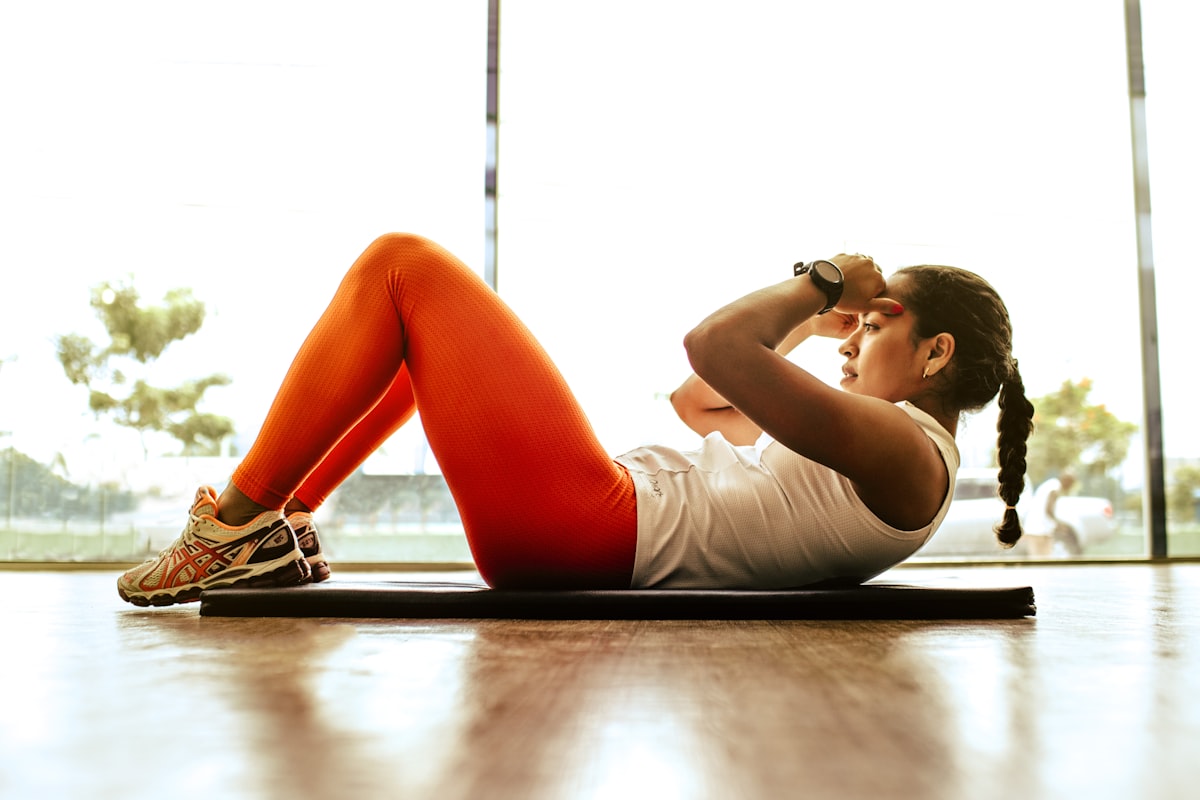
The study most worth reading closely came from Taiwan and appeared in Scientific Reports in 2018. Fifty-six older women with sarcopenic obesity were randomized to twelve weeks of elastic band resistance training or to no exercise intervention.
7 kilograms of skeletal muscle mass relative to controls, with the difference still present at a nine-month follow-up, and improvements in muscle quality and physical capacity traveling alongside it. Twelve weeks. Bands. Twice or three times a week. That is the entire intervention.
A companion trial published in Medicine in 2017 randomized a similar population to elastic resistance exercise with a CONSORT-registered protocol and reported gains in body composition and physical capacity — the band work changed what the DEXA saw, not just how participants felt.
And a 2023 pilot study in BMC Public Health compared band training against group dance in older women with sarcopenia over twelve weeks: the band group came out ahead on fat-free mass, handgrip strength in both hands, leg strength, and walking speed. Dance was good. Bands were measurably better for muscle.
Now the boundary lines, because they matter. These trials studied older women with diagnosed sarcopenia or sarcopenic obesity; nobody has run the identical trial in thirty-year-old office workers, so younger readers are extrapolating from a population chosen partly because their results show up clearly. Effect sizes were real but modest — we are talking tenths of kilograms of muscle, not transformations.
And 'elastic band training' in these studies meant supervised, progressive, near-limit effort, not casual arm circles with a limp loop while watching television. The tool earned its results inside a structured program.
What the evidence does support, plainly: for a dieter who needs a joint-friendly, progressive, at-home resistance method with an actual trial record behind it, bands are not a compromise choice. In this specific job they are the best-studied option on the shelf.
How We Picked: Four Tests Before the Price Tag
Resistance bands are one of those categories where the products look identical in listing photos and diverge hard in the hand. Our screening process came down to four questions, and price only got a vote after all four passed.
First: does the set cover a true resistance range? A useful kit spans from light — a grandmother doing chair-assisted rows — to heavy enough that twelve repetitions of a squat or row feel genuinely hard by the last one. Sets offering three near-identical tension levels failed this test on arrival. Graduated loops from roughly 10 to well over 50 pounds of resistance, or a tube set with swappable bands, passed it.
Second: how does it fail? Latex wears, seams split, and a band that snaps mid-pull near a face is the category's one unforgiving sin. We favored layered natural latex over no-name rubber, read the one-star reviews specifically for snapping reports, and disqualified anything with a pattern of complaints about breaking at anchors.
One of our own test sets snapped at a door anchor within two weeks — it did not make the list, and its failure shaped the safety section below.
Third: skin and grip behavior. Thin loops roll into a pinch at the thigh; powdered latex turns slick; fabric bands that grip clothing without rolling earn their premium. If the band spends the set fighting the user, reps get skipped, and skipped reps are how a twelve-week program quietly becomes a four-week one.
Fourth: can you progress on it for a year? Progression is the mechanism by which the trials got their results — tension that keeps rising as the muscle adapts. A format with graduated levels (more colors, more choke, more pre-stretch) passes; a single fixed-tension band does not.
Full transparency about method: we are researchers and writers, not a testing laboratory. These picks come from published trial protocols, aggregating buyer reviews at scale, and three sets bought with our own money — not from instrumented load-cell measurements.
The Three Sets We'd Buy First
Long loop pull-up bands, a graduated set. This is the format the clinical trials used, and it remains the best single purchase. Continuous loops of layered latex in ascending thicknesses cover rows, squats, overhead presses, lat pulldowns behind a door, assisted pull-ups if you ever want them, and warm-up mobilizations. Progression is structural: when orange gets easy, you reach for red, then black.
The failure mode is honest wear you can see — small nicks in the latex — rather than surprise failure, and replacement of a single loop is a few dollars. If you buy only one item from this page, buy this one.
Fabric loop bands, non-roll, set of three. Hips and glutes respond quickly to banded squats, bridges, and lateral walks, and the wide woven construction matters more than it sounds: the thin rubber loops that roll into a tourniquet mid-set are the most-returned product in the category, while fabric versions grip leggings and stay where the exercise put them.
Lower total resistance than the long loops — this is the entry set, the one that gets a sedentary dieter moving in week one without any equipment intimidation. Keep them in the desk drawer; they weigh almost nothing.
Tube bands with handles and a door anchor. Not everyone adapts to gripping raw rubber, and handles solve that by making every movement feel like the gym machines people already know: seated row, chest press, face pull, triceps pushdown. The door anchor is the part worth inspecting before purchase — a solid foam block that wedges securely, not a thin strap that walks.
This set earns its slot by protecting the long game: back and pulling work, which loop bands handle awkwardly, is what keeps shoulders healthy enough to keep training at all.
A note on what we left off: mini bands (too weak to load the big muscles), band-plus-rail pull-up towers (overkill for this job), and anything sold with 'fat burning' claims (band or no band, that is not how fat loss works).
- Start with long loops if buying one set; add fabric loops in week one if hip work feels awkward, and tubes only after two months of consistent training.
- Store every set away from sunlight and heat — UV and a hot car glovebox are how good latex dies young.
A Twenty-Minute Session That Respects the Spleen
The classical texts treat movement as medicine dispensed daily, in doses that strengthen rather than drain. The Suwen's first chapter praises those who 'worked the form but did not exhaust it,' and Hua Tuo — the physician credited with the Five Animal Frolics — taught that the body needs motion the way water needs flowing: stop the flow and it stagnates, overdo the churning and it froths away.
A band session built on that principle looks different from the punishment sessions diet culture sells. Warm, steady, progressive, finished with something left in the tank.
A practical template, two or three days a week on non-consecutive days. Open with three minutes of easy movement — a walk around the block, arm circles, gentle squats to a chair — until the body feels warm, because cold starts are where strains live.
Then two rounds of five movements, twelve to fifteen repetitions each, choosing a band tension that makes the last three reps honest but not desperate: banded squats, rows anchored in a door, overhead presses, banded glute bridges, and a carry or plank finisher. Rest sixty to ninety seconds between rounds.
Total time, including warm-up and a short stretch, lands around twenty minutes — and the classical rule holds throughout: exhale on effort, never hold the breath against a stuck band, never work to total exhaustion. Leave the last two repetitions in reserve.
Progression, the part the trials depended on, is weekly rather than daily: when fifteen reps feel smooth, add tension — thicker loop, less slack, slower tempo on the lowering phase. Strength arrives from that rising tide, not from soreness, and soreness is not a scoring system.
In TCM terms this session pattern suits the Spleen's preferences almost exactly: mid-morning or late afternoon, when digestion is neither asking for blood at the stomach nor the body settling toward sleep; warm muscles rather than cold starts; effort that builds yang without burning it out.
Pairing the session with a warm, protein-containing meal an hour or two later — congee with shredded chicken, eggs, a fish stew — covers both frameworks at once. The classical texts called it feeding the flesh. The trials measured it as lean mass retention. Same congee, different vocabulary.
- Schedule sessions mid-morning or late afternoon — neither on a full stomach nor right before bed — which is when both Spleen theory and workout-adherence data agree.
- Two twenty-minute sessions a week is the dose the trials approached; one heroic weekly session does not substitute.
"Flowing water never stagnates; a door hinge never rusts — because they move. So it is with the body."
Care, Safety, and When Bands Are the Wrong Tool
A snapped band at eye level is the category's only serious hazard, and the mechanics of failure are boringly predictable: compromised latex, a frayed anchor, or a setup that stores the energy of a drawn bow near a face. The countermeasures are equally boring.
Inspect loops by holding them up to light and stretching gently — dust them with talc-free chalk if you must, but replace any band showing nicks, stickiness, or discoloration rather than waiting for it to audition for a fail video. Check door anchors before every session; ours that snapped on day nine had been riding a hinge-side gap that pinched the strap, a placement the instructions actually warned about.
Anchor on the hinge side or solidly wedge the block, face away from the anchor line, and never stretch a band to more than roughly twice its resting length.
Skin matters too. Latex allergies are common enough that most listings offer a latex-free fabric line; hives from a hip band is a discovery best made on a fifteen-dollar purchase, not a torso-wrapped pull.
Cleaning extends life too: a wipe with a damp cloth after sweaty sessions keeps skin oils from degrading the latex, and keeping bands off concrete — sharp grit is the silent killer of loops — doubles their working years. None of this is complicated. It is the same logic as sharpening a kitchen knife: a cheap tool, maintained, beats an expensive one neglected.
Then the honest exclusions. Bands are the wrong first tool if a physician has flagged uncontrolled blood pressure — the breath-holding beginners do under tension is the specific risk — or if you have a fresh surgical repair, an acute disc flare, or severe osteoporosis, where loading decisions belong to a physical therapist, not a shopping guide.
Falling risk changes everything: chair-based band work is fine and trial-supported, standing band work with balance challenges is not a do-it-yourself project.
And the medical boundary in plain words: we are researchers and writers, this article is education rather than prescription, and anyone starting exercise after fifty, during pregnancy, or alongside chronic disease should have a clinician glance at the plan. A two-minute conversation prevents most of the injuries this section spends a thousand words avoiding.
The Honest Trade-Offs
Bands have ceilings, and pretending otherwise would break the trust this site runs on.
Progressive overload gets fuzzy. With a barbell you add 2.5 kilograms and everyone can see it. With bands, 'I choked down a hand-width and slowed the tempo' is real progression but harder to feel and log, and motivation runs on visible progress. If you are the type who thrives on numbers, consider a simple logbook of band color, rep count, and tempo — the numbers exist, they are just softer.
Maximum resistance tops out. Serious lifters will eventually want iron; a strong man can out-pull any band set within a year of training. For the dieting reader protecting muscle over a six-month deficit, the ceiling is far above the required dose — but the limit is real and worth naming.
Longevity is the weak spot. Latex is organic material; UV, sweat, and heat age it, and even well-treated bands retire after a few years of hard use. Factor replacement loops into the true cost, and the bargain still holds — a decade of bands costs less than four months of a mid-tier gym.
Variety has a ceiling as well: a band resists in one direction, so the constant tension a cable stack provides through a full range of motion is only approximated here. That is close enough for muscle preservation during a diet. It is not close enough for a powerlifter's off-season, and honest reviews say so.
So the verdict, plainly. For most people losing weight who need a joint-friendly, cheap, trial-tested way to keep the muscle they have, a graduated long-loop set — with fabric loops or handled tubes as taste dictates — is the purchase we would make first, and the one the sarcopenic obesity literature would recognize.
The thirty-eighth week of a diet, cold morning, no motivation: the band in the drawer is the workout that actually happens.
The classical physicians said the body stays serviceable the way a hinge does: through motion, repeated, never excessive. Rubber loops would not have surprised them much. What would surprise them is how many people own a set and never open the drawer. Which end of that sentence describes you today?