The Failure Point Is the Freezer, Not the Pan
Ask around and you will find a strange pattern in batch-cooking sob stories: the cooking almost never fails. The chicken gets roasted, the brisket gets braised, the Sunday kitchen hums for two hours and produces a refrigerator full of intention.
The failure arrives nine days later, when the third portion comes out of the freezer wearing a coat of frost, smells like the inside of an ice cube, and eats like it was punished. That is freezer burn — surface dehydration and oxidation — and it is the specific, preventable reason most batch-cooking routines die before week three.
It matters because of what the cooked food was supposed to displace. The companion health article on this site makes the research case for the protein gap: the appetite appears to regulate protein more tightly than any other macronutrient, and plates diluted below the target push total eating upward. The practical conclusion there is that the protein anchor of dinner needs to be decided before the plate is built.
A vacuum sealer is how that decision survives contact with a Wednesday. Cook once, portion into flat labeled bricks, freeze — and the defrost-and-eat option is three minutes faster than the delivery app, which is the only margin that competes.
One boundary before the picks, because storage gadgets attract exaggerated claims. None of these machines preserves anything by itself. Refrigeration and freezing do the preserving; the vacuum only defends quality — texture, flavor, color — by removing oxygen from the picture.
If you take one sentence from this article, take that one, because every disappointed sealer owner we have heard from bought the machine expecting it to be something it is not.
The arithmetic of the alternative is blunt. Delivery runs thirty to fifty dollars for a household and arrives in containers nobody recycles properly; the home-cooked brick costs a couple of dollars and twelve thawing minutes.
That gap only matters, though, if the home option is as easy as the app — and for most of cooking history it was not, because reheated food suffers precisely at the quality points people notice first.
The sealer's whole contribution is to move the quality floor: food that comes out of the freezer tasting like the food that went in is food the household will actually choose on a tired Tuesday, and choosing it twice a week is the entire health outcome in miniature.
What the Meat-Science Literature Actually Shows
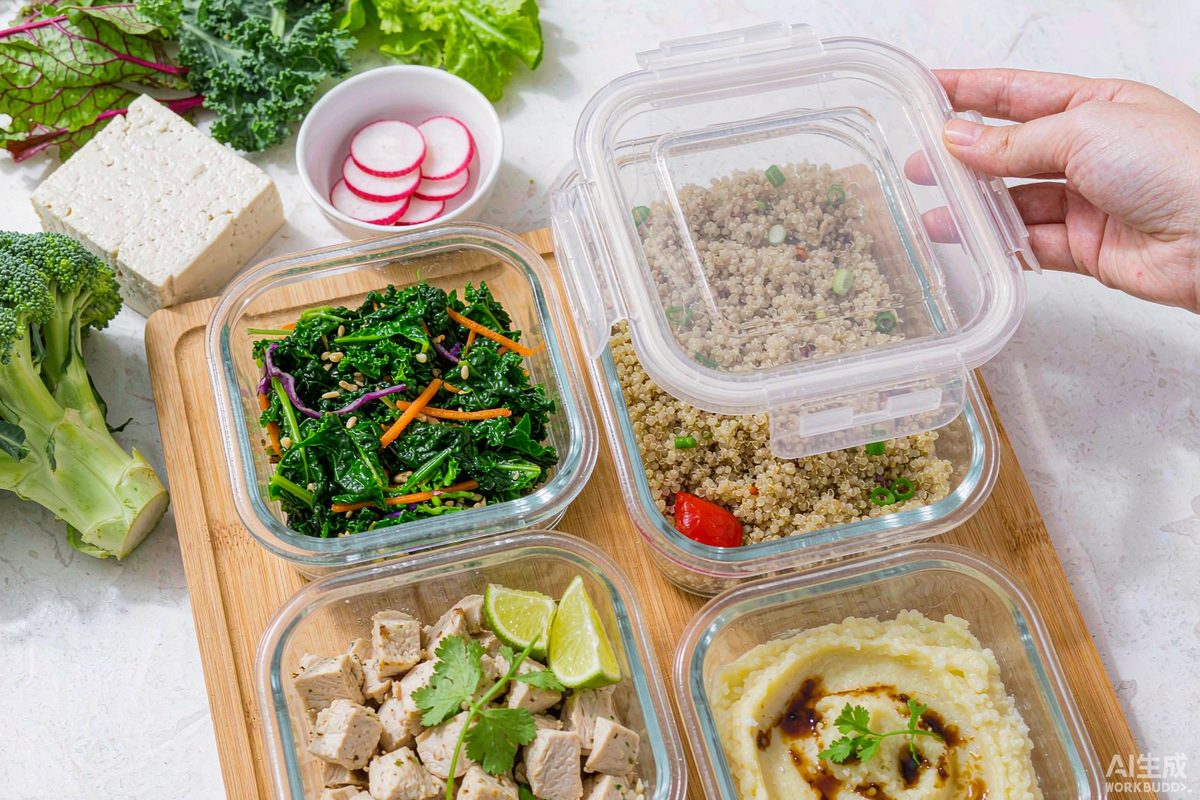
The evidence base for vacuum packaging is industrial, and it is worth being precise about that. Meat scientists have run the comparisons for decades because producers live and die by shelf life.
A 2024 Auburn University trial in the journal Foods took eight hundred and eighty-two pork loin chops through a fifteen-day simulated retail display: the vacuum-packaged chops held their condition while the ones in conventional overwrap deteriorated, with lipid oxidation in the overwrapped meat climbing significantly from day ten onward.
The authors' summary line is the whole case — vacuum packaging limits the deterioration of fresh pork, and overwrapping actively accelerates color loss and oxidation.
The frozen side has its own literature. A Norwegian study published in Poultry Science tracked frozen turkey meat for a full year across different packaging and storage conditions, and the vacuum-packaged samples came out with lower oxidation markers — the rancidity chemistry — than air-packaged ones across the treatments.
A related lamb trial found vacuum skin packaging strongly inhibited lipid oxidation regardless of storage temperature. None of these studies tested a countertop home machine; they used chamber equipment, controlled atmospheres, and laboratory measures. The reasonable inference is about the principle — removing oxygen slows the chemistry that ruins frozen food — not a promise that your sealer matches a packing plant.
There is one more literature this article leans on, and it is about the food, not the wrapping. A large French survey published in Public Health Nutrition found that people who cook at home more often eat better and plan meals more — the mechanism the Sunday batch is really buying. The sealer is downstream of all of it: it exists to keep home cooking viable on the days home cooking loses.
A caution about applying these numbers directly: the trials measured raw and minimally processed meats in industrial packaging, while your Sunday chicken is cooked, seasoned, and handled at home. Cooking changes the spoilage chemistry — it kills the initial microbial load but speeds oxidation of the fats, which is why cooked meats turn stale-tasting in the freezer faster than raw ones do.
If anything, the cooked-and-frozen household has more to gain from oxygen removal than the raw one. No published trial has tested a countertop machine directly, so the inference stays an inference — the principle is well supported, the appliance-specific promise is not.
What the Machine Does, and What Marketing Oversells
Here is the honest mechanics. A vacuum sealer removes air from a bag and heat-seals it shut. Removing air removes oxygen, which slows two families of chemistry: oxidation, which turns fats rancid and fades colors, and the growth of aerobic spoilage organisms that make food smell and taste like the freezer. What it does not do is kill anything or make unsafe food safe.
Bacteria that thrive without oxygen — the ones that matter for storage safety — are indifferent to the machine, and one of them, the one that causes botulism, positively prefers the airless environment a vacuum creates.
That is why the safe-use rules are not fine print: perishables go into the freezer or refrigerator promptly, raw garlic in oil stays refrigerated and short-lived, and vacuum sealing is never a substitute for cold. The government food-safety guidance treats these packages exactly like any other perishable, plus a bit more caution.
With that said, the legitimate wins are larger than they sound. Freezer burn is eliminated on properly sealed items, which rescues the texture and the willingness to eat what you cooked. Portioning gets easier because flat bricks stack and thaw uniformly — a one-inch brick of cooked protein thaws under cold running water in about twelve minutes, versus the hour-plus of a lumpen zip bag.
And the pantry side, canisters and jars, slows the staling of nuts and grains that otherwise go rancid and get binned — food waste being its own quiet budget line.
About jars specifically, because the technique trips people up: sealing mason jars takes either a jar-sealing adapter that fits your machine's accessory port or a handheld lid pump, and wide-mouth jars seal far more reliably than regular ones. Dry goods only — a jar holding liquid will not pull a proper vacuum with these adapters.
Done right, a sealed jar of toasted nuts keeps for weeks where the open bag went soft in days, and a jar of cooked grains becomes the fastest lunch component in the refrigerator.
A vacuum sealer removes oxygen, not risk; the freezer does the preserving and the machine only defends the texture, the flavor, and the portion you already cooked.
The Three Picks, and Who Each One Is For
The countertop suction sealer is the weekly workhorse, and it is the right first purchase for a household that cooks protein in bulk with any regularity. What separates a keeper from a drawer fossil is not the number of buttons but the seal quality on real-world food: moist cooked chicken releases steam and juice, and a machine without a wet mode will fail its seal on exactly the items you bought it for.
Check the pulse function for soft foods, the roll storage for custom bag sizes, and — the boring one that matters — whether replacement bags are easy to buy locally.
The handheld pump with valve bags is the quiet counter-argument to buying big. Fifteen seconds per bag, no counter footprint, bags washed and reused until the valve wears, and enough capability to run the entire flat-brick freezer system for one or two people.
It is also the honest recommendation for anyone unsure the habit will stick: the failure mode of a forty-dollar experiment is a drawer; the failure mode of a hundred-and-twenty-dollar one is a guilt object.
The canister-and-jar kit completes the system rather than duplicating it. Bags handle the freezer; canisters and sealed jars handle the fridge and pantry, where the soft, liquid, and fragile items live and where nuts and cooked grains quietly turn. On most machines a small accessory port runs all of it from the same pump.
If the household is small, this kit plus the handheld may be the entire answer; if you batch for four, the countertop machine earns its shelf and the canisters ride along.
- Match the tool to the food: bags for the freezer, canisters for fridge and pantry, jars for dry goods. One format will not cover all three jobs well.
- Buy bags before you buy the machine. A sealer whose consumables are awkward to source is a two-month appliance.
- For one or two cooks, start with the handheld pump. The upgrade decision will make itself within a month.
The Sunday Batch, Run Like a System
The workflow that survives months has four steps and takes about ninety minutes. One: cook two proteins and one grain in parallel — oven and stovetop doing different jobs, nothing exotic, the point is volume of ordinary food. Two: cool everything properly, because sealing hot food steams the bag and ruins the seal; twenty minutes on a tray does it.
Three: portion flat — a single-meal brick about an inch thick, pressed flat on the counter, because flat is what thaws in minutes and stacks in a drawer-like freezer bin. Four: label with the contents and the date, and load the freezer with the bricks standing upright until frozen, then filed flat.
The thawing step is where the system either clicks or collapses, so be specific with yourself: a flat brick under cold running water is dinner in about twelve minutes; the same mass frozen in a rounded zip bag is an afternoon.
Keep one thawed brick in the refrigerator at all times and the four-o'clock protein gap — the one the leverage research associates with between-meal grazing — has an answer before it becomes crackers.
Batch two proteins even if the household eats one, because variety is what stops the routine from collapsing into a chore with a smell. The failure we hear about most is not technique; it is monotony. Rotation is a food-safety note too — smaller batches, labeled honestly, get eaten within weeks instead of discovered in July. The freezer is a filing cabinet, not a landfill, and the label is the filing system.
Maintenance is one drawer, not a ritual. Wipe the seal bar and gasket after oily sessions, because rendered fat on the heating strip is the most common cause of weak seals reported by long-term owners. Empty the drip tray if the machine has one; there is nothing to descale. Store the machine with the lid latched open so the gasket does not take a permanent set, and keep the bags in a drawer away from sharp things.
Ten minutes of care a month is the entire service schedule, which is more than can be said for most appliances that cost the same.
- Cool before you seal. Sealing warm food creates steam that compromises the seal and can push the bag into the danger zone for bacteria.
- Freeze bricks upright first, then file them flat. It doubles usable freezer space and ends the excavation problem.
- Date everything with a marker in the drawer, not from memory. Memory is wrong by week six, every time.
"Vacuum packaging limits the deterioration of fresh meat during long refrigerated storage — but the preservation still comes from the cold, and the machine's job is defending quality."
The TCM Shelf Behind the Freezer
The classical tradition this site studies did not have freezers, but it had the problem freezers solve: how to keep substantive food at the center of the plate when the week is busy. The Suwen's plate architecture — the five grains nourish, the five livestock benefit — is a composition rule, and composition rules are only useful if they are repeatable.
What breaks repeatability in a modern week is not knowledge or motivation; it is the hour at which the protein component of dinner has to be decided. A freezer of labeled bricks moves that decision to a Sunday afternoon, when the deciding is cheap.
The Ling Shu, the Inner Canon's second half, gets more kitchen-specific than most readers expect. Chapter fifty-six prescribes for disorders of the Spleen — the organ system that transforms food into the flesh of the body — a list of ordinary foods: rice, beef, jujube, mallow leaves. Beef, in a medical canon, sitting next to rice and vegetables as daily food for the organ that builds and transports.
Two thousand years later, the leverage research described in our companion article argues the same position from the other direction: the protein-dense component of the plate is what the appetite defends, and the plates that lack it generate the grazing that follows.
The Yang Jizhou compendium of 1601 would later codify the acupuncture side, with Zhongwan at the body's center as the emblematic point for fortifying the middle burner — the same middle the Sunday batch feeds.
There is a modest honesty to keep here. Nothing in a sealer is medicine, and the classics would not pretend otherwise; they prescribed food, routine, and the ordering of both. The machine's entire contribution is that the prescribed food survives the week it was cooked in.
Doctrine aside, the tradition's storage advice was quietly sophisticated for its era. The classical texts discuss drying, salting, honey-packing, and sealing foods in vessels — each a technology of exclusion, keeping air and moisture away from substance.
A vacuum brick is the same move with better physics: protect what the tradition calls the essence of the food — the flavor and nourishment carried in it — from the environment that degrades it. The Suwen's prescription that depleted essence be replenished with flavor presumes the flavor survived storage long enough to reach the patient. That presumption is exactly what the machine defends.
Who Should Skip It
The honest close. If your household is one or two people who already cook most nights, a countertop sealer may be a solution looking for your problem — the handheld and a stack of containers will cover it. If you buy proteins in small portions and cook them fresh, the machine does nothing you need. If your freezer is the size of a shoebox, flat bricks will change your life briefly until the shoebox fills.
And if the plastic bothers you — it bothers some of us — the reusable valve bags and jar sealing cut the consumable stream substantially, though not to zero.
What the machine cannot do is cook, decide, or care. Every failure of batch cooking we have catalogued across a year of reader mail traces to a human-system failure, not a sealing one: batches too large, variety too low, labels too optimistic.
The evidence reviewed here supports a narrow claim — oxygen removal measurably slows the chemistry that ruins frozen food, and home cooking correlates with better diets — and the sealer is simply the tool that connects those two findings on a Wednesday evening.
The question worth asking before buying is the one the whole site keeps returning to: which decision do you actually need to make easier? If it is the six-thirty decision, a drawer of dated protein bricks is a genuinely good answer. If it is something else — appetite, budget, time — the sealer will wait, and so will the aisle.
One last practical note for the skeptical: check the used market first. Older-generation sealers turn up constantly at resale apps and estate sales for a fifth of retail, and the core technology has not meaningfully changed in a decade — the new machines add modes and lights, not better seals. A used unit with a fresh gasket performs the same oxygen removal as a new one.
That is fitting, because the point of this entire article is a system, not a purchase. The purchase is the least interesting part of it; the Sunday afternoon that produces a drawer of dated bricks is the part that pays.