The Rules of the Twelve Weeks
Before the gadgets, the method — such as it was. One fifty-something editor, one right knee with early osteoarthritis (confirmed on a sports-clinic X-ray two years ago, bad enough to notice, not bad enough for surgery), and twenty-four steps of honest staircase. Every morning: walk down, record pain 0 to 10, note handrail use.
' Each tool got a minimum fourteen-day run, introduced one at a time so I could tell who was doing what, with a week of baseline before the first one arrived.
The candidates, assembled from what people actually buy when a knee starts complaining: a knit compression sleeve, a patellar strap, an electric heated wrap, a smokeless moxibustion box, a single-point cane, a vibrating massage wand with heat, a set of fabric resistance loop bands, and a copper-infused sleeve that arrived in packaging so confident I nearly believed it.
One disclosure before the purists arrive: I also did a quadriceps routine three mornings a week throughout — the same ten-minute chair-and-wall programme we describe in our companion piece on the knee as the mansion of the sinews. That's a confound. It's also reality.
Anyone testing knee tools while doing nothing else for the knee is testing in a fantasy, because the trials say movement is the mainline treatment and gadgets are accessories to it. Where a tool's effect clearly exceeded the trend line, I've said so; where I can't separate the two, I've said that instead.
The grading rubric, in plain language: did the tool change the morning numbers, did it survive real life (under trousers, on a bicycle, through a full workday), and would I spend my own money again at full price. Five tools passed. Three didn't.
- Run each new knee tool for at least two weeks before judging — the first three days of anything are noise, and damp weather weeks can erase a real effect from the average.
- Keep the daily score as one number, not a diary. A single 0-to-10 rating takes four seconds, and four seconds a day is the difference between data and abandoned projects.
The Compression Sleeve: Old Tech That Keeps Passing Tests

The sleeve is the Honda Civic of knee products — nobody writes poems about it and everybody ends up owning one. Mine is a simple knit tube, level 2 support, no hinges, no stays, fifteen-ish dollars. On paper it does almost nothing: a 2014-ish wave of trials on bracing in knee osteoarthritis shows modest, inconsistent structural claims, and no sleeve has ever moved an X-ray.
What the good ones do is smaller and better: they warm the joint, they squeeze lightly, and — the part biomechanists actually care about — they sharpen proprioception, the knee's positional sense. A joint that knows where it is in space picks cleaner paths down stairs. That steadiness showed up in my log as a handful of 4s becoming 3s and the handrail grip loosening by week three.
The classical tradition endorsed the mechanism without the nylon. Suwen's chapter on painful obstruction (bi) describes cold and damp settling into the lowest joints and prescribes warmth and movement; a knit sleeve is the twenty-first-century rendition of wrapping the knee in a warm cloth before the day's first walk.
Chinese grandmothers have been issuing exactly this prescription for generations — most families own at least one pair of knit knee warmers, taohu or huxi, worn through winter regardless of any diagnosis.
Practical notes from the twelve weeks. Size matters more than brand: a sleeve that bunches behind the knee will spend all day announcing itself, and one that's too tight turns the good squeeze into a tourniquet by afternoon. Wash it every second day unless you enjoy the smell of your own decisions.
And keep expectations at the price point — the sleeve takes stairs from 'careful' to 'confident,' which is worth fifteen dollars, but it never once changed my evening stiffness number. That job belonged to other tools on this list.
The Electric Heated Wrap: The Morning Unstick
If the sleeve was steady, the heated wrap was decisive. My knee's worst quarter-hour is the first one after getting out of bed — the joint refuses to bend fully, the first steps down the hall are a negotiation, and on cold mornings the negotiation fails.
The protocol that fixed it cost nothing in technique: fifteen minutes of medium heat around the knee while sitting on the edge of the bed checking the phone, then stand up and go. The wrap is a soft neoprene band with three heat levels, a sixty-minute auto shut-off, and a controller I have already sat on twice without casualty.
The numbers moved in week one. Morning stiffness dropped from roughly fifteen minutes to under five, and it was the only variable that changed — I hadn't yet touched the bands or the cane, and the sleeve had already plateaued. On the two coldest mornings of the test the wrap was the difference between a 5 and a 3 on the staircase. No other tool on this list produced a change that fast or that visible.
The mechanism is the least mysterious thing in this entire article. Heat relaxes the muscle guarding around a cranky joint, dilates local vessels, and thickens synovial fluid's glide; the Cochrane evidence on thermotherapy for knee osteoarthritis is modest but points the same direction as every knee patient's lived experience.
' Where modern medicine and a 2,000-year-old text agree this cleanly, you can buy with confidence. My only complaints: the cord is short, and 'one size fits all' means the strap's velcro faces a life of compromise.
"For painful obstruction where cold surpasses heat, use warmth: when the channels are warmed, qi and blood move, and the pain ceases."
The Smokeless Moxa Box: Warmth, the Old Way
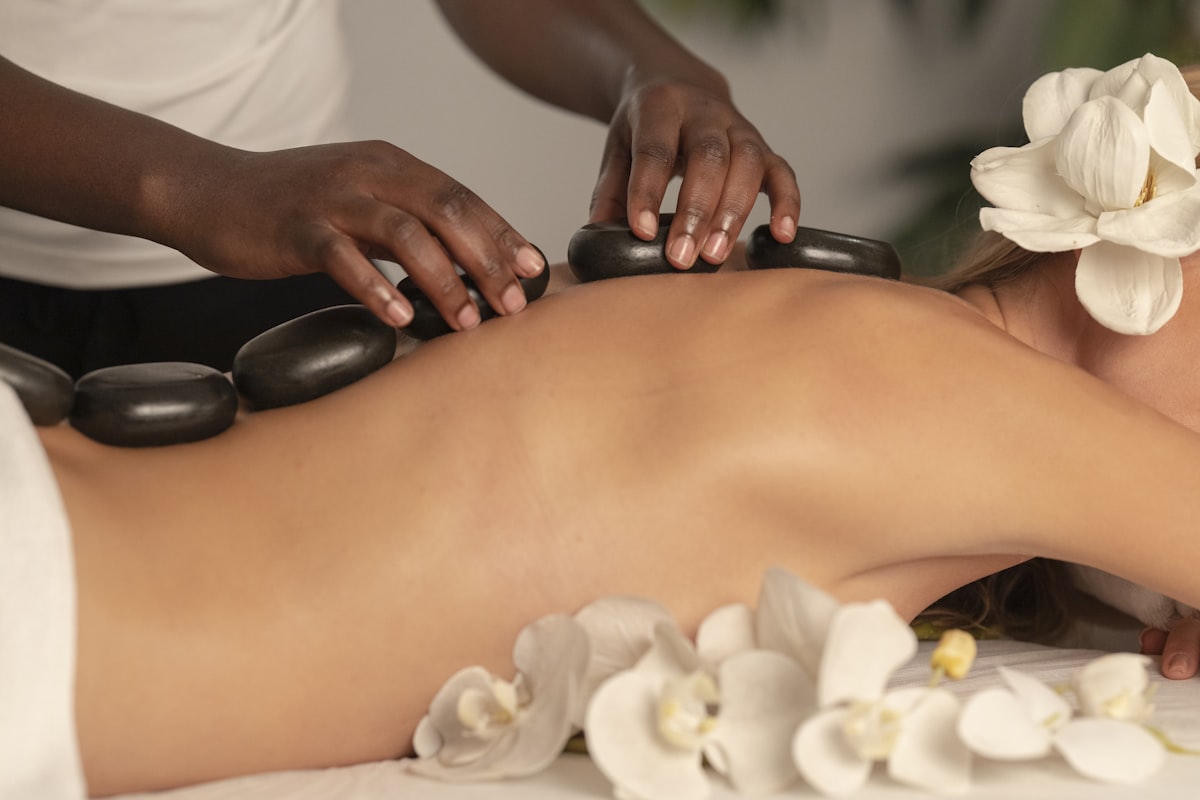
The moxa box is the list's wildcard and its slowest burn, in both senses. It's a small wooden (or tin) box, palm-sized, that holds a compressed charcoal-and-mugwort stick over the knee while you lie still for about ten minutes. Mine is smokeless — the stick smolders behind a mesh screen, and the smell is a faint campfire ghost rather than the full incense experience of a Chinese medicine clinic.
The claim underneath it is deep in the tradition: moxibustion drives warmth into the channels at the points where cold has lodged, and for knees the classic targets are the Xiyan 'knee eyes' beside the patellar ligament and Yanglingquan just below the outer joint line — the point the Zhen Jiu Da Cheng names the Meeting Point of the Sinews.
What the twelve weeks actually showed: moxa and the electric wrap occupy overlapping territory, and I never found a morning where moxa beat the wrap on stiffness. Where the box earned its keep was the evenings of a damp weather week — week 5, a stretch of rain that pushed every morning number up a full point.
Ten minutes of moxa on those evenings felt categorically different from the electric wrap: deeper, slower to fade, the kind of warmth that seems to keep working after the stick goes out. Subjective? Completely. But evening-that-lingers warmth is precisely the effect the tradition claims for mugwort over electric heat, and my small notebook agreed with it twice.
The honest boundaries, stated plainly: moxibustion for knee osteoarthritis has some encouraging small trials in the Chinese-language literature and nothing like the pooled evidence strength that exercise enjoys — I treat it as a pleasant, plausibly helpful warmth ritual, not a treatment with proven superiority.
Burns are the real risk, and the reason the box design beats holding a stick: the screen keeps glowing charcoal a centimeter off the skin, and the timer is your nose telling you the stick is done. Check the skin after the first session. Redness that fades in an hour is normal; anything beyond that means the box sits too close.
- Position the box over the lower half of the kneecap so warmth reaches the knee eyes and the GB34 hollow at once, and stop at ten minutes — more time adds risk, not benefit.
- Never use moxa on numb skin, over swollen joints, or anywhere sensation is unreliable; warmth you cannot feel is a burn you will meet later.
The Cane: The Tool Everyone Resists and Nobody Regrets
The cane was the last tool I picked up and the one I now argue about most. Nobody wants a cane at fifty-two. It announces itself in a way a sleeve never does, and I went into the test looking for reasons to disqualify it. The numbers wouldn't let me. Used in the hand opposite the bad knee — the correct side, and the detail most people get wrong — a cane unloads the joint on every single step.
Gait-lab work in knee osteoarthritis has measured meaningful reductions in joint loading with cane use, and my staircase log did something no soft tool had done: on heavy days, the descent pain number dropped by a full point and stayed down as long as the cane came along.
It also removed the handrail dependency, which matters on unfamiliar stairs, wet pavements, and the one stone stairway at the market that has personal beef with me.
The classical framework, interestingly, has no objection. Tools that support the joint while it keeps moving sit comfortably inside a tradition whose whole theory of bi syndrome is 'open the channels, keep the flow' — the Suwen line I keep on the wall says the sinews bind bone and ease the joints, and a cane is simply a third leg that lets tired sinews keep easing the joint through their range.
What the tradition would not bless is the opposite pattern: a brace or support rigid enough to let the quadriceps stop working altogether, the mansion's gates chained shut while the staff sleeps.
Buy it properly. Single point, adjustable height, grip at wrist level with the elbow bent about 20 to 30 degrees; rubber tip replaced when the tread goes smooth. Use it in the opposite hand — knee right, cane left — or you're just carrying a stick. And retire it cheerfully on good days; mine lives behind the coat rack now and comes along maybe twice a week. It's not a life sentence. It's a load-sharing agreement.
The Resistance Bands: The Only Tool That Changes the Machine
Let me say the ending first: if this list were cut to one item, the bands would survive and everything else could fight over second place. Not because bands are magic — they're five strips of fabric elastic costing about as much as lunch — but because they're the only tools here attached to the mechanism that actually changes a knee's trajectory: the quadriceps.
The Cochrane pool of exercise trials found pain reductions comparable to medication and function gains that persisted months after formal programmes ended; the Mayo MRI cohort found stronger thighs meaning less cartilage loss under the kneecap and less pain across thirty months. Every other tool in this review manages symptoms. This one, used consistently, renovates the suspension.
In practice the bands joined the morning quadriceps routine — looped around the ankles for seated knee extensions once plain leg raises got easy, and around the thighs for side-steps that light up the hip muscles no one talks about but every stair climb borrows.
Twelve weeks on, the staircase numbers tell the honest story: the trend line was already improving from the routine itself, so I can't hand the bands a clean victory on my little chart. What I can report is the number nobody put in a trial — the first time in two years I walked down all twenty-four steps at full speed without editing my gait, somewhere in week 9. Cheap, foldable, unbreakable, fits in a coat pocket.
The bar is on the floor and the bands clear it anyway.
The classical frame, once more, earns its keep. Suwen names the sinews as what binds bone and eases the joints, and Chinese medicine has always treated sinew as something nourished by use and blood, not something to rest until it apologizes. A five-dollar loop band is a very old idea — train the sinew, feed the hinge — in very modern packaging.
"The sinews bind the bones and make the joints nimble; when the sinews are nourished, the hinges serve a long life."
Three That Went Back in the Box
The patellar strap first — and this one hurt to demote because it isn't a bad product. It's a small band that buckles just below the kneecap and presses on the patellar tendon, and for genuinely patellar-tendon problems (jumper's knee, the runner's ache right at that tendon) the mechanism is sound. My knee's problem lives elsewhere.
Diffuse, weather-sensitive, early-osteoarthritic stiffness doesn't care about a tendon unloading strap, and fourteen days of wearing one produced a flat line in my log — plus a red pressure mark by day three. If your pain is a point the size of a coin directly below the kneecap and it flares on stairs and after running, this is your tool and my review isn't about your knee. Wrong patient, right product.
The vibrating massage wand with heat was the pleasant fraud of the test. Twenty minutes of vibration-plus-warmth felt genuinely lovely in the moment, like a small purring animal taking up residence on the kneecap, and produced exactly zero change in the next morning's numbers across fourteen days. Feel-good-in-the-moment, nothing-in-the-ledger.
If massage devices help anyone's knee numbers, it's via the same relaxation-of-muscle-guarding route the heat wrap already covers better and cheaper. Back in the box.
And the copper-infused sleeve — nine dollars more than the plain knit sleeve, marketed on copper's anti-inflammatory aura, identical in my blind fingertips to the cheap one. The claims around copper fabrics and arthritis have been tested and found wanting in proper trials going back decades: copper bracelets and sleeves don't outperform placebos in randomized studies.
My twelve weeks agreed with the literature in the least scientific way possible: indistinguishable numbers, a sleeve that pilled worse in the wash. The plain knit sleeve did everything the copper one did, minus the mythology and the markup. '
- Match tools to mechanism: tendon-point pain takes a strap, diffuse stiffness takes warmth and strength work — buying the right tool for the wrong knee is how drawers fill up.
- A gadget that only feels good while you're using it and never changes your next-morning numbers is entertainment, not therapy. Your log knows the difference even when the marketing doesn't.
The Final Scorecard, and the Order I'd Buy In
Twelve weeks, eight tools, one staircase, and a notebook that now lives on the hall table. The keepers, in the order I'd spend money on a fresh bad knee: first, the fabric resistance bands, because strength is the only intervention on this list with trial evidence of changing the knee's long-term story — about fifteen dollars.
Second, the electric heated wrap, because it delivered the fastest, most visible change in morning stiffness of anything tested — call it thirty. Third, the plain knit compression sleeve, fifteen dollars of steady, all-day confidence on stairs. Fourth, the smokeless moxa box, the keeper whose evidence is thinnest but whose damp-evening evenings won me over completely.
Fifth, the cane, which I still grumble about and still pack on market days — the only tool that measurably unloads the joint with every single step.
The returned three: the patellar strap (right product, wrong knee), the vibrating massage wand (pleasant, inert), and the copper sleeve (mythology at a nine-dollar premium). Total spent across the eight: somewhere north of $180. Total spent on the two tools I'd call load-bearing: about $45.
A closing honesty, the same one every review here ends with: this is one knee, twelve weeks, no control group, and a confounding exercise programme I refuse to apologize for. Your knee, your staircase, and your weather will run their own trial — which is why the notebook matters more than any gadget on the shelf. Four seconds a day, one number.
Start it this week, buy the bands first, add warmth where the mornings are worst, and let your own twenty-four steps tell you what the advertising never will: which tools earn the drawer, and which ones are just renting it.