You're Breathing Wrong. Most Athletes Are.
Watch any gym at peak hour. Watch the faces. Mouths open. Shoulders creeping toward ears with every inhale. Breath held unconsciously during the hard parts, then gasped out in a rush during the easy ones. The rhythm is chaotic — three short inhales, a held breath, an explosive exhale — and it repeats for the entire session.
Now watch an elite distance runner or a trained martial artist. The mouth is closed or barely open. The breath is nasal, rhythmic, and locked to the movement. Inhale matches footstrikes or steps. Exhale matches the effort phase. The face is relaxed. The shoulders don't move.
That gap — between the chaotic, mouth-open, shoulder-shrugging breath and the calm, nasal, synchronized breath — is trainable. And it maps almost perfectly onto what TCM has been teaching about Lung Qi for two millennia.
The Lungs govern Qi. In TCM, that's a specific physiological claim: the Lungs extract Qing Qi (clear Qi) from the air and combine it with Gu Qi (grain Qi, from food) to produce the Zong Qi (gathering Qi) that powers everything — speech, circulation, movement. A weak Lung doesn't just mean poor cardio. It means the entire body's Qi production is bottlenecked at the intake valve.
You can eat perfectly, sleep perfectly, and program your training perfectly, and still underperform because the Lungs can't pull enough raw material from the air.
Modern sports science has its own version of this insight, and it's called inspiratory muscle training. The diaphragm, intercostals, and accessory breathing muscles are skeletal muscles — they fatigue, they can be trained, and their weakness is a genuine performance limiter.
A 2017 systematic review found that inspiratory muscle training significantly improves time-trial performance, reduces perceived exertion, and accelerates recovery. The mechanism: a stronger respiratory pump delays the metaboreflex — the point where fatiguing respiratory muscles steal blood flow from working limbs — which is exactly when performance collapses.
TCM and sports physiology, converging on the same conclusion from opposite directions: your breath is a trainable performance system, and it's probably the most neglected one in your program.
- Film yourself breathing during a moderate workout — just your upper body. If your shoulders rise on every inhale, your primary breathing muscles are asleep and your accessory muscles are doing their job. That's fixable.
- Athletic breathing is a skill, not an automatic function. Treat it like you treat your squat form — something you practice deliberately until it becomes automatic under load.
"The Lung is the canopy of the organs, the master of Qi. All the Qi of the body submits to the Lung. When the Lung breathes deeply, the hundred vessels flow freely."
The Two Schools of Athletic Breathing — and What Each One Leaves Out
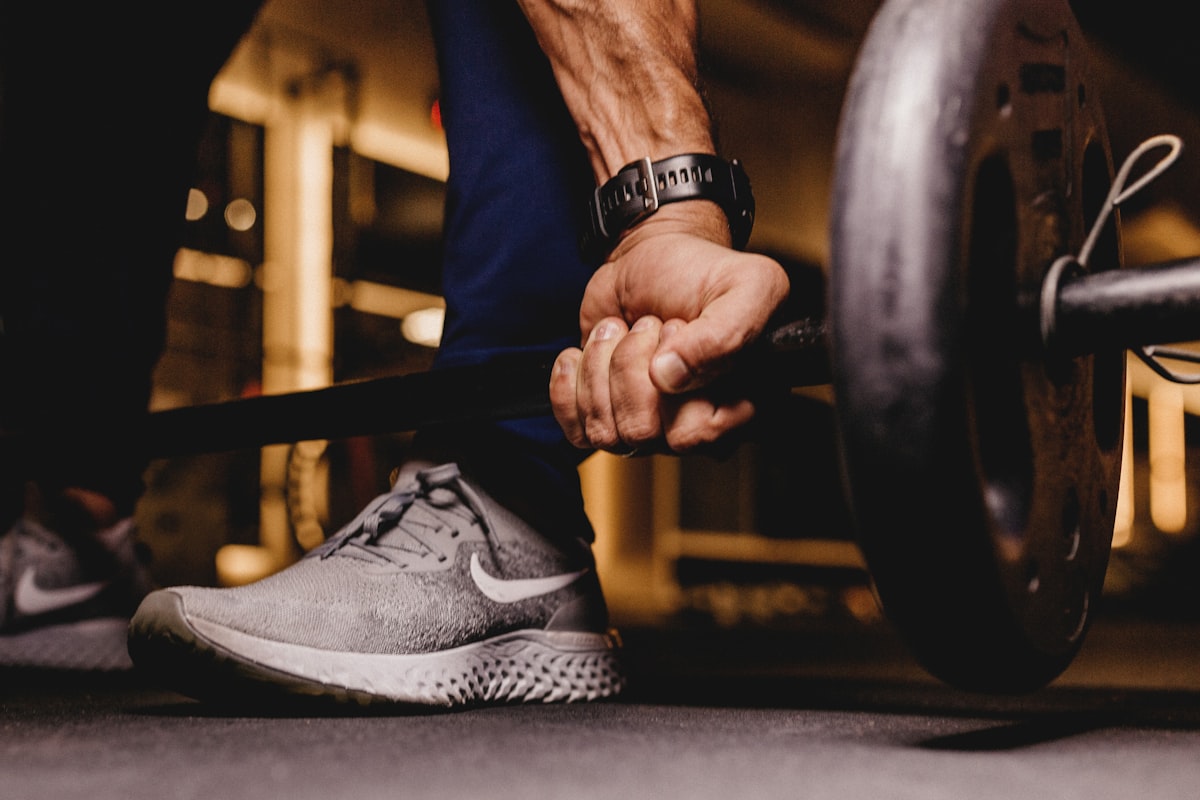
Athletic breath training splits into two camps, and neither one has the full picture.
Camp One is the strength-training camp. ' The idea: take a deep diaphragmatic breath, hold it against a closed glottis to create a rigid cylinder of pressure in the torso, and use that cylinder to protect the spine under heavy load. This is genuine, effective, research-backed technique. Powerlifters and Olympic weightlifters have been using it for decades. It works.
The problem: it's a pressure strategy, not a breathing strategy. It teaches you to hold your breath, not to breathe better. Athletes who only know Valsalva breathe chaotically between sets and have no breath-to-movement coordination. Their nervous system lives in a state of held tension, and their recovery between sets is actively impaired by breath-holding habits they don't know they have.
Camp Two is the endurance-training camp. Its vocabulary is rhythmic breathing, nasal vs. oral, cadence-matching, and ventilatory threshold. The idea: breathe in a pattern matched to your stride or stroke rate, use nasal breathing at low intensity to improve efficiency, and learn to manage the breath to delay the ventilatory threshold — the point where breathing becomes uncontrolled and performance tanks.
This is also genuine, effective, research-backed. Every elite endurance athlete does some version of it.
The problem: it's a flow strategy. It works beautifully at submaximal intensities. When the load gets heavy — when you're under a bar, when you're sprinting, when you're fighting — the nasal-rhythmic strategy falls apart and the athlete reverts to chaotic mouth breathing because they were never taught the bridge between flow and pressure.
TCM bridges these two camps with a single organizing concept: the Lung governs both the intake of Qi and its distribution. The strength athlete needs distribution — Qi moved into the limbs, the spine, the working muscles. The endurance athlete needs sustained intake — a steady supply of clear Qi over time. Both depend on the same organ system.
Both can be trained with the same foundational drills, adapted to intensity. The protocol that follows takes the diaphragm training from qigong, the pressure strategy from powerlifting, and the rhythm work from endurance training, and puts them into one progression.
- Know which camp you're coming from. Strength athletes: you need rhythm and recovery breathing — add the nasal and cadence drills. Endurance athletes: you need pressure management — learn to brace without holding tension in your neck and face.
- Don't pick sides. The athlete who can flow-breathe at 70% intensity and pressure-breathe at 90% intensity has the full toolkit. Neither camp alone gets you there.
"The breath is the commander of Qi, and Qi is the commander of Blood. When the breath is ordered, Qi and Blood follow — and the body moves as one."
Diaphragm First — and Why Your Six-Pack Is Getting in the Way
The diaphragm is the primary breathing muscle. It's a dome-shaped sheet of muscle that separates the thoracic cavity from the abdominal cavity, and when it contracts, it flattens downward, creating negative pressure that draws air into the lungs. In a functional breath, the diaphragm drives the inhale and the belly expands.
Most athletes I assess can't do this. Instead, their inhale is driven by the accessory muscles — the scalenes, sternocleidomastoid, upper trapezius — which pull the ribcage up and forward. The belly stays flat or sucks inward. The shoulders rise. The breath is shallow, fast, and locked into the upper chest.
This is called apical breathing, and it's a stress pattern — it's what happens when your sympathetic nervous system is activated, when you're anxious, when you're cold, when you're fighting. It's a survival breath, not a performance breath.
Why is this so common in athletes? Three reasons. First, chronic tension — tight lats, tight pecs, tight neck muscles from training and desk work — physically restricts ribcage expansion. The diaphragm can't descend fully because the ribcage can't open.
Second, aesthetic abdominal bracing — the habit of holding the stomach in, keeping the six-pack visible, sucking the belly tight — directly inhibits diaphragmatic descent. The diaphragm pushes down; the stomach muscles pull in. When the stomach muscles win, the diaphragm loses. Third, the same high-sympathetic training that makes you strong keeps your breathing locked in stress mode during recovery.
You finish your set, you're panting through your mouth, shoulders high — and that pattern never gets a reset signal.
The fix is the supine 360-degree breath drill, borrowed from qigong and refined through modern respiratory physiotherapy. Lie on your back, knees bent, feet flat. Place one hand on your belly and one on your lower ribs. Breathe in through your nose and feel your belly rise first, then your lower ribs expand laterally into your hands. The shoulders don't move. The chest doesn't pump.
The breath expands in all directions — belly forward, ribs sideways, low back pressing into the floor — like a balloon inflating inside your torso. Exhale slowly through the nose or pursed lips and feel everything settle back down.
Do this for five minutes every day, separate from training, until the pattern becomes automatic. Most athletes need two to three weeks before their default breath shifts from chest to belly. It sounds like a small adjustment. It's not. Re-patterning the primary breathing muscle changes everything downstream.
- The supine 360 drill is diagnostic as much as it is corrective. If your belly won't rise on inhale, your diaphragm is inhibited. If your ribs won't expand sideways, your intercostals and lats are too tight. The drill tells you what to fix.
- Practice this lying down first — gravity helps. Once the pattern is solid on your back, do it seated, then standing, then walking. The diaphragm doesn't care about your position. It cares whether the surrounding muscles are letting it move.
"The breath of the sage reaches the heels. The breath of the common man stops at the throat. When the breath descends fully, the Qi of the whole body follows, and the hundred channels receive their nourishment."
Nose vs. Mouth — the War Nobody Wins, and What Actually Works
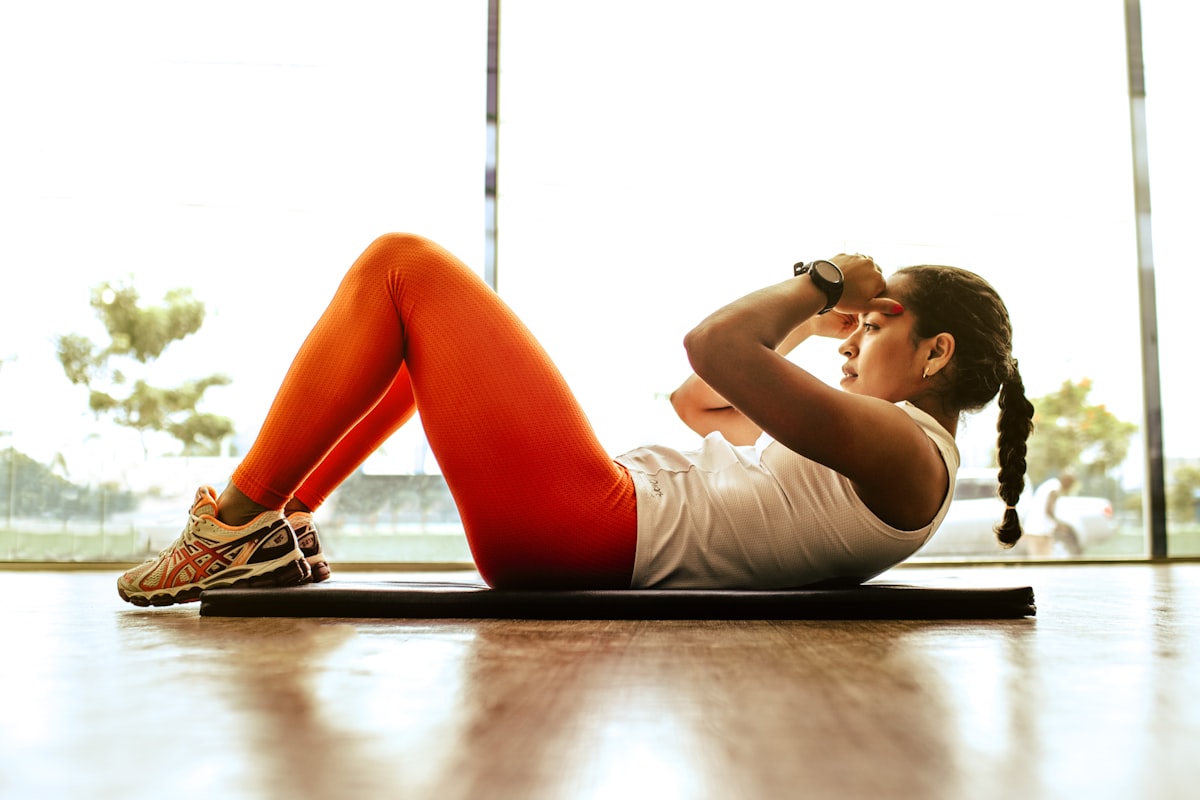
The nose-breathing evangelists will tell you to tape your mouth shut during sleep and never breathe through your mouth again. The gym-bro pragmatists will tell you to suck air through whatever hole you can during a heavy set. They're both half right.
The nose is the superior breathing apparatus. It filters, warms, and humidifies incoming air — which protects the delicate lung tissue. It produces nitric oxide, a gas that dilates blood vessels in the lungs and improves oxygen uptake. It naturally paces the breath — nasal resistance slows the inhale, which keeps the breath deeper and more diaphragmatic.
And it biases the nervous system toward parasympathetic activation, which means nasal breathing during rest periods between sets accelerates recovery.
The mouth, by contrast, is the emergency intake. It's faster, wider, and lower resistance — which means more air per second. During maximal effort, when oxygen demand exceeds what the nose can deliver, the mouth becomes necessary. The problem isn't using the mouth during hard efforts. It's defaulting to the mouth for everything — warm-up sets, recovery periods, moderate cardio, sitting at your desk.
Mouth breathing at low intensity trains shallow, chest-dominant breathing and keeps the nervous system in a low-grade stress state that the body never fully exits.
The practical rule: nasal breathing for everything below 80% intensity. That covers your warm-up, your zone-2 cardio, your recovery between sets, your daily life. Mouth breathing only when the effort demands it — heavy sets above 85%, sprint intervals, the final stretch of a race. The nose should be your default. The mouth should be your reserve.
One drill that transforms this faster than anything else I've tried: nasal-only zone-2 sessions. Put on a simple fabric mask that covers just your mouth, or consciously keep your mouth closed, and run, ride, or row at a pace where nasal breathing is comfortable. If you have to open your mouth, slow down.
The pace you can sustain nasally is your true aerobic base — and training at that pace, exclusively nasally, expands it faster than mouth-breathing at the same heart rate. The mechanism is the additional respiratory muscle work against nasal resistance, combined with the parasympathetic signal that nasal breathing sends. Do this once a week for six weeks and your ventilatory threshold will shift.
- The mouth-taping-during-sleep trend has actual evidence behind it for snoring and mild sleep apnea. But don't tape your mouth during training — that's a different ask. Nasal-only training is about conscious choice, not physical restriction during high output.
- Test your nasal baseline: run, ride, or row at the highest pace you can sustain with your mouth closed for ten minutes. That pace — not the pace you can hit while gasping — is your real aerobic fitness floor.
"The nose is the gate of the Lungs. When the gate is open, clear Qi enters and turbid Qi is expelled without obstruction. The gate that is bypassed leaves the Lung undefended."
The Valsalva Done Right — When to Hold, When to Flow, and the Neck That Pays the Price
The Valsalva maneuver — a deep diaphragmatic breath, held against a closed glottis to create intra-abdominal pressure — is one of the most effective spinal protection strategies in strength training. It's also the most commonly butchered technique in the gym.
The purpose of the Valsalva is to create a rigid cylinder of pressure in the torso that stabilizes the spine under load. The breath fills the lungs, the diaphragm descends, the abdominal wall braces outward, and the combination turns the torso into a pressurized column.
This protects the intervertebral discs, increases force transfer from the legs through the trunk, and — critically — gives the nervous system a threat-reduction signal. The body is more willing to produce force when it feels safe, and a braced core feels safe.
Where athletes get it wrong: they hold the pressure in their head and neck instead of their torso. You can see it — the face goes red, the veins bulge in the neck, the jaw locks, the eyes squeeze shut. That's not intra-abdominal pressure. That's intra-cranial pressure, and it's a recipe for headaches, hemorrhoids, and in extreme cases, genuinely dangerous blood pressure spikes.
The Valsalva should be felt in the belly and the low back, not above the shoulders.
The TCM gloss on this is useful. TCM would describe the face-reddening, neck-bulging Valsalva as Qi rising to the head — an upward counterflow caused by forcing breath against tension in the upper body instead of directing it down into the Dantian, the energy center below the navel.
The classic qigong instruction 'sink the Qi to the Dantian' is exactly the cue that fixes a bad Valsalva: breathe into the belly, let the pressure settle low, keep the neck and jaw soft.
The practical fix is a three-part cue. One: inhale into the belly, not the chest — your stomach should push against your belt. Two: brace outward, 360 degrees — not just the six-pack, but the obliques and the low back. Three: keep your face relaxed — jaw unclenched, eyes open and soft, tongue resting on the roof of your mouth. The Valsalva is a torso strategy, not a face strategy.
Practice it with an empty bar until the pattern is automatic, then load it.
- Film your face during a heavy set. If your eyes squeeze shut, your jaw locks, or your neck veins bulge, your Valsalva is leaking pressure upward. Fix the bracing pattern before adding more weight.
- The 'hiss exhale' is the bridge between pressure and flow: during the concentric phase of a lift, release a small, controlled hiss through your teeth. It maintains enough pressure for spinal stability while preventing the full breath-hold that spikes blood pressure. Practice this at moderate loads first.
"Qi sinks to the Dantian, and the root is established. When the breath presses downward and the mind rests in the center, even a thousand pounds cannot disturb the foundation."
Breath-to-Movement Synchronization — Turning Your Lungs Into Your Metronome

Every elite endurance athlete does this instinctively. Runners match inhales and exhales to footstrikes. Swimmers match breath to stroke cycles. Rowers match breath to the catch and drive. The pattern is consistent across sports: exhale on effort, inhale on recovery.
The reason is biomechanical — the exhale engages the core, which stabilizes the spine during force production — and physiological: forced exhale recruits the internal intercostals and abdominals, which assist the movement.
TCM takes this further. The Lung governs the rhythm of Qi circulation — the cyclical movement of Qi through the meridians. When breath is locked to movement, Qi circulation becomes ordered. When breath is chaotic, Qi circulation becomes chaotic. The ancient internal martial arts — tai chi, bagua, xingyi — treat breath-movement synchronization as fundamental, not optional.
Every movement has an assigned inhale or exhale, and the breath leads the body.
Practical synchronization for modern athletes, by modality:
Running — the 3:2 pattern at moderate pace: inhale for three footstrikes, exhale for two. This alternating-odd pattern distributes the impact of the exhale (which engages the core harder) across both sides of the body, reducing the injury pattern associated with always exhaling on the same footstrike. At faster paces, shift to 2:1 or 1:1.
The rule: exhale should be slightly shorter than inhale, and the pattern should alternate sides.
Cycling — pedal-stroke matching: exhale during the downstroke (effort phase), inhale during the upstroke (recovery phase). At moderate cadence, one exhale per two downstrokes is comfortable. At high cadence, shift to one breath cycle per downstroke.
Strength training — exhale on the concentric (lifting, pushing), inhale on the eccentric (lowering, returning). This is gym standard for a reason: the exhale engages the core during the effort phase. But add one refinement: don't exhale completely. Leave about ten percent of the breath in the tank during the concentric to maintain intra-abdominal pressure through the sticking point, then finish the exhale at lockout.
HIIT and intervals — the recovery breath between efforts matters more than the effort breath. After each interval, switch immediately to nasal, slow-exhale breathing: two short nasal inhales, one long nasal or pursed-lip exhale. This pattern — an inspiratory gasp inhibitor — accelerates heart rate recovery and prevents the hyperventilation spiral that makes the next interval harder than it should be.
- Start with the strength pattern — exhale on effort — because it's the simplest and most universally applicable. Master it at moderate loads before you try breath-movement matching at race pace.
- If counting footstrikes or pedal strokes distracts you from the workout, start with just the exhale timing. Exhale is the active phase. Inhale will take care of itself.
"One breath, one movement. When the breath leads, the body follows without hesitation. When the body leads, the breath scatters and the Qi disperses."
Recovery Breath — the Part Between Sets That Nobody Programs
Between your sets, while you're scrolling your phone or staring at the floor, your heart rate and nervous system state during the first thirty seconds of rest predict your next set's performance more reliably than how much weight is on the bar. Faster heart rate recovery between sets is correlated with higher total training volume, better repeat-sprint ability, and lower perceived exertion for the same work.
Controlled breathing during rest periods accelerates heart rate recovery. The mechanism: slow, extended exhales activate the vagus nerve, which triggers parasympathetic (rest-and-digest) signaling. Heart rate drops. The sympathetic spike from the set resolves faster.
And maybe most importantly, the mental reset happens — the brain shifts from 'I just survived that' to 'I'm ready for the next one' faster when the breath deliberately signals safety.
TCM maps this as the Lung's role in descending Qi. After exertion, Qi naturally rises — to the chest, the head, the muscles — and the Lung's job is to bring it back down. A slow, extended exhale — especially through the nose or pursed lips — stimulates the Lung's descending function.
Chinese martial arts and qigong incorporate a specific breath pattern between training rounds: two or three short nasal inhales followed by one long, slow exhale through the mouth with the lips slightly pursed, as if blowing through a thin straw. Try it. The heart rate drop is noticeable within fifteen seconds.
The inter-set breath protocol I teach:
Seconds 0-10 after the set: Let your breath be whatever it needs to be. Don't force a pattern during the initial recovery gasp. Your body is oxygen-depleted; let it refill on its own terms.
Seconds 10-30: Switch to nasal breathing. Close your mouth. The initial oxygen debt is paid, and nasal breathing now biases recovery. If you can't nasal-breathe within twenty seconds of finishing a set, the set was likely too intense for the training goal.
Seconds 30-60: The pursed-lip exhale pattern. Two nasal inhales, one slow pursed-lip exhale. Repeat. This is the vagal activation phase. Heart rate should drop noticeably with each cycle.
Seconds 60+: Continue nasal breathing. Walk slowly if you're between heavy sets — the gentle circulation helps clear metabolites — or sit and do the recovery breath pattern. By the time the next set starts, your nervous system should feel reset.
Three-minute rest between heavy sets is standard. With this breath protocol, your heart rate recovery at two minutes looks like what three minutes produces without it.
- Track your inter-set heart rate recovery: measure your HR immediately after a set and again 60 seconds later while using the recovery breath. The delta should be at least 20 beats. If it's less, your conditioning or recovery habits need work.
- The phone is the enemy of inter-set recovery. Scrolling keeps your sympathetic system engaged — the opposite of what the recovery breath is trying to achieve. Put the phone down, close your eyes, and breathe.
"When the breath is held after exertion, Qi scatters. When the breath is released slowly, Qi settles and returns to its root. Between effort and effort, let the breath be slow, and the body will be ready."
The Daily Breath Practice — Ten Minutes That Do More Than an Hour of Cardio
Here's the thing that separates the athletes who transform their breathing from the ones who read about it and change nothing: a daily, non-negotiable, standalone breath practice. Not breathing during training. Not breathing between sets. A dedicated ten-minute session where the only thing you're training is breath.
The TCM tradition calls this Zuo Wang — 'sitting and forgetting' — or more practically, breath cultivation. The respiratory muscles are skeletal muscles. They respond to deliberate, progressive training the same way your quads do. A daily breath practice is the 'strength session' for your diaphragm, intercostals, and the neural pathways that coordinate them.
The protocol — ten minutes total:
Minutes 0-3: Supine 360-degree breathing. Lie on your back, knees bent, one hand on belly, one on lower ribs. Breathe into the belly, then the ribs, then feel the low back press into the floor. Exhale slowly through pursed lips. The goal here is to wake the diaphragm and establish the full expansion pattern. Five to six breath cycles per minute — slow, deep, complete.
Minutes 3-6: Seated box breathing. Sit on the floor or a chair, spine tall but not rigid. Inhale for four counts. Hold full for four counts. Exhale for four counts. Hold empty for four counts. The holds train respiratory muscle endurance and CO2 tolerance — the body's ability to function with elevated carbon dioxide, which is what lets you stay calm during hard efforts. If four counts is easy, go to five.
If it's a struggle, drop to three.
Minutes 6-8: Nasal cadence breathing. Still seated. Close your mouth. Breathe exclusively through your nose. Inhale for three counts, exhale for six counts. The extended exhale trains the slow-twitch endurance of the expiratory muscles and maximizes vagal tone. If you can't complete a six-count exhale comfortably, drop to a 3:4 ratio and work up.
Minutes 8-10: Free breathing. Let go of the structure. Let the breath find its own rhythm. The only instruction: nose only, and notice where the breath is moving in your body. Is it shallow? Deep? Are you holding tension anywhere? Don't fix anything. Just watch. This is the integration phase — the breath finding its new baseline after nine minutes of deliberate training.
That's the practice. Ten minutes. Do it every morning before training or every evening before bed. The athletes I've trained who adopt this consistently report the same changes within three to four weeks: easier nasal breathing during zone-2 work, faster heart rate recovery between sets, better sleep, and — the one that surprises everyone — calmer performance under pressure.
The breath practice doesn't just train the lungs. It trains the nervous system's capacity to regulate itself.
- Do the breath practice at the same time every day for the first three weeks — habit formation depends on a consistent trigger. Morning before breakfast or evening before the bedtime wind-down both work.
- If ten minutes feels like too much, start with five — the first two phases only. The practice earns its time back in faster recovery and better training quality, but you need to experience that before it feels worth protecting.
"Cultivate the breath for one quarter-hour each day, and in one hundred days the Qi will be abundant and the spirit clear. Neglect the breath and the body will weaken by degrees, even if the limbs are strong."