Cartilage Is the Only Tissue in Your Body With No Blood Supply
Every other part of you is plumbed. Muscles, skin, organs — they all sit on a network of capillaries that delivers oxygen and nutrients and hauls away waste. Cartilage doesn't. The slick white tissue that caps the ends of your bones at every joint has no blood vessels, no lymphatics, no nerves. It's the one part of your body that runs on a delivery system you have to operate yourself.
That sounds like a design flaw. It's actually the design. Cartilage has to withstand decades of compression — your knees absorb a force of roughly one and a half times your body weight with every step, more when you run or climb stairs. Blood vessels would rupture under that load. So instead, cartilage evolved to be fed from outside, through the fluid that surrounds it in the joint capsule.
Here's the part that surprises people: that fluid — synovial fluid — doesn't just lubricate. It nourishes. Cartilage cells, called chondrocytes, sit inside a dense mesh of collagen and proteoglycans, and they get their nutrients by diffusion from the synovial fluid that bathes the joint surface. No fluid movement, no nutrients. And the fluid only moves when the joint moves.
The whole system runs on a simple loop. Movement compresses the cartilage, squeezing waste products out. Movement releases, and the cartilage rebounds like a sponge, drawing fresh fluid in. Feed the loop, and your joints stay nourished. Break the loop — sit still for hours, days, years — and the tissue slowly starves. That's not metaphor. It's the mechanical reality of how an avascular tissue survives.
So when someone tells you joints wear out 'like a tire,' the analogy is wrong. A tire wears from use. Cartilage atrophies from disuse. The two problems point to opposite solutions.
- Cartilage has no blood supply — nutrients reach it only through synovial fluid, and the fluid moves only when the joint moves.
- The 'joints wear like tires' analogy gets the science backwards: cartilage is fed by use, not worn down by it.
"When grain enters and Qi is full, the thick moist essences pour into the bones; the joints flex and extend, the marrow is replenished, and the skin is moistened — this is called Ye, the lubricating fluid."
Synovial Fluid 101: The Egg White That Becomes Joint Grease
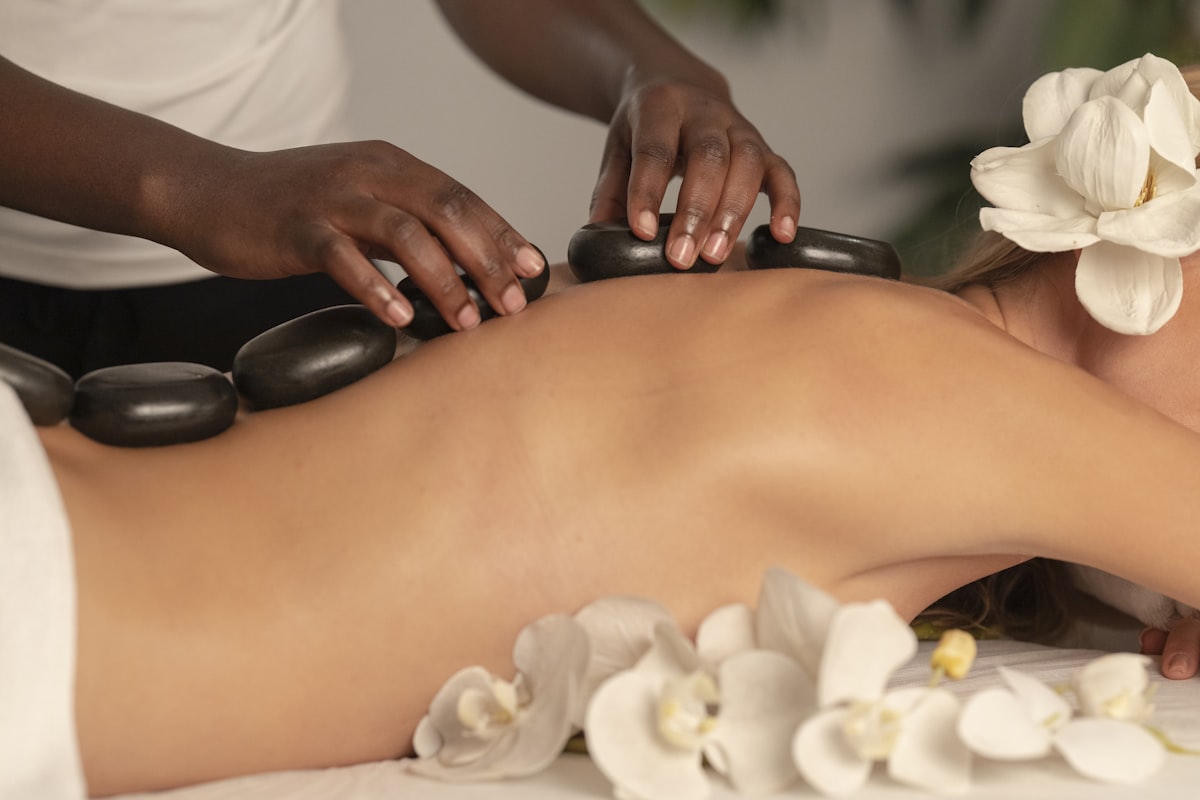
Scoop synovial fluid out of a healthy joint and you'd hold something that looks and feels like raw egg white: clear, slippery, slightly viscous. The comparison isn't cosmetic. Both egg white and synovial fluid are built on long protein chains that tangle and slide against each other — the physical basis of their slipperiness.
The fluid is a hybrid. Part of it is filtered blood plasma, the watery base that carries nutrients. Part of it is manufactured on site by the synovial membrane, which secretes two heavyweight molecules: hyaluronan and lubricin. Hyaluronan is a massive sugar chain that gives the fluid its viscosity — its thickness, its resistance to being squeezed out.
Lubricin is the boundary lubricant, the molecule that lets two cartilage surfaces slide past each other with a coefficient of friction lower than ice on ice.
Together they do something remarkable: the fluid is viscoelastic. Move slowly, and it thickens, forming a cushion that absorbs impact. Move fast, and it thins, letting the joint glide without drag. It's the same physics as a spoon in honey — slow pull, the honey resists; quick pull, it shears and lets go. Your joints read your speed and adjust the resistance accordingly.
Healthy knees hold about two to four milliliters of the stuff — barely a teaspoon. A teaspoon of fluid, engineered to take the load of a lifetime of stairs, squats, and the occasional stumble. It's replaced continuously, and the rate of replacement is tied to movement. Use the joint, and the membrane stays active, secreting fresh fluid. Immobilize the joint, and production slows within days.
That last fact is worth sitting with. Your body doesn't keep a reserve of joint grease. It makes it on demand, and the demand signal is movement.
- Synovial fluid is a two-part system: filtered blood plasma for nutrition plus locally made hyaluronan and lubricin for glide.
- The fluid is viscoelastic — thick under slow load (cushioning), thin under fast movement (gliding). Your joints self-adjust to your speed.
Why Your Knees Feel Like Rust at 6 AM
You wake up, swing your legs out of bed, and for the first ten steps your knees feel like hinges that haven't been oiled since the Reagan administration. Then you shuffle to the bathroom, and somewhere between the bed and the coffee maker, the rust burns off. Sound familiar? You're experiencing the fluid problem in real time.
All night, you've been still. Your knees have been parked in roughly the same position for seven or eight hours, and the synovial fluid has responded the way any viscous fluid does when it stops moving: it's settled, thickened, and spread unevenly across the joint. The lubricin has drifted away from the load-bearing surfaces.
The hyaluronan network has become more tangled, more like cold honey and less like warm oil. Your joint surfaces are effectively running dry for those first few steps.
Then you move, and within minutes the pump restarts. Fluid redistributes, viscosity normalizes, and the creak fades. That's the classic pattern — brief morning stiffness that resolves with movement.
Here's where the pattern gets clinically useful: how long the stiffness lasts is a clue. Mechanical morning stiffness from osteoarthritis typically burns off in under thirty minutes. If your joints stay stiff for an hour or more after waking, that's a different signature — the kind of prolonged morning stiffness that rheumatologists flag as a possible sign of inflammatory arthritis.
That distinction is one of the first things a doctor checks, and it's worth knowing before you self-diagnose.
The TCM texts described the same morning phenomenon in their own terms: Qi and Blood that have pooled and congealed during the night, a body whose fluids haven't yet begun to circulate. The prescription that followed — gentle movement to wake the channels before the body is asked to do anything demanding — maps almost exactly onto what modern joint physiology now recommends.
- Morning stiffness that clears within 30 minutes of moving is typical of osteoarthritis; stiffness lasting over an hour can signal inflammatory disease — worth a doctor's check.
- The TCM prescription for morning joints — gentle movement before demand — matches what fluid mechanics now recommends.
The Compression Pump: Movement Is How Joints Eat
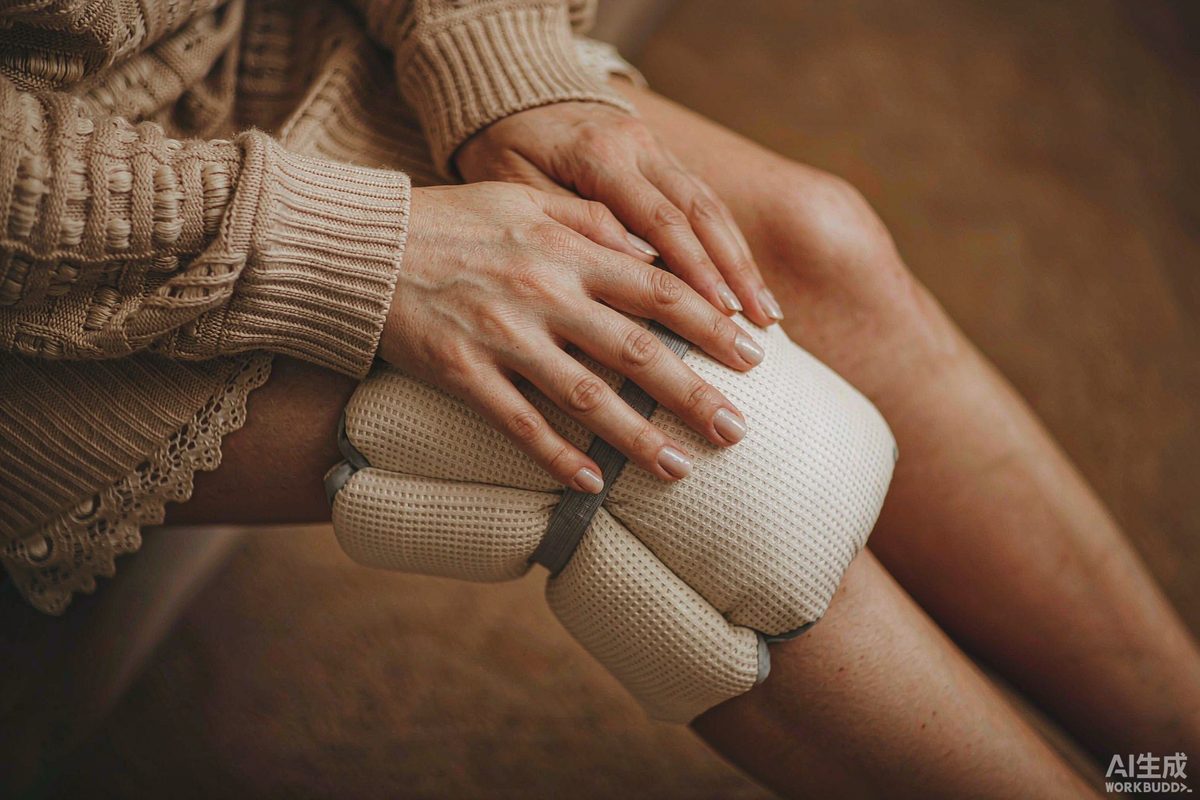
Here's the sequence that keeps cartilage alive. When you load a joint — stand up, take a step, bend your knee — the cartilage compresses. Compression squeezes fluid and waste out of the tissue, like stepping on a wet sponge. When you unload — lift your foot, straighten the leg — the cartilage rebounds and draws fresh fluid back in, pulling nutrients along with it.
That's the compression pump, and it's not a metaphor; it's measurable. Researchers have watched it happen. In one study of exercise therapy in knee osteoarthritis, patients who added supervised exercise to their treatment showed lower levels of inflammatory markers — TNF-alpha, hs-CRP, MMP-3 — in their synovial fluid after four weeks, alongside better joint function.
The movement itself was changing the chemistry inside the joint.
The deeper point is that cartilage is mechanosensitive. Its cells are equipped to detect mechanical load, and they respond to it — changing how much matrix they build, how active their repair genes are. Load is a signal, not just a stress. Chondrocytes need the signal. Without regular compression and release, they downshift into a lower-activity state, and the matrix they maintain slowly thins.
This is the part that contradicts the fearful way we talk about exercise and arthritis. The 'wear and tear' framing makes people protect their joints by sitting still, which is exactly the wrong move. The joints that do best over decades are the ones that get loaded regularly, moderately, and through their full range — not the ones that were spared.
None of this is a license to ignore pain. Sharp pain, swelling, or a joint that gives way are signals to stop and get checked. But between the extremes of 'train through it' and 'never move it,' the evidence and the physiology point the same way: move it, gently, often.
- Loading a joint squeezes waste out of cartilage; unloading sucks fresh fluid in. Both halves of the cycle need to happen, regularly.
- A 2012 study of knee osteoarthritis found four weeks of exercise therapy lowered inflammatory markers in synovial fluid — movement changes joint chemistry.
"The running water never stagnates, and the door hinge never rusts — because both are in constant motion."
What TCM Called Jin-Ye: Fluids, Marrow, and the Kidney
The classical texts never used the words 'synovial fluid.' But they built a detailed theory of body fluids that behaves remarkably like the modern one, and it's worth knowing because it changes how you think about joint health.
The Huangdi Neijing divides the body's fluids into two classes: Jin and Ye. Jin is the thinner, faster fluid — sweat, tears, saliva, the moisture that lubricates surfaces and moves quickly with Qi. Ye is the thicker fluid — the dense, slow stuff that fills the joints, moistens the marrow, and nourishes the deep tissues.
The distinction is almost exactly the plasma-versus-hyaluronan split in modern synovial fluid physiology: a mobile watery component and a viscous structural one.
Lingshu Chapter 30 says it directly: grain enters, Qi fills, and the 'thick moist essences' pour into the bones, allowing the joints to flex and extend while replenishing the marrow. That's a two-thousand-year-old description of synovial fluid feeding cartilage and bone.
The mechanism was wrong in the details — no one in the Han dynasty had seen a chondrocyte — but the functional map was right: fluids, produced from food, moving into joints through motion.
The Kidney's role in this system is the part modern readers usually trip on. In TCM, the Kidney governs the bones and produces marrow, and 'marrow' is a broader category than the stuff inside your spine — it includes the fluids that bathe the joints and support the brain. Kidney essence declines with age, and with it, the body's ability to produce and maintain those deep fluids.
Which is why classical practitioners treated thinning joint fluid and weakening bones with the same logic: nourish the Kidney, protect the fluids, keep them moving.
You don't have to adopt the metaphysics to use the insight. The practical translation is simple: fluids that feed joints are produced from diet, governed by constitutional reserves, and distributed by movement. All three levers are things you can pull.
- TCM split body fluids into Jin (thin, fast, surface) and Ye (thick, slow, deep) — Ye maps closely onto synovial fluid's viscous role.
- The Kidney-bone-marrow axis is TCM's framework for why joint fluid thins with age: deep reserves decline, so protection and movement matter more.
Water, Fish Oil, and the Food Angle — With Honest Limits
Everyone wants the nutrition answer. Drink more water, eat more fish, and your joints will thank you — that's the version that circulates on the internet. The honest version is more complicated, and it's worth getting straight.
Water first. Synovial fluid is mostly water, and severe dehydration does reduce total body water, which can leave joints feeling drier and creakier. What the evidence does not show is that drinking extra water beyond normal hydration meaningfully changes synovial fluid volume or quality in healthy people. Your body regulates joint fluid tightly. Drink when you're thirsty, don't chase a magic number.
Omega-3s are the better-studied piece, and the studies are genuinely mixed. 5 g daily). Not high-dose superiority — the opposite. Then the VITAL trial, following nearly 1,400 adults with chronic knee pain over five years, found omega-3 supplementation produced no meaningful reduction in knee pain compared to placebo.
The takeaway isn't 'fish oil is useless.' It's that the supplement aisle's promise — a pill that oils your joints — isn't supported. Oily fish as part of a normal diet is a fine choice for overall health. Expecting a capsule to restore joint lubrication is not realistic, and the studies that support high-dose supplementation are mostly small or short-term.
What about the TCM food tradition? Its recommendations — warm broths, gelatinous stews, bone broth, foods that 'nourish the Kidney' — are essentially a way of eating that prioritizes hydration, protein, and minerals, all of which the fluid-producing machinery needs. Reasonable as diet. Not a medicine.
So the honest food answer is boring: adequate water, adequate protein, fish a couple times a week if you like it, and no single food that will save your knees.
- The best trial evidence on omega-3s for knee pain is mixed — low-dose beat high-dose in one trial, and a large five-year trial found no benefit over placebo.
- Food supports joint fluid by providing protein, water, and minerals; no food or supplement directly 're-oils' a joint.
A Ten-Minute Joint-Feeding Routine
If the science has one clear instruction, it's this: joints need frequent, gentle, full-range movement. Not one heroic workout a week — a daily drip of motion. Here's a ten-minute routine built on the compression pump, doable in bed, at a desk, or anywhere you have floor space.
Start before your feet hit the floor. Lying in bed, point and flex your toes ten times, then circle each ankle slowly, ten rotations each way. Bend and straighten each knee ten times — you're pushing fluid through the joints while they're still unloaded. This two minutes is the single highest-value joint work you'll do all day, because it happens before the stiffest moment.
On your feet: ten slow knee bends, hands on a counter if balance is a concern. Then hip circles — hands on hips, draw ten big slow circles each direction. Shoulder rolls backward ten times, forward ten. Then the neck: look left, center, right, ten slow counts each side. Two more minutes, done.
Now the 'movement snacks' — the part that matters as much as the morning routine. Every forty-five minutes of sitting, stand up for sixty seconds. March in place. Reach for the ceiling. Do five shallow squats. The research on sedentary time and joint health is consistent: the damage pattern comes from long uninterrupted stillness, and the antidote is frequency, not intensity.
Finally, pick one loading activity you can do most days — a fifteen-minute walk, a swim, a gentle cycling session, a qigong set. The morning routine greases the joints; this is the meal. Moderate, regular, and varied beats intense and rare, every time.
Ten minutes of maintenance plus a daily walk won't rebuild cartilage that's already gone. It will feed the tissue you still have, and that's the whole game.
- Do the two-minute in-bed routine before standing — ankle pumps, knee bends, and slow circles push fluid through joints before the stiffest moment of the day.
- Movement snacks beat workouts for joint health: 60 seconds of standing and moving every 45 minutes of sitting.
- Pick one daily loading activity — a 15-minute walk, a swim, gentle cycling — as the 'meal' on top of the morning 'grease job.'
"Excessive lying harms the Qi, excessive sitting harms the flesh. The body was made for motion, and stillness, taken too far, is itself an injury."
The Honest Boundary: What Lubrication Can and Can't Do
Time for the parts that don't fit the feel-good version. Movement and fluid mechanics are real, but they are not a cure, and pretending otherwise is how people end up doing squats on a joint that needed a surgeon.
What lubrication work can do: maintain the cartilage you have, ease morning stiffness, support the synovial membrane's production, and keep the muscles that stabilize the joint strong. For mild to moderate osteoarthritis, that package — movement, warmth, weight management, strength — is the foundation that every guideline, East and West, puts first.
What it can't do: regrow cartilage that's worn through to bone. Reverse structural damage. Stop the disease process in someone with advanced osteoarthritis. And movement can't fix a joint that's acutely inflamed, swollen, hot, or locked. Those situations are not a lubrication problem — they're a medical problem, and the answer starts with a clinician, not a routine.
Watch for the flags: a joint that's red, warm, or visibly swollen; pain that wakes you at night; a knee that locks or gives way; stiffness lasting more than an hour in the morning. If any of those sound like you, see a doctor before you start any new movement program. Exercise is medicine, but like medicine, it has contraindications.
And a final honest note on the supplements and injections that promise to 'restore' joint fluid. Hyaluronic acid injections exist and have evidence — of the modest, mixed kind. They're a legitimate conversation for a doctor, not an at-home fix. If a product sounds like it will re-oil your joints from a bottle, it won't.
The fluid in your joints is made by your body, on demand, in response to movement. You are the pump. That's the whole message — and also the whole difficulty, because it means nobody can do it for you.
- See a doctor if a joint is red, hot, swollen, locks, gives way, or stays stiff over an hour — movement programs are not for acutely inflamed joints.
- Movement maintains existing cartilage and eases stiffness; it cannot regrow worn cartilage or reverse advanced osteoarthritis.
"The sage does not treat the already-ill illness; he treats the illness that has not yet arisen."