The Only Flavor That Bites Back
Sweetness is a molecule recognized. Sourness is a proton admitted. But heat from a chili is neither of those things, and once you understand what it actually is, the whole conversation about spicy food gets more interesting. Capsaicin does not activate taste buds. What it does is bind to TRPV1, a receptor whose day job is reporting dangerous heat — the kind that threatens to scald tissue.
The receptor opens, a nerve fires, and the brain reads the message exactly as designed: hot. Too hot. Except nothing in your mouth is above body temperature.
You are being lied to, competently, by a small molecule in a pepper. The burn is real as sensation and absent as temperature, which puts chili in a strange category — a flavor that is not a flavor, a pain that harms nothing at the dose any dinner contains. People who study eating behavior have a name for the willingness to seek this out: benign masochism.
The body files a threat report, the threat turns out not to exist, and the aftermath is a flush, sometimes a sweat, and a slow wave of endorphins that many people find pleasant in a way they cannot quite defend.
The selectivity even has a botanical logic behind it. Mammals crack pepper seeds with molars; birds swallow them whole and fly them somewhere better. Capsaicin is the pepper's old treaty with evolution — punish the chewers, spare the carriers — which is why squirrels abandon a bird feeder laced with cayenne and cardinals never notice.
The burn you volunteer for at dinner was originally aimed at your front teeth, and the fact that you came back for more says something about endorphins that pepper breeders discovered long before the word existed.
There is a question worth asking under all of this, and it is not whether spicy food is good or bad for you. It is what a compound that hijacks a temperature alarm might be doing to metabolism, appetite, and the long odds — and whether a medical tradition that never saw a capsaicin molecule somehow arrived at a compatible idea two thousand years earlier. Both threads lead somewhere.
Neither leads where the headlines say.
- Capsaicin triggers TRPV1, the same receptor that reports scalding heat — the burn is a real sensation with no real temperature behind it.
- The sweat and flush after a hot meal are measurable physiology, not imagination; the pleasurable aftermath is an endorphin response to a false alarm.
"Chili is a pain that harms nothing at the dose any dinner contains — a threat report the body files and then withdraws."
A Controlled Burn: the First Ninety Minutes
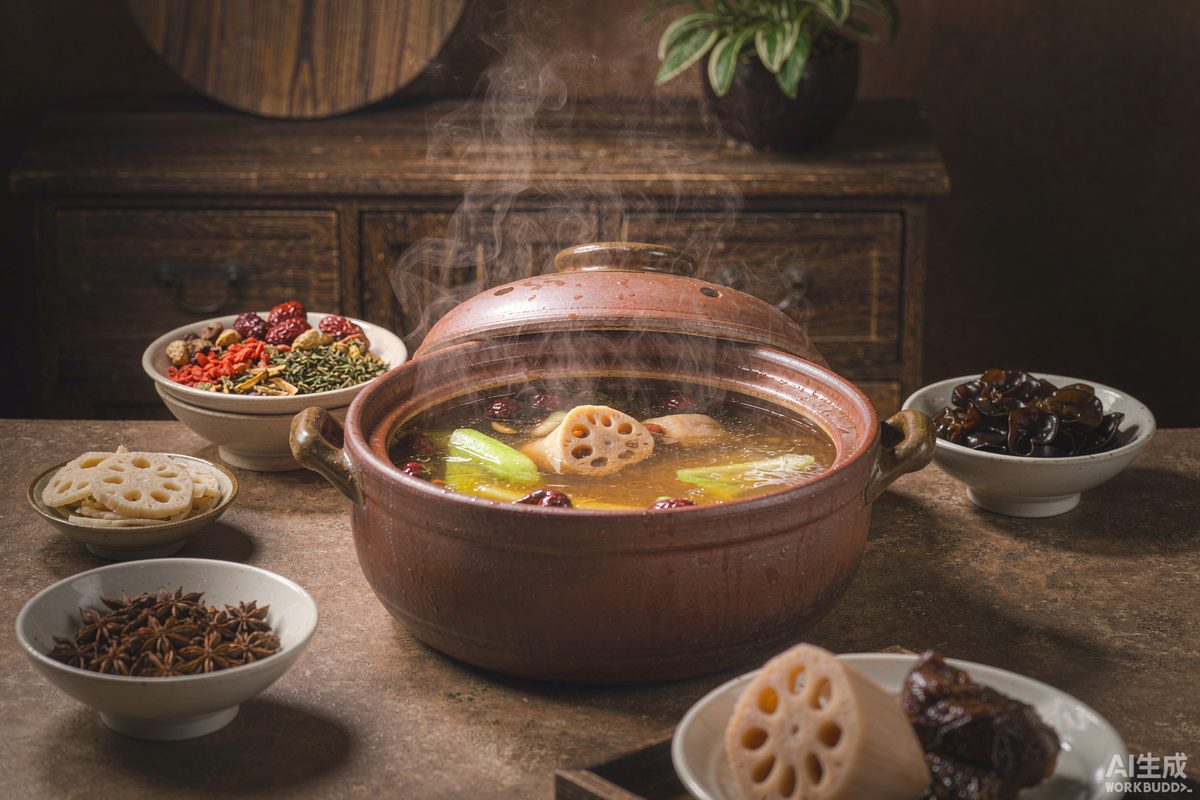
The cleanest way to see what capsaicin does is to watch a meal, not a molecule. In a study published in Physiology & Behavior, researchers gave volunteers food spiced with red pepper — ordinary, restaurant-plausible amounts, about a gram and a half — and measured what happened over the following hours in two kinds of people: those who ate spicy food regularly and those who avoided it.
In the non-users, the spiced meal measurably raised diet-induced thermogenesis, the energy spent processing food, and it trimmed appetite afterward, particularly for fatty foods. The effect was not subtle in this group.
In the regular users, almost nothing happened. That asymmetry is the most honest finding in the whole field. The body adapts to capsaicin the way it adapts to any repeated stimulus — the alarm quiets, the receptors recalibrate, and the same dish that once produced a full-body flush becomes, by the fortieth consecutive month of eating it, simply dinner.
A related trial using capsaicin in a lunch found the same shape of result: acute effects on energy expenditure and fat oxidation that were visible, real, and modest in size.
Modest deserves emphasis. The thermogenic bump from a spiced meal is on the order of a small handful of calories — real enough to measure in a lab, too small to matter on a plate. Anyone selling cayenne capsules on the promise of meaningful fat burning is selling the gap between a laboratory number and a lifestyle number.
What the acute studies genuinely support is narrower and more interesting: pungent food slightly raises the metabolic cost of the meal that contains it, nudges the next meal toward less fat appetite in people new to heat, and does its work as part of food rather than as a pill.
- About 1-2 g of red pepper with a meal measurably raised thermogenesis and reduced subsequent appetite in people unaccustomed to spice.
- Regular eaters adapt — the metabolic effect fades with habituation, so chili is a food to enjoy, not a mechanism to exploit.
- The energy burned from a spiced meal is small in absolute terms; no supplement replaces what the whole diet does.
The Italian Cohort, Read Twice
In 2019, the Journal of the American College of Cardiology published an analysis from the Moli-sani study, a large cohort of Italian adults. Of roughly twenty-three thousand participants followed for a median of about eight years, nearly a quarter ate chili peppers at least four times a week.
Those regular chili eaters had a lower risk of death from all causes, and from cardiovascular causes in particular, than people who rarely or never ate chili — a difference that survived adjustment for diet quality, activity, smoking, and the usual suspects. The press release wrote itself. Chili pepper: now a health food.
Now the second reading. The following year, the same journal published a commentary taking that paper apart, gently and by title: there is insufficient evidence to support a causal relationship between chili pepper consumption and mortality. The objections are the standard furniture of nutrition epidemiology, and they are right.
A single food-frequency questionnaire years apart cannot capture what a person actually ate across a decade. Chili eaters in southern Italy differ from non-eaters in ways no regression fully absorbs — regional diet patterns, socioeconomic texture, the kind of family that puts peperoncino on the table. And a hazard ratio that shrinks with every added adjustment is usually a flag, not a finding.
Where does that leave an honest reader? Somewhere unspectacular. The cohort does not prove chili extends life. It does show, as such studies reliably do, that regular chili eating is compatible with a long life and clusters inside real, durable eating patterns — the Mediterranean ones, in this case, which are themselves well supported. The correct conclusion is not that capsaicin saves lives.
It is that nothing about a spicy plate stands between anyone and the dietary advice that has survived every trial: mostly plants, mostly whole foods, cooked at home, eaten with people you like. Heat fits inside that. It does not replace it.
- A large Italian cohort linked frequent chili eating to lower mortality — as association, not proof, and a journal commentary said so explicitly.
- Food-frequency data and confounding cap what cohort studies can show about any single food.
- Treat chili as a well-loved component of an overall dietary pattern, not as an active ingredient with its own mortality benefit.
"The correct conclusion is not that capsaicin saves lives. It is that a spicy plate fits inside the diet that has survived every trial."
Xin: the Flavor That Disperses
Open the Suwen and pungent flavor — xin — is not primarily a taste either. It is an action. Chapter five sorts flavors by the direction they move the body: sour gathers, sweet tones, bitter drains, salty softens, and pungent disperses — it scatters, pushes outward, opens.
'Qi and flavors that are pungent and sweet disperse,' the text says, 'and belong to yang': the active, outward-facing half of the body's accounting.
The organ assigned to pungent is the lung, and the lung's territory in Chinese medicine is not the pair of lobes but the entire body surface — the skin, the pores, the fine fleece of wei qi that patrols the border between you and the weather. Pungent flavor, routed through the lung, moves outward to that border.
This is the logic behind the oldest prescription in the household tradition: at the first sign of a wind-cold — the chill, the stiff neck, the sneeze that announces more sneezes — a decoction of fresh ginger and scallion whites, taken hot, followed by blankets and sweat. The Shennong Bencao Jing files dried ginger the same way, its ancient entry naming sweating and the expulsion of wind-damp among its works.
Dispersal was the therapy.
The tradition also wrote its own safety label, which is the part modern readers rarely hear. Pungent travels with qi, warns the Suwen, so when qi is already disordered — depleted, scattered, running hot — do not eat much of it. A flavor that disperses is, by definition, a flavor that spends.
Classical dietetics never treated spice as a free good; it was a tool with a target and a season, used hard in the right moment and pulled back in the wrong constitution. The damp-heat type with the flushed face and the oily skin gets different advice than the cold, pale, sluggish type. Same flavor, opposite prescriptions.
- In TCM, pungent (xin) disperses and belongs to yang, routed through the lung, whose territory is the skin and pores — the logic behind hot ginger decoctions and sweating therapy for early colds.
- The classics pair the praise with a warning: pungent spends qi, so excess or the wrong constitution calls for moderation, not more heat.
- Constitution matters — dispersing spice suits a cold, sluggish pattern far better than a hot, dry one.
Where the Two Maps Agree, and Where They Tear
Lay the two systems side by side and the overlap is almost embarrassing. Both traditions describe pungent flavor as an event on the surface of the body. Chinese medicine sends it to the pores and prescribes sweat; physiology watches capsaicin trip a heat receptor and produce — literally — gustatory sweating, the forehead beading over a hotpot.
Both describe warmth and movement: the tradition says pungent moves qi and blood, and the lab measures vasodilation and raised thermogenesis. Both even agree on the aftermath, the pleasant calm after the burn, which one framework calls the resolution of stagnation and the other attributes to endorphins. Different vocabularies, same choreography.
Then the maps tear, and it is worth being precise about where. Chinese medicine grades pungent foods by their nature — ginger warms, mint cools, radish moves but differs from mustard — and matches them to constitutions, seasons, and patterns. Modern pharmacology works the other direction: one compound, one receptor, one dose-response curve, and tolerance as the dominant variable.
The tradition's warning against pungent excess in hot, dry, depleted people has no direct equivalent in the trial literature, which mostly sorts volunteers by spicy-eating habit and moves on. Neither map is wrong. They are drawn for different questions — one for a person, one for a mechanism.
There is also one place the tradition's caution finds unexpected modern company. Capsaicin at concentrated supplement doses is a gut irritant for some people, and high-dose extracts have produced real, documented GI symptoms in trials — burning, nausea, cramping.
The classical texts never imagined a cayenne capsule, but their instinct that this flavor is powerful, directional, and not for everyone turns out to be a defensible piece of pharmacovigilance. A flavor that disperses can disperse things you wanted to keep.
- Both systems describe pungent as movement toward the body's surface — TCM's pores and wei qi rhyme with documented gustatory sweating and thermogenesis.
- TCM grades pungent foods by nature and constitution; modern work tracks one compound and the tolerance it builds. Neither map covers the other's ground.
- Concentrated capsaicin supplements irritate the gut in some people — the tradition's moderation instinct has a modern echo.
Dose, Tolerance, and Who Should Pass
So what does sensible heat look like on an actual plate? The trial doses are a good anchor: roughly one to two grams of red pepper per meal — a modest pinch of flakes, half a fresh chili, a spoonful of chili crisp — produced the measurable effects without anyone reaching for water. That is cooking dose, not capsule dose, and the distinction does most of the work.
Capsaicin is fat-soluble, which is why the burn rides on oil and why milk, with its casein, washes it away better than beer or water ever will. Cooking softens the blow too: long simmering mellows capsaicin into the dish, and pairing heat with something sweet or acidic rounds the edge in a way plain water cannot.
Tolerance is the other half of the dose conversation. The metabolic and appetite effects seen in spice newcomers largely wash out in regular eaters, so if you already eat hot food daily, the honest expectation is pleasure, not physiology. Chasing bigger and bigger burn to force an effect back into existence is a trade with a bad exchange rate — you get the discomfort back before you get the metabolism back.
Some people should sit the spicier versions of this out, or come close. Irritable bowel syndrome flares predictably with capsaicin in a meaningful share of patients; uncontrolled reflux often reports chili as a trigger, whatever the population data say; and anyone with active gastritis or an ulcer has enough mucosal drama without adding a receptor agonist to the list.
None of this makes chili dangerous at food doses for healthy people — decades of eating in Sichuan and Hunan put that worry away. But food-dose chili for the well and supplement-dose extract for the unwell are different projects, and conflating them is where most spicy-food advice goes wrong.
For anyone starting from zero, the honest path is slow. A quarter-teaspoon of chili flakes in a dish for four, raised one notch a week, lets both mouth and gut adapt together — the stomach lining trains along with the tongue, which is why veteran eaters can eat breakfast dishes that would send a newcomer to the milk carton. Speed is what turns tolerance-building into heartburn.
The tradition would put the same idea differently: the dispersing flavors are taken with food, cooked, and never raw by the spoonful, and a person whose pattern runs hot or dry is told to walk, not run, toward the whole pungent shelf.
- Cooking doses from the trials — about 1-2 g red pepper per meal — are modest and food-shaped; supplements at 10-20x that are a different risk profile.
- Capsaicin is fat-soluble: milk or yogurt beats water for the burn, and simmering mellows it into the dish.
- IBS and active reflux often flare with chili — reducing heat is reasonable management, not weakness.
"Cooking dose, not capsule dose — the distinction does most of the work."
The Rest of the Pungent Pantry
Chili gets the headlines, but it is the youngest immigrant in a pungent family the tradition catalogued long before. Ginger leads it. Fresh, it is the dispersing mover — the early-cold herb, the thing grated into congee at the first chill of autumn. Dried, the classics rate it hotter and more interior, warming the middle burner rather than pushing the surface.
Garlic belongs to the same shelf: pungent and warm, classically used to move and disinfect, and now studied for everything from blood lipids to the microbiome with results that are interesting, mixed, and nowhere near as tidy as the supplement aisle claims.
Scallion whites — the pale ends most cooks throw away — were the other half of the traditional sweat-out formula, paired with ginger because the tradition read them as working the surface together.
Sichuan pepper occupies its own strange corner: the numbing buzz comes from a different molecule, sanshool, which vibrates against touch receptors rather than heat ones, producing the tingling that makes chili's burn feel like it has a texture. Mustard and horseradish burn upward through the nose via yet another compound; radish is pungent with a cooling assignment in the classical books.
Even black pepper, so ordinary it disappears, was once taxed like treasure for exactly the dispersing quality the texts describe.
The practical takeaway from the whole shelf is less about picking winners than about variety of direction. A pantry with several pungent players — ginger for the early chill, garlic for the slow braise, a spoon of chili crisp when dinner is flat — covers more of what the tradition was pointing at than any single hero food. Heat is one verb. The pantry speaks a sentence.
- Ginger, garlic, scallion, Sichuan pepper, mustard, and radish each carry pungent flavor with a different classical assignment — warming, cooling, or moving.
- Sichuan pepper's tingle comes from sanshools acting on touch receptors, not the capsaicin heat pathway.
- Rotate several pungent ingredients across the week rather than leaning on one hero spice.
Heat Is a Tool, Not a Virtue
Strip everything else away and three sentences survive. Capsaicin is a false heat alarm with real, small, measurable effects — a nudge to thermogenesis and appetite that works best in people new to it and fades in everyone else. The population studies are a good story told loosely: people who eat chili regularly live slightly longer in some cohorts, and no one has shown it is the chili.
And the medical tradition that never saw a molecule treated pungent flavor as a directional tool with a dose and a constitution attached — powerful, useful, and self-limiting, the way genuinely active things usually are.
That is more or less what the Sichuan grandmother knew without a citation. Ginger when the chill arrives. Heat to the edge of comfort, not past it. Quilt, sweat, sleep, and if it is not better in three days, see someone with a license. She would not have phrased the boundary that way, but she enforced it — her remedies had a jurisdiction, and beyond it sat the doctor in town.
The open question, the one neither system has closed, is whether the long-term habituation story has a chapter nobody has measured yet — whether decades of daily heat leave some trace on metabolism or the gut that acute meals never reveal. The cohorts hint. The trials cannot reach.
Until they do, the honest position fits in a bowl of dan dan noodles: eat it because it is good, taste it because it is alive, and let the burn do what it does without asking it to also save your life.
- Capsaicin's proven effects are small and fade with habituation; the mortality studies are association, not prescription.
- Traditional use came with built-in limits — dose, season, and constitution — which is a reasonable model for modern eating too.