The Pattern Everyone Has Noticed
There is a sequence so familiar it has become folklore: the hard week, the long nights, the flight landed and deadline filed — and then, within a day or two of finally resting, the sore throat. Not during the crunch. After it. Whole families observe this rhythm without ever asking why the body seems to hold the line under pressure and collapse the moment it is allowed to stop.
Medicine has an explanation, and it is more interesting than folklore. Sleep is not downtime for the immune system. It is the shift when immune work gets done — the trafficking of defense cells into tissues, the consolidation of immunological memory, the recalibration of inflammatory tone.
Cut the night short and that work is left unfinished, and the body walks into the next day with its guard arrangements out of date. Two decades of controlled studies have moved this from plausible to measured, including experiments where volunteers were deliberately exposed to a cold virus and the outcome turned, in part, on how they had slept in the weeks before.
Chinese medicine described the same phenomenon with a different instrument: Wei Qi, the defensive qi, a layer of the body's energy said to patrol the surface, warm the skin, and slam the door on external pathogens — wind, cold, the classical vocabulary for what we now call infections. The classical texts made a claim that sounds almost modern: Wei Qi and sleep are not separate topics.
They are one circulation, day and night phases of the same force, and a person who sleeps badly is, in that framework, sending the night watch home early.
This article walks through both accounts. First the trials — including one of the cleanest experiments in behavioral immunology. Then the classical model, which got the structure right long before the mechanism was visible. And finally the practical part: what to change, what sleep can honestly promise your immune system, and where its reach ends.
- Watch the timing pattern in your own life: illness that arrives just after a period of sustained short sleep, not during it. Once you see it, the 'I always get sick on vacation' mystery usually resolves.
- Immune risk from sleep is cumulative, not single-night. The studies that found effects tracked sleep across a week or more — which is also why one early night before a flight won't undo a depleted month.
"Everyone knows you get sick when you run down. Almost nobody asks what, exactly, was running."
Wei Qi: The Night Watch of the Classical Body
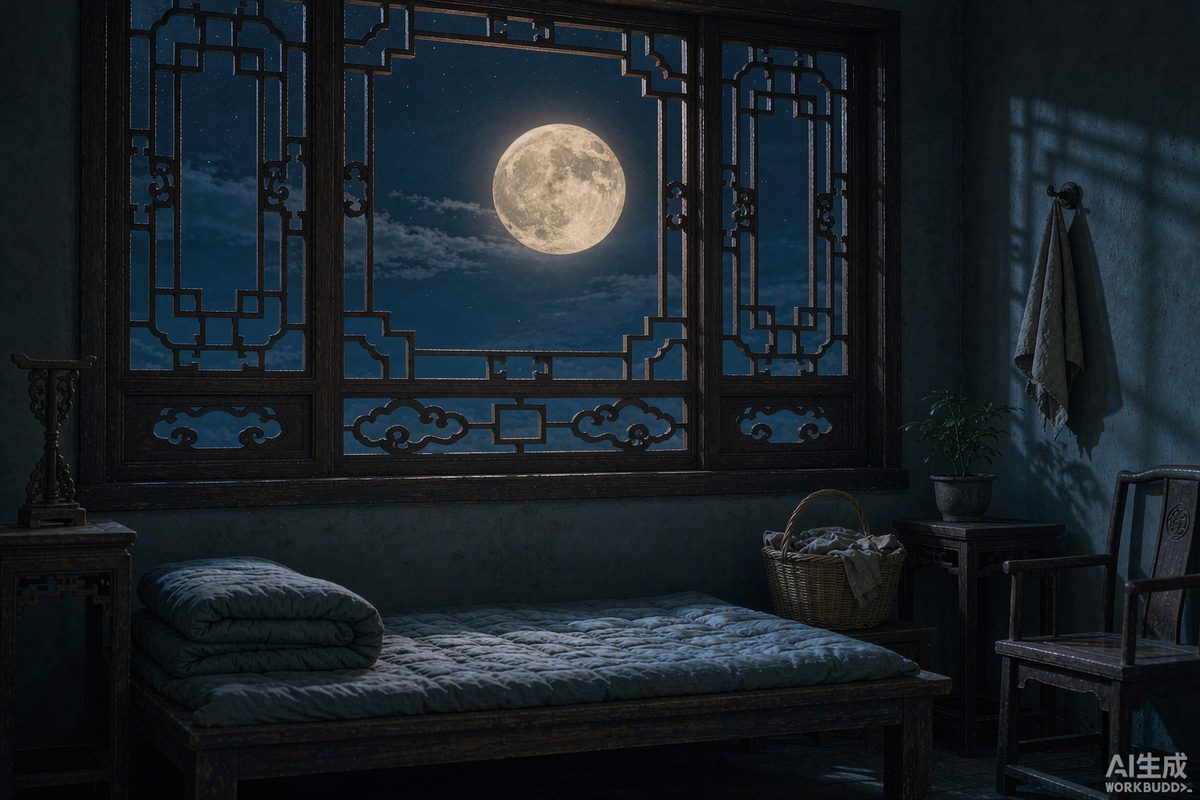
Start with the classical model, because it is startlingly well-organized. In the Neijing's physiology, the body's Qi divides into several functional currents, and the one assigned to defense is Wei Qi — 衛氣, the qi of guarding. Its job description in the Lingshu is specific: it flows through the Yang channels by day, warming the muscles, firming the skin, holding the body's surface closed against external pathogens.
The texts call the common cold conceptually 風寒 — wind-cold — and Wei Qi is what wind-cold has to get past.
Then comes the part that matters for this article. At night, the Lingshu says, Wei Qi withdraws from the surface and travels into the Yin — the interior, the deep organs — where it is restored. Sleep and this inward turn are the same event described twice.
' The classical texts therefore treat a sleepless night as a defense problem directly: the watch was never relieved, the patrol never stood down and never resupplied, and by morning the surface is defended by a depleted force.
This is why the tradition connects chronic insomniacs and frequent colds so casually. It also explains the prescription logic. Points like BL-13 (Feishu, at the upper back beside the spine) are named in the Zhen Jiu Da Cheng for securing the exterior and steadying the Lung, the organ that governs defensive qi in this system.
Moxibustion, warm food, covered necks in cold weather — a whole culture of small defenses follows from taking the surface patrol seriously.
One caution about reading the classical model too literally: Wei Qi is a functional description, not an anatomical substance. The value of the concept is the structure it imposes — defense has a schedule, night is when the schedule resets, and you cannot borrow against the reset indefinitely.
Whether you find that persuasive as physiology or useful as metaphor, it predicted the direction the modern evidence would take.
- The classical insight in one line: sleep is not rest from defense work, it is where defense work gets resupplied. Budget for it the way you'd budget for any essential supply line.
- Traditional advice to keep the neck and shoulders covered in cold, windy weather comes from the Wei Qi model — the surface patrol is said to be thinnest where the Yang channels converge. Warm scarves cost nothing either way.
"When Wei Qi enters the Yin, the eyes close and there is sleep; when it returns to the surface, the eyes open."
The Challenge Trials: Getting Sick on Purpose
Now the evidence, and there is no need to overstate it — it is already strong. The most convincing designs in this field are viral challenge trials, where researchers quarantine volunteers, expose them to a measured dose of a cold virus, and watch who gets sick. Everything is controlled: the dose, the environment, the exposure. The variable that keeps mattering is sleep.
The 2015 trial by Aric Prather and colleagues at UCSF is the reference point. A hundred and sixty-four healthy adults wore wrist actigraphs for a week to capture their real, natural sleep, then received nasal drops containing rhinovirus and spent five days in monitored quarantine.
The result had a clean dose-response shape: people sleeping fewer than five hours a night were roughly four and a half times more likely to develop a clinical cold than those sleeping more than seven. Not a trend, not a signal hiding under noise — a relationship that held after adjusting for age, stress, and other complicating factors. Short sleepers were, bluntly, the ones who caught the cold.
Four years earlier in the same research line — Sheldon Cohen's group at Carnegie Mellon — had run the same design with self-reported sleep, published in the Archives of Internal Medicine in 2009. There the interesting variable was sleep efficiency: how much of time in bed was actually asleep.
Participants whose sleep efficiency dipped below roughly 92 percent were about five and a half times more likely to catch a cold than those above 98. Fragmented sleep predicted infection better than raw duration did. Tossing and turning matters even when total hours look acceptable on paper.
Two limits belong beside these findings. The challenge trials used laboratory strains of rhinovirus in healthy volunteers — real life involves different viruses, imperfect dose control, and bodies with preexisting conditions. And the effect sizes describe risk multipliers within a plausible range, not destiny: some well-slept participants caught colds anyway; some short sleepers resisted.
What the trials establish is that sleep shifts the odds on the first line of contact, before anything else — pills, syrups, supplements — has any chance to matter.
- Sleep efficiency — the fraction of time in bed actually asleep — predicted cold risk better than total hours in the 2009 trial. If you are in bed nine hours but asleep six, treat that as the problem rather than going to bed even earlier.
- The dose-response is continuous: every hour of sleep below seven raised risk somewhat. There is no single magic threshold where you are suddenly 'safe.'
"The virus was the same for everyone. What differed was the condition of the door it had to enter through."
What Sleep Loss Does to Immune Chemistry
Between 'sleeping badly' and 'catching a cold' sits a large body of mechanistic work, and Michael Irwin's 2015 review in the Annual Review of Psychology maps it without hand-waving. The findings cluster into three layers.
The first is inflammation. Even a single night of partial sleep loss raises circulating levels of inflammatory signaling — interleukin-6, C-reactive protein, nuclear factor kappa B activity in immune cells. A bit of inflammation is not automatically bad; it is the same machinery that heals a wound.
But chronic low-grade inflammation, sustained over months of short sleep, is the background state associated with cardiovascular disease, metabolic dysfunction, and depressed immune regulation. The immune system, kept awake, runs hot in the wrong places and underperforming in others.
The second layer is immune memory. Deep sleep is when the body consolidates not just what you learned that day but what your adaptive immune system learned — the processes that turn an exposure into a lasting defense are organized around slow-wave sleep.
The vaccine literature shows this from the outside: in a 2003 German study, people who slept the night after a hepatitis A vaccination developed roughly twice the antibody titers of people who stayed awake. One night. The same principle underlies why vaccinating someone (or yourself, historically, at the cost of a lost night of work) can plausibly be undermined by sleeping badly around the dose.
The third layer is cell trafficking — the night-time movement of immune cells into lymph nodes and tissues, the literal patrol route. This traffic is synchronized to the circadian clock, which is why the classical Wei Qi model, with its daytime surface circuit and night-time inward circuit, reads like an accidental anticipation of circadian immunology.
' The Lingshu said the defensive qi circulates the Yang by day and enters the Yin by night. The observation, at the level of description, is the same.
- One night of short sleep produces measurable inflammatory changes; recovery nights reverse them. The risk accumulates from chronic patterns, so aim for a sustainable average rather than occasional perfection.
- If you get a vaccine and can control your schedule around it, sleep normally the night after the dose. The antibody-response effect seen in trials came from one night of sleep versus one night awake.
"Sleep is the immune system's filing night. Skip it and yesterday's exposures go unprocessed."
Where the Two Models Disagree
Honesty requires marking the seams between the classical and modern accounts, because they are not the same picture drawn twice.
The modern account is mechanistic and quantified. It can tell you which cytokines move after four hours of sleep, which sleep stage consolidates which immune process, and how large the cold-risk multiplier is at a given sleep duration.
It cannot, however, tell you why your particular recovery from last winter's flu took three weeks rather than ten days — individual variation dwarfs what the population studies can resolve.
The classical account is functional and prescriptive. It tells you the shape of the system — defense has a rhythm, night belongs to restoration, the surface must be kept warm and closed — and it generates practical rules without needing a single lab measurement. What it cannot do is quantify.
Nothing in the Neijing will tell you whether six and a half hours is enough for you, or how much of your susceptibility is sleep rather than diet, stress, or plain bad luck. The texts were built for a different purpose: pattern recognition in individual patients, not risk statistics in populations.
There are also real points of divergence. Wei Qi as described includes functions modern biology splits across innate immunity, surface temperature regulation, and skin barrier function — the classical model bundles what the modern one separates. Conversely, modern immunology knows about lymph nodes, antibodies, and T-cell memory, categories with no classical equivalent.
Anyone claiming the Neijing 'anticipated' circadian immunology is being generous about the details and accurate about the outline. Both things can be true at once: the outline was right, the details were unavailable.
For a reader deciding what to do tonight, the divergence matters less than the convergence. Both traditions, arrived at by different roads, treat night sleep as the non-negotiable substrate of immune competence. On that, they do not disagree.
- Use each system for what it does best: the modern data for sizing the risk, the classical model for structuring the day — early dinner, wind-down, covered surface, dark room.
- Be suspicious of any source that claims the classical texts contain modern immunology in disguise. What they contain is a disciplined description of patterns, which is worth more than a loose metaphor and less than a trial.
"One tradition measured the door. The other measured what walks through it. Neither measured everything."
The Timing Question Nobody Asks
Hours of sleep get all the attention; the placement of those hours is the quieter variable. Immune processes are clock-bound. Cytokine levels, leukocyte counts in the blood, the responsiveness of natural killer cells — all of it oscillates across the twenty-four-hour day, and the oscillation is tied to the central circadian clock set by light, not merely to the amount of sleep accumulated.
This is where the classical framework was more insistent than modern advice usually is. The Neijing does not just say sleep enough; it says sleep during the hours assigned to it — night is when Yang enters Yin, and a night spent awake is not equivalent to a day spent in bed.
Modern chronobiology has caught up to a version of this in shift-work research: night shift workers show altered inflammatory profiles and elevated infection risk even when their total sleep hours are roughly maintained, because sleep scheduled against the circadian grain is not the same biological event. The mismatch between when you sleep and when your body expects it has consequences of its own.
The practical translation is less dramatic than the theory. Most readers are not night-shift workers. The relevant version is: a consistent lights-out window, late enough to be honest about your life and early enough to preserve the deep-sleep-heavy first half of the night, does more for immune function than scattered hours adding up to the same total.
The first half of the night carries most of the slow-wave sleep; the last carries most REM. Shortchanging either half is a different deficit. A 11:30-to-7:00 sleeper and a 1:30-to-8:30 sleeper get eight hours each. They do not get the same night.
- If you cannot extend your sleep, protect its placement: keep the start of the night anchored, because the deepest immune-relevant sleep concentrates in the first cycle.
- Weekend catch-up sleep recovers some function but does not fully reset circadian-dependent immune rhythms. Consistency across the week beats weekday debt and weekend repayment.
"Eight hours at the wrong hour is not eight hours. The body checks the clock, not the arithmetic."
What Actually Helps
Stripped of ceremony, the actions that survive scrutiny are boring, which is usually how you know they are real.
First, the average matters more than any single night. The cold-risk effects in the trials came from week-scale patterns, so the goal is a sustainable weekly average — seven or more hours for most adults, achieved however your life allows.
Second, efficiency over duration: if you lie awake for ninety minutes a night, fixing that fragmentation (consistent wake time, no alcohol near bedtime, treating genuine insomnia rather than spending more hours in bed) buys more immune protection than an earlier bedtime would.
Third, the standard hygiene stack — dark room, cool room, fixed wake time, light in the morning — is unglamorous because it works and needs no improvement.
The classical additions slot in around this without contradiction. An earlier, lighter dinner leaves the night's work to defense rather than digestion — a principle the tradition argues explicitly and which modern sleep studies half-agree with, at least for people whose reflux or bloating fragments their nights.
Keeping the neck and shoulders warm in cold weather is the Wei Qi model's surface advice; it costs nothing and offends nothing. Acupressure at BL-13 or ST-36 as a wind-down ritual has thin direct evidence for immune outcomes — the classical texts recommend it on grounds of their own — and we describe it as a ritual with plausible relaxation effects, not an immune intervention.
And the honest boundary, stated plainly: sleep is one input into immune competence among several. Diet, vaccination status, stress load, underlying conditions, age, and plain epidemiological luck all sit in the same pot. No amount of good sleep makes a person infection-proof, and the person who catches a cold despite careful sleep has not failed at anything — the trials' own well-slept participants caught colds.
What the evidence supports is narrower and more useful than a promise: people who sleep well, consistently, get sick somewhat less often than they themselves would if they did not. That is the whole claim, and it is enough.
- Fix fragmentation before extending duration. Ninety minutes of lying awake is usually a behavior and environment problem, not a 'need more time in bed' problem.
- Treat a cold caught after good sleep as noise, not failure. The statistics describe shifted odds across weeks and populations, not guarantees for any single exposure.
"The advice that survives every era of sleep research is the advice nobody wants to hear: regular hours, a dark room, and dinner earlier than you planned."
When the Watch Fails Anyway
One more distinction the classical tradition makes cleanly and modern health content often blurs: susceptibility to ordinary colds is not the same thing as recurrent or severe infection. A cold or two each winter is normal human hardware.
Recurrent infections, fevers that do not resolve, infections needing repeated antibiotics, wounds that will not heal — these are different categories and deserve medical evaluation, not sleep hygiene. The Neijing tradition itself distinguishes ordinary wind-cold from deeper patterns of deficiency; the modern equivalent is knowing when a pattern has left the range where self-care is the right tool.
This article's claims are also bounded by what its evidence can carry. The strongest findings — the challenge trials — concern healthy adults, laboratory rhinoviruses, and colds. Extrapolating to flu, covid, or more serious infections is biologically plausible and supported by weaker observational data, but it is extrapolation.
The classical texts, for their part, were not written as clinical advice for a reader they have never met; they are a framework we find instructive, which is different from a prescription.
What remains is a durable piece of common ground. The body's defense is not a constant. It has a schedule, and the night is load-bearing in that schedule.
Two traditions, twenty-six centuries apart in their instruments, looked at the person who burns the candle and then catches the cold — and both said the same thing, one in the language of qi and the other in the language of cytokines: the watch that guards you by day is provisioned while you sleep. Provision it.
- Red flags that take this beyond sleep territory: infections that are frequent, severe, prolonged, or complicated. Bring those to a clinician — this article is educational context, not diagnosis.
- If you improve sleep for six weeks and still catch every circulating bug, the sleep hypothesis was at least partly wrong for you. That is useful data; take it to a professional rather than to stronger supplements.
"The night watch was never optional. It only ever seemed that way, briefly, to the person still awake."