Nine O'Clock, and the Ceiling Fixture Is the Problem
The famous villain of modern sleep advice is the phone. Fair — but the phone is usually the smallest light in the room. In 2011, a Harvard team led by Joshua Gooley kept 116 healthy adults in a clinical research center and compared what happens under ordinary room light, under 200 lux at the eye, against near-darkness in the eight hours before bed.
Room light delayed melatonin onset in 99 percent of participants and shortened the night's melatonin window by roughly ninety minutes. Under dim light, melatonin rose earlier and lasted longer — the body's internal version of night got its full length back. Light during the usual sleep hours suppressed melatonin by more than half in most trials.
Read those numbers again with your own living room in mind. Under two hundred lux is a normal evening: ceiling fixture on, kitchen lit, television adding its flicker. The study is saying that an ordinary, non-screen, non-device evening — the kind your grandparents would call restful — is already a circadian dose. The phone in hand adds to a problem the room started.
Chinese medicine describes the same evening with different instruments. Night is when Yin rises and the Yang Qi draws inward; the body is meant to cross that threshold with the environment's cooperation, darkness arriving on schedule.
A room blazing at ten in the evening tells the Wei Qi to stay at the surface — the physiology says it in melatonin, the Neijing says it in tides, and the practical instruction lands in the same place: the lights go down, or the body stays up.
What follows is a review, not a lecture. We tested the main ways to buy darkness back — amber bulbs, a lamp that dims properly, and tinted glasses for the hours screens refuse to leave. One of them surprised us. One of them mostly decorated the shelf.
What Amber Light Actually Does
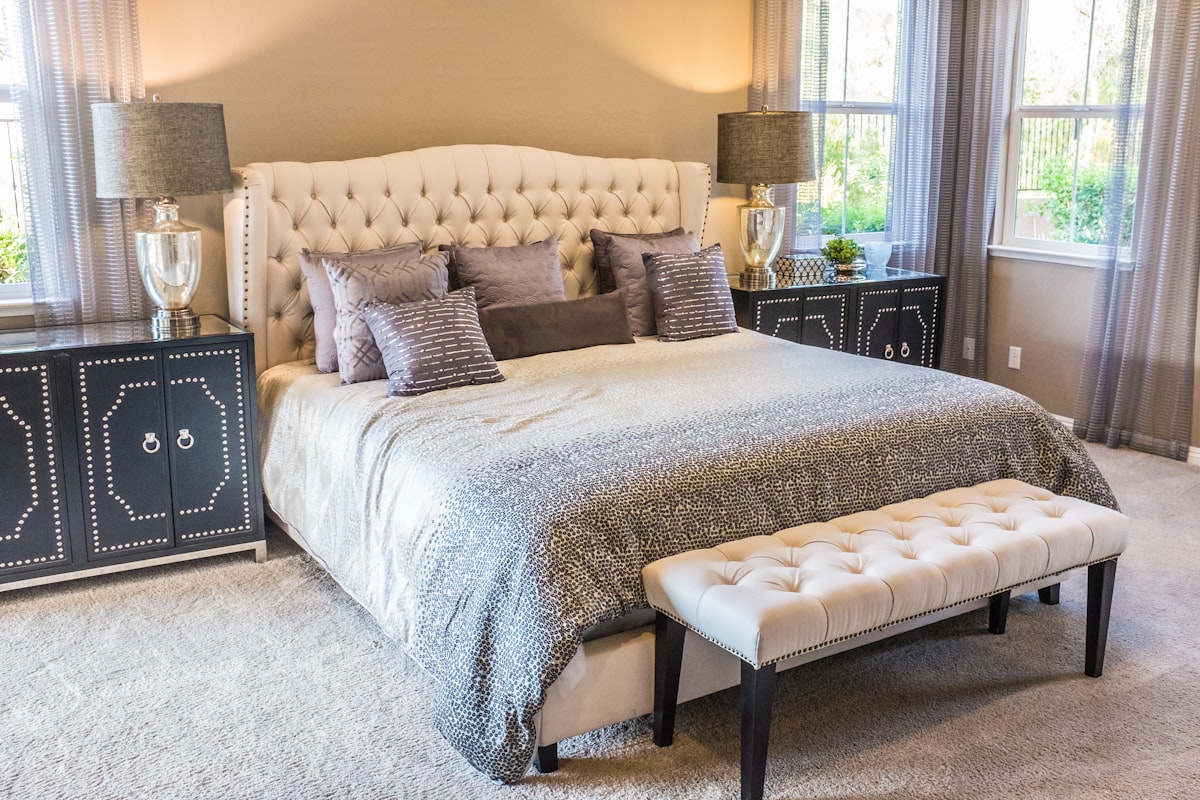
The circadian system has its own set of eyes. A sparse population of retinal cells containing melanopsin — a photopigment most sensitive near 480 nanometers, deep blue — feeds light information straight to the master clock, and that input suppresses melatonin and shifts its timing. The cells barely care what a color chart calls the light; they care how much short-wavelength energy arrives at the eye.
That single fact explains the whole product category. A typical daylight LED bulb, 5000K, is a short-wavelength fountain. A 2700K warm bulb cuts most of it. An 1800K amber bulb — the color temperature of a candle flame — pushes essentially everything it has to the red and amber end.
Under amber light at modest intensity, the melanopsin system reads the room as dusk, and the evening hormone schedule proceeds as if the sun had set, which in spectral terms it has.
But there are two levers, and the second one gets under-advertised. Intensity matters independently of color. A bright amber room still delivers a visual signal; a dim warm room is closer to real dusk than a bright amber one.
This is why the biggest win in our testing came from the unglamorous move of turning the ceiling fixture off entirely and working from two low lamps — color set the spectrum, and the switch set the dose.
Does any of it show up in sleep? The controlled evidence is small but points one way. A Toledo randomized trial put twenty adults in amber blue-blocking lenses or UV-blocking clear lenses for three hours before sleep; the amber group reported significantly better sleep quality and improved mood by the end of two weeks.
A Basel study dressed teenagers in blue blockers during evening screen time and watched their melatonin survive an LED exposure that flattened the control group's. Small samples, mostly subjective outcomes — say it honestly, and then notice that the downside of trying is a thirty-dollar bulb.
How We Tested, and What Counts as a Win
No sleep lab was harmed in the making of this review. Two editors, one shared apartment, four weeks, and a consumer lux meter — the setup was a household, not a trial, so treat everything below as structured experience rather than evidence. The evidence is in the previous section; this is the shopping guide.
Method, such as it was. Light was measured at eye level, in the angle of gaze, from the usual sitting spots: sofa, bed, desk. Our targets came straight from the research literature — under 20 lux in the final two hours before sleep, and under 10 for the last stretch, numbers that sound extreme until you see them achieved by a single 1800K bulb in a floor lamp.
Each lighting setup ran in two-week blocks with bed and wake times held steady, and we kept short nightly diaries: estimated time to fall asleep, night wakings, and how the morning felt on a one-to-five scale. Two columns earned special attention — the number of evenings the ceiling light stayed off, and how often one editor's partner actually fell asleep on the sofa instead of migrating to bed.
A win was defined in advance, because otherwise every gadget declares victory: falling asleep in what felt like twenty minutes rather than an hour of tossing, on more nights than not, without anything else in the routine changing. No new supplements, no schedule shifts, same caffeine cutoff.
The honest preamble stands for the whole review: amber lamps are a small lever with good mechanistic backing, and small levers produce small, real results that a bad week can erase.
Three products survived the month. One more — a Himalayan salt lamp, bought with more affection than expectation — did not, and its autopsy appears below, because the ways gear fails are as useful as the ways it works.
The Three Picks, and Where Each One Belongs
First pick, and the backbone of the whole setup: amber LED bulbs at 1800K. Four of them cost about the price of a takeout dinner and convert any existing lamp into evening hardware. In our two-week block, the floor lamp with an amber bulb measured 12 lux at eye level from the sofa — comfortably inside the target window — and the ceiling light stayed off on every night but one.
What they cannot do is work: reading fine print, matching clothes, cutting vegetables. They are last-two-hours bulbs, and they fail the moment you ask them to be daytime bulbs. Buy dimmable if your fixtures allow, and check the stated CRI before trusting the color of anything.
Second: a bedside lamp that dims properly, meaning to nearly nothing. This mattered more than we expected. Most LED table lamps have a dimming floor around ten or fifteen percent of full brightness — enough to read by, which is exactly the problem at midnight.
The lamp we kept walks down to a candle's worth of glow, which turned out to be the single feature that let one of us read in bed without pushing the other's sleep onset later. Weighted base, rotary dimmer, 2700K bulb — unglamorous specs, night after night of use.
Third: amber blue-blocking glasses, the tool for screens that will not be put down. The trial evidence for lens wear — better subjective sleep quality, preserved melatonin under screen light — is real and small, and the practical use case is narrow: late work, travel, a household where one person's screen time starts after the other's lights-out.
Ours live in the drawer by the sofa, worn maybe three nights a week, and they look ridiculous, which we have decided to treat as a feature.
The failure, for contrast: a Himalayan salt lamp, gorgeous, glowing, and measuring a negligible four lux at two feet — fine as an object, useless as an intervention. Buy it as sculpture if you like it. Do not buy it as strategy.
- Put amber bulbs in the two lamps you actually switch on after dinner — floor and bedside — and leave the ceiling for daytime use.
- For the final hour, dim to roughly candle level. If you can read comfortably across the room, the room is still too bright.
- A hallway night light should be red or amber and low. A white hallway flood undoes the evening's work in ten seconds.
- Glasses are for unavoidable screens. A screen that can be put away beats a screen that gets filtered.
"The room should follow the sky: at dusk the world dims by degrees, and the body keeps its own appointment with the dark."
Bulbs, Lamps, or Glasses — Picking Your Route
Three products, three different problems, and buying the wrong one for your situation is how this category earns its gimmick reputation. A quick decision guide, based on where each earned its keep in our month.
Choose the amber bulbs if your problem is the room — a family space where evenings happen, television on, lights blazing because the switch by the door controls a fixture built for cleaning day. Bulbs fix the room's default.
They work on everyone in it at once, they cost the least, and they require zero behavior change after installation, which in our experience is the strongest predictor of whether any sleep intervention survives a month.
Choose the bedside lamp if your problem is the last hour — reading in bed, a partner who sleeps earlier, the stretch between deciding to sleep and actually managing it. This is the most personal light in the house and the one most worth spending money on, because it is the only one aimed at the final minutes. The dimming floor is the spec to check; everything else is taste.
Choose the glasses if your problem is a screen that outlives the room — late-shift work, a project that follows you to the couch, jet lag, a teenager. Lenses travel where lamps cannot, and they stack with the other two products rather than replacing them.
One caution repeated from the evidence section: the trial data involve three-hour evening wear, not half an hour of panic-blocking after an all-screen night, and driving in tinted lenses at night is a hard no.
If budget allows only one, most homes get the most benefit from the bulbs, because they change the default evening for everybody in the room. The lamp refines it. The glasses are the scalpel for a specific wound.
The Two-Hour Sequence
Hardware only pays off inside a sequence. Ours, refined over the test month: dinner, then the ceiling light's last appearance around nine; the floor lamp takes over; screens either leave the room or the glasses come out; the last stretch happens by the bedside lamp at its lowest rung.
Total cost of the routine, after installation, is zero discipline — the lights themselves carry the schedule, because a dark ceiling at ten feels like night and a bright one does not.
The sequence is also where the tradition and the trials agree most cleanly. Suwen's seasonal chapters attach the same instruction to every evening of the year: let activity gather inward as the light goes, no exertion, no disturbing the Yang as it withdraws. The Neijing's image for the physiology is blood returning to the liver in stillness — the day's expenditure being stored.
Modern chronobiology draws the same curve in melatonin: the hormone is supposed to begin rising one to two hours before habitual sleep, in the dusk window, and every study in this review is a measurement of what delays it. Room light delays it by stretching biological evening.
Screens delay it by delivering daylight spectrum at midnight — the 2015 PNAS experiment found eReader readers took longer to fall asleep, secreted less melatonin, and had their circadian clocks pushed later than book readers under the same dim rooms.
Which is why the lamps do the deepest work: they change what the room asks of everyone in it. A household where the ceiling goes dark at nine has made a decision no individual willpower has to re-make each night. The Shen, in the classical phrasing, settles when the court grows quiet — and whatever you make of Shen, the melatonin curve makes the same claim in its own units.
Dim the room, still the evening, and the body files the paperwork on its own.
What Amber Cannot Fix
The failure log deserves its own section, because this category oversells so reliably. First and biggest: light is not the only thing screens deliver, and usually not the main thing. The PNAS study put books on its eReaders — no feeds, no notifications — and still delayed its participants' clocks. Content that interests you wakes you up through routes no bulb can block.
Our extra-time match, watched faithfully under 12 lux of amber light, kept both editors up precisely as long as it would have under the ceiling fixture. The match was the stimulus. The lamps never had a vote.
Second: everything else you do at night arrives on the same ledger. The afternoon coffee still has half itself in your blood at ten. The late workout still has your core temperature elevated past eleven. Amber lighting is a component of a wind-down, not a substitute for one, and in a house with a midnight espresso, the spectrum is decoration.
Third, a critique from within the science worth knowing: a researcher of adolescent sleep, Mary Carskadon, pointed out after the Basel trial that the blue-blocking glasses may work partly by dimming everything — thick orange lenses block a lot of total light, not just blue. That is not a debunking; dusk is dim as well as amber.
But it means the cheap trick underneath the expensive glasses is the one this whole review keeps returning to: less light, later.
And a scope limit in the spirit of honest labeling: for true clinical insomnia — lying awake most of the night, night after night — lighting tweaks are a minor lever, and the treatment with the strongest evidence remains cognitive behavioral therapy for insomnia. Buy the bulbs for the good nights you are leaving on the table.
Do not buy them instead of a conversation with a doctor if the bad nights have become the norm.
The Free Version, and Where to Start Tonight
Costs nothing to run the first experiment. Tonight at nine, switch off one overhead light and run the room on its lowest existing lamp — if the bulbs in it are the cool-white kind that came with the fixture, even better for the comparison. Sit where you usually sit. The first thing most people notice is not sleepiness; it is how loud the dark room is, and then, twenty minutes later, how much the eyes adjust.
Human nights used to look like that room. The body remembers before you do.
From there, the cheap upgrades in order of value: a pack of amber bulbs for the two most-used lamps; a small red or amber night light for the hallway so the midnight trip does not end the evening's work; and, only if screens are truly immovable, the glasses.
Candles are the original 1800K bulb and genuinely lovely for a wind-down hour — with the obvious, non-negotiable caveat that an open flame belongs in the room with you, awake, and nowhere near the bedding.
One number to leave with: ninety minutes. That is what eight hours of ordinary room light cost the volunteers in the Harvard study — ninety minutes of melatonin night, every night, for nothing. It is also roughly the difference between the modern experience of falling asleep and the one people describe from campgrounds and dark-sky vacations. The gear in this review exists to buy that time back at retail price.
Whether your evenings can actually lose the ceiling light — with a family in the room, dishes undone, a show waiting — is a domestic question no lux meter can settle. But the nine o'clock switch is one decision, made once, and the darkest room in the house is the one where somebody already flipped it. Start there.