The Patient Who Ate Perfectly and Still Gained Weight
Let me start with Daniel, because he is the reason I think about this topic the way I do. He tracked his food to the gram. Lean protein, leafy greens, olive oil, the whole responsible spread. Three nights a week on the elliptical, forty minutes, same machine every time. And for half a year, nothing. The scale would dip two pounds, drift back up, and settle where it started.
I asked him to narrate a normal Tuesday. He woke at 6:40, drove forty minutes to an office park, and sat. Meetings, email, lunch over the keyboard, more email. Drove home, ate, and sat on the couch until bed. Add up the standing and walking and he was on his feet maybe ten minutes out of the whole day — and sixteen hours in a chair.
The gym was never the problem. The problem was the sixteen hours around it. Most of us have been taught to think about weight as a ledger of food in and exercise out, and that's not wrong, exactly. It's just incomplete. It leaves out the hours. And the hours, it turns out, are where the body quietly makes up its mind about whether to store or to burn.
This article is about those hours. Not the workout, not the diet, but the long stretch of ordinary stillness in between, the part of the day we treat as neutral because nothing is happening. Your body doesn't treat it as neutral. It treats it as a signal.
- Subtract your workouts and honestly count the hours you sit. Most people who struggle with weight are still for twelve to sixteen hours a day.
- The diet-and-exercise ledger is incomplete. It leaves out the biggest category of all: the hours between.
- Before changing anything else, just write down one normal day hour by hour. The pattern usually reveals itself.
"The gym was never the problem. The problem was the sixteen hours around it."
The Calories You Never Notice You're Burning
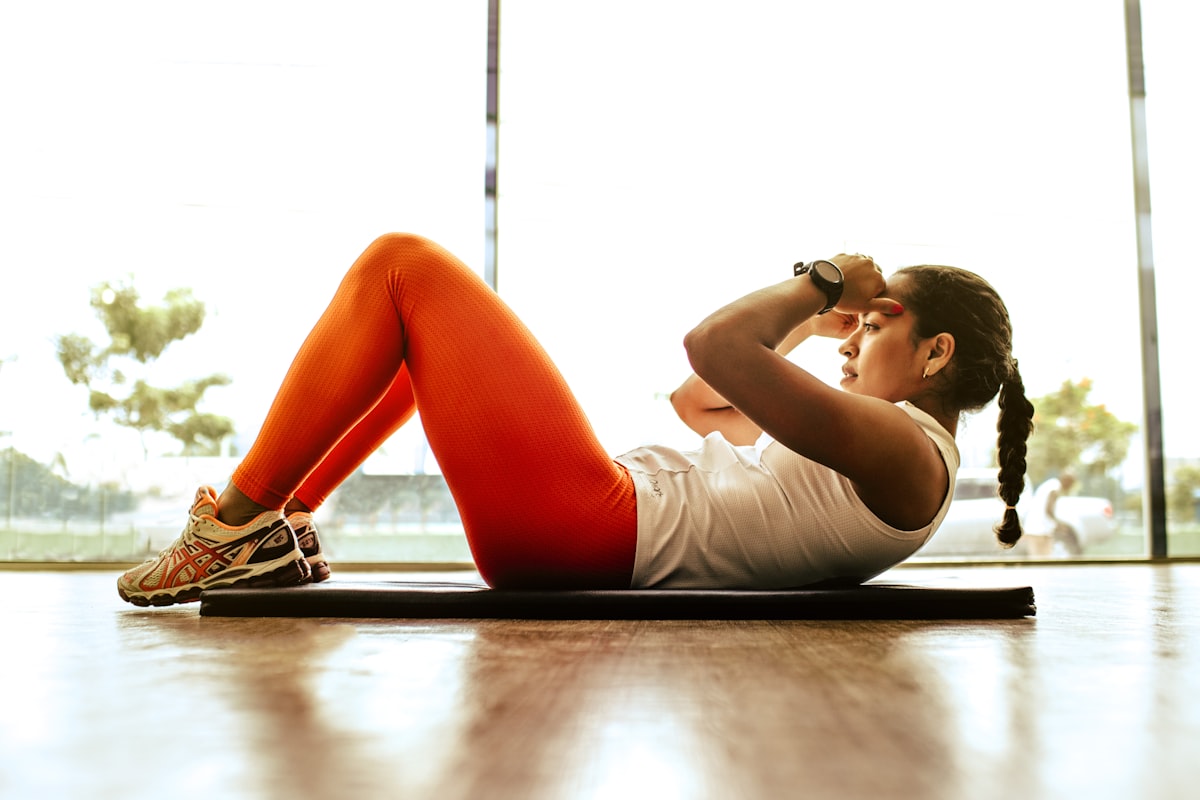
There's a name for the energy you spend on everything that isn't sleeping, eating, or deliberate exercise. Physiologists call it non-exercise activity thermogenesis — NEAT, because the field loves an acronym. It's the calories burned typing, standing at a counter, folding laundry, pacing on a phone call, bouncing a knee under the desk, carrying groceries up a flight of stairs.
In 2004 a Mayo Clinic researcher named James Levine published a review that still frames the whole subject. His central finding was the kind of thing that should make you set down your coffee: two people of the same size can differ in their daily NEAT by two thousand calories a day. Two thousand.
Not because one is a marathoner and the other bedridden — just because of differences in occupation, in how much they stand and walk and fidget.
Put that number next to a diet. Two thousand calories is more than most people try to cut in a week of careful eating. And yet it slips away silently, because you never feel NEAT. You feel a workout — the burn in your legs, the sweat on your back. NEAT is invisible precisely because it's small and constant, a thousand tiny motions that never rise to the level of sensation.
Which is exactly why it's so easy to lose, one escalator ride, one drive-through, one more hour in the chair at a time.
Levine's argument, reduced to a line, was that the body maintains a kind of background 'tank' of movement, and when the environment quietly drains that tank — a desk job, a car, a couch — the body compensates by holding onto weight. The tank doesn't ask your permission to empty. It just does.
- Two people the same size can burn two thousand calories a day apart, from how much they stand and fidget alone.
- You never feel NEAT, which is why it vanishes without you noticing. One escalator at a time.
- Treat each hour of sitting as a choice you're making, not a default you slide into.
"NEAT corresponds to a carefully regulated 'tank' of physical activity that is crucial for weight control."
What Eight Hours of Sitting Does to Your Blood
Here's where it stops being abstract. In 2012, David Dunstan and a team in Melbourne took nineteen overweight and obese adults and had them sit through three different five-hour sessions. One session was uninterrupted sitting. The other two were the same sitting, except every twenty minutes the person got up and walked for two minutes — one group at an easy stroll, the other a little brisker.
Then they gave everyone a standardized drink of glucose and fat and watched what happened to blood sugar and insulin over the next five hours.
The results were clean. When people just sat, their glucose and insulin spiked after the drink and stayed high. When the same people sat but broke it up with a two-minute walk every twenty minutes, the post-meal glucose curve dropped noticeably, and insulin fell with it. The stroll and the brisker walk both worked. You didn't need to sprint, or even to sweat.
Two minutes. Roughly twenty times a day. That's not exercise in any meaningful sense — it's barely a warm-up — and it changed the way those people's blood handled a meal. The upshot is worth sitting with: your body processes food differently depending on whether you've been still for hours or up and down. Sitting isn't just the absence of movement.
It's an active state with metabolic consequences of its own, and those consequences compound every single day you don't interrupt them.
- Two minutes of walking every twenty minutes measurably lowered glucose and insulin in the Dunstan trial.
- The walk doesn't need to be brisk. An easy stroll got the same benefit as a faster one.
- Think of sitting as a state with costs, not just a neutral pause between activities.
"Interrupting sitting time with short bouts of light- or moderate-intensity walking lowers postprandial glucose and insulin levels."
Why Stillness Tells Your Body to Store
The mechanism, in plain terms, runs through muscle. When you sit, the big muscles in your legs go quiet. A muscle that's working — even gently, even just holding you upright or walking slowly — pulls glucose straight out of the blood, without needing much insulin to do it. A still muscle stops doing that. The sugar has nowhere to go but storage, and insulin has to work harder to push it there.
Repeat that cycle a few hundred times a year and you end up with a body that's a little worse at handling food than it should be, a bit more inclined to store, a touch more resistant to insulin. Nobody notices on any single day. The damage is quiet and cumulative, the way a door hinge wears down without ever making a sound.
Chinese medicine arrived at a similar conclusion from the opposite direction, two thousand years before anyone measured blood sugar. The classics don't talk about insulin. They talk about Qi — the thing that moves. Sit hour after hour and the Qi stagnates; the circulation that should be running through your limbs and organs slows and pools.
Stagnant Qi stops transforming food into energy properly, and the untransformed food, in the old language, thickens into Dampness and Phlegm. That is more or less the classical account of stubborn, heavy weight. And the organ blamed for it, the Spleen, is exactly the one the Inner Canon says is injured by prolonged sitting.
There's a useful way to test this on yourself without any equipment. Eat the same lunch on two days, once after a morning of sitting straight through and once after a morning where you walked every hour or so. Watch what happens to your afternoon energy, your hunger at four o'clock, your craving for something sweet at dusk.
Most people notice the difference within a week, and the craving shift is the one that surprises them. That is the feedback loop working in real time, not weight, not measurement, just the body running more smoothly on the same fuel.
- Working muscle pulls glucose out of the blood directly. Still muscle stops doing that, so sugar heads for storage.
- The change is quiet and cumulative. No single day of sitting feels harmful, which is why it wins.
- In the classical frame, stillness equals stagnation, and stagnation is where weight comes from.
"Prolonged sitting injures the flesh; prolonged lying injures the Qi. Excess in stillness is a kind of injury."
The Old Warning: Sitting Injures the Flesh
The Inner Canon lists five overindulgences, and sitting is one of them. Prolonged sitting injures the flesh, it says — jiu zuo shang rou. The word for flesh, rou, is the tissue the Spleen governs: the muscle and connective substance that gives the body its solidity. Sit too long, the reasoning goes, and the Spleen's domain suffers.
The limbs grow heavy, the digestion slows, the flesh softens, and Dampness gathers where Qi should be flowing.
You can watch the logic play out in a clinic if you know what to look for. The classic sedentary patient — desk-bound, car-commuting, couch-bound at night — tends to arrive with a specific picture: a slightly pale tongue with scalloped edges, a doughy midsection, afternoon heaviness, digestion that's loose or sluggish, a general sense that the engine is running in low gear.
In the classical frame that's not a calorie problem. That's Qi stagnation and Spleen deficiency wearing a sedentary life like a coat.
' It was to keep the Qi moving all day, in small regular doses — walking, stretching, working the limbs through their full range, never letting the body go cold and still for too long. The old doctors treated movement the way a modern one treats a medication: as something to be dosed frequently and in small amounts, not crammed into a single heroic hour.
The metabolic research, when it finally caught up, described the same medicine in different words.
- The Inner Canon counts prolonged sitting as one of five injuries of excess, alongside excess lying and excess standing.
- Sedentary patients often show a recognizable picture: scalloped tongue, doughy midsection, afternoon heaviness.
- The classical fix was frequent small movement all day, not one heroic hour at the gym.
"Prolonged looking injures the Blood; prolonged lying injures the Qi; prolonged sitting injures the flesh."
Your Appetite Follows Your Body
There's a second thread here, and it's the one people find hardest to believe. In 2001 a team at Imperial College London ran a lean, elegant experiment: they infused healthy volunteers with ghrelin, a hormone the stomach makes, and turned them loose on a buffet. On ghrelin, every single participant ate more — about twenty-eight percent more on average.
It was the first time anyone had shown in humans that a single circulating hormone could dial hunger and food intake up that directly.
Ghrelin is the body's hunger signal. It rises before meals, falls after, and its whole job is to whisper 'eat' to the brain. What does that have to do with sitting? The connection is indirect, and I want to be careful not to overstate it. Sitting all day doesn't mechanically flood you with ghrelin.
What stillness does is degrade the feedback loops that keep appetite honest — the blood-sugar handling, the sleep, the energy regulation, the low-grade swings that come from uninterrupted sitting. A body that moves through its day tends to keep those loops tighter. A body that's still all day leaves them looser, more easily thrown off by poor sleep, by stress, by a late heavy meal.
So the point isn't that sitting makes you hungry. It's that stillness erodes the internal regulation that makes hunger trustworthy, and when hunger stops being trustworthy, the buffet wins.
The hormone is real, the mechanism is real, but the honest claim is narrower than the headlines: movement protects your appetite the way exercise protects your joints — not by stopping the problem directly, but by keeping the whole system in better working order.
- Ghrelin raised food intake by about twenty-eight percent in the first human trial — hunger is chemically driven, not a character flaw.
- The sitting–appetite link is indirect. Stillness degrades the loops that keep hunger honest; it doesn't flood you with ghrelin.
- Protect the feedback loops — sleep, steady blood sugar, regular movement — and appetite stays more trustworthy.
"There was a clear-cut increase in energy consumed by every individual from a free-choice buffet (mean increase 28%) during ghrelin compared with saline infusion."
The Numbers That Actually Move the Needle
So what do you do with all this? You don't need to become a fidgeting lunatic or buy a treadmill desk tomorrow. The research points to a handful of thresholds that are small enough to actually keep.
First, break up the sitting. The Dunstan trial used two minutes of walking every twenty minutes, and that's the benchmark. It's more forgiving than it sounds — the walk doesn't need to be brisk to get the metabolic benefit. Stand up, walk to the kitchen, do a lap of the floor, refill a glass. The act of standing and moving is the dose.
Second, aim for a rough step count. Eight to ten thousand steps a day gets cited constantly, and the evidence says the benefit curve is steep at first and flattens somewhere in that range. If you're at three thousand now, don't jump to ten. Add two thousand and hold it for a month. The hold is the hard part.
Third, keep the post-meal window honest. A short walk within about thirty minutes of finishing a meal, even five or ten minutes, blunts the glucose spike more than the same walk at a random hour. It's the cheapest metabolic insurance there is, and it lines up neatly with the old Chinese habit of a gentle stroll after eating.
Fourth, stop suppressing the fidgeting. The science of NEAT is remarkably kind to the people who tap their feet, shift in their chairs, stand up and sit down for no reason. That low-level motion is real expenditure, and most of us were trained out of it in school.
A word on honest expectations, because this field attracts hype. None of these numbers come with promises of rapid transformation. The Dunstan trial measured a five-hour metabolic response, not a dress size. The NEAT research describes population variance, not a guarantee that two thousand extra steps will burn exactly the same calories for you as for the average subject.
And the ghrelin work tells us hunger is chemically real, not that movement tames it on command. What the evidence supports is narrower and more durable: moving more often, in small doses, improves how the body handles food, and those improvements compound quietly over months. That is the claim. It is a good claim, and it doesn't need embellishing.
- Two minutes of walking every twenty minutes is the evidence-backed dose for breaking up sitting.
- Add two thousand steps to your current count and hold it for a month before adding more.
- Walk for five to ten minutes within half an hour of a meal. It blunts the glucose spike more than a walk at a random time.
"The dose is small and constant: stand up, move for two minutes, repeat all day. That is the whole prescription."
A Week of Moving Without Exercising
Here's what I actually tell patients, day by day, and none of it requires a gym. Wake up and don't reach for the phone in bed — stand first, stretch your arms overhead, walk to the kitchen. Park at the far edge of every lot, even in the rain. Take phone calls standing or walking; you'll find you pace without deciding to.
Set a twenty-minute timer at your desk, and when it rings, stand and walk for two minutes — to the window, down the hall, up and down one flight of stairs. Eat lunch away from the screen and walk for ten minutes after. Do one household task by hand that a machine would do faster: hang the laundry, chop the vegetables, carry the groceries in two trips instead of one.
Walk the dog yourself, or walk your own block before dinner. In the evening, stand up through the first ten minutes of whatever you're watching, or fold laundry on your feet.
None of this feels like a program, which is precisely the point. If it feels like a program, it has to be sustained by willpower, and willpower flags. The trick is to stop thinking of these as exercises and start thinking of them as the shape of a normal day — the way a day is supposed to look for a body that evolved to move.
I should be honest about the ceiling here. This is not a fast way to lose weight. It's a slow, steady, compounding way, and it works best as the floor underneath whatever else you're doing — the base that keeps your diet and your workouts honest. People who expect a two-week transformation are always disappointed.
People who stay with it for six months are usually surprised, because they wake up one morning and realize the weight left without a fight.
- If it feels like a program, willpower has to sustain it. Make movement the shape of the day instead.
- This is slow and compounding, not fast. It's the floor under your diet, not a replacement for it.
- Expect the surprise at six months, not the transformation at two weeks.
"The body that is used moves without being told. The body that is still must be persuaded, and persuasion fades."
The Unfair Part
Here's the part nobody wants to hear, and I'll say it plainly because the evidence says it. The people who stay leanest without visible effort are often not eating less than you or working harder than you. They're just moving more in the hours you don't see — standing, pacing, puttering, fidgeting their way through the day. It looks effortless because it is effortless, for them, in the moment.
It's a habit they absorbed, not a discipline they flex.
That's the unfair part. But it's also the hopeful part, because it means the gap between you and them is made of small, cheap, repeatable acts rather than heroic ones. You don't have to out-run a slow metabolism. You mostly have to stop being so still — which is a strange thing to say about the most comfortable generation of humans who ever lived, but there it is.
So the next time you finish a workout and think the work is done, remember Daniel. The gym was never his problem. The sixteen hours around it were. And those hours, the long quiet ones, are yours to spend or to sit through.
- The leanest people often aren't eating less or training harder. They're moving more in the hours you don't see.
- The gap is made of small, cheap, repeatable acts, not heroic efforts.
- Those sixteen hours around the workout are the real frontier.
"The most comfortable generation that ever lived is also the stillest, and the body keeps the ledger."