The Aisle That Is Not in Any Cookbook
Open a package of sandwich bread and count the things that are not flour, water, salt, or yeast. Emulsifiers with acronyms for names. Dough conditioners. Preservatives that outlive the loaf by weeks.
This is the signature of ultra-processed food — the NOVA classification's fourth category, defined not by nutrients but by manufacture: industrial formulations assembled from refined substances and additives, engineered for convenience, shelf life, and a texture that makes chewing optional.
It now accounts for well over half the calories eaten in the United States, and similar or rising shares in the United Kingdom, Canada, and increasingly Brazil and China.
The definition annoys some nutrition scientists, and the annoyance is not baseless — sorting foods by how industrial they are, rather than by sugar or fat or fiber, blurs categories that patients find useful. Aged cheese and plain yogurt ride the processing spectrum too.
But the category keeps refusing to die, because every time researchers measure it against health outcomes, the same association surfaces: people eating more of it gain more weight and sicken more often, and the relationship survives the standard statistical adjustments.
Whether it causes the weight gain — rather than merely accompanying it — was, until recently, a fair question. Observational data cannot settle causation; too much differs between households stocked one way and households stocked the other. So the decisive evidence had to come from somewhere unforgiving: a hospital research ward, locked cabinets, and scales that record grams. That study exists.
It is the spine of this article, and it was run by a lab that set out, honestly, expecting to defend the food.
A scope note, as always here. Nothing below treats any single food as poison or any body size as a moral report card. The question is narrower: what does the evidence show when it isolates the degree of processing itself — and what did a medical tradition, working without centrifuges, already notice about refined abundance when it catalogued the diseases of the well-fed?
- Read the ingredient list of your five most-bought packaged items this week. Not to ban them — to learn which ones quietly carry a dozen additives you never chose.
- NOVA sorts by manufacture, not nutrients, so judge categories loosely. The point is the overall share of the diet, not any single loaf.
"The category was defined by how food is made rather than what is in it — which is exactly why the food industry could not engineer its way out of the findings."
Twenty People in a Ward: The Trial That Removed Choice
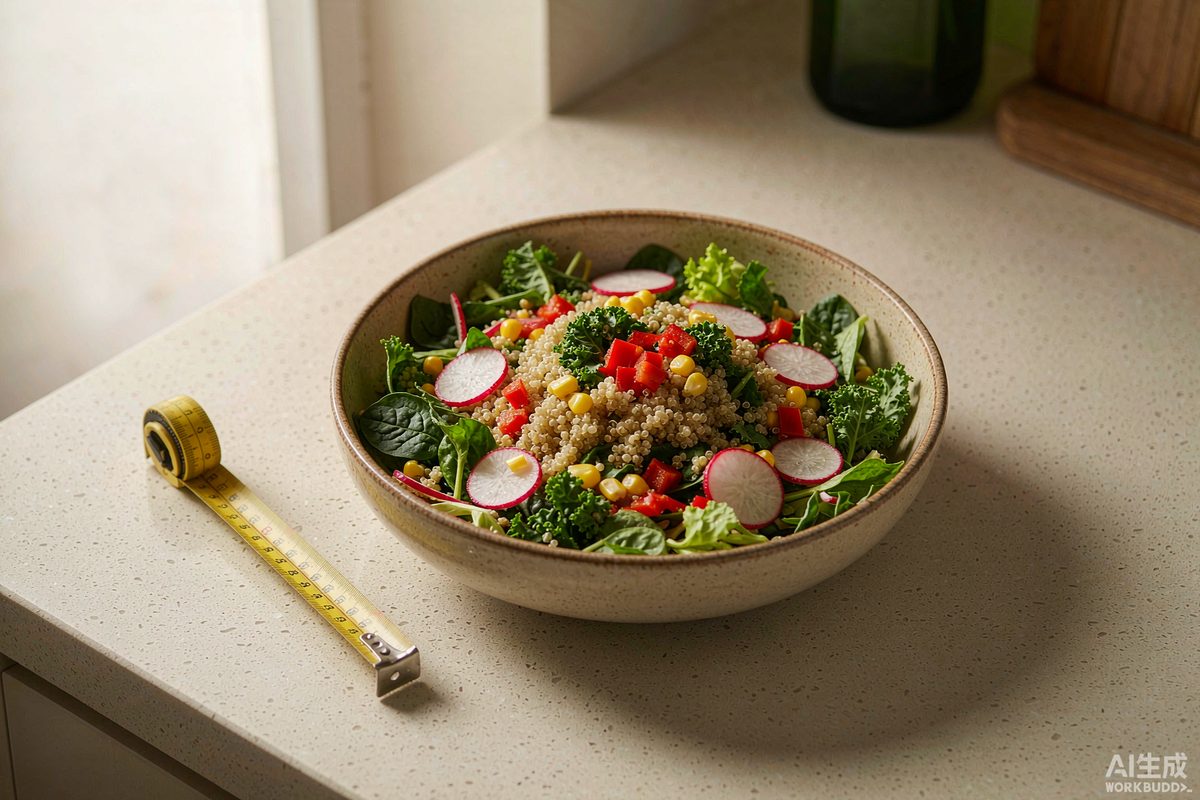
Kevin Hall's lab at the National Institutes of Health ran the study the debate had been missing. Twenty adults, healthy weight range, checked into a metabolic ward for four weeks and randomized — in crossover, so each person did both conditions — to two weeks of an ultra-processed diet or two weeks of a matched unprocessed diet, then switched.
The diets were engineered to be nearly indistinguishable on paper: matched presented calories, matched macronutrients, matched sugar, sodium, and fiber. Participants could eat as much or as little as they wanted, from meals delivered on trays. Nobody could sneak to a drive-through. Nobody could misremember what they ate.
The result was not subtle. On the ultra-processed diet, people ate about 509 more calories per day than on the unprocessed diet — consumed faster, too — and gained close to a kilogram of body weight across the two weeks. On the unprocessed arm, with permission to eat exactly as much, the same people lost roughly a kilogram. Same declared macronutrients. Same sodium. Same fiber targets.
The only big lever left standing was processing itself, and it moved intake by half a thousand calories a day.
The 2019 paper became the reference point for a reason worth respecting even if you argue with it. Twenty people and four weeks is small and short — Hall says so in his own limitations paragraph — and a ward diet is not a life. But it closed off the laziest objection, the one that attributed the population-level association entirely to self-report error or to junk food eaters' other habits.
Here those excuses had nowhere to stand, and the calories still arrived.
What the trial could not do is name the mechanism. It recorded that people overate; it did not record why. That question — which property of engineered food undoes the body's accounting — is where the next two decades of research have gone looking, and where the honest answer is still a stack of plausible suspects rather than a verdict.
- The trial matched fiber on paper, but texture and speed still differed. How fast you eat is part of what processing changes, and worth noticing at your own table.
- Crossover design means the same people produced both results. That is about as clean as human feeding evidence gets outside a month-long prison stay.
"Permission to eat as much as they wanted produced a kilogram of gain or a kilogram of loss in the same bodies, two weeks apart. The difference had a factory address."
Why the Body Overeats It: A Stack of Suspects, No Verdict
The leading explanations, in roughly the order the field ranks them. First, eating rate. Ultra-processed food is soft. It has been pre-broken — extruded, puffed, ground, emulsified — so each bite demands less chewing and dissolves sooner, and people finish a tray of it several minutes faster than the same calories in tough, fibrous form.
Satiety signals are slow; the machinery that says 'enough' runs behind a mouth that has already moved on. Hall's team measured eating rate directly and found it predicted the surplus.
Second, engineered palatability. Formulations pair fat with refined carbohydrate and sodium at ratios that single whole foods rarely achieve, hitting reward circuitry that evolved for scarcity. Third, energy density — processing removes water and fiber, the two things that fill a stomach without adding calories. Fourth, packaging: the discrete unit.
A bag divides into servings the way no roast does, and each serving is a decision made before hunger was consulted.
Each suspect has studies behind it, and none has been convicted alone. The honest reading of Hall's own follow-up analyses is that the effect probably arrives as a stack — softness plus density plus engineered reward plus portion structure — rather than one smoking gun. That messiness matters for anyone selling you a single villain.
Sugar alone does not explain it; the low-sugar UPF arms of related trials still overeat. Fat alone does not. 'Hyperpalatability' without texture is half a story.
Classical Chinese medicine spent centuries on a parallel question — not which molecule, but what happens to an organism fed food that has been worked over before it reaches the mouth — and its answer is due a fair hearing, because it is structural rather than chemical. That is the next section's business, after one more look at what the long-horizon data add.
The short version: populations followed for years keep recording what the ward recorded in weeks.
- At your next packaged meal, notice the speed. If the plate empties in under ten minutes, texture did some of that — and fullness lags the fork.
- Be skeptical of single-nutrient villains. The overeating effect persists in products engineered low in whichever nutrient is currently on trial.
"Softness, density, engineered reward, portion structure — the effect arrives as a stack. Anyone selling you one villain is selling you half a story."
The Long Follow-Ups: Cohorts, an Umbrella, and Their Caveats
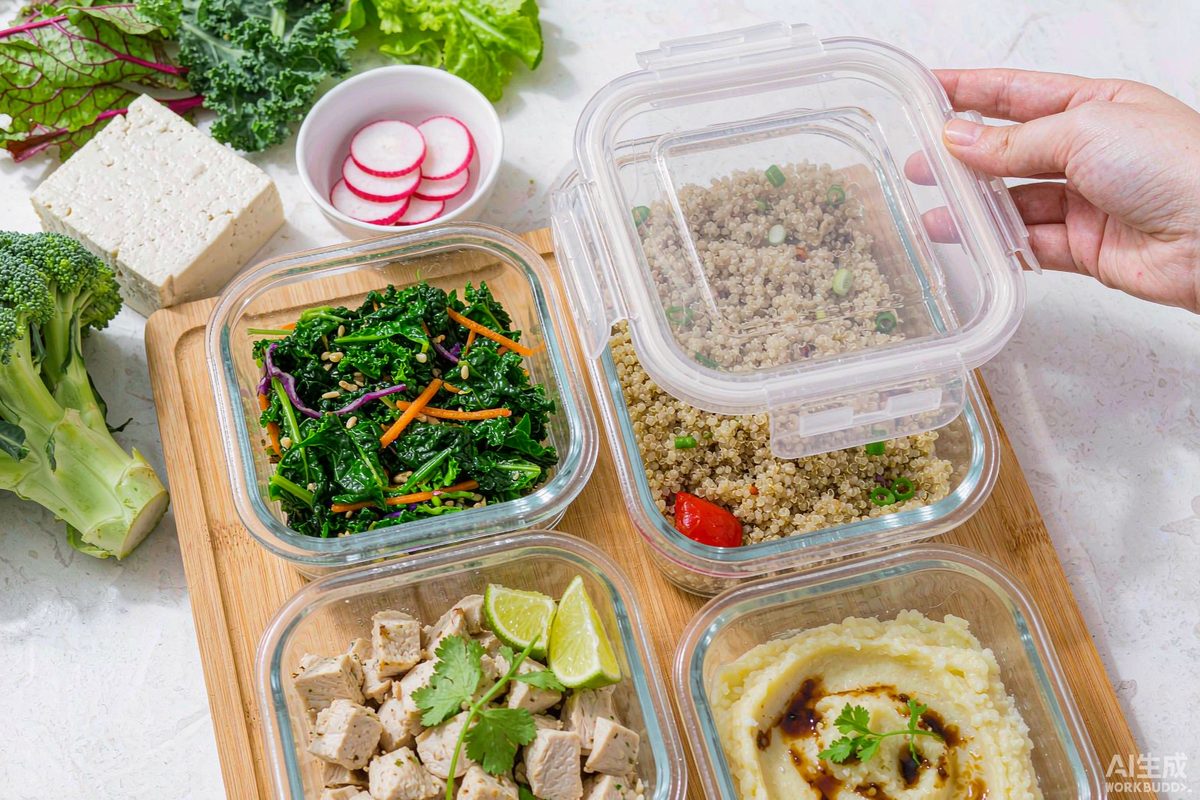
The NutriNet-Santé cohort has followed well over one hundred thousand French adults since 2009, and in 2019 it delivered the finding that pushed ultra-processed food from nutrition-blogs into medical journals. A ten percent increase in the share of diet from ultra-processed foods was associated with a twelve percent higher rate of cardiovascular disease over the follow-up period.
The gradient was monotonic — more processing, more events — and it held after adjustment for the usual suspects: income, activity, smoking, BMI, and overall diet quality measured the conventional way.
Five years on, the umbrella review is the sturdier citation. Published in the BMJ in 2024, it gathered the pooled evidence across dozens of meta-analyses covering close to ten million people and graded each outcome by how much it could trust its own numbers. The verdicts came in tiers.
Highly suggestive and convincing support attached itself to cardiometabolic outcomes — cardiovascular disease, type 2 diabetes — and to obesity itself, alongside depression, sleep problems, and all-cause mortality in weaker tiers.
The authors, to their credit, printed the weaknesses in the same breath: measurement of intake is noisy, residual confounding is unavoidable, and a handful of the pooled analyses were themselves graded low quality.
That caveat deserves its own sentence, because it is where careful readers should slow down. People who eat the most ultra-processed food differ from people who eat the least in ways no questionnaire fully captures — money, stress, hours worked, neighborhood, depression. The cohorts adjust for what they can measure.
What they cannot measure keeps a door open through which some portion of the association may still walk. The ward trial blocks that door for weight gain specifically, which is why this article leans on both: the trial for mechanism, the cohorts for scale and for the outcomes a two-week study could never reach.
- When a headline cites the umbrella review, check the tier. 'Highly suggestive' and 'convincing' are different grades, and honest reporting names which one.
- Cohorts show gradients across whole populations, not predictions about one person. Use them for direction, not diagnosis.
"The trial supplies the mechanism, the cohorts supply the scale, and neither pretends to be the other."
膏粱之变: The Classical Verdict on Refined Abundance
Two thousand years before anyone coined NOVA, the compilers of the Huangdi Neijing were already arguing about rich, worked-over food — and they came down on the processing side with a phrase that has kept its edge. ' Gao liang means fatty, refined fare — the polished grain and rich meat of the well-fed.
The classical commentators argued for centuries about whether the great sores (da ding) meant boils or the deeper abscesses of damp-heat, but nobody argued about the direction of the sentence. Abundance, refined past the point of easy transformation, was itself the exposure.
A later chapter sharpens the diagnosis into something uncomfortably contemporary. ' Read that twice. The tradition had obesity among its most privileged patients, and it declined to file the condition under character.
The disease was billed to the diet: to a food supply that had drifted far from the plain staples the same text prescribes as the foundation — the five grains first, with meats and vegetables and fruits as attendants, never the other way round.
What accumulates in this reading has a name: phlegm and dampness, the tradition's terms for the heavy, sluggish residue of food the middle burner failed to fully process. The modern reader is free to treat that as metaphor.
But as a description of obesity's felt experience — heaviness, fog, fatigue, accumulation that will not move — it is a precise phenomenology, and it was written by physicians who had already noticed that their richest patients were their sickest.
- The five grains as foundation, everything else as attendant: a one-line diet architecture that survives every fad intact.
- The classical texts priced obesity as a disease of the food supply, not the will. That framing is two millennia older than the anti-stigma consensus.
"The Han physicians saw their richest patients getting sickest and wrote the diagnosis into the food. 'The illness of gao liang' — not the illness of weakness."
The Spleen's Complaint, Translated Into Modern Grammar
In the classical system, the organ network charged with transformation and transport is the Spleen — the pi zang, an office responsible for turning incoming food into usable qi and moving it where it needs to go. The Neijing gives the office a working metaphor worth keeping: granary official. Food arrives; the granary processes, distributes, files.
Whatever the granary cannot process, the tradition says, does not simply vanish. It accumulates as dampness, condenses into phlegm, and settles — in the limbs, under the skin, in the head as fog and the chest as oppression.
The Zhen Jiu Da Cheng, the great acupuncture compendium of 1601, sends practitioners to Fenglong, below the outer knee, as the meeting point where stalled phlegm can be addressed: an accumulation given a physical address.
Now set that architecture beside the ward trial and notice the convergence, which is structural rather than chemical. The classical worry about gao liang was never a particular ingredient. It was work — specifically, food that arrives with its work already done.
Polished grain, rendered fat, concentrated sweetness: each is pre-digested in the plain sense that the granary's labor has been outsourced to the mill and the vat. The modern trial measured the same surrender as eating rate and a 509-calorie surplus. The classical physician would say the Spleen, given a diet of finished work, goes slack — and what it does not transport, it stores. The vocabulary is pre-industrial.
The geometry is the same.
This is also why the tradition's prescription reads as it does: restore work to the food. Grains that need cooking. Vegetables that need chewing. Meals that take the middle burner its full allotted time rather than arriving as solved problems. Nothing in that requires believing qi is a measurable substance.
It requires only noticing that every mechanism on the modern suspect list — texture, density, speed, structure — is a description of work removed, and that a medical tradition built its dietary advice around putting the work back.
- One classical habit worth borrowing: ask of any meal how much work it still requires of you. Pre-solved food is easy to overeat by design.
- Phlegm-damp reads as metaphor until you match it against the fog and heaviness patients actually report. The phenomenology earned its keep.
"The ancients blamed food with its work already done; the ward trial measured what happens when nobody chews. Same finding, twenty-three centuries apart."
The Counter-Technology Is an Ordinary Kitchen
If the exposure is manufacture, the intervention is, bluntly, cooking — and the observational evidence for that is better than its reputation.
In a 2015 analysis of the American NHANES data, Julia Wolfson and colleagues found that adults who cooked dinner at home most frequently ate significantly better by every standard diet-quality index, and consumed less, than those who cooked least — an association that held after adjustment for income and education, the two confounders most often raised against it.
Cooking is no cure; plenty of home cooks bake their own hyperpalatable trays. But as a population lever it points the right way, and it happens to be the lever the classical texts pulled first.
The realistic version of that advice is worth stating without romance. Un-processing your entire diet is a project for people with time, money, working stoves, and neighborhoods that stock vegetables. Food-insecure households cannot shop their way out of a supply chain, and lecturing them is worse than useless — the research literature on constraint is clear that advice without means is noise.
So the workable unit is smaller: one meal a week cooked from ingredients, then one more. A pot of rice and beans against a shelf of pouches. Bread with five ingredients against bread with twenty-six. The dose-response logic that runs through the cohort data runs through kitchens too — partial replacement shows partial benefit, which is a rarer mercy than most dietary advice offers.
And the framing from the Suwen still governs the tempo. Nothing in the classical text recommends austerity; it recommends hierarchy — grains as foundation, richer things as attendants. A diet that inverts that order is the exposure. A diet that restores it, imperfectly and most days, is the treatment the tradition would recognize.
- Start with replacement at one meal, not elimination across the pantry. The cohort gradients reward partial change; absolutism usually just quits.
- Cost is a real variable, not an excuse to wave away. Beans, rice, oats, and eggs carry more of this intervention per dollar than anything in the health-food aisle.
"The intervention is not purity. It is one more meal a week that still asks something of the cook and the chewer."
Where the Evidence Ends
What is solid: the inpatient trial shows processing itself drives overeating in the short term under locked conditions; the cohorts and the 2024 umbrella show the associations extend to obesity, diabetes, and cardiovascular disease across millions of people-years; the classical texts named refined abundance as a disease exposure when doing so offended their richest patrons.
What is not solid: the exact boundary of the category, which NOVA draws crudely and critics rightly poke; the size of the causal share in free-living populations, which no observational design can fully pin down; and the durability of the ward result beyond four weeks, which remains untested at scale for the obvious reasons.
' Anyone selling a single villain or a single fix has out-run the literature. The same goes for anyone pricing the conclusion as panic: the actionable core requires no boutique anything. More of your week's food worked by hands you can name. Fewer formulations you cannot picture as ingredients.
A closing observation from the odd corner where this article began. The Neijing's physicians watched prosperity remodel the diet and then watched the bodies answer, and they wrote the causation into the food rather than the eater — an act of analytical decency that took the modern field until roughly last decade to match. The factory is new. The diagnosis is old.
What remains open is the same question both eras left on the table: how much of the modern pantry a household can afford, in money and hours, to make itself — and whether that figure is a private choice or the next public health argument. The data lean toward the second. The kitchen, as ever, just has to start somewhere.
- Hold the caveats alongside the findings. A category drawn crudely can still track a real exposure — the ward trial is the backstop.
- If you change one thing after this article, change the bread. It is the UPF product most households eat daily, and the homemade version asks the least skill of anything in the kitchen.
"The diagnosis is two thousand years old and the factory is seventy. Only one of them ever blamed the eater."