The Loaf With a Résumé
Pick up a standard loaf of sandwich bread and read the label out loud. Somewhere between the flour and the salt you will meet DATEM, an emulsifier that strengthens dough; sodium stearoyl lactylate, which does roughly the same; monoglycerides and diglycerides, which keep crumb soft through a shelf life measured in weeks; and calcium propionate, which keeps mold off through that same generous window.
None of it is poison. All of it is the signature of the NOVA classification's fourth category — ultra-processed food, industrial formulations assembled from refined substances and additives you would not find in a home kitchen — and bread is its flagship, because bread is the ultra-processed product most households eat every single day without thinking about it.
The evidence review behind our companion health article is where the concern gets its numbers: an inpatient trial in which people eating matched ultra-processed meals consumed about five hundred extra calories a day and gained weight they did not on the unprocessed menu, and an umbrella review in the BMJ grading the links to obesity, diabetes, and cardiovascular disease across millions of followed adults.
That case is argued at length over there. This article is the gear list — the practical question of what a household that found the evidence persuasive can actually put on the counter.
One boundary before the picks, because shopping pages drift. None of these machines treats, prevents, or burns anything. Homemade bread is not a diet food; it contains calories, cheerfully so.
The claim being made here is smaller and better supported: replacing a category of industrially formulated staples with versions your kitchen makes from ingredients you can picture moves the diet's overall processing share in the direction the research associates with better outcomes — and the machines below exist to make that replacement survive past the second week.
- Bread is the highest-frequency ultra-processed item in most homes. One swap here moves the weekly average more than a dozen occasional ones.
- Homemade is not automatically low-calorie. The target is the ingredient list, not the calorie count — keep the distinction or the machine becomes a cake habit.
"The loaf you buy has a two-month future. The loaf you make has four ingredients. Both facts are about the same sandwich."
What the Studies Say About Making Your Own
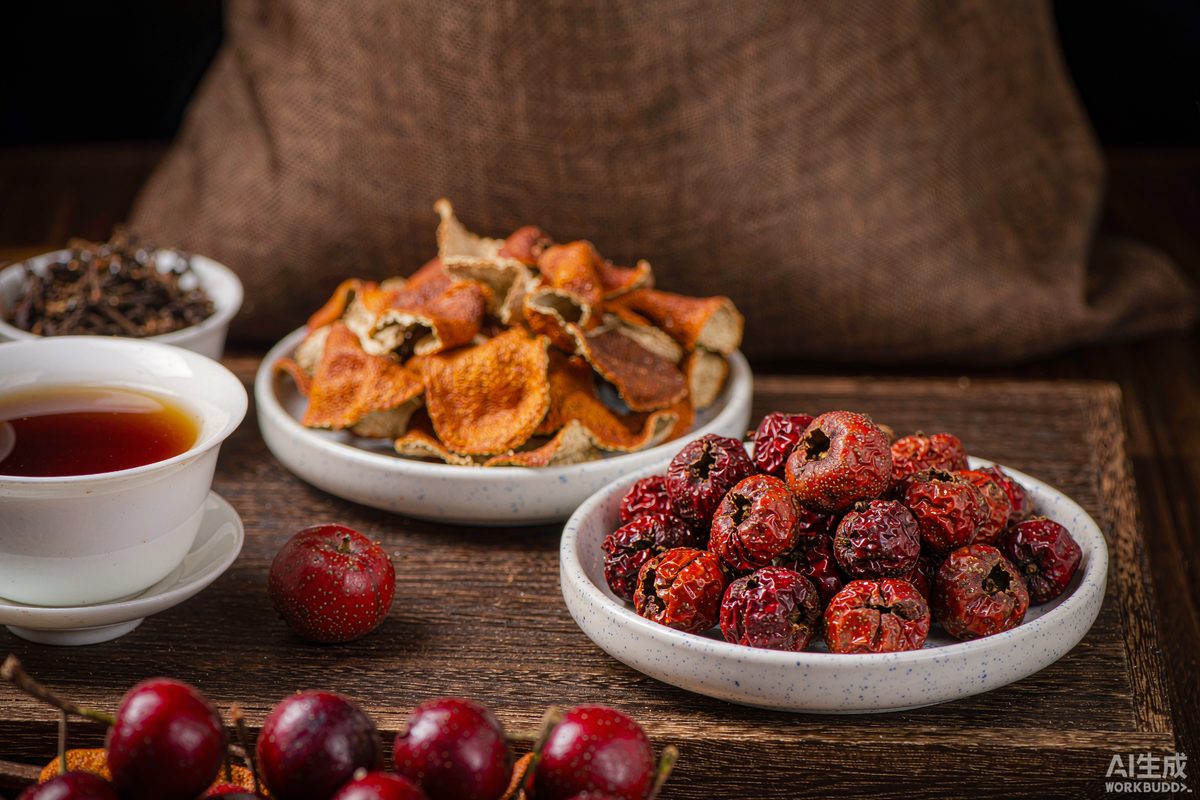
Three studies anchor the case, and each earns a place with its design rather than its headline. The first is a 2021 Stanford trial published in Cell: seventeen adults, ten weeks, two engineered diets — one high in fermented foods, one high in fiber — with microbiome sequencing and blood work throughout.
The fermented-food arm increased gut microbiota diversity and lowered the activity of nineteen inflammatory markers; the high-fiber arm, interestingly, did not, in this short window. Fermentation was doing something the same calories had not. The honest fine print: seventeen people, ten weeks, and yogurt machines nowhere in the methods. The study supports the category, not the appliance.
The second is the one most people know by its finding. In 2011, researchers tracking more than one hundred twenty thousand men and women across three Harvard cohorts published in the New England Journal of Medicine the food-by-food accounting of what associated with long-term weight change.
Yogurt sat near the top of the protective column — associated with less weight gain per four-year stretch than almost anything else on the list, alongside nuts and fruit. Yogurt is confounded with everything; yogurt eaters are, on average, different people. But the signal has outlived most of its skeptics.
The third is the boring one that may matter most. Julia Wolfson's 2015 analysis of national survey data found that people who cooked dinner at home most often ate measurably better and consumed less than those who cooked least — after adjusting for income and education. Home preparation is not a magic act; it is a lever, and it is the one the machines below are built to pull nightly.
The Chinese dietary classics would recognize the whole arrangement without a translator: the Suwen puts grains at the foundation of the plate and treats the kitchen's daily labor as the front line of medicine — a pantry approach, not an apothecary approach.
- The Cell trial is about fermented foods as a category. Treat the yogurt maker as an adherence tool for that category, not as the intervention itself.
- Cooking frequency, not cooking ambition, is what the data reward. A plain weekly loaf beats an artisan project that happens twice and dies.
"Fermentation moved the immune markers in ten weeks where added fiber alone did not. The old pantry knew something the supplement aisle still hasn't."
How the Three Were Chosen
A word on method, because appliance lists are usually wish lists in disguise. Every pick below had to pass the same four tests. First, the ingredient test: the machine must make a product whose entire ingredient list is things a home pantry already contains — flour, water, salt, yeast, milk, a spoonful of culture.
A machine that mostly enables boxed mixes with their own stabilizer packets fails this test no matter how well it bakes. Second, the survival test, which is really the timer test: commercial bread wins on convenience, and any honest counter to convenience has to automate something, so every pick either bakes or ferments on a schedule the household does not have to attend to.
Research on habit formation is unromantic on this point — the behaviors that survive are the ones that stop requiring decisions.
Third, the footprint test. Counter space is the scarce resource in most kitchens, and a machine that must live in a cupboard is a machine that gets used monthly and regifted within two years. Where a full-size pick could not justify its footprint for a smaller household, we chose the compact version and accepted the compromise in the loaf, rather than pretending the compromise away.
Fourth, the parts test: paddles, seals, and pans that can be bought separately. A bread machine with an unobtainable paddle is a two-year appliance sold as a ten-year one, and the economics of every pick below assume it stays in service long enough to matter.
Prices, in fairness, wander. The ranges given reflect what these categories have typically cost and are checked as of writing; a holiday sale moves any of them a third either way.
Nothing here is sponsored, and where a pick has a real weakness — the vertical loaf's shape, the yogurt maker's narrow temperature window — the weakness is printed next to the strength, because a gear list you cannot trust is just a longer advertisement.
- Run every appliance purchase through the parts test first. Replaceability is the cheapest predictor of whether a machine sees its fifth year.
- If a machine's best recipes start with a boxed mix, it is not reducing your processing share. It is relocating it.
"The test was never 'does it bake well.' It was 'will this machine still be on the counter in March.'"
Pick One: The Weekly Workhorse
The standard two-pound horizontal machine is the right first purchase for most households, and the reasoning is arithmetic before it is culinary. Bread is a frequency food — eaten daily, repurchased weekly — so the machine that wins is the one that can carry the whole sandwich habit by itself, on a schedule, without the household renegotiating anything.
A horizontal-pan two-pounder bakes a loaf shaped like the one you are replacing, slices like the one you are replacing, and runs the three cycles that actually get used: basic white, whole wheat with its longer rest, and the delay timer, which is not a convenience feature but the load-bearing wall of the whole intervention. Set it at night; the loaf is warm before the first lunchbox opens.
What to check before paying: the paddle, the pan coating, and the beep. A low-profile or collapsible paddle saves you from excavating a paddle-hole out of every slice, which sounds trivial until week three, when it is the sentence people use to justify putting the machine away. A thick, well-reviewed nonstick pan matters because thin coatings are the first failure point in this category. m.
appliance fanfare has ended more home-baking careers than any dense loaf.
The honest failure mode of the workhorse is not poor bread. It is abundance. A warm two-pound loaf on the counter every evening invites overeating of a perfectly good food, and the household that discovers it is finishing loaves it used to half-waste should simply bake less often — the machine does not require a schedule to be worth its shelf.
Eighty dollars is a fair ceiling for a reliable mid-range model; the premium machines earn their price in crust settings, not in anything the ingredient-list argument needs.
- The delay timer is the feature that makes the habit stick. Buy for the timer before the crust settings.
- If warm loaves start disappearing fast, bake fewer — the machine has no obligation to run daily for the swap to work.
"Commercial bread wins on convenience, so the machine that beats it has to bake while the household sleeps."
Pick Two: The Small-Kitchen Answer
For one- and two-person households, dorm-adjacent kitchens, and anyone whose counter is already spoken for, the compact vertical machine is the version of the same idea priced in floor space. It bakes a one-to-one-and-a-half-pound loaf in a pan that stands rather than lies — a footprint near a rice cooker's, which is the entire argument.
The compromise is printed on the bread itself: a vertical loaf is tall and square, and cutting sandwich slices from it is a geometry problem the horizontal loaf never poses. Households whose bread identity is the rectangle will notice every week. Households whose bread is toast, eggs, and soup-dunking will stop noticing by the second loaf.
The compact category is where budget machines cluster, so the shopping scrutiny should go up, not down, at the lower price. Three checks carry most of the weight. A viewing window, because vertical loaves brown unevenly and flying blind wastes the learning curve.
A keep-warm that releases within an hour, because a tall loaf left standing in its own pan steams at the base — the single most common complaint in this category's reviews. And a paddle you can actually buy as a spare, since small machines are the most likely to be orphaned by their own manufacturers.
Weight matters too: a compact machine light enough to shelve and lift means the cupboard life is survivable rather than fatal to the habit.
Who should skip it: families of four or more, for whom a compact loaf means baking every day and the workhorse's extra counter space pays for itself in a week. Who should not: the household that has already failed one bread machine and suspects, usually correctly, that the machine's footprint — not anyone's resolve — was what died.
The smaller commitment is easier to keep, and a kept small habit beats an abandoned large one on every measure that shows up in the research.
- Buy the window and the short keep-warm or skip the category — soggy vertical loaves are what kills this machine's reputation.
- A second machine for a second home or office defeats the point. One kept habit is worth more than two furnished cupboards.
"The compact machine sells floor space, not crust. Whether that trade works is a question about your kitchen, not about bread."
Pick Three: The Fermenter's Assistant
The yogurt maker is the quiet overachiever of this list, and the case for it runs through the Cell trial rather than the bakery aisle. Fermentation — milk cultured at a warm temperature for hours — is the category the Stanford researchers actually loaded their successful diet with, and plain homemade yogurt is its cheapest, least skill-demanding member.
The commercial product it displaces is, meanwhile, one of the dairy case's stealth ultra-processed items: fruit-on-the-bottom cups and 'original' tubs carrying added sugar, modified starch, gelatin, and carrageenan toward a texture nature never produced. Homemade yogurt is milk and a spoonful of the previous batch. The label is short enough to memorize.
What the machine contributes is temperature discipline.
The window between a culture that never sets and a milk that scalds is a few degrees, and stovetop-and-oven improvised methods fail there often enough that most people quit on attempt two — which is an adherence problem identical in shape to the bread machine's, and solved the same way: a thermostat that runs the eight-to-twelve-hour fermentation unsupervised, often in individual jars portioned for the week.
Nothing about that improves the fermentation science. It improves the odds the household is still making yogurt in March, which is the only variable the kitchen controls.
Fairness requires the boundary stated plainly: seventeen participants and ten weeks make the Cell trial a promising signal, not a prescription, and no yogurt maker was harmed or vindicated by any clinical trial. The stronger, duller evidence is Wolfson's — people who prepare more of their own food eat better across the board — and the yogurt maker is simply the lowest-effort entry in that ledger.
A jar version suits a family that portions; a single-container version suits the by-the-bowl eater. The culture is free forever after the first spoonful, which means the real cost of the habit, like the bread, is the ten minutes of measuring it asks of you.
- Strain homemade yogurt through cloth for ten minutes and you have the thick Greek texture the stabilized tubs fake with starch.
- Save the first spoonful of every batch as the next starter. The habit should cost roughly the price of milk, forever.
"Milk, a spoonful of the last batch, and a thermostat. The dairy case never stood a chance on ingredients."
The Honest Wrap
What these three machines can do is narrow, and it is worth restating so the receipts match the claims. They can replace the highest-frequency ultra-processed staples in a household — daily bread, daily yogurt — with versions whose ingredient lists fit in one breath, on schedules that do not depend on anyone's evening willpower.
The research behind that direction of travel is real: the inpatient trial showing processing itself drives excess intake, the cohorts and the umbrella review linking the category to obesity and cardiometabolic disease, the fermentation trial, and the steady finding that home-prepared food tracks with better diets.
What the machines cannot do is make a food low-calorie, treat anything, or survive a household that was never going to bake. Appliances bought for an identity rather than a routine end up at the thrift store, and there is no study that changes this.
The dosing advice, then, is the classical one, which has outlasted every diet of the past century by declining to be extreme. The Suwen does not ban the rich foods it warns about; it assigns them the rank of attendants behind a foundation of plain grains — hierarchy, not austerity.
Translated to a Tuesday: one loaf a week, one batch of yogurt, the aisle still visited for the things no machine makes well, nobody's dinner party ruined by doctrine. The cohort gradients themselves suggest partial replacement carries partial benefit, which is a mercy most dietary advice never offers.
The open question this list cannot settle for you is economic. Machines cost money and ten minutes; the store loaf costs neither, which is why it conquered the shelf. If the ten minutes and the footprint are available to you, the swap is small, the evidence is pointed, and the first warm slice converts more skeptics than any paragraph could.
If they are not — and for a lot of households they honestly are not — the fault is in the arithmetic of time and money, not in anyone's kitchen. Start with one loaf. See who eats it.
- Dose the habit like the classics did: foundation and attendants. One machine, one weekly bake, no doctrine about the rest of the pantry.
- If the routine survives month two, add the yogurt maker; if it does not, return nothing but the resolution. The bread aisle will wait.
"The store loaf costs no minutes and the homemade one costs ten. That trade, not any study, decides what stays on the counter."