The Only Vegetable That Seasoned Itself
Every vegetable in the market was raised on soil and rain. Seaweed was raised on the ocean itself, which makes it less like produce and more like a receipt for everything the sea carries — including the one mineral your thyroid cannot function without. Kombu, the thick kelp ribbon sold in East Asian groceries, is so iodine-dense that clinical measurements found roughly 35 milligrams of iodine in fifteen grams of it.
The adult daily requirement is 150 micrograms. A strip of dried kelp the size of a bookmark holds more than two hundred times that requirement, pressed into its fibers like brine into salt.
That extremity is the story. Iodine is a nutrient with narrow margins: too little and the thyroid swells into goiter; too much and it misfires the other way, shutting down the very hormones it is supposed to build.
Seaweed, sitting at the extreme end of the natural food scale, can push a person across either edge — which is why the same food appears in classical texts as medicine and in modern case reports as the cause of the problem it is famous for curing.
The food has given the world more than minerals. In 1908, a Tokyo chemist named Kikunae Ikeda simmered kombu, evaporated the broth, and isolated crystals of glutamate — the taste the West had no word for and later named umami. A seaweed taught humanity its fifth flavor. The seasoning that followed, monosodium glutamate, descends directly from a pot of kelp water.
The old Chinese medical texts filed sea plants under a different job entirely: dissolving lumps. The Shennong Bencao Jing, compiled some nineteen centuries ago, assigns hai zao — sargassum, a brown seaweed of the shallows — to 'goiter qi' and to firm kernels beneath the neck. That is a startlingly specific target.
Goiter is the thyroid's distress signal, and a classical herbalist reaching for seaweed to treat it was, without knowing it, doing molecular endocrinology.
Three maps of one food, then: the epidemiologist's, the endocrinologist's, and the herbalist's. This article walks all three — including the places where they contradict each other.
- Dried kombu can carry hundreds of times the daily iodine requirement in a single strip — species and portion size decide everything.
- The classical text Shennong Bencao Jing prescribed seaweed against goiter roughly nineteen centuries before iodine was identified.
"A classical herbalist reaching for seaweed against goiter was doing endocrinology without the vocabulary for it."
A Cohort That Counted Grams
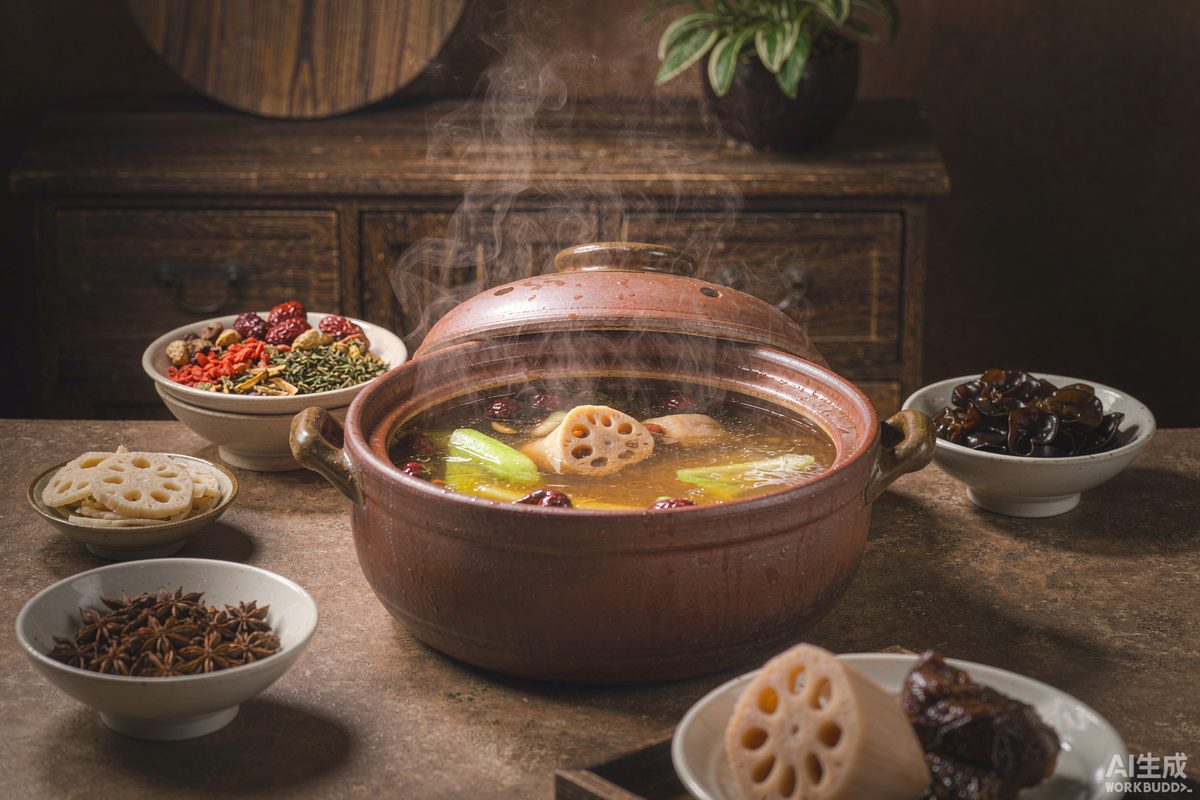
The cleanest long-term data comes from Japan, where seaweed is breakfast rather than a trend. The Circulatory Risk in Communities Study — CIRCS — followed 6,169 adults aged 40 to 79 across four Japanese communities, none with cardiovascular disease at baseline, for a combined 130,248 person-years.
Seaweed intake was estimated from a 24-hour dietary recall and sorted into bands, from zero up to fifteen or more grams a day. Over the follow-up, 523 cardiovascular events accumulated.
The finding was narrow and the researchers said so plainly. 63 — and a similar reduction for cerebral infarction specifically. Among women, nothing. For coronary heart disease, nothing in either sex. A 37 percent drop in stroke is a large number for a food study, which is exactly why it deserves a suspicious read.
The suspicions are the usual furniture of nutrition epidemiology, plus one specific to this design. A single 24-hour recall is a photograph of a diet, not a film — the man who ate fifteen grams of seaweed that Tuesday may eat it every day, or twice a year. Men who eat seaweed regularly in rural Japan differ from men who do not in income, in overall diet pattern, in a hundred unmeasured ways.
Fiber, potassium, and folate ride along with the seaweed; the analysis cannot tell you which passenger did the work, if any did.
What the cohort genuinely supports is modest: in this population, habitual seaweed eating was not a risk and tracked with better stroke outcomes among men. That is a reason to feel comfortable with the food. It is not a prescription, and anyone claiming seaweed prevents stroke has read further into the data than the data goes.
- A Japanese cohort of 6,169 adults found the heaviest seaweed eaters had lower stroke risk — but only among men, and only as association.
- A single 24-hour recall cannot capture decade-long habits; confounding rides along with every food cohort.
"The cohort supports comfort with the food, not a prescription for it."
Iodine Is a Window, Not a Dial
Your thyroid is a small gland with a large jurisdiction: it sets the pace of metabolism through hormones that have iodine as a structural part. Given that dependence, you might expect more iodine to mean more hormone, the way more flour means more bread. The gland does not work that way. It self-regulates across a wide range, and both ends of the range fail.
Too little iodine is the older, better-understood failure. Without enough raw material the gland works harder, grows larger, and presents as goiter — the neck lump that once mapped whole regions of inland China, the Alps, and the American Midwest where leached soil had lost the mineral.
Severe deficiency in pregnancy damages fetal brain development, which is why iodized salt is counted among the quiet public-health victories of the last century: a few parts per million in a shaker, and whole disease maps erased.
Too much iodine is the less intuitive failure. A sudden flood triggers a protective shutdown called the Wolff-Chaikoff effect — hormone synthesis pauses until the excess clears, and in most people the gland escapes the pause within days and resumes. When the escape fails, as it can in newborns, fetuses, and people with autoimmune thyroid disease, the pause becomes hypothyroidism.
Chronic excess plays other tricks: in nodular glands it can trip the opposite failure, a thyroid that breaks regulation and overproduces.
The window is wide but real. Adult requirement sits near 150 micrograms a day; the tolerable upper intake level is about 1,100. Kombu makes a joke of both numbers. Wakame and nori sit orders of magnitude lower — a sheet of nori in the tens of micrograms, a bowl of wakame soup typically under a few hundred. Same shelf, same word, and the iodine content differs by a factor of a hundred.
Any conversation about whether seaweed is good for the thyroid that does not name the species is a conversation that has not started yet.
- Requirement is about 150 micrograms of iodine daily; the tolerable upper level is roughly 1,100 — and kombu can exceed both in a single serving.
- Excess iodine pauses hormone synthesis (the Wolff-Chaikoff effect); in newborns and autoimmune thyroid disease, that pause can stick.
Fifteen Grams of Kombu, Measured
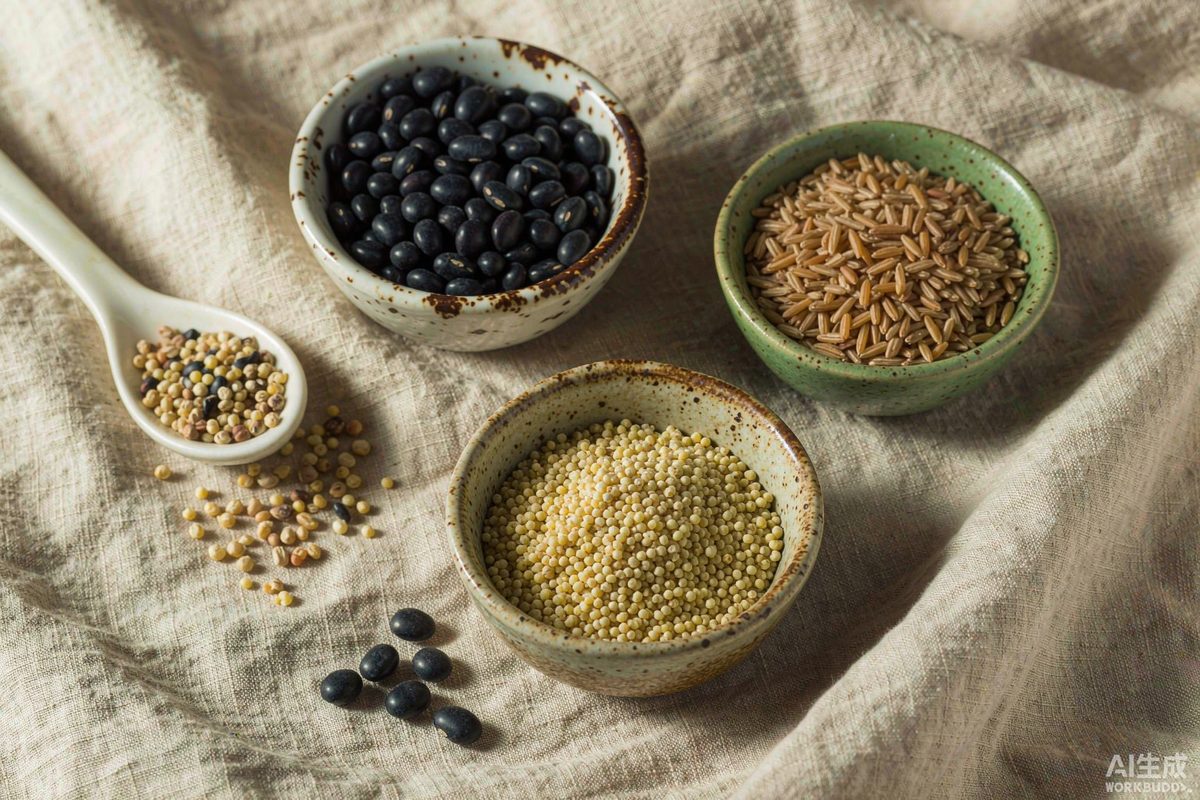
Because doses like kombu's are hard to believe, a Japanese research group did the obvious thing: they fed it to people and measured. In a 2008 trial, normal, healthy Japanese adults ate 15 and then 30 grams of kombu daily — iodine contents of 35 and 70 milligrams. Within seven to ten days, serum TSH, the pituitary's signal telling the thyroid to work, rose significantly, past the normal limit in some subjects.
Free T4 and free T3, the actual thyroid hormones, slipped slightly downward while staying inside the reference range. Nothing dramatic happened to the volunteers. Their paperwork, however, had begun to look like early thyroid disease.
The longer arm was more unsettling. Subjects who continued at fifteen grams a day for 55 to 87 days kept the raised TSH the entire time. Then the good news: within seven to forty days of stopping, every abnormal value walked back to baseline. The suppression was real, measurable, and fully reversible.
Clinical reports fill in the edges a trial cannot. Australian physicians described a series of adults who developed serious hypothyroidism from a brand of soy milk manufactured with kombu — and a newborn whose mother had been drinking it. Separate cases tied daily seaweed soup in late pregnancy to neonatal hypothyroidism. None of this required kilos of kelp.
It required a habitual daily product with kombu in the ingredient list, mistaken for a neutral beverage.
Put numbers on the arithmetic and the pattern makes sense. Fifteen grams of kombu delivered roughly 230 times the daily requirement, every day, to a gland whose safety valve assumes any flood will be brief. Nobody in the trial got sick — worth saying. Nobody in the trial should be the model either.
The dose makes the poison, and with kombu the dose sneaks up: a fistful in the pot, every day, for years, is not a seasoning habit. It is a pharmacological regimen with no prescriber.
- 15 g of kombu a day — about 35 mg of iodine — raised TSH above normal in healthy adults within days; values reversed within weeks of stopping.
- Case reports connect kombu-containing soy milk, and daily seaweed soup in pregnancy, to hypothyroidism including in newborns.
"A fistful of kombu every day is not a seasoning habit. It is a regimen with no prescriber."
Hai Zao: the Old File on Neck Lumps
Turn to the Shennong Bencao Jing, the oldest Chinese pharmacopeia, and find the entry for hai zao — sargassum, a brown seaweed of the shallows. The text gives it a bitter, salty flavor and a cold nature, then a list of jobs: it governs 'goiter qi,' kernels beneath the neck, bound and knotted qi, abscesses, firm masses, and water swelling. Read past the archaic vocabulary and the target is unmistakable. Neck lumps.
The entry is roughly nineteen hundred years old, and it prescribes the exact substance that carries the mineral whose absence causes the lump.
The logic of the prescription came from flavor theory. The Suwen's chapter on treatment principles says the firm are softened — jian zhe ruan zhi — and assigns softening to the salty flavor. Salt dissolves, salt penetrates, salt breaks what has hardened; a nodule was understood as firmness, and firmness yielded to the sea's own taste.
Seaweed, the most salty thing in the pharmacopeia, became the flagship of a whole class of phlegm-softening, lump-dispersing agents that later formularies deployed against ying liu — goiter and its cousins — often paired with other shell and mineral substances of the same salty character.
For a goiter caused by iodine deficiency, the prescription worked, and worked for reasons the tradition had no way to see. An inland village with leached soil, enlarged thyroids in every third neck, and a coastal remedy that supplied the missing atom: folk medicine landing a pharmacological bullseye through centuries of trial, error, and patient observation of who recovered and who did not.
Honesty requires the other half. The same texts that reached for seaweed never imagined that too much of it could also produce a neck lump, a slowed mind, or a failing gland — the excess arm of the iodine curve was invisible to a framework without micrograms. The remedy was right about the deficiency disease and silent about the overdose one.
A blind spot is not a falsification, but it marks exactly where the old map ends and the modern one has to take over.
- The Suwen principle 'the firm are softened' made salty-flavored sea plants the classical treatment class for goiter and nodules.
- The tradition solved the deficiency disease and had no tools to see the overdose disease — both live on the same iodine curve.
When the Old Remedy Runs Backwards
The overlap between the two systems has a twist in it, and the twist is the most useful thing in this whole subject. Take the same food and place it against the same organ, and its effect flips with the cause.
If a person's goiter traces to iodine deficiency — the classic inland pattern the classics were built to solve — seaweed functions as repletion, and hai zao deserves its reputation. If the thyroid disease is Hashimoto's thyroiditis, an autoimmune condition, the same seaweed can aggravate: excess iodine is a recognized flare factor in autoimmune thyroid disease, feeding an immune attack that was already confused.
If it is a nodular gland, chronic excess can trip it into overproduction. One food, three scripts, and the script is chosen by the patient's pathology, not by the food's label.
Modern population data carries the same ambiguity in a lab coat. 42. Headlines wrote themselves, again. Then come the qualifiers, some supplied by the authors themselves: the study was cross-sectional, measuring prevalence rather than new cases; intake came from a food-frequency questionnaire; reverse causation is a live possibility in any diet-disease snapshot.
A Korean cohort also lives at high background iodine intake, where the U-shaped curve bends in ways a food group cannot cleanly isolate. The paper is a hypothesis wearing the costume of a finding.
The tradition, to its credit, encoded the flip in its own grammar. Constitution mattered: the cold, pale, nodular pattern got the seaweed formula; the heat pattern with red eyes and a racing pulse got entirely different treatment. Classical medicine could not measure TSH, but it distrusted one-size-fits-all instinctively. On that point, at least, the two systems need no translation.
- The same seaweed that cures deficiency goiter can aggravate Hashimoto's disease or trip a nodular gland into overproduction — the diagnosis picks the script.
- A 2024 Korean analysis of 169,057 adults linked frequent seaweed intake with lower thyroid cancer prevalence — cross-sectional data, not proof of protection.
"The script is chosen by the patient's pathology, not the food's label."
Who Should Measure Twice
Some readers should treat this entire pantry as a conversation with their doctor rather than a dietary preference. The list is short and specific.
Anyone with diagnosed thyroid disease — Hashimoto's, Graves', nodular goiter — sits at the top. Autoimmune and nodular glands lose the safety valve that handles iodine floods, and kelp supplements have repeatedly been documented triggering or worsening disease.
Standard clinical advice in several countries asks thyroid patients to avoid kelp supplements outright and to keep whole-food seaweed modest and consistent, so that medication dosing stays meaningful against a stable background.
Anyone taking levothyroxine should know the pill's absorption is fragile. It wants an empty stomach, and high-fiber foods taken alongside can measurably cut the fraction that gets through. A wakame salad eaten with breakfast competes with the morning tablet in the same crowded doorway. Separating them by hours is the boring fix that works.
Pregnancy deserves its own line. Iodine needs rise sharply because the fetal thyroid and brain are under construction, and most guidelines recommend measured supplementation in deficient regions. But the same pregnancies supplied the neonatal hypothyroidism cases tied to kombu soup and kombu soy milk: the fetal safety valve barely functions at all.
Iodine in pregnancy should come from the source with a label — the prenatal supplement — not from an unmeasured pot of kelp broth.
Two quieter notes close the list. Nori concentrates vitamin K, which matters to anyone on warfarin for the same reason kale does. And seaweed is potassium-dense, which kidneys with reduced function handle poorly. Neither is exotic advice; both are the ordinary arithmetic of eating a concentrated food while taking a concentrated drug.
- Thyroid disease, levothyroxine use, and pregnancy each change the seaweed math — ask the prescriber rather than the snack bag.
- Nori's vitamin K matters on warfarin; seaweed's potassium load matters with reduced kidney function.
Condiment, Not Staple
Strip the file down and three sentences survive. Seaweed is a genuine food with real fiber, real minerals, and one cohort story that is encouraging and unproven. Iodine, its signature mineral, is a two-edged tool: the deficiency it cures and the excess it causes sit on the same shelf, and kombu sits so far toward excess that it behaves less like food and more like a low-grade drug.
The classical remedy hai zao earned its keep against goiter for reasons its authors could not have named — and the same entry, applied to the wrong thyroid, points the other way.
The kitchen version of all this fits in a sentence: treat sea vegetables as a condiment with a memory. A two-inch strip of kombu in the soup pot, removed before serving. A teaspoon of cut wakame soaked into miso soup, a few times a week. Nori sheets over rice, or by the strip as a snack.
That is how coastal populations ate it for centuries — small, frequent, bounded by the size of a pinch — and it keeps the weekly iodine load inside the window rather than across it.
What nobody has measured is the long middle: decades of modest, habitual intake and the thyroid's quiet accounting of them. The cohorts hint, the dosing trials run weeks, and the gap between them is where most real diets live. Until that gets filled, the honest position is the grandmother's position, which happens to be the pharmacologist's too. A little, often. Not a fistful.
And if there is a thyroid diagnosis anywhere in the family, the pot of kombu broth is worth one conversation with an endocrinologist before it becomes a habit.
- Condiment portions — a strip of kombu, a teaspoon of wakame, occasional nori — mirror how coastal diets actually used sea vegetables.
- No study covers decades of habitual moderate intake; small frequent portions are the honest default until that gap closes.
"A little, often. Not a fistful. The grandmother's rule and the pharmacologist's agree."