The Smallest Pantry Section With the Longest Memory
Most pantry sections demand space. This one needs a shelf the width of a cereal box: a flat pack of nori, a bag of wakame flakes, a slab or two of kombu, and you hold more cooking leverage than a cabinet of sauces.
All three keep for a year or more without refrigeration, portion by the sheet and the strip, and each carries the one taste — glutamate-driven savoriness — that makes home cooking read as 'cooked all day' when it took twenty minutes.
The economics are almost embarrassing. Twelve dollars of dried kombu flavors more pots of soup than a case of commercial stock, and it does so with one ingredient instead of a paragraph of them. The total cost of this entire guide's shopping list lands below a single takeout dinner, and the shelf life means nothing gets thrown away in a panic at the back of the vegetable drawer.
Cost per meal, the sea-vegetable shelf may be the cheapest upgrade in the grocery store, and none of it needs replacing more than once or twice a year.
They also carry something less advertised: the most extreme mineral profile of any common food group. Seaweed concentrates the ocean, and the ocean contains iodine, and your thyroid requires that iodine in amounts that sit inside a window — not too little, not too much. Nori and wakame live comfortably inside the window at food portions. Kombu lives outside it at generous portions.
That single sentence is the reason this guide spends as much time on serving sizes as on product quality.
A note on scope before the picks. This is a food guide, not a supplement guide, and deliberately so: kelp capsules and iodine drops concentrate the exact variable we are asking you to respect. Whole sea vegetables at kitchen portions let the size of the pinch do the dosing, the way coastal kitchens have done it for centuries.
And if you live with a thyroid diagnosis, are pregnant, or take levothyroxine or warfarin, the honest advice sits upstream of any purchase — talk to the prescriber first, because for you this pantry is a medication question wearing a grocery costume.
With that said, three products, in the order we would buy them.
- Three products cover every sea-vegetable job in a home kitchen: nori for snacks and rice, wakame for soups and salads, kombu for broth.
- Whole foods at kitchen portions self-dose better than kelp capsules — the pinch size does the work.
"This pantry is the rare one where the serving size is a safety question, not a marketing one."
What the Evidence Says Before You Buy
Three findings are worth carrying into the store, because listing copy rarely reports them accurately.
First, the fiber. Seaweed's soluble fiber includes alginate, which gels in the stomach and has been tested as a satiety aid. In a 12-week randomized trial, 96 adults with obesity followed an energy-restricted diet with either an alginate preload drink or a placebo three times daily before meals. In the analysis that counted everyone enrolled, no difference in weight loss. 0 kilograms. '
Second, the vitamin B12 story is real for nori and messier for the rest. A 1999 study of dried asakusanori — purple laver, the nori species — demonstrated genuine, bioavailable cobalamin, which makes nori one of the very few plant-derived foods with documented B12 activity.
Other seaweeds, however, contain B12 analogs that resemble the vitamin on a label but do not function in the body, and can even muddy deficiency testing. If a wakame or kelp product advertises B12, treat the claim as decoration.
Third, the iodine numbers that make kombu famous are the reason Japan's iodine intake sits among the world's highest, and the country's own clinical literature — a historical review of goiter and thyroid function in Japan reads as a story of deficiency and excess in the same century — treats the kelp drawer with visible respect.
Japanese public health discussion in recent years has shifted from worrying about too little iodine to monitoring too much, largely because of seaweed consumption patterns.
The buying implications fall out neatly. Nori and wakame are foods; buy them the way you buy rice, on quality and freshness. Kombu is a food that behaves, at large servings, like a dose; buy it the way you buy liquor, on the understanding that the bottle will outlast the month. All three belong on the shelf. Only one comes with rules.
- Alginate fiber helped weight loss only in the completers analysis of one RCT — 'may support a working diet,' nothing stronger.
- Nori's B12 is documented and bioavailable; B12 claims on kelp and wakame products are mostly decoration.
Nori: the Gateway Sheet
Start here even if you buy nothing else, because nori is the sea vegetable that asks the least and returns the most. It is already toasted, it needs no soaking, no knife, no pot — a sheet goes from pack to plate in one motion, over rice, around a ball of leftovers, cut into confetti over congee or noodles.
The flavor is mild enough for children, and the texture, when fresh, shatters pleasantly instead of chewing like paper.
The iodine profile is the other reason nori leads. Per sheet it carries tens of micrograms — real, food-sized, far below the tolerable upper intake even for a generous snacker. Households that keep a pack in the drawer are, in effect, running a low-and-steady iodine program without ever doing arithmetic, which is the pattern coastal populations stumbled onto long before anyone counted micrograms.
What separates a good pack from a disappointing one is mostly packaging discipline. Sheets should be sealed with a desiccant, glossy dark green-black, and brittle; anything bendy arrived stale or the pack leaks humidity. Price per sheet matters less than the seal, because stale nori is the main way people conclude they dislike seaweed.
Once opened, an airtight tin with the desiccant packet buried inside buys weeks of extra crispness. Keep the tin away from the stove — heat and steam are the two fastest killers.
For snacks, plain sheets dressed at home — a brush of toasted sesame oil, a flick of salt, thirty seconds under the broiler — beat most pre-seasoned packs, which trade a portion of nori's clean flavor for sugar and a sodium load the rest of this guide is quietly trying not to add to. If you want heat, a dusting of chili flakes does what the seasoning sachet does, minus the corn syrup solids.
One more use worth knowing: scissors over the sink. A sheet snipped into strips takes ten seconds and turns a bowl of instant or leftover noodles into something that reads homemade. Nobody needs to know how little happened.
A pack and a pair of scissors quietly solve more weeknight dinners than most appliances on this list, and compared with any other salty snack in the aisle the trade is stark: fewer calories, a trace of iodine doing useful work, and an ingredient list one line long.
- Buy sealed packs with desiccant; crispness at first bite is the whole product.
- Plain sheets dressed at home beat pre-seasoned packs on flavor and sodium alike.
Wakame: the Ten-Second Green
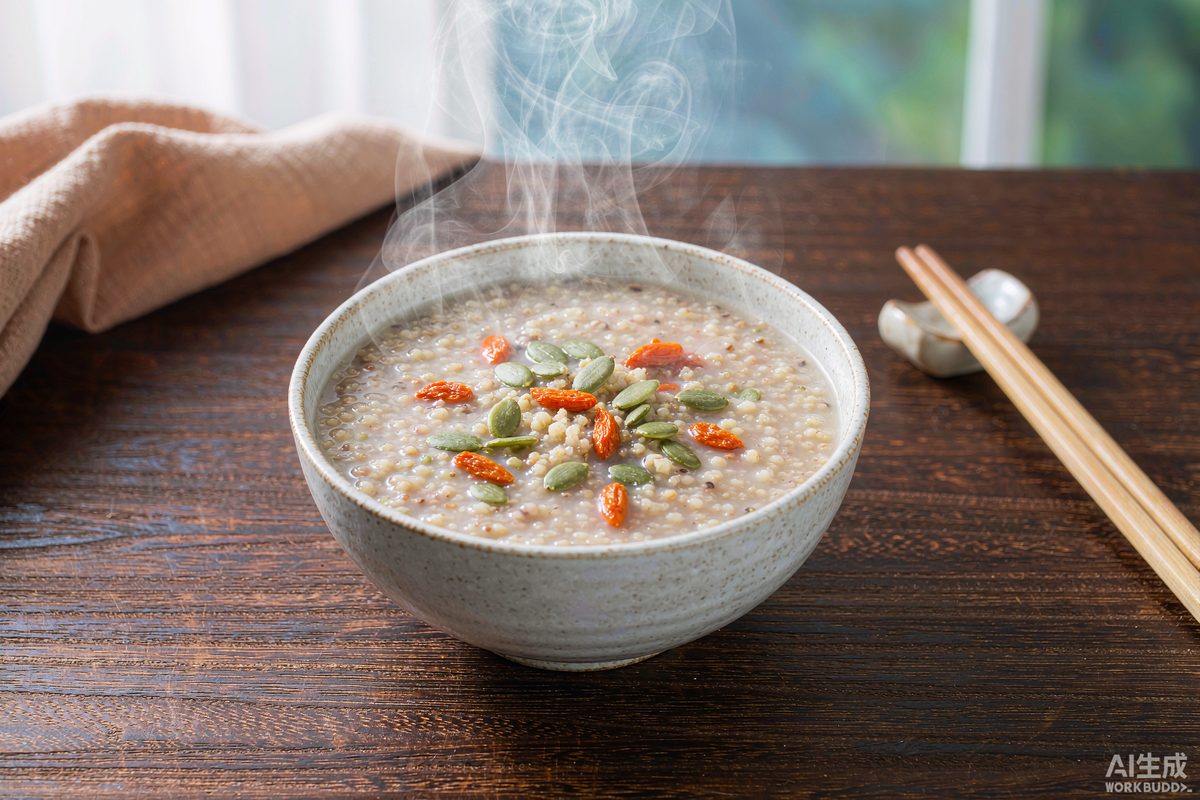
Wakame is the sea vegetable for people who want greens without a market run. The dried flakes sit in the jar looking like crumbled autumn leaves, and then warm water performs the trick: eight to tenfold expansion in minutes, into a tender, slippery dark green with a faint sweetness under the brine. A teaspoon becomes a bowl of miso soup.
A soaked tablespoon, squeezed and dressed with rice vinegar, sesame oil, and a scatter of cucumber, becomes the cold salad that appears on every Japanese table and most Chinese banquet spreads.
The classic move takes under three minutes end to end. Hot water over a teaspoon of flakes, drain at the two-minute mark, dress while still warm so the vinegar sinks in, chill if you have the patience. Done well it is the cheapest respectable dish in the repertoire; done carelessly it is a salty puddle, and the difference is almost entirely draining and dressing ratio, not product quality.
Iodine runs moderate — real amounts, an order of magnitude under kombu, easily managed by counting teaspoons instead of eyeballing handfuls. Along the way the flakes bring calcium, magnesium, and the soluble fiber that gives the texture its silk.
Buying notes worth the thirty seconds. Choose cut wakame over whole leaf for everyday use; it rehydrates evenly and measures predictably. Dried color should be a dull brownish-green — vivid green in the dry state suggests dye or over-processing, and the honest sellers say 'naturally dark' in the listing. The bag needs a real resealable zip or a transfer jar: the flakes are hygroscopic and go leathery in kitchen air.
'
And keep the servings small and repeated rather than large and occasional, which is both the traditional pattern and the one that keeps the weekly iodine total where you intend it.
- One teaspoon of dried wakame rehydrates into a full bowl — measure before soaking, not after.
- Dull brownish-green is the honest dried color; neon green dry flakes are a red flag.
"Wakame is the sea vegetable for people who want greens without a market run."
Kombu: the Broth Builder That Needs a Dose Rule
Kombu is why the other two exist in your kitchen at all — the umami source that made a Tokyo chemist isolate glutamate in 1908 and gave the world its fifth taste. A single strip, steeped rather than boiled, turns plain water into dashi, and dashi turns a fridge of ordinary leftovers into soup that tastes intentional.
Miso soup is only the front door: the same stock runs through noodle broths, braises, simmered vegetables, and the mild, clean base that makes congee worth waking up for.
The technique, briefly, because it decides more than the brand does: wipe the white powder with a barely damp cloth — it is mannitol, the sweetness, and washing it off is the most common way people ruin good kombu. Cover the strip with cold water, heat slowly, pull the kelp the moment small bubbles ring the pot, before a rolling boil.
After that point you are extracting bitterness instead of savoriness, and no brand rescues you.
The spent strip is not garbage, either. Sliced thin and simmered with soy and mirin, it becomes tsukudani, a jam-dark condiment for rice; chopped into a stir-fry, it disappears without complaint. Traditional kitchens ran one slab through three courses before discarding it, and the habit still works.
Then the rule, which this guide would print on the listing if listings were honest: kombu is the most iodine-dense food in common commerce, with trial measurements of roughly 35 milligrams of iodine in fifteen grams — about 230 times a day's requirement. A strip in a shared pot, divided across bowls and days, lands the dose in sensible territory.
Daily fistfuls of raw or broth-soaked kombu do not; clinical studies show thyroid function measurably suppressing within days at those intakes, and recovering once the habit stops. Strip, not fistful. Remove before serving. And if you have any thyroid condition, are pregnant, or take thyroid medication, ask the prescriber before the strip goes anywhere near the pot.
- Wipe kombu, never wash it — the white powder is flavor, not dust.
- Strip per pot, removed before boiling: the portion rule that keeps kombu food rather than pharmacology.
"Strip, not fistful — the two-word version of everything endocrinology has measured since."
Reading the Label: Species, Source, and the Fine Print
Sea vegetable labels compress a lot of information into small print, and three details do most of the work.
Species first. Nori is Porphyra or Pyropia; wakame is Undaria pinnatifida; kombu is Saccharina japonica or its cousins.
Names matter less for flavor than for expectations — and for one specific warning: hijiki, a different seaweed sold in black wiry strands, accumulates inorganic arsenic well beyond the levels seen in nori, wakame, and kombu, to the point that several national food safety agencies advise against eating it.
It is not one of our three picks, and if you find it folded into a 'seaweed salad mix,' you now know why we would pass.
Origin and testing second. Clean cold water is the whole supply chain, and reputable sellers name the harvest region and, increasingly, publish testing for heavy metals — worth having, since seaweeds are efficient at pulling minerals and contaminants alike out of water. The good listings read like a fishing report: region, season, drying method. The bad ones read like a horoscope.
Seasoned snack products deserve extra label reading. The good ones list two or three ingredients — seaweed, oil, salt. The commercial ones hide sugar and most of a day's sodium inside a 5-gram serving, which quietly undoes the point of choosing a mineral-rich food in the first place.
Sustainability, finally, is the easy part of this purchase. Seaweed farms need no land, no freshwater, and no fertilizer — the crop is one of the few that improves the water it grows in, and most of the world's supply comes from small coastal operations in East Asia. Almost any nori-wakame-kombu trio from a named source carries a lighter footprint than the equivalent shelf of chips and croutons.
The hard part here is not the planet. It is the thyroid, and the portion sizes that keep it happy. Price transparency helps too: the per-ounce cost of all three staples varies wildly between a generic Asian-market pack and a boutique rebrand, and the seaweed inside is frequently the same harvest.
- Know your species: nori, wakame, kombu at kitchen doses; hijiki carries arsenic concerns several agencies warn against.
- Named harvest region and published heavy-metal testing separate serious brands from repackagers.
The Bottom Line
Buy in this order. Nori first — sealed, dark, brittle sheets that make the habit easy and carry the gentlest iodine load. Wakame second, cut flakes in a resealable bag, a teaspoon at a time into soups and salads. Kombu last and least often, a single strip at a time, wiped and steeped and fished out, treated with the respect owed to the most concentrated food on the shelf.
The through-line of this guide is that portion size is the quality that matters most, and it outranks brand, price, and packaging. The classical texts that first prescribed sea plants against neck lumps could not measure what made the remedy work, but the old kitchens preserved the dose anyway: a pinch, a strip, a spoon. Small, frequent, bounded.
Modern endocrinology arrived a few centuries later and confirmed the arithmetic — the same drawer, expressed in micrograms.
Who should not buy this shelf today: anyone with a thyroid diagnosis, anyone on levothyroxine or warfarin, anyone pregnant without a prescriber's nod. That is not a disclaimer written for lawyers. The dosing trials behind it are short, real, and reproducible, and the same product that helps one household can unbalance another's medication within weeks.
For everyone else, the three packs above will outlast most of the pantry, cost less than a dinner out, and make at least four bowls a week taste like someone in the kitchen knows something. Start with the nori. The other two will follow within a month, and the soup will never quite go back to what it was.
One question is worth keeping open, because the research has not closed it: what decades of small, steady sea-vegetable intake actually do for a thyroid over a lifetime. The cohorts hint at good, the trials run weeks, and your grandmother's broth pot is still the best data point in the room.
- Order of purchase: nori, then wakame, then kombu — the gentlest iodine load first.
- Portion discipline outranks brand choice on this shelf; a pinch is the feature, not a limitation.
"The old kitchens preserved the dose long before anyone could measure it — a pinch, a strip, a spoon."