A Walk That Carries Something
Somewhere between the couch and the trailhead sits the most underrated piece of exercise equipment ever issued: a backpack with weight in it. Soldiers call the heavy version a rucksack, and the practice of walking with one — rucking — has been their unglamorous job requirement for as long as armies have marched. Civilians borrowed the word in the last decade and, as usually happens, wrapped it in marketing.
Strip the branding off and you are left with something almost embarrassing in its simplicity: put 15 to 30 pounds on your back, then go for the walk you were already going to take.
That simplicity is exactly why the practice deserves scrutiny rather than enthusiasm. Walking is the most studied, most prescribed, most adhered-to exercise in the medical literature — the one activity older adults actually keep doing. Rucking attaches a load to it, and the load changes the transaction. The walk costs more energy. The legs, hips, and spine receive a message they do not get from strolling.
The skeleton, which responds to force the way a librarian responds to noise, gets asked to maintain itself. Whether that extra stimulus is enough to matter — for bone, for balance, for the long game of staying upright and unfractured at seventy — is a question with real evidence behind it, some of it encouraging, none of it as tidy as a gear company would like.
There is also an older literature in play. Classical Chinese medicine assigned the bones to the Kidney system and prescribed unhurried walking by name — the Suwen's spring instruction to rise early and walk broadly through the courtyard is, read plainly, a walking prescription with a calendar attached.
A tradition that watched laborers, soldiers, and farmers for two thousand years had opinions about carrying, too, mostly warnings. This article walks both literatures: what the trials measured, what the cohort found, and where the honest boundary of the claim sits.
One calibration up front. Rucking is not a substitute for resistance training, and no study shows a loaded walk rebuilding lost bone. The defensible claim is smaller and still interesting: load makes an ordinary walk into a modest skeleton-and-balance stimulus that plain walking may not provide.
- The definition is looser than the marketing suggests: any comfortable pack with 10 to 20 percent of your body weight inside counts. A bag of rice is a legitimate starting plate.
- If you already walk thirty minutes most days, you are one strap adjustment away from the entire intervention. Nothing else about the habit needs to change.
"Rucking is walking with a reason attached. The weight is the reason."
What Weight Changes About an Ordinary Walk
Start with the arithmetic of effort. Walking is cheap by design; an average-paced hour costs a sedentary person somewhere near 250 kilocalories, which is why public health guidelines treat it as baseline movement rather than exercise. Add a load to the torso and the cost climbs — not dramatically at small loads, but steadily.
Reviewers of load-carriage research report oxygen consumption and heart rate rising in rough proportion to the added mass, with the effect amplified by grade, speed, and how the load sits on the body. A twenty-pound pack on a flat sidewalk is a gentle surcharge. The same pack on a hill is a different sport.
The placement matters as much as the mass. A backpack distributes weight across the shoulders and hips, keeping the load close to the spine, where the skeleton — not the arms — carries it. Carry the same twenty pounds in shopping bags and the forearms, grip, and shoulders do the work while the trunk twists to keep the bags off the knees; the load is the same, the mechanics are worse.
This is the practical case for the pack over the hand-carry, and it is also why the tradition would have nodded: weight borne by the frame, not dangled from the extremities.
Posture shifts too, and mostly in a useful direction. Most people walk slightly collapsed — head forward, shoulders rolled, the residue of every desk hour. A load on the upper back is a quiet argument against that slump; hunch under twenty pounds for a mile and the body self-corrects toward stacked, because stacked is where the weight is cheapest to hold.
Walkers consistently report this as the strangest first-week discovery: the pack improved their posture without anyone mentioning posture.
What the load does not change is the joint-friendliness that makes walking worth prescribing. Ground reaction forces rise somewhat under load, but a walked step remains a low-force event compared with running or jumping — one reason the loaded walk has survived as military conditioning for recruits who cannot be broken on day one.
The stimulus is real enough to register on the body's ledgers, mild enough to recover from by tomorrow.
- Keep the load high on the back and close to the spine. A pack that swings or rides low converts a training stimulus into a shoulder complaint.
- Hills multiply load. If you carry twenty pounds, treat your first hilly ruck like a heavier session than the number suggests.
"The body reads the message, not the marketing: mass on the spine, carried steadily, is a request the skeleton answers."
Bone: What the Vest Trials Showed
The cleanest human evidence on light-load bone training comes not from backpacks but from weighted vests, and it is better than the small sample sizes suggest. At Oregon State University, Christine Snow's laboratory ran the experiment that matters: postmenopausal women, the demographic where hip bone loss stops being theoretical, exercising in weighted vests over years rather than weeks.
In the long-term trial published in 2000, women who trained in vests — with jumping movements added, and calcium supplementation standardized — preserved hip bone mineral density across five years, while their non-exercising controls lost bone at the hip, which is what that skeleton does by default after menopause.
The companion study, published two years earlier, filled in the other half of the fracture equation. Forty-four women aged fifty to seventy-five trained three times weekly for nine months, resistance added progressively through the vest.
Alongside strength and power gains, the researchers measured postural stability directly, and the trained women improved on indices of fall risk — dynamic balance, the capacity that decides whether a slippery doorstep becomes an anecdote or an ambulance ride. Hip fracture has two ingredients: weak bone and a fall. The vest program touched both.
Now the honest footnote, because this article promised one. Those programs were structured exercise sessions — supervised, progressive, with jumps. A loaded walk is not that. Walking does not deliver the impact spikes that jumping does, and bone responds to strain above a threshold, not to mileage. So the vest trials do not prove that rucking preserves hip bone.
What they establish is the dose-response principle underneath the practice: loads carried on the skeleton, in amounts far below gym-barbell territory, measurably moved bone and balance outcomes in the exact population where those outcomes decide independence. Rucking is the lifestyle-shaped version of that stimulus. The transfer is plausible and unproven, and the rest of this article keeps that boundary visible.
- The vest trials used jumps as well as loads. If your joints allow, a few gentle hop-cycles mid-walk are closer to the tested protocol than the walk alone.
- Nine months to change balance, five years to hold bone: this is slow medicine. Judge a loaded-walk habit in seasons, not weeks.
"The trials never tested a backpack. They tested a principle — light load, borne repeatedly, answers to bone — and the principle is what rucking borrows."
Walking Itself Already Counts
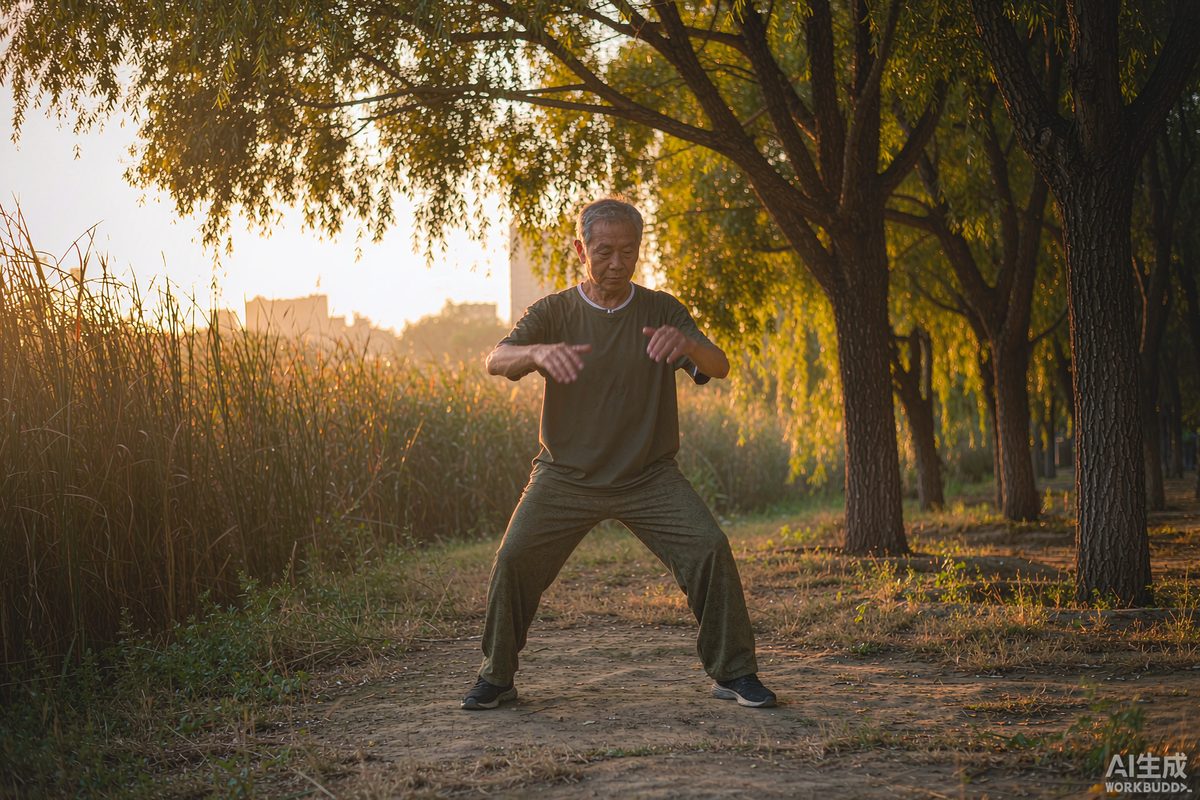
Before crediting the pack, credit the walk. The Nurses' Health Study followed 61,200 postmenopausal women for twelve years and logged 415 hip fractures along the way, and its walking analysis, published in JAMA in 2002, remains one of the most quoted numbers in the field.
Every additional three MET-hours of weekly activity — about one hour of ordinary-paced walking — was associated with a 6 percent lower hip fracture risk. Women whose total activity reached roughly 24 MET-hours weekly ran a 55 percent lower risk than the sedentary comparison group.
And the finding that survives every retelling: among women who did no other exercise at all, walking at least four hours a week came with a 41 percent lower hip fracture risk than walking under an hour.
Read those numbers with their full caveat attached — this is observational data, and women who walk for hours differ from women who do not in muscle, appetite, vigor, and fortune. Adjustment helps; it cannot equalize. Still, the pattern was linear, dose-responsive, and present even in heavier women whose body weight already conferred some skeletal protection.
Walking behaved like a genuine input to fracture risk, not a marker of general virtue.
Which raises the fair question: if plain walking is already associated with that much protection, what is the weight for? The honest answer is that the load is a hypothesis about thresholds. Bone adapts to strain above its maintenance floor, and four decades of age-related loss suggest the floor of an unladen walk sits low for many skeletons.
The loaded walk nudges the stimulus upward without converting the outing into a joint-hostile activity — an attempt to keep the dose-response curve moving while preserving everything that made walking stick in the first place.
The classical texts prescribed the walk on other grounds. The Suwen's spring chapter tells readers to rise early and walk broadly through the courtyard — unhurried, loose, in fresh air — as the seasonally correct way to let qi spread after winter's closure. No packs mentioned.
The tradition's walking prescription was about flow, not force; the loading idea enters from a different door entirely, and the next section opens it.
- The cohort's smallest useful dose was one extra walking hour per week — a 6 percent risk reduction attached to a change most people would not notice making.
- If time, not intensity, is your constraint, more plain walking still beats less loaded walking. Load is a modifier, not a prerequisite.
"Sixty-one thousand women and twelve years of charts made one point plainly: the walk is already medicine. The weight is an argument about dosage."
The Kidney Governs Bone; Sitting Injures the Flesh
Open the Suwen to its chapter on the five overexertions and you find a catalogue of occupational wear written long before desks: prolonged viewing injures the blood, prolonged lying injures the qi, prolonged sitting injures the flesh, prolonged standing injures the bone, prolonged walking injures the sinews.
Every harm in the list is a duration, not an event — the tradition diagnosing what happens when any single posture owns the whole day. Read it against modern sedentary research and the symmetry is uncomfortable.
The flesh that prolonged sitting injures belongs to the Spleen, the system that governs muscle and limbs; the modern literature on sitting time arrives, from a different vocabulary, at the same organ's territory.
Against that catalogue, the tradition sets two prescriptions this article has already met. The first is the courtyard walk — movement, in measure, outdoors, unhurried.
' Bone strength, dental integrity, the luster of hair, the soundness of the lower back and knees — all filed under an organ system the tradition watched decline in step with age, exactly where modern endocrinology later found mineral density declining too.
The Zhen Jiu Da Cheng's standard intervention at Shenshu, the point at the level of the second lumbar vertebra, warmed for a failing lower back, is the clinical face of that model: treat the Kidney's gate, and the structure it governs follows.
Where does the loaded walk fit this map? The tradition never said 'carry weight to build bone' — its concern with bearing ran the other direction, warning that prolonged standing injures bone and excess labor consumes essence. But it also held that the Kidney's essence and the Spleen's flesh feed each other: the flesh moves the body, and the movement returns substance to the storehouse.
A measured load, borne in motion and set down again, sits comfortably inside that logic — stimulus without depletion, the walk the classics prescribed with a dose of the standing the classics warned about. It is a framework, offered as texture rather than mechanism. No instrument measures Kidney essence. The correspondence, like the vest trials, is an argument worth weighing, not a prescription to swallow whole.
- The five-overexertions lens is a scheduling tool: whichever posture owns your day is the one injuring you. A loaded walk breaks the sitting streak; it should not become a standing-still streak.
- Set the pack down at rest stops. The tradition's warning about bearing was about unbroken duration, and straps loosen for a reason.
"A tradition that feared depletion prescribed the walk and feared the permanent carry. Measured load, in motion, is where those two judgments meet."
How to Load Without Complaining Knees
The practical manual is short because the practice is short. Start with 10 percent of body weight — fifteen pounds for a 150-pound walker — carried in whatever pack already lives in your closet. Two walks a week, thirty to forty minutes, flat ground. If the shoulders and knees file no complaints for a fortnight, add five pounds or one hill loop, never both in the same week.
The ceiling for general health purposes sits well below military loads; twenty to thirty pounds is a permanent residence for most civilian walkers, not a waypoint. The gear companies selling sixty-pound plates are selling a different hobby.
Fit decides whether the weight is a stimulus or an abrasion. The pack should ride high on the back, snug against the torso, with a hip belt taking share where one exists; loose straps turn every step into a small percussion injury.
Feet deserve the second thought the marketing gives last: under load, a walking shoe with some cushion and a full-size toe box outlasts the minimal shoe that was fine for unloaded strolls. Feet spread under kilometers. Plan for the feet you will have at mile three.
Some readers should scale this down or skip it. Anyone with symptomatic knee or hip osteoarthritis, a history of stress fracture, significant osteoporosis, or spinal stenosis should treat added load as a conversation with their clinician, not a default — the same forces that nudge healthy bone also travel through compromised joints, and the arithmetic does not favor the compromised side.
Walkers over seventy get a gentler calculus: balance is the outcome that matters most, and a heavy pack that turns a stumble into a fall works against the entire project. Poles — the subject of a companion review on this site — transfer some of the load question to the wrists and are the standard work-around.
One habit belongs in every version: log the load. A pack hides its weight; memory inflates it. A written number keeps progression honest and, more usefully, keeps regression honest too — the week the shoulders ache is the week the written number tells you to drop five pounds instead of pushing through.
- Ten percent of body weight, twice a week, flat terrain: the whole beginner program fits in one sentence. Most failed starts are simply faster than that.
- Stress reactions announce themselves as focal bone pain that worsens with steps. That symptom ends loaded walking for the month; it does not negotiate.
"Progression in rucking is measured in pounds per fortnight, not pounds per workout. The skeleton keeps a slower calendar than the ego."
Where the Evidence Ends
The honest accounting, in four parts. First: no randomized trial has tested rucking — backpack walking — as a bone intervention. The vest studies transfer a principle, not a proof; they involved structured sessions with jumps, supervision, and five years of protocol adherence, none of which describe a Saturday trail walk.
Anyone selling 'rucking rebuilds bone' is extrapolating past the data, and the extrapolation is the product.
Second, the walking evidence is observational. The Nurses' Health Study's 41 percent figure comes with self-selection written into its margins, and the authors said so. Healthier women walk more; walking may partly be the signature of constitutions that were never going to fracture. Adjustment narrows that objection without erasing it.
The number is an association with impressive dose-response behavior, not a trial result.
Third, load has a documented downside literature, and it comes from the population with the most rucking hours: soldiers. Military studies of heavy load carriage — double the civilian doses and up — report stress fractures, shoulder neuropathy, and knee complaints scaling with load and mileage.
The civilian doses are far smaller, which is the point of keeping them small; the military data functions as the edge of the map, marking where the dose-response curve stops being friendly.
Fourth, the traditional framework is offered as a model with explanatory texture, not a tested mechanism. Kidney essence is not serum calcium; the Spleen of the classics is not the anatomical spleen; no instrument will settle the question.
What the framework contributes is a two-thousand-year-old habit of thinking in doses and durations — movement in measure, posture in moderation, depletion as a real cost — and that habit, unlike its metaphysics, survives translation intact. Sized correctly, every claim in this article fits inside its evidence.
- Keep three claims separate: loaded exercise moved bone and balance in vest trials (tested), loaded walking probably provides a modest version of that stimulus (inferred), rucking prevents fractures (not demonstrated by anyone).
- Military load data is the ceiling, not the target. If your pack weight approaches what paratroopers hump, you have left health territory for a different sport.
"An extrapolation worn honestly is a hypothesis; the same extrapolation sold as proof is just a backpack with a brochure."
The Weight You Choose
End where the practice actually begins: with a number and a door. Fifteen pounds — a pair of dumbbells, some books, that bag of rice — into any padded pack, and a walk you have already proven you can do. The evidence reviewed here asks you to expect something modest: a walk that costs more, argues with your slump, and places a quiet, repeated request on bones that respond to requests, given years.
The vest trials say light loads move skeletal outcomes in the population that most needs them moved. The cohort says the plain walk was already earning its keep. The classics say the courtyard, the morning, and the measured pace were always part of the prescription, and that the body's structure answers to the same storehouse that steady movement feeds.
None of it requires a branded plate, a weighted-beanie fad, or a six-week transformation narrative, and the day rucking becomes a chore is the day to take the weight out and walk plain for a month — the cohort's other lesson is that plain walking never stopped counting. The pack is a modifier, borrowed from soldiers, justified by grandmothers' trials, framed by physicians who never saw a dumbbell.
So the closing question is not whether rucking works. It is whether the walk you already take would survive gaining a purpose — because the failure mode of every exercise habit is not injury or plateaus but abandonment, and a walk with a reason has, in this editor's logged experience, survived months that a walk without one did not.
Choose the weight, write the number down, and see what your Tuesdays look like in April.
- Write the starting load on a card inside the pack. Progress and regression both need the number; memory provides neither honestly.
- If the habit sours, halve the weight before questioning the habit. Most rucking quit-stories are five-pound stories.
"A walk with a reason outlives a walk with a goal. The pack only supplies the reason."