The Park Regulars Who Walk Backward
Every morning in parks across China — Chengdu, Kunming, Guangzhou, pretty much any city with a stretch of open ground — you'll see the same quiet scene. Retirees walking backward. Not jogging, not power-walking. A slow, deliberate backward stroll, arms swinging gently, heads turning now and then to check what's behind them. To a visitor it looks like a lost bet or a superstition. It's neither.
It's a practice called dao zou, literally 'reverse walking,' and it's been a fixture of Chinese morning exercise for as long as anyone can remember.
I used to assume it was harmless folklore, the kind of thing that survives because it's old, not because it works. Then I actually looked at the biomechanics. And the clinical trials. And I stopped rolling my eyes.
The premise is simple enough that it sounds like it shouldn't work: walk the exact same route, but in the opposite direction. What changes is everything below the belt. Forward walking loads the knee in a specific pattern — the quadriceps do most of the braking as your leg absorbs impact, and the knee takes force in a way that, for people with cartilage already wearing thin, grinds exactly where it hurts.
Walk backward and that loading pattern flips. The hamstrings and hip extensors pick up work the quads used to do alone, the knee moves through a range that spares the kneecap joint, and the whole lower limb gets a recruiting pattern it doesn't see during a normal walk.
None of this is woo. It's measurable in a motion lab, and it's increasingly showing up in randomized trials with real patients and real pain scores.
- Retro walking is not a new fitness fad — it's a long-standing Chinese morning practice (dao zou) that modern biomechanics has started to explain, not the other way around.
- The core idea in one line: walking backward changes how the knee is loaded, shifting work from the quadriceps to the hamstrings and hip extensors.
"The running water never stagnates, and the door hinge never rusts, because they are in constant motion. The same principle applies to the joints."
Why Backward Is Not Just Forward in Reverse
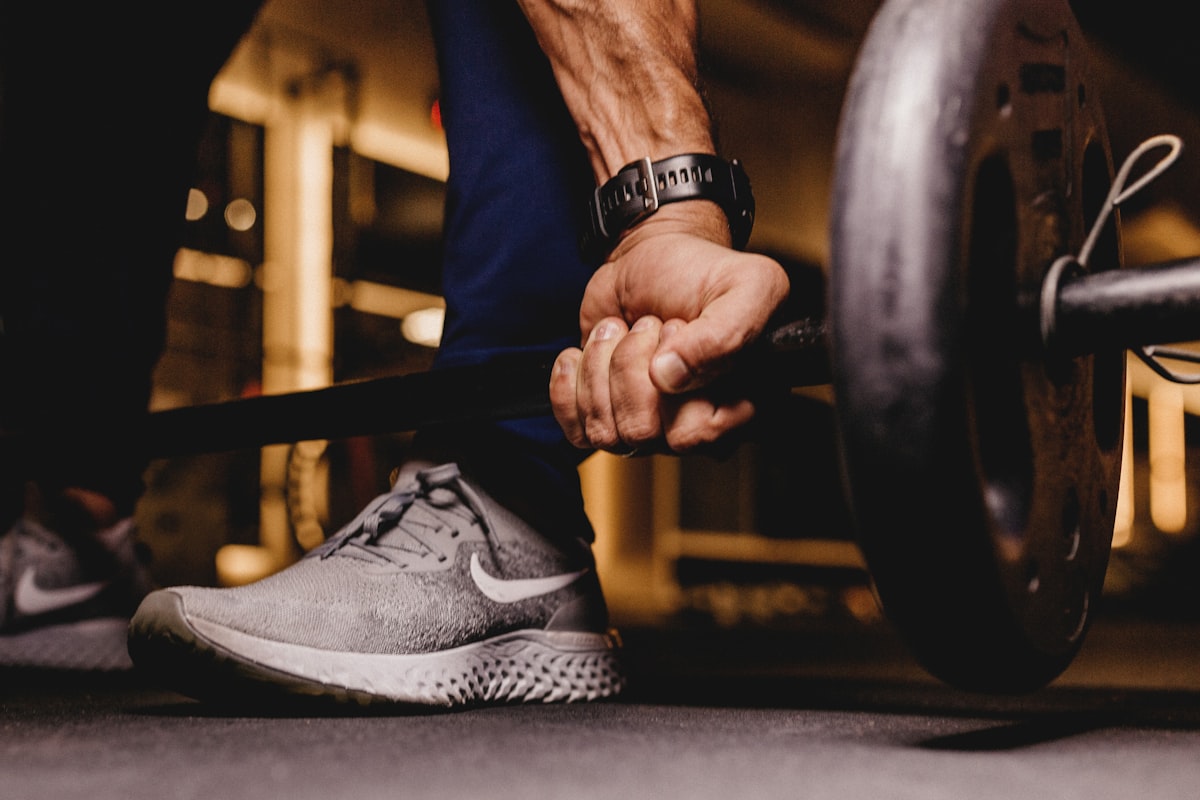
Here's the part most write-ups skip: the mechanics. Walking forward, your gait has a rhythm — heel strike, mid-stance, toe-off — and each cycle asks the knee to do two jobs at once. Absorb the shock of landing, then straighten against gravity to push you forward. For a healthy knee, no problem. For a knee with osteoarthritis, that dual job is exactly the problem.
The medial compartment — the inner half, the part that bears most of your weight — takes repeated compressive loading, and the kneecap tracks through a groove that, once cartilage thins, becomes a source of grinding pain. The technical term is an increased external knee adduction moment, and it's the number the research keeps pointing to.
Walk backward and the sequence inverts. Your toe strikes first instead of your heel, the knee never fully straightens into a locked position, and the hamstrings — the muscles behind the thigh, chronically underused by forward walkers — become the primary engines.
Studies that stuck electrodes on people's legs during retro walking found hamstring and hip-extensor activation goes up sharply compared to forward walking, while the load on the kneecap drops. For someone whose knee hurts precisely when they walk forward, this is a small revelation: the same ten minutes, done backward, loads the joint differently enough to feel like a different activity entirely.
There's a neurological layer too. Forward walking is so automated that your brain barely supervises it. Backward walking isn't automated at all — your nervous system has no well-worn highway for it, so it has to pay attention. Every step becomes a small problem in proprioception: where is my foot, where is the ground, what's behind me. That forced attention is part of the benefit, not a side effect.
It's why balance metrics improve after retro-walking programs in a way they don't after ordinary walking.
- The knee pain relief comes from reduced load on the kneecap and the inner (medial) compartment of the joint — the two places osteoarthritis grinds hardest.
- Because backward walking isn't automated, the nervous system has to supervise each step. That forced attention is proprioception training in disguise.
"The wise physician treats what is not yet diseased. When the joint is unloaded early, the sinew is spared the grind that wears it thin."
The TCM Read: Kidneys, the Spine, and a Point Under Your Foot
Classical Chinese medicine never wrote down 'retro walking' as a prescription in so many words, but the practice slots neatly into its framework — which is probably why it endured in Chinese parks rather than being imported from a Western physio textbook.
The Kidney system governs the bones and, by extension, the knees and lower back, which is where retro walking does its loudest work. In the Yellow Emperor's Inner Canon, the Kidneys are described as storing the essence that builds bone marrow and anchors the body's root. A practice that strengthens the legs, the lumbar spine, and the sense of being grounded is, in that framework, a Kidney-nourishing practice.
The knees in particular are said to be the meeting place of the sinews — and sinew belongs to the Liver, which means healthy knees want both Kidney strength (bone) and Liver suppleness (sinew). Walking backward, by loading the hamstrings and hip extensors while sparing the kneecap, trains both without asking either to overdo it.
Then there's the Du Mai, the Governing Vessel. It runs from the tailbone straight up the spine to the crown of the head, and in TCM it's the body's master Yang channel — the midline channel that governs posture, balance, and the spine's relationship to gravity. Retro walking, done with a tall spine and a slight backward lean, keeps that channel engaged and extended.
And every backward step lands on the Yongquan point — Kidney 1, 'Bubbling Spring' — in the arch of the foot, the point classical texts identify as the body's grounding tap. Landing toe-first and rolling back to the heel massages that point on each stride.
None of this is a claim that meridian theory has been proven in a lab. It hasn't, and we shouldn't pretend otherwise. What's fair to say is that a practice the TCM tradition treats as root-strengthening happens to line up with what modern trials measure — stronger legs, better balance, less knee pain. Two different maps, one useful destination.
- In TCM terms, retro walking is a Kidney- and Liver-nourishing movement: it loads the bones (Kidney) and the sinews (Liver) at the same time it spares the knee joint.
- Landing toe-first rolls the stride across Yongquan (KD-1), the grounding point in the arch — the same point Tai Chi and standing meditation emphasize.
"The Kidneys store the essence of life. When Kidney essence is abundant, the bones are solid and the lower back is pain-free."
What the Knee Trials Actually Found
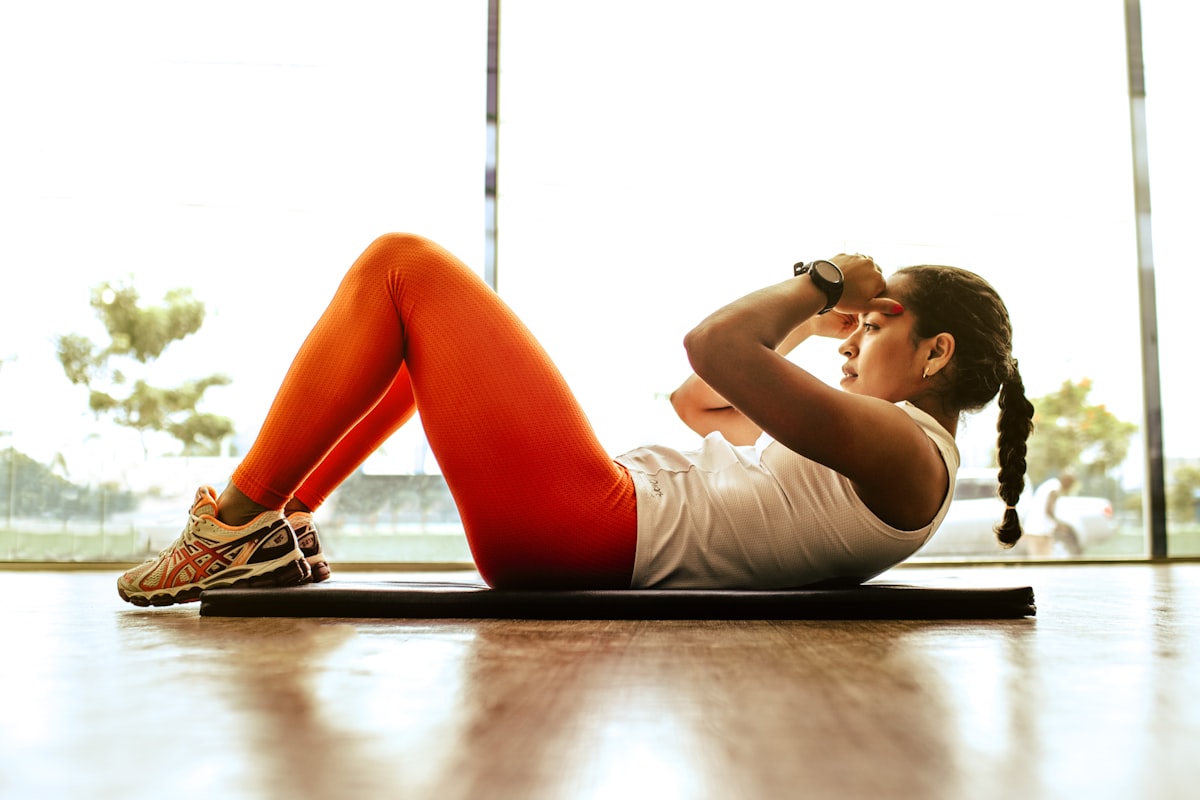
Time to get specific, because 'backward walking is good' is exactly the kind of vague claim this site tries to avoid.
A 2019 randomized controlled trial in BMC Musculoskeletal Disorders took 68 people with knee osteoarthritis (mean age about 56) and split them three ways: one group did supervised retro walking, one did forward walking, and one got routine physiotherapy — all three times a week for six weeks. 2 on the WOMAC index). Quadriceps strength — the muscle that props up a failing knee — also improved more with retro walking.
A 2021 trial out of the Guangzhou University of Chinese Medicine, a nice full circle given where retro walking is practiced most, randomized 32 knee osteoarthritis patients to four weeks of backward walking plus usual care versus usual care alone.
The backward walkers showed significant gains in static stability (how steady they stood), proprioception (how accurately their joints reported position), pain, and function.
A separate 2013 study found retro walking beat conventional treatment alone for reducing disability during a knee osteoarthritis flare-up, and a 2019 systematic review and meta-analysis pooled 21 studies and concluded backward walking with physiotherapy was 'effective and clinically worthwhile' for knee osteoarthritis specifically, cutting pain and disability while improving quadriceps strength.
The honest caveats: these are small-to-moderate trials, most with a few dozen participants, and none lasted long enough to say anything about year five. The effect sizes are real but not miraculous — retro walking is a useful adjunct, not a replacement for the rest of what helps a knee (strength work, weight management, maybe a brace or an injection if a doctor recommends one). What's striking is the consistency.
Across different researchers, different countries, different protocols, the same finding keeps turning up. Backward beats forward for knees. That's not a fluke of one enthusiastic lab.
- The strongest evidence is for knee osteoarthritis specifically: backward walking reduced pain and disability and built quadriceps strength more than forward walking in multiple trials.
- Read the caveat honestly: the studies are small and short, so treat retro walking as an adjunct to standard knee care, not a substitute for it.
"Treating disease after it has arisen is like forging weapons after war has begun. Better to unload the joint before it grinds."
The Balance Angle Nobody Talks About
Knee pain is the headline, but I'd argue the balance effect is the sleeper. Falls are what actually kill — hip fractures after a fall carry a one-year mortality risk that's sobering, and the biggest single modifiable factor in whether you fall is how well your body knows where it is in space.
That's proprioception, and it quietly decays with age, more so in people with knee osteoarthritis, whose joints stop sending accurate position signals.
Retro walking is one of the few cheap ways to train proprioception directly. Because you can't see where you're stepping, your body has to feel it. Your ankles, knees, and hips are forced to renegotiate the ground on every stride using only internal feedback.
Do that for a few weeks and the sensors sharpen — this is what the 2021 trial measured when it found improved proprioception and reduced center-of-pressure sway, the technical term for how much you wobble when you stand still.
There's a neat crossover with the research on Tai Chi and balance, which the TCM tradition has known for centuries and modern gerontology has confirmed. Both practices share a core ingredient: slow, attentive movement that demands the nervous system supervise every step instead of coasting on autopilot. Retro walking is a stripped-down, single-move version of that principle.
You don't need a form, a class, or any skill. You need a clear stretch of ground and the willingness to look a little strange for ten minutes.
For older adults specifically, the fall-prevention case is the strongest reason to bother. A knee that hurts is a quality-of-life problem. A hip that breaks is a life-changing one. If one daily habit nudges both in the right direction, it earns its place in the routine.
- Balance and proprioception — not just pain — improved in the trials, which is why retro walking is quietly a fall-prevention tool, not only a knee tool.
- The mechanism is the same one Tai Chi uses: attentive, non-automated movement that forces the nervous system to supervise each step.
"The Du Mai governs the spine and the upright stance. When the Governing Vessel is held tall and steady, the body does not sway or fall."
How to Start Without Looking Foolish — or Falling
First, the safety stuff, because walking backward into traffic or a parked car is a real risk, not a joke. Pick a place with a flat, obstacle-free surface: a quiet sidewalk with a railing nearby, an empty basketball court, a long hallway, or — the gold standard — a school running track where the lanes are painted and nothing moves. A treadmill with side rails works indoors and lets you hold on while you learn.
Start at a crawl. Honestly, slower than you think you need.
Here's a starting protocol that won't overwhelm anyone. Weeks one and two: five minutes of backward walking, three or four times a week, right after a normal warm-up walk. Keep one hand near a rail or wall for the first sessions, or have someone walk beside you. Turn your head to glance behind you every few steps instead of craning the whole time, which tenses the neck.
Land toe-first and roll back to the heel, knees soft, spine tall — imagine a string pulling the crown of your head upward.
By week three, add a little duration, up to ten minutes. By week six, you can try interval-style: one minute backward, one minute forward, repeated. The forward intervals give your nervous system a breather and keep the whole thing from feeling monotonous.
Some people add a gentle backward lean or small backward lunges later, but none of that is required — the plain backward walk is the intervention the trials tested, and it's plenty.
If your knee hurts more afterward — not in a 'I used a muscle I forgot about' way but in a sharp, joint-specific way — stop and talk to a physical therapist. Retro walking is genuinely easier on the knees for most people with osteoarthritis, but 'most people' isn't 'every person,' and a knee that's bone-on-bone in a specific spot may not read the memo.
- Start with five minutes, three or four times a week, at a pace slower than feels necessary. Speed is the last variable you add, not the first.
- Hold a rail, wall, or a partner's arm for the first sessions. The goal is to build the pattern safely, then let go as balance improves.
"Begin gently and advance gradually. What is forced grows weak; what is nourished day by day grows strong."
The Mistakes That Send People Home With a Twisted Ankle
The failure modes are predictable, and most of them come from overconfidence. The most common: going too fast too soon. Walking backward at your normal forward pace is how people clip a curb, trip over a crack, or twist an ankle they never saw coming. Treat speed as the last variable you add, not the first.
Craning your neck. Newcomers want to watch their own feet the whole time, which turns the spine into a question mark and torques the neck. Glance behind you periodically; trust your feet the rest of the time. That trust is the whole point of the exercise — it's proprioception training, and you can't train it while your eyes do all the work.
Ignoring the surface. A sidewalk with uneven slabs, gravel, or tree roots is a hazard. The track, the hallway, the court — flat and predictable every time.
Skipping the warm-up. A cold calf or hamstring asked to work backward is a pulled muscle waiting to happen. Three or four minutes of easy forward walking first.
And the sneaky one: doing retro walking as your only exercise and neglecting forward walking entirely. The research uses retro walking as an adjunct — a supplement to normal walking and strength work, not a substitute. You still want the forward miles for cardiovascular fitness and the simple pleasure of not having to watch where you're going. The backward stroll is the seasoning, not the meal.
- Glance behind you periodically instead of craning your neck the whole time. Trusting your feet is the entire point — that's the proprioception being trained.
- Keep forward walking in the rotation. Retro walking is a supplement to normal walking and strength work, not a replacement for them.
"Prolonged looking injures the Blood, and prolonged tension injures the sinews. Move with the neck free and the gaze relaxed."
A Ten-Minute Retro Walk That Fits Into a Real Day
The whole thing fits into a gap most people already have. Warm up with three minutes of easy forward walking. Then ten minutes backward, at a pace where you could hold a conversation. Then two or three minutes of normal walking to re-anchor. Fifteen minutes door to door, and the only equipment is a pair of shoes with decent tread.
Do it where the morning light is, if you can — there's a reason the park regulars go at dawn. The combination of forward warm-up, backward work, and forward cool-down covers the knee unloading, the quadriceps recruitment, and the balance training in one short block, and it's gentle enough to do daily.
A note on expectations, because I'd rather under-promise. The people in the trials who saw the biggest drops in pain did it three times a week for six weeks and kept up their usual care. Nobody in any of these studies was cured of osteoarthritis by walking backward — the condition is structural, and no amount of backward steps regrows cartilage.
What changes is the load on the joint, the strength around it, and the nervous system's grip on balance. Those three things, together, are most of what separates a knee that dictates your day from one you barely notice.
So the next time you see someone walking backward in the park, know that they're not superstitious. They're running a six-week trial on their own knees. And the results, so far, are on their side.
- Three minutes forward, ten minutes backward, three minutes forward — about fifteen minutes total, three to six days a week, is the shape the research supports.
- Expect the benefit to show up over six weeks, not six days. Strength and balance build gradually, and the knee adapts on its own schedule.
"At cockcrow, rise and move. The morning Yang is rising, and the body is most ready to be strengthened without strain."