You Don't Get Stronger in the Gym
The sentence sounds wrong the first time you hear it, because every gym mirror in the world insists otherwise. But the physiology is settled on this point: training doesn't build muscle. Training damages muscle. The building happens afterward, during the hours and days when you're not lifting anything heavier than a fork.
Stress the tissue, then let it repair — and the repair overshoots, laying down a little more than was there before. That overshoot is the entire point. Skip the repair and you've paid for the damage without collecting the adaptation.
Most people understand this in the abstract and ignore it in practice. They train hard, then under-sleep, under-eat, and stack a hard day on top of a hard day, and then they wonder why they plateaued. The body doesn't plateau by accident. It plateaus because the repair bill came due and nobody paid it.
Chinese medicine has been saying this for two thousand years, in its own vocabulary. The Inner Canon doesn't talk about protein synthesis; it talks about Jing, the deep stored essence that training draws on, and about the harm of drawing on it faster than it replenishes. Same observation, different language.
The thing everyone misses — ancient physician and modern lifter alike — is that progress is not a function of how much you can do. It's a function of how much you can recover from.
This article is about reading the difference between being tired and being depleted, because that line is where most training programs quietly go wrong. Not dramatic, not painful, just... flat. A month of hard work with nothing to show for it because the recovery never happened.
- Training damages muscle; the repair afterward is what builds it. If you never let the repair finish, you're paying for damage without collecting the adaptation.
- The first sign of a recovery problem is usually not pain. It's a plateau — a month of hard work with no measurable change.
"The wise physician treats what is not yet sick, just as the wise ruler governs what is not yet in chaos. By the time the disease is full-blown, it is already too late."
Tired and Depleted Are Different Debts
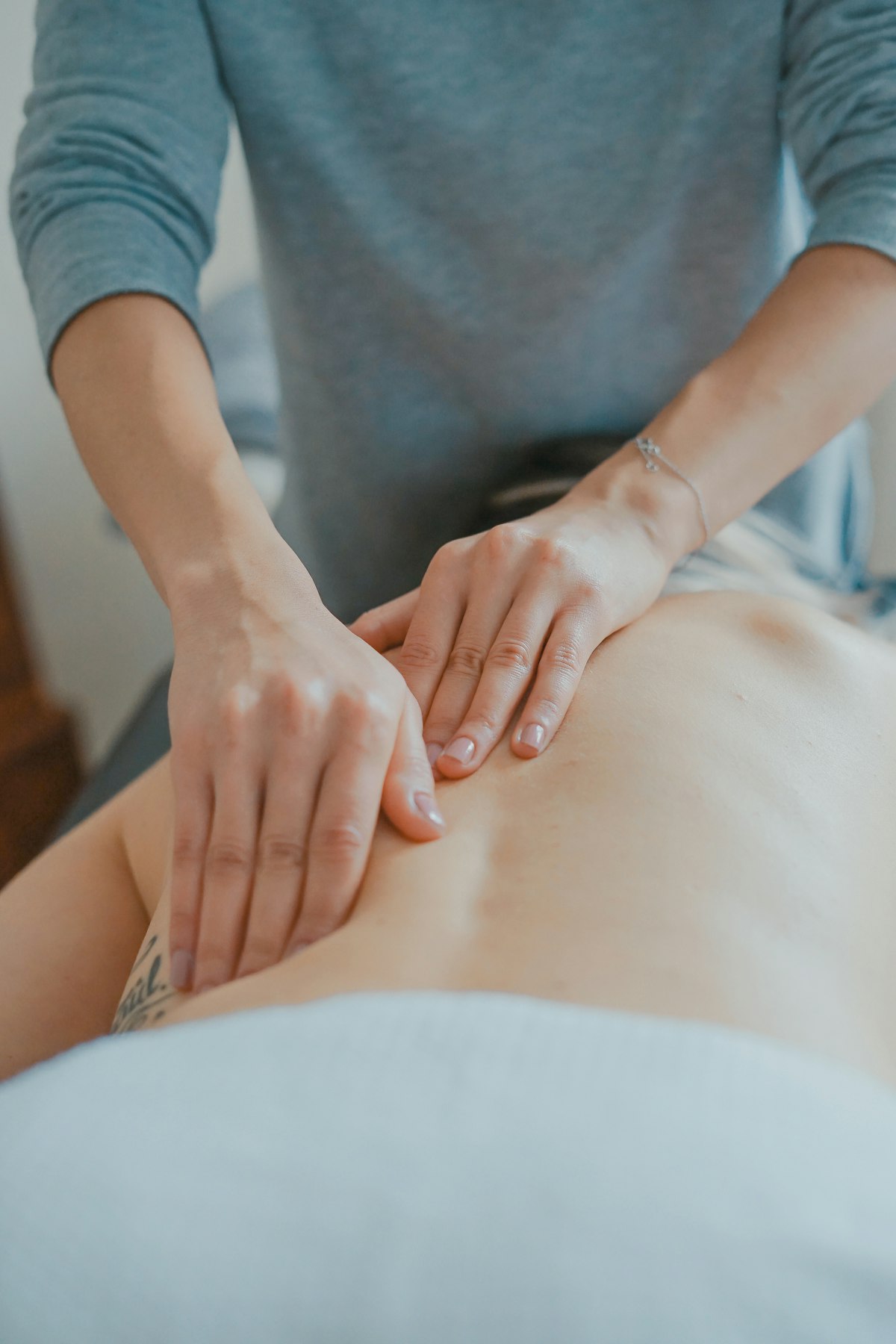
Here's the distinction that sorts most of this out. Tired is a short-term debt. You trained hard yesterday, you slept six hours instead of eight, and today your legs are heavy and your mood is flat. A rest day, a decent night's sleep, and a real meal clear it. The account goes back to zero and you train again.
Depleted is different. Depleted is a debt that compounds. It's what happens when the short-term debt never gets paid, so the body starts borrowing from deeper reserves — the ones that are supposed to stay untouched. Training quality drops. Sleep gets worse, which slows recovery further, which drops training quality again. You catch colds. You get irritable.
And through it all you keep training, because stopping feels like losing ground, when in fact the training itself is what's digging the hole.
The exercise science literature has a name for the far end of this: overtraining syndrome. " Diagnosis rests on the pattern: a sustained drop in performance that doesn't bounce back after normal rest, plus fatigue and mood changes that don't lift.
The review's central point is that overtraining isn't one thing going wrong; it's a network of systems — hormonal, immune, neural, metabolic — drifting out of sync all at once.
What's striking is how closely that maps onto the classical Chinese picture of Jing depletion. Jing is the stored essence that underlies growth, repair, and reproductive health. Draw on it slowly and it replenishes. Draw on it faster than it restores and you get the pattern the old texts describe: fatigue that rest doesn't fix, a dull ache that moves around, a heaviness in the limbs, a mind that can't settle.
The ancients didn't have cortisol assays. They had the same set of symptoms and a word for the underlying account being overdrawn.
The practical upshot: you can't spot depletion by how sore you are. Soreness is a local, temporary signal. Depletion is systemic and slow, and it shows up first in the places you're not looking.
- Tired clears with one rest day and a full night's sleep. Depleted doesn't lift after a normal rest — that's the signal to look harder.
- Overtraining has no reliable blood test. It's diagnosed by pattern: a sustained performance drop plus fatigue and mood changes that rest doesn't fix.
The Morning Check That Costs Nothing
Before watches and heart-rate apps, there was a simpler instrument: how you feel in the first ninety seconds after waking. It's crude, it's subjective, and it's more useful than people give it credit for.
Try it for a week. The moment you wake, before coffee, before you check your phone, take a rough inventory. Is the body heavy or light? Is the mind clear or fogged? Do you want to move, or does the idea of moving feel like an insult? Write down a single number from one to five, no overthinking. The trend over a week tells you more than any single morning.
A body that's recovering well wakes up a little achy but fundamentally willing — the stiffness is in the muscles, and it shakes out within minutes. A body that's running on empty wakes up heavy all over, with a fog behind the eyes that coffee doesn't cut, and a low-grade dread of the session ahead. That dread is not weakness or laziness. It's information.
The limbic system is telling you, weeks before your performance numbers crater, that the account is overdrawn.
TCM reads the same thing through the tongue and the eyes. A tongue that's swollen and scalloped at the edges, or coated thick and greasy in the morning, is the classical sign of Qi deficiency or damp accumulation — the body failing to transform what you're feeding it, whether that's food or training load.
The whites of the eyes, the color under the fingernails, the speed at which the face recovers its color after exertion: these were diagnostic tools before there were labs.
You don't have to adopt the full framework to use the instinct. The point is just that the body telegraphs depletion early, through channels most training programs never ask about. If you only track what the barbell tells you, you find out you're overtrained about three weeks after you already were.
- Score your first ninety waking seconds from one to five every day for a week. The trend is the signal, not any single morning.
- A swollen, scalloped tongue or a thick greasy coat in the morning is a classical sign of Qi deficiency or damp — the body failing to transform load.
Heart Rate, and Why Your Wrist Is Lying to You

Resting heart rate and its variability have become the default recovery metric, and the idea is sound: a resting heart rate that creeps up five to eight beats over your baseline, morning after morning, is a decent early-warning sign that recovery isn't keeping pace with load. The problem isn't the concept. It's the sensor.
Wrist-worn trackers measure heart rate through photoplethysmography — light shone into the skin to detect the pulse of blood. It works well enough when you're still. It degrades the moment you move, and it degrades specifically at the intensities where people most want the number.
A 2020 validation study in JMIR mHealth and uHealth tested four popular wrist wearables against a chest-strap criterion during sitting, walking, and running, and the picture was consistent: accuracy falls off as intensity climbs, with some devices drifting badly above roughly 150 beats per minute. For a resting morning reading, seated and still, most devices are acceptable.
For anything during a hard session, treat the wrist number as an estimate with error bars.
So the practical rule is boring but reliable: if you're going to track heart rate for recovery, do it the same way every morning — seated, after a minute or two of stillness, before coffee — and watch the trend over two weeks, not the day-to-day wiggle. A single high morning doesn't mean anything. Seven straight mornings eight beats above your norm, plus heavy legs and flat mood, means something.
Here's the part most recovery gadgets skip, and it's the part TCM has always led with: heart rate is downstream. It's a readout of the autonomic nervous system, which is itself responding to everything — sleep debt, food, stress, the argument you had yesterday, the training block you're in. Treating the number as the cause is like blaming the thermometer for the fever. The number is useful as a dashboard light.
The engine is sleep, food, and the load you're putting on it.
That's why the honest advice is to use the metric, but never let the metric boss you around. If your watch says you're "recovered" but your body says otherwise, the body wins. Every time.
- Wrist-worn optical heart rate accuracy falls off as intensity climbs. Trust it for resting morning readings, distrust it during hard intervals.
- Watch the two-week trend in resting heart rate, not daily swings. One high morning is noise; seven straight high mornings is a message.
"The Heart governs the vessels, and its brilliance shows in the face. When the Heart's Qi is insufficient, the pulse is thready and the complexion loses its luster."
What Actually Restores You, in Order
If recovery were a product, it would be the least exciting product ever sold: sleep, food, and time, in that order, with almost everything else running a distant fourth. But the boring answer is the true one, and the industry built on expensive recovery gadgets would rather you not notice.
Sleep is the non-negotiable. It's during deep sleep that growth hormone pulses, that tissue repair accelerates, that the brain clears metabolic waste. Cut sleep and you cut the one window where most of the actual rebuilding happens. No foam roller, ice bath, or compression boot buys back what a short night costs. If you can only fix one thing about your recovery, fix this one.
Food is second. The body can't repair tissue it has no raw material for, and under-eating is the single most common recovery failure among people training hard. Protein gets the attention, but total energy is what usually breaks — a hard-training person eating in a deficit is asking the body to build while simultaneously starving the build site.
A 2021 review in Sports Medicine makes the case bluntly: many of the symptoms blamed on "overtraining" are actually undereating — relative energy deficiency — wearing a training mask. The fix isn't less training so much as more fuel.
Time is third, and it's the one people resent, because it can't be optimized. Adaptation has a minimum duration. You can compress your sleep schedule and hack your meals and still, at a certain point, the tissue needs the days. The classical texts understood this as the difference between Yin and Yang effort: Yang is the burst, the push, the session; Yin is the quiet rebuilding that happens when you stop.
No amount of Yang makes up for a missing Yin.
Everything else — the cold plunge, the massage gun, the compression boots — lives in the margins. Helpful at the edges, occasionally pleasant, never a substitute for the three things that actually do the work.
- Sleep is the single highest-leverage recovery lever. Deep sleep is when growth hormone pulses and tissue repair accelerates.
- Under-eating is the most common recovery failure in hard-training people. Many 'overtraining' symptoms are really undereating in disguise.
Rest Days, the Classical Version
The modern gym splits the week into training days and rest days, as if rest were the empty space between the real events. Classical Chinese movement traditions never saw it that way. They built rest into the structure of the practice itself, and it's worth stealing the idea.
The principle shows up everywhere in the old systems. Qigong and tai chi are explicitly low-intensity, and the classics warn against the kind of exertion that leaves you wrecked — not because exertion is bad, but because the point is to cultivate, not to spend.
The Inner Canon's advice on seasonal living is one long argument for matching effort to the body's available energy rather than forcing a constant output year-round. Winter, in that framework, is the season to draw inward and conserve; you don't train the same way in January that you do in July.
There's a specific concept worth naming: zhan zhuang, standing post. It looks like nothing — a person standing, knees slightly bent, arms rounded as if holding a ball — but it's one of the oldest methods in the internal arts for rebuilding energy without movement. Practitioners stand for twenty minutes, letting the breath deepen and the mind quiet.
It reads as rest from the outside, but practitioners describe it as the most restorative thing they do, a way of sinking into stillness that ordinary sitting doesn't reach. The physiology is consistent with what we now know about the parasympathetic nervous system: a prolonged, undemanding, breath-centered stillness pulls the body out of the sympathetic drive of training and into the repair state.
You don't need the full tradition to use it. A rest day that includes twenty minutes of slow breathing, or a very easy walk, or a standing-post session, is a rest day that actively drops you into recovery rather than one where you just... don't train. The difference is real. Passive rest leaves the nervous system to find its own way down; a deliberate low-intensity practice leads it there.
- Classical systems built rest into the structure of practice rather than treating it as empty space between sessions.
- Zhan zhuang (standing post) is an old internal-arts method for rebuilding energy through stillness — twenty minutes of quiet, bent-knee standing.
A Recovery Week You Can Actually Run
Here's a concrete structure, not a philosophy. Steal what fits and discard the rest.
First, hard days and easy days alternate, and both are planned, not negotiated in the moment. The old training dictum — from endurance coaches, not just TCM — is that heavy loads are tolerated when the athlete takes a rest day every week and alternates hard and easy. If every day is medium-hard, you get the fatigue of training with none of the adaptation of proper recovery.
Second, one full day a week is a genuine rest day: no training, a walk at most, a real meal, an early night. Not "active recovery" that turns into a forty-minute session. Rest.
Third, every three to four weeks, drop the volume for a week — a deload. Cut the sets and the load by a third to a half. This is the part most people skip, because it feels like losing, and it's the part that actually lets the accumulated adaptation surface. The progress you built in the three hard weeks shows up during the easy one, not during the hard ones themselves.
Fourth, match effort to season, loosely. You don't have to adopt the full classical calendar to accept the idea that there are periods for building and periods for consolidating. After a heavy block, take the foot off. The body doesn't read your training spreadsheet; it reads the load.
Fifth, and this is the one that separates people who stay healthy from people who burn out: watch the trend lines. Resting heart rate, morning energy score, sleep quality, mood. When two or three of them drift the wrong way for more than a week, that's not a signal to push through. That's the dashboard lighting up. Reduce load now, for a few days, and you lose almost nothing.
Ignore it for a month and you lose the month.
- Alternate hard and easy days, and take one full rest day every week. Medium-hard every day produces fatigue without adaptation.
- Deload every three to four weeks: cut volume by a third to a half for one week so the accumulated adaptation can surface.
"In winter, retire early and rise late, waiting for the sunlight. This is the way of nourishing and storing — go against it and you injure the Kidneys."
When to Stop and Ask Someone
Most recovery problems resolve with sleep, food, and a few lighter weeks. Some don't. Knowing which is which is the last skill, and the one people most often skip.
If performance has dropped and hasn't recovered after two weeks of genuine reduced load, that's past the self-help line. If the fatigue comes with a resting heart rate that won't come down, persistent sleep that doesn't refresh, frequent illness, or a mood that's flat or dark in a way that's out of character — get a real evaluation.
These are the patterns that a blood panel and a clinician can actually interrogate: iron status, thyroid function, vitamin D, testosterone or estrogen, markers of overreaching that don't resolve. Some of these have a medical fix. None of them are fixed by grinding harder.
There's a specific modern overlap worth naming, because it's under-diagnosed: relative energy deficiency in sport, or RED-S. It produces exactly the fatigue-and-flat-mood picture people attribute to "overtraining," but the root cause is chronic under-fueling, and it has real health consequences beyond performance — bone density, reproductive function, immune function.
A 2021 review in Sports Medicine lays out how much the two conditions share. If you train a lot, feel wrecked, and have also been restricting food, this is the first thing to investigate, not the last.
The classical frame says the same thing more gently. There's a limit to what rest alone fixes, and the old physicians were explicit that when Jing is deeply depleted, you don't just rest — you treat. Herbs, food therapy, and a long, patient convalescence. The honest boundary, from either tradition: I can tell you how to read the signs.
I can't diagnose from a distance, and no article substitutes for a clinician looking at your labs.
Train hard. Rest harder. And when the trend lines stay wrong despite the rest, stop guessing and go find out why.
- If performance stays down after two weeks of genuinely reduced load, that's past the self-help line — get labs and a clinician.
- RED-S (chronic under-fueling) mimics overtraining exactly but has different root causes and worse long-term consequences. Investigate it first if you train hard and restrict food.