The Part of the Meal Nobody Counts
Ask someone what they changed on a diet and they list foods. Gone: the bread, the soda, the dessert. What they rarely mention is the clock — what time the first bite happened, what time the last one ended, and how much of the day the kitchen was open.
That omission is strange, because the timing experiments of the past decade keep surfacing a result that sounds like a trick: two people eating the same food can land in different metabolic territory depending on when they ate it.
Chinese medicine would not find this surprising. The classical texts assign the digestive organs their own working hours — the Stomach's shift, the Spleen's shift — and treat eating against that schedule as a category mistake, like delivering freight to a warehouse after the loaders have gone home.
The modern vocabulary is circadian biology: peripheral clocks in the liver, gut, and pancreas that set the efficiency of glucose handling and fat processing by hour, largely independent of what the master clock in the brain is doing.
This article works through both languages. First the trials — what time-restricted eating has actually demonstrated in randomized settings, which is less than the headlines promised and more than the critics concede.
Then the classical frame, which never ran trials but spent two thousand years refining a simpler observation: bodies process food differently at dawn than at midnight, and a pattern that ignores this pays for it. At the end, a practical window assembled from both traditions — deliberately gentler than the internet's 16:8 orthodoxy, and more survivable for it.
- The two dials are independent: what you eat and when you eat it. Most diets only turn the first one, which is why a modest change to meal timing can add results without touching the menu at all.
- Before lengthening your fast, notice where your current window actually sits. Most people are shocked to find their kitchen is open for fourteen or more hours a day once evening snacking is counted honestly.
"The body does not only digest food. It digests the hour the food arrives."
Three Clocks Ticking at Once
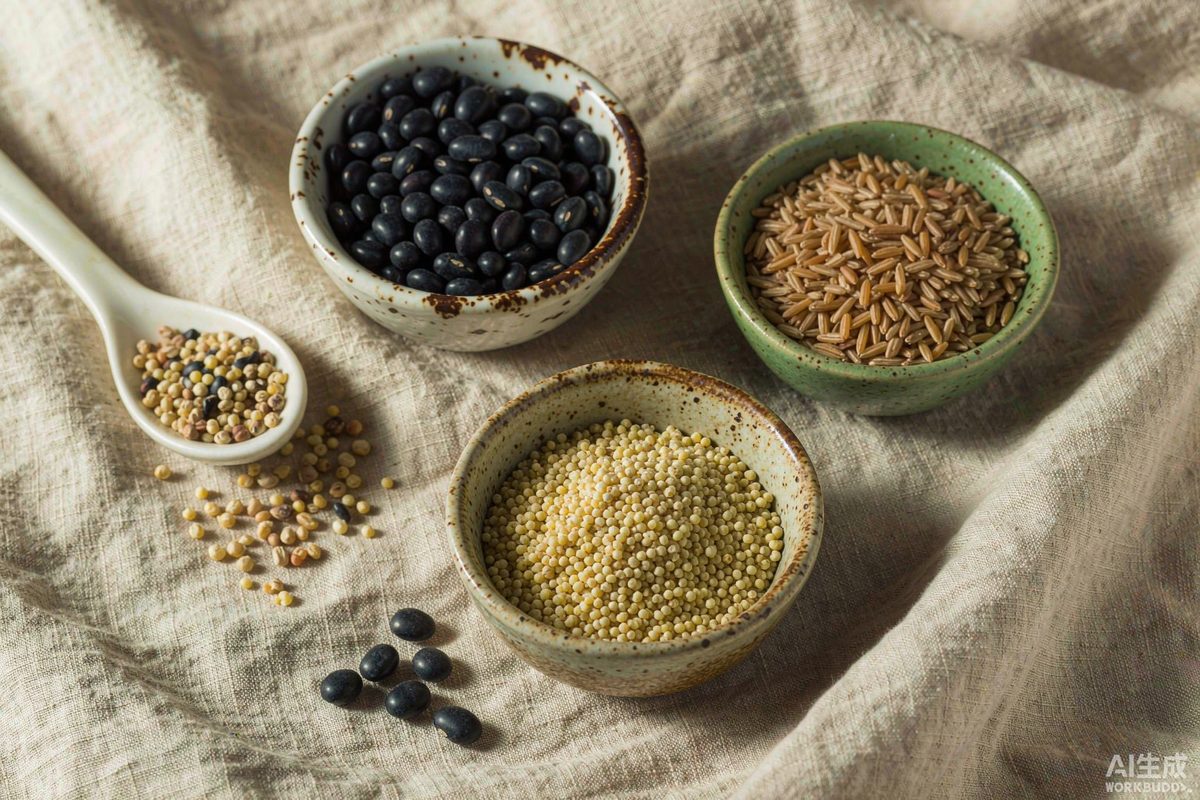
The central discovery that made meal timing scientifically respectable was that the body's clocks are not single. The suprachiasmatic nucleus in the brain — the master clock, set daily by light — was only ever the first of them.
Researchers subsequently found independent clock machinery in the liver, the pancreas, the gut lining, and fat tissue itself, each cycling on roughly twenty-four-hour schedules and each regulating a different slice of metabolism.
Here is why this matters at the dinner table. m. m. The liver's glycogen handling, the gut's motility, the efficiency with which dietary fat is stored versus oxidized — all of it is time-stamped. Feed a mouse during its natural sleep phase and it gains more weight on identical calories than a mouse fed while awake.
Mice are not people, and the human equivalents are smaller, but the human data that exist point the same direction with decent consistency.
The classical texts map the same territory with different instruments. The Neijing's meridian doctrine assigns each organ a two-hour watch across the day — the Stomach's watch sits in the morning, the Spleen's follows it — and the scheme's practical meaning was never mystical: each organ has a season, and work assigned out of season is done badly.
The Suwen's third chapter says it directly about Yang Qi in general: it rises with dawn, peaks at midday, and withdraws after sunset, so the day's heaviest work belongs early and the evening is for lightening the load, not replenishing it.
Where the two systems diverge is on mechanism and confidence. Chronobiology has reagents and knockout mice; the organ clock has accumulated clinical observation, argued over for centuries. On the operative conclusion — the body rewards early eating and penalizes late eating — they agree more than either side's enthusiasts tend to notice.
- Peripheral clocks synchronize mostly to food timing, not light. This is why late meals can leave you feeling 'off' even when your sleep schedule hasn't changed — the organs got the memo at midnight.
- A practical read of the organ clock that doesn't require believing the meridian map: treat the morning as the digestive system's peak hours and the evening as its wind-down, then check your own glucose meter or energy levels against that schedule.
"Yang Qi rises with the dawn, gathers at noon, and withdraws when the sun sets. Match the body's intake to the light, and the light does half the work."
What the Trials Actually Measured
Now the receipts, with their limitations attached.
The 2018 Cell Metabolism trial led by Elizabeth Sutton is the cleanest starting point. , no evening food — with calories controlled to hold body weight steady. That last detail is the study's genius and its constraint: since weight couldn't change, any metabolic shift had to come from timing itself. Insulin sensitivity improved. Blood pressure dropped. Oxidative stress markers fell. All without a single gram lost.
m. dinner is not a life most people can run, and the study lasted five weeks.
, against a twelve-hour control, free-living adults with obesity, twelve weeks. Weight loss exceeded the control group by a real but unglamorous margin — a couple of kilograms. Blood pressure and mood improved in secondary analysis. Participants found the early window hard, and adherence data showed the evening was where discipline bled out.
Then the 2020 study from the Satchin Panda lab's collaborators — ten-hour windows in metabolic syndrome patients, already on statins and blood pressure medication. Weight, waist circumference, blood pressure, and LDL cholesterol all shifted modestly over twelve weeks.
The population mattered: these were people whose disease was established, and a timing-only intervention still moved numbers without removing any food group.
Read together, the honest summary is: consistent, modest cardiometabolic improvements from narrowing the window, with a persistent signal that the window's position — early over late — carries much of the effect. No trial has shown timing to be magic, and several showed it to be merely decent. Decent is not nothing. Almost no other free intervention moves blood pressure and insulin sensitivity simultaneously.
- Effect sizes in these trials are modest — expect single kilograms and single blood-pressure points, not transformations. Anyone promising more than that is selling.
- The early-window studies used windows that most working adults can't sustain. Translating 'early' into your life usually means shifting dinner earlier rather than deleting it.
"The question was never whether the body has an opinion about time. It was whether we were willing to listen to something this quiet."
The Spleen Keeps Office Hours
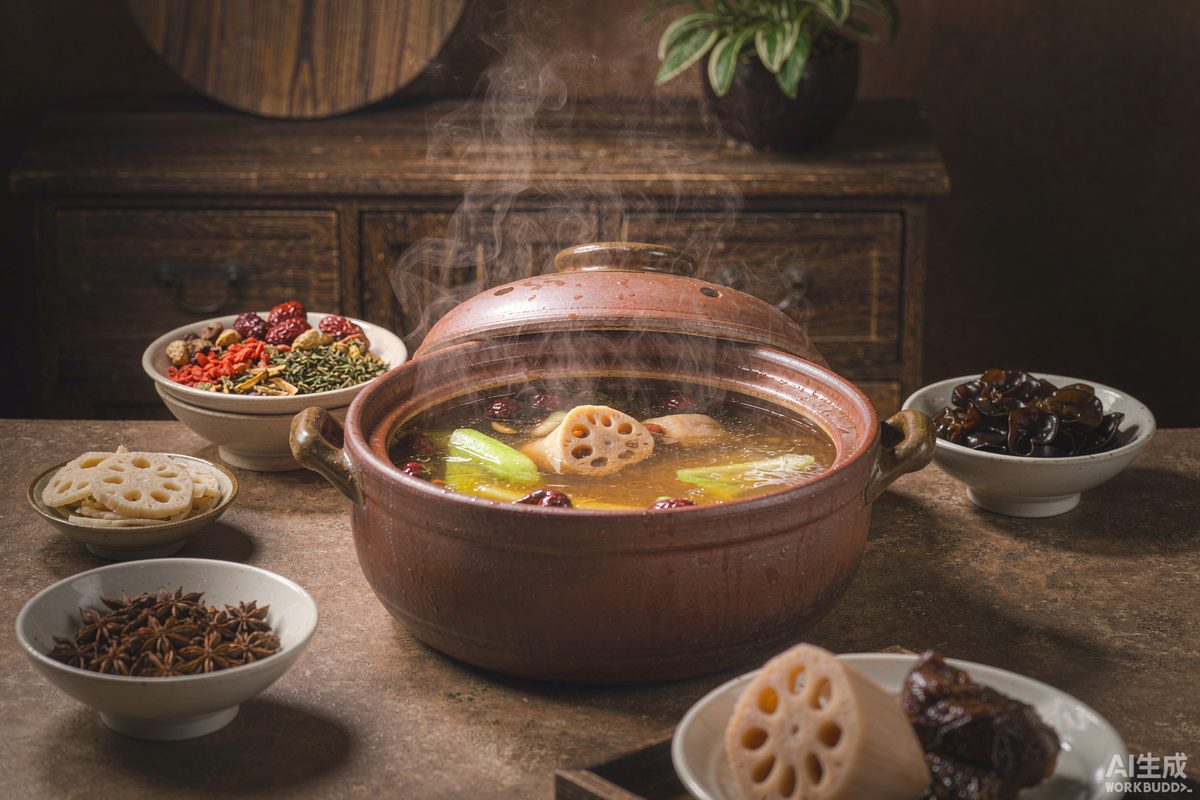
In Chinese medicine, digestion is a two-person operation. The Stomach (胃) receives and begins breaking down what arrives; the Spleen (脾) — a function, not the anatomical organ — transforms it into usable Qi and transports that Qi where the body needs it. Nearly every dietary disease in the classical literature traces back to this pair being overworked, mistimed, or both.
What the Spleen cannot transport doesn't vanish. It settles, accumulates, thickens — Dampness and Phlegm in the classical vocabulary, which map uncomfortably well onto the metabolic sediment of modern life: high triglycerides, visceral fat, post-meal fog.
The texts' advice to this pair is rhythm, more than content. The Suwen's first chapter compresses the whole dietary doctrine into four characters usually translated 'food and drink with measure and rhythm' (食饮有节) — regularity, proportion, timing.
The tradition's deep suspicion of the grazing, midnight-eating pattern follows from it: every intake is a work order for the middle burner, and a work order delivered after hours sits in the queue until morning. The person who skips breakfast, grazes all afternoon, and eats a large dinner at nine is, in this framework, running the Stomach's shift in reverse — idle during its hours, overwhelmed after them.
The Suwen also warned against the opposite excess. Chapter 43: when food and drink are doubled beyond measure, the intestines and stomach take the injury. Feast days, binge windows, forty-five-minute races to consume two thousand calories inside a shrinking window — the classical physician would read the current fasting culture's feast-and-fast oscillation as a fresh way to insult an old system.
A window narrowed thoughtfully differs from a window weaponized.
Acupuncture's contribution to the discussion is the point ST-36, below the outer knee — the Zhen Jiu Da Cheng's named anchor for fortifying Stomach and Spleen. We describe self-massage there as a mealtime ritual: two minutes of firm circular pressure before eating, less as treatment than as a pause that makes the meal deliberate. The point has been studied for gut motility with mixed results.
The pause is the part we'd defend.
- The classical anti-damp template — three anchored meals, generous breakfast, moderate lunch, light early dinner — is a timing prescription first. Notice it describes an eating window of roughly twelve hours without ever using the phrase.
- If you compress eating into a short window, resist feasting inside it. Doubling intake inside the window is the exact input the Suwen names as a gut injury.
"When food and drink are doubled beyond measure, the intestines and stomach take the injury."
Why Early Beats Late — in Both Languages
Strip the trial literature and the tradition down to their shared claim and one word remains: early. The metabolic payoff of meal timing concentrates at the front of the day.
The mechanism, in the modern telling, runs through melatonin as much as insulin. As evening darkness rises, melatonin secretion begins — and melatonin suppresses insulin release. Eat a large meal late in the evening and it lands on a pancreas already being throttled for the night; glucose curves steepen, lipid storage pathways dominate.
One reason late eating also disturbs sleep is that the gut is still mid-shift when the brain is trying to file its end-of-day reports. Anyone who has slept badly after a 9:30 dinner has met this mechanism personally.
The classical version needs no hormones. Yang Qi, per the Suwen, withdraws after sunset — the body's capacity for transformation thins as the light does. Food arriving then is handled by whatever force remains, which the texts predict will be insufficient: the residue settles as Dampness, sleep turns shallow and busy, the tongue the next morning is coated and heavy. m.
wakefulness would not need a melatonin assay to connect them.
Notice what neither tradition says. Neither says breakfast is a moral obligation for every body, and neither says the window must be eight hours. What both say, in their own dialects, is that the body's returns on food diminish across the day — that a system built to spend daylight rewards being fed before the light fades.
,' is a blunt folk memory of a subtler rule: the earlier the last meal, the easier everything downstream runs. m. dinner trial proved the principle at an extreme no one should live at. Your own version is somewhere between that and your current life — probably closer to 'dinner by seven' than you'd guessed before reading the trials.
- The cheapest experiment in this entire article: move dinner thirty minutes earlier for two weeks and log sleep quality. Many people observe the change before they observe the scale.
- If dinner must be late on some days, make it small and low-fat rather than skipped-and-compensated. A light late meal insults the system far less than a feast arriving at its old hour.
"The evening meal was never meant to be the day's main event. It is a comma, not a full stop."
Where Fasting and the Spleen Disagree
Honesty requires the disagreements, and there are two.
The first is about heroics. Popular fasting culture drifts toward escalation — 16:8 becomes 18:6 becomes 20:4, eating compressed into an hours-long sprint, hunger treated as progress. The classical texts treat exactly this as pathology.
The Spleen wants steady work, not sprints: transformation runs on regular, moderate intake, and the feast-and-famine oscillation starves the middle burner then floods it, which is the same abuse pattern the texts blame for Spleen Qi deficiency — bloating, fatigue after meals, loose stools, foggy thinking.
The modern literature is quieter on this point but not silent: extreme windows show higher dropout, more compensatory weekend eating, and in some dieters, disordered-eating-shaped patterns that outlast the diet. If a fasting protocol makes every day an argument with your appetite, it has already failed the classical test and, eventually, the adherence one.
The second disagreement is about skipping breakfast specifically. Fasting culture often implements the window by skipping the morning meal, because morning hunger is the easiest to suppress.
The tradition recoils: the morning is the Stomach and Spleen's watch — the hours when the system is most ready to transform — and repeatedly wasting them while feeding the body at midnight is, in this framework, precisely backwards.
The human evidence here is genuinely tangled: breakfast-skipping trials show mixed metabolic results, and observational links between breakfast and health are polluted by every confounder in the book. Our reading of both sources is that the question isn't whether breakfast exists but where the window's center of mass sits. m. m. with breakfast and no night eating honors both traditions. m. m.
that deletes breakfast and centers the day's largest meal at dusk violates both — even though the fasting apps count the two as identical.
Between the disagreements sits the synthesis this article keeps returning to: the tradition never optimized fasting duration. It optimized timing regularity. That turns out to be the variable the modern field is still catching up to.
- Longer is not better. Most of the measured benefit arrives by a twelve-to-ten-hour window; the marginal gains of 16:8 over 12:12 are small, and the adherence cost is not.
- Watch the weekend. A flawless weekday window undone by midnight Saturday feasting is the classical feast-famine oscillation in modern dress, and the body's ledger treats variance worse than the average suggests.
"The middle burner does not reward austerity. It rewards showing up at the same time, every day, with a moderate load."
Designing a Window You Can Live With
Assemble everything and the practical protocol writes itself — conservative where the evidence is thin, specific where it converges.
Start wider than the internet says. Twelve hours is the floor that both chronobiology and common sense defend: if your last bite is at 7 p.m. and your first at 7 a.m., you already have the baseline the metabolic-syndrome trials used and most of the benefit the mechanism predicts. Narrow later only if twelve hours feels effortless for a month and you have a reason.
Then move what you keep. Pull the window's start earlier rather than its end later: a real breakfast, a lunch that carries the day's load, a dinner that shrinks and shifts toward seven or earlier. The early-window trials are the ones with the best metabolic cards, and the organ clock agrees. m. dinner impossible, compromise honestly — largest meal at midday, dinner as a light event, not a second lunch at ten.
Keep regularity even on the days the window breaks. Both traditions treat a broken window handled gracefully — same mealtimes, smaller portions — as routine maintenance, and a broken window handled with a 4 a.m. pizza as a small disaster. The Suwen's 'rhythm' clause survives every exception.
And add the two quiet supports. Protein and fiber at breakfast blunt the morning's glucose response and the afternoon's appetite; the classical grain-centered breakfast — congee, millet, the Neijing's 'five grains as nourishment' — turns out to be a decent low-glycemic design in disguise.
Two minutes of pressure at ST-36 before meals, whatever it does to the stomach itself, reliably makes the meal slower and more deliberate, which is a metabolic intervention in its own right. None of this is dramatic. The entire subject, viewed honestly, is a collection of small hours-of-day effects compounding quietly over months. That is also why it survives: there's no heroics to quit.
- Write down your current window for three ordinary days — first bite to last, including the 10 p.m. spoon of peanut butter. You cannot move what you haven't measured.
- Pick one lever for the next month: earlier dinner, or real breakfast. Changing both at once guarantees you'll learn nothing about which one mattered.
"Food taken at its proper hour becomes Qi. The same food, at the wrong hour, becomes baggage."
Where the Evidence Ends
The boundary lines, drawn where they belong.
Solid: peripheral circadian clocks exist and are synchronized primarily by food timing. Early time-restricted eating improved insulin sensitivity and blood pressure without weight loss in controlled trials. Ten-hour windows produced modest cardiometabolic improvements in metabolic syndrome patients, including those on medication.
Late meals produce higher glucose excursions than identical morning meals in controlled settings.
Less solid: the durability question. Trials run twelve weeks to a year; almost nothing rigorous exists beyond that. Optimal window length is genuinely unknown — the differences between 12-hour and 16-hour protocols are small, inconsistent, and confounded by adherence. Most participants in early-window trials found them socially difficult, which means the real-world effect sizes will run below the trial ones.
And nearly all fasting research excludes people it would most concern.
Not supported: fasting as a treatment for diabetes, and the casual use of these protocols by anyone on glucose-lowering medication — insulin or sulfonylureas plus a compressed eating window is a hypoglycemia engine, and this is a conversation for your physician, not a blog.
Pregnancy and breastfeeding, adolescence, a personal or family history of eating disorders, and significant underweight are all standard exclusions for good reason. The organ clock, finally, is a classical framework, not a finding — we present it because its operative advice rhymes with the controlled data, not because meridian maps have been validated by them.
The open question we find most interesting: whether regularity itself — the classical 'rhythm' clause — is the variable the field keeps missing. The one trial that shaped meals to individual metabolic profiles hinted that personalized timing beats fixed timing, which would be, in effect, the Neijing's point about matching the body's season, returning with a spreadsheet.
Science often arrives at old observations the long way. It's still arriving.
- If you take glucose-lowering medication of any kind, do not start a compressed eating window without medical supervision. This is a hard line, not a precaution.
- Treat the organ clock as a design heuristic that happens to rhyme with the trial data — useful for deciding when to eat, not an explanation of why your body works.
"Treat the disease before it arises; feed the body before it asks at midnight. The order of things is most of medicine."