A Rule That Doesn't Ask You to Change What You Eat
Most diet advice lands the same way: change what you eat, eat less of it, or both. And most of it fails for the same reason — it asks you to become a different person at the table. This rule is different, and that's why I keep coming back to it. It asks nothing about what's on your plate. It only cares about the order in which you eat it.
The claim, stated plainly: eating your vegetables first, then your protein, then your starch lowers the spike your blood sugar makes after a meal, compared to eating the exact same food in the opposite order. Same plate. Same calories. Same everything. Just a different sequence, and the glucose curve flattens out.
That's a strange thing to believe at first, because we're taught that a meal is the sum of its parts — that a bowl of rice is a bowl of rice whether you eat it before or after your broccoli. But the body doesn't process food as a single lump. It processes it in waves, and the first wave sets the tone for the rest.
The tradition that became Chinese medicine understood this a long time ago. Its dietary texts treat the order and timing of a meal as part of the medicine itself, not as table etiquette.
The Yellow Emperor's Inner Canon and the later Spleen-and-Stomach treatises describe digestion as a sequence — the Spleen receiving, transforming, and transporting one thing at a time — and they warn that a disordered meal burdens the middle burner even when the ingredients are sound.
What follows is the modern evidence for that old instinct, the mechanism underneath it, and a way to do it that doesn't feel like discipline. Because the best part of this rule is that it's nearly free. You already have the vegetables and the rice. You just have to eat them in the right order.
- The rule in one line: eat your vegetables first, your protein and fat second, and your starch last. Same food, different order, flatter glucose.
- Nothing on the plate has to change. That's the whole appeal — this is a sequencing fix, not a food restriction.
- If you only remember one thing, make it this: the starch goes last. The vegetable course is the buffer that earns the rice its place.
"The Spleen and Stomach receive and transform in order. When the meal arrives disordered, the middle burner labors twice and transforms half."
The Sequence in One Sentence
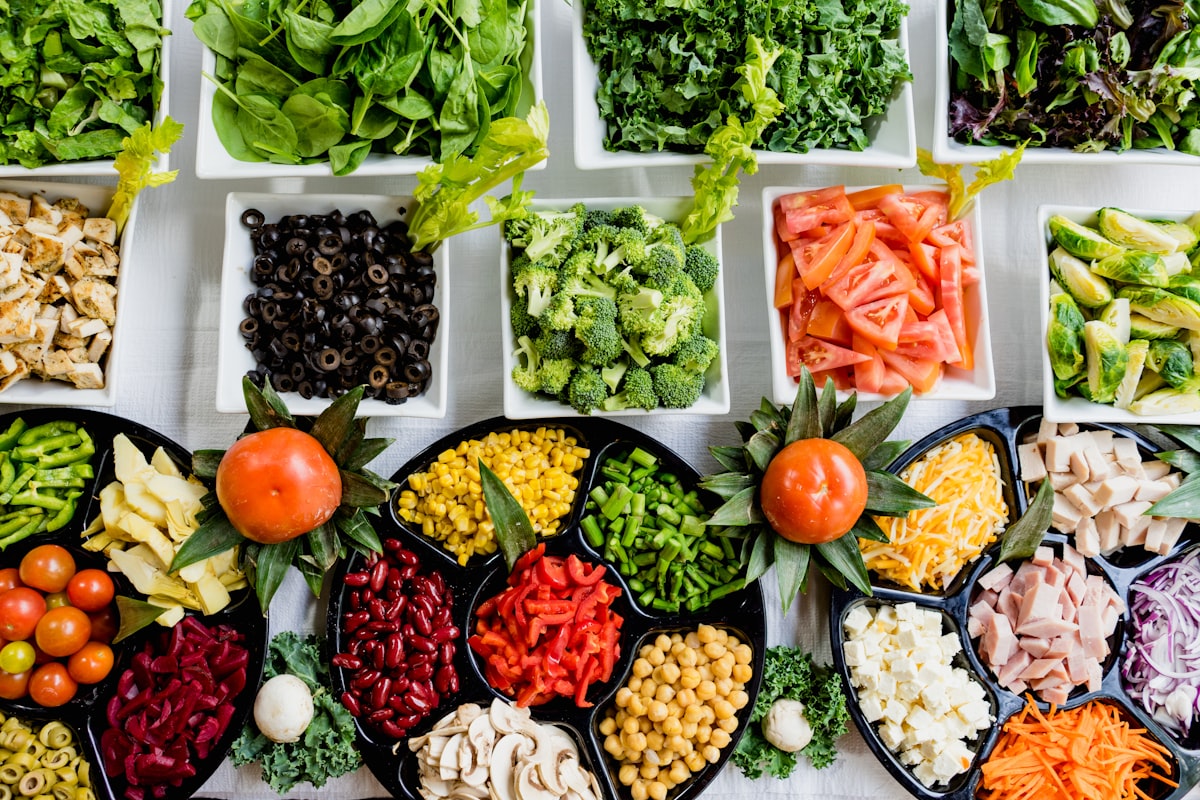
The whole rule fits in one sentence, so let's pin it down before anything else: vegetables first, protein and fat second, starch and sugar last.
That's it. Not complicated. But each position earns its spot for a reason, and the reasons matter when you're actually standing in front of a plate trying to remember what to do.
Position one is vegetables — cooked, raw, or a mix, but ideally fibrous and non-starchy: leafy greens, broccoli, cauliflower, cabbage, zucchini, peppers, mushrooms, green beans. The fiber coats the digestive tract and physically slows everything that comes after it. Position two is protein and fat: eggs, fish, chicken, tofu, beans, plus whatever healthy fat rides along.
Protein triggers the gut hormones that tell your brain you're filling up, and fat delays stomach emptying. Position three — the last thing you eat — is the starch and sugar: rice, noodles, bread, potatoes, fruit, dessert, the sweet drink.
Why this order? Because the carbohydrate is the thing that spikes your blood sugar, and the fiber, protein, and fat are the things that slow that spike down. Eat the slowers first and the spiker last, and the spiker hits a digestive tract that's already cushioned.
Eat the spiker first — the classic Western pattern, bread basket before the salad arrives, rice as the first thing on the fork — and the glucose hits an empty, unprotected system.
Notice what this rule is not. It's not low-carb. It's not keto. You can eat rice at every meal. You just eat it last. It's not even about eating less, though people often do, because the vegetables and protein fill you up before the starch has a chance to. And it's not about willpower, because the order is a habit you can set in advance — the plate gets built in sequence, and the sequence does the rest.
The version I give patients is a little rhyme that's easier to keep in your head than "vegetables, protein, fat, starch": greens first, then the stuff with the muscle, then the stuff with the starch. Crude, but it sticks.
- Memorize the three positions, not a food list: fibrous vegetables first, protein and fat second, starch and sugar last.
- The starch is the spiker and the vegetables are the buffer. The rule is just 'buffer before spiker.'
- This isn't low-carb and it isn't a portion cut. Rice and noodles stay on the menu — they just move to the end of the meal.
"Eat the greens first, the meat second, and the grain last. The grain, arriving on a full and orderly stomach, is transformed without turmoil."
What Actually Happens to Your Blood Sugar
To see why the order matters, you have to watch what a meal does to your blood sugar, because that's the whole game here.
When you eat starch or sugar, the carbohydrate gets broken into glucose and floods into the blood. The pancreas answers with insulin, which escorts that glucose into cells. In a healthy person the peak is modest and the return to baseline is smooth.
In someone with insulin resistance, prediabetes, or diabetes, the same meal produces a taller peak that falls slower — and it's the tall, drawn-out excursions, repeated meal after meal for years, that do the damage the textbooks warn about: the fatigue after lunch, the three-o'clock crash, and the long-term wear on blood vessels and nerves.
Food order changes that curve without changing the meal. The 2019 study that convinced me measured exactly this. Researchers gave people with prediabetes the same meal on two separate days, in two orders. In one, the carbohydrates were eaten first; in the other, protein and vegetables first and carbs last.
When the carbs came last, the post-meal glucose excursion was significantly lower — the peak was shorter and the whole curve flattened. Same food, same plate, a genuinely different metabolic response.
A 2023 randomized crossover trial in young healthy women found the same thing and added a useful detail: eating vegetables first reduced post-meal blood glucose and insulin regardless of how fast they ate. You don't have to eat slowly for the order to help. You just have to eat the vegetables before the starch.
The mechanism isn't mysterious. Fiber slows the rate at which the stomach empties and the small intestine absorbs glucose. Protein triggers incretin hormones — GLP-1 and GIP — that enhance insulin release and slow gastric emptying. Fat does its own delaying. Stack those three in front of the starch, and the starch arrives at a gut that's already braked.
The glucose seeps in over a longer stretch instead of pouring in at once, and a flatter, lower peak is the result.
None of this requires a prescription or a supplement. It requires eating the same dinner in a different order. That's the part people find hard to believe until they see it on their own glucometer.
- The thing being managed here is the glucose excursion — the height and duration of the after-meal spike. Flatter is better, and order flattens it.
- You can verify it at home with a continuous glucose monitor or finger-prick meter: eat the same meal both ways and compare the two-hour readings.
- The mechanism is three brakes — fiber slows absorption, protein triggers fullness hormones, fat delays emptying — all firing before the starch arrives.
"When the carbohydrates were consumed last, the postprandial glucose excursion was significantly reduced compared with consuming them first."
Why TCM Has Been Saying This for Two Thousand Years
The modern glucose research is new. The instinct underneath it is ancient, and it's worth sitting with that for a moment, because it changes how seriously you take the rule.
Chinese medicine never treated a meal as an undifferentiated pile of nutrients. It treated it as a sequence of substances arriving at the middle burner — the Spleen and Stomach — one course at a time. The classical dietary texts return again and again to the order of eating, and they do it for the same reason the glucose researchers do: the first thing you eat sets the conditions for everything after it.
The Spleen, in this frame, is the organ of transformation and transportation. It converts what you eat into Qi and Blood, and it has a rhythm. Overload it with the heavy, concentrated, sweet-or-starchy stuff first, and it bogs down; the surplus isn't transformed cleanly and instead accumulates as Dampness — the sticky, heavy residue TCM blames for foggy heads, weight that won't shift, and that post-meal slump.
Feed it the light, fibrous, vegetable course first, and the Spleen receives an easy load that primes it for the heavier courses to come.
Sun Simiao's dietary instructions, written in the seventh century, lay out a sequence that sounds almost banal to a modern ear: the light and vegetable dishes first, the grain and the meat after. Read it now, next to a 2019 glucose study, and the banal instruction stops looking like etiquette. It looks like a prediction about blood sugar made thirteen hundred years early, without a glucometer.
There's a deeper point buried here. The tradition isn't claiming the vegetables are morally superior or that rice is bad. It's claiming the body processes things in order, and that a meal's effects depend partly on its sequence. That's a claim about how digestion works, and it happens to be one the modern data now supports.
When two systems separated by two millennia and a language barrier arrive at the same practical instruction — vegetables first, starch last — it's worth treating that instruction as more than folk wisdom.
The difference between the two is just vocabulary. The glucose researcher says "fiber slows gastric emptying and blunts the excursion." The classical physician says "the light course opens the way and the heavy course follows without burdening the Spleen." Same observation, different tongue.
- TCM reads the meal as a sequence arriving at the middle burner, not a pile of nutrients — the first course conditions everything after it.
- The classics prescribe light and vegetable dishes first, grain and meat after. It reads like a blood-sugar prediction written without a glucometer.
- Two traditions, two vocabularies, one instruction: vegetables first, starch last. When that happens, the instruction is probably real.
"Begin the meal with the light and the vegetable; take the grain and the meat after. The middle burner, opened by the light, carries the heavy without burden."
Vegetables First: The Fiber Argument, in Plain Terms
The vegetable course earns its first position on one word: fiber. It's worth understanding what fiber actually does, because it's the engine of the whole rule.
Fiber is the part of plant food your small intestine can't fully break down. That indigestibility is precisely the point. Soluble fiber, the kind in beans, oats, and many vegetables, dissolves into a gel in the gut. That gel physically slows the rate at which the stomach empties and the rate at which glucose moves across the intestinal wall into the blood.
Insoluble fiber, the kind in leafy stems and skins, adds bulk and keeps things moving. Both slow the arrival of whatever comes next.
So when you eat a plate of leafy greens and broccoli before your rice, you're laying down a physical barrier — a sort of speed bump in the digestive tract — that the rice's glucose then has to cross slowly. The peak of the glucose curve drops and stretches out. The insulin response, which tracks the glucose, drops with it.
Eat the rice first and there's no speed bump; the glucose pours in fast, the pancreas overreacts, and the curve spikes tall and crashes hard.
There's a second effect that gets less attention but matters a lot in practice. Vegetables are bulky and take a while to chew. Eating them first gives the body's fullness machinery — the stretch receptors in the stomach, the gut hormones released by fiber and protein — time to switch on before you reach the calorie-dense starch.
By the time the rice is in front of you, you're already partway full, and the rice portion tends to shrink on its own. Not because you're denying yourself. Because the earlier courses did their job.
Cooking matters here, and it's the one point where TCM and the raw-food movement genuinely disagree. The tradition prefers vegetables lightly cooked — steamed or stir-fried — because cooking softens the fiber and makes the vegetables easier on a weak digestive system.
The modern data is agnostic on the moral question but clear on the practical one: steaming and quick stir-frying preserve more of a vegetable's nutrients and glucosinolates than long boiling, and cooked vegetables are easier to eat a lot of. You want volume here. A big plate of warm greens beats a small handful of raw leaves, both for the fiber and for the fullness.
- Fiber is a physical speed bump for glucose. Vegetables first lay that speed bump down before the starch arrives.
- Volume matters: a big plate of cooked greens beats a few raw leaves, for both the fiber and the early fullness.
- Steam or quick-stir-fry rather than boil — cooking softens the fiber and keeps more of the nutrients and glucosinolates in the vegetable.
"The leafy and the fibrous clear the way. They hold the meal's pace, slow the heavy course, and let the Stomach report its fullness before the grain arrives."
Protein and Fat: The Second Position Earns Its Keep
If vegetables are the speed bump, protein and fat are the second set of brakes, and they work through a different mechanism entirely — hormones.
When protein reaches the small intestine, it triggers the release of incretin hormones, chiefly GLP-1 and GIP. These are the same hormones the newer diabetes and weight-loss medications are designed to mimic, which tells you how central they are. GLP-1 slows gastric emptying, enhances insulin release in response to glucose, and signals fullness to the brain.
Fat contributes its own delay: a meal with fat in it empties from the stomach more slowly, which stretches the arrival of any carbohydrate even further.
The practical upshot is that a piece of fish or chicken or tofu eaten before the rice buys you a slower, gentler glucose rise than the same rice eaten on its own. Eggs at breakfast, for instance, are a protein-and-fat course that flattens the curve of whatever toast or oatmeal comes after. The old advice to start the day with protein isn't a fad; it's meal-order advice wearing different clothes.
There's also the satiety effect, and it's the part people feel most. Protein is the most satiating macronutrient, and eating it in the middle of the meal — after the vegetables, before the starch — means you arrive at the carbohydrate already substantially satisfied. The starch portion shrinks without a fight, and the meal ends cleaner, without the heavy, overfull feeling that a starch-first meal leaves behind.
A note on what counts, because people overcomplicate this. It doesn't have to be meat. Tofu, tempeh, eggs, fish, chicken, beans, lentils, plain yogurt, edamame — anything with real protein and a bit of fat works.
The tradition has its own phrasing for this position: it pairs the protein with the vegetable course as part of the "opening" of the meal, the substantial-but-not-heavy middle that steadies the middle burner before the grain lands.
The one thing to avoid is burying the protein under the starch. A sandwich where the bread outnumbers the filling is a starch-first meal in disguise, no matter how much turkey is in there. Same with a bowl of noodles with a few shreds of chicken on top. If the starch is the first and largest thing on your fork, the sequence has already failed before you've taken a bite.
- Protein triggers GLP-1 and GIP — the same incretin hormones the new diabetes drugs mimic — which slow emptying and blunt the glucose rise.
- Protein is the most satiating macronutrient; eating it mid-meal shrinks the starch portion without a fight.
- Watch the disguised starch-first meals: the sandwich that's more bread than filling, the noodle bowl with a few shreds of chicken. Sequence fails when the starch leads the fork.
"The substantial course steadies the middle burner. Meat, fish, or the bean arrives after the greens and before the grain, and the meal holds its balance."
Where the Evidence Gets Thin
I want to be straight about what this rule is and isn't, because the honest version serves you better than the triumphant one.
The studies are real and the mechanism is sound, but the evidence base is still young and narrow. The trials that measured food order directly were small and mostly short-term. They tracked post-meal glucose and insulin over hours, which is the right thing to measure for the mechanism, but they don't yet tell us what a decade of eating in sequence does to A1c, or cardiovascular events, or weight.
The long, hard endpoint data simply isn't there yet.
There's also individual variation the studies can't fully capture. How much the order helps depends on where you're starting from — someone with prediabetes tends to show a bigger, more meaningful flattening than a young healthy person whose curve was already modest. Gastroparesis, reflux, or any condition that changes how your stomach empties will change how the rule plays out too.
And the rule is a tool for managing the after-meal excursion; it is not a substitute for treating diabetes or prediabetes with the care team that manages your numbers and your medication.
One more honest limit. Meal order helps most when the meal contains real starch and real vegetables. It doesn't rescue a meal that is mostly starch with a garnish of green — the sequence only works if the buffer course is substantial enough to do its job. And it doesn't turn dessert into health food. A sweet eaten last still spikes; it just spikes a little less than it would have on an empty stomach.
So treat this for what it is: a low-cost, no-side-effect habit that flattens the after-meal glucose curve, backed by short-term trials and a plausible, well-established mechanism, and recommended by a two-thousand-year-old dietary tradition for reasons that now look prescient.
Use it as a layer on top of whatever else you're doing — not as a replacement for medical care, and not as a reason to skip the vegetables on the assumption that order alone will save you. If you have diabetes or prediabetes, bring this to your clinician and fit it into the plan you already have, not the plan this article implies.
- The direct trials are small and short-term; they measure the after-meal curve, not years of hard outcomes. The long-term data isn't in yet.
- The people who benefit most are those with prediabetes or early insulin resistance — the healthier your curve already is, the less room there is to flatten.
- Order is a layer, not a cure. It doesn't fix a mostly-starch meal or turn dessert into medicine, and it's not a substitute for treating diabetes with your care team.
"Good medicine states its limits. The order of a meal steadies the blood sugar of a meal; it does not, by itself, undo the accumulated years."
A Day of Eating in Sequence
Here's the rule turned into an actual day, because abstractions don't survive contact with a busy morning. The pattern is the same every time: something fibrous, then something with protein, then the starch.
Breakfast. If you eat eggs, start there — two eggs, maybe with a handful of sautéed spinach or mushrooms first, then your toast or oatmeal last. If you're having oatmeal, the vegetable course might be a small plate of greens or a tomato, then a spoonful of nuts or a scoop of yogurt for the protein, then the oats. Coffee can come whenever; it's not part of the sequence and doesn't much change it.
Lunch. This is where the rule usually dies, because lunch is rushed. The fix is to build the plate in order and eat it in order: the salad or cooked greens first, the chicken or fish or tofu and beans second, and the rice or bread or noodles last.
If lunch is a sandwich, that's a starch-first meal in disguise — so eat a small salad or some raw vegetables first, then the sandwich, and try to make the sandwich itself more filling than bread.
Dinner. Same three positions, and this is the meal where the order matters most, because dinner tends to be the starchiest and the one eaten closest to sleep. Greens or a cooked vegetable first — a big serving, not a garnish. Then the protein and its fat. Then the rice or noodles or potatoes, which you'll now want less of because the earlier courses have filled you up.
Snacks and sweets. The rule scales down too. If you're going to have fruit or a small dessert, eat it after something with protein or fiber rather than on an empty stomach — a few almonds before the apple, or a slice of cheese before the chocolate. It's the same principle in miniature.
The point is that none of this requires a new grocery list. You already eat vegetables, protein, and starch in some order every day. All this rule does is flip the order so the brakes fire before the sugar arrives. Try it for two weeks and watch two things: how you feel about ninety minutes after meals, and, if you have a meter, what the numbers do.
The feeling comes first, and it's usually the thing that sells people on the habit for good.
- Build the plate in order and eat it in order: greens first, protein and fat second, starch last. Same for breakfast, lunch, and dinner.
- Lunch is where the rule dies — rescue it by eating a small salad or raw vegetables before the sandwich, and make the sandwich more filling than bread.
- Scale it down for snacks: a few almonds before the fruit, a slice of cheese before the chocolate. Buffer before spiker, every time.
"The same food, in the right order, becomes a gentler medicine. The sequence is not a restriction; it is the plate, arranged to do its own work."