人老腿先老: The Saying Every Grandparent Repeats
Walk through any Chinese park at six in the morning and you'll see it: rows of older people slapping their calves, kicking heels back toward their hips, doing slow knee bends that most forty-year-olds couldn't manage without a trainer. Ask one of them why, and you'll get the same line — 人老腿先老, ren lao tui xian lao. People age from the legs first.
It's the closest thing Chinese folk medicine has to a universal law: repeated by grandmothers, echoed by qigong teachers, baked into how entire communities exercise at dawn. My own mother recited it for years while ignoring it completely, the way people do with proverbs that hit too close to home.
Then her knees started complaining on the stairs of her apartment building, and suddenly the proverb had her full attention — and her full exercise routine followed.
The saying carries a specific claim, not a vague one. Aging shows up earliest and hits hardest in the legs. Not the heart, not the brain, not the skin. The legs. That claim sat in folk wisdom for centuries, and in the last thirty years modern geriatrics has been quietly measuring it with stopwatches, gait mats, and chair-stand tests. The two traditions keep arriving at the same address.
This article walks through what the old saying actually means, whether the evidence backs it, and — the useful part — what to do about it. Because buried in all the grim statistics is a genuinely good piece of news: the legs are the most trainable part of an aging body. The same muscles that decline fastest are the ones that respond fastest to work.
- The proverb isn't fatalism — in Chinese folk practice it's a call to action: if the legs go first, the legs get trained first.
- You don't need a park or a group. The three tests and the protocol in this article run entirely in a kitchen.
"A tree rots from the roots first; a person ages from the legs first."
The Root and the Crown
Classical Chinese medicine divides the body into root and branch — gen and biao. The head is the crown: the showpiece, the part that gets the attention and the mirror time. The legs are the root: the part nobody sees, the part everything else stands on. When a TCM practitioner talks about the root of the body, they're not reaching for poetry. They're describing anatomy.
The three great storage systems of classical medicine all anchor below the waist. The Kidney stores Jing — the inherited essence that drives growth, bones, and marrow — and its meridian runs from the sole of the foot up through the inner leg. The Liver, which governs the sinews and connective tissue, routes through the same territory. The Spleen, which governs the flesh, rules the muscles of the limbs.
Three organs, one address: your legs.
That's why the classics treat weak legs as a diagnostic window instead of a cosmetic complaint. Cold feet, creaking knees, legs that quit halfway up a flight of stairs — these read as signals about the state of Kidney Jing and Liver blood, not as isolated joint trouble. The Stomach meridian, the great supply line of acquired Qi, runs down the front of the thigh to the foot.
One classical approach to legs that feel heavy as lead starts with the digestive system, not the muscles. In a literal sense, the tradition thinks your legs are your constitution, out where anyone can see it. The proverb is the folk version of that anatomy lesson.
What the Gait Studies Say
In 2011, a team pooled data from nine aging cohorts — 34,485 adults over 65 — and found something that made walking speed a talking point in geriatric clinics ever since. Gait speed predicted survival better than most blood tests.
1 meter per second faster was tied to a 12 percent lower risk of death, and the spread was stark: a 75-year-old man in the slowest group faced a predicted 10-year survival of 19 percent, while a fast-walking man the same age could expect 87 percent. One number — how quickly you cross a room — sorted people into worlds of difference.
Guralnik's 1995 New England Journal of Medicine study reached the same place from a different direction. 9 times more likely to become disabled within four years. Five times. The whole assessment took about ten minutes and needed nothing but a stopwatch and a chair.
Honest boundary: these are associations, not proof that slow legs cause early death. Disease burden, frailty, and a dozen other factors travel with both. But the pattern holds across countries, cohorts, and decades, and it lines up with what the proverb claimed all along. Modern epidemiology didn't overturn the grandmothers. It gave them a p-value.
- Gait speed below 0.8 m/s isn't a diagnosis — but it's a good reason to mention it at your next checkup.
- A baseline is only useful if you retest. Put the three numbers from this article somewhere you'll see them in three months.
"The running water never stagnates, and the door hinge never rusts — because they are in constant motion."
Why the Legs Go First

There's a mechanical reason the legs lead the decline: they have the most muscle to lose. After about age 30, adults shed roughly one percent of muscle mass a year, and the rate climbs after 60. Because the legs hold about half the body's muscle, they lose the most in absolute terms.
Worse, the fast-twitch fibers that produce explosive strength — the ones that catch you when you stumble — disappear faster than the slow-twitch ones. You end up with enough muscle to walk slowly and not enough to react quickly. That's the quiet signature of aging legs: strength is fine, speed is gone.
Add the modern accelerant, sitting. The calf works as a venous pump, pushing blood back up against gravity — both Chinese medicine and cardiology call it the second heart. Sit for eight hours and that pump barely runs. Blood pools in the lower legs, ankles swell, feet run cold, and the whole system behaves like what TCM describes as Qi stagnation: heavy, sluggish, slow to recover.
Then the stumble happens, the fast-twitch fibers aren't there to catch it, and the wobble that should have been a non-event becomes a hip fracture. The legs don't just age first. We help them along.
The fix isn't exotic. It's getting the pump running again — walking, calf work, stairs — before the stagnation becomes a lifestyle.
- Every hour of sitting, stand for two minutes and rise onto your toes ten times. The calf pump works instantly.
- Cold feet at night are worth taking seriously: they're a signal of sluggish lower-limb circulation, the same thing TCM reads as Yang not reaching the root.
"The Kidney governs the bones and generates marrow; the Liver governs the sinews; the Spleen governs the flesh of the body."
Three Tests You Can Run in Your Kitchen
You don't need a lab to know where your legs stand. Three tests, all doable at home with a chair, a hallway, and a stopwatch. Run them next to a counter or wall the first time, because the results can be humbling, and skip any test that causes pain — that's a doctor conversation, not a self-test conversation.
Chair stand: sit in a sturdy chair, arms crossed over your chest, and stand up and sit down five times as fast as you can. Under 10 seconds is strong at any age. Eleven to thirteen is normal. Over 15 seconds — or needing your hands — is a signal worth acting on this year, not next.
One-leg balance: stand on one leg, eyes open, hands on your hips. In a 1997 study of adults 60 and older, people who couldn't hold this position for 5 seconds had roughly double the risk of injurious falls over the next three years. Hold 30 seconds and you're ahead of most people half your age. If you can close your eyes and hold 10, your vestibular system is doing its job.
Gait speed: time yourself over a measured 4 meters at your normal walking pace, the pace you'd use crossing a parking lot. Divide distance by time. At 0.8 meters per second or faster you're in the healthy zone; below 0.6 is the band researchers use for frailty screening.
Write the three numbers down. In three months they'll tell you more than any article can — and they'll make the proverb personal.
- Test the same time of day, ideally after a normal morning, not after a workout — you want your usual number, not your best number.
- If any test hurts, stop. Sharp pain in the knee or hip during a chair stand is worth a professional opinion before you start training.
"When the sinews and bones are strong and the Qi flows freely, the body moves with ease; when the root is weak, the branches shake."
Training the Root: What Actually Works
Here's the part the proverb leaves out: leg strength and balance respond to training at any age, including the ninth decade. The classic trials that proved resistance training works in nursing home residents were done with people in their eighties and nineties, and gains showed up in weeks. You don't need a gym membership. You need a chair, a counter, a staircase, and a stubborn streak.
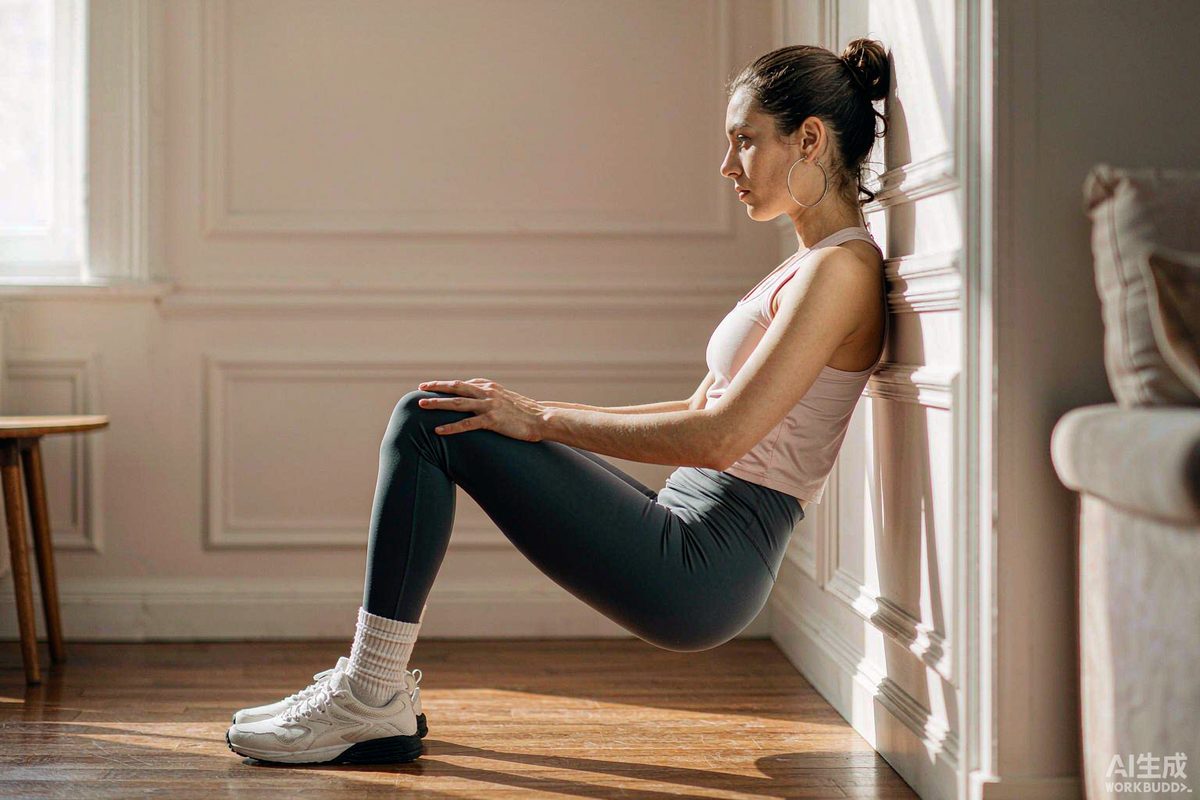
The core list is short. Chair squats — sit, stand, repeat, hands free when you can manage it. Calf raises at the counter, slow on the way down, three seconds down if you can. Step-ups on the bottom stair, alternating lead legs.
Brisk walking with deliberate arm swing — this is where the TCM timing ideas fit naturally; the morning walk is the classic Yang-raising habit, and it doubles as the single most underrated leg exercise in existence.
If you want the full classical package, taiji or qigong weight-shifting practice trains exactly what the tests above measure: ankle control, weight transfer, single-leg stance, the slow-twitch endurance that keeps you upright on a moving bus.
Start embarrassingly small. Five chair squats a day, twice a week at first, then every other day, then daily. Add one rep a week. Use the counter for balance support — that's not cheating, it's called progressive loading, and it's how every strength program in existence works. The muscles don't care about your pride. They respond to load, rest, and repetition, in that order.
- Chair squat cue: push the floor away with the whole foot, heels down, knees tracking over the toes. Chest up, gaze forward.
- Calf raise cue: rise as high as you can, pause one second, take three seconds to lower. Twenty reps, twice through, every day is enough.
- Step-up cue: place the whole foot on the stair, push through the heel, no bounce. Control the way down — that's where the strength is built.
"A tree rots from the roots first; a person ages from the legs first."
The Kidney–Leg Axis: Why Leg Work Is Jing Work
Classical theory ties the legs to the Kidney, which stores Jing — the deepest reserve of vitality, the battery you're born with. Bones, marrow, teeth, and the lower back all answer to the Kidney in this system, and so does the leg itself. That's why an old TCM doctor listening to a patient describe weak knees, ringing ears, and a sore lower back hears one story, not three. They all run on the same account.
Modern biology doesn't use the word Jing, but it keeps finding overlapping patterns. Leg muscle is the body's largest glucose sink; weak legs track with worse metabolic control. Muscle releases myokines that support bone, brain, and immune function.
And the mitochondria in leg muscle are among the most trainable in the body — exercise is the only known intervention that reliably builds new mitochondria, and it does so fastest in the biggest muscles. When classical medicine says leg work nourishes the deepest reserves, it is describing, in its own vocabulary, mitochondrial and metabolic function.
The practical translation is mundane. Keep the legs warm in winter — cold constricts, and Kidney Yang is the warmth function. Keep them moving every single day. Treat the feet as part of leg health: foot soaks at night, barefoot work on a mat, a hand on the sole during calf stretches.
The classical map and the modern one keep agreeing on the same address, which is either coincidence or a two-thousand-year-old head start.
- Foot soak at night, warm not hot, for 15 minutes: it shifts blood back to the periphery and pairs naturally with calf raises during the soak.
- Barefoot time matters more than people think — the sole's proprioceptors are the Kidney meridian's doorstep in classical terms, and modern rehab agrees the foot needs sensory input.
"The Kidney stores Jing and governs the bones; its vigor is visible in the legs and the lower back."
Start With One Stair
A few years back I watched a 68-year-old man go from gripping the railing on every staircase to jogging up two flights without stopping. No secret program. He decided the bottom stair of his building was an appointment: one step-up with the left leg, one with the right, every time he came home. Then two. Then five. Six months later his daughter asked what he'd changed. 'The stair,' he said, as if it were obvious.
It was, in hindsight.
You already have your baseline from the kitchen tests. The question isn't whether the work matters — the data and the proverb agree, and they rarely agree on anything. The question is what you'll actually do tomorrow morning, and the week after, when it's cold and the couch is warm and the stair looks very optional. Pick the smallest version that still counts: five chair stands while the kettle boils.
One-leg balance during each toothbrushing, both sides. The stair.
Your legs are the root of the body, and roots respond to water — daily, boring, delivered a little at a time. Three months from now, run the kitchen tests again. Your numbers will tell you whether the old saying is still winning.
- Anchor the habit to something that already happens: kettle, toothbrush, first coffee. The stair won't be optional if it's attached to a routine that isn't.
- Retest quarterly. A five-second gain on one-leg balance is a real, measurable win — log it like you'd log a weight.
"The sages did not treat those already ill, but treated those not yet ill; they did not govern the body already in disorder, but governed it before disorder."