The Last Hour of Sleep Deserves Better Than a Klaxon
A standard alarm does one thing: it detonates. Somewhere in the dark, mid-dream, a phone erupts at full volume, and the body goes from deepest parasympathetic to full sympathetic mobilization in under a second. Heart rate jumps. Cortisol spikes above even the normal morning rise.
If the alarm lands during slow-wave sleep — the deepest stage, which clustering toward the first half of the night makes possible for early alarms — the resulting grogginess has a name, sleep inertia, and it can outlast the commute. That leaden first hour, the one spent negotiating with the snooze button like a hostage mediator, is not a character flaw.
It is what being pulled out of the wrong stage of sleep feels like.
There is a second cost that gets less attention: snoozing. Each snooze cycle is a nine-minute fragment of new sleep too shallow to restore anything, punctuated by another sympathetic jolt. Three snoozes means four detonations and no proper exit from sleep at all. The morning, physiologically, never happens cleanly.
Light changes the shape of the exit. Morning light is the master signal for the circadian clock — a fact established in controlled human experiments since the early 2000s, when researchers mapped exactly how bright light pulses at dawn shift the body's phase earlier. Let light arrive gradually, and melatonin secretion tapers before you are even conscious of waking.
By the time the tone sounds — if you still want one — you are in light sleep, closer to the surface, surfacing already. The alarm stops being a detonation and becomes a formality.
What a Sunrise Clock Actually Does
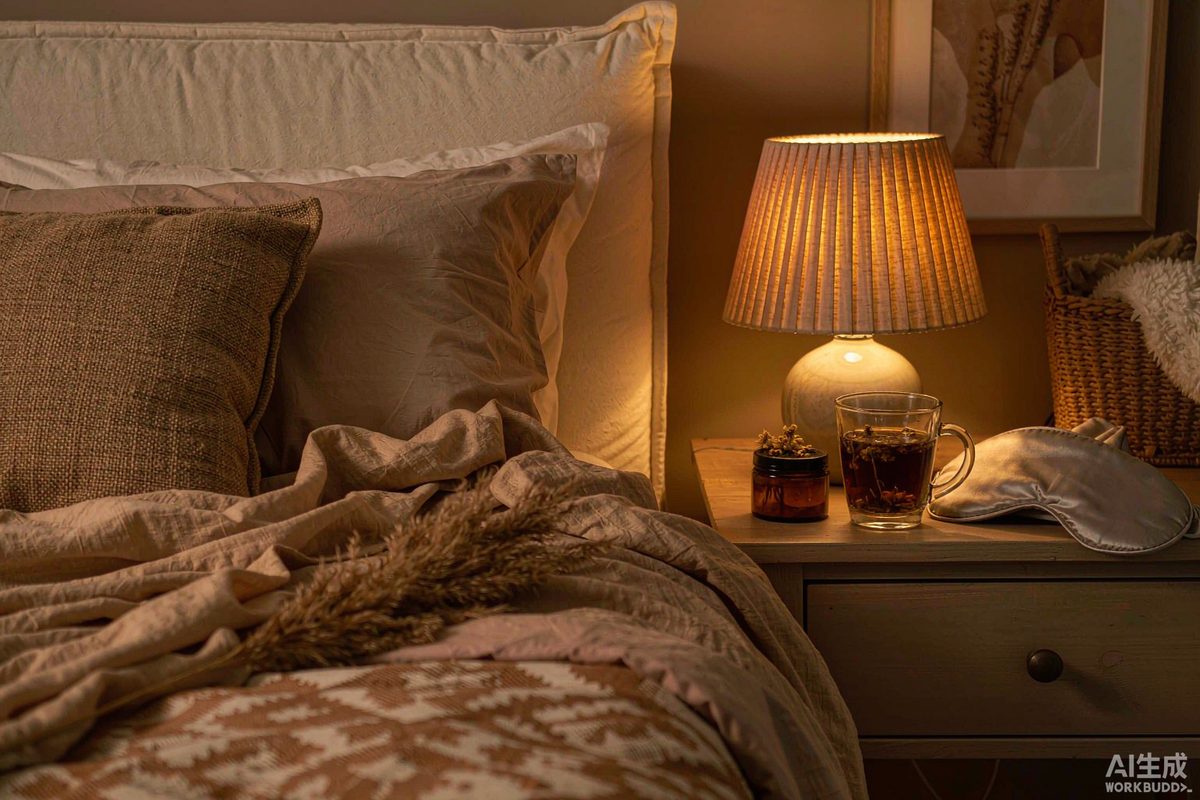
The mechanics are simple and, in the better units, well executed. You set a wake time. The clock begins thirty minutes earlier — some models offer fifteen to forty-five — glowing a deep red, barely brighter than a nightlight. Over the ramp it shifts through amber toward warm white, brightening in steps until the dome is genuinely bright where it matters: on the bed, at pillow level.
If you have enabled the audible backup, a soft tone starts only after the ramp completes. The design bet is that you will rarely hear it. Most of our testers, by the third week, were waking somewhere inside the ramp, several minutes before any sound.
This is not the same thing as a phone alarm with a 'sunrise' wallpaper, and it is worth saying why. Brightness is the active ingredient, and phone screens cannot produce it — not at the distance and area a bedroom requires. A dedicated unit putting out a few hundred lux at the pillow across a wide dome is a different stimulus than a phone screen glowing at arm's length.
The wavelength matters too: the ramp starts red-dominant, the least alerting end of the spectrum, so the earliest phase of the dawn nudges the clock without startling the sleeper.
What the good units add is a reversed ramp at night — a sunset mode that dims the room down over half an hour, which our testers ended up valuing more than expected. The same physiology that hates a jarring morning loves a tapering evening. The Neijing would call the pair of them a matched pair of Yang cues: light rising slowly at dawn, light sinking slowly at dusk.
The device is just a small mechanical promise that both will happen on schedule.
- Ramp length matters more than most reviews admit: 30 minutes suits most people; 15 is abrupt, and 45 can wake you too early. Start at 30 and adjust once per week, not nightly.
- Set the ramp to finish exactly at your target wake time — not at your old snooze-adjusted time. The device works by anchoring a consistent clock signal.
Yang Qi Should Rise, Not Leap
Classical Chinese medicine has a whole physiology of morning, and it reads the violent alarm as a small injury repeated daily. In the Neijing's framework, defensive Qi — Wei Qi, the yang energy that patrols the body's surface and fights off intrusions — spends the night circulating in the interior, in the Yin organs. At waking, it moves outward to the surface, where it will spend the day.
Dawn light is the cue that draws this shift; the rising sun and the rising Yang move together, and the classical texts treat that parallel as a law, not a metaphor.
The 卯时 (mao hour), 5 to 7 AM, belongs to the Large Intestine and the grand movement of the day's first Yang. A person who wakes in this window feeling heavy is described as having Wei Qi caught between interior and exterior — half-emerged. What helps, in this framework, is a gradual, warm, drawing cue. What harms is a rupture.
An alarm that detonates the body into wakefulness forces Yang to leap rather than rise, and the tradition predicts the residue precisely: a startle that lingers in the chest, a morning of jittery fatigue, the Shen — the spirit — arriving late to the eyes. Sound familiar? Modern sleep science calls the residue sleep inertia and measures it in reaction-time tests. Same observation, different instruments.
Suwen's second chapter turns the principle into seasonal instruction: in spring, rise early, walk the courtyard with hair unbound, unhurried — letting the day's Yang expand the way the season's does. The recipe's essentials translate directly into a bedroom technology decision: the morning needs light, warmth, and slowness, in that order.
A sunrise clock is, honestly, a very literal implementation of a two-thousand-year-old morning prescription. We kept waiting for that to feel like a coincidence. It never did.
- Pair the light ramp with warmth where you can — warm socks set out the night before, or a robe on the radiator. Yang rises more willingly when the body is not cold.
- If you wake mid-ramp feeling heavy-headed, move the clock 30 cm closer rather than raising brightness. Proximity beats intensity at dawn.
"In the three months of spring, rise early. Walk the courtyard, the hair unbound, the body unhurried — and let the Sheng Qi of the season be released."
What the Specs Mean — and What Is Just Marketing
Product pages lean on numbers that sound clinical. Here is which ones change your mornings.
Brightness, measured honestly, is the first spec that matters — but manufacturers quote lux at the lamp surface, and what counts is lux at the pillow. A dome claiming 10,000 lux delivers that only at unnervingly close range; for waking, a unit that produces a few hundred lux spread across a wide dome at 30-40 centimeters from your face does the job. Coverage geometry beats headline numbers.
Second, the low end of the ramp should be red-dominant. A clock that starts its dawn in blue-white is starting your morning with the most alerting wavelength in existence at the sleepiest moment — backwards. Third, the sunset mode: genuinely useful, frequently cheapened. Check that it dims gradually rather than through visible steps.
Then the things that barely matter. Bluetooth speakers, app ecosystems, mood-lighting palettes — harmless, mostly unused by week two. Sleep-tracking features in a lamp are worse than useless; you have read why. Sound quality matters only if you hate the built-in tones, in which case FM radio is the feature you actually need.
And the display: look for a dimmable, preferably red-toned clock face, because a bright white LED display firing at the ceiling all night undoes the darkness work the rest of your bedroom is doing.
One more honest note: several sunrise clocks are essentially the same hardware in different shells. Price buys smoother ramps, better dimming curves, and sturdier dimmers — worth it at the mid-range, diminishing past it.
- Test the pillow-lux yourself: at your real sleeping position, with the room dark, the fully-ramped dome should make reading uncomfortable at arm's length. If you can read comfortably, move the lamp closer instead of buying a brighter one.
- Check the minimum brightness of the display before buying — 'dimmable' often still means 'visible from orbit.' A red nightlight mode is the feature to look for.
- Avoid units whose dawn ramp emits an audible tick from the dimmer circuit. Reviews mention it as 'faint hum' — at 5:30 AM it is not faint.
The Three We Kept Using
We ran three devices through the six-week protocol described above — same bedroom, same winter, same stubborn sleeper. All three worked. They differ in how, and for whom.
The dedicated sunrise clock was the strongest performer and the easiest recommendation. Its ramp is smooth, its sunset mode is genuinely gradual, and it needed nothing from a phone after setup. The red nightlight mode turned out to be the sleeper feature: it replaced the harsh bathroom trip light that had been fragmenting the second half of our tester's nights for years.
If you buy one device from this article, it is this one.
The 10,000-lux light therapy panel is not an alarm at all, and including it in a sunrise-clock review is deliberate. The clinical evidence on morning light — the trials for winter low mood, the phase-shifting studies — was done with exactly this kind of panel, sat near for 20-30 minutes after waking. The sunrise clock handles the exit from sleep; the panel handles the circadian signal afterward.
In December and January, our tester ran both, and the combination outperformed either alone. In summer, the panel went back in the closet, which is fine. It is a seasonal tool and should be marketed as one.
The smart-bulb setup is the value pick and the traveler's pick. Two tunable bulbs and a bedside lamp scheduled through an app replicated maybe eighty percent of the dedicated clock's dawn for a third of the price, and packed into a suitcase for a work trip.
The compromises: the ramp maxes out dimmer than the dedicated unit, setup requires an app evening you will only do once, and the sunset mode lacks the fine gradation of the real thing. For a guest room, a rental, or a first experiment in dawn simulation, it is the honest place to start.
Setting It Up So It Works on the First Monday
Placement first. The dome should sit at mattress height, 30-50 centimeters from your face, angled so the ramp reaches your closed eyelids — not across the room on a dresser, where it becomes ambient mood lighting with a job it cannot do. If you share a bed, angle it toward the person who needs the help, and accept some compromise; light does not respect property lines.
Timing second. Fix a target wake time seven days a week — the device is an anchor, and anchors only work on consistent seabeds. If your schedule is chaos, the sunrise clock will still soften individual mornings, but you will be getting maybe a third of the available benefit. Weekends count. The Neijing's seasonal advice assumes the sun rises every day, not just on weekdays, and so does your suprachiasmatic nucleus.
Integration third. The ramp replaces the jolt, not the rest of the morning. Get actual daylight within the first hour — a balcony, a walk, a bus stop — because the sunrise clock is the overture and the sky is the symphony. Keep a conventional backup alarm set for one week only, at slightly lower volume, in case the ramp does not wake you; most people abandon it by Wednesday.
And give the system a fair trial: the first two mornings tend to feel gimmicky, the second week quieter, and the third week is when our testers stopped negotiating with the snooze button entirely.
- Sunday-night rehearsal: run the sunset mode while reading and note the time it finishes dimming. That moment, not 'when you feel like it,' is your real lights-out.
- Winter pairing — sunrise clock at dawn, light panel with breakfast, outdoors at midday if you can. Three light signals beat any single expensive gadget.
- Travel: photograph your clock's settings. Re-creating a familiar dawn in a hotel with smart bulbs takes ninety seconds when you are not guessing ramp times.
"The mind should wake before the body; the body should wake before it is told."
Honest Limits: Who Should Skip It
This category has real evidence behind it and real boundaries around it, and the product pages rarely volunteer either.
The evidence: dawn simulation has been studied since the 1990s, most seriously in seasonal affective disorder, where trials comparing a simulated dawn to a full 10,000-lux session found comparable antidepressant effect — and, in the 2015 comparison we cited, a strong preference for the dawn among participants, presumably because a sunrise happens in bed.
The phase-shifting mechanism is solid: bright light at dawn advances the circadian clock, per the controlled phase-response-curve work from 2003, and morning light therapy for mood disorders has meta-analytic support across decades. What has not been studied as heavily: sunrise clocks in healthy sleepers without winter symptoms. The devices borrow their credibility from adjacent populations.
The mechanism transfers; the specific trial in healthy people mostly does not exist.
The boundaries: if you sleep through anything — a partner's alarms, fire drills — no ramp will save you; keep the backup alarm permanently and treat the light as a morning-quality upgrade, not a wake guarantee. Shift workers' circadian problems are inverted and this tool will not fix an inverted schedule.
Significant winter depression deserves the clinically studied protocol — a 10,000-lux panel, ideally with professional guidance — not a bedside dome alone. And if mornings are brutal because bedtime is 1:30 AM, no dawn device outranks an earlier bedtime; we tested that too, reluctantly. Light fixes leaving sleep. Only darkness fixes entering it.
The First Morning
Here is what the first proper morning with one of these actually feels like, because the marketing images get it wrong in both directions. Nothing ecstatic happens. You will probably not wake at the summit of the ramp bathed in golden light like a person in a stock photo.
What happens instead is smaller and better: somewhere inside the ramp, sleep thins, and there is a stretch — ten seconds, maybe thirty — where you are neither asleep nor exactly awake, just aware that the room is faintly warm-colored. The old alarm would have ended that stretch with an explosion. The ramp lets it complete. You surface. No hostage negotiation, no wet-sand hour, no verdict from a phone.
That stretch is the product. Everything else — the sunset mode, the nightlight, the FM radio — is furniture around it.
' It is a fair question, and it generalizes past alarm clocks — to the scores we check, the screens we charge at the bedside, the whole apparatus of small nightly agreements nobody remembers making. The sunrise clock is a modest piece of plastic. What it offers back is not modest: the first ten minutes of every day, returned to their original owner.