Why the Bathroom Walk Deserves Equipment
The companion health article on this site covers the evidence in full, so this one starts where that one ended: night bathroom trips are among the most common causes of waking in adults past fifty, and a systematic review and meta-analysis in the Journal of Urology found older adults with nocturia carry meaningfully higher odds of falling and of fracturing a hip than peers who sleep through.
The walk itself explains why — a person wakes from deep sleep with reaction time blunted, stands up into a blood-pressure dip, and navigates a dark hallway on a full bladder in a hurry. Every ingredient on that list is a documented fall risk alone. Together, at two in the morning, they are the most dangerous routine trip a household contains.
The gear question follows directly, and the strongest evidence behind it is older and broader than any single product: occupational-therapy home assessment. The OTIS randomized controlled trial followed people aged sixty-five and over who received a home hazard evaluation and modification — lighting among the items addressed — and the program reduced falls compared with usual care.
That trial tested a process, not a product: someone walks the route, finds the hazards, fixes them. This review is the do-it-yourself version of that walk, focused on the three fixes with the best cost-to-consequence ratio for the night walk specifically: a path that lights itself, a floor that grips, and a bed that holds its occupant's first step.
An expectation check belongs here, because gear pages tend to oversell. Nothing below reduces the number of times you wake — that is the fluid-timing and medical-assessment project in the health article. What this equipment changes is the safety and the speed of each waking: fewer stumbles, fewer doorway collisions, less full-brightness light sabotage of the sleep you are trying to return to.
Modest goals, cheap tools, real stakes. The classical texts would add their own frame — the Ling Shu's account of aging Kidney decline, the lower back and knees losing their strength to rise and steady the body — but the practical conclusion crosses both literatures: prepare the route, not just the bladder.
One more boundary before the products. Night waking with confusion, repeated falls despite a prepared environment, or waking driven by snoring and unrefreshing sleep is a clinician's territory, not an Amazon cart. The tools below serve the ordinary two a.m. trip. They do not diagnose the reason for it.
- Walk your own route in the dark tonight, at the speed you actually move at two a.m. Every wobble you notice is a product category below.
- Budget under eighty dollars covers all three items. The expensive version of this list is a fractured hip; the prices below are the cheap alternative.
"The trial tested a home hazard walk-through. This review is that walk-through, written down, for the one trip that happens at the worst hour."
The Path That Lights Itself
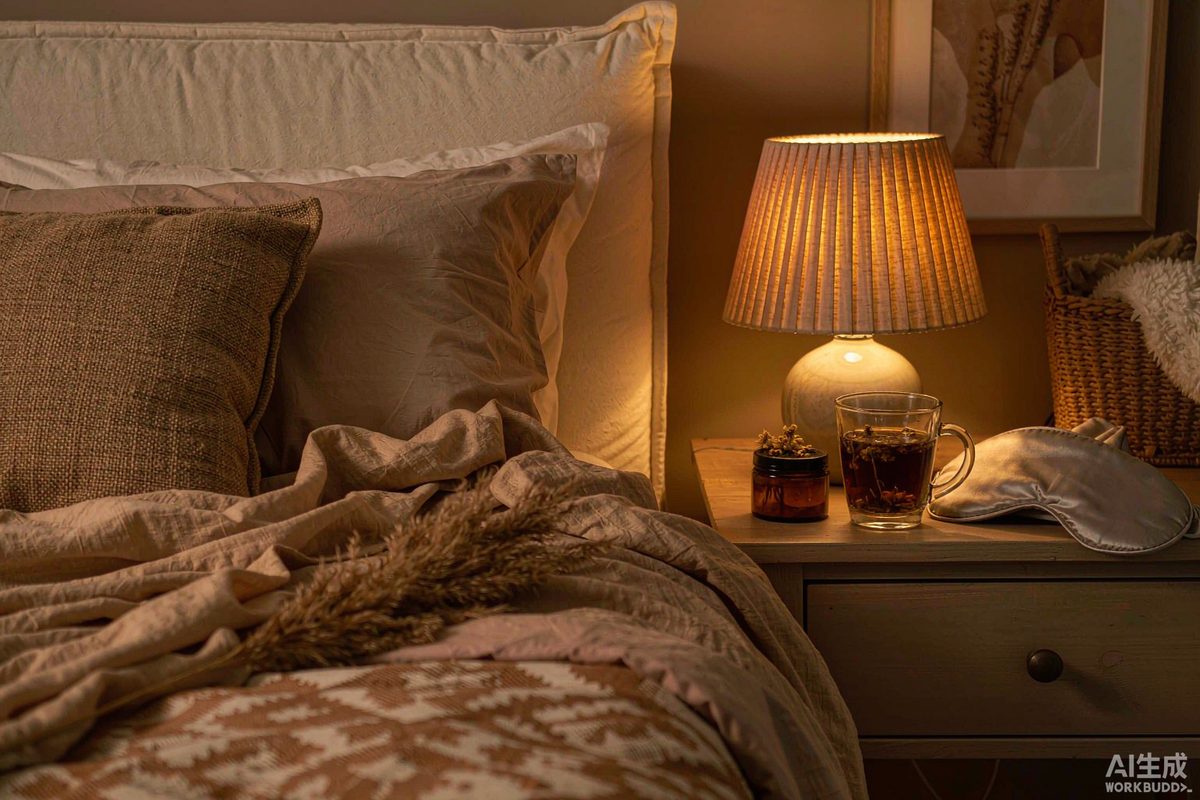
The product logic starts with a light-avoidance rule most people have backwards. When a night waking happens, the reflexive move is the ceiling switch or the bright bathroom fixture — and the melatonin study behind this review explains the damage.
Researchers at Brigham and Women's Hospital exposed people to ordinary room light before bedtime and measured a substantial suppression of melatonin onset plus a shortening of the hormone's duration through the night; light of that intensity, at that hour, tells the pineal gland that the day has resumed.
The dark-adapted eye is even more vulnerable, because its sensitivity has climbed for hours and a sudden bright source both startles and resets it. So the worst lighting for a night trip is also the most common lighting for a night trip.
The motion-sensor night light is the correction, and its specification follows from the research: warm amber or red rather than white or blue (the blue-blocking trial in the references found better sleep outcomes when short wavelengths were filtered at night), dim rather than bright, and triggered by motion rather than a switch — so the hands stay free and the light greets the feet instead of the eyes.
Placement runs low, near baseboards, one per segment of the route: bedside, hallway midpoint, bathroom threshold. A sensor that fires at ankle height lights the floor where the feet land; a ceiling fixture lights the face, which is the wrong end.
Practical selection notes from living with these. Buy units with a sensor and a duration you can set — about ninety seconds covers a walk and a door without leaving a glow in the hallway all night. Plug-in models beat battery models on reliability, and reliability is the entire product: the night this fails is the night it was bought for. m. walker, worse than either extreme.
What the light does not do, honestly stated: it does not treat the waking, and a melatonin-suppression study is not a motion-light trial. The reasoning chain — bright light at night suppresses melatonin, therefore dim warm light at night is the correct tool — is well-supported at each link, but no randomized study has followed falls after motion-light installation specifically.
The OTIS trial supports home modification in general; the specific product is the sensible, inexpensive interpretation.
- Amber or red, dim, low, motion-triggered, ninety seconds. Every spec has a study or a fall mechanism behind it; skip any and the list reassembles itself wrong.
- Light the whole route at once. A bright bedroom and a dark bathroom threshold is a hazard with a welcome mat.
"A night light for adults is not nostalgia. It is the cheapest fall-prevention device that plugs into a wall."
The Grip Between You and the Floor
Second on the route: what your feet are wearing when the route begins. m. walk is taken barefoot or in years-old scuffs by an overwhelming share of households, on hardwood or tile, at the moment reaction time is at its floor. Tread that grips converts the most common household fall — the slide on hard flooring at low speed — from likely to unlikely, and it does so for the price of a pizza.
This is the least sophisticated item in the review and possibly the highest-yield.
Selection has three non-negotiables. A real rubber outsole with visible tread, not fabric or worn-smooth EVA: rubber holds on tile that has just been mopped, which is exactly when bathroom floors are at their worst. A closed heel: the slide-on scuff that lets the heel escape at the bathroom doorway is a small, classic, entirely preventable fall, and a fitted heel keeps the shoe attached through turns.
And a sole that flexes at the ball of the foot — a stiff plank of a sole changes gait in ways that create their own wobble, particularly for anyone whose walk already needs respect. Washability is the quiet fourth criterion; a slipper that survives the machine gets worn, and gear that gets worn prevents falls, while gear that gets retired to a closet does not.
The honest evidence note, stated plainly: no randomized trial has isolated slippers as a fall intervention, and this review will not pretend otherwise. Footwear and flooring appear inside broader home-hazard and footwear research, where appropriate footwear and hazard reduction ride together. m. — plus the trivial cost of being wrong.
In a review organized by cost-to-consequence ratio, that trade clears the bar without needing a trial of its own.
The classical frame agrees in its own vocabulary. The Ling Shu ties the steadiness of rising — the lower back, the knees, the sinews — to the resources that decline with age, and treats a stumble not as bad luck but as a system losing support. A gripped sole is support at the smallest, most literal level: the interface between the body and the floor, reinforced. The tradition would not have called it a product.
It would have called it attending to the ground under the aged, which it recommended constantly.
- Rubber sole, closed heel, flex at the ball, machine-washable. Four checks, and they fit on the sticky note your phone's notes app pretends not to be.
- Retire the fashionable scuffs. They are fine at noon on carpet; they are the fall at two a.m. on tile.
"Nobody trips in slow motion on dry carpet. The grip you buy is for the mopped tile and the half-asleep stride — the walk you do not choose."
The Rail That Holds the First Step
Third: the moment the feet leave the mattress. Rising from lying is the biomechanical event of the night walk — blood pressure dipping, the inner ear lagging, the hips and lower back asked to fold a sleeping body upright in one motion — and it is where the Ling Shu located the aging body's honest complaint: the lower back and knees lose their strength to rise and steady the frame.
A bed assist rail is the modern answer to that sentence. A steel handle anchored under or beside the mattress gives the hand a fixed point at the exact moment the body needs one, converting a rise that used to require momentum and luck into a rise that requires a grip and five unhurried seconds.
Selection runs on three checks. Structure first: a base plate that slides under the mattress and keeps the handle vertical beats strap-and-buckle designs for older adults, because a strap's give, however small, turns the handle into something that moves under load — and a handle that moves is worse than no handle, because the body calibrates to it in a week.
Height second: the grip should clear the mattress top by about a hand's width, reachable from lying without a twist. Weight rating third, read against the actual user, not the carton's optimism. Installation is the product in a deeper sense: test the rail with your full weight in daylight, because a rail that rocks in its socket is a lever parked next to a sleeping person.
Two cautions, both serious enough to have earned their sentences. First, rails are contraindicated where cognitive impairment makes climbing over or entanglement likely — for those households, an occupational-therapy assessment is the correct tool and this product can be the wrong one. Second, a rail is not a substitute for the five-second rule from the health article: sit fully upright, breathe once, then rise.
The rail supports the rise; it does not cancel the physiology. Used by the right person, installed honestly, it is the item on this list most likely to prevent the fracture the whole review exists to prevent.
- Test any rail with full weight before the first night. A rocking rail is a hazard in costume, and daylight is the time to discover it.
- Rail plus five seated seconds beats rail plus a fast launch. The equipment supports the pause; it does not replace it.
"The Ling Shu named the failing rise two thousand years ago. The rail is the modern clause of that sentence."
What the Light Research Actually Says
Because the night-light aisle is full of claims, the research behind this review deserves its own section, with its limits shown. The melatonin study is unambiguous about mechanism: ordinary room light before sleep suppressed melatonin onset and shortened its duration in healthy adults, measured directly.
The blue-blocking randomized trial extended the story: adults with insomnia who filtered short-wavelength light in the evening slept better than controls over the trial period. Neither study tested a motion-sensor plug-in light, and the honest reader should notice that. What the chain supports is a specification — dim, warm, brief — rather than a certified outcome.
The motion light is the best commercial embodiment of the specification, priced at twelve dollars, which is why it leads this list rather than some gadget with a sleep-certification sticker.
The fall evidence has its own structure. The OTIS randomized controlled trial tested occupational-therapy home assessment and modification — a professional walking the home, adjusting hazards including lighting — and reduced falls in people sixty-five and over. That is strong evidence for the process and softer evidence for any specific item, this review's products included.
Between the trial and the shopping cart sits a layer of reasoning the review has tried to keep visible: each product here addresses a mechanism the falls literature documents independently — dark-route navigation, slippery flooring, the unstable first rise. Mechanism plus trial-plausible process plus trivial cost is a defensible case.
Mechanism alone, sold as proof, is how gear pages mislead, and this one declines the invitation.
The classical texts, for their part, would recognize the structure of the argument if not the vocabulary. The Suwen's water-office framing and the Zhen Jiu Da Cheng's warmed points at Guanyuan and Shenshu treat the cause — the failing transformation of water that sends you down the hallway at all. The lighting and the rail treat the corridor.
The tradition ran both plays at once: warm the gate, and mind the path of the person who must walk it at night. A modern household that does only the first has a diagnosed symptom and a dark hallway; one that does only the second has a lovely night light and an untreated bladder. The pairing is the point, and it is why this review opens with a health article rather than a shopping list.
- Keep the two claims separate: light at night measurably shifts melatonin (tested), and motion lights prevent falls specifically (inferred, mechanism strong, direct trial absent).
- Treat any product claiming sleep-certification with more skepticism than the twelve-dollar amber plug-in. Price of the study is not proportional to price of the object.
"Treat the gate and light the corridor. The texts ran both prescriptions; only one of them plugs in."
Who Should Skip This List Entirely
Some readers should close this tab, and honesty requires saying which. First: anyone whose night wakings come with snoring, gasping, morning headaches, or unrefreshing sleep — the apnea question outranks every product here, because treating the airway frequently retires the hallway trips altogether.
Second: anyone with urinary symptoms that suggest infection, prostate enlargement, or bladder disease — small, urgent, frequent voids, burning, hesitancy — who should trade the shopping trip for a clinical one, since effective treatments exist and none of them are sold as plug-in lights. m. project an occupational-therapy matter rather than an e-commerce one.
Fourth: the young and symptom-free — one void a night is normal, and lighting up a healthy hallway is a solution looking for its problem.
And some readers should scale down rather than out. If the route is already lit and the flooring carpeted, the slippers may be the only gap; if the bed is low and the riser steady, skip the rail. The list is modular by design — it maps onto the route you walked in the dark in section one, and gaps you did not find do not need products.
The total system costs between forty and a hundred and fifty dollars depending on what a household already owns, and the low end of that range delivers nearly all of the function. Anyone whose purchase exceeds that is buying confidence, and confidence in the dark is better bought with five seated seconds.
One last honest note on what this gear cannot do. It does not reduce the wakings. A person who wakes three times a night will still wake three times with every item on this list installed — they will return to sleep faster, walk more safely, and sabotage less melatonin on the way. That is a real improvement, and it is the only improvement on offer here.
The reduction project lives in the fluid diary, the salt shaker, and the clinician's office, which is exactly where the companion article leaves its readers.
- Snoring first, symptoms to the clinic, rails reconsidered with cognitive impairment, and nothing to buy if the wakings are rare. The skip-list is as useful as the cart.
- Gaps you did not find walking the dark route do not need products. The list maps to the route, not the reverse.
"The gear makes the waking safer and shorter. Only the diary and the doctor make it rarer."
The Verdict, in the Order of Purchase
The buy order, distilled from a year of watching a hallway get fixed properly: the motion-sensor amber light first, all placements at once, because it is cheapest and it changes the character of every trip immediately. The gripped slippers second, worn nightly without exception, because the floor does not negotiate.
The rail third, and only after testing it in daylight, for anyone whose first step needs a hand — which, per the Ling Shu's two-thousand-year-old observation about aging backs and knees, is eventually everyone the tradition and the falls literature both describe. Total cost lands between forty and a hundred and fifty dollars; the low end is nearly the whole benefit.
Compared with the rest of this site's sleep reviews, the niche here is narrow and deliberate: the sunrise clocks and blackout curtains elsewhere on these pages shape the edges of the night, its beginning and its end. This list shapes the middle — the walk through it — which the falls literature insists is the most consequential part of the night for a specific and growing share of readers.
Different job, different tools, same night.
The classics get the closing word because they closed the loop first: treat the water office with warmth and rhythm, and attend to the ground, the rail, and the light along the path of the person who rises in the dark.
Two literatures, one hallway, and a route that lights itself the moment the feet find the floor — the whole review, in the end, is a twelve-dollar object and a five-second pause, chosen with the evidence attached and nothing more claimed for them than they earn.
- Light, slippers, rail — in that order, tested in daylight, and only where your dark walk found a gap.
- Pair the gear with the health article's diary. The route and the waking are two ends of the same night; fix them together.
"Buy the light, grip the floor, test the rail in daylight. The two a.m. walk will take it from there."