The Oldest Sleep Aid Was a Smell
Before there were pills, there were things to breathe. Roman bedrooms held dried flowers in the mattress linen. Chinese physicians of the Han era carried aromatic herbs in sachets and burned woods whose smoke was understood to settle the spirit and scatter what the texts called turbidity — the stale, heavy quality that clings to a sickroom or a sleepless mind.
The materia medica classic of the tradition, the Shennong Bencao Jing, ranked sweet flag among its upper-class herbs for exactly this talent: opening the apertures, freeing the nine orifices, letting what is blocked move again through the nose and inward.
The tradition kept a whole cabinet of these. Agarwood and sandalwood for the evening burner, dried tangerine peel for a stalled mood, herbs tied in bundles over doorways on the solstice. None of it was decoration; aroma was a delivery route, a way of reaching the heart and the shen — the spirit — through an opening no needle needed. That reasoning is pre-scientific, and this article does not adopt it as mechanism.
What it preserves is a working observation: human beings settle, reliably, in air that smells like the day has ended.
Modern bedrooms have mostly kept the habit and lost the reasoning. Somewhere between a third and half of regular essential-oil users reach for them at night, lavender first, and the bedside diffuser has become one of the quiet bestsellers of the wind-down economy.
What almost nobody at the checkout asks is the question this piece will try to answer with sources attached: does scent in a bedroom do anything measurable to sleep — and if it does, what kind of machine deserves the nightstand?
A fair warning about the shape of the evidence before the first product appears. Sleep-and-scent research is small-trial country: the strongest studies run on dozens of people, not thousands, and most measure sleep the sleepers themselves reported. That does not make the research worthless. It makes it a modest claim that deserves modest language, and this review will hold itself to that.
What the Trials Actually Found
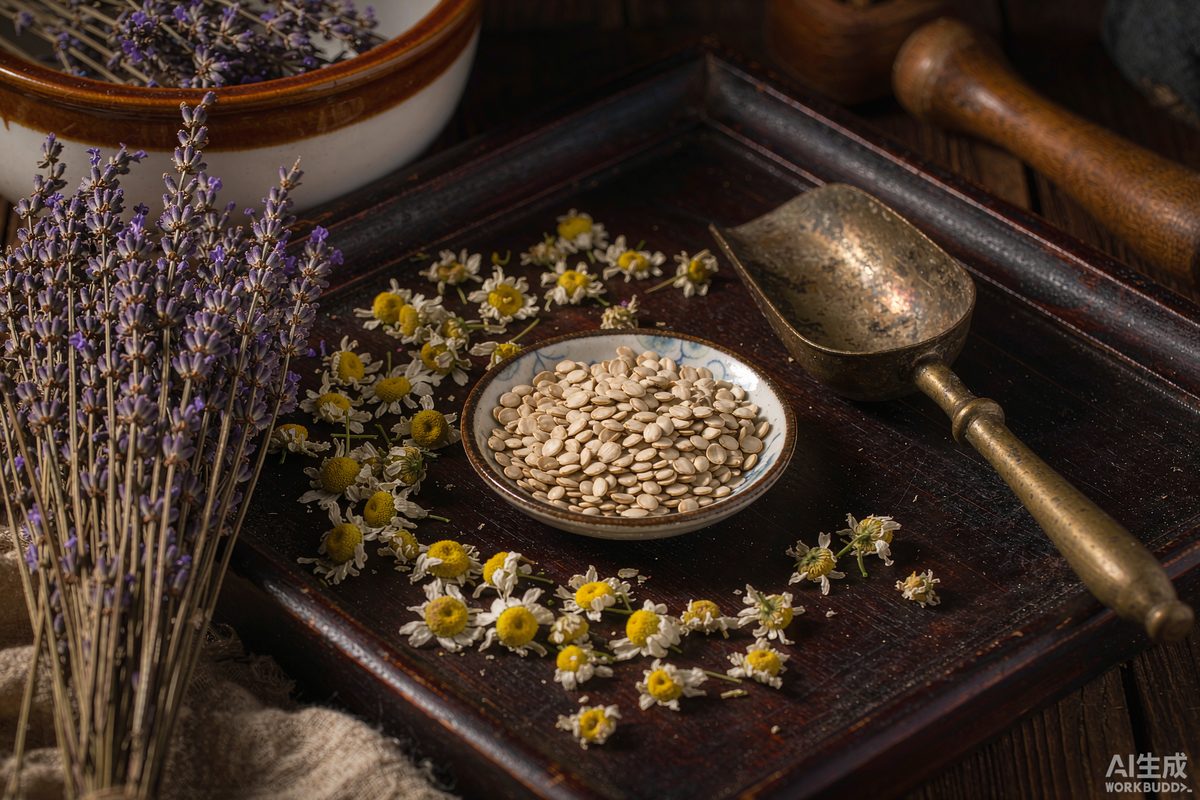
The most interesting of the small trials is also one of the earliest. In 2005, a team led by Namni Goel ran twenty-four volunteers through a properly instrumented comparison: three nights each with lavender scent in the sleeping air, three with a control scent, with wrist actigraphy and subjective ratings throughout, and the order swapped between participants. Lavender did not simply make people feel sleepier.
It changed the architecture — the proportion of deep, slow-wave sleep rose, and participants rated their own sleep as more vigorous-feeling the next morning, with the effect strongest in the women and in the self-described light sleepers. No pill had been swallowed. The change arrived entirely through the nose.
Later work filled in plausible machinery. A 2012 trial followed midlife women with insomnia who inhaled lavender over several weeks and recorded shifts in autonomic balance — heart-rate variability moving in the direction of rest-and-digest, the nervous system's brakes engaging sooner.
And in 2019, a systematic review and meta-analysis of aromatherapy trials — most of them lavender, most of them in various clinical and student populations — concluded that the pooled effect on sleep quality was positive, small to moderate in size, and measured on subjective scales rather than lab hardware.
Three findings, three sizes. The honest summary line reads: something real is probably here, it is bigger in self-reported sleep quality than in electrode tracings, and no trial yet published shows aromatherapy outperforming the established treatments for chronic insomnia.
Sample sizes deserve one more beat, because they are this literature's weakest joint and readers should know it before quoting any number. The 2005 trial counted twenty-four volunteers.
The meta-analysis pooled studies that mostly enrolled dozens rather than hundreds, several relied on single-question sleep ratings, and publication bias — trials with boring results going unreported — is a standing risk in a field this fashionable. Numbers this small can genuinely be noise dressed in statistics.
The reasonable position is cautious interest rather than enthusiasm, and the buying advice below leans on engineering and ritual value as much as on the biology.
A diffuser is a reasonable addition to a bedroom. It is not a rival to a sleep clinic.
- Lavender is the most-tested scent in this literature, but orange and chamomile appear in smaller trials — if you dislike lavender, the evidence does not collapse without it.
- Trial length in this research runs from three nights to about eight weeks; give any new scent at least two weeks before deciding it does nothing.
Why a Diffuser Beats a Pillow Spray at 2 AM
If scent is going to do anything, the delivery method decides most of the practical outcome. A pillow spray delivers one burst at 11 PM and has finished its job by midnight. The trials that showed effects kept scent in the air — continuous or intermittently refreshed, right through the hours where sleep is being made.
A diffuser is the only bedside format that reproduces the trial conditions without anyone waking up to respray a pillowcase.
The other practical virtue is accidental and worth naming: a diffuser is a machine with a routine attached. It holds water, so it must be filled each night — a fifteen-second task that functions as the day's last action and as a physical marker that the productive hours are over.
Sleep researchers who study wind-down interventions keep circling the same finding: the content of the ritual matters less than its existence, and a device that enforces a small nightly ceremony earns its shelf space partly through choreography.
Three engineering questions separate the good units from the drawer-bound ones. Does it have a timer that ends before dawn, so the room is not scented — and the machine not running — for eight straight hours? Does it shut itself off when the tank runs dry, which is a safety requirement rather than a luxury? And can it run in short intervals, matching the intermittent exposure most of the trials actually used?
A unit missing any of these is a room-freshener, not a sleep tool.
Two more specs matter in use but rarely make the listings. Tank size beyond 300 ml buys runtime nobody needs once the timer works; the larger basin mostly means heavier weekly cleaning. And the advertised coverage area assumes closed doors and still air, a description that fits almost no real bedroom at ten at night — halve whatever the box claims and you will be close to the truth.
- Interval modes (for example 15 seconds on, 15 off) stretch a small oil budget across the whole evening and come closer to the intermittent exposure used in trials than continuous misting.
- Place it a meter or more from the bed at roughly pillow height; scent that is thick enough to notice from the pillow is usually strong enough to irritate by morning.
Three Setups That Cover Most Bedrooms

Narrowing the field to three formats covers nearly every bedroom and every budget, and each earns its slot by solving a different problem.
The workhorse is the ultrasonic cool-mist diffuser with a timer and auto shut-off. Water carries a few drops of oil as a fine cool mist, the sound is a whisper-level hum that most people stop hearing by the second night, and the price sits between a takeaway dinner and a decent pillow.
Its weaknesses are honest ones: it adds some humidity to the air, which is a feature in a dry winter bedroom and a flaw in a damp one, and it wants a weekly rinse with a wipe, since standing water and a neglected tank part company with hygiene quickly.
The purist pick is the nebulizing diffuser, which skips water entirely and releases pure oil in a concentrated stream controlled by an intensity dial. Strongest scent, smallest footprint of added moisture, fastest oil consumption, and a faint pump note — the format for larger rooms, drier climates, and people who want the trial-strength exposure rather than a polite hint of it.
The minimalist third option is a passive ceramic stone: oil on stone, air doing the diffusion, nothing plugged in and nothing to hear. It will not perfume a large room, and it is not trying to. What it offers is the faintest possible presence — enough scent for a small bedroom, silent operation a nebulizer cannot match, and a form factor that disappears into a travel bag.
A household's first diffuser should probably be the ultrasonic. A quiet sleeper in a small room could stop there and never need more.
One comparison shoppers rarely think through: humidity. An ultrasonic unit adds moisture with every puff of mist, welcome in a heated winter bedroom, less welcome in a damp coastal summer one or beside books and linens.
If the bedroom already runs a dehumidifier, or sheets take most of a morning to dry out, the nebulizing and passive formats sidestep the whole question — same scent, no water, no second appliance quietly fighting the first.
- First unit, one question decides it: is the bedroom small and quiet — go passive ceramic; is it average-sized with normal humidity — go ultrasonic with a timer.
- Whatever the format, check the decibel claim against reviews that mention sleeping beside it; marketing silence and actual silence are different products.
"The five qi enter through the nose and are stored in the heart and lungs."
Oils: Where Most of the Quality Risk Lives
The diffuser is hardware. The oil is the part of this purchase most likely to disappoint, because the essential-oil market runs loose enough that adulteration is routine.
A bottle sold as lavender may be diluted with a cheaper relative, stretched with synthetic linalool, or simply mislabeled — and the nose cannot be trusted as an auditor, since a fresh synthetic often smells more intensely of lavender than the real distillation does.
The practical defenses are unromantic. Buy oils that name the botanical species on the label — Lavandula angustifolia, not lavender ambience. Prefer brands that publish batch-level testing, specifically gas chromatography-mass spectrometry, however unfashionable the phrase; a company that posts GC-MS reports for every batch has put its money where a skeptical customer can audit it.
Choose dark glass bottles, since light degrades the delicate constituents, and date the bottle when opened, because an oil past its prime smells flat in a way users describe as turned or papery.
A note on lavender specifically, since it is the scent most people arrive with. True lavender, Lavandula angustifolia, is the variety the trials used; much inexpensive lavender oil is lavandin, a hybrid with more camphor and a sharper edge, grown in volume because it yields more oil per acre.
Lavandin is not dangerous and not unpleasant — but if a diffused blend has ever smelled medicinal rather than soft, the hybrid was probably why. Check the Latin name and the species stops being a lottery.
Dosage stays small, and smaller than marketing suggests. The trials used a few drops in the air, not drenchings; a bedroom that smells strongly of anything is past the useful range, and headaches — the most commonly reported side effect in the literature — arrive precisely there. Two or three drops in a small ultrasonic tank is the entire prescription. The diffuser magnifies; it does not need to be fed generously.
- Batch-numbered oil with a published GC-MS report is the closest thing this market has to proof; anything resting on the words pure and natural alone is marketing.
- Store bottles upright, capped, away from the sunny windowsill — heat and light spend an oil's shelf life faster than use does.
Safety, Stated Plainly
Inhaled aroma is mild; the exceptions are real, and this section is written to be skipped by no one.
Cats come first, because the internet comes to cats late. Felines lack the liver pathways to clear several common essential-oil constituents, and a diffuser running all night in a sealed room where a cat sleeps is one of the documented poisoning scenarios — not the mist itself landing on fur and being groomed off, but concentrated exposure with no exit.
A diffuser in a household with cats belongs in a room the cat does not sleep in, running briefly, door open, and tea tree oil should not be in the house at all. Dogs tolerate the format better but deserve the same exit door.
Then the humans. People with asthma or reactive airways should treat any bedroom mist as a potential trigger and start with the passive stone format and short exposure — some tolerate it entirely, and some discover their trigger in an inconvenient hour.
In pregnancy, the conservative advice is to keep exposures light and to run specific oil choices past the midwife or physician, since the safety evidence for most botanicals in pregnancy is thin in both directions. Keep bottles away from small children, for whom a few milliliters of concentrated oil is a poisoning dose rather than a fragrance.
And no oil — none — goes on skin or in a drink as part of a sleep routine without separate, specific guidance; diffused-in-air is the format this article reviews, and the rules change with every route of exposure.
Finally the boundary that outranks the rest: chronic insomnia is a medical condition with a first-line treatment, cognitive behavioral therapy for insomnia, and no aroma outranks it. A diffuser joins a routine. It does not treat a disorder.
- House rule worth adopting: diffuser runs with the bedroom door ajar, so pets and people can leave the scent behind if they choose.
- If anyone in the house wakes congested or headachy, drop the dose in half before blaming the format — overdosing is the most common user error in aromatherapy.
Boundaries, and a Two-Week Experiment
The evidence ledger, one last time with nothing rounded up: the best single trial found lavender increased deep sleep in two dozen young adults with order-swapped controls. A second trial found autonomic calming in midlife women with insomnia. A meta-analysis pooled small, mostly subjective trials and found a small-to-moderate improvement in reported sleep quality. No large trial exists.
No long-term safety record exists for nightly use across years. The classical texts that placed aromatics beside the bed worked from centuries of observation and a theory of orifices and essences that modern anatomy replaced; the overlap between the classical verdict and the trial results is suggestive, not confirmatory.
What remains is an experiment any reader can run for the cost of a mid-range ultrasonic unit and one decent bottle. Two weeks, same bedtime, one diffuser on a timer two drops' distance from strong. Track one number only — how long it takes to feel asleep — because it is the outcome most sensitive to the wind-down hour the machine enforces.
Expect one of three results, all of them informative: a real improvement, no change, or the discovery that the ritual was the active ingredient all along.
The third result is not a failure of the experiment. It may be the finding.
There is a fourth result worth naming before the kettle goes on. Some readers will find the scent bothers them — a stuffy nose at two in the morning, a headache neither partner can quite attribute to anything else. That result is informative too, and the exit costs nothing: unplug the unit, cap the bottle, keep the ten-minute ritual without the mist. The wind-down was never the oil's property.
Two thousand years of bedside herbs, one 2005 lab with twenty-four volunteers, and a meta-analysis of small trials all point somewhere slightly left of the chemistry — toward scent as the bell that tells a nervous system the day has ended. If the bell is what works, the diffuser is doing its job whether the lavender does or not.