I Used to Dismiss Kitchen Scales. Then a Patient Taught Me Otherwise
I used to think a kitchen scale was a diet-industry prop — a gadget for people who wanted to outsource their eating to arithmetic. Fifteen years of practice changed my mind, and the patient who did it was a 38-year-old elementary school teacher. m. every day, exhausted by dinner, with a scalloped tongue and a pulse I'd call Spleen Qi Deficiency with phlegm-dampness. She was furious at her body.
She'd been on three different diets in two years and gained weight on all of them.
"What do you eat in a day?" I asked her.
"Normal food. I'm not a binge eater."
I believed her. Then I asked her to do one thing I'd never required before: weigh everything she ate for a week, no diet changes, just numbers. She came back with a notebook. Her "bowl of rice" was 2.5 cups cooked — about 375 grams. Her "small handful" of trail mix was 90 grams, closer to a full meal. Her "splash" of olive oil was four tablespoons. She sat in my office and laughed until she almost cried.
The Spleen governs transformation and transportation — the classic Suwen formula. It can only transform what actually arrives, and what arrives is measured in grams, not in intentions. She hadn't been eating badly. She'd been eating invisibly. We kept her exact same foods, sized them honestly, and in six months she lost 31 pounds without one forbidden food. The scale didn't diet for her.
It showed her what her own hand was doing. That's the whole argument of this guide: measurement is the first medicine, because you can't tonify what you can't see.
- Weighing is temporary medicine: most patients need two to three weeks of honest weighing to recalibrate their eyes, then only occasional check-ins.
- Weigh the food, not the philosophy — no diet changes in week one. Just learn what your portions actually are.
- Write the numbers down. The notebook matters as much as the scale; both studies on self-monitoring show tracking is what predicts weight loss.
"The Stomach receives and the Spleen transforms and transports. When the middle burner is taxed beyond measure, transformation fails and turbid dampness accumulates."
Digital Kitchen Scale: The Cornerstone of Portion Awareness
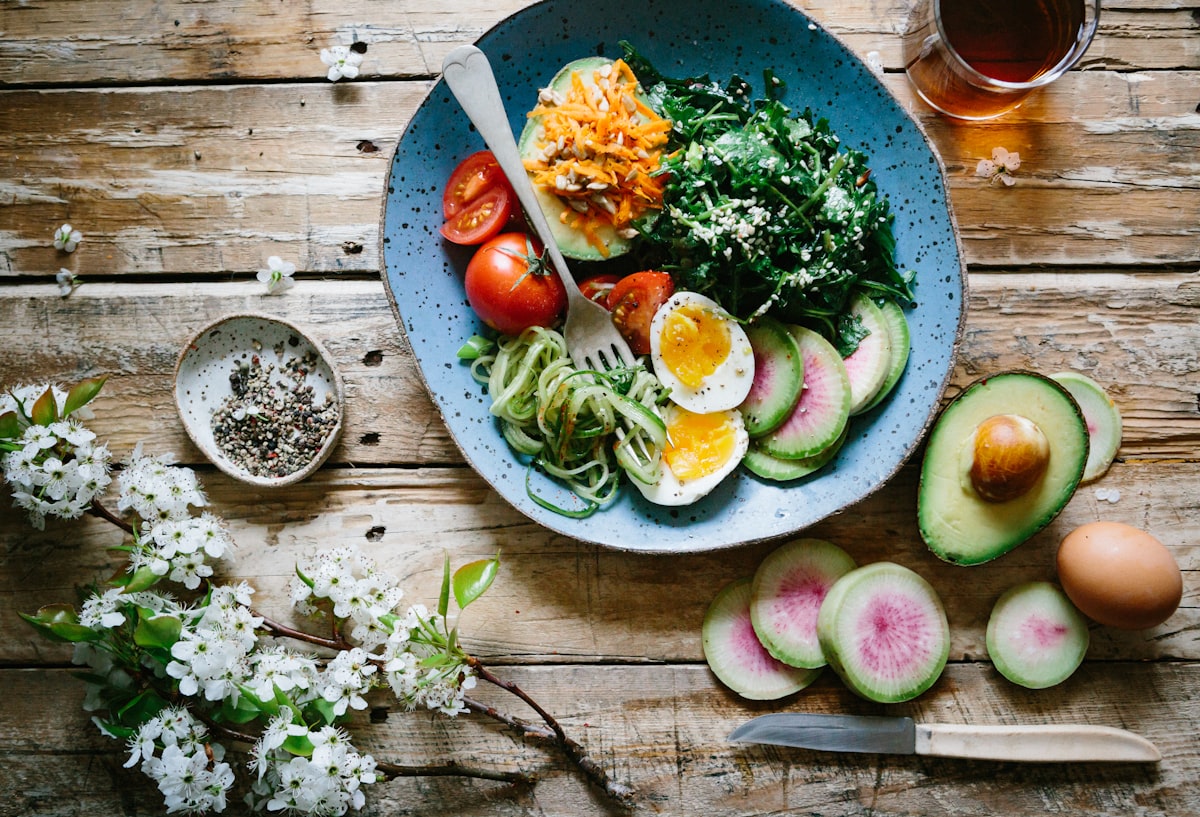
A gram scale is the single highest-leverage purchase in this guide, and it's the one I recommend first to every patient. Cups lie. A cup of rice packed or scooped differs by 30 percent. A cup of shredded cheese is a different food depending on who shreds it. Grams are the same every time, in every kitchen, on every day.
I look for three things in a scale: a tare button that zeroes the bowl or pot, 1-gram (or finer) resolution, and a capacity of at least 5 kilograms so it handles a full pot of congee. The tare button is the feature that makes the habit stick — you place the pot, press tare, add rice, press tare, add water, and the scale does the bookkeeping for you.
The habit I teach is embarrassingly small: weigh one meal a day, forever, and weigh your five most common meals until their weights are memorized. My patients who do exactly that — not more — are the ones who keep the weight off at two years. The ones who weigh everything for a month and then quit? They relapse, because the skill was never the grams. It was the pause the scale forces.
That two-second pause between "I want more" and "I'll measure more" is where the Spleen gets a chance to catch up with the Stomach.
- Weigh rice raw or cooked, but never mix the two standards — raw rice roughly triples in weight when cooked.
- Memorize five anchor meals (your rice, your oatmeal, your nuts, your protein, your soup) and you rarely need the scale again.
- Tare the plate itself so the food hits zero — fewer dishes, same accuracy.
"I didn't realize a 'handful' was a meal for two people. My hand had been lying to me for thirty years."
Portion Control Containers and Measuring Cups: Spleen-Friendly Portioning
The classic TCM plate is half cooked vegetables, a quarter grain, and a quarter protein — warm, cooked, and balanced enough that the Spleen never faces a one-note load. Portion containers make that ratio automatic. You fill the big container with vegetables, the medium with grain, the small with protein, and the plate is done before hunger gets a vote.
Measuring cups earn their place through repetition rather than precision. The same cup, used for the same rice, at the same water ratio, produces the same bowl every time — and predictability is kindness to a weak Spleen. The organ that hates surprises is the organ you're feeding.
When I put a patient with Spleen Qi Deficiency on congee, I hand them the 1:8 cup ratio and tell them the measuring cup is now part of their prescription.
One caution I give everyone: containers that are too large defeat the purpose. I've seen patients buy restaurant-sized meal-prep boxes and fill them to the rim with "healthy food" — which is still too much food. Match the container to the serving, not the serving to the container.
- Half vegetables, quarter grain, quarter protein — the plate ratio that keeps the middle burner from being overwhelmed.
- Use the same measuring cup for the same grain every time; consistency beats precision.
- Choose the smallest container that honestly fits your meal — the box should be smaller than your old plate, not equal to it.
Body Composition Smart Scale: Weight Was Never the Whole Story
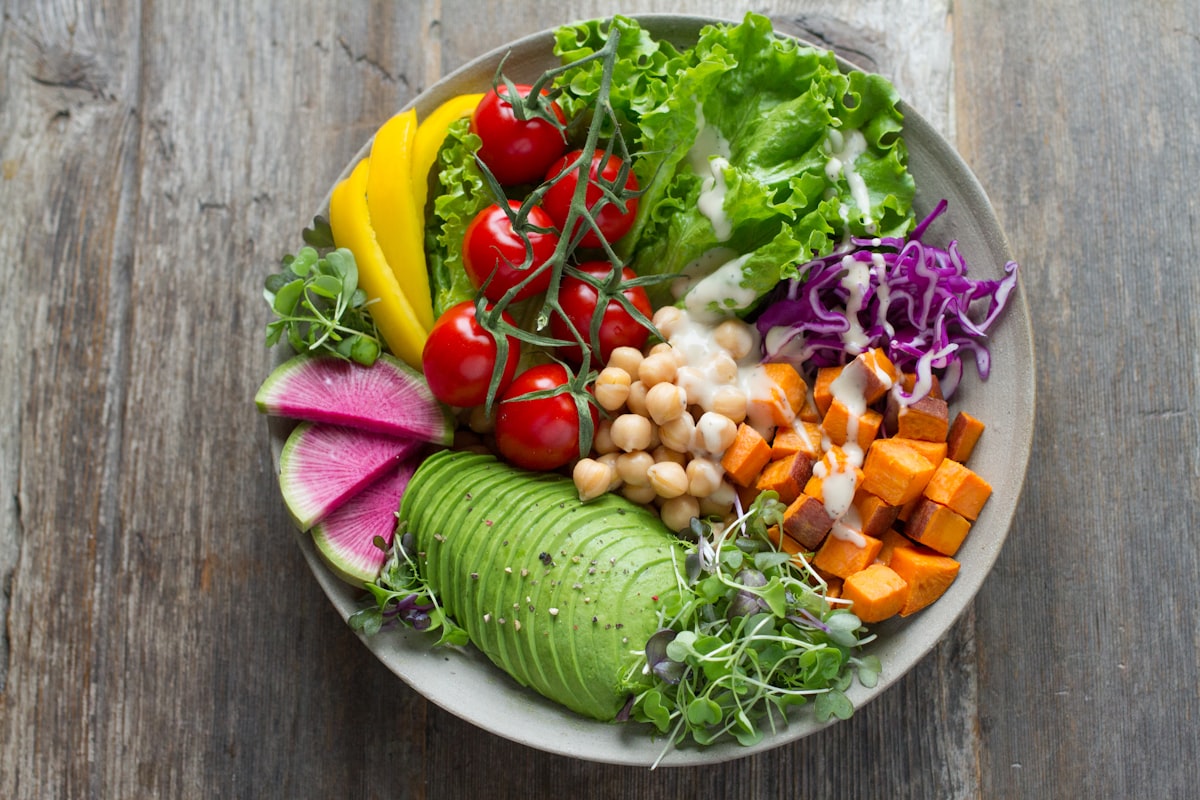
A 52-year-old contractor came to me with a classic phlegm-dampness picture: a thick middle, a puffy face, joints that ached in humidity, and a weight that refused to budge no matter what he ate. He'd started lifting weights at my urging — building muscle is the best Spleen tonic I know — and for six weeks the bathroom scale didn't move an inch. He was ready to quit.
His body composition scale told the real story. Body fat down 2.8 percent. Visceral fat down one full level. Muscle mass up 3 pounds. His weight was identical, but his belt was looser and his morning puffiness was gone. The number he was watching had been lying to him. The numbers on the composition scale told the truth: the dampness was draining and the Spleen was finally winning.
Visceral fat is the modern term for what TCM describes as internal dampness pooled around the middle burner. It tracks with metabolic trouble the way phlegm-dampness tracks with weight that won't move. That's why I tell patients to watch visceral fat and body fat percent, not pounds. One rule: weigh two or three times a week, same time, same conditions. Daily numbers bounce with water, salt, and sleep.
Trends, not digits, are the medicine.
- Weigh on the same two days each week, in the morning, after the bathroom, before food or coffee.
- Ignore the daily bounce; log the weekly trend line instead.
- Watch visceral fat like a vital sign — it's the closest Western number to a dampness index.
"The number didn't move for a month, but my belt did. I almost quit right before it started working."
Glass Meal Prep Containers: Store Food, Starve Impulse
Impulse eating is rarely hunger. It's availability. The 6 p.m. decision to order delivery isn't made at 6 p.m. — it's made at 3 p.m. when the fridge has nothing ready and the takeout app is one thumb away. Glass meal prep containers break that chain by making the cooked, portioned meal the easiest option in the house.
I recommend glass over plastic for two reasons, one practical and one TCM. Practical: you see through glass, so the portion is visible before you open the lid — the visual reminder works even on a tired evening. TCM: the Spleen wants warm, cooked food, and glass reheats evenly in a way most plastic containers can't match.
Cold leftovers eaten straight from the fridge are the Spleen's worst case — raw temperature, raw texture, maximum transformation work. A glass container of congee, gently reheated, is a warm meal that arrived with zero decision-making.
The ritual I prescribe: cook once, portion immediately, while the pot is still warm. The 20 minutes of scooping at stove-side saves a week of decisions. Every patient who adopts it tells me the same thing — they eat better on their worst days, and their worst days are the days that decided their weight all along.
- Portion into containers while the food is still warm — it seals better, and the habit happens when you're already in the kitchen.
- Two-compartment boxes keep grain and vegetables separate; texture survives reheating, so the meal stays worth eating.
- Label containers with the day. A dated container is a commitment; an unlabeled one is a suggestion.
Measuring Tape: The Number That Doesn't Lie
The bathroom scale has a water problem. A salty dinner, a late night, a heavy week — the scale swings three pounds either way, and patients either celebrate or despair over weather. The measuring tape doesn't care. Waist and hip circumference measured weekly report the slow truth, and the slow truth is the truth that matters.
My 61-year-old patient with yang deficiency lost three inches off her waist in four months while her weight dropped barely eight pounds. " One of those numbers kept her going. She measured every Thursday morning, same spot, just above the navel, exhaled, and wrote it down. She still does it a year later, because it's the number that never insulted her.
In TCM the waist is the territory of the Dai Mai, the belt vessel, which encircles the middle like a girdle — the channel most tied to the dampness that pools around the abdomen. Measuring that circumference is, in a literal sense, measuring the belt vessel's burden.
I ask patients to watch waist circumference the way a cardiologist watches blood pressure: as the number that predicts the future, not the number that flatters the present.
- Measure the same day, same time, same spot (just above the navel, after exhaling), and write it down.
- Use a locking tape so you read the number after it's secured, not while you're twisting to see.
- Watch waist and hip together — the ratio moving toward normal is the dampness clearing.
"My scale and I argued every week. My tape and I never fought once."
Smaller Bowls and Plates: The Eye Eats First
The eye eats first. A modest portion on a large plate reads as "not enough," and the brain sends the hand back for seconds before the Stomach has filed a single report. Flip it — the same portion in a small, deep bowl reads as generous, and the meal ends with the Stomach full and the eye satisfied.
Okinawa's centenarians named this hara hachi bu: eat until you're eight parts full. TCM arrived at the same number centuries earlier as Chi Qi Fen Bao, seven-tenths full, the classical portion standard of health preservation. Sun Simiao wrote it plainly — eat before hunger becomes extreme, stop before fullness arrives — because the Spleen transforms a moderate load beautifully and drowns in a large one.
Overfilling the middle burner is, in the classical view, the direct cause of dampness and phlegm. The bowl is the oldest portion-control device in the world.
That's why I send patients to the tableware aisle with a real prescription: a 7-inch plate and a deep rice bowl, the kind used across East Asia for centuries. No counting, no apps. The vessel does the portioning before willpower is ever consulted. Patients laugh at how simple it sounds. Then they report back that dinner stopped feeling like a negotiation.
- Buy bowls that hold about one cup, not three — the vessel sets the ceiling for the meal.
- Serve from the stove, not from the table; leaving the pot out invites the second trip that undoes the bowl's work.
- Let the small bowl be the whole plate: rice in the bowl, vegetables and protein around it, nothing served twice.
"Hara hachi bu — eat until you are eight parts full. Leave the last two parts for the Spleen to finish the work."
Precision Scale: For Herbs, Seeds, and the Small Things
The foods that defeat eyeballing aren't the big ones. They're the dense ones — nuts, seeds, goji berries, dried fruit, a swirl of honey — where a "small handful" can carry 300 calories and nobody's the wiser. A pocket scale with 0.1-gram resolution catches exactly the foods that slip past every other tool in this guide.
It also earns its place for the thing my practice is built on: herbs. When I prescribe a formula, I write grams, and grams should be weighed — a heaping spoon of astragalus granules is not the same dose as a level one. 1g scale and a small dish for their daily decoction.
One patient, a 44-year-old with dampness and afternoon fatigue, started weighing her goji berries and seeds — the two things she'd always "splurged" on believing they were free. She cut her daily nut intake by half without noticing, and told me the scale made her feel like she was finally running her kitchen like a pharmacy. She wasn't wrong. In food therapy, the kitchen is a pharmacy, and a pharmacy measures.
- Weigh nuts, seeds, and dried fruit straight into the bowl with the tare function — these are the foods where hands are worst.
- A 0.1g scale is right for herbs and tea; a 1g kitchen scale is too coarse for a 3-gram dose of granules.
- Keep the scale and a small dish next to the tea station, so weighing is part of making tea, not a separate chore.
A Weekly Rhythm That Works Without Becoming a Chore
No one needs seven tools doing seven jobs at once. That's how gadgets become drawer ornaments. The rhythm I prescribe uses each tool once a week, in a rotation that takes about ten minutes a day and collapses to a single Sunday hour.
Sunday: cook and portion the week's grains, proteins, and soups into glass containers while they're warm. Weigh the rice pot once — the pot is the anchor portion, and everything else mirrors it. Monday through Friday: weigh one meal a day with the kitchen scale, alternating the meal you weigh so the whole week gets covered. The precision scale lives with the tea and the nuts, used whenever they come out.
Thursday morning: measuring tape, same spot, written in the same notebook. Tuesday and Friday: body composition scale, same time, and you ignore every single daily reading in favor of the two-week trend.
That's the whole system. Seven tools, one rhythm, maybe fifteen minutes a day. The research backs the mechanism — self-monitoring is one of the most consistently predictive behaviors in weight management — but the real reason the rhythm works is gentler. You're not policing yourself. You're taking a reading. A diabetic doesn't feel punished by a glucometer; she feels informed.
My patients stop feeling judged by their numbers in about two weeks. That's when the Spleen's real work — steady, moderate, predictable transformation — starts showing up in the measurements.
- Start with one tool for two weeks — usually the kitchen scale — then add the next. Habits layer better than they batch.
- Same notebook, same pen, same day for the tape; ritual is what makes tracking stick.
- If a week goes sideways, don't fix the week. Just take the next reading. The tape forgives.
The Patient Who Refused to Count Anything
Not everyone will weigh their food, and I've stopped pretending otherwise. One patient, a 49-year-old graphic designer with forty pounds and a deep dislike of anything that smelled like a diet, told me flat out: "I'm not weighing my dinner. That's not a life I want." Fair enough.
So we negotiated. She agreed to one weighing, once a week, of the rice pot only. Everything else she ate from a smaller bowl and a 7-inch plate, with the rule that she never went back to the stove for seconds without sitting down for ten minutes first. That was the entire program. No counting, no apps, no notebook.
Eight months later she'd lost 26 pounds. Her bloating was gone, her energy was stable through the afternoon, and she'd started cooking congee on Sundays because she liked how it made her feel. She never did weigh her dinner. She didn't need to — the bowl, the pause, and the single weekly pot-reading had done the quiet work that a full surveillance program would have done loudly.
That's the honest ending here. These tools aren't a diet. They're a mirror — and mirrors work best when you're not staring into them all day. Start with the one that fits your life. The Spleen doesn't need perfection from you. It needs awareness, warmth, and a portion it can actually transform. Measure what you can, skip what you can't, and let the numbers be information instead of judgment.
That's how real change starts — not with a resolution, but with a reading.