The Recovery Tool Graveyard — What I Bought, What I Kept, and What's Gathering Dust
Six months. Seventeen tools. My own money. Real clients with real post-training fatigue. Here's the scorecard before we get into the details.
Kept: high-density foam roller, far-infrared heating pad, acupressure mat and pillow set, simple lacrosse ball (for trigger points), resistance band loop set (for assisted stretching), a thermos flask (for warm post-workout fluids), and a basic percussion massage gun — the cheapest one that held up, not the $600 one. And my hands — still the most versatile recovery tool I have, still the one I reach for first.
Returned or gathering dust: the pneumatic compression boots (effective but overkill for anyone who isn't training 20+ hours a week), the vibrating foam roller (gimmick — the vibration doesn't add enough to justify the noise and cost), the $600 massage gun with eleven attachments (nine of which do the same thing as the other two), and the cryotherapy cuff (dangerous for certain TCM patterns — more on that in the section on what not to buy).
What I learned: the tool that makes the biggest difference isn't the most expensive one. It's the one that matches your actual recovery pattern — and most people don't know what their pattern is because nobody's ever taught them to read their own post-training body state.
- Before you buy anything, do a one-week audit of your post-training symptoms. Soreness type (sharp vs. dull vs. stiff), location (joint vs. belly of muscle vs. tendon), timing (immediate vs. next-day vs. two days later). The pattern tells you which tool category you actually need.
- The foam roller is the only tool I'd call 'everyone should have one.' Start there. Everything else is pattern-specific.
"He who treats without understanding the pattern is like a blind man throwing stones — he may hit the target once, but he cannot say why."
The Pattern-Tool Map — Match the State Before You Apply the Tool
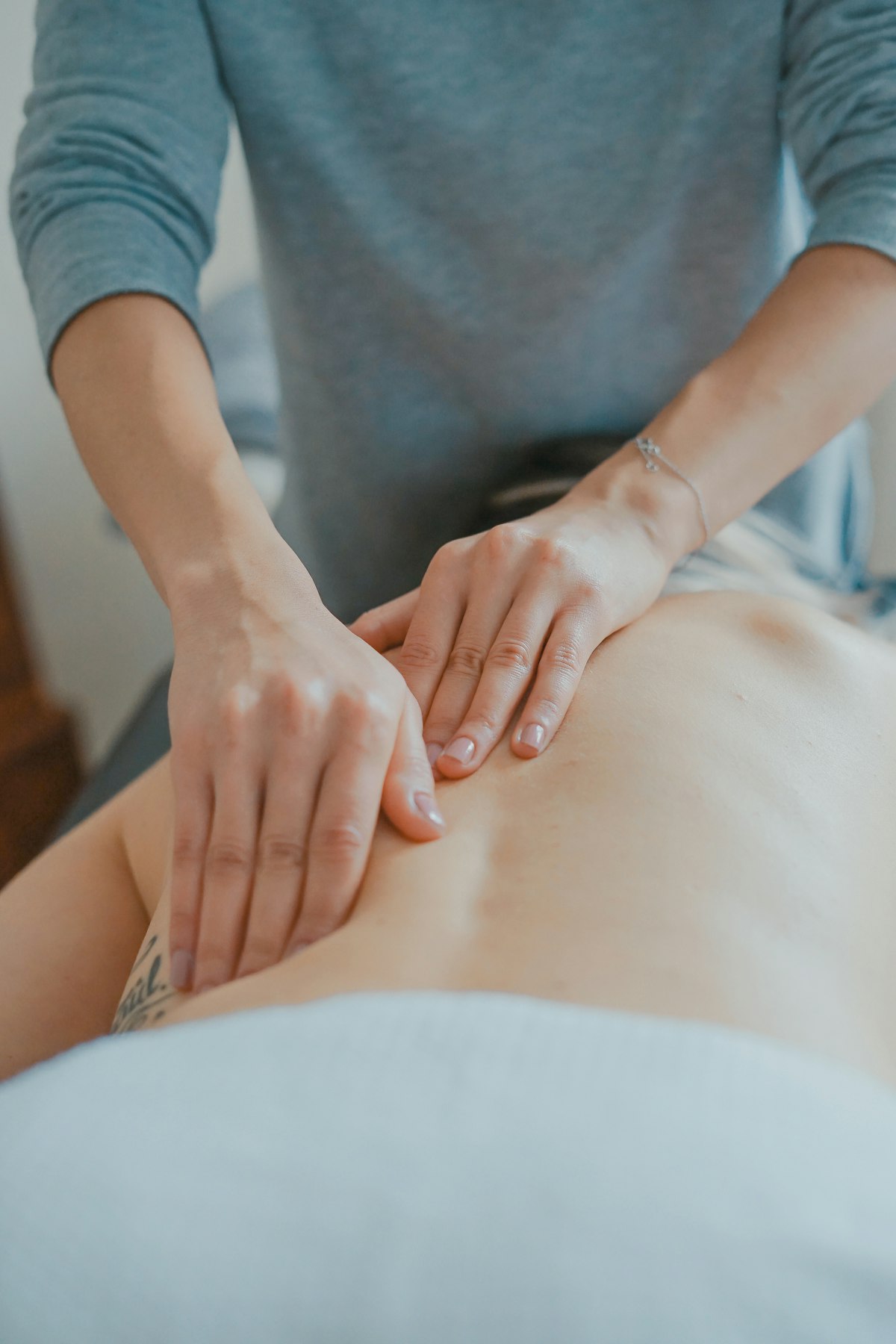
TCM organizes post-training tissue states into a few clean categories. Match the tool to the pattern, and recovery accelerates. Mismatch them, and you're at best wasting time and at worst making things worse. Here's the map.
Blood Stasis — the 'deep bruised' soreness. This is DOMS at its most intense: the muscle feels tender, swollen, heavy. Movement hurts at first then eases. The tissue is holding metabolic waste and stagnant blood from the microtrauma of training. TCM calls this Blood Stasis in the channels. The right tools: circulation-promoters. Foam rolling (gentle, moving, not parked on one spot). Walking.
Gentle dynamic stretching. Cupping if you have access. The wrong tools: deep static compression, aggressive massage gun on the most tender spots, ice. Ice freezes the stasis in place instead of moving it — which is why I stopped recommending cryotherapy for post-training soreness years ago.
Qi Stagnation — the 'stuck and tight' feeling. Upper back between the shoulder blades. Neck. The band of tension across the low back that won't release no matter how much you stretch. The tissue isn't necessarily sore to the touch — it's bound up, restricted, like a belt that's one notch too tight. TCM calls this Qi Stagnation, often in the Bladder or Gallbladder channels.
The right tools: percussion (massage gun on medium setting, moving, not parked), foam rolling with movement, acupressure (firm sustained pressure on trigger points), and any tool that creates local movement and release.
The wrong tools: heavy compression, static stretching held at end-range (stretching a Qi-stagnated area without warming it first can provoke a protective spasm), and any tool that increases baseline tension.
Cold-Damp Bi — the 'chronic stiff joint' pattern. Gets worse in cold weather. Improves with warmth and movement. Mornings are the worst. The joints feel stiff and achy rather than hot and swollen. TCM sees this as an invasion of Cold and Dampness into the channels, most commonly the Knee, Low Back, and Shoulder regions. The right tools: heat, and lots of it. Infrared heating pad. Moxibustion if you can access it.
Warm baths with Epsom salt. Warming herbal liniments. Gentle movement to circulate. The wrong tools: ice (never — it drives the Cold deeper), aggressive percussion on the joint itself, stretching the joint to end-range when cold.
Heat-Toxin — the 'hot, swollen, angry' pattern. The joint or muscle is red, hot to the touch, visibly swollen. This is acute inflammation — the body's active inflammatory response to recent injury. TCM calls this Heat-Toxin or Damp-Heat in the channels. The right tools: rest, elevation, gentle compression (NOT aggressive), and anti-inflammatory herbs both topical and internal.
The wrong tools: heat (will make inflammation worse), deep massage, percussion, foam rolling over the inflamed area, and any movement that provokes the joint. This pattern needs cooling and settling, not activation.
Most athletes I see are some mix of Blood Stasis and Qi Stagnation — the muscle soreness of hard training layered over the chronic tension of desk work and stress. Start with circulation tools for the stasis, then release tools for the stagnation. The order matters.
- Read your body state before you reach for a tool. Hot joint = no heat. Cold stiff joint = no ice. Deep bruised muscle soreness = movement, not parked compression. Tight upper back = release, not heavier stretching.
- If you're not sure which pattern you're in, default to the safest intervention: gentle movement and warmth. A twenty-minute walk plus a heating pad on the tight area is the zero-risk recovery baseline.
"Warmth disperses Cold, movement resolves Stagnation. The tool is only as wise as the hand that wields it — know the pattern before you apply the remedy."
The Foam Roller — the One Tool I'd Save If the Gym Was Burning Down
I've seen foam rollers used brilliantly and foam rollers used like instruments of self-torture. The difference is speed, duration, and breathing.
A foam roller works by deforming the fascia — the connective tissue web that wraps every muscle, every bundle of fibers, every individual fiber. Fascia can develop adhesions — stuck spots where layers that should slide freely against each other are glued together.
Training creates these adhesions because training creates microtrauma, and the body's repair response includes laying down new collagen that isn't always organized smoothly. Foam rolling mechanically breaks up those adhesions and — this is the part most people miss — stimulates the mechanoreceptors in the fascia that signal the nervous system to release muscle tension.
How to actually do it: slow, deliberate, and breathing. Roll at about one inch per second — any faster and you're just compressing tissue without giving the mechanoreceptors time to respond. Spend 20-30 seconds per section of muscle, not minutes. When you find a spot that feels distinct — a knot, a tight band, a point of resistance — pause on it and breathe.
Three slow breaths, in through the nose, out through the mouth, while maintaining gentle pressure. The breath signals safety to the nervous system, which allows the muscle to release. If you hold your breath while rolling, you're signaling threat, which makes the muscle guard harder. Counterproductive.
What never to roll: the lower back (the lumbar spine has no ribcage protection, and the pressure can cause the spinal erectors to spasm defensively), the front of the neck, and any area that produces sharp pain rather than the 'good pain' of pressure release.
The high-density recommendation over soft foam is specific: soft foam rollers compress under body weight and never actually deform the fascia. They just squish the skin and fat on top. A high-density roller transfers your body weight into the tissue, which is what produces the mechanical release.
If a high-density roller feels unbearably intense, start with body weight supported — lean against a wall with the roller between you and the wall, or do the movement with your opposite leg on the ground taking some of the weight.
- Roll with your breath, not against it. Inhale as you position, exhale as you roll. Holding your breath during foam rolling turns it into a threat drill instead of a release drill.
- After foam rolling a muscle group, do one set of the movement that muscle performs — a bodyweight squat after rolling quads, a shoulder rotation after rolling the thoracic spine. The combination of fascial release plus active movement retrains the new range of motion.
"Where the Qi goes, the Blood follows. Where the circulation goes, the Stagnation disperses. Move gently, and the channel opens."
Heat Tools — Far-Infrared Pads, Moxa, and the Thing Ice Gets Wrong

The ice vs. heat debate in sports medicine has shifted over the past decade. The old RICE protocol — Rest, Ice, Compression, Elevation — has been revised by its original author, Dr. Gabe Mirkin, who now acknowledges that ice delays healing by restricting blood flow to injured tissue. The updated approach prioritizes movement and circulation over freezing the injury site.
This aligns almost perfectly with TCM, which has warned against applying Cold to injured tissue for two thousand years. Cold constricts the channels. It freezes Blood stasis in place instead of dispersing it.
It drives external pathogens — in TCM terms, Cold and Dampness — deeper into the joints, which is the mechanism TCM describes for why an injury that was iced aggressively becomes a chronic, cold-sensitive problem that flares every winter.
Heat is the safer default for most recovery states. It dilates blood vessels, increases local circulation, relaxes muscle guarding, and — this is the TCM lens — disperses Cold and moves stagnant Qi and Blood. The tool matters too.
Standard electric heating pads provide superficial heat — maybe half an inch of penetration — which is fine for the layer right under the skin but doesn't reach the deep muscle and joint tissue where post-training stasis pools. Far-infrared heating pads use ceramic or mineral elements (jade, tourmaline) that emit wavelengths in the far-infrared spectrum, which penetrate 2-3 inches into soft tissue.
The sensation is a steady, deep warmth rather than surface heat. For the cold-stiff low back after deadlifts, the cold-weather knee that aches in winter, and the chronic shoulder tightness that resists stretching, the far-infrared pad is the tool that actually reaches the target tissue.
Moxibustion — burning dried mugwort (moxa) near the skin over acupoints or affected areas — is TCM's original deep-heat therapy. The moxa smoke contains compounds with measurable anti-inflammatory effects, and the sustained radiant heat penetrates deeply.
For athletes who can access a practitioner or learn the technique safely, moxibustion on Stomach 36 (the great Qi tonic point below the knee) during a heavy training block provides recovery support that no electric pad can match. For everyone else, the infrared pad on the affected area for twenty minutes is the practical substitute.
The one scenario where cold has a legitimate role: acute trauma minutes after the injury — the twisted ankle, the impact bruise, the joint that's visibly swelling in real time. Ten to fifteen minutes of ice in the first hour can limit the inflammatory cascade. After that hour, switch to gentle movement and protection. No more ice. TCM and updated sports medicine agree on this point.
- Test whether cold or heat helps your specific joint by applying each for five minutes on different days and comparing how the joint feels one hour later. The answer is individual. Trust your body's feedback over the internet consensus.
- Infrared pads should be used with a thin cloth barrier — direct contact at full temperature can cause low-grade burns over time. Set a timer. More than 25 minutes doesn't add benefit and increases risk.
"Cold closes the channels and freezes the Blood. Warmth opens the channels and moves the Qi. What is frozen cannot flow, and what cannot flow cannot heal."
Percussion Massage Guns — When They Help, When They Hurt, and the Speed Setting That Matters
The massage gun is the recovery tool everyone bought during the pandemic and half of people now keep in a drawer. The problem isn't the tool. It's that percussion at the wrong speed, in the wrong place, for the wrong duration is actively harmful — and nobody reads the manual.
How percussion massage actually works: the rapid strikes of the gun head create mechanical vibration that travels through soft tissue, triggering several responses. Mechanoreceptors in the muscle and fascia — specifically Pacinian corpuscles, which respond to rapid pressure changes — signal the spinal cord to inhibit pain signals from the same area.
This is the gate-control theory of pain in action: the vibration signal overwhelms the pain signal. Separately, the percussion temporarily increases local blood flow, which helps flush the metabolites that accumulate during training. And there's a mechanical effect on trigger points — hyperirritable spots in muscle that refer pain elsewhere — where sustained percussion can release the local contraction knot.
Where massage guns go wrong, in order of frequency in my practice: speed too high (the highest setting feels like it's doing more, but it's just battering the tissue without giving the mechanoreceptors time to respond — medium speed, 1800-2400 percussions per minute, is optimal for release), one spot for too long (more than 15-20 seconds on a single point can cause bruising and nerve irritation — the 'float' technique, where the gun head moves continuously across the muscle, is safer and more effective), and — the big one — using the gun on inflamed tendons.
Never use a percussion gun on an acutely inflamed tendon. Tendinitis is inflammation of the tendon itself. Percussion on inflamed tendon tissue increases inflammation and can worsen the micro-tears that are causing the pain. The gun is for muscle bellies — the thick, meaty part of the muscle — not for the thin, cord-like tendon near the joint. Aim it at the calf muscle, not the Achilles tendon.
The quad belly, not the patellar tendon. The forearm muscles, not the wrist tendons.
TCM adds another consideration: percussion moves Qi aggressively. That's useful for Qi Stagnation — the tight, bound-up upper back — and counterproductive for patterns where the Qi is already scattered and needs to settle, like post-HIIT recovery, post-competition fatigue, or any state where the nervous system is already overstimulated.
In those cases, go with sustained pressure (acupressure, foam rolling) or heat, not percussion.
- The cheapest massage gun that doesn't overheat after 10 minutes of use is the one you want. The $600 models add attachments and app connectivity — neither of which changes the recovery outcome. Medium speed, flat or ball head, continuous movement. That's the whole technique.
- Test the speed yourself: set the gun on medium against your thigh. If it feels like an aggressive jackhammer, it's too high. If it feels like a firm rhythmic tap — strong but not painful — that's the recovery sweet spot.
"The skilled physician uses the right amount of force for the right amount of time. Too much percussion scatters the Qi rather than moves it, and what is scattered takes longer to return than what has simply stagnated."
The Acupressure Mat — Love It or Hate It, but Use It Right

The acupressure mat divides people faster than any other recovery tool. Half my clients say it transformed their sleep. The other half tried it once, said it hurt, and never touched it again. The difference is almost always in the instructions — or the lack of them.
An acupressure mat is a foam pad covered with thousands of plastic spikes, arranged in small clusters (usually lotus-flower patterns). The spikes don't puncture the skin.
They create sustained, diffuse pressure across the entire surface of the back — which, in TCM terms, stimulates the Bladder meridian, the longest and most Yang channel in the body, running from the inner corner of the eye down the entire spine to the little toe. The Bladder meridian carries the Shu (transport) points of every organ — the points where each organ's Qi most readily accesses the surface.
Stimulating the Bladder meridian along the back is, in effect, giving every organ system a gentle signal to regulate.
The spike pressure also triggers a parasympathetic response through sustained, predictable sensory input. The first 2-3 minutes are intense — the spikes feel sharp, the body tenses, you question your life choices. Then something shifts. The discomfort fades into a diffuse warmth. The muscles that were guarding against the spikes release. Heart rate drops. Breathing deepens.
This is the endorphin release and the parasympathetic shift — the same mechanism that makes acupuncture relaxing despite the needles.
The critical instructions most packaging omits: lie on it with a thin shirt at first, not bare skin. Start with 10 minutes, not the 20-40 minutes some brands recommend. Place it on a firm surface — a carpeted floor or a thin yoga mat works; a soft bed sinks under you and the spikes can't reach the tissue. And — this one matters — do it in the evening, after training, when the body is ready to wind down.
Using the mat in the morning, when Yang should be rising, sends the opposite signal.
The acupressure mat is best for: the 'wired but tired' post-training state, evening wind-down, chronic upper back tension, and anything where the nervous system won't settle. It's the wrong tool for: acute injuries, open skin (rashes, cuts), and people with sensory processing issues that make sustained pressure genuinely intolerable.
- Layer up to start. T-shirt for the first week, then bare skin if you want more intensity. The mat shouldn't be a test of pain tolerance — it should be a gradual nervous-system training tool.
- Pair the mat with a guided breath session: 4-count inhale, 6-count exhale, for the full 15 minutes. The breath keeps the nervous system on the relaxation track while the spikes do their work on the Bladder meridian.
"The Bladder meridian is the great Yang channel — it carries the Qi of all the organs along the spine. When it is stimulated, the whole body responds."
The Lacrosse Ball, the Resistance Band, and Other Five-Dollar Tools That Outperform the Expensive Stuff
The recovery tools that earn their keep in my practice aren't the ones with Bluetooth. They're the ones that cost less than lunch.
A simple lacrosse ball — the dense rubber kind, not the soft foam kind — is the most precise trigger-point release tool available. A foam roller covers a broad surface area, which is great for fascial release across a whole muscle. A lacrosse ball focuses body weight onto a single spot, which is what you need for deep trigger points in the glutes, the rotator cuff, the deep hip rotators, and the arch of the foot.
The technique: lean against a wall with the ball between you and the wall, find the spot that refers pain somewhere else (a true trigger point), and hold gentle-to-moderate pressure on it while breathing. The release takes 30-90 seconds. Then move. Don't dig. Don't grind. Don't make it a pain contest.
Trigger point release is a parasympathetic event — if you're bracing and holding your breath, you're working against the release you're trying to achieve.
Resistance band loops — the flat fabric kind, not the thin rubber tubing — are the most versatile stretching-and-mobilization tool for the lower body. Loop around the thighs for glute activation before training. Loop around the ankles for lateral walks.
Use as an assist for hamstring and hip-flexor stretching by looping around the foot and using the band's tension to guide the stretch instead of forcing end-range with muscle effort. The band-assisted stretch is safer than a partner stretch because you control the intensity, and safer than a solo stretch because the band maintains the position without requiring muscle tension to hold it.
A simple thermos for warm post-workout drinks. I've said this elsewhere but I'll say it again: cold fluids after training shock the Spleen's digestive fire. A thermos of warm ginger tea or room-temperature electrolyte water that you can drink immediately after the session is a genuine recovery tool — and it costs twenty dollars.
And your hands. Cross-fiber friction on the quadriceps tendon. Sustained pressure on the suboccipital muscles at the base of the skull (the tension that causes tension headaches after long training sessions). Gentle kneading of the calf after a run. Your hands can feel tissue texture in a way no tool can — you can sense where the muscle is tight, where it's giving, where it's guarding.
The hands are the original recovery tool, and they're still the most versatile one in the kit.
- The lacrosse ball trigger-point rule: if you're grinding into the spot with your full body weight, you're doing it wrong. Gentle to moderate pressure with breath is what releases a trigger point. Pain isn't progress here.
- Build a five-dollar recovery kit: one lacrosse ball, one loop resistance band, one thermos. Three tools. Ten minutes after each training session. That's more than enough for most athletes.
"A skilled hand can do more than a hundred instruments. The tool that listens to the tissue and responds to its need — that is the true Dao of external therapy."
Four Tools to Skip — and What to Use Instead
Not every recovery tool earns its price. Here are four that didn't survive six months in my practice, and the simpler replacement that works better.
Pneumatic compression boots. The inflatable leg sleeves that squeeze sequentially from foot to thigh. They feel great — that's the problem. The sensation is so pleasant that it masks the fact that the actual recovery benefit, when studied head-to-head against simple walking, is statistically indistinguishable.
A 2020 study comparing compression boots to active recovery found no significant difference in DOMS reduction or performance recovery. Meanwhile, a twenty-minute walk costs nothing, actively pumps blood and lymph through muscle contraction (the body's natural compression mechanism), and doesn't require sitting still for an hour.
Unless you're a professional athlete training twice a day who literally cannot add more movement to your day, skip the boots and take a walk.
Vibrating foam rollers. The idea — vibration plus rolling is better than rolling alone — makes intuitive sense. The execution adds noise, weight, and cost to a tool that already works perfectly without vibration. The vibration doesn't penetrate deeply enough to add meaningful mechanical release beyond what the roller's pressure already provides.
And a vibrating roller costs three to four times what the equivalent non-vibrating roller costs. Buy the regular high-density roller and spend the difference on a lacrosse ball and a heating pad.
Cryotherapy cuffs and ice packs for DOMS. We covered this in the heat section, but it bears repeating: ice delays healing by restricting blood flow. Delayed-onset muscle soreness is a circulatory problem — metabolic waste pooled in the muscle — and ice makes circulation worse.
The temporary numbing effect masks the soreness so you feel better for an hour, then the soreness returns with interest because nothing was actually cleared. Gentle movement, warmth, and hydration are the actual DOMS protocol.
The eleven-attachment massage gun. Two attachments cover 95% of use cases: the flat head for large muscle surfaces (quads, hamstrings, glutes) and the ball head for trigger points and smaller muscle groups. The bullet head, which concentrates all the force into a tiny tip, is a nerve-irritation machine for anyone who isn't a trained manual therapist.
The fork attachment for the spine is structurally dangerous if you hit a vertebra wrong. The rest of the attachments exist to make the box look impressive. Buy the basic model, use the ball and flat heads, and ignore the rest.
- The test I use for any recovery tool: does it produce a measurable result after three weeks of consistent use? Better sleep? Faster recovery between sessions? Improved range of motion? If the answer is 'it feels nice,' that's fine — but a walk also feels nice and costs nothing.
- If a tool requires you to stay completely still for more than 20 minutes to 'work,' be skeptical. The body recovers through circulation, and circulation requires movement. Passive tools support recovery. They don't replace active movement.
"The hundred diseases arise from stagnation. What sits unused pools and decays; what circulates stays fresh. The simplest cure is movement — and movement costs nothing."