The Jar That Started This
Opening a jar of pickles doesn't sound like a health topic. It is one, if you've ever watched someone with arthritis lose a three-minute fight with a lid. The numbers behind that fight are stark: a stubborn vacuum-sealed jar lid can require 15 to 20 pounds of twisting force, and studies of hand osteoarthritis find grip strength drops significantly as joint damage accumulates.
One 2013 study measured grip and pinch strength in women with hand OA and found both meaningfully reduced compared to healthy controls — alongside slower, clumsier fine motor performance. That's the science behind the scene at my mother-in-law's kitchen table.
This isn't a niche problem. Hand osteoarthritis is one of the most common joint conditions on earth — the research literature puts radiographic changes in over half of people past 55, with a fifth of them symptomatic. For that population, the kitchen is the front line. Every jar, can, peeler, and knife is a small test of whether you can still cook for yourself.
The stakes are bigger than convenience. People who can't open their own food quietly stop cooking, eat more prepared food, lose an activity that keeps hands moving. Occupational therapists call this the 'activity spiral' — pain leads to avoidance, avoidance leads to disuse, disuse makes the hands weaker and stiffer, which makes everything harder. Tools are the way out of that spiral. They don't fix the joint.
They let the joint keep doing what it can.
So I tested eight of them — the common ones people actually buy, not clinical catalog equipment — with three testers over five weeks. This is what survived.
- Jar lids can demand 15-20 pounds of twisting force — beyond what many arthritic hands can produce, which is why leverage tools, not willpower, are the answer.
- Pain leads to avoidance, avoidance to disuse, disuse to more pain. Adaptive tools interrupt that spiral by letting you keep cooking.
"Illness arises from overuse — this is the constant rule. Let the tool carry the force the small joints should not."
What a Joint-Friendly Kitchen Tool Actually Is
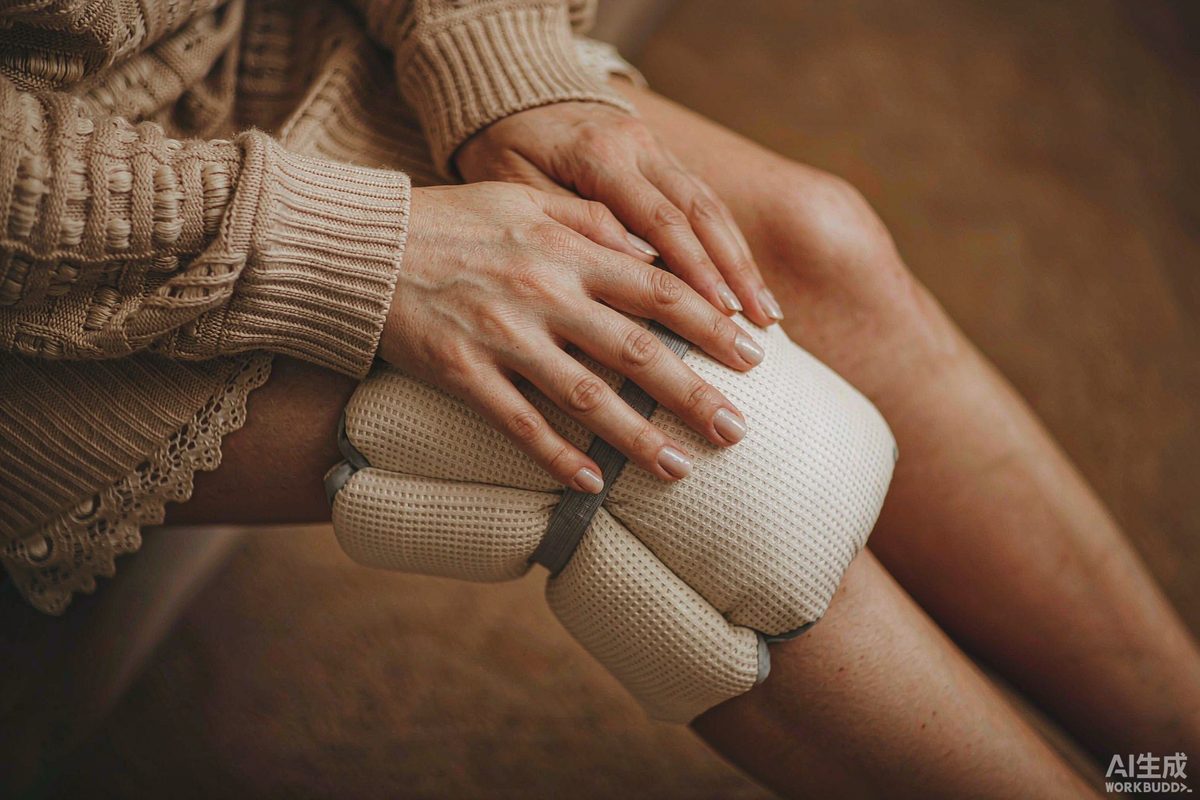
Before the scorecard, the physics, because once you understand the four principles you can walk into any store and evaluate any gadget yourself. The marketing wants you to think the answer is 'ergonomic,' which now means nothing. The four things that actually matter:
Grip diameter. The smaller the handle, the more your fingers must wrap and pinch, and pinch is the motion that hurts most in hand arthritis. Fat, padded handles spread the force across the palm and reduce the load on the thumb's carpometacarpal joint — the joint that goes first in osteoarthritis. A tool with a narrow metal handle fails on day one, no matter how 'ergonomic' the box says it is.
Leverage. A long handle is a lever, and a lever multiplies force. Jar openers with long arms, peelers with long necks, knives with tall blades — anything that extends the distance from your hand to the work reduces the force your hand must produce. This is the single cheapest improvement in kitchen design, and it costs manufacturers nothing.
Weight. A heavy tool is a static load your fingers must hold against gravity. Lightweight versions of everything — aluminum pans, thin blades, plastic-bodied openers — cut the fatigue of holding. The research on grip force control in hand OA found patients not only weaker but less precise in modulating grip, which means heavy tools demand exactly the sustained gripping these hands struggle with.
Non-slip surfaces. Rubber, silicone, and textured grips do two jobs: they keep the tool from slipping out of a weak hand, and they let you hold it with less force. Same reason a wet bar of soap is hard to grip — friction, or the lack of it, is half the battle.
Everything that follows is just these four principles wearing different product names.
- Four principles separate real joint-friendly tools from marketing: fat grips (less pinch), long handles (leverage), light weight (less holding fatigue), non-slip surfaces (less gripping force needed).
- The thumb's CMC joint fails first in hand OA — tools with padded, larger-diameter handles protect exactly that joint.
"The sinews bind when strained, the bones weaken when overloaded. Guard them with tools before you ask them to heal."
How I Tested — and What a Five-Week Test Can't Tell You
Method first, because anyone can claim they 'tested' products. Three testers: my mother-in-law, 71, bilateral thumb and finger osteoarthritis, moderate pain most mornings; my father, 68, weak grip following a stroke, normal joint structure but severely reduced hand strength; and me, 41, desk-worker hands with early stiffness and no diagnosed arthritis.
That spread matters — it covers two different failure modes: painful joints and weak grip.
We set a task list that mirrors real cooking: open a new jar of pasta sauce, a jar of pickles, a vacuum-sealed salsa; peel five carrots and three potatoes; chop an onion, a bunch of herbs, and a raw chicken breast; open a can of tomatoes; drain a pot of pasta. Each tool got rated on effort, pain, speed, and whether the tester would use it on a Tuesday night after work.
We also ran the dishwasher test — does it survive, and does anyone bother putting it back in the right drawer.
Now the limits, stated plainly. Five weeks is not long-term use, and three testers is not a population. Hand OA patterns vary wildly — thumb base disease, knuckle disease, and finger-joint disease each respond differently to the same tool. Our results are a strong signal, not a guarantee.
I also have a bias worth naming: I wanted the cheap tools to win, because I've watched people with arthritis spend hundreds on gadgets that end up in a drawer. If anything, I graded the cheap stuff generously.
One more honesty note: none of these tools treats the underlying condition. They reduce the load on damaged joints. That's their job, and it's a good one — but it's not the same as therapy, and we'll get to that at the end.
- Test kitchen tools on real tasks — jar lids, peeling, chopping — and grade on effort, pain, and whether you'd actually reach for it on a tired Tuesday.
- A tool that doesn't survive the dishwasher test won't survive your routine. Ease of cleaning is part of the product.
Jar Openers: The $7 Hero and the $35 Question

Jar openers are the most crowded category in the joint-friendly kitchen, and the market has settled into three real designs. The contoured manual opener — a shaped plastic or rubber tool that cups the lid and gives you a handle to twist — is the seven-dollar hero. It works on the leverage principle: your palm pushes the handle while the teeth bite the lid.
In our test, it handled every lid except the most stubborn vacuum-sealed jars, and it weighs nothing and hides in a drawer. My father, with his post-stroke grip, opened a pickle jar with it on day two — the first jar he'd opened alone in a year.
The mounted opener screws under a cabinet and works one-handed: you slide the jar into the V-shaped teeth and twist the jar, not the lid. It's a clever design — the cabinet does the gripping, so the tool compensates for grip weakness rather than demanding strength. Our testers liked it but found it awkward for large jars and inconvenient in a rental kitchen.
It's a great permanent solution for your own home, a poor one for a drawer.
The electric opener is the thirty-five-dollar question. It grips and rotates the lid with one button press, zero effort, works on nearly any jar, and my mother-in-law called it 'the best thing in this kitchen' by week two. The downsides are equally clear: it's bulky, needs batteries, and it only opens jars.
For someone with moderate to severe hand arthritis, it's the difference between making dinner and ordering out on a bad day. For someone with mild stiffness, it's an expensive appliance you'll use once a month.
The verdict that surprised me: most households need two. The cheap manual opener for everyday, the electric one for bad days. Total cost about forty dollars — less than one visit to a hand therapist, and it works every single day.
- Manual contoured openers solve everyday lids with leverage; electric openers solve bad days with zero effort. Most people with hand arthritis need both.
- A mounted under-cabinet opener is excellent for your own kitchen, useless for a drawer — the cabinet does the gripping, so it compensates for weak grip, not just pain.
Cutting With Weak Hands: Rocker Knives, Shears, and Spiked Boards
Cutting is where standard kitchen design abandons arthritic hands completely. A chef's knife demands a tight pinch grip, a sawing motion that torques the wrist, and sustained force — the exact triple threat that hurts. Three tools dismantle that problem.
The rocker knife, or mezzaluna, replaces sawing with pressing. Curved blade, two handles, you rock it forward and back over the food. The cutting happens through downward pressure from the arm, not pinch from the fingers. Our testers chopped onions, herbs, and cooked chicken with it for five weeks, and the difference was immediate and obvious: no wrist twisting, no jarring.
The ergonomic-handle versions with a thick angled grip were the ones that earned permanent drawer space. It's not a paring knife — for small precise work you still need something else — but for volume chopping it's a revelation.
Spring-loaded kitchen shears are the second keeper. The spring pushes the blades back open for you, so every cut is a one-way squeeze instead of a squeeze-and-prise. They're the tool for cutting pizza, opening packages, snipping herbs, and breaking down a cooked chicken — jobs where a knife demands either force or dexterity.
The good ones have a locking mechanism and a comfortable grip, and they cost less than twenty dollars.
The spiked cutting board is the quiet genius of the category. A board with stainless spikes that hold food in place while you cut — no gripping the vegetable, no claw hand, no chasing a rolling onion across the counter. You press the food onto the spikes and cut with one hand. It eliminates the 'hold and cut' problem that makes most knife work impossible for weak or painful hands, and it doubles as a serving board.
This was the tool my father adopted fastest.
One caution that applies to all cutting tools: keep them sharp. A dull blade demands more force than any handle design can compensate for. Sharp knives are safer for everyone, and for arthritic hands, sharpness is the difference between a tool you can use and one you can't.
- Rocker knives replace sawing with pressing — the arm does the work, the fingers only guide. Look for thick, angled, ergonomic handles.
- Spiked cutting boards hold food in place so you cut with one hand and never grip the vegetable — the fastest win for weak hands.
- Spring-loaded shears cut on a one-way squeeze — half the effort of standard scissors. And keep every blade sharp: dull tools demand force no handle can fix.
Peelers, Can Openers, and the Dishwasher Test
Peelers and can openers are the tools people buy first and give up on first, so we paid special attention to them.
A standard swivel peeler is a narrow metal stick with a blade — the ergonomics of a pencil, the required grip of a wrench. The joint-friendly versions differ in three ways: a fat, soft handle that fills the palm; a perpendicular or angled blade that lets you pull the peeler toward you instead of twisting the wrist; and light weight.
Our testers peeled five carrots and three potatoes with each design, and the winner wasn't the most expensive — it was the one with the thickest, softest grip. The rubberized-handle peeler took the effort down from 'hurts' to 'fine' for my mother-in-law, which is the entire review in one sentence.
Can openers are the category where we were ready to recommend an electric model outright, and the testing surprised us. The electric openers — the ones that grip the can and spin it around the blade — are genuinely effortless. One button, done. They also have a specific failure mode: the older designs leave a sharp lid edge, and several models struggled with taller cans.
The modern 'safety rim' electric openers that cut the side of the can instead of the top solve both problems, leaving a smooth edge, and those are worth the money for anyone with weak hands. But the manual 'one-touch' openers — the clamp-style ones that squeeze and ratchet around the lid — were more capable than expected.
My father, with his weak grip, managed a can of tomatoes with the ratchet style on the second try. Slower than electric, but no batteries, no counter space, and twelve dollars.
Now the dishwasher test, which eliminated exactly two products from our keep list. One ergonomic peeler had a hollow handle that filled with water and went moldy. A soft-grip knife had a handle that discolored and started peeling after four washes. Both failed not because they were bad tools but because they demanded hand-washing, and nobody with painful hands is hand-washing gadgets at the end of a long day.
Whatever you buy, check the care instructions before you commit — dishwasher-safe is a feature, not a footnote.
- For peelers, grip thickness beats blade technology — the rubberized-handle versions cut effort from 'hurts' to 'fine.'
- Modern side-cutting electric can openers leave smooth rims and take zero grip strength; manual ratchet openers are a capable twelve-dollar fallback.
- Run the dishwasher test before you buy: a tool that needs hand-washing is a tool you'll stop using within a month.
The Five I'd Keep — and the $40 Starter Kit
Eight tools went in. Five earned permanent drawer space. Here's the ranking, straight from the notebook.
Number one: the contoured manual jar opener. Seven dollars, solved the most common daily fight, works for every tester on every jar short of the impossible ones. This is the tool I'd hand to anyone first.
Number two: the electric jar opener. Not for everyone — if your hands only ache occasionally, skip it — but for moderate to severe arthritis, this single device decides whether you cook or order in on bad days. My mother-in-law's verdict: 'I didn't know this existed, and I'm angry I've spent four years wrestling jars.'
Number three: the rocker knife with ergonomic handle. Replaced the chef's knife for every chopping task in the test kitchen. The single biggest effort reduction of any tool in the test.
Number four: the spiked cutting board. Eliminated the hold-and-cut problem completely. My father, who can't reliably grip a rolling vegetable, now chops alone. That sentence is the whole review.
Number five: the spring-loaded kitchen shears. A one-way squeeze, twenty different jobs, dishwasher-safe, cheap. The understudy that became a star.
The three that didn't make it: an expensive 'ergonomic' chef's knife with a gimmicky angled blade (the angle forced an awkward wrist position — worse than a standard knife); a mounted under-cabinet opener (great concept, wrong kitchen for us); and a multi-tool that claimed to open everything and did none of it well.
If you can only spend forty dollars, buy the manual jar opener, the rocker knife, and the spiked board. That's twenty-five dollars for the three biggest wins. Add the electric opener when a bad day proves you need it. The expensive 'arthritis-friendly' celebrity gadgets are, in our test, strictly worse than the boring engineering.
- The $25 starter kit: contoured manual jar opener + rocker knife + spiked cutting board. The three biggest effort reductions per dollar.
- Add the electric jar opener only when a bad day proves you need it — it's the tool for moderate-to-severe arthritis, not mild stiffness.
- Beware gimmicky 'ergonomic' angles: one test knife's angled blade forced a worse wrist position than a standard knife. Test with your own hand before trusting marketing.
What No Gadget Fixes
The tools worked. Now the part that's harder to write: they changed how much load our testers' joints carried, and nothing about the underlying condition changed at all. The joints are still arthritic. The thumbs still ache on cold mornings. The tools bought back an activity, and that's worth a lot — but it's not treatment.
If you have hand pain that's changing how you live, the first step isn't a shopping cart. It's an occupational therapist or hand therapist. These are the professionals who actually know adaptive equipment — they can size you for splints, teach joint protection techniques, and tell you which of the hundreds of kitchen aids is right for your specific arthritis pattern.
The research is clear that for hand osteoarthritis, the effective package is education, exercise, and joint protection — and a therapist delivers all three in a way a gadget cannot.
Splints deserve a special mention because they're the tool category people skip. A thumb CMC splint, worn for a few hours during heavy hand use, can significantly reduce pain in basal thumb arthritis — the most common and most disabling hand OA pattern. They're not kitchen tools, but they make kitchen tools work better, because a splinted thumb can hold a peeler without pain.
And a boundary worth drawing clearly: if a joint is hot, swollen, red, or so painful that you're avoiding use entirely, see a clinician before you adapt around it. Tools can mask a problem that needs treatment, from inflammatory arthritis to an injury. Kitchen gadgets are for protecting joints that a doctor has cleared — not for diagnosing the ones that aren't.
The through-line of this whole test: dignity is a practical thing. It's a lid that opens on the first try. It's chopping your own onions at 71. The tools don't fix the joints — but they let the person keep their kitchen, and their kitchen keeps them moving. That's joint protection in the oldest sense of the term, and no supplement aisle can sell it.
- See an occupational or hand therapist before you buy a drawer of gadgets — they size splints, teach joint protection, and match tools to your specific arthritis pattern.
- A thumb CMC splint worn during heavy hand use can reduce pain in the most common hand OA pattern — it makes every kitchen tool work better.
- Hot, swollen, or red joints need a clinician, not a gadget. Adaptive tools protect cleared joints; they don't diagnose or treat disease.
"The sage treats the illness that has not yet arisen. Protect the joint before the joint demands protection."