The Throat Noticed First
The first sign was not the calendar. It was the throat — dry at the back, faintly scratchy by mid-afternoon, worse when the heat kicked on. Then the skin on my knuckles started to crack, and the air in the apartment developed that thin, papery quality that makes you reach for water without thinking.
Autumn arrives in a lot of ways. The leaves, the light, the angle of the sun. But the way most of us feel it is in the membranes: the nose, the throat, the skin, the lips. Those are the surfaces where dryness announces itself, and they are exactly the surfaces Chinese medicine has been watching for a couple thousand years.
In that older frame, the shift of seasons isn't a backdrop. It's a force that acts on the body the way weather acts on a house. Cold contracts. Heat expands. Dampness makes things heavy and slow. And dryness — the signature of autumn — pulls moisture out of the body's surfaces the same way a dry wind pulls water out of a field.
The organ that sits at the front of that exchange, the one the tradition says opens directly to the outside air, is the Lung.
So the scratchy throat, the dry cough, the cracked lips, the nose that stings in the morning: in this frame, those aren't random annoyances. They're the same event, and they point at the same thing. What you eat in this season, and how you prepare it, is where the tradition has always gone for the answer.
- Autumn's signature in Chinese medicine is dryness, and it shows up first in the body's membranes — throat, nose, skin, lips.
- The Lung is the organ the tradition says opens directly to outside air, which is why it takes the brunt of a dry season.
- Seasonal shift isn't background in this frame; it acts on the body the way weather acts on a house.
Dryness Has a Name, and a Job, in Chinese Medicine
Chinese medicine treats the climate as one of six influences — wind, cold, summer-heat, dampness, dryness, and fire — and gives each one a character. Dryness is the one that belongs to autumn. Its job, in the language of the texts, is to injure fluids: to thin out and consume the moisture that keeps the body's surfaces supple and its passages lubricated.
The pairing runs deeper than a metaphor. The Neijing, the founding text of the tradition, lays out a correspondence between the seasons and the organ systems, and autumn's match is the Lung, whose job includes governing the skin and the body's protective surface, and managing the distribution of fluid.
Put the two together — a dry season and a Lung that rules the moist outer layer — and you get the classic autumn picture: dry throat, dry cough, dry skin, thirst that water alone doesn't quite fix.
There's a reason the texts reach for food here rather than, say, a bigger fan. The understanding is that the body's moisture has to be replenished gently and from within, and that certain foods — the ones with a naturally moist, slippery, softening quality — do that work better than simply drinking more.
The tradition calls these yin-nourishing and moistening foods, and it has spent centuries assembling a short list of them.
That list is worth looking at through two lenses, because the claim is specific and testable. The old lens says these foods moisten dryness and settle the Lung. The modern lens asks what's actually in them, and whether any of it does anything measurable.
The honest answer lands in the middle: the old texts and the lab work don't map onto each other perfectly, but they don't contradict each other either, and a few of the foods on that list have held up under scrutiny better than the skeptics expected.
- Dryness is one of six climatic influences, and its job is to consume the body's fluids — the moisture in the throat, skin, and passages.
- Autumn's organ correspondence is the Lung, which in this frame governs the skin and the distribution of fluid.
- The tradition's answer is food, not more water: certain moist, slippery foods replenish fluids gently from within.
"In autumn, dryness prevails. It dries the throat, the nose, and the skin, and it consumes the body's fluids. Nourish the yin and moisten dryness with food that is soft, moist, and gently warmed."
Why the Lung Takes the Hit, of All the Organs
Every organ in Chinese medicine has a direction it faces and a territory it governs. The Lung faces outward. It's the organ the tradition says opens into the nose, commands the skin and the fine body hair, and stands as the body's first line against what the air carries in.
That's not poetry; it's a functional claim, and it's the reason the Lung is the organ autumn hits hardest. The Lung is the surface of contact between you and the air, and autumn's air is dry. Breathe enough of it — especially indoor air heated until it's parched — and the surfaces the Lung governs are the first to lose moisture: the nasal passages, the throat, the lining of the airway, the skin.
The result is the specific kind of cough this season is known for. It's a dry cough, without much phlegm, often worse at night and first thing in the morning, and it responds poorly to the usual cold remedies because it isn't a cold. It's a moisture problem. The throat feels tight and papery; a tickle sets off a cough that produces nothing.
This is the clinical picture the tradition calls Lung dryness, and it's one of the more consistent seasonal diagnoses in the whole system — not because the theory is tidy, but because the symptom pattern is so recognizable.
Here's where the frame earns its keep. If the problem is lost moisture rather than an invader, the response shouldn't be the same as fighting a cold. The tradition's answer to Lung dryness is to moisten — to feed the Lung with foods that replenish its fluids and quiet its irritation.
Whether you accept the organ model or not, the dietary instruction that falls out of it is concrete and mostly harmless: eat more of the moist, soft, warming foods, and fewer of the things that dry you out. That's a low-risk, testable claim, and the rest of this piece is about the specific foods it points to.
- The Lung opens into the nose and governs the skin, which makes it the body's main point of contact with dry air.
- Autumn's cough is characteristically dry — little phlegm, worse at night and on waking, and it isn't a cold.
- If the problem is lost moisture, the response is to moisten, not to fight an invader that isn't there.
The Short List the Classics Kept Reaching For
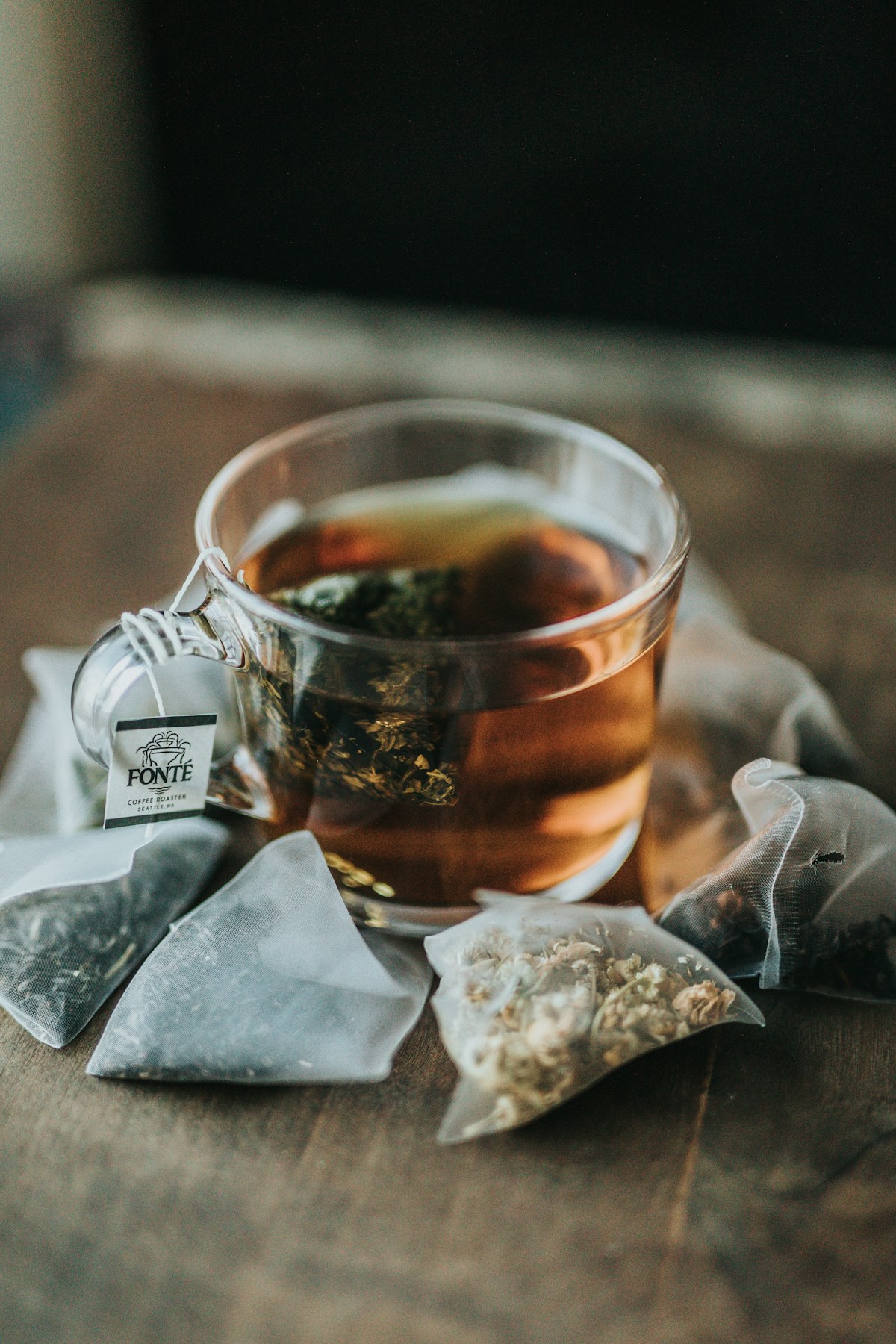
Across the classical texts, the same handful of foods keeps turning up whenever dryness is the problem. They're not exotic. Most of them are cheap, and all of them have been in the pantry for centuries.
Pear leads the list. It's the textbook answer to Lung dryness: cool in nature, moistening, and sweet enough to be pleasant. The tradition favors it cooked rather than raw — a pear steamed with a little rock sugar, or simmered in soup — on the reasoning that cooking it warm makes it gentler on the digestion while keeping its moistening quality.
The modern footnote is simpler: a pear is mostly water and soluble fiber, which is exactly what a dry throat and a sluggish system want.
Snow fungus, sometimes called silver ear or tremella, is the one that surprises people. In its dried form it looks like a pale, withered sea sponge; soaked in water it swells into translucent, gelatinous fronds that give a soup its characteristic silkiness. The tradition prizes it as a gentle yin tonic, cheap enough to eat daily.
It's also the one food on this list with real laboratory interest — its polysaccharides have been studied for immune and anti-inflammatory effects, though mostly in cells and animals, not people.
Lily bulb joins pear and snow fungus as the third leg of the classic trio. The pale slices rehydrate to a soft, faintly sweet texture, and the tradition pairs it with the other two to deepen the moistening and calm the spirit — an old association between the Lung and the Heart that shows up again and again in the texts.
And then there's honey, which sits a little apart. It's not in every classical formula, but it's the one item modern medicine has actually put to the test for coughs, with results that lean favorable. More on that in a moment.
The point for now is that these four — pear, snow fungus, lily bulb, honey — are the short list, and they've held their place for a reason that has less to do with doctrine than with the fact that a warm, sweet, slippery bowl of them genuinely feels like relief on a raw throat.
- Pear is the textbook answer to Lung dryness — moistening, mildly cooling, and favored cooked rather than raw.
- Snow fungus swells into gelatinous fronds that give a soup its silky texture, and it's the list's most-studied item in the lab.
- Lily bulb deepens the moistening and carries an old association between the Lung and the Heart.
"Pear moistens the Lung and settles cough; snow fungus nourishes the yin and moistens dryness; lily bulb clears and calms. Cooked together, warm and gently sweet, they ease the dry throat of autumn."
Snow Fungus, the Cheap One That Punches Above Its Weight
Snow fungus deserves its own section, because it's the ingredient that makes these soups feel like more than warm water, and it's the one the modern literature has looked at most seriously.
The traditional claim is specific: snow fungus nourishes yin, moistens dryness, and benefits the Lung. It's recommended for dry cough, dry throat, and the parched feeling that comes with a dry season, and because it's mild and inexpensive, the tradition treats it as a daily food rather than a medicine you dose carefully.
A palm-sized piece, soaked in cold water for half an hour, becomes a bowl of translucent fronds that cook down into a silky, almost slippery broth.
The modern angle is where it gets interesting. Snow fungus is rich in a particular kind of polysaccharide, and researchers have spent real effort characterizing it.
A 2022 study isolated a high-molecular-weight polysaccharide from Tremella fuciformis and showed it stimulated immune-signaling in macrophages through the TLR4 receptor — a cell-level effect, not a human trial, so it doesn't prove anything about your cough. A related line of work has examined its antioxidant and immune effects in animal models.
The honest read is that the laboratory interest is genuine and ongoing, but the leap from "this polysaccharide does something in a dish" to "this soup will fix your throat" has not been made by any study I can point to.
That gap is fine, because nobody sensible eats snow fungus for the macrophage data. They eat it because a warm bowl of it, sweetened slightly and taken in the evening, has a way of coating a raw throat that water doesn't. The tradition and the lab are looking at the same food from two distances, and for once the distances don't have to be reconciled to keep the practice worthwhile.
- Snow fungus is treated as a daily food, not a dosed medicine — mild, cheap, and safe enough to eat often.
- A 2022 study isolated its polysaccharide and showed immune-signaling in cells, but that's a dish-level effect, not proof for your cough.
- Soak a palm-sized piece in cold water for half an hour and it becomes a bowl of translucent fronds.
Lily Bulb and Pear, the Pair That Softens
If snow fungus gives the soup its texture, lily bulb and pear give it its meaning. The two are almost always paired in the classic moistening recipes, and the pairing has a logic that goes beyond flavor.
Lily bulb — baihe — rehydrates from pale, papery slices into something soft and faintly sweet, with a mild, calming quality the texts associate with settling the spirit. The tradition links it to both the Lung and the Heart, and the classic reasoning is that a dry, irritated Lung and a restless, unsettled mind often come together in the autumn, when the season's sharpness grates on both.
Lily bulb is the ingredient that addresses both at once.
Pear is the more familiar half of the pair. Cool and moistening, it's the food the tradition reaches for first when the throat is dry and the cough is empty. The detail worth keeping is the cooking: the texts prefer pear warmed — steamed, simmered, or baked — over raw.
The stated reason is that warmth protects the digestion while the pear does its moistening work, and there's a modern echo in the fact that warm food and drink genuinely do feel better on an irritated throat than cold ones.
The lab note on lily bulb is modest but real. A 2020 study of Lilium lancifolium bulbs reported antioxidant and anti-inflammatory effects in cell models, identifying a handful of the compounds responsible. As with snow fungus, this is evidence about the ingredient's chemistry, not a clinical verdict on the soup.
It tells you the bulb contains compounds that do something measurable in a dish; it does not tell you that a bowl of lily soup will clear your cough. Worth knowing, worth not overstating.
The recipe that ties the pair together is barely a recipe. Simmer pear and lily bulb with a piece of soaked snow fungus and a little rock sugar for forty minutes, drink it warm. The result is sweet, soft, and quietly effective at the one thing a dry throat wants, which is to stop being dry for a while.
- Lily bulb and pear are almost always paired, and the tradition links lily bulb to both the Lung and the Heart.
- Pear is preferred cooked — warmed, steamed, or simmered — to protect the digestion while it moistens.
- A 2020 study found antioxidant and anti-inflammatory effects in lily bulb extracts, in cells, not people.
Honey: the One the Lab Actually Tested
Honey is the outlier on this list, and it's the one worth taking most seriously, because it's the only one that has been run through randomized trials for the exact symptom in question.
The trials are mostly in children, which matters when you're reading the results. A 2023 systematic review pulled together the evidence on honey for acute cough in children and concluded — carefully — that honey probably beats placebo and no treatment, and may do about as well as over-the-counter cough syrups, with the added advantage of fewer of the side effects.
An older Cochrane review reached a similar, slightly more hedged conclusion: low-to-moderate certainty evidence that honey reduces cough frequency and improves sleep in kids with coughs, better than no treatment and at least as good as dextromethorphan.
The honest caveats are built into that wording. The evidence is for acute coughs, in children, mostly for a night or two, and the quality of the studies is described as low to moderate. Nobody has run the equivalent trial on adults with autumn's dry cough, and honey's mechanism — coating the throat, thinning mucus, its natural antibacterial properties — is understood in pieces rather than as a settled whole.
None of that makes honey useless; it makes the claim about honey specific, which is how I prefer it. Honey helps a short, dry, tickly cough in kids. For an adult with a scratchy autumn throat, it plausibly helps the same way, but that's an extrapolation, not a finding.
The TCM view slots honey in without much friction. The tradition considers it moistening and mildly tonifying, and it's a common carrier for the other ingredients — the spoonful of honey stirred into the pear soup, or into warm water with a slice of lemon. The two frames agree on the practice even if they disagree on the vocabulary.
One safety note the tradition wouldn't dispute: never give honey to an infant under one year old, because of the risk of infant botulism. That's not folklore; it's a hard rule.
- A 2023 systematic review and an older Cochrane review both found honey probably helps acute cough in children, with low-to-moderate certainty.
- The evidence is specific — children, acute cough, a night or two — not a verdict on adult dry cough, which is an extrapolation.
- Never give honey to an infant under one year; the botulism risk is a hard rule, not folklore.
"Honey is moistening and gently tonifying. Taken warm, it coats a dry throat and carries the flavor of whatever it is stirred into."
How to Eat This Without Turning It Into a Chore
The pattern that keeps this from becoming a project is to stop treating these foods as remedies you take and start treating them as food you already eat, nudged toward the season.
The simplest version is the evening soup, and it doesn't need a recipe. Put a palm-sized piece of soaked snow fungus, a handful of lily bulb slices, and half a pear (cored, not peeled) into a pot with enough water to cover. Simmer for forty minutes. Add a spoonful of honey and a few crystals of rock sugar, if you want it sweeter, and drink it warm an hour or two before bed.
That's the whole thing, and it's forgiving: too much or too little of any one ingredient doesn't ruin it.
The smaller habits matter as much as the soup. Cook your vegetables instead of eating them raw, since the tradition holds that raw, cold food taxes the digestion and the season is already doing enough drying. Warm your drinks — room-temperature water over iced, tea over cold brew. Keep a kettle or a thermos going so the warm option is the easy option.
And ease up on the things that dry you out fastest: too much coffee and alcohol, heavily spiced or fried food, and long, hot showers that strip the skin.
If you want to structure it, think of it as a week of small additions rather than a menu overhaul. Two or three evenings of the pear-and-snow-fungus soup. A spoonful of honey in warm water on the scratchy mornings. A pear, steamed with a little rock sugar, as the afternoon snack instead of something fried. Cooked greens with dinner instead of a raw salad. None of this is difficult, and none of it needs to be perfect.
The point isn't to turn autumn into a regimen. It's to notice that the season is already doing something to your throat and skin, and to reach for the foods that push back, the way the tradition has for a long time. Most of them were already in your kitchen.
- The evening soup is the anchor: snow fungus, lily bulb, half a pear, simmered forty minutes, honey stirred in warm.
- Cook vegetables, warm your drinks, and go easy on coffee, alcohol, fried food, and long hot showers.
- Think of a week of small additions — a soup here, a spoon of honey there — not a menu overhaul.
Where This Does and Doesn't Reach
It's worth saying plainly what this is and isn't, because the topic is a health topic and the season brings real respiratory illness along with its dry air.
What the tradition offers here is a dietary pattern — warm, moist, gentle foods aimed at a dry season — and the modern literature offers scattered, mostly preliminary support for the individual ingredients. The honey evidence is the strongest and most direct, and even that is modest and mostly pediatric. The snow fungus and lily bulb work is cell- and animal-level.
The pear evidence is mostly the quiet, unglamorous kind: a pear is water, fiber, and a little sweetness, and none of that hurts a dry throat. Taken together, the case for these foods is a case for plausibility and comfort, not proof.
That distinction is the whole point. A bowl of warm pear soup will not cure a respiratory infection, will not replace a bronchodilator, and will not shorten a real illness. If your cough lingers for more than a couple of weeks, brings up blood or discolored phlegm, comes with fever, chest pain, or shortness of breath, or if it's a child who's struggling — that's a doctor, not a pantry.
The tradition would say the same thing in its own idiom: diet supports the body, but it doesn't substitute for the physician when something is genuinely wrong.
The honest place these foods occupy is the daily one. They're what you eat in a dry season to feel less dry, the way you wear a scarf against the wind. The old texts and the new papers are looking at the same simple practice, and neither is claiming a miracle. Autumn is going to be dry. This is one gentle, pleasant way to push back.
- The case for these foods is plausibility and comfort, not proof — the honey evidence is the strongest and even that is modest.
- A warm pear soup won't cure an infection or replace a bronchodilator, and it won't shorten a real illness.
- Lingering cough, blood or discolored phlegm, fever, chest pain, or shortness of breath means a clinician, not a pantry.
"Food supports the body through the seasons, but it does not stand in for the physician. Warm what is dry, moisten what is parched, and seek help when the illness is more than the weather."