Two Buildings, Two Philosophies — and They're Both Incomplete
Walk through the doors of a commercial gym at 6 PM and you'll feel the philosophy before you see it. Mirrors on every wall. Music with a BPM designed to override hesitation. The unspoken assumption painted across the entire space: your body is a machine. Load it, stress it, let it adapt, repeat with more load. Exhaustion is evidence of effort. Pain is the fee for progress.
Now walk into a qigong hall — just a room, really, wood floor, no mirrors, maybe incense, definitely silence. Eight people moving through the Eight Brocades with the kind of slow economy you'd swear was choreographed sleep. Nobody's sweating. Nobody's counting reps. The unspoken assumption here is different: your body is a garden. Water it. Let Qi circulate. Don't yank the roots. It'll flourish for a century.
Two thousand years of history. Two totally different operating systems. And for the past decade I've worked in both buildings — morning shift in the gym, evening shift in the qigong studio. Here's what I've seen that neither camp wants to admit.
Western fitness, at its peak, builds muscle and bone with a reliability no other tradition can touch. It also chews through rotator cuffs, spikes systemic inflammation, and produces people whose resting cortisol looks like they're being chased by a bear five days a week.
TCM movement, at its peak, builds circulation, nervous system balance, and a relationship with your body that makes training sustainable for decades. At its worst, it's so gentle that practitioners silently lose bone density and functional strength year by year while their posture looks better than ever.
These two systems have never had to talk to each other. But they now share the same bodies — yours. And the uncomfortable truth I've had to accept is that neither one is sufficient by itself. What follows is an honest comparison: what each camp gets genuinely right, where each genuinely fails, and the hybrid protocol that takes the foundation from one and the strength from the other.
- Notice which camp you instinctively defend — gym or gentle movement. This article isn't here to validate your preference. It's here to show you what your preference is missing.
- Before changing anything, ask yourself one honest question: does your current training leave you with more energy at the end of the week, or less? That answer tells you which half of the hybrid you need.
"The ancient ones understood the Way of life: they modeled themselves on Yin and Yang, harmonized their movement with the seasons, and did not exhaust themselves with foolish striving. Therefore their bodies did not age before their time."
What the Gym Gave Us: The Overload Principle, Bone Density, and Why Numbers Matter
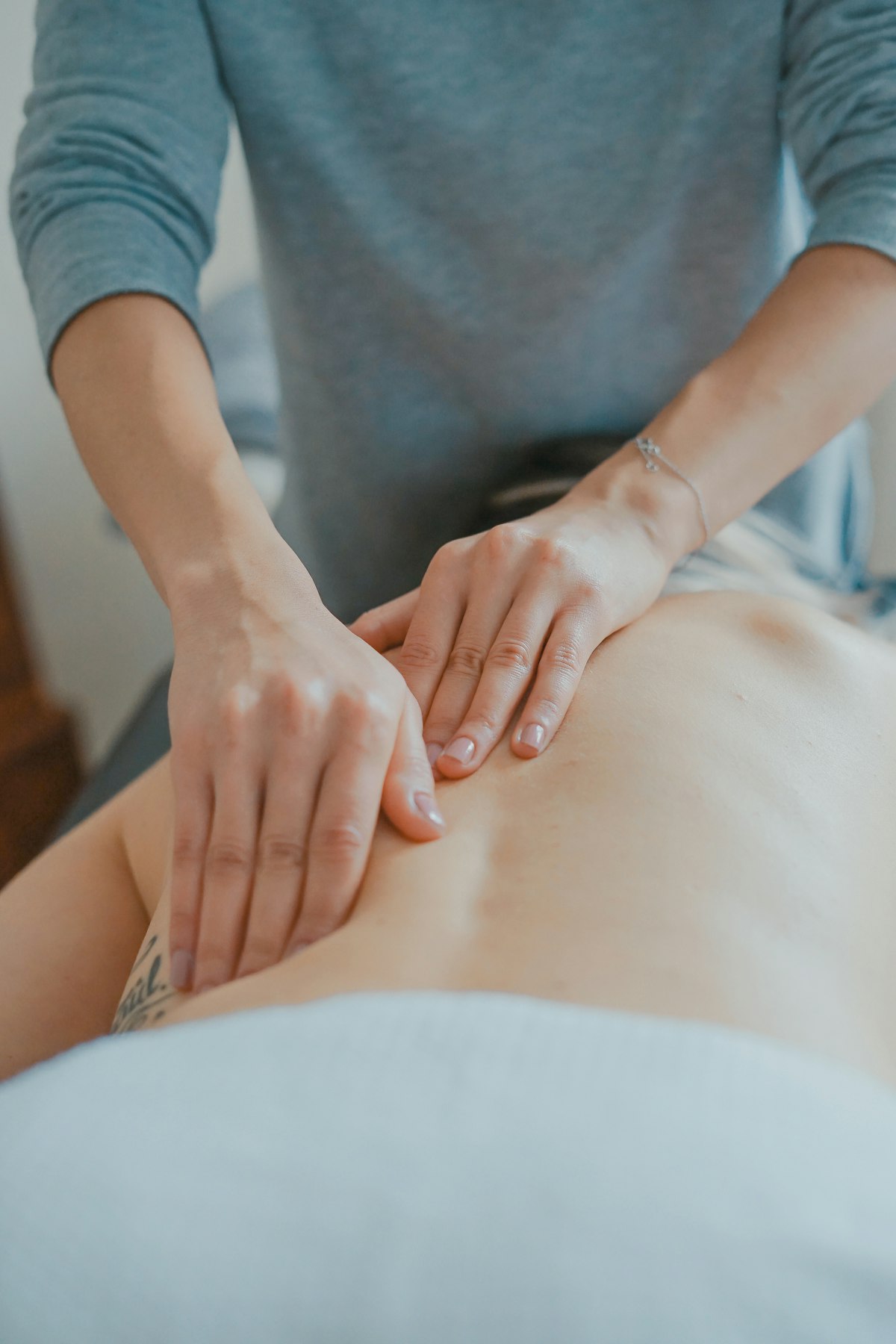
Let's start with what the gym gets right — because the hybrid protocol depends on it, and ignoring these strengths would be just as dogmatic as the gym-bros who dismiss qigong as 'standing around.'
The overload principle is the single most powerful training idea in history. The insight that tissues adapt when stressed beyond their current capacity — and rebuild stronger — explains why a novice can double their strength in months, why bone responds to loading, and why muscles grow. TCM never formalized this. It doesn't have a training variable for 'add five pounds.' That's a genuine gap.
Then there's bone density. This one deserves emphasis because it's the hole in TCM's armor that nobody wants to talk about. Bone is living tissue. It needs load — meaningful, progressive, occasionally heavy — to maintain and build density. A 2017 meta-analysis confirmed that progressive resistance exercise significantly improves bone mineral density in both pre- and post-menopausal women. Squats with load.
Deadlifts. The kind of thing that gentle movement alone does not provide. Osteoporosis is a real, measurable, deadly disease — hip fractures kill — and the Western gym remains its best non-pharmaceutical countermeasure. I've watched qigong-only practitioners in their sixties with beautiful posture and bone scans that made me catch my breath.
Good movement can't compensate for insufficient loading at the skeletal level.
The third thing Western fitness nailed is measurability. The gym gives you numbers: weight on the bar, resting heart rate, body composition, one-rep max. Numbers enable progressive overload — you can't progressively load what you can't measure. They create accountability. And they give beginners a clear, motivating path: lift a little more than last week. Watch the number climb. This isn't trivial.
It's one of the strongest psychological adherence tools available, which is why gyms are full of people who've been showing up for years, and why so many home qigong practitioners quietly stop after a month. A poetry-based progression system sounds beautiful. It also doesn't keep people training.
Finally, specificity: if you want to run a marathon, you run. If you want to deadlift 500, you deadlift. Training transfers best when it resembles the goal. That's not a philosophy. It's exercise science, and it works.
- If you're over 40 and your movement practice has zero loading, add two strength sessions a week — this is the single biggest upgrade most qigong-only practitioners need. The bone density research is unambiguous.
- Use the numbers — but as tools, not tyrants. Track your lifts and resting heart rate. Let the trend across months, not the single bad session, be your judge.
"When the sinews and bones are loaded with proper measure, they respond by growing strong; when they are loaded beyond measure, they respond by breaking. The principle is the same — only the dosage differs."
The Machine Model's Body Count: What the Gym Breaks That It Wasn't Designed to Fix
Now the other side of the ledger.
The machine model — stress, adapt, repeat — works beautifully for muscles and bones. It fails for everything else the body actually is: a nervous system that needs recovery, connective tissue that remodels on a different timeline, a hormonal system that can't distinguish 'hard workout' from 'existential threat,' and the energy networks that TCM calls Qi.
First casualty: the nervous system. High-intensity training is a deliberate stressor — it spikes cortisol, adrenaline, sympathetic activation. In moderation, your body absorbs this and adapts. Done chronically — which is exactly what gym culture rewards, with its 'never skip' mentality, its programs that don't deload, its wearables that guilt you for resting — the nervous system never fully recovers.
The result is the symptom cluster sports medicine now labels overtraining syndrome: fatigue, irritability, poor sleep, depressed immunity, declining performance, and a hormonal profile indistinguishable from chronic stress. A 2017 review in the Journal of Sports Medicine is blunt about what fails first. It's not the muscles. It's the autonomic nervous system and the endocrine system.
The machine model has no category for this — because machines don't have nervous systems.
Second casualty: joints and connective tissue. Muscles adapt to overload in weeks. Tendons, ligaments, and cartilage adapt in months or years. But gym culture loads everything on the muscle's schedule — which is why the classic trajectory of the dedicated lifter is: rapid strength gains for about two years, then a shoulder, a knee, or a lower back that won't quite heal. I see this constantly in my practice.
Impressive physiques, chronically inflamed joints. Programs that never once asked the question: is the connective tissue ready for what we're about to ask of it?
Third casualty — and maybe the most insidious: the mind-body connection itself. 'No pain, no gain' teaches people to override their body's signals. Push through pain. Train through fatigue. Treat discomfort as a moral virtue. This is the exact inverse of TCM's core instruction, and it has a cost that compounds over time: people who learn to ignore their bodies eventually lose the ability to read them.
The first signal they ignore is usually the one they should have listened to.
- The single most neglected variable in gym culture is the deload: one week every 6-8 weeks at 50% volume. It's the cheapest insurance against overtraining syndrome available.
- Learn to distinguish muscle burn (fine — metabolic stress) from joint pain (never fine — structural damage). The machine model tells you to push through both. The hybrid model treats the second as a stop sign.
"The wise doctor treats the disease that has not yet arisen. The wise athlete rests before the injury that has not yet occurred."
What Your Grandfather's Qigong Practice Got Right — That Your Training Log Can't See

If Western fitness treats your body like a machine, TCM movement treats it like a river. And the river model catches three things the machine model misses entirely.
The first is circulation — not just blood, but the entire fluid dynamics of the body. Every TCM system — qigong, tai chi, Five Animal Frolics, Eight Brocades — is organized around the same objective: move Qi and blood smoothly through the meridians. Prevent stagnation.
In TCM theory, stagnation is the root of most chronic disease: pooled blood, sluggish lymph, fascia that's glued together, organs that don't get fresh circulation because movement patterns are too narrow. The postures are designed as pumps and flushes. Twist the spine to wring the internal organs. Swing the arms to pull blood through the shoulders. Press the palms to drive Qi down the meridians.
Modern research on mind-body exercise keeps finding the same downstream effects: improved blood pressure, better immune markers, reduced inflammatory cytokines, measurable quality-of-life improvements across dozens of conditions.
The second thing is sustainability. TCM movement isn't designed for a season. It's calibrated for a lifetime. ' Movement that builds reserves rather than spends them. There's no 'no pain, no gain' in the qigong hall because the entire tradition considers pain a signal you're doing something wrong, not a badge of honor.
That calibration makes the practice survivable across decades in a way that HIIT classes can't match.
The third — and in my experience, the most underappreciated — is nervous system regulation. Slow, breath-synchronized, coordinated movement is a parasympathetic practice. It activates rest-and-digest. It lowers cortisol. It trains your body to move from calm rather than fight-or-flight. This isn't a spiritual claim. Heart rate variability improves measurably. Sleep deepens.
The stress hormones that chronic gym-goers live in start to come down. Tai chi and qigong practitioners show the exact biomarkers that overtraining destroys. The gym spikes your sympathetic system and sometimes forgets to let it come back down. The qigong hall settles it — and a body that can't settle can't recover. Recovery is where the actual adaptation happens. Miss that, and the whole machine grinds to a halt.
- The simplest test of your movement practice: after you finish, are you calmer or more wired? TCM-based movement should leave you settled and clear. If you're buzzing, something's off.
- If you adopt exactly one qigong habit, make it the daily 10-minute Eight Brocades. It's a full circulation and nervous-system reset with essentially no skill barrier.
"The highest good is like water. Water benefits all things and does not compete — it yields to every obstacle and overcomes everything by its constancy. So the body that yields in movement does not break."
The Honest Criticism: Where TCM Movement Falls Short — and the Price of Being Too Gentle
An honest comparison means an honest critique. TCM movement has two genuine weaknesses that its advocates rarely mention. They're structural, not superficial.
Conservative loading. ' That calibration is a gift for the nervous system. It's a liability for bone, muscle, and metabolic health. Bone needs load — meaningful, progressive, sometimes heavy — to maintain and build density. Gentle movement alone does not protect against osteoporosis. That's not my opinion. It's the research.
Muscle needs progressive tension to be maintained, and muscle mass is the body's metabolic insurance policy: it guards against frailty, insulin resistance, and the cascade of functional decline that follows aging. A 60-year-old who's done only qigong for decades can have beautiful posture, a calm nervous system, excellent circulation — and the bone density and grip strength of someone a decade older.
I've seen this pattern enough times that it's no longer anecdote. It's a predictable outcome of an incomplete system.
The second weakness is the measurement problem. TCM movement has no built-in progressive structure. There's no way to quantify 'better' — no equivalent to adding five pounds, no objective marker of improvement. ' Gorgeous as poetry. Useless as a training log. Without measurable progression, many people plateau quietly. The forms become a routine rather than training.
Psychologically, the absence of numbers makes it hard to know if the practice is working — and in a culture built on feedback, that undermines adherence in exactly the population that needs it most.
The honest conclusion: TCM movement is an incomplete training system, just as Western fitness is. It needs the gym's loading and measurability. The gym needs its circulation and nervous-system wisdom. Which means the real question isn't which one is right. It's how to put them together.
- If you practice qigong or tai chi and you're over 40, add two loaded strength sessions a week — treat them as part of your practice, not a betrayal of it. Your bones will still be thanking you at 70.
- Add one measurable marker to your gentle practice: grip strength (test monthly with a dynamometer) or a timed single-leg stand. Improvement proves the practice is doing its job. Plateau tells you something needs to change.
"Softness overcomes hardness, stillness overcomes motion — but the one who has only softness is broken by the wind, and the one who has only hardness is shattered by the storm."
What the Research Actually Shows (Neither Camp Is Going to Quote This)

The most useful thing I can do here is show you what the peer-reviewed literature actually says — because the data tells a more balanced story than either camp's marketing.
Western resistance training has some of the strongest evidence in all of preventive medicine. Beyond the bone density meta-analysis already mentioned, the research shows resistance training improves glucose control, reduces cardiovascular risk, preserves muscle mass through aging, and — critically — is associated with reduced all-cause mortality in a clear dose-response relationship. More strength, longer life.
Up to a point.
But the same literature documents the failure mode with equal clarity. The 2017 review on overtraining syndrome establishes that chronic high-volume, high-intensity training without adequate recovery produces measurable autonomic, hormonal, and psychological dysfunction. The Western research base itself confirms the machine model's blind spot. The scientists know. The marketing just doesn't lead with it.
On the TCM side, the evidence base is younger and less comprehensive — but the direction is consistent and growing. Randomized controlled trials of qigong and tai chi show meaningful improvements in blood pressure, balance, sleep quality, immune function, and inflammatory markers. A 2018 synthesis of mind-body exercise studies found significant quality-of-life improvements across diverse clinical populations.
And the mechanism is starting to become clear: slow, coordinated movement with breath control activates the parasympathetic nervous system, improves heart rate variability, and reduces the stress hormones that drive chronic disease.
Head-to-head studies comparing the two traditions directly are rarer — but the pattern is consistent. When mind-body exercise is compared with conventional training for outcomes like blood pressure, balance, and psychological health, the mind-body interventions match or exceed conventional training results — while causing a fraction of the injuries.
The synthesis writes itself. Western training has the loading science. TCM movement has the regulation science. Each methodology is validated by research that measures its own strengths. The hybrid approach isn't a compromise between two competing belief systems. It's the rational conclusion of two complementary bodies of evidence.
- Read the primary literature yourself — the overtraining review and the bone density meta-analysis are both open-access summaries on PubMed. They make the hybrid case more persuasively than any opinion piece.
- The research answer to 'which is better?' is always 'for what?' Strength and bone: resistance training. Blood pressure, stress, balance: mind-body practice. Longevity and quality of life: both, systematically combined.
"Investigate things to gain knowledge, and you will find the two are never truly separate — the hard and the soft, the movement and the stillness, the load and the flow."
The Solution: 80% Foundation + 20% Intelligent Loading — and How One Week Looks
Here's what I actually teach — the protocol that came out of watching both systems fail in their own predictable ways. The principle is simple. Qigong and mind-body work form the foundation: roughly 80% of your movement minutes. Intelligent strength loading forms the top: roughly 20%. The foundation builds circulation, nervous system balance, mobility, and the kind of sustainability that lasts decades.
The top builds bone, muscle, and the functional strength that keeps the foundation safe as you age. Each one fixes what the other lacks. Neither replaces the other.
A concrete week looks like this.
Daily foundation — every single day, 20-30 minutes. One qigong or tai chi session: Eight Brocades, Five Animal Frolics, or 20 minutes of tai chi. Plus 15-20 minutes of walking. This layer is non-negotiable. It's the circulation engine, the nervous system reset, and the daily habit that anchors everything else.
Three loading sessions per week, 30-40 minutes each. Monday, Wednesday, Friday — the intelligent-loading top. Each session starts with five minutes of qigong to warm up and ground. Then the work. Monday: kettlebell swings (3 x 15) and goblet squats (3 x 8-10) — hinge and squat, the two patterns that build the posterior chain and the legs.
Wednesday: push-ups or a press variation (3 x 8-12), a row (3 x 10), and carries — farmer's or suitcase (3 x 30 seconds) — upper body plus grip and core stability. Friday: slightly heavier. One main lift — deadlift, squat, or overhead press — worked in 5 sets of 5 with progressive weight, followed by 10 minutes of loaded carries.
Progressive overload applies to the loading layer only. Add a little weight or a rep each week. Deload every 6-8 weeks. Let the numbers keep you honest.
Two recovery layers complete the system: one full rest day where you only do the foundation qigong, and one 20-minute mobility or meridian-stretching session on any off day.
That's the entire protocol. 80% foundation. 20% loading. Zero cult membership in either camp required. Beginners start with foundation only for two weeks, then add two loading sessions, then build to three. What my clients consistently report: the strength and bone density of the gym, with the recovery, the calm, and the joint health of the qigong hall.
And most importantly, a system you can still be doing thirty years from now.
- The 80/20 split is about minutes, not importance. Missing a week of the qigong foundation is a bigger loss than missing one lifting session. Protect the foundation first.
- Keep loading sessions boring: hinge, squat, push, pull, carry. Five movements. The magic is in doing them consistently for years, not in program novelty.
- Progress rule: only one layer gets harder at a time. When you add weight to lifts, keep qigong identical. When life gets stressful, drop lift intensity and protect the foundation.
"The great tree grows from a tiny sprout; the journey of a thousand miles begins beneath one's feet. Nourish the root with constancy, and the branches will bear fruit for a hundred years."
Is Your Training Building You Up or Breaking You Down? — Red Flags for Both Camps
Whatever paradigm you train in, your body tells you the truth — if you're listening. Here are the red flags, organized by system, that signal your training is depleting you rather than building you.
Gym-side red flags — the machine model's failure modes: you need more than 48 hours to recover from a session. Your resting heart rate creeps up week over week instead of holding steady. Your sleep gets worse on training days. You're irritable, anxious, or emotionally flat in a way you can't explain. You're getting sick more often than usual. Your strength or performance is stuck or declining despite working harder.
You feel you 'deserve' the pain and push through joint aches that don't resolve. Any two of these, sustained for a month, signals overtraining — and the fix is never more training. It's a deload, more sleep, and often a full week completely off.
Qigong-side red flags — the river model's failure modes: you can't stand on one leg for 10 seconds with eyes open. Your grip strength has been quietly declining across the years. You've never in your life lifted anything heavier than a suitcase. Stairs feel harder than they did five years ago. A doctor has mentioned osteopenia or osteoporosis. You avoid loading entirely out of fear. These aren't moral failings.
They're signs of an incomplete system — and the fix is the hybrid's top layer: two gentle-but-progressive strength sessions a week, started with a professional if you're over 50.
Then there are the universal red flags that transcend paradigm. Pain in a joint — as opposed to muscle burn. Chest pain or unusual breathlessness. Dizziness during movement. And training that consistently leaves you more depleted two hours later than it left you energized. Treat any of these as absolute stops.
The deepest lesson in this whole comparison is that both traditions actually share the same core instruction, hidden under different language. The gym says 'listen to your body' in the fine print. TCM puts it in the title. Your body is not a machine to be loaded until it breaks. It's also not a garden to be left unloaded until it weakens. It's both.
And it will tell you, honestly, which one it needs today — if you stop drowning it out with ideology and actually pay attention.
- Run a monthly self-audit: resting heart rate trend, grip strength, single-leg balance time, sleep quality, and the 'how do I feel two hours after training?' test. Five numbers. Five minutes. One honest picture.
- When in doubt, do less — then do the foundation. A week of qigong and walking has never injured anyone. A week of grinding has injured plenty.
"He who knows others is wise; he who knows himself is enlightened. The body is the first teacher — the one who listens to it trains for a lifetime, and the one who ignores it trains for a season."