Tai Chi Isn't Exercise. It's Nervous System Training Disguised as Slow Dancing.
Here's what I tell every new student who walks into my studio expecting yoga-with-a-karate-kick: Tai Chi is nervous system training. It happens to look like slow, graceful movement, but the actual target isn't muscle — it's the part of your brain that maps your body in space.
Most exercise runs on one script: apply stress, break down tissue, rebuild stronger. Running, lifting, yoga, HIIT, whatever — same logic, different tool. And that script works. Nobody's arguing against squats. But that script trains one thing. Muscle.
Tai Chi trains something upstream of muscle: your proprioception (internal GPS), your motor control (how precisely your brain calls on muscle fibers), and your postural reflexes (the automatic corrections that catch you before you even notice you're tipping).
Put it side by side. A barbell squat asks your body to do one thing: hinge and extend. Part the Wild Horse's Mane — a single Tai Chi posture — asks you to shift weight asymmetrically, rotate your torso, extend one arm forward and the other back, hold a specific hand shape, direct your gaze, and synchronize your breath — all in one unbroken sequence. That's not a physical difficulty problem. It's a neurological one.
A 2014 study in the Journal of Sport and Health Science found that longtime Tai Chi practitioners had measurably thicker cortex in the brain regions responsible for motor planning and body awareness compared to matched controls doing conventional resistance training. Same age, similar health profiles — different brains. The Tai Chi group wasn't stronger by any gym metric. They were wired differently.
Which brings me back to my grandfather. Construction worker. Arthritic knees. Fused vertebra at L4-L5 from a job-site fall at 45. At 78, he could stand on one leg for three times as long as I could at 28. He didn't have bigger quads. He had a nervous system that knew in real time exactly where his body was relative to the ground. That distinction — muscular strength versus neurological integrity — is the whole game.
Tai Chi doesn't make you sore. It makes you coordinated. And coordination, it turns out, is what keeps you out of a wheelchair at 85.
- The slowness in Tai Chi isn't aesthetic. It's a requirement. Moving slowly gives your brain the processing time it needs to refine motor patterns. Speed hides sloppy coordination. Slowness exposes and corrects it.
- If you're used to gym workouts, the first thing you'll notice is the absence of burn. That doesn't mean nothing's happening. You're training a different system — one that doesn't announce itself with soreness.
- The most concrete payoff of nervous system training is fall prevention. Falls are the leading cause of injury-related death in adults over 65. Tai Chi cuts fall risk by up to 45% across multiple meta-analyses — more than any drug on the market.
"The feet are the foundation of the body. When the root is unstable, the branches cannot flourish. Tai Chi trains the root before it trains anything else."
The Ancient Map: What Tai Chi Thinks It's Doing Inside You
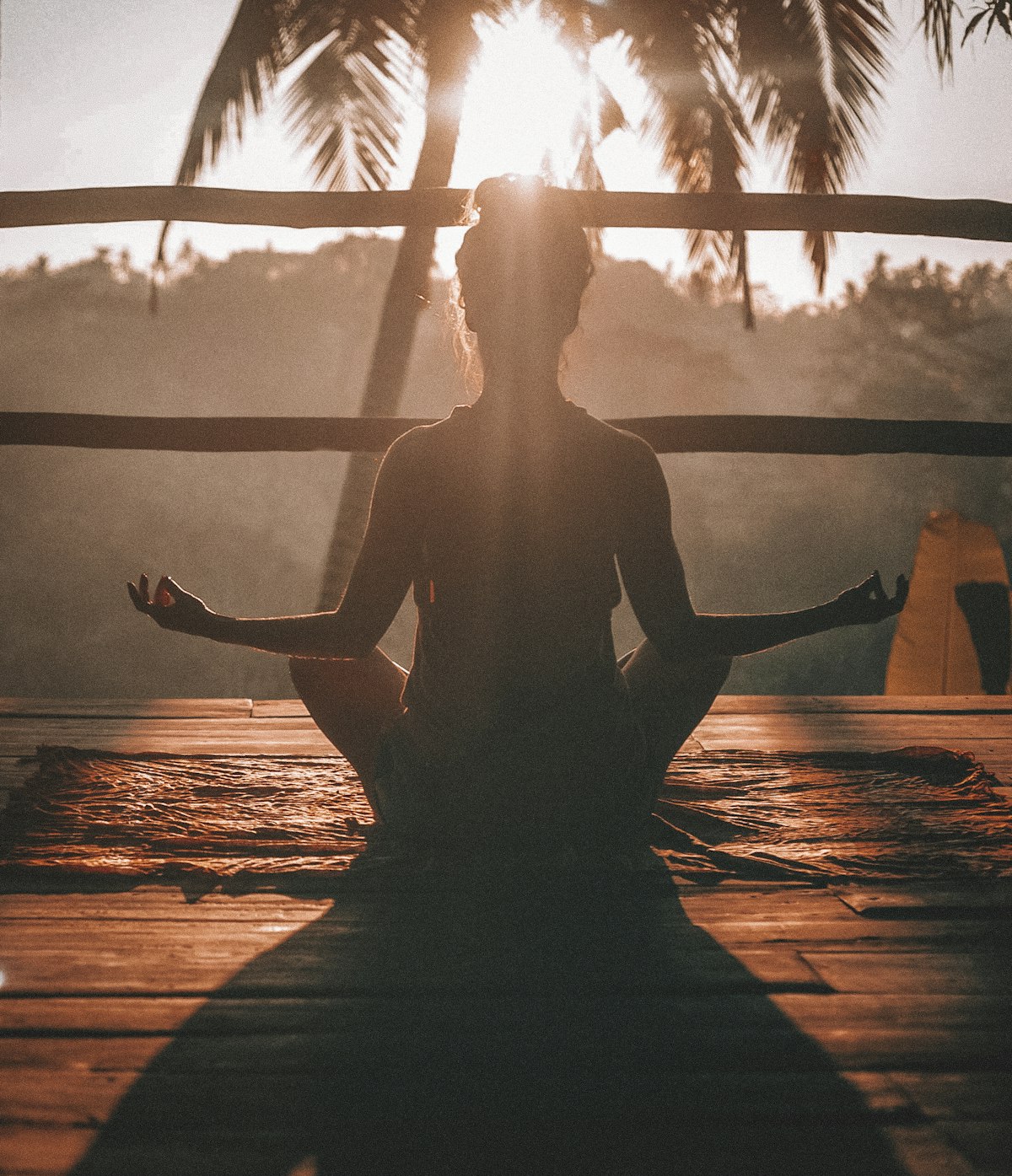
Before you learn a single posture, you need the interpretive framework — because every movement in the Yang 24-form was designed through a lens that most Western exercisers have never looked through.
In Traditional Chinese Medicine, health equals smooth flow. Qi moves through a network of twelve primary meridians, each paired with an organ system, plus two central vessels: the Ren Mai running up your front midline and the Du Mai running up your spine and over your head. Disease — pain, fatigue, anxiety, organ trouble — is a blockage somewhere in that network.
The blockage might be mechanical, emotional, environmental. The solution is always the same: get things moving again.
Every posture in Tai Chi does exactly that — mechanically. Extend your arm palm-up and you're stretching the Lung meridian along the inner arm. Rotate your torso and you're wringing the Gallbladder meridian that zigzags down your side. Shift weight fully onto one leg and you're compressing Yongquan (KD-1), the Kidney point on the sole that connects you to ground. The postures aren't random choreography.
They're targeted meridians stretches delivered through slow, loaded movement.
The slowness matters for a specific biomechanical reason. Your fascia — the connective tissue that wraps every muscle, bone, and organ — is piezoelectric. Stretch it and it generates a micro-voltage. But there's a catch: move too fast and the fascia rebounds like rubber, unchanged.
Move slowly, hold the stretch, and the fascia undergoes something called thixotropy — it transitions from a gel state to something more fluid, releasing stored tension and literally reorganizing around the lines of stress. " It's not mysticism. It's biophysics that Chinese practitioners figured out empirically two thousand years before Western labs named it.
The Yin-Yang dance in Tai Chi is the constant alternation between weight-bearing and empty, expanding and contracting, inhaling and exhaling. Each form cycles through these polarities continuously. A body stuck in Yang is inflamed, anxious, wired. A body stuck in Yin is stagnant, cold, depressed. Tai Chi doesn't push you toward one pole — it teaches you to oscillate. The oscillation is the rhythm of health.
- First thing to notice in your practice: where does your body resist? Tightness, numbness, restriction — those are stagnation zones in TCM language. Don't fight them. Breathe into them and let the movement gradually open the area.
- The concept of 'root' (gen) means grounding through Yongquan (KD-1) on the sole. When rooted, your weight sinks through your legs into the earth, and the rebound force travels back up. That's the physical reality of 'grounding' — not a metaphor.
- You don't need a meridian wall chart to benefit. The movements are designed so correct form automatically stimulates the right pathways. Do the posture right and the energy follows.
"The twelve regular meridians connect the interior to the exterior, the upper to the lower, the Yin to the Yang. When Qi flows freely through all channels, there is life. When it is obstructed, there is disease."
Movement 1: Commencement (Qi Shi) — The Posture That Fires the Master Circuits
The form starts where everything starts: standing still.
Feet shoulder-width. Knees soft, not locked. Tailbone tucked slightly under. Chin level. Tongue resting on the upper palate behind the front teeth. Arms at your sides, palms facing backward — not forward. This is Wu Ji, the posture of undifferentiated stillness before anything happens.
From here, the first movement is simple enough to look like nothing: inhale, raise both arms slowly in front of you to shoulder height, palms down. The arms float — no shoulder effort, the sensation coming from the back expanding, the shoulder blades separating. Exhale, bend the elbows, draw the hands back toward the chest, and press the palms down as if submerging a beach ball underwater. Return to sides.
Repeat three times.
Looks like a warm-up. It's not.
In TCM terms, the upward arm raise opens the Ren Mai — the Conception Vessel running up your front midline, governing all Yin energy in the body. The downward press activates the Du Mai — the Governing Vessel running up the spine and over the crown, governing all Yang. Rise and sink, Yang rising and Yin descending — that cycle is the fundamental rhythm the next 23 postures will follow.
By starting with Ren and Du, Tai Chi turns on the body's master circuits before targeting any individual organ. It's flipping the main breaker before plugging in the appliances.
Mechanically, Commencement teaches the single most transferable skill in the entire form: weight sensing. As your arms rise, your weight shifts slightly forward toward the balls of your feet. As they lower, it settles into your heels. This micro-shift — a weight transfer so subtle you'd miss it if you weren't paying attention — is the sensor calibration that makes every balance-demanding posture to come possible.
My grandfather used to say: if you can't feel where your weight is during Commencement, you won't feel it anywhere else.
- Arms should rise without shoulder tension. If your traps are hiking toward your ears, you're muscling it. Imagine helium balloons tied to your wrists and let them float.
- Knees stay slightly bent. Locked knees block Qi flow from lower to upper body and strain the lumbar spine. Springs, not stilts.
- Tongue on palate is non-negotiable. It bridges Ren Mai (ending at the lower gum) and Du Mai (ending at the upper palate), closing the Microcosmic Orbit. Skip it and you're leaving the circuit open.
"Wu Ji gives birth to Tai Ji. From stillness comes movement, from movement returns stillness. This is the way of the universe, and the way of the body."
Movement 2: Part the Wild Horse's Mane (Ye Ma Fen Zong) — Opening the Lungs Through Your Arms
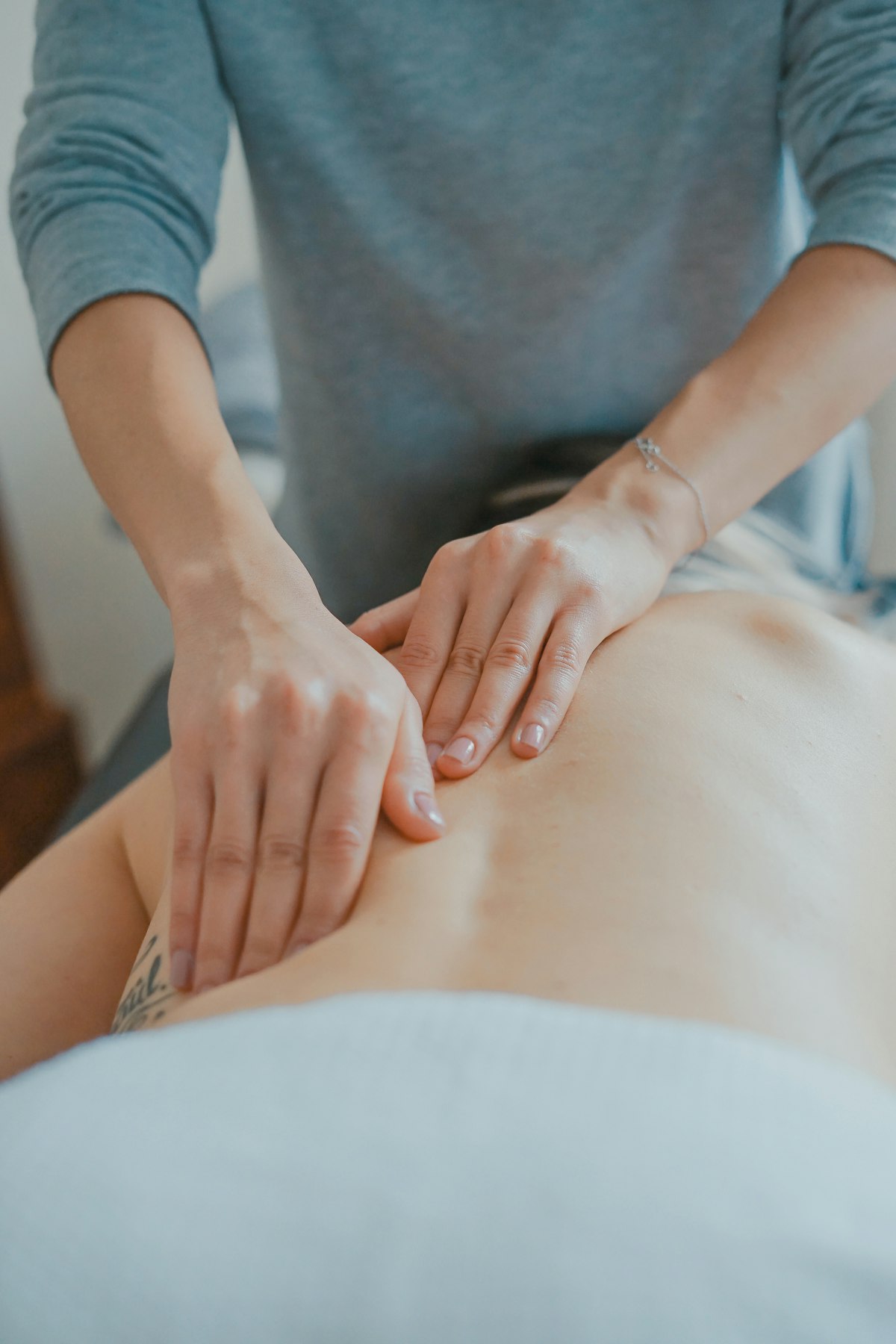
From Commencement, shift everything onto your right leg. Left foot steps out. As you transfer 70% of your weight forward onto the left, your body rotates. Left arm arcs up, palm facing your chest like you're holding a beach ball against your body. Right arm lowers into a downward palm press beside your right hip.
Then — in one motion — left arm separates forward and up, palm facing your body, while the right arm presses down and back. One hand at eye level. One at hip level. Body angled. Weight forward. You've parted the wild horse's mane. The movement alternates left and right across three repetitions, stepping each time.
TCM-wise, this is the Lung and Large Intestine show. Extend your forward arm with palm slightly inward and thumb-index fingers gently connected (the Tai Chi hand), and you're stretching the Lung meridian running down the inner arm to the thumb's radial side, plus the Large Intestine meridian running along the outer arm to the index finger.
These two are paired in the Metal element: Lungs govern intake of Qi from air, Large Intestine governs elimination of waste. Together they represent the breath cycle and the body's boundary between inside and outside.
The alternating forward-back arm motion mechanically opens the intercostal muscles between ribs. Spirometry studies show regular Tai Chi practice increases forced vital capacity and forced expiratory volume in older adults — real, measurable improvements in lung function, delivered without a single jumping jack.
The backward-stepping element trains something nobody talks about: controlled weight transfer. Most falls don't happen during stable standing. They happen during transitions — getting up from a chair, stepping off a curb, turning to reach for something. Part the Wild Horse's Mane teaches you to shift your center of mass smoothly from two legs to one, hold it, then shift back.
That's the exact skill that keeps a transition from becoming a fall.
- Front knee tracks over the foot, never past the toes. Overextending the forward lunge strains the knee. Keep the bend moderate and comfortable.
- The space between your arms should feel like a sphere of energy you're compressing and expanding. This maintains structural integrity and keeps your arms from collapsing inward.
- Gaze follows the forward hand — but loosely. Eyes look forward and slightly up, like watching a bird take off. Neck stays long, chin slightly tucked.
"The Lungs govern the Qi of the entire body. They are the canopy that covers the five zang organs. When Lung Qi descends, the hundred vessels flow smoothly."
Movement 3: White Crane Spreads Its Wings (Bai He Liang Chi) — Your Heart, Literally on Display
From the final Part the Wild Horse's Mane, settle your weight back onto the rear leg. Front foot pivots inward. Right arm rises overhead in an arc, palm forward, fingers extending up — like blocking the sun. Left arm drops beside the left hip, palm down, fingers forward. Weight fully on the right leg. Left foot barely touches the ground — an empty step.
You look like a crane at the water's edge, one wing skyward, one earthward, balanced and completely still.
This posture opens the Heart and Pericardium meridians. The rising arm stretches the Heart meridian (running from the armpit down the inner arm to the little finger) and the Pericardium meridian (chest, down inner arm, to the middle finger). Heart houses the Shen — spirit, consciousness, emotional self. Pericardium is the Heart's bodyguard, filtering emotional shocks before they land.
When these meridians are open, you feel calm and emotionally resilient. When they're constricted — chronic stress, anxiety, grief — you feel scattered, palpitation-prone, fragile.
The overhead arm opens the axillary region where the Heart meridian begins at HT-1 (Ji Quan, "Highest Spring"). Most people's arms never go above shoulder level in daily life. The armpit stays closed. Opening that space, combined with the diaphragmatic breathing the posture demands, triggers a parasympathetic cascade that drops heart rate and blood pressure within minutes.
A 2019 systematic review in the Journal of the American Heart Association pegged Tai Chi's systolic blood pressure reduction at 8-12 mmHg and diastolic at 4-6 mmHg — numbers comparable to first-line antihypertensives, without side effects.
I've seen this posture calm panic attack symptoms in real time. Student walks in vibrating with anxiety. Five minutes of White Crane, focusing on the upward stretch and the exhale. By the third repetition, their shoulders have dropped two inches and their breathing has switched from chest to belly. The posture doesn't fix the source of the anxiety. That's not its job.
It gives the nervous system a different signal to follow.
- The raised arm elongates, doesn't strain. Imagine your middle finger being pulled skyward by a silk thread — that's the Pericardium meridian ending at PC-9. Shoulder stays down.
- The lowered arm at your hip isn't dead. Palm presses gently downward as if resting on a floating object. Intention in both hands — the upper lifts, the lower grounds.
- The empty step — front foot barely touching — trains single-leg balance. Wobbling is your nervous system learning. Stay with it and the wobble becomes stillness.
"The Heart is the sovereign ruler of the body. When the ruler is calm and clear, the twelve officials serve peacefully. When the ruler is agitated, all the officials fall into disorder."
Movement 4: Brush Knee and Push (Lou Xi Ao Bu) — The Stress-Release Posture Hiding in Plain Sight
From White Crane, step forward with your left foot and transfer weight onto it. Your left hand sweeps downward in a circular "brushing" motion past the left knee — as if clearing tall grass out of your path. At the same time, your right hand pushes forward from beside your ear, palm facing forward, fingers up. Torso rotates, untwisting as the push extends. Forward hand at shoulder height.
Brushing hand resting beside the forward hip, palm down.
Repeat on alternating sides across multiple steps. Each time, brush the knee on the forward side while the opposite hand pushes forward.
This movement targets the Liver and Gallbladder — the Wood element pair that manages smooth Qi flow through the entire body. The twisting component wrings out the Gallbladder meridian, which zigzags from the outer eye, over the temple, down the side of the neck, across the shoulder, along the lateral ribcage and hip.
When this meridian is congested — as it is in anyone who hunches at a desk, carries tension in their neck and shoulders, or suppresses frustration — the entire side body tightens. The repeated torso rotations in Brush Knee wring it out like a wet towel.
The forward push activates the Liver meridian (inner thigh, groin, ribcage). Liver governs the smooth flow of Qi. Stagnant Liver Qi — the most common TCM pattern in stressed adults — shows up as irritability, PMS, digestive upset triggered by stress, and that tension headache behind the eyes that Tylenol doesn't quite reach.
The alternating knee-brushing hand stimulates SP-9 (Yin Ling Quan) and LV-8 (Qu Quan) — key points along the inner knee that regulate Liver and Spleen.
Brush Knee is the movement I prescribe most often to students with tension headaches and TMJ. After a day of screen work, three rounds of Brush Knee feels like someone unscrewed a bolt from the base of my skull. It's a stress-release mechanism disguised as a martial arts posture — and it's my personal favorite for a reason.
- The brushing hand actively sweeps with intention, palm down — not a limp flopping motion. The movement creates a gentle spiral through the wrist and forearm that stimulates the triple energizer meridian.
- Gaze follows the pushing hand, but rotation comes from the thoracic spine, not the neck. If your neck is doing all the twisting, you're missing the Gallbladder meridian benefit.
- The push extends like a branch growing. Elbow stays slightly bent, shoulder stays down. Power comes from the back leg driving into the ground, not from the arm itself.
"The Liver is the general of the army. It stores the Blood and governs the smooth flow of Qi. When the Liver is harmonious, the sinews are supple and the emotions flow freely."
Movement 5: Playing the Lute (Shou Hui Pi Pa) — The Posture That Teaches You to Store Energy Instead of Spending It
From Brush Knee and Push, draw your weight back onto the rear leg. Front foot moves slightly inward, toes touching the ground — empty step. Both hands come together in front of your body: left hand at chin level, palm inward (holding the neck of a pipa, the Chinese lute), right hand at elbow level, palm up (supporting the instrument's body). Body upright, slightly sunk. Balanced on the rear leg.
Front foot light as a feather.
Most beginners miss what this posture does. It's not dramatic. It's not athletic. It's the Kidney meridian movement, and it works through three mechanisms operating simultaneously.
First, the weight-bearing rear leg compresses Yongquan (KD-1, "Bubbling Spring") into the ground — stimulating the point that roots and grounds the body's energetic system. Second, the slight forward torso tilt (spine staying straight) creates a gentle traction on the lower back where the Kidneys sit, mechanically massaging the organ and the Ming Men (Gate of Life) point at L2-L3.
Third, the whole posture pulls inward — hands received toward the body, weight drawn back, front foot barely touching — which mirrors the Kidney's energetic direction: inward, downward, consolidating, storing.
Where the Liver expands outward. Where the Heart radiates. The Kidney receives. Playing the Lute teaches the body to gather and store Qi instead of perpetually dispersing it. That skill — conserving rather than spending — is something modern life has nearly erased from our operating system.
Kidney Qi declines naturally with age. The clinical manifestations are lower back pain, weak knees, hearing loss, memory decline, and loss of bone density (Kidneys govern bones in TCM). A posture that gently, consistently stimulates this meridian is, in practical terms, one of the most direct anti-aging interventions available. My grandfather's lumbar spine was fused at L4-L5 from that construction fall.
By 85, his orthopedist had told him he'd be in a wheelchair. Instead he was in the courtyard every morning, doing Playing the Lute with the same quiet precision he'd had at 45. The orthopedist wrote "remarkable soft tissue compensation" in his chart. My grandfather just called it practice.
- The lute hand position — one high at throat level, one low at navel level — connects the Ren Mai (throat center) with the lower Dantian (primary energy storage). Heaven and earth, linked through the body.
- Weight distribution: 90% rear leg, 10% front (ball of foot only touching). If you can lift the front foot without shifting weight, you're properly rooted.
- The feeling is deep internal quiet — like listening to a distant sound. This inward attention is the mental component of Kidney Qi consolidation. Don't just do the posture. Listen from it.
"The Kidneys store the essence. They govern birth, growth, reproduction, and aging. To strengthen the Kidneys is to strengthen the root of life itself."
Your First Month of Practice — 20 Minutes, 5 Movements, 1 Habit
Five movements. Commencement, Part the Wild Horse's Mane, White Crane Spreads Its Wings, Brush Knee and Push, Playing the Lute. That's your practice for the first month. Not all 24. Not even close. Five.
Here's the daily structure. Minutes 0-2: Wu Ji standing. Feet shoulder-width, knees soft, hands at sides, tongue on palate. Breathe through your nose. Feel your weight settle. Scan for tension — jaw, shoulders, low back — and let it go. Minutes 2-5: Commencement x3. Slow. Arms floating. Breath synced: inhale on the rise, exhale on the sink. Minutes 5-12: The full five-movement sequence, three times through.
First time, you'll pause between postures to remember what's next. Fine. By week 2 it should flow without stopping. Minutes 12-17: Two more passes, but each one with a different focus. First pass: footwork and weight transfer. Second: arm positions and hand shapes. Third: breath coordination. Fourth: gaze direction and internal intention. Each layer builds a different neural circuit.
Minutes 17-20: Wu Ji standing, eyes closed. Hands resting over the lower Dantian — two inches below your navel. Three deep belly breaths. Feel the energy settle.
The closing meditation isn't optional. It's the "save" button for the Qi you've generated. Skip it and half the session evaporates.
Breath pattern: inhale on expanding, opening, rising movements. Exhale on contracting, closing, sinking movements. This syncs the diaphragm with the posture and prevents the breath-holding every beginner does instinctively.
Common mistakes I see every new student make: locked knees (keep them soft, always), rushing between postures (the transitions are as important as the postures), staring at your feet (gaze should be horizontal, distant), and treating this as exercise instead of practice. You're training your nervous system, not burning calories. The mindset matters.
After a month of daily five-movement practice, you can add movements six through ten. Don't rush it. These five will serve you for the rest of your life. My grandfather did them for sixty years and never got bored. The depth isn't in the variety. It's in the attention.
- Best practice times: early morning (5-7 AM, Large Intestine time — Yang rising, sets your nervous system tone for the day) or late afternoon (5-7 PM, Kidney time — consolidating, grounding). Either works. Pick one and commit.
- Flat, thin-soled shoes or bare feet on a non-slip surface. Proprioceptive feedback from your soles is your primary data stream. Thick running shoes block it completely.
- Track your resting heart rate and blood pressure for 30 days — morning and evening. The changes are often dramatic enough to show your doctor. They're also the best motivation to keep showing up.
"A journey of a thousand miles begins with a single step. A Tai Chi practice of a thousand days begins with a single Commencement."