A Mind Split in Two
Western thought has spent the last few centuries insisting the self is one thing — one mind, one consciousness, one 'I' that wakes in the morning and carries on. Chinese medicine never made that assumption. Its model of the psyche is layered and plural, and near the base of it sit two entities most people have never heard of: the Hun and the Po.
Call them souls if you like, or don't — the classical texts use 魂 and 魄, and neither word maps cleanly onto any Western term. ' One wanders. One stays. Together they describe a mind that is not a single unified actor but a small committee, with different members on duty at different hours.
Here's the short version, because the whole system turns on it. The Hun lives in the Liver and governs the part of you that dreams, imagines, plans, and wanders — the mind's movement, its ability to leave the present and go somewhere else. The Po lives in the Lungs and governs the part of you that feels, senses, and runs on its own without being asked — the body's animal-level operating system.
The Hun leaves at night to dream. The Po stays, holding the body steady, breathing, circulating. When the two are balanced, you get a person who can imagine freely and still feel grounded in their own skin. When they're not, the symptoms read like a modern complaint list: insomnia, vivid or disturbing dreams, grief that won't move, a dulled sense of being in your own body.
This article is about those two souls — what they do, what breaks them, and what the balance between them actually feels like in a life. I'll keep the honesty boundary explicit throughout: none of this is anatomy, and I'm not claiming the Hun is a thing you could find on an MRI.
It's a two-thousand-year-old map of the psyche, and maps deserve to be judged by whether they help you navigate, not whether they match the terrain pixel for pixel.
The Hun: The Soul That Leaves at Night
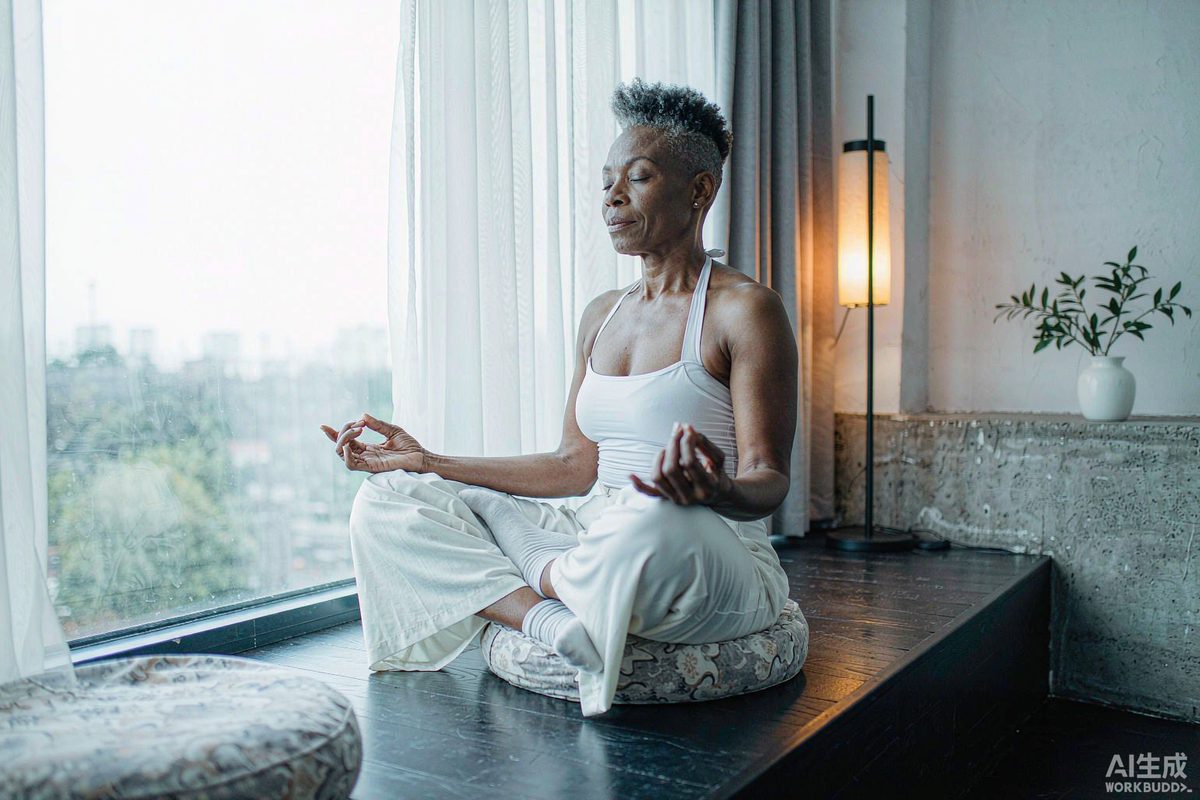
The Hun is the part of the mind that moves. The classical texts are specific about where it lives and what it does: the Liver stores the Blood, and the Blood houses the Hun. During the day the Hun is anchored — it powers imagination, forward planning, the ability to picture a future that doesn't exist yet, the sudden leap of association that connects two unrelated ideas. At night the story changes.
The Hun is said to leave the body during sleep and wander, and the dreams you remember are the traces of where it went.
That last claim sounds mystical until you read it as a description. Consider what actually happens when you fall asleep: the part of you that plans and imagines doesn't switch off, it just stops being supervised.
The scenes your mind generates at night — the impossible cities, the conversations with people who are gone, the physics-defying leaps — are the same machinery that does daydreaming and planning during the day, running without the brakes of waking logic.
Modern neuroscience has its own name for this: the default mode network, the set of brain regions that light up when you're not focused on a task, generating mind-wandering, autobiographical memory, and simulation of future scenarios.
A 2007 Science paper by Mason and colleagues showed that this network is active precisely when the mind is off-task and drifting — which is, functionally, what the Hun is doing when it's not anchored to the present.
The clinical part is what matters for actual people. If the Liver Blood is thin — from chronic overwork, screen exhaustion, blood loss, or years of pushing through — the Hun has nothing solid to anchor to.
It wanders too much, or too restlessly, and the result is the classic sleep picture: vivid, disturbing dreams, waking at 3 AM (the Liver's clock hour), sleepwalking or sleeptalking, and a daytime mind that drifts when it should hold still. The person can't quite land anywhere. That's not a metaphor. It's the Hun, unanchored.
The Po: The Soul That Stays
The Po is the Hun's opposite in almost every way, and it's the one people overlook because it does its job so quietly. If the Hun is the mind that leaves, the Po is the mind that stays — the part of you that is all body. The Lungs store the Qi, and the Qi houses the Po.
It governs the animal functions you never asked to run: breathing, heartbeat, reflexes, the million autonomic adjustments that keep you alive while you're thinking about something else entirely. It's sensation — not interpreted sensation, but raw, pre-verbal sensation, the felt difference between a warm room and a cold one, the ache in your shoulders, the warning twinge in your stomach.
And it's closely tied to the voice, to weeping, and to grief.
Here's a detail that always lands with people. In the classical model, at the moment of death the Hun leaves first — it ascends, departs, and the dreams and imagination go with it. The Po is the last to go. It sinks, returns to the earth, and is the reason the body is described as 'settling' or 'returning' rather than simply stopping.
Grief, in this framework, is what happens to a living person when their Po gets stuck processing a loss — a heaviness in the chest, a sighing that won't stop, a literal feeling of the breath being shallow or held. ' All of it is Po territory.
The diagnostic question for the Po is about sensation and instinct. A person whose Po is strong has a felt, immediate sense of their own body — they notice when they're hungry, when a room feels wrong, when someone is bad news.
A person whose Po is weak or stuck lives at a slight distance from their own skin: they forget to eat, they don't notice tension until it becomes pain, they describe a numbness or a fog where other people describe a feeling. That numbness is the Po going quiet.
Why the Two Souls Need Each Other
Picture the pair as a relationship rather than two separate organs. The Hun is movement — yang, upward, outward, the capacity to leave. The Po is stillness — yin, downward, inward, the capacity to stay. Left to itself, the Hun would drift off into pure fantasy and never return. Left to itself, the Po would sink into pure animal routine and never lift its eyes.
They need each other precisely because each one's strength is the other one's danger.
Think of it as a kite. The Hun is the kite, the part that wants to rise and wander on the wind. The Po is the string and the hand holding it. Cut the string and the kite doesn't fly higher — it crashes. Shorten the string to nothing and the kite never leaves the ground.
A person with a strong Hun and a weak Po is the classic unmoored creative: brilliant, associative, full of visions, and completely unable to land — can't sleep, can't feel their body, can't finish anything because the mind keeps taking off.
A person with a strong Po and a weak Hun is the opposite: grounded to the point of stuckness, dutiful, physically present, but imagination-starved — no dreams to speak of, no ability to picture a different future, a life that feels like maintenance rather than movement.
There's a modern echo here worth naming. Interoception — the sense of your own internal bodily state — has become a major research topic, and low interoceptive accuracy tracks with everything from anxiety disorders to emotional dysregulation. That's the Po, in Western dress. Meanwhile the imagination, mind-wandering, and future-simulation the default mode network does is the Hun, in Western dress.
The two-thousand-year-old split between an ethereal soul and a corporeal soul keeps showing up in the lab under different names, which is either a coincidence or a hint that the old physicians were mapping something real.
When the Hun Won't Settle
The most common Hun disturbance I hear about is the unanchored-at-night variety. It shows up as a cluster: vivid dreams that feel exhausting, waking in the early hours and lying there with a racing mind, a daytime drift where you read the same paragraph four times.
The classical answer is almost always the same: the Blood that anchors the Hun is thin, and the Liver that should be holding it steady is either deficient or stagnant.
The Liver's clock hour is 1 to 3 AM. Waking in that window, habitually, is the single most reliable signal that something is off in the Liver-Hun axis. Pair it with the daytime signs — dry eyes, irritability that comes in waves, a tendency to clench the jaw or grind the teeth, a feeling of being wired and depleted at the same time — and the pattern is legible enough to act on.
Nourishing Liver Blood is slow work, and there's no supplement that shortcuts it. The foundations are boring and they work: protect sleep, stop staring at screens for the last hour of the night (screens drain Liver Blood through the eyes, in the classical view), and eat the foods the Liver is said to love — dark leafy greens, black sesame, goji berries, a little properly cooked liver if you're not vegetarian.
The herb that shows up in the formulas, Suan Zao Ren (sour jujube seed), is the classic anchor for a wandering Hun — it's the backbone of Suan Zao Ren Tang, used for two thousand years for restless dreams and insomnia.
- Track your wake-up time for a week. Habitual 1–3 AM waking points to the Liver-Hun axis; 3–5 AM points to the Lung-Po axis. The window is a diagnostic clue, not a random detail.
- Screens are a Liver Blood drain in the classical view — the eyes are the Liver's opening. The single highest-leverage change for a wandering Hun is turning screens off an hour before bed, not another supplement.
- Suan Zao Ren (sour jujube seed) is the classic Hun-anchoring herb, the core of Suan Zao Ren Tang. It's gentle and well-studied — but fix the sleep hygiene first.
"The Liver stores the Blood, and the Blood houses the Hun. When the Blood is insufficient, the Hun is not at peace, and the dreams are many and disordered."
When the Po Goes Quiet
The Po's signature disturbance is quieter than the Hun's, and because it's quiet it often gets missed entirely. Grief is the textbook trigger. The classical framework says grief and its related emotions — sorrow, longing, the specific ache of missing someone — are governed by the Lung, and in excess they injure it. The Po, which lives in the Lung, is what takes the hit. '
But it's not only grief. Chronic low-grade depletion does it too — the slow loss of sensation that comes from years of pushing through, ignoring the body's signals, overriding tiredness with caffeine and hunger with deadlines. A Po that's been ignored for long enough stops bothering to send signals at all. The person forgets they have a body except when it hurts.
The classical treatment for a quiet Po is breath, and that's not a metaphor either. The Lungs govern Qi, and the breath is the most direct lever on them. Long, slow exhalation — making the out-breath longer than the in-breath — is the specific practice, and it works on the Po through the same channel that grief injures.
Add movement that brings awareness back into the body — walking where you actually feel your feet, qigong, anything that forces sensation — and you start waking the Po back up. Weeping, when it comes, is considered a release of the Lung's Qi, not a breakdown. In this framework, tears are the Po finally moving again after being stuck.
- Lengthen the exhale. A slow out-breath, longer than the in-breath, is the direct classical lever on the Lungs and the Po. Two minutes of it shifts the nervous system more than most people expect.
- If you've been numb, seek sensation, not insight. Walk barefoot on grass, take a cold shower, feel your feet on the ground. The Po wakes through the body, not through analysis.
- Don't pathologize tears. In the classical view weeping is the Lung releasing stuck Qi — grief finally moving. A good cry is a sign the Po is coming back online, not a setback.
Dreams as a Clinical Signal
The part of the Hun-Po system that most people find either fascinating or ridiculous is the use of dreams as diagnosis. The classical texts take dreams seriously as clinical data — not as prophecy, but as a readout of what the internal organs are doing while the waking mind is offline.
The Suwen has a famous passage matching dream content to organ states: dreaming of flying or falling, of forests and wind, of angry confrontations, each tied to a different organ's excess or deficiency.
Skepticism here is healthy, and I'd hold it. Dream interpretation is where even serious classical medicine tips toward the unfalsifiable. But there's a narrower version of the claim that's harder to dismiss: that the emotional and physical state of the body shapes dream content in predictable ways, and that chronic, recurring dream themes are a signal worth paying attention to.
A person who dreams night after night of being chased, of arriving unprepared, of searching for something lost — that's not a random slideshow. It's the Hun replaying the day's unprocessed material through the filter of whatever organ is under strain.
The modern research on dreaming supports the narrower claim even as it rejects the grander one. Sleep consolidates memory and processes emotion — that's now textbook.
A 2009 study by Voss and colleagues on lucid dreaming showed that dreams can blend waking self-awareness with dream imagery in ways that suggest consciousness isn't a single on-off switch but a gradient — which is, in its own vocabulary, a version of the Hun and the Po doing different jobs in different states. The point isn't to read your dreams like tea leaves.
It's to notice when the same dream keeps coming back, because that repetition is usually the psyche trying to tell you something it can't say while you're awake.
"When the Liver Qi is in excess, one dreams of anger; when the Lungs are in excess, one dreams of weeping and of flying about. The dreams follow the state of the organs as a shadow follows its form."
Working With Both Souls
The practical work falls into two lanes, one for each soul, and they don't look much alike. For the Hun — movement, imagination, the capacity to leave — the work is to give it something solid to anchor to and then let it rest. Nourish the Blood (the boring foundations: sleep, food, no screens at night). Calm the Liver (the 1–3 AM waking is the tell).
And give the imagination a legitimate daytime outlet — writing, drawing, planning, any place the wandering mind is allowed to wander on purpose. A Hun that gets to roam freely during the day doesn't need to break loose at 3 AM.
For the Po — stillness, sensation, the animal body — the work is almost the reverse: bring awareness back down into the body and keep it there. Breathwork with long exhales. Movement that emphasizes feeling over performance. Grief allowed to move rather than frozen. The Po doesn't respond to ideas; it responds to sensation, rhythm, and touch.
Most people need one lane more than the other, and the direction of the imbalance tells you which. If you're a planner and a dreamer who can't sleep, work the Hun — anchor, nourish, wind down. If you're grounded but numb, dutiful but flat, work the Po — breathe, feel, let the grief move.
The two-soul model earns its keep not because it's scientifically verifiable, but because it gives you a clean diagnostic question: which half of my mind has gone quiet, and which half is running away with me?
- Diagnose the imbalance first. Can't sleep, can't stop planning, mind always leaving? That's a Hun problem — anchor and nourish. Feel numb, flat, stuck, checked out of your body? That's a Po problem — breathe and feel.
- Give the Hun a daytime outlet. A wandering imagination that's allowed to roam on purpose (writing, drawing, planning) is far less likely to break loose at 3 AM.
- The Po is trained by repetition and sensation, not by ideas. Daily breathwork and body-based movement will do more for a quiet Po than any amount of insight or self-talk.
"At birth, the Hun enters the Liver and the Po enters the Lungs. The Hun is the coming and going of the spirit; the Po is the firmness and solidity of the form. To treat the mind, tend both."
The Boundary We Don't Cross
I want to end by being precise about what this framework is and isn't, because the honesty matters more than the elegance. The Hun and the Po are not anatomical structures. There is no scan that will find them, no blood test for a 'wandering Hun,' no peer-reviewed study demonstrating that the ethereal soul departs at death.
The classical model is a clinical map built from two thousand years of observation — and a map can be useful without being literally true in the way a photograph is.
What keeps me returning to it isn't faith. It's that the map keeps predicting things.
The connection between unexpressed grief and respiratory problems, between chronic screen exposure and disturbed sleep, between a dulled body-sense and emotional flatness — these are real, repeatable patterns that the Hun-Po framework names directly and that Western medicine is only now reaching through separate routes (interoception research, the default mode network, sleep and emotion consolidation).
Two vocabularies, same territory.
So I'll leave the question open, the way the best of this tradition always did. The next time you can't sleep, or can't feel, ask which half of you has gone missing — the part that wanders, or the part that stays. The answer won't be scientific. But it might tell you exactly where to begin.