The Nose Is a Door That Never Closes
Under a microscope, the grains were wrong. In 2016, a research group examined brain tissue from residents of Manchester and Mexico City and reported finding millions of magnetite particles — an iron oxide the brain can produce on its own, in minute amounts, for its own purposes. The biological version grows as angular crystals with crisp edges.
These particles were round, often fused into clusters, occasionally flecked with trace metals. That geometry matched something else exactly: the magnetite that forms in combustion, on vehicle friction surfaces and inside engines, and that pours out of every tailpipe in a traffic jam.
The doorway they apparently used is the one you are breathing through right now. The olfactory nerve runs from the roof of the nose straight up through a bone perforated with tiny holes into the brain — a genuine anatomical shortcut, the only place where neurons with one end in the outside world plug directly into the central nervous system.
Particles small enough, the researchers argued, can ride that nerve inward, skipping the blood-brain barrier entirely. No other route into the brain is so unguarded. It is also a route no medication can close — the only defense ever found for it sits upstream, in the air itself.
None of this proves the particles do damage once they arrive. It establishes something more basic and more uncomfortable: the brain of a city dweller carries the physical residue of combustion, deposited along a route that has no checkpoint. For two thousand years, Chinese medicine described the nose as the opening of the lung — a door, not a wall.
The magnetite work reads like an inventory of what has been walking through it.
This article follows that thread. What do the large human cohorts actually say about air pollution and dementia? Where does the classical picture of turbid qi agree with the particle physics, and where does it go quiet? And what can one person do about an exposure that arrives with every breath?
- Brain tissue from Manchester and Mexico City residents contained millions of combustion-shaped magnetite particles, likely inhaled through the nose.
- The olfactory nerve is the only direct, barrier-free route from the outside world into the brain.
"The brain of a city dweller carries the residue of combustion, deposited along a route with no checkpoint."
Six Million People, One Road Map

Cohort studies are where the question gets its numbers, and the largest of them comes from Ontario. 6 million Ontario adults aged 20 to 85, tracked from 2001 to 2012. Over that window, 243,611 people received a diagnosis of dementia. Each person's home address was mapped against road traffic year after year, which quietly turned an entire province into a dose-response experiment nobody had to design.
The gradient was small but consistent. People living within 50 meters of a major road — heavy, constant traffic at the curb — had a 7 percent higher incidence of dementia than people living more than 200 meters away. The effect faded with distance in steps: the further back from the road, the closer the risk came to baseline.
Parkinson's disease and multiple sclerosis, analyzed in the same paper as honest comparisons, showed no such pattern. Whatever the road was doing, it was doing it to dementia specifically.
The authors put a number on the stakes: if the association is causal, a meaningful share of dementia cases among the people living nearest heavy traffic — on the order of one in ten in the closest band — could be attributed to it. Seven percent per person sounds modest. Run it across a city where millions live along arterials, and the arithmetic stops being modest.
Three honest limits. The addresses were home addresses; people commute, move, and change jobs. Exposure was modeled from distance and traffic counts, not measured at every doorstep. And observational cohorts can never fully exclude the possibility that something else — poverty, noise, chronic stress — travels with traffic and does the actual work.
The study adjusted for many of these, but adjustment is a statistical argument, not a physical one. Ten percent of a large number is still a large number, which is the entire public-health case compressed into six words.
- A 6.6-million-person Ontario cohort found dementia incidence 7% higher within 50 m of major roads, fading with distance — Parkinson's and MS showed no pattern.
- If the association is causal, roughly one in ten dementia cases among people nearest heavy traffic could be attributed to it.
"The province had become a dose-response experiment nobody had to design."
APOE4 and the Uneven Burden
Fine particulates — PM2.5, particles under 2.5 micrometers — get the headline because they are small enough to pass from lung into bloodstream, but the traffic story is wider: nitrogen oxides, ultrafine particles under 0.1 micrometers, and the brake-and-tire dust that regulation has barely touched. And the burden is not distributed evenly. Part of the skew has a name.
APOE4 is the best-known genetic risk factor for late-onset Alzheimer's disease, carried by roughly a quarter of people. In 2017, Diana Younan and colleagues followed 3,647 older women from the Women's Health Initiative Memory Study, averaging seventy years old at enrollment, with air-quality models tied to their home addresses.
Women living where fine particulate pollution exceeded EPA standards had a higher risk of global cognitive decline and of all-cause dementia. Among APOE4 carriers, the association was stronger — the same air cost them more.
The same paper carried a second layer. Mice engineered to develop Alzheimer-like pathology were exposed to polluted air, and their brains accumulated more amyloid plaques than controls breathing filtered air. Human epidemiology and an animal model pointing the same direction is about as much triangulation as environmental health usually manages.
The particulate story also explains why the road cohort used distance rather than chemistry: ultrafine particles fall out of the air fast, so the dose lives close to the curb. Distance is a crude but honest proxy for a measurement most cities still do not take.
The reading has to stay disciplined. Cohort associations of this size cannot rule out confounding, and the women were well into the age range where cognitive decline has many parents. The APOE4 interaction was observed, not experimentally arranged. Nobody should rush to get genotyped over this — a gene result that would not change your next step is mostly anxiety with a label.
The usable takeaway is blunter: for people already carrying above-average baseline risk, the case for cleaning up the air they actually breathe is stronger, not weaker, than for everyone else.
- In a cohort of 3,647 older women, PM2.5 above EPA standards tracked with cognitive decline and dementia — strongest among APOE4 carriers.
- The same study found mice exposed to polluted air accumulated more amyloid plaque than controls breathing filtered air.
Turbid Qi and the Canopy Organ
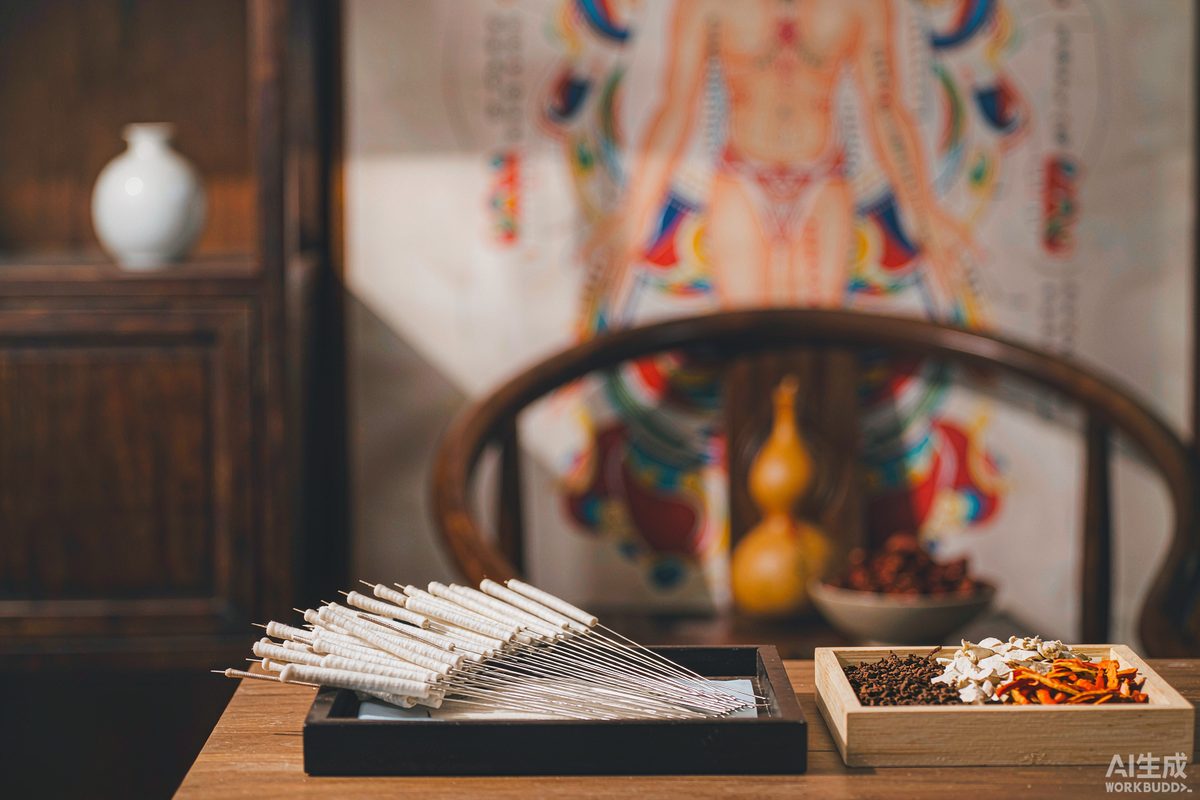
Open the Huangdi Neijing and the architecture is already there. The Suwen calls the lung the huagai — the canopy — the organ positioned highest in the trunk, spread over everything beneath it like a roof over a hall. It is also the organ that meets the outside world most directly: the Neijing states plainly that the lung governs qi and breath, and that the nose is its opening.
The Ling Shu goes further and describes zong qi, the gathered breath, rising and coming out through the nose. In this framework the nose is less a feature of the face than a chimney of the lung — shared plumbing between the body's interior and whatever the weather is doing.
The same texts map a traffic system for clean and dirty. The Suwen's Yin Yang Ying Xiang chapter compresses it into one line: clear yang exits through the upper orifices, turbid yin exits through the lower. Two directions, two exits, an order to the flow.
Air pollution is what happens when the turbid arrives from below and enters through the top instead — zhuo qi, turbid qi, coming in by the door reserved for the clean. The classical texts even had a word for the fog: wu, mist and haze, classed among the damp, obstructing evils that smother what should be clear.
Where the old framework goes quiet is dose and time. It could name turbid air and rank it among harms, but it had no micrograms, no annual averages, no way to see that a small intrusion each day compounds across forty years into a changed brain. Its advice was therefore blunt. The Suwen's opening chapter says to evade harmful winds and qi at their proper time — avoidance as a treatment, stated without apology.
That sentence is the whole modern playbook, written before the first tailpipe.
- The Neijing places the lung highest as the 'canopy' and names the nose as its opening — the door the turbid enters.
- 'Clear yang exits the upper orifices, turbid yin the lower' draws the flow; pollution reverses it at the door reserved for the clean.
"Pollution is the turbid arriving by the door reserved for the clean."
What Actually Lowers the Dose
The bad news first: no randomized trial has ever shown that cleaning up your air prevents dementia, and nobody is going to run that trial — it would need decades and a placebo haze. What exists is particle physics, exposure measurements, and smaller trials on symptoms, which together still support moves that measurably cut the dose.
Indoor air is the biggest lever, because people spend most hours inside. 5 to levels that outdoor monitors would flag. A range hood that vents outside, used every single time, matters more than most purchases in this category.
Portable HEPA filters remove particles mechanically — a bedroom unit sized to the room lowers exposure during the overnight hours, when the brain does its housekeeping and when you are, unavoidably, still breathing. Filtration studies have documented reduced indoor particle counts and some respiratory outcomes; cognitive benefits remain untested.
Outdoors, distance and timing do the work the epidemiology itself suggested. The Ontario gradient faded within a couple hundred meters of the road, which is a map written in words: choose the parallel street over the arterial for the evening walk, the park over the running path beside the highway.
Bad-air days, announced by any AQI app, are the 'proper time' the Suwen told readers to evade — shift the workout indoors or push it later. On smoke days, keep windows shut and let the filtration carry the load. Ventilation has a rhythm too: outdoor air runs cleanest mid-morning and late evening in most cities, which is when windows belong open, while the commute hours belong shut.
Masks earn an honest asterisk. A fitted N95 filters what passes through it, which is not nothing on a smoke day, but leakage and fit make real-world protection uneven, and no study ties mask wearing to any long-term brain outcome. Treat it as a tool for the worst days, not a lifestyle.
- Cooking can spike indoor PM2.5 above outdoor levels; a vented range hood used every time is the cheapest exposure fix in the house.
- A bedroom HEPA unit cuts overnight dose during the hours the brain consolidates and clears — cognitive benefit unproven, particle reduction documented.
"Distance and timing do the work the epidemiology itself suggested."
The Exercise Tradeoff
Exercise complicates the picture in an ironic way. Moving hard multiplies ventilation — a runner takes in several times more air per minute than a walker — so the same polluted street delivers a much larger dose to the person moving fastest through it. Studies sampling roadside exercise have found particle intake climbing in step with breathing volume.
The training effect is real and large; the pollution tax on it is real and smaller, but not zero.
The practical resolution is geometry, not abstinence. A twenty-minute walk on a leafy side street delivers the exercise benefit with a fraction of the traffic dose of the same walk along a four-lane arterial. Morning before rush hour, evening after it, routes through parks and residential blocks — the choices cost nothing and they stack.
Even the indoor answer has an outdoor half — air that entered through a window at the five o'clock rush is the air you breathe at eleven, so opening windows belongs on the clean side of the day's schedule. For people who run or cycle to commute, the honest accounting says the cardiovascular benefit still outweighs roadside exposure for most people at most pollution levels; the fix is the route, not quitting.
The old exercise tradition solved this differently and arrived nearby anyway. Standing practice (zhan zhuang) and qigong were timed to dawn and placed in courtyards, hillsides, and the edges of woods — away from the day's dust and crowds, in the hours when the air had settled.
The reasoning was qi and timing rather than particulate counting, but the map the two traditions draw is almost identical: exercise yes, exhaust no. A modern reader does not have to choose between the vocabularies. The dawn courtyard and the park route are the same decision, one expressed in qi, the other in micrograms.
- Hard exercise multiplies breathing volume, so roadside workouts raise particle intake — move the route one street over instead of skipping the workout.
- Classical practices placed dawn exercise in courtyards and woods; the park route is the same logic in modern units.
Who Should Care Most
Priority lists deserve honesty about uncertainty, but some exposures are simply heavier. People living within sight of an arterial — the Ontario study's closest band — carry the documented gradient. Delivery riders, traffic officers, and street-level workers accumulate rush-hour doses the way office workers never do.
People with asthma or COPD already live at the lung-end of the harm and have clinical reasons beyond the brain to mind the air; for them the exposure question is not hypothetical at all. The pattern is not symmetric across a day either — a rush-hour dose, then cleaner midday air — so a job near traffic has a rhythm worth learning around.
APOE4 carriers sit in a stranger position. The 2017 analysis found the pollution penalty heavier for them, which argues for tighter exposure control — but the gene test itself is a decision to make with a doctor, not an act of hygiene. Most guidelines still discourage casual genotyping for Alzheimer's risk, because the result changes few near-term choices and cannot be unread.
Knowing the family history, which is free, gets you most of the same caution without the paperwork.
Two groups argue in opposite directions and deserve the closing lines. Children breathe faster, live closer to tailpipe height, and are still building the organs that do the filtering — school routes along quiet streets are worth organizing a family's morning around.
And older adults, the group dementia research watches most closely, are the ones whose exposure window has already partially closed; their leverage is in the present tense, in ventilation and route choices, not in decades of retroactive worry. Worry, in any case, was never on the list of interventions.
- Street-level workers, people near arterials, and those with lung disease carry the heaviest doses — and have the most to gain from exposure control.
- Casual APOE4 testing is not recommended; family history gives most of the same caution without an unerasable result.
Evade It at the Proper Time
Strip it down and three findings stand. Particles shaped like combustion sit in urban brains, having entered by a nerve that bypasses every defense. Large cohorts tie dementia incidence to traffic proximity with a dose gradient that fades with distance. A gene that raises Alzheimer's risk also raises the price of bad air.
None of this is proof that any one person's dementia traces to any one street, and the honest summary keeps that uncertainty in the frame rather than filing it away.
The Suwen's opening chapter spends its authority on a single instruction: evade the harmful and the pathogenic at their proper time. It is strange, reading it now, how little the modern version changes — hood on, filter running, route shifted one street over, the hard workout moved off the red AQI day. A two-thousand-year-old sentence and an air-quality app give the same advice at different resolutions.
What remains genuinely open is the middle of the curve: how much dementia, across a whole city, is the air's doing, and whether a cleaner decade can pull the risk back down. Those questions are being answered the slow way, by cohorts still running and cities still changing. Until they finish, the tradition's verb is the one worth borrowing. Not cure, not detox, not panic.
Evade — at the proper time, which for most readers means starting with the air indoors tonight.
- Three facts carry the piece: combustion particles in brain tissue, a traffic-distance gradient in dementia incidence, and a gene that raises the cost of bad air.
- The open question — how much dementia is the air's doing, and whether it reverses — is still being answered by running cohorts.
"Evade, at the proper time. A 2,000-year-old sentence and an AQI app give the same advice at different resolutions."