The Organ That Complains First
Every office has a theory about the 3 p.m. slump. Lunch was too heavy. Blood sugar. The meeting that ran long. The theory nobody reaches for, because it is too boring to hold a grudge against, is water. Not dramatic dehydration — nobody in a carpeted office is crossing a desert — but the quiet, partial kind that accumulates between a morning coffee and whatever you drink when you finally look up from the screen.
The brain is an unusual organ to keep supplied. It weighs about three pounds, sits in its own filtered bath, and burns a fifth of the body's energy while doing it. Because it lives half-submerged, small changes in the body's fluid budget register there early — earlier than they do in the muscles, which tolerate a dry afternoon without comment.
You can lose 1 to 2 percent of body weight in water and still feel, if asked, roughly fine. The lab equipment disagrees. Attention wobbles. Tasks feel heavier. Mood sours by a few degrees, in the direction nobody can quite name.
That is the territory of this article: not heatstroke, not the marathon medic's clipboard, but the gray zone — mild dehydration, the kind a working brain drifts into on an ordinary Tuesday. Both of the traditions we write from have something to say about it. One measured it with vigilance tasks and body mass. The other drew the whole fluid economy of the body two thousand years ago and gave it a name: jin ye.
They turn out to worry about the same afternoon.
A note on scope before the ground gets confusing, because the phrase mild dehydration invites two opposite misreadings. The first is dismissal: two percent sounds like nothing, a rounding error of a day. The second is dread, usually from people who have read that athletes fade at higher losses and have concluded their desk job is a medical event. Both are wrong in useful ways.
Two percent of body mass for an eighty-kilogram adult is roughly a liter and a half — not a crisis, and not nothing. Everything below the two percent line is where the interesting, ordinary damage happens; everything far above it belongs to sports medicine and to clinicians, and this article stays out of their way.
What the Trials Actually Measured
Start with the cleanest experiment. 6 percent, about two liters of sweat from an eighty-kilogram man, a deficit you could rack up across a long, dry workday if you drank nothing. Then they sat the men down at a computer battery: attention, working memory, reaction time.
The headline result was not that everything collapsed. It was which things bent first. m. — declined. Fatigue and headache rose. And the tasks did not change; the men's rating of them did. Work that looked identical on the screen took more effort to push through. Working memory, interestingly, held. The machinery stayed online. The operator got tired.
4 percent — headaches, worse mood, lower concentration — and, notably, at rest as well as during exercise. The female subjects registered the deficit without the exercise load; the men needed more provocation. Neither study says the brain stops working. Both say the same quieter thing: the cost shows up as friction, and friction is easy to misattribute. You will blame the task. The deficit gets a pass.
- A fluid loss of roughly 1.4-1.6% of body mass — reachable on an ordinary sedentary day — measurably reduced vigilance and increased headache and fatigue in controlled trials.
- Working memory largely held; the earliest casualties were sustained attention, effort ratings, and mood.
- The deficit shows up as friction, and friction gets blamed on the wrong suspect — the task, the meeting, the lunch.
"The machinery stays online. The operator gets tired."
Where the Fog Comes From, and What We Do Not Know
Mechanism is where the honest hedging starts. Several plausible stories exist and none has been crowned. The brain sits in cerebrospinal fluid, so sustained fluid loss slightly reduces its buoyant support — enough to make some headaches worse, though the full story there is unresolved.
Blood volume drops a little with dehydration, and with it the pressure driving flow to the brain; the brain compensates beautifully over seconds, but compensation is not the same as comfort. And the osmoreceptors that govern fluid balance sit in the hypothalamus, a neighborhood that also runs sleep pressure and alertness. Cross-talk between plumbing and mood is anatomically expected, not a surprise.
What the review literature actually concludes is more modest than the headlines. A 2014 review in the British Journal of Nutrition surveyed the field and found the pattern real but ragged: effects of mild dehydration on attention, mood, and short-term memory appear in many studies, the size of the effect varies, and some well-designed studies find little at all.
A complication runs underneath the whole literature — most dehydration studies induce their deficit with exercise and heat, and separating what the water loss did from what the treadmill did is not trivial. Reviews that pool the work keep flagging this. The field agrees the fog exists and keeps arguing about its exact address.
There is also a ceiling on the good news worth stating plainly. No trial shows that drinking extra water above what thirst asks for pushes cognition beyond baseline. The studies that tried — giving well-hydrated people more water and watching for a glow — mostly found nothing. Hydration, in the current evidence, is a floor, not a supplement. Below the floor, you pay. At the floor, you are done.
Nobody has shown a bonus for overfilling.
One more variable makes individual readings noisy, and it deserves a paragraph before anyone self-diagnoses. Bodies differ. Sweat rates vary several-fold between people doing identical work; two colleagues in the same office can drink the same amount and end the day at completely different deficits, one of them fine and one of them fogged.
Size matters, so does air conditioning, so does a commute that involves stairs. This is why the popular fixed targets — the glass counts, the ounce rules — produce so many quiet failures. They answer a question about averages when the only question that matters is about you, and the instruments for you are the crude ones described later: color, headache, effort.
- Several mechanisms are plausible — reduced buoyancy of the brain, lower blood volume and flow, hypothalamic cross-talk — but none is settled science.
- Reviews find the attention-and-mood effect real but inconsistent across studies, and most studies confound water loss with exercise and heat.
- No trial shows extra water beyond thirst improves cognition above baseline — hydration behaves like a floor, not a performance enhancer.
Jin Ye: How the Classics Mapped a Glass of Water
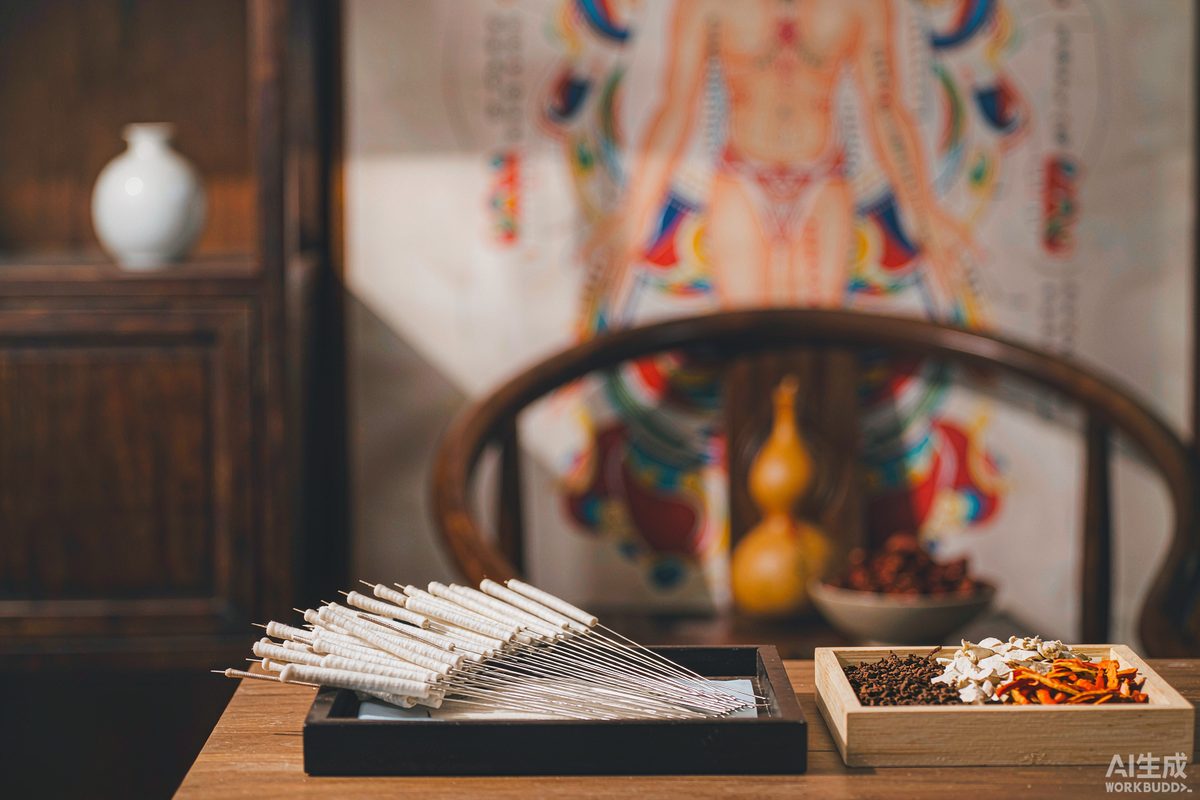
Open the Suwen to chapter twenty-one and you find a water cycle written in organs. Drink enters the stomach. Essence spills upward to the spleen, which scatters it; the essence returns upward to the lung, and the lung — the text says it plainly — regulates the water passages, sending fluid down to the bladder while the refined part spreads in four directions and runs along the five channels.
Shui jing si bu: the water essence spreads everywhere. It is a surprisingly modern sentence for a third-century text, less a mystical claim than an accounting system. Water in, fluid distributed, waste out, with the spleen as the freight department and the lung as dispatch.
The fluids themselves get a name, jin ye, and a set of jobs. They moisten the eyes, the mouth, the joints; they become sweat and saliva and, in the classical physiology, the thin end of the marrow itself. The tradition tracks them like a treasurer. Too little, and the texts describe dryness arriving in an order: parched mouth first, then restless heat, then the deeper deficits.
Too much, or moving badly, and it pools — heaviness, puffiness, a fog the tradition attributes to damp rather than to drought. Same water, two failure modes.
Which is why a TCM intake asks questions a modern hydration chart does not. Not just how much you drink but whether you are dry or pooled, whether the dryness concentrates in the mouth or the eyes or the stool, whether fluids move in the morning or only fail at night. The quantity question is the easy one. The tradition is more interested in routing.
- Suwen chapter 21 maps water from stomach through spleen and lung to the whole body — a classical accounting of fluid metabolism, not just a metaphor.
- Jin ye (body fluids) moisten eyes, mouth, and joints, and the tradition reads both failure modes: dryness and pooling.
- Classical intake asks where dryness shows up and whether fluids route properly, not just how many glasses were drunk.
The Sea of Marrow, and the Rhyme with a Dry Afternoon
Then there is the brain's own water, and here the Ling Shu makes a claim modern readers walk past too quickly. The brain, it says, is the sea of marrow — sui zhi hai — the reservoir where the deepest essence gathers, with its lower transport point at Fengfu, a point on the back of the neck. The image is hydrological on purpose. Seas receive every river; the brain receives what the deepest reserves produce.
The same chapter lists the shortage symptoms, and the list deserves to be read twice: when the sea of marrow is insufficient, the mind turns and the ears ring, the shins ache and the eyes grow dizzy, and the person longs to lie down. Nao zhuan er ming — the mind turns. Ringing ears, heavy legs, blurred focus, an urge to lie flat.
Read that against the trial subjects' reports — fatigue, headache, tasks rated harder — and the overlap is uncomfortable in the good way. Two vocabularies, two millennia apart, describing the same degraded afternoon.
An honest boundary belongs here, because the traditions are not actually claiming the same disease. In classical physiology, sui hai insufficiency is a deep, chronic depletion of kidney essence — the picture of advanced age, chronic illness, years of overdraw. It is not what happens when you skip the water cooler for a day, and treating them as identical would be sloppy in both directions.
The rhyme is real but partial: the classical texts were mapping the reservoir, modern trials the daily tide. What the tide teaches is smaller and more usable. The reservoir, the tradition insists, is filled slowly and drained quickly — and the cheapest thing you can stop doing is draining it by habit, in the small ways, every afternoon.
- Ling Shu 33 calls the brain the sea of marrow and lists its shortage symptoms: turning mind, ringing ears, aching shins, dizziness, the urge to lie down.
- The overlap with trial symptoms of mild dehydration is striking, but classical sui hai insufficiency means deep essence depletion, not a missed glass of water.
- The traditions converge on one habit point: the reservoir fills slowly and drains quickly, and small daily drains matter.
"The classical texts were mapping the reservoir; the trials, the daily tide."
Thirst Is a Late Warning System
If the deficit is this easy to reach, the obvious defense is thirst. The awkward finding — known to geriatricians for decades, and to anyone who has cared for an aging parent — is that thirst arrives late and arrives later in life.
The osmoreceptors still fire, but the sensation they produce gets quieter with age; older adults drink less water spontaneously than younger people under identical conditions, and their bodies reach measurable dehydration at thirst levels a thirty-year-old would have corrected hours earlier. Some of the deficit is physiology.
Some of it is design: by later life, many people deliberately under-drink to manage bladder urgency, or take medications that affect fluid balance, or simply stop noticing the cue amid everything else.
The practical fix is unromantic. Urine color is a cruder instrument than any lab, and it has noise — vitamins turn it bright, some foods turn it dark — but for daily self-monitoring it beats waiting for thirst, especially in the second half of life. Pale straw is the target. Dark apple juice with a headache attached is a retroactive report, filed too late.
There is also a scheduling insight buried in the trials. The deficits in the studies appeared during tasks requiring sustained effort, not during rest — which means the deficit ambushes you at the worst moment, mid-task, when stopping feels most expensive.
Drinking on a trigger (every meeting you stand up from, every hallway trip, before each meal) front-loads the supply before the demanding hours, rather than negotiating with a thirst signal that will not show up until the damage is done.
- Thirst lags behind actual need, and the lag widens with age — older adults reach measurable dehydration before feeling properly thirsty.
- Urine color is imperfect but useful: pale straw is the target; dark urine plus a headache is a late report.
- Drink on triggers, not on thirst — the deficit hits hardest mid-task, exactly when stopping feels most expensive.
What Counts, How Much, and the Coffee Question
The eight-glasses rule survives because it is memorable, not because it is evidence. Actual needs vary enormously — body size, climate, sweat rate, how much of your day is stairs versus spreadsheets. The better anchor is the pair of signals already described: thirst (early and imperfect) and urine color (crude but honest). 5 liters of fluid a day from all sources, and the phrase doing the real work is all sources.
Food supplies a fifth or more of most people's fluid intake — soup, fruit, congee, the cucumber in your lunch — and the classical dietetics never separated eating from drinking anyway; both were jin ye business.
The coffee question deserves its one paragraph. Caffeine is a mild diuretic, and the myth that it drains you net-negative has survived on the strength of how plausible it sounds. In habitual drinkers, the diuretic effect largely washes out; a morning coffee or two contributes to the day's fluid budget like anything else. Herbal teas, broths, and the warm barley water the tradition favored all count.
Very cold iced drinks, in the classical view, are not forbidden — they are just harder work for a spleen the texts describe as preferring warmth, a preference most stomachs quietly endorse on winter mornings.
As for pace: the body absorbs a glass of water in minutes but the osmotic accounting takes longer. m. after a dry day is not the fix it feels like — most of it is headed for the bladder inside the hour, which is why the refill-after-every-meeting habit beats the heroic evening catch-up. Steady beats heroic. This is one of the few areas of health where the boring strategy is also the correct one.
A word on what counts as eating your water, because the phrase is less precious than it sounds. A bowl of congee, a cucumber, an orange, a summer watermelon — all of these arrive with most of their weight already liquid, released slowly across digestion.
The tradition knew this without a percentage chart: classical dietetics assigned moistening foods a real clinical role, and a person whose fluids run dry was steered toward pears and broth long before anyone measured the water content of a pear. Modern tables roughly agree with the old instincts.
If your meals are built from dry, salty, processed material, no bottle fixes the deficit they create; if your meals carry their own moisture, the bottle's job is smaller. Drink like someone who eats well, and the drinking gets easier.
- Needs vary widely; track thirst plus urine color rather than obeying a fixed eight-glass number.
- Food supplies a fifth or more of daily fluid; coffee counts too — the diuretic effect mostly washes out in habitual drinkers.
- Sip steadily across the day; a heroic evening catch-up mostly ends up in the bladder within the hour.
Water Is Not Medicine, but Nothing Runs Without It
It would be tidy to end with hydration as a brain superfood. The evidence does not support the promotion. What it supports is narrower: mild deficits — common, invisible, reachable on any sedentary day — measurably tax attention and mood, and correcting them restores what was being taxed. That is not a performance claim.
It is a leak-repair claim, and the distinction matters, because the wellness industry sells water the way it sells everything: as more-than-baseline, glow-inducing, optimized. The trials say the glow is imaginary. They also say the afternoon fog, for a meaningful share of people, is not.
And the classical tradition, read carefully, never made the bigger claim either. Jin ye theory treats fluids as infrastructure — the medium every other therapy works through — which is why the first line of treatment in so many classical patterns is not an herb at all but a correction of routing and rhythm: warm fluids taken steadily, meals that carry their own moisture, sleep that lets the reserves refill.
The Shennong Bencao Jing lists its fluid-restoring herbs, Gualou gen among them, for defined dry patterns — prescriptions, not tonics for everyday drinking.
The open question, the one neither system has answered, is what decades of small, repeated deficits do to an aging brain. Cross-sectional studies hint that habitually under-drinking older adults perform worse on cognitive tests, but cross-sectional studies cannot untangle cause from constitution — maybe mild chronic dehydration nudges the brain, or maybe something else both dries the person and slows the mind.
Until better data arrive, the defensible position is the cheap one. Keep a glass on the desk. Refill it without ceremony. And if dizziness, fainting, confusion, or a racing heart show up, skip the self-help section entirely — those are reasons to see a clinician, not to pour another glass and wait.
- The supported claim is leak repair: mild deficits tax attention and mood, and correcting them restores function. Extra water above baseline buys no bonus.
- Classical fluid therapy is about routing and rhythm — steady warm fluids, moistening foods, sleep — with drying herbs reserved for defined patterns.
- Dizziness, fainting, confusion, or palpitations are clinician territory, not hydration-habit territory.
"Hydration is infrastructure. Nobody celebrates the pipes until the afternoon goes dry."